Category Archives: SBS

Culture Without Borders: Beautiful Messages from World Embassies for Irreechaa
From Paris to Delhi, from Washington to Canberra, diplomatic missions across Ethiopia send warm wishes to the Oromo people and all who celebrate the ancient festival of thanksgiving — proof that Irreechaa’s beauty now resonates far beyond the waters of Hora Arsadi.
Finfinnee, Ethiopia — October 3, 2026
The Colors of Celebration, the Voices of the World
The fields have shimmered with the colors of the season. The grass glistens with moisture. All of creation has been adorned with the richness of the harvest — and now, the Irreechaa festival has raised its head high.
Irreechaa is the reflection of gratitude to creation, the sign of reconciliation, and the expression of the unity of the Oromo people. On this day, the Oromo people, adorned in traditional dress, gather at the water’s edge with songs and prayers to give thanks to Waaqa, the Creator.
But this year, something remarkable has happened. The beauty of this tradition, the hospitality of this season, has been recognized far beyond Oromia’s borders. Diplomats and ambassadors from various countries stationed in Ethiopia have expressed their love and respect by extending messages of welcome and congratulations.
These diplomatic messages are testimony that the development, growth, and reach of Oromo culture has crossed national boundaries and is now receiving international recognition and honor.
Here are the beautiful messages that have arrived from embassies around the world.
Part One: European Embassies
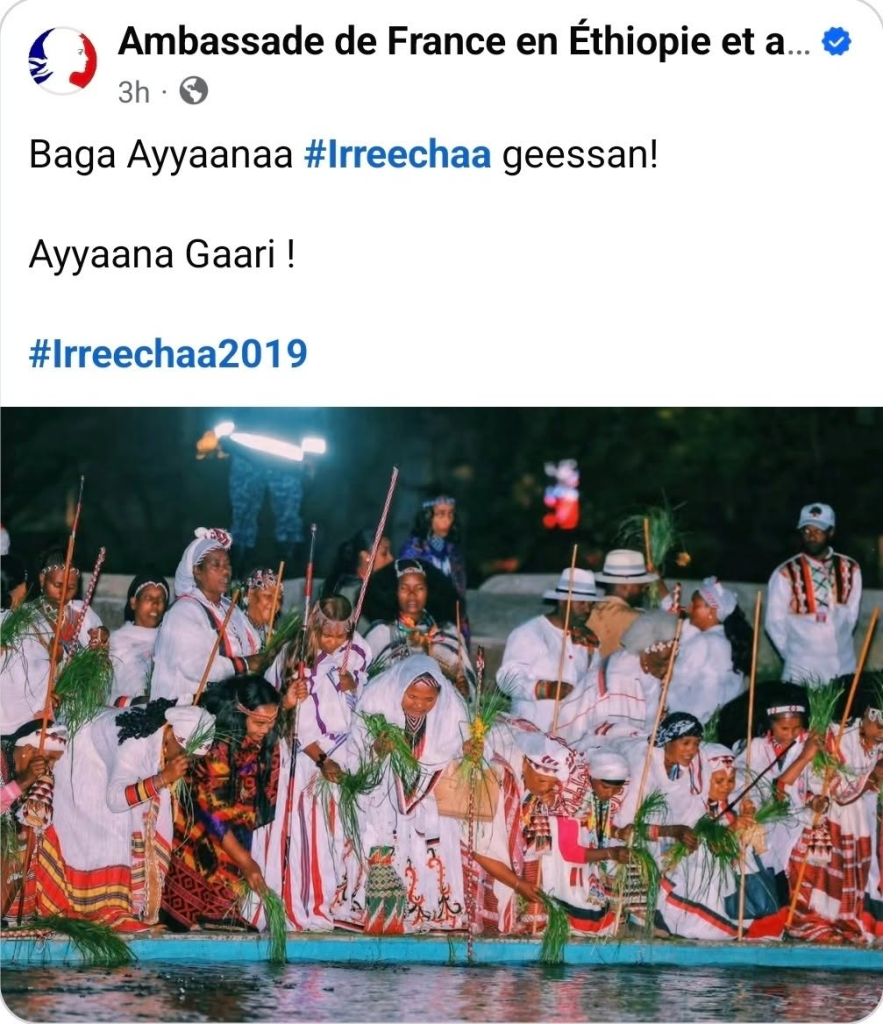
France: “Baga Ayyaanaa Irreechaa Geessan!”
The French Embassy opened its message in the Oromo language itself — a gesture of profound respect that did not go unnoticed.
“Baga Ayyaanaa Irreechaa geessan! Ayyaana Gaari!”
“May you arrive at the Irreechaa festival in peace! Good celebration!”
By beginning in Afaan Oromo, the French diplomatic mission demonstrated not merely courtesy but genuine cultural reverence. To speak to a people in their own language is to honor them. To greet them in their own tongue on their most sacred day is to say: We see you. We respect you. We celebrate with you.
British Embassy: “Happy Irreechaa!”
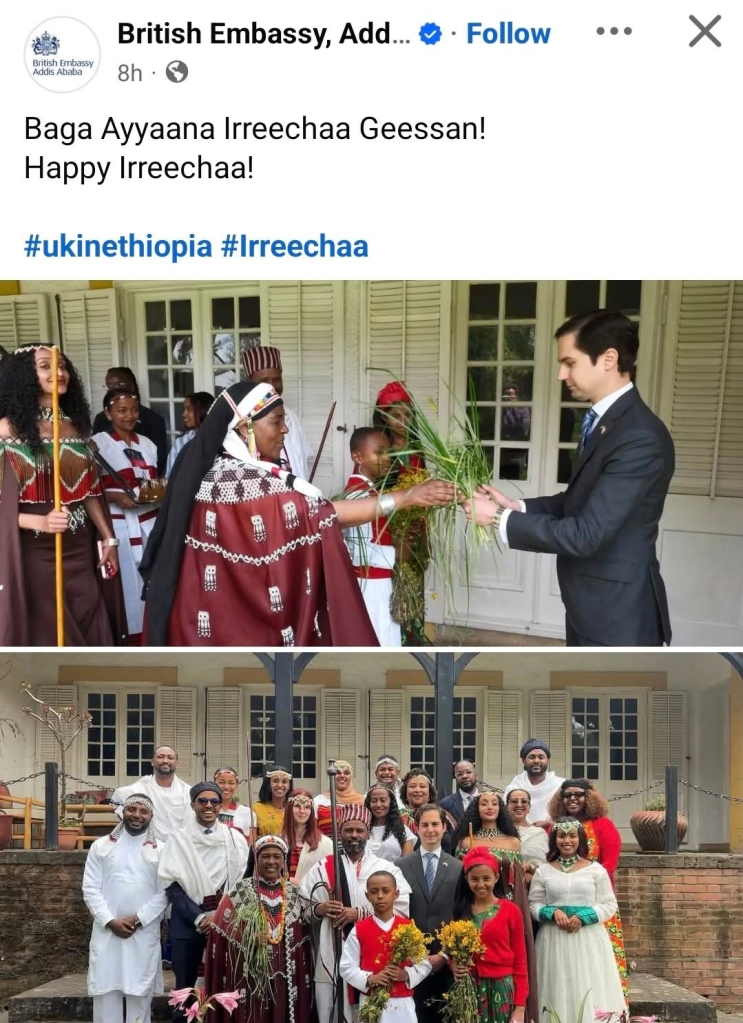
The British Embassy offered a message both concise and concrete:
“Baga Ayyaana Irreechaa Geessan! Happy Irreechaa!”
The dual-language greeting — Oromo and English — reflects the bridge-building nature of the festival itself. Brief, warm, and direct, the message shared in the joy of a people celebrating their heritage.
Sweden: A Wish for Peace and Unity
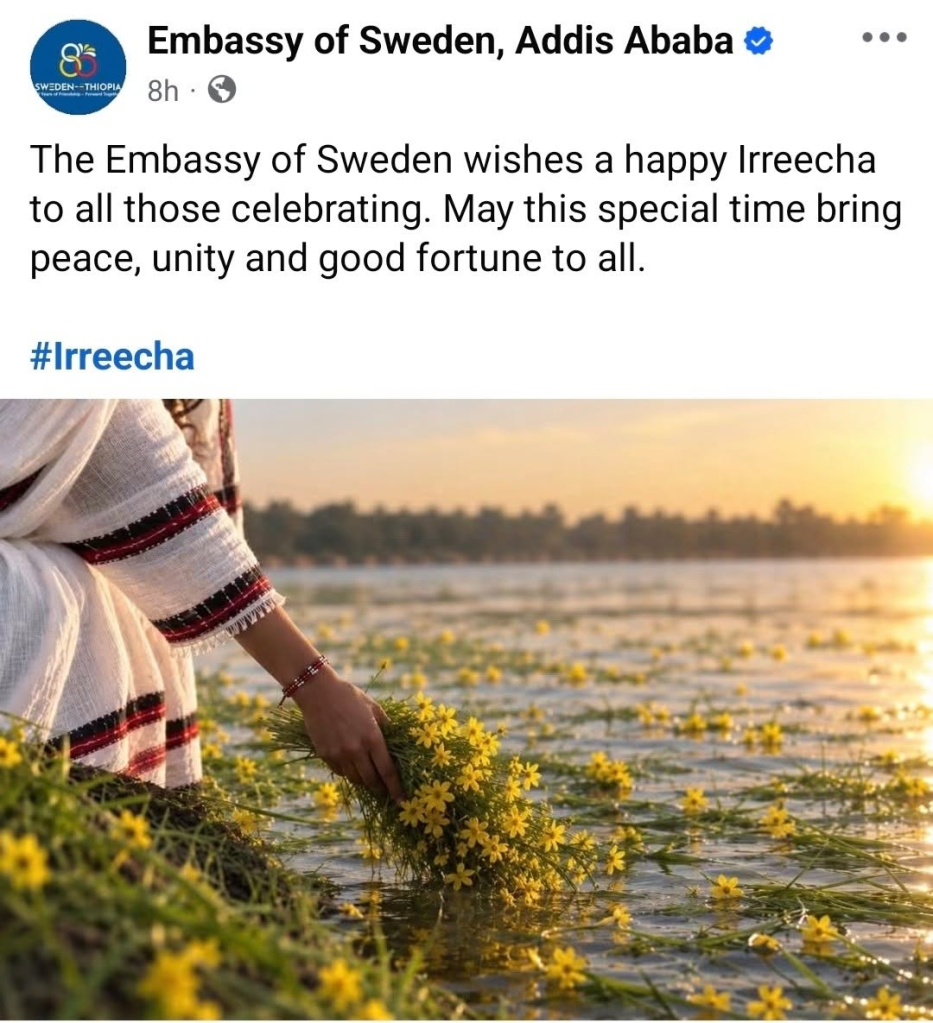
The Swedish Embassy conveyed its respects through a written message, expressing its hope that this time may bring peace, unity, and good fortune to all. Sweden’s message reflected the values that Irreechaa itself embodies — nagaa (peace), tokkummaa (unity), and carraa gaarii (good fortune).
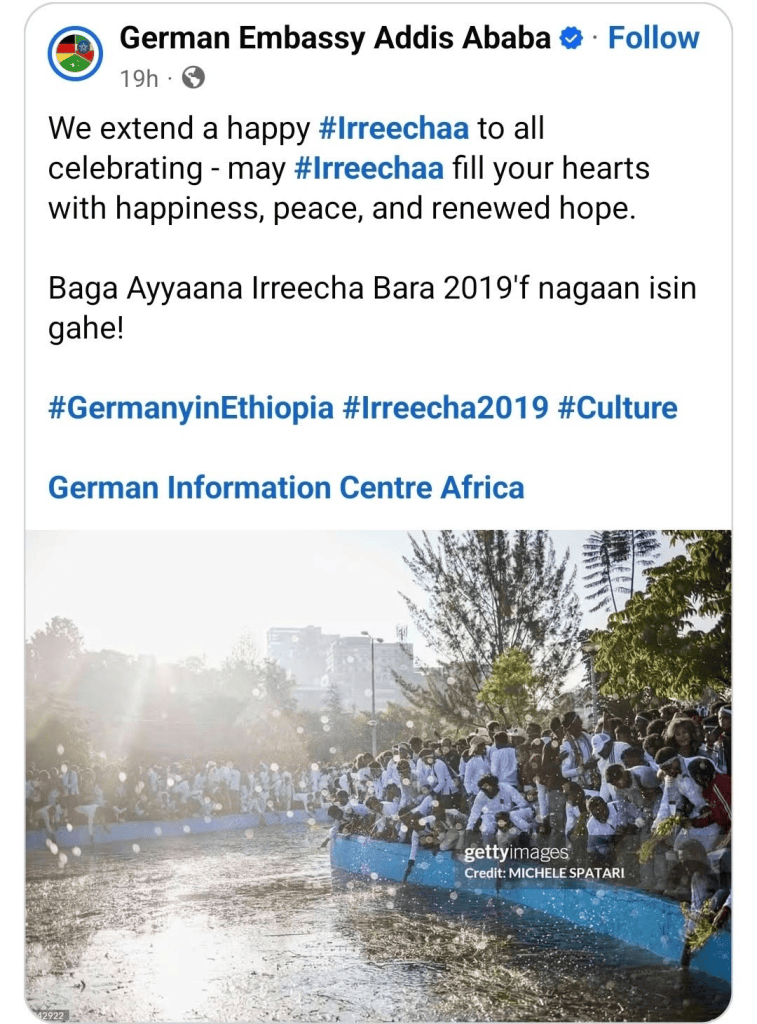
Germany: “May Irreechaa Fill Your Hearts”
The German Embassy shared a message of remarkable beauty:
“May #Irreechaa fill your hearts with happiness, peace, and renewed hope.”
The German message captured the essence of the festival — not merely a celebration of the past, but a renewal of hope for the future. Happiness, peace, and renewed hope — this is what Irreechaa offers, not only to the Oromo people but to all who encounter it.
Part Two: North American and Australian Embassies
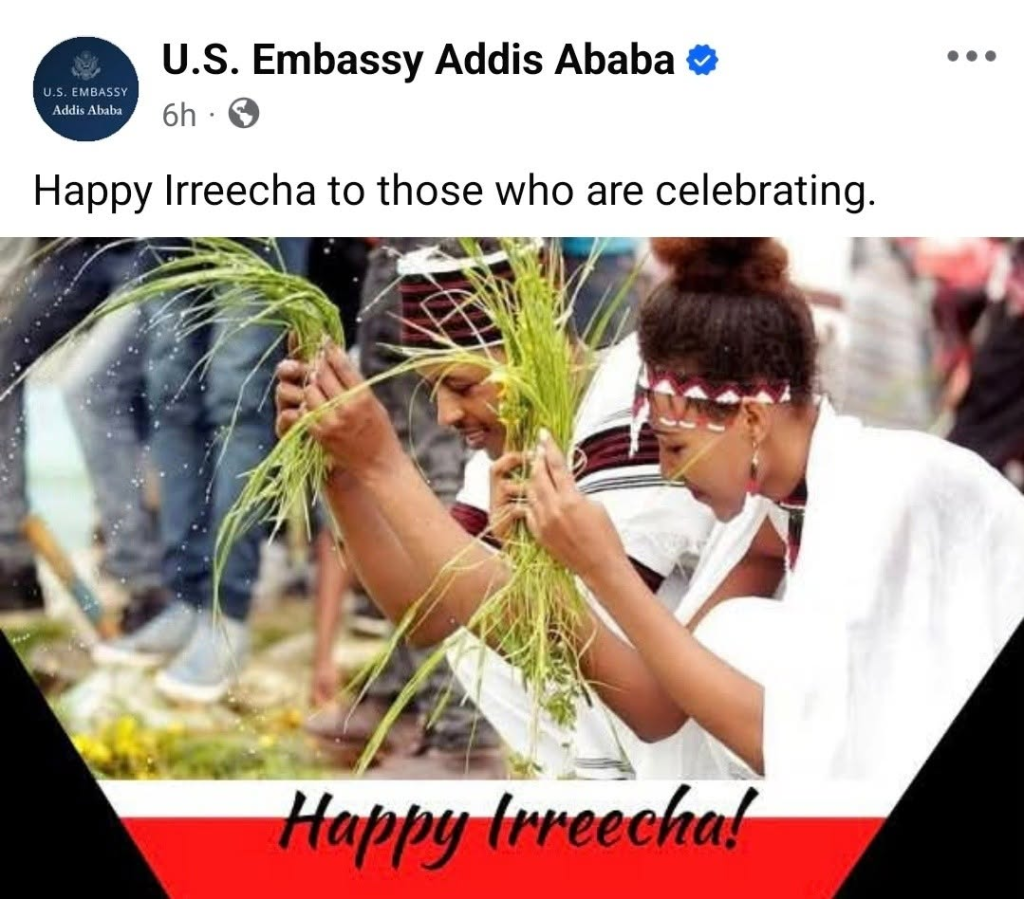
United States: “Happy Irreecha to Those Who Are Celebrating”
The United States Embassy extended its wishes to all citizens and communities honoring the festival:
“Happy Irreecha to those who are celebrating.”
The American message was inclusive and direct — acknowledging the festival and extending goodwill to all who participate. It is a recognition that Irreechaa belongs not only to the Oromo people but to all who value gratitude, community, and renewal.
Australian Embassy: A Warm Wish from the Southern Hemisphere
The Australian Embassy in Ethiopia shared its message on its social media page:
“The Australian Embassy, Ethiopia wishes a happy Irreechaa to all celebrating!”
Short, warm, and heartfelt — the Australian message joined the chorus of international voices honoring the festival. From the southern hemisphere, a wish of joy traveled north to the waters of Hora Arsadi.
Part Three: Asian Embassies
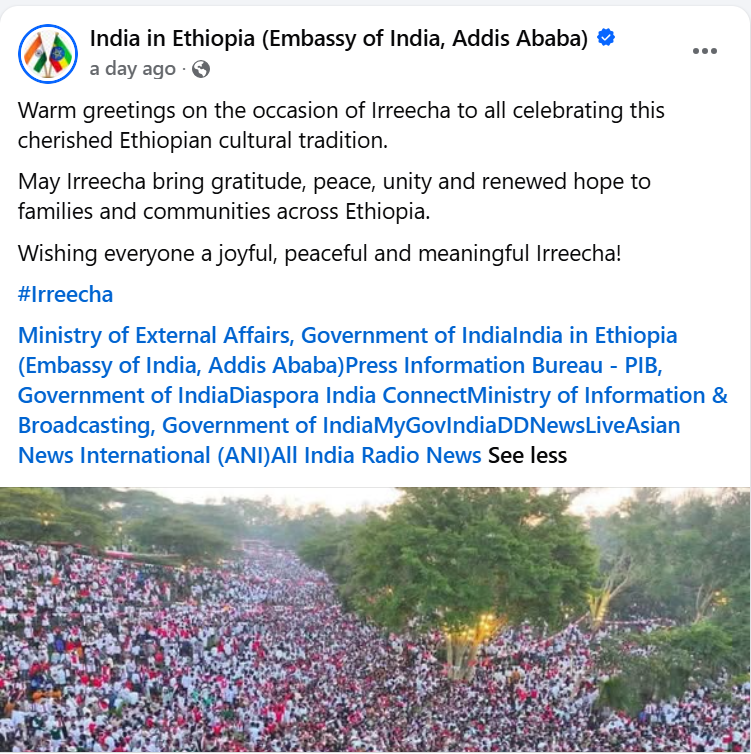
India: Honoring the Beautiful Culture of Ethiopia
The Embassy of India expressed its profound respect for Ethiopia’s beautiful culture, wishing that Irreechaa may bring gratitude, peace, unity, and new hope to all families and communities.
“Irreechaa bring gratitude, peace, unity, and new hope to all families and communities.”
India’s message demonstrated how much it values the culture and traditions of its neighbor — a recognition that transcends geography and speaks to the universal language of respect.
The Meaning of These Messages
What do these diplomatic messages tell us? Two profound truths emerge.
International Recognition: Irreechaa Has Crossed Borders
Irreechaa has now transcended national boundaries. It has reached the status of a great cultural and traditional festival honored by the world.
This is not a small thing. For a festival that was once suppressed, that was once forbidden, that was once celebrated in exile with songs of grief — to now receive official recognition and warm wishes from embassies around the world is a testament to the resilience of the Oromo people and the universal beauty of their traditions.
Irreechaa belongs to the Oromo people. But its message — gratitude, reconciliation, unity, peace — belongs to all humanity. And the world is beginning to recognize this.
The Message of Unity: Words That Repeat
In all the messages, words like peace, unity, gratitude, and new hope are repeated. This repetition confirms that the meaning of this festival is profound.
These are not random diplomatic formalities. They are the recognition of something real. When embassy after embassy, from different continents and different cultures, uses the same words — peace, unity, gratitude, hope — they are testifying to something they have seen and admired in Irreechaa.
Irreechaa is not just a festival of the Oromo people. It is a festival of values that the world needs. And the world is taking notice.
The Warmth of Recognition
There is something deeply moving about these messages. They are not required. No one compelled these embassies to send greetings. They did so because they wanted to — because they recognized something beautiful and wanted to honor it.
From France, speaking in Oromo. From Germany, wishing renewed hope. From India, honoring the culture of Ethiopia. From Australia, sending joy across continents.
These messages are more than diplomatic courtesy. They are a form of recognition — the acknowledgment that Irreechaa is a treasure, not just for the Oromo people, but for the world.
And for a people who have so often been marginalized, so often been told that their culture was lost, so often been forced to celebrate in exile — this recognition means everything.
A Festival Without Borders
The title of the original report captures it perfectly: “Aadaa Daangaa Hin Qabne” — Culture Without Borders.
Irreechaa has no borders. It cannot be contained within national boundaries. It cannot be limited to a single people or a single language. Its message — gratitude to the Creator, reconciliation with one another, unity as a people, peace as a way of life — speaks to something universal in the human heart.
And now the world is speaking back. From embassies on every continent, the message is coming: We see you. We honor you. We celebrate with you.
Your Turn: Share Your Thoughts
The original report ends with questions for the reader — and we extend them to you:
Which of these messages from the various embassies created the most special feeling in you? Which one impressed you most?
Where and how are you celebrating this year’s Irreechaa?
Share your thoughts with us. Share your stories. Share your joy.
Because Irreechaa is not just a festival to be observed. It is a festival to be lived. And when we share our experiences of it — with our neighbors, with our nation, with the world — we participate in the very unity that Irreechaa creates.
Irreechaa Without Borders
The festival has arrived. The embassies have spoken. The world has recognized.
Irreechaa is no longer a local celebration. It is a global testimony. It is a declaration that the Oromo people — their culture, their traditions, their values — are here to stay, and that what they offer the world is something the world desperately needs.
Gratitude. Reconciliation. Unity. Peace. Hope.
These are the gifts of Irreechaa. And this year, the world has said thank you.
Baga Ayyaana Irreechaa Geessan!
Happy Irreechaa to all who are celebrating!
Irreechaan nagaa, jaalalaa fi tokkummaa haa ta’u!
May this year’s Irreechaa be one of peace, love, and unity!
#Irreechaa #AadaaDaangaaHinQabne #CultureWithoutBorders #Irreechaa2026 #Oromia #Ethiopia #Diplomacy #GlobalRecognition #PeaceAndUnity
Source: Sofumer Media ·

Irreechaa: The Festival That Renews Humanity Itself
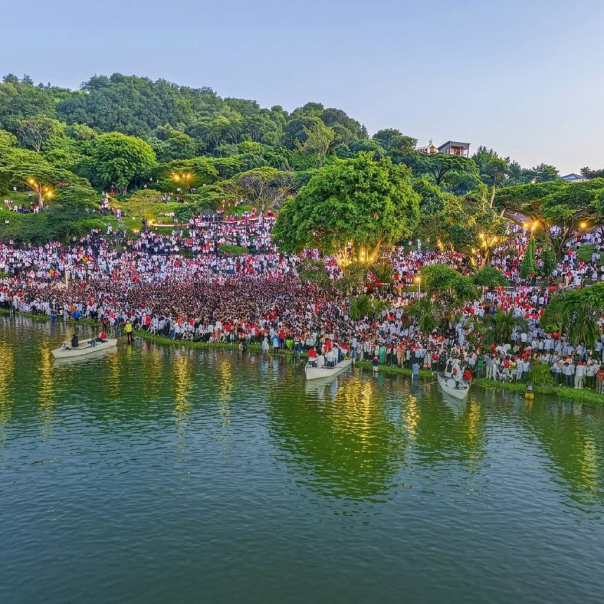
In the Oromo language, ten words capture what no single English phrase can hold: Irreechaa is empowering, reconciling, unifying, peace-bringing, restorative, improving, fulfilling, refining, completing, and renewing of humanity.
Beneath the sycamore trees, beside the sacred waters, a people gather not merely to celebrate — but to become whole again.
Ten Words, One Truth
There are moments when a single sentence carries the weight of an entire civilization’s wisdom. The Oromo people have such a sentence about Irreechaa:
“Irreechaan humneessaa, lachiisaa, marabeessaa, nageessaa, damboobsaa, fooyyessaa, fufsiisaa, fineessaa, guutessaa fi haaromsaa namummaa ti.”
Translated, it means: “Irreechaa is empowering, reconciling, unifying, peace-bringing, restorative, improving, fulfilling, refining, completing, and renewing of humanity.”
This is not poetry for its own sake. It is a theological statement, a philosophical declaration, and a psychological insight — all compressed into ten carefully chosen Oromo words. Each word describes not merely what Irreechaa does, but what it is. The festival is not a symbol of these things. It is the mechanism through which they happen.
To understand Irreechaa is to understand that humanity — fractured, exhausted, divided, grieving — can be regenerated. And the Oromo people have been practicing that regeneration for thousands of years.
Humneessaa: The Empowerment
Irreechaa begins with empowerment — humneessaa.
Before the festival, participants are asked to reconcile with themselves and with others. They set aside grudges. They release resentment. This is not weakness. It is the most difficult form of strength: the strength to lay down your weapons, to open your hands, to approach the sacred water without the armor of grievance.
The Oromo understand something that modern psychology is only now catching up to: unresolved conflict is a form of imprisonment. It binds the spirit. It drains the soul. To forgive — to seek araara — is to be liberated.
At Irreechaa, the person who has reconciled is not just morally superior. They are empowered. They have reclaimed energy that was being spent on resentment. They stand at the water’s edge lighter, freer, more capable of gratitude. This is the first regeneration: the empowerment that comes from letting go.
Lachiisaa: The Reconciliation
The second word is lachiisaa — reconciliation.
This is Irreechaa’s beating heart. Without araara, the festival cannot proceed. The tradition is explicit: you cannot participate in Irreechaa while holding a grudge. The water will not receive your thanks if your heart is still at war.
In a world that profits from division — where political parties, media ecosystems, and social platforms thrive on grievance — this requirement is revolutionary. Irreechaa says: Before you celebrate, reconcile. Before you give thanks, make peace. Before you approach the sacred, heal the human relationships that have been broken.
The Oromo do not pretend that reconciliation is easy. They do not suggest that pain should be ignored or injustice forgotten. They simply insist that the work of peace must be done — deliberately, consciously, before the community gathers. This is not naive optimism. It is disciplined spiritual practice.
At Hora Arsadi, at Hora Finfinne, at watersides across Oromia, millions of people perform this practice every year. They come as individuals carrying private wounds. They leave as a community bound by shared peace.
Marabeessaa: The Unification
Marabeessaa — unification. Gathering. Coming together as one.
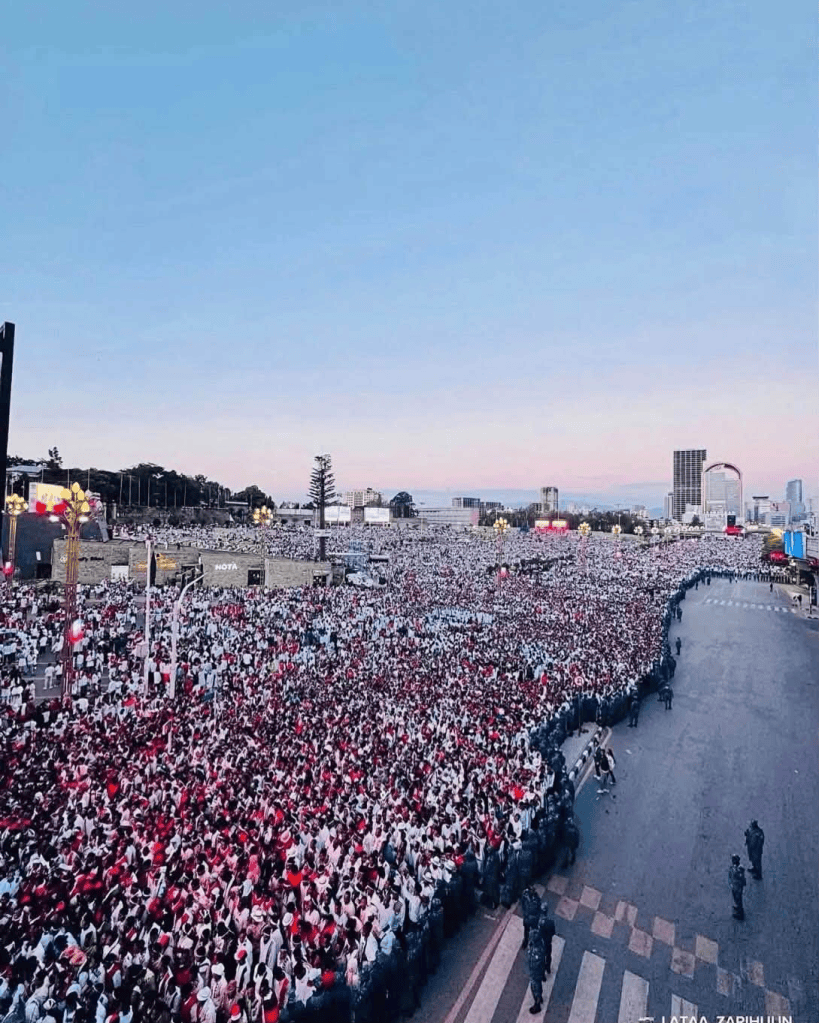
Irreechaa is the largest gathering of Oromo people in the world. Millions arrive from across Ethiopia, from the diaspora, from every walk of life. Farmers and professors. Mothers and students. Elders and children. Muslims and Christians and practitioners of the old faith. They dress in white — a sea of unity that visually overwhelms the eye.
But the unification is not mere numbers. It is spiritual. It is the experience of dissolving the boundaries that separate human beings from one another. For one day, the Oromo people are not many. They are one.
This is what the Oromo call tokkummaa — unity — and it is not an abstract ideal. It is a lived experience at the water’s edge. The person standing beside you is not a stranger. They are your brother. They are your sister. They are yourself, reflected in the sacred waters.
In a nation and a world where ethnic, religious, and political identities so often divide, Irreechaa offers a different possibility: a unity that does not erase difference but transcends it. Everyone is welcome. Everyone is included. Everyone belongs.
Nageessaa: The Peace-Bringing
Nageessaa — peace-bringing.
The Oromo greeting for the festival is “Baga Irreechaa nagaan geessan” — May the Irreechaa arrive in peace. This is not a casual wish. It is a declaration of intent. Peace is not something that happens to you. It is something you arrive at, together, at the water, with your hands open and your grudges surrendered.
Irreechaa does not merely celebrate peace. It produces it. The festival is a peace-making technology, an ancient ritual that creates the conditions for harmony between individuals, communities, and the divine.
Consider what happens when millions of people gather in a single place and commit, together, to reconciliation. Consider what happens when a nation’s largest cultural event is built on the requirement that participants set aside their conflicts. Consider what happens when the sacred water receives only the prayers of those who have made peace with their neighbors.
Peace is not the absence of conflict. It is the presence of araara. And Irreechaa makes that presence visible, tangible, and real.
Damboobsaa: The Restoration
Damboobsaa — restorative. Renewing. Returning what was lost.
The rainy season in Oromia is long and hard. Rivers swell. Roads wash out. Crops are destroyed. Families are separated. The land itself seems to be in mourning.
Then the rains end. The sun returns. The harvest begins. And the people gather at the water to give thanks.
Irreechaa is the celebration after the suffering. It is the moment when the community pauses and says: We made it through. We survived. We are still here.
This is restoration — not the erasure of hardship, but the transformation of hardship into gratitude. The floods came, and we endured. The darkness came, and we waited. The sun returned, and we give thanks.
The Oromo understanding of restoration is deeply wise. It does not pretend that pain did not happen. It does not rush past grief. It simply insists that pain and grief are not the end of the story. The water is still there. The grass is still green. The community is still gathered. And the harvest, despite everything, has come.
Fooyyessaa: The Improvement
Fooyyessaa — improving. Making better.
Irreechaa is not content with survival. It seeks flourishing. The festival is not merely about maintaining what exists but about becoming more than you were.
This is the Oromo concept of fooyya’uu — progress, development, growth. The festival is connected to the harvest, to the productivity of the land, to the prosperity of the community. It celebrates not just what has been given but what has been built.
But the improvement Irreechaa seeks is not only material. It is moral, spiritual, and communal. The person who participates in Irreechaa is not the same person who entered the festival. They have been improved — refined by the discipline of reconciliation, elevated by the experience of unity, deepened by the practice of gratitude.
Irreechaa makes people better. Not through lectures or commandments, but through participation in a ritual that embodies the values it teaches.
Fufsiisaa: The Fulfillment
Fufsiisaa — fulfilling. Completing what was promised. Making whole.
There is a deep longing in the human heart for completion — for the sense that life is not fragmented, that it has meaning, that it is going somewhere. Irreechaa answers that longing.
The festival marks the fulfillment of a cycle. The rains came, and the harvest followed. The prayers were offered, and the blessings arrived. The year turns, and the community moves forward, not into emptiness, but into the next season of hope.
But fufsiisaa is more than seasonal. It is existential. At the water’s edge, surrounded by millions of people who share your language, your faith, your hope, you experience a sense of completeness that modern life so often denies. You are not alone. You are not meaningless. You are part of something larger than yourself — a people, a tradition, a story that stretches back thousands of years and forward into an unknown but blessed future.
This is fulfillment: the knowledge that you are exactly where you are supposed to be.
Fineessaa: The Refinement
Fineessaa — refining. Purifying. Making fine.
Water is the medium of purification in Oromo cosmology. At Irreechaa, participants dip sacred grass into the lake or river and sprinkle the water upon themselves and others. The Kormoomsaa — the blessing of the young men — is a ritual sprinkling that cleanses and consecrates.
This is not merely symbolic. The Oromo believe that water is the source of purity and the foundation of creation. To be sprinkled with sacred water is to be washed — not just physically, but spiritually, morally, and communally.
The refinement Irreechaa offers is the refinement of the human character. At the water’s edge, the layers of resentment, pride, and grievance are stripped away. What remains is the essential human being — vulnerable, grateful, connected, at peace.
The festival does not make people perfect. It makes them fine — purified of the things that separate them from themselves, from each other, and from the divine.
Guutessaa: The Completion
Guutessaa — completing. Making full. Filling up what was empty.
There is a difference between fulfillment and completion. Fulfillment is the experience of meaning. Completion is the achievement of wholeness. Irreechaa offers both.
The festival completes the cycle of the year. It completes the work of reconciliation. It completes the process of purification. It completes the community — bringing together all its members, from the youngest child to the oldest elder, from the nearest village to the farthest diaspora.
At Irreechaa, nothing is left out. No one is excluded. The festival is guutuu — complete, full, entire. The sea of white garments is not just a visual image. It is a theological statement: this is what wholeness looks like. This is what humanity becomes when it gathers in gratitude and peace.
The Oromo understanding of completion is radical. It insists that human beings are not complete as individuals. We are complete only in community. We are complete only in relationship with the divine. We are complete only when we gather at the water, together, with hands open and hearts reconciled.
Haaromsaa Namummaa: The Renewal of Humanity
And so we arrive at the final and greatest word: haaromsaa namummaa — the renewal of humanity.
This is the culmination of all the others. Empowerment leads to reconciliation. Reconciliation leads to unity. Unity brings peace. Peace enables restoration. Restoration opens the way for improvement. Improvement leads to fulfillment. Fulfillment demands refinement. Refinement produces completion. And completion is renewal.
Irreechaa is not just a festival. It is a process — a spiritual technology that takes human beings as they are and transforms them into what they can become. It takes fractured people and makes them whole. It takes divided communities and makes them one. It takes a broken world and makes it new.
This is what the Oromo people have known for thousands of years. This is what they celebrate at the water’s edge every year. This is what they offer to Ethiopia, to Africa, and to the world.
Humanity can be renewed. Not through politics or economics or technology alone, but through the ancient practices of reconciliation, gratitude, purification, and community. Not through grand ideological projects, but through the simple, profound act of gathering at the water with your people, setting down your grudges, and giving thanks.
Irreechaa is the renewal of humanity. And it happens every year, at the water’s edge, one person at a time.
Baga Irreechaa Nagaan Geessan
The Oromo greeting for the festival says it all:
Baga Irreechaa nagaan geessan.
May the Irreechaa arrive in peace.
May the festival be empowering, reconciling, unifying, peace-bringing, restorative, improving, fulfilling, refining, completing, and renewing of humanity.
May the waters receive your gratitude.
May the grass carry your prayers.
May the nation, like the earth after the rains, emerge greener and stronger than before.
And may you — and all of us — be renewed.
#Irreechaa #Oromia #Ethiopia #RenewalOfHumanity #PeaceAndReconciliation #Thanksgiving #HaaromsaaNamummaa

Irreechaa celebration in 1959: From Sacred Waters to a Global Stage
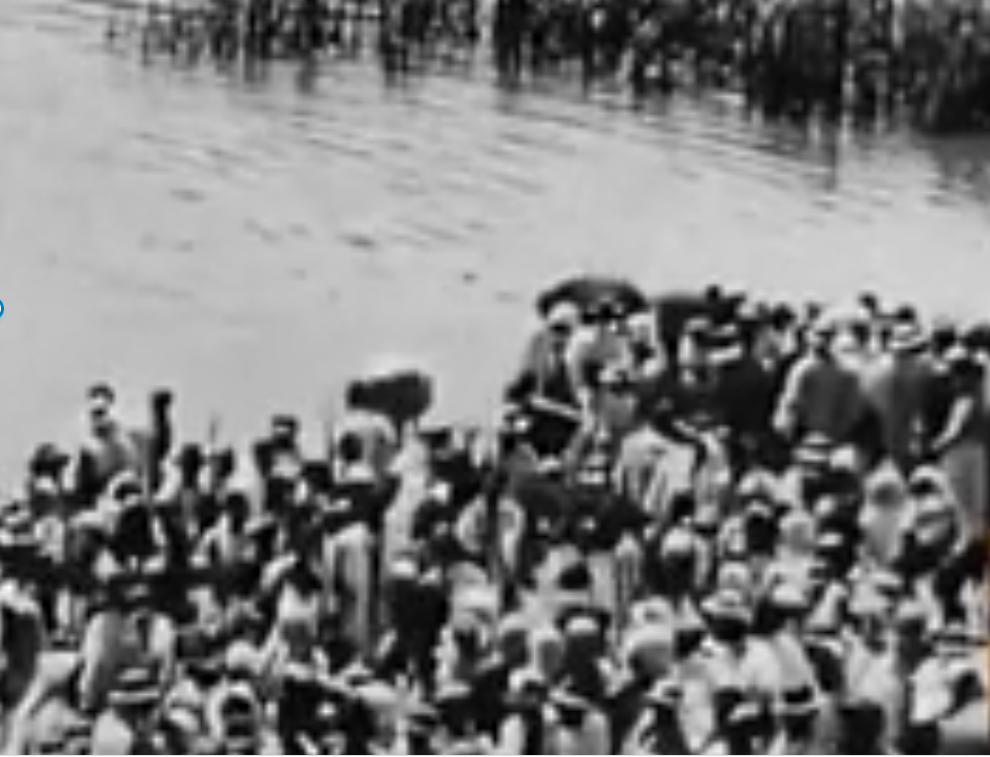
By Maatii Sabaa
The green grass that floated on the sacred waters of Hora Arsadi this week carried more than prayers for the harvest. It carried the weight of a people’s history — and a future still being written.
As the spring sun broke through the receding clouds of Ganna, millions of Oromo people gathered across Ethiopia and the world to celebrate Irreechaa celebration in 1959, the ancient thanksgiving festival marking the transition from the dark rainy season to the bright season of Birraa. From the shores of Lake Harsadi in Bishoftu to community parks in Melbourne and Amsterdam, the festival unfolded as both a spiritual ritual and a declaration of cultural resilience.
The Festival of Light Over Darkness
Irreechaa — sometimes spelled Irreechaa or Irrecha — is the Oromo thanksgiving to Waaqa (God) for protection through the rainy season and for the blessings of the year ahead. The festival is deeply rooted in the Gadaa system, the traditional Oromo governance structure recognized by UNESCO as an Intangible Cultural Heritage of Humanity.
The word itself carries profound meaning. Irreechaa is described as a “sign of reciprocating Waaqaa in the form of providing praise for what they got in the past, and is also a forum of prayer for the future”. It is not merely a celebration of a season’s turn — it is the moral heartbeat of a people.
Two Sacred Days, One Unifying Spirit
This year’s observance followed the traditional two-day structure set by the union of Oromo Abbaa Gadaa leaders:
Hora Finfinne: Reclaiming the Heart of the Capital
On Saturday, October 3, 2026, the celebration began at Hora Finfinne in Addis Ababa, marking a significant historical moment. For decades, public celebrations of Irreechaa were banned under successive regimes, and the Oromo people were denied the right to give thanks at their own sacred sites. The site now known as Finfinne was originally named for this very lake — a sacred geography that the construction of the capital attempted to overwrite.
Celebrating Irreechaa at Hora Finfinne is, in the words of one observer, “not just a cultural act; it is a powerful reclamation of space, identity, and dignity”.
Hora Arsadi: The World’s Stage
On Sunday, October 4, the festival moved to its grandest location: Hora Arsadi in Bishoftu, approximately 45 kilometers south of Finfinne. This crater lake has been the central site of Irreechaa for generations, drawing millions of participants from across Oromia and the global diaspora.
The scale of the gathering is staggering. In recent years, international media have broadcast images of hundreds of thousands — sometimes millions — of people dressed in traditional white attire moving with purpose and joy toward the water. It is recognized as one of the largest annual human gatherings on the African continent.
The Rituals of Renewal
At the heart of Irreechaa lies a simple yet profound act: the dipping of fresh green grass and yellow daisies into sacred waters.
Participants carry bundles of freshly cut grass — symbols of fertility, life, and renewal — to the lakeshore. At the water’s edge, they dip the grass into the lake, sprinkle themselves and those around them, and leave the offerings in the water. The shallows fill with green, a visible testament to collective prayer.
The grass itself carries deep symbolism. Green represents life and vitality; yellow daisies represent the joy of survival through the hardship of the rains. Water represents purification — the washing away of the past year’s difficulties.
Traditional songs, known as sirba, echo across the valley. Elders lead prayers in Afaan Oromoo. Women, adorned in traditional caaccuu beads and cultural dress, walk in procession. Youth sprinkle water as a gesture of blessing.
Reconciliation as Moral Requirement
One of the most striking aspects of Irreechaa is its demand for araaraa — reconciliation.
“Critical to Irreechaa is the requirement of reconciliation,” wrote one commentator observing the diaspora celebrations. “A person carrying a grudge, a dispute, or an unresolved conflict is not permitted to participate fully in the festival”.
This is not merely social etiquette. It is a profound statement of the Oromo moral order: gratitude and grievance cannot coexist. One cannot approach the sacred with a heavy heart. One cannot give thanks while holding anger. The festival enforces a communal ethic that prioritizes harmony over division.
The social roles of Irreechaa extend beyond the spiritual. The festival plays a “pivotal role in strengthening the unity of the people, promoting and exchanging cultures among the society, forcing elders to keep peace in the community”. Social rules are confirmed on the Irreechaa stage, and those who engage in evil are blamed and cursed while those who do good are appreciated and accepted.
A Nation in Transition
This year’s Irreechaa unfolded against a backdrop of significant national developments.
In Addis Ababa, the city has undergone dramatic transformation through urban corridor development projects. Expanded pedestrian and vehicle roads now welcome millions to the sacred sites, and Hora Arsadi Lake has been enhanced to make it more comfortable and accessible for festival-goers.
Genet Mekonnen, Head of the Bishoftu City Culture and Tourism Office, emphasized that Irreechaa “stands as a core symbol of brotherhood, peace, unity, freedom, and equality.” She noted that the festival’s inclusion of various Ethiopian nations, nationalities, and peoples — all participating in vibrant traditional attire — is “crucial for fostering people-to-people connection, strengthening solidarity, and enhancing a deep sense of national togetherness”.
The city’s goal, she added, is to become a major tourism destination, with comprehensive development efforts underway to accommodate the influx of visitors for this cultural landmark.
Beyond Borders: Irreechaa in the Diaspora
The Oromo diaspora ensured that Irreechaa celebration in 1959 was celebrated far beyond the Horn of Africa.
In Melbourne, Australia, hundreds gathered at the Botanical Gardens on September 27, 2026. Dressed in beautiful cultural attire, community members carried fresh green grass and flowers to the water’s edge, dipping them in the traditional manner — giving thanks that they had passed through the past year safely.
“The sight of families in their finest cultural dress, the sound of traditional songs, and the shared prayers created an atmosphere of joy and reverence that echoed celebrations back home in Oromia,” reported one attendee.
In Amsterdam, the Oromo community of the Netherlands gathered at Gaasperplas. Women in traditional dresses carried fresh green grass and yellow daisies; elders led prayers in Afaan Oromoo; and the sound of faaruu — traditional songs of gratitude — echoed across the park grounds.
For the diaspora, Irreechaa serves as a vital cultural anchor. “Irreechaa is a reminder that the Oromo system is portable. It travels across oceans. It survives in new climates and new languages. It does not require the soil of Oromia to flourish — only the hearts of Oromo people who refuse to forget”.
The Enduring Symbol
As the celebrations drew to a close and the green grass settled on the waters of Hora Arsadi, the meaning of Irreechaa celebration in 1959 resonated beyond the rituals.
The festival represents the “triumph of light over darkness” — not merely the seasonal transition from rainy Ganna to bright Birraa, but the enduring resilience of a people who have preserved their traditions through centuries of suppression.
The words of the Abbaa Gadaa leaders framed this year’s observance around national consensus — a theme that echoed across the lakeshores and diaspora gatherings alike.
For the Oromo people, Irreechaa is more than a festival. It is an expression of identity, a bond of unity, and a living link between generations. It is the moment when the past and present meet — where children learn the songs their grandparents sang, where elders see their traditions carried forward, and where a people remember, together, who they are.
As one celebrant in Addis Ababa put it: “What makes this year’s Irreechaa festival special is the completion of the Grand Ethiopian Renaissance Dam and the various development projects across the country. The ceremony in Addis Ababa city with wide roads and shining streets makes it special”.
But beyond the infrastructure and the politics, the heart of Irreechaa remains unchanged: a people giving thanks to Waaqa, carrying green grass to sacred waters, and reaffirming the bonds that have held them together for millennia.
Irreechi irree keenya — Irreechaa is our unity.
Irreechaa celebration in 1959
October 3-4, 2026
Finfinne & Bishoftu

Multicultural and Multifaith Victoria Officially Launches, Ushering in a New Era of Community Engagement
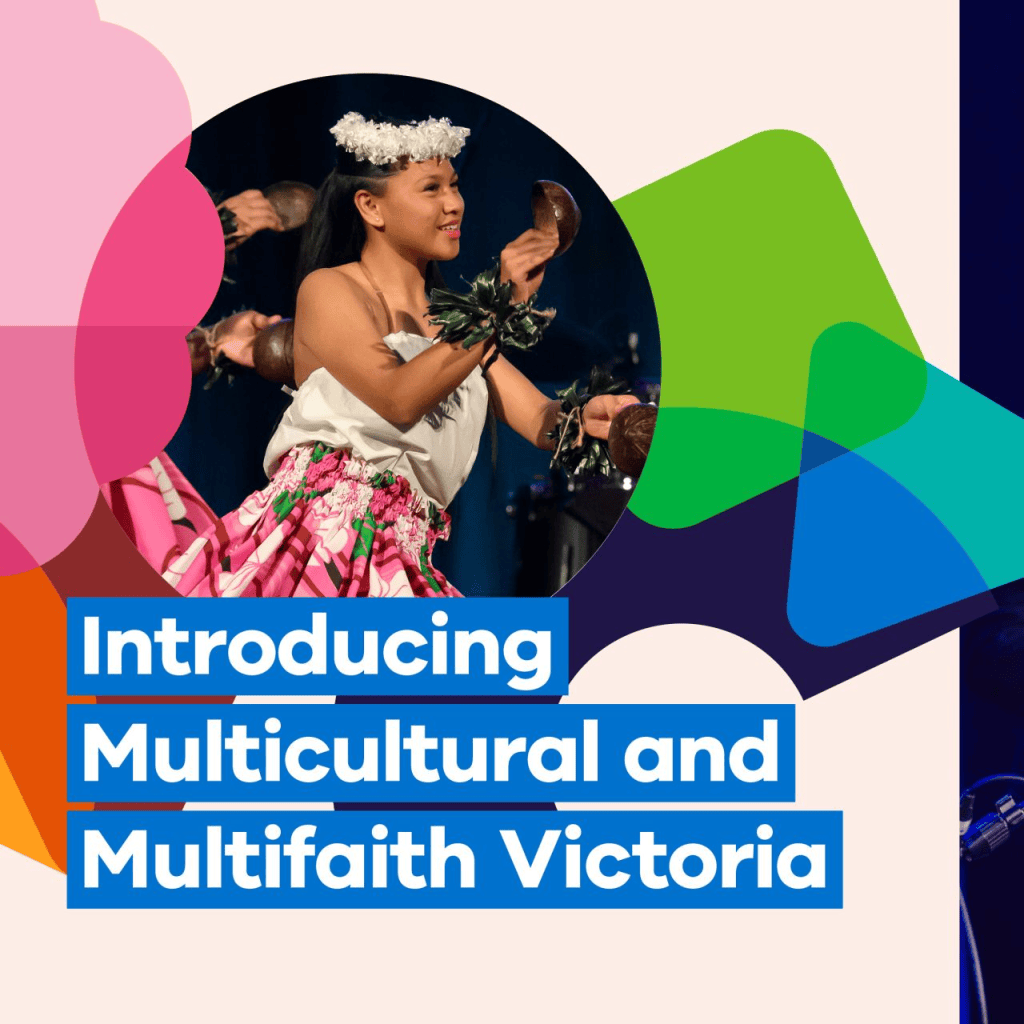
Melbourne, Victoria — Victoria has entered a new chapter in how it engages with its diverse communities, with the official launch of Multicultural and Multifaith Victoria — a body dedicated to ensuring that communities across the state are heard, engaged, and represented in the decisions that shape their lives.
Announcing the launch, the organisation declared: “The future of multicultural and multifaith engagement in Victoria starts today.”
A New Voice for Victoria’s Diverse Communities
The launch marks a significant step forward in the state’s approach to multicultural and multifaith affairs, creating fresh opportunities for communities to have a genuine say in government decision-making.
In its founding statement, Multicultural and Multifaith Victoria outlined its core mission: to bring people closer to government, strengthen participation, build connections, and help create a more inclusive future for all Victorians.
“We look forward to working alongside communities across Victoria, bringing people closer to government, strengthening participation, building connections, and helping create a more inclusive future for all,” the organisation said.
Bringing People Closer to Government
At the heart of the new body’s vision is a commitment to closing the distance between communities and the institutions that serve them. By fostering stronger participation and meaningful engagement, Multicultural and Multifaith Victoria aims to ensure that the voices of Victoria’s culturally and religiously diverse communities are not only heard but actively reflected in policy and decision-making.
The organisation has signalled its intention to work collaboratively with communities across the state — building partnerships, nurturing connections, and championing an inclusive future that benefits all Victorians.
A Digital Transition
As part of the launch, Multicultural and Multifaith Victoria has announced that its LinkedIn presence will shortly be updated to reflect the new name and identity, ensuring its digital platforms align with its renewed mandate.
Community members, stakeholders, and partners are encouraged to follow the organisation’s journey and stay informed about upcoming initiatives.
More Information
For further details about Multicultural and Multifaith Victoria and its work, visit the official website at https://www.multicultural.vic.gov.au/
The launch of Multicultural and Multifaith Victoria represents a renewed commitment by the Victorian Government to fostering an inclusive, connected, and representative society — one where every community has a place at the table.

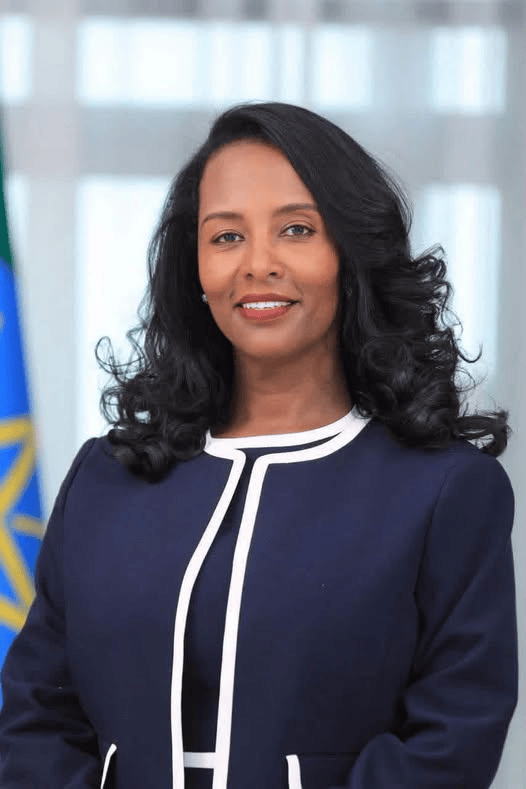
Adanech Abiebie Appointed Mayor of Addis Ababa: A New Chapter for Ethiopia’s Capital
Congratulations pour in as a seasoned leader takes the helm of Africa’s diplomatic hub
(Addis Ababa, 30 September 2026)-In a moment that has captured the attention and hopes of millions, Mrs. Adanech Abiebie has been appointed Mayor of Addis Ababa — a city that stands as both the political heart of Ethiopia and the diplomatic capital of Africa.
The announcement has sparked an outpouring of congratulations and goodwill from citizens, colleagues, and observers across the nation and beyond.
A Leader for a Rising City
Addis Ababa is not just any city. It is home to the African Union headquarters, a growing hub for international diplomacy, and a metropolis undergoing rapid transformation. Its mayor carries a responsibility that extends far beyond municipal boundaries — shaping the experience of residents, visitors, and the global community alike.
With her appointment, Adanech Abiebie steps into a role that demands vision, resilience, and an unwavering commitment to public service. Those who have followed her career describe her as a leader who understands the complexities of urban governance and the aspirations of everyday Ethiopians.
A Wave of Congratulations
The response to her appointment has been swift and heartfelt.
“Congratulations! May you have a blessed term of service, outstanding success, and a fruitful journey ahead!”
These words, echoed across social media and community gatherings, reflect a deep well of hope. For many, this is not simply a political appointment — it is an opportunity to see leadership that listens, delivers, and inspires.
The Weight of the Moment
Addis Ababa faces no shortage of challenges: rapid urbanization, infrastructure demands, housing needs, and the task of ensuring that development benefits all residents, not just a few. Yet within these challenges lie extraordinary opportunities.
The city is emerging as a center of innovation, commerce, and culture. Its streets pulse with the energy of a young population eager for progress. Its markets, universities, and cultural institutions tell a story of a city on the move.
The question that now rests before the new mayor is simple yet profound: How can Addis Ababa become a city that works for everyone?
A Prayer and a Promise
For those who offered their congratulations, the sentiment was clear: this is a moment for prayer as much as celebration.
“May God guide your steps, grant you wisdom, and bless your service to our beloved city and nation.”
Such words carry the weight of a community that understands the gravity of leadership. They are not merely formalities but genuine expressions of hope — that this new chapter will bring not only progress but also fairness, compassion, and lasting change.
Looking Ahead
As Adanech Abiebie takes office, the eyes of the nation — and indeed the continent — are upon her. The road ahead is long, and the expectations are high. But if the enthusiasm surrounding her appointment is any indication, she does not walk it alone.
A city is not built by one leader. It is built by a people united in purpose. And in this moment, there is a palpable sense that Addis Ababa is ready to rise — together.
Congratulations, Mayor Adanech Abiebie. May your term be marked by achievement, may your leadership be a blessing to all, and may the city you serve flourish in the years to come.

Ethiopia Launches E-Passport Service at Its Embassy in Canberra
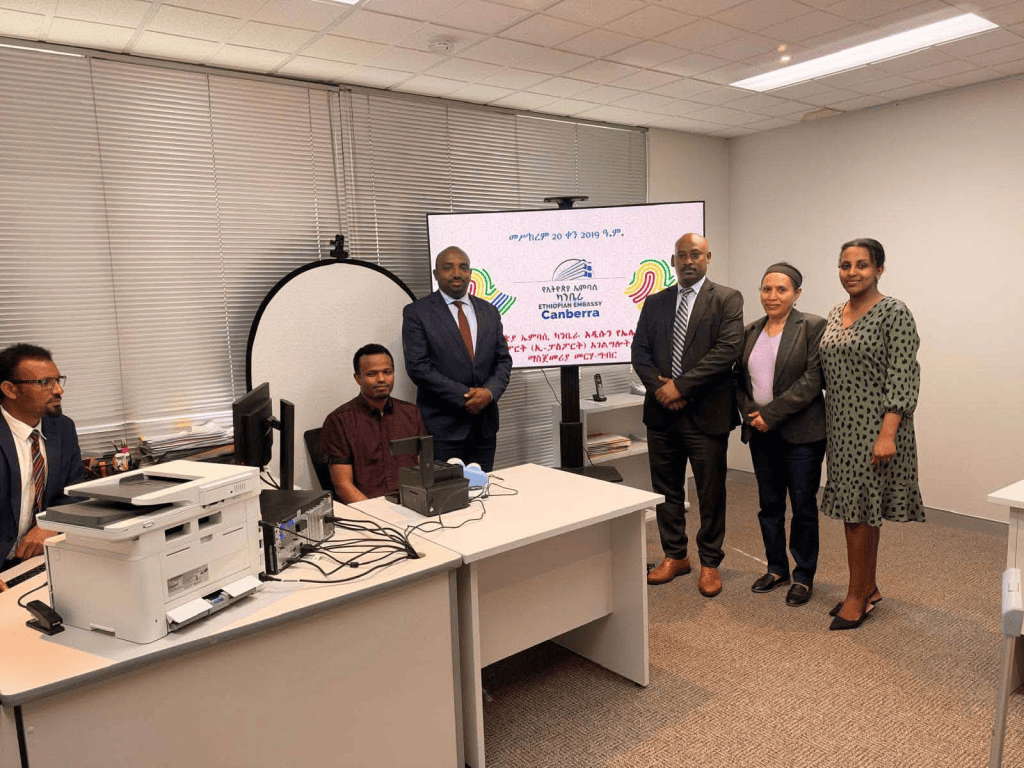
A new era of consular service begins as Ethiopian citizens in Australia gain access to biometric passport processing closer to home.
(CANBERRA, 30 September 2026)-The Embassy of the Federal Democratic Republic of Ethiopia in Canberra has officially launched its E-Passport service, marking a significant milestone in the country’s efforts to modernize consular services and better serve its citizens abroad.
The inauguration ceremony took place today, September 20, 2019 E.C. (Ethiopian Calendar), with Mr. Yalalet Getachew, the mission’s Chargé d’Affaires, officially opening the service to the public.
Meeting International Standards
The new electronic passport is designed to comply with the standards set by the International Civil Aviation Organization (ICAO). This compliance ensures that Ethiopian travelers benefit from enhanced service at international airports worldwide, reducing the inconveniences that have long plagued citizens traveling with older document formats.
The E-Passport represents a leap forward in both security and efficiency, aligning Ethiopia with global best practices in travel documentation.
A Breakthrough for Citizens Abroad
Perhaps the most transformative aspect of this development is what it means for Ethiopians living in Australia and the surrounding region. Previously, the biometric data collection service — a mandatory step in the passport application process — was only available at the headquarters of the Immigration and Citizenship Service in Addis Ababa.
This meant that citizens abroad faced the burdensome prospect of traveling back to Ethiopia simply to complete a procedural requirement.
Now, with the service available at the embassy level, citizens can:
- Submit their passport applications online from the comfort of their current location
- Provide their biometric data at the embassy in Canberra
- Avoid the expense and hardship of international travel solely for administrative purposes
This shift represents a fundamental change in how the Ethiopian government approaches diaspora services — moving from a centralized model to one that meets citizens where they are.
Expanding Access Across Australia
The embassy has indicated that this is only the beginning. In its announcement, the mission stated that additional information regarding the service will be shared in due course, and that preparations are already underway to extend the service to other cities where Ethiopian citizens reside.
This commitment to reaching communities beyond the capital signals a broader strategy to make consular services more accessible and responsive to the needs of the Ethiopian diaspora across the continent.
A Step Forward in Diplomacy
The launch of the E-Passport service in Canberra is more than an administrative upgrade — it is a statement about the relationship between Ethiopia and its citizens abroad. By investing in accessible, modern consular services, the government is acknowledging the importance of its diaspora and the role they play in the nation’s global presence.
For Ethiopians in Australia, this development brings not only practical benefits but also a sense of connection and recognition. The distance between home and abroad just became a little shorter.
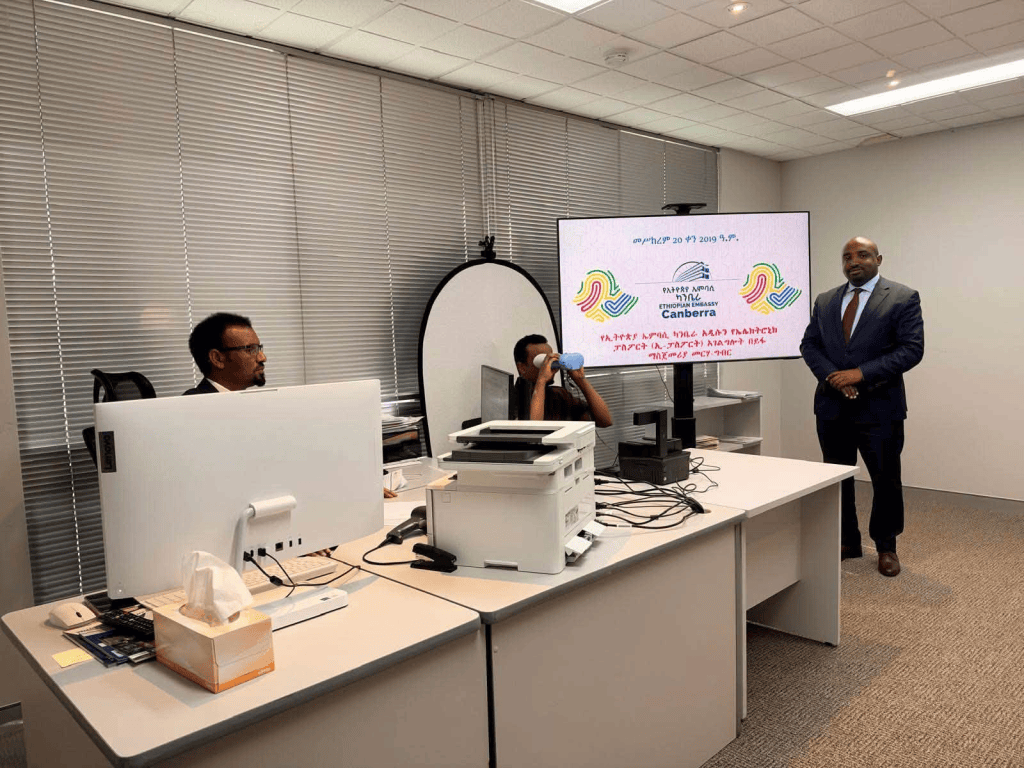
For more information about the E-Passport service, citizens are encouraged to follow the embassy’s official channels for updates.
#Ethiopia #EPassport #Canberra #Diplomacy #EthiopianDiaspora #ConsularServices

Ethiopia’s Embassy e-Passport Rollout: A New Era for Citizens Abroad
The launch of e-passport services at Ethiopian embassies marks a historic shift in how the diaspora connects with home — faster, safer, and closer than ever
CANBERRA— For millions of Ethiopians living abroad, a trip to the embassy has long meant queues, paperwork, and uncertainty. That era is ending.
This week, Ethiopia’s Immigration and Citizenship Service (ICS) officially launched e-passport services at the nation’s embassies, extending the country’s biometric passport revolution to its citizens overseas. The initiative, announced under the banner #ICSEthiopia #ePassport, represents the latest phase of a sweeping modernization effort that began with the domestic rollout in early 2025.
For a diaspora that sends home billions in remittances and serves as Ethiopia’s most visible global ambassadors, the message is clear: the distance between home and abroad just got shorter.
From Addis to the World
The journey to this moment began on February 21, 2025, when Ethiopia unveiled its first-ever electronic passport at a ceremony at the Science Museum in Addis Ababa. President Taye Atske Selassie attended, receiving one of the first copies as senior government officials, diplomats, and international partners looked on .
The new passport was not merely an upgrade — it was a statement. Produced locally through a joint venture between the Ethiopian government and Japanese technology firm Toppan Security, the e-passport embedded biometric data including fingerprints and facial images, employed advanced encryption, and met the highest international security standards .
ICS Director General Selamawit Dawit called it a “game changer” at the time. “With improved security, faster processing, and internationally recognized standards, this passport will significantly enhance the travel experience for Ethiopians while strengthening our global recognition and border control” .
By August 2026, the service was ready to cross borders.
The Embassy Rollout: What It Means
The global expansion relies on a newly designed digital platform that allows overseas Ethiopians to handle passport applications, renewals, and administrative consular processes directly from their host countries. Public Relations Director Ambo Mekassa explained that the platform is engineered to eliminate geographical hurdles and remove the long-standing requirement for citizens abroad to travel back to Ethiopia for basic documentation .
For the diaspora, the implications are profound:
- New passport issuance can now be initiated from abroad
- Renewals and replacements for lost or damaged passports are available through embassies
- Corrections and updates to existing passports can be processed without returning home
The system builds on domestic reforms that already decentralized passport services across Ethiopia, expanding service centers from 12 to 23 locations nationwide .
A Passport That Tells Ethiopia’s Story
What sets Ethiopia’s e-passport apart is not only its technology but its artistry. The document earned international acclaim in 2026, receiving the prestigious Red Dot Award for Brands and Communication — a recognition rarely bestowed on government travel documents.
The award cited the passport’s “robust security features, advanced technological integration, and its ability to securely store comprehensive user identification data.” But it was the visual design — intricate depictions of Ethiopia’s historical landmarks, cultural heritage, and natural wonders on the visa pages — that captured the judges’ imagination .
The passport carries Ethiopia’s story to every border it crosses. For a nation with a civilization spanning millennia, it is a fitting ambassador.
Local Production, African Ambition
Perhaps the most significant dimension of Ethiopia’s e-passport story is where it is made. Historically, Ethiopian passports were ordered from abroad, leaving the country dependent on foreign suppliers for a critical sovereign document.
That changed with the establishment of a state-of-the-art printing facility in Addis Ababa — a joint venture between the Ethiopian government and Toppan Security, with Ethiopian Investment Holdings holding a 49 percent stake . The facility has the capacity to produce passports entirely on Ethiopian soil: designed, printed, and personalized locally .
“This is a matter of trust, pride, and regional capability,” said Selamawit Dawit. “The facility will create skilled jobs, build local expertise, and support other African nations with secure, African-made identity and travel documents” .
The ambition extends beyond Ethiopia’s borders. Toppan has signaled plans to produce passports and IDs for neighboring countries, positioning Ethiopia as a hub for secure document production in Africa .
The Road Ahead
The embassy rollout coincides with a broader push to integrate the e-passport system with Ethiopia’s Fayda National Digital ID, allowing domestic applicants to complete biometric verification online. Officials say this integration will eventually support remote applications, strengthen fraud prevention, and further reduce the need for in-person visits .
For the diaspora, the agency has also clarified the legal standing of foreign nationals of Ethiopian descent. Holders of the Ethiopian Origin ID Card — commonly known as the Yellow Card — retain full statutory rights under Proclamation 270/2002, including the right to invest as domestic entities, own immovable property, and enter or reside in Ethiopia without work permits .
Meanwhile, domestic production has stabilized supply. The days of passport shortages and backlogs — which once numbered over 350,000 applications — appear to be receding . During the 2025-2026 fiscal year alone, ICS issued approximately 1,633,104 passports, a milestone that strengthened both tourism and international connectivity .
A Bridge, Not a Barrier
For too long, bureaucratic distance has separated Ethiopians abroad from the document that connects them to home. The embassy e-passport rollout changes that equation. It transforms the embassy from a place of queues into a gateway of service. It replaces uncertainty with predictability. And it tells every Ethiopian abroad that their country sees them — not as an afterthought, but as an integral part of the national story.
As one official put it, the platform is designed to “eliminate geographical hurdles.” In practice, that means a mother in Melbourne can renew her passport without flying to Addis. A student in Washington can replace a lost document without months of waiting. A businessperson in Dubai can keep their travel credentials current without interrupting their work.
These are not small conveniences. They are acts of recognition. They say: you belong here, even when you are far away.
The Bigger Picture
Ethiopia’s e-passport journey reflects a broader truth about modern governance: the most meaningful reforms are often the ones citizens feel in their daily lives. High-level diplomacy and macroeconomic policy matter, but so does the ability to renew a passport without losing weeks of work and thousands of dollars in travel.
By investing in local production, embracing biometric technology, and extending services to embassies worldwide, Ethiopia is doing more than issuing documents. It is building trust. It is signaling that the state exists to serve its people — wherever they may be.
The passport itself, with its Red Dot-winning design and embedded chip, carries Ethiopia’s image abroad. But the service behind it carries something equally important: the promise that no Ethiopian is too far to be served.
#ICSEthiopia #ePassport #Ethiopia

🩸 THREE MOMENTS. ONE PEOPLE. ONE NAME. 🩸

They tried to split us by faith. We chose to die as OROMO.
1️⃣ ARSII — 1966
📍 Hundee Tokkummaa Oromoo
In the mountains of Arsii, the foundation was laid. In 1966, brave Oromo sons — Muslim and Christian together — raised the banner of Oromo unity. The enemy’s plan was simple: use religion to break us. They failed. They dug deep foundations that no conspiracy could shake. From Arsii, the root of Oromo unity was planted in blood and fire. 🔥
“Hundee Tokkummaa Oromoo — Arsii, 1966”
2️⃣ SHINNIGAA — 1980
📍 Tokkummaa Oromoo Shinnigaa
In 1980, at Shinnigaa, they came with the same weapon — religion. “Separate yourselves,” they said. “Die apart.” But our heroes looked at the pit, looked at each other, and said:
“Maqaa amantaan gargar hin baanu.”
We do not divide the name by religion.
They refused to separate. They were massacred together, as one people, under one name. Their blood soaked the same ground. Their sacrifice became our foundation. 🕯️
“Tokkummaa Oromoo Shinnigaa — 1980”
3️⃣ BISHOOFTUU — 2016
📍 Walgaltee Ilmaan Oromiyaa
Thirty-six years later, in Bishooftuu Harsadii, the enemy tried again. Same tactic. Same lie. Separate the Muslim from the Christian. Divide the youth. Break the unity.
They failed again.
The youth of Oromiyaa refused to be divided. They were buried together — in one place, under one identity. They became the pillars of our identity (utubaa eenyummaa). We will never forget them. Not today. Not ever. ✊
“Walgaltee Ilmaan Oromiyaa — Bishooftuu Harsadii, 2016”
⚡ THE MESSAGE ⚡
From Arsii 1966 → Shinnigaa 1980 → Bishooftuu 2016
The enemy’s strategy never changed:
Use religion to divide. Use division to destroy.
Our answer never changed either:
We are OROMO first. We die together. We rise together.
They built pits expecting us to fall apart.
We built monuments of unity from our bones.
🔥 “Seenaa keenya keessatti barayyuu cululuqee jiraata.” 🔥
In our history, it lives forever — shining.
🔁 SHARE if you refuse to be divided.
❤️ LIKE if you honor their sacrifice.
💬 COMMENT the name of your hero.
📌 SAVE this. Teach it. Never forget.
#Oromo #Oromia #Arsii1966 #Shinnigaa1980 #Bishooftuu2016 #MaqaaAmantaanGargarHinBaanu #TokkummaaOromoo #NeverForget #OromoUnity #SeenaaKeenya #Qeerroo #OromoIdentity #OnePeopleOneName
“Those who tried to bury them did not know: a people who refuse to be divided have found something stronger than death.” 🩸✊

Oromia Restructures: Six New Administrative Clusters and Their Administrators
Ethiopia’s largest federal state moves to a clustered governance model, appointing six vice presidents to oversee regional zones
(ONA, Finfinne — Oromia)– Ethiopia’s largest and most populous federal state, is undergoing a significant administrative restructuring. Under a newly approved arrangement, the state will be organized into six administrative “clusters,” each led by a vice president responsible for coordinating the zones within their region.
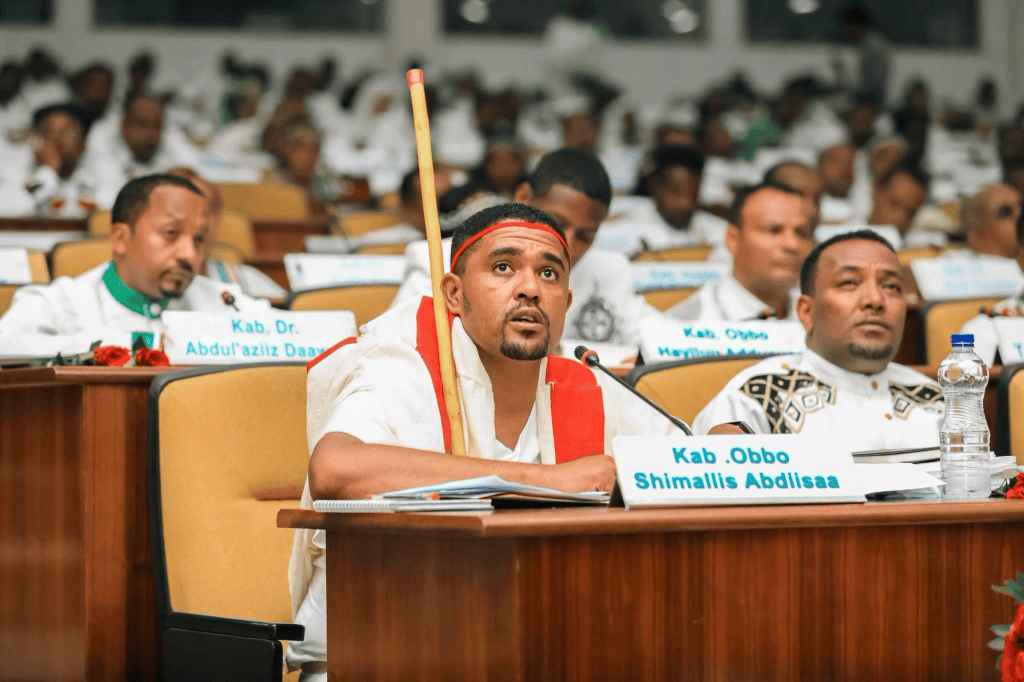
The plan was approved during the first session of the Oromia Regional Council (Caffee Oromia) held in Adama. Governor Shimelis Abdisa was successfully reelected, and he subsequently nominated six vice presidents, all of whom were confirmed by the council.
The Six Clusters and Their Administrators
According to the approved plan, Oromia will be divided into the following six administrative regions:
1. East Oromia (2 Zones) — Administrator Ato Abdurahman Abdela
Oversees West Hararghe and East Hararghe. These zones are located in eastern Oromia, bordering the Somali Region and the Harari region.
2. Southeast Oromia (4 Zones) — Administrator Ato Ahmed Idris
Oversees Arsi, Bale, West Arsi, and East Bale. This cluster spans the Rift Valley area and includes important ecological resources such as Bale Mountains National Park.
3. South Oromia (4 Zones) — Administrator Ato Ahmed Haji
Oversees Guji, West Guji, Borena, and East Borena. These areas border Kenya and are primarily characterized by pastoralism and cross-border trade.
4. West Oromia (4 Zones) — Administrator Ato Melaku Melaku
Oversees East Wollega, West Wollega, Kellem Wollega, and Horro Guduru Wollega. This region is one of Ethiopia’s important coffee-producing areas.
5. Southwest Oromia (3 Zones) — Administrator Dr. Reshad Kemal
Oversees Iluababor, Buno Bedele, and Jimma. Jimma is known as Ethiopia’s coffee capital, and the region is rich in agricultural and forestry resources.
6. Central Oromia (4 Zones) — Administrator Dr. Mengistu Bekele
Oversees East Shewa, North Shewa, Southwest Shewa, and West Shewa. This cluster surrounds the capital, Addis Ababa, and includes important cities such as Adama.
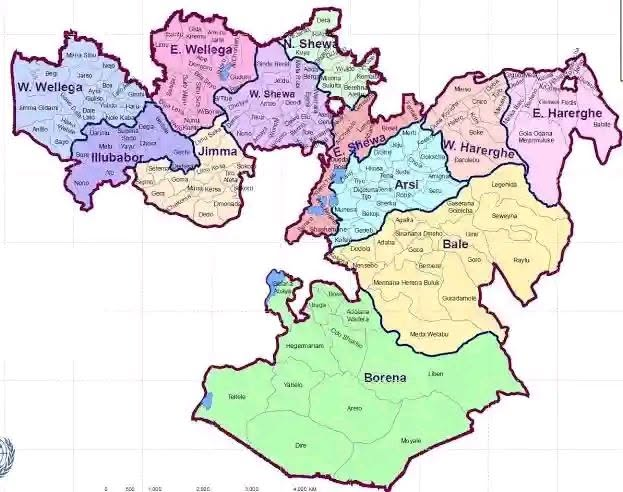
Background and Controversy
This administrative restructuring comes at a time of profound change in Ethiopia’s political landscape. Reports suggest that the ruling Prosperity Party is considering a broader “clusterization” reform of the federal system nationwide, and Oromia’s six-cluster plan may be part of that larger blueprint.
Supporters argue that dividing a vast administrative region into smaller management units can bring government closer to the people, improve administrative efficiency, and enhance public service delivery. Oromia covers an area of 353,600 square kilometers with a population of over 27 million, and single-tier management indeed faces enormous challenges.
However, criticism is equally strong. Some analysts suggest the restructuring may carry political motives — weakening Oromia’s cohesion and negotiating power as a single political entity by dividing it. Some commentators have described it as “a systematic weakening of Oromo political power.”
Human rights observers also worry that pushing through such a major administrative reform while security conditions in parts of Oromia remain unstable could exacerbate tensions at the local level.
What Comes Next
With the six vice presidents now in place, they are expected to begin forming coordination bodies for each cluster. However, the specific division of powers, financial arrangements, and relationships with existing zonal administrative units remain to be clarified.
In his address to the council, Governor Shimelis stated that the new term would “consolidate development gains and advance reforms,” but did not elaborate on the controversial aspects of the administrative reorganization.
For Oromia — a central player in Ethiopia’s political landscape — this quiet administrative revolution may have implications far beyond a single list of appointments.

The Poisoned Feast: The Unbroken Spirit of Jaal Daawud Ibsaa
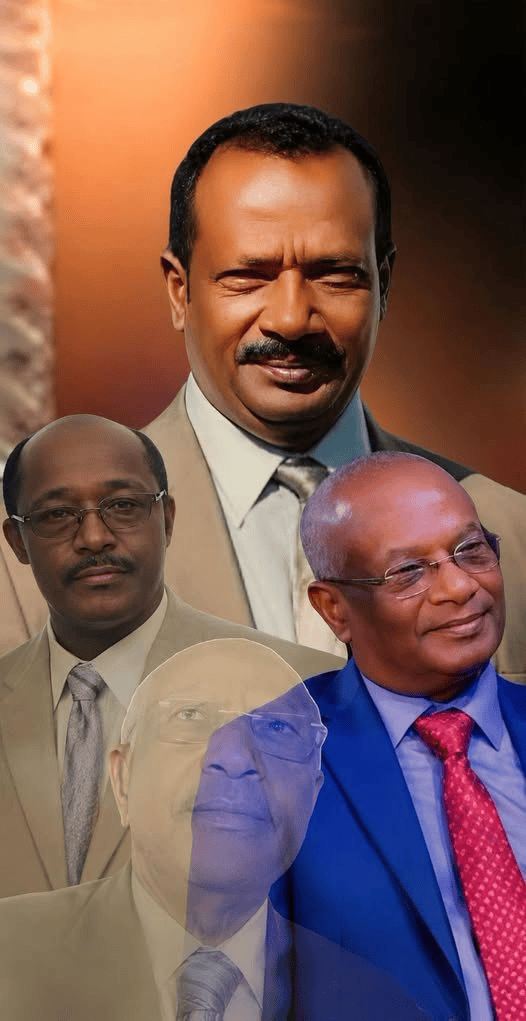
A Feature Article on Sacrifice, Betrayal, and the Silence That Defeated Torture
—
In the annals of the Oromo national struggle, certain stories refuse to fade. They are passed down not through official archives but through whispered testimonies, through the memories of those who survived, and through the written records of security officials who once sought to erase them. One such story belongs to Jaal Daawud Ibsaa, a name that resonates in the Horro Guduruu heartland and beyond—a man whose journey from student activist to underground fighter to silent prisoner embodies the most harrowing dimensions of resistance.
This account draws from a security report authored by Nugusee Fantaa, head of the Wollega administrative security, and Tasfaayee W/Sillasee, head of Information and National Security, as documented by journalist Abbaa Duulaa Gammada. The journalist himself was granted unusual access, recalling that when he sought to research this history, the security archives of both the Derg’s peace and wartime offices were opened to him. “Abbaa Duulaa told me,” the journalist recounts, “‘You are the only one who has ever asked me to research this story.'”
Roots of Resistance
Jaal Daawud Ibsaa was born in Horro Guduruu, in the western highlands of Oromia. Like many young Oromos of his generation, he pursued education with determination, attending Wingate—the same institution that shaped Mallas Zeenaawii, a student two years his senior. Daawud then entered Kilo 4 University, where he studied statistics. But his formal name tells only part of the story: while the struggle knew him as Daawud, his family called him Firew—a detail preserved in the security records that now serve as historical testimony.
His political consciousness crystallized during the student movements of the early Derg years. For two years, he was imprisoned for his involvement in student activism. Upon his release, he did not retreat. Instead, he joined the underground armed struggle of the ONLF—the Oromo National Liberation Front—immersing himself in a movement that would define the rest of his short life.
The Seventeen Who Crossed the Border
In 1968, when the ONLF elected its central committee of twenty-eight members, Daawud was among those chosen. Three years later, in 1971, the Front made a strategic decision to expand its armed operations into western Ethiopia. Jaal Daawud and Abbaa Caalaa Lataa were appointed to lead and coordinate the western struggle. In total, seventeen fighters—most from the Wallagga and Beegii regions—crossed the Sudanese border to begin operations.
The Derg regime took notice. The suppression of this western ONLF initiative became a priority, with officials including Gidaamii district chief Hiikaa Masaadii and Wollega provincial administrator Nugusee Fantaa devising plans to crush the movement.
Among the seventeen fighters was Obboleessi Zakkaariyaas Shoroo, a native of the region. The security apparatus saw in him a tool for betrayal. Zakkaariyaas was summoned and given his orders: “Feed your brother and his comrades. We will supply you with poison to add to the food. If you refuse, you and your family will be killed, your property confiscated, your land taken, your livestock seized.”
Zakkaariyaas recoiled. “How can I kill my own brother?”
The response was cold and absolute: “If you can, separate your brother so he does not eat. If you cannot—then let them die together.” The security report notes that Zakkaariyaas, under duress, eventually agreed.
The Feast
The fighters, dressed in peasant clothing to blend into the countryside, had gathered in the area. Zakkaariyaas was watched to ensure he did not falter. The poison, sent from Finfinnee through Nugusee Fantaa to Hiikaa Masaadii, was passed to Zakkaariyaas.
On the evening of the planned betrayal, Zakkaariyaas slaughtered a sheep and prepared a feast, claiming to honor his brother and comrades. The seventeen ONLF fighters had split into two groups; Abbaa Caalaa was moving with nine men in another direction, and thus was not present at the meal. But Daawud and the remaining fighters accepted Zakkaariyaas’s invitation and gathered at his home that evening.
Zakkaariyaas could not bring himself to separate his brother. “You will eat later,” he urged. But Daawud refused and joined the meal. As his brother and comrades ate the poisoned food, Zakkaariyaas stood by, trembling, watching.
Daawud ate only a little. When he finished, he rose and went to the door to relieve the comrade who had been standing guard. The others continued eating. Then the convulsions began. Their bodies burned as if on fire. Screams filled the night as one by one they collapsed. Zakkaariyaas clutched his brother’s corpse to his chest.
Daawud had eaten less, but the poison did not spare him. Standing guard outside, he drank large quantities of water, then began convulsing, vomiting blood and bile. The pain in his stomach was unbearable. Yet he did not fall where he stood—he staggered back inside and collapsed among his fallen comrades in Zakkaariyaas’s compound.
Survival and Silence
The fighters in peasant disguise, waiting for the signal, arrived at Zakkaariyaas’s house as planned. They found seven comrades dead—and Daawud, gravely ill but still breathing.
He was rushed toward Dambidoolloo, then to Naqamte, as the ONLF sought both to extract intelligence and to save his life. But the Derg’s security apparatus had other plans. At Naqamte, once he had partially recovered, he was transferred to prison and the beatings began.
The Wollega security report is explicit: no intelligence was ever extracted from Jaal Daawud. Unable to break him through interrogation, they transferred him to Ma’ikelawwii Prison in Finfinnee. There, he was placed in a container filled with benzene and dirty water as interrogation intensified. The report details repeated searches and various forms of torture applied to him.
Daawud chose death over betrayal. Not a single word of intelligence escaped his lips. He endured until the end, and then he passed—unbroken, unbroken in spirit, unbroken in loyalty to the cause he had embraced as a student and carried to his final breath.
The Meaning of Nyaata Summaa’ee
The story of Daawud Ibsaa and the poisoned feast is more than a historical account of betrayal and heroism. It is a meditation on the impossible choices that colonial and authoritarian regimes force upon communities. Zakkaariyaas was not a willing traitor; he was a man crushed between the love of his brother and the threat to his family, his land, his very existence. The regime understood that the most effective weapons are not always guns—sometimes they are the bonds of kinship turned into instruments of destruction.
And yet, in the figure of Daawud Ibsaa, the story offers something else: the possibility of a fidelity that cannot be purchased, tortured, or poisoned away. He ate the food, drank the water, endured the benzene, and carried his secrets to the grave.
The security report that documents these events was never meant to celebrate him. It was meant to record the success of a suppression campaign. But in recording the methods of his torturers, it inadvertently preserved the evidence of his resistance. The archive of oppression became, in the end, a monument to the oppressed.
—
This article is based on the security report authored by Nugusee Fantaa and Tasfaayee W/Sillasee, as documented by journalist.






