Daily Archives: July 18, 2026

What Makes Waaqeffanna Different from Other Religions?

In the highlands and lowlands of Oromia, where the Oromo people have lived for millennia, an ancient faith endures. Waaqeffanna—the indigenous religion of the Oromo—represents one of Africa’s oldest continuous monotheistic traditions. But in a world where Christianity and Islam dominate the religious landscape, what truly sets Waaqeffanna apart?
The Core Belief: One God, No Idols
At its heart, Waaqeffanna is a monotheistic religion. Followers, known as Waaqeffataa, believe in Waaqa Tokkicha—the one God. Waaqa, meaning “the God of heaven” in the Oromo language, is the creator of the universe and all life within it.
Yet here lies the first distinction: unlike many other faiths, Waaqeffanna has no temples, no idols, and no anthropomorphic representations of the Divine. As one French missionary observed in 1901, the Oromo “repudiate all anthropomorphic representation of the Divinity. Their temple, which is the universe with the star-studded arch; their altar, the surface of the earth”. Where other religions build cathedrals, mosques, and synagogues, Waaqeffanna worshippers find the sacred in creation itself.
Worshipping Through Creation
The slogan of Waaqeffanna captures its essence: “Uumamaan Uumaa galateeffanna” —”We praise the Creator by His creation”. This principle shapes everything about the faith. Followers see Waaqa’s deeds in the coming of rains, the sprouting of new life, and the changing of seasons. Nature is not worshipped itself but serves as the primary material through which God is praised.
This stands in stark contrast to religions that emphasise revealed scriptures or prophetic traditions. Waaqeffanna has no holy book. A legend tells that Waaqa once gave the Oromo a sacred book, but a cow ate it, and God—in his anger—never provided another. Whether myth or metaphor, the story reveals something profound: in Waaqeffanna, God’s presence is encountered not in written words but in the living world.
The Three Pillars: Ayyaana, Uuma, and Safuu
Waaqeffanna rests on three foundational concepts:
Ayyaana are intermediary spirits that serve as manifestations of Waaqa, connecting the divine with the human world. Through Ayyaana, Waaqa can communicate with chosen individuals who become religious leaders known as Qaallu (male) or Qaafitti (female).
Uuma refers to creation itself—the entire universe as the handiwork of God.
Safuu forms the moral and ethical foundation, guiding right conduct and maintaining cosmic order.
This trinity of spirit, creation, and morality provides a comprehensive worldview without the rigid dogmas or institutional hierarchies found in many other religions.
The Gadaa Connection: Religion as Governance
Perhaps the most distinctive feature of Waaqeffanna is its intimate connection with the Gadaa system—the traditional Oromo democratic governance structure. Unlike other religions that often separate spiritual and political authority, Waaqeffanna is woven into the fabric of Oromo social organisation. Religious leaders play spiritual and political roles within the Gadaa system. This integration of faith and governance is rare among world religions and reflects a holistic approach to life where the sacred and the civic are inseparable.
Tolerance Without Compromise
Remarkably, Waaqeffanna has demonstrated extraordinary religious tolerance throughout its history. Many Oromo today practice Christianity or Islam alongside elements of their ancestral faith—a phenomenon known as syncretism. This compatibility stems from Waaqeffanna’s focus on natural patterns of life and right conduct rather than exclusive doctrinal claims.
Yet this tolerance does not diminish the faith’s distinct identity. Whether Oromo become Christians or Muslims, “a true belief in one God (Waaqeffanna dhugaa) remains the basic tenet of Oromo identity”. The Oromo never substituted other gods or carved statues for their Waaqa. This steadfastness in monotheism, combined with openness to other traditions, creates a unique religious posture.
Similarities and Distinctions
Like Christianity and Islam, Waaqeffanna affirms belief in one supreme God. But where Abrahamic religions centre on prophets, scriptures, and institutional structures, Waaqeffanna centres on the natural world, moral order (Safuu), and spirit intermediaries (Ayyaana).
Where other religions build physical sacred spaces, Waaqeffanna finds the sacred everywhere. Where others seek divine revelation in texts, Waaqeffanna finds it in the rhythm of seasons, the fertility of the earth, and the moral conscience of the community.
A Living Tradition
Today, approximately 3% of the Oromo population—roughly 1.1 million people—actively practice Waaqeffanna. The annual Irreechaa festival, a thanksgiving ritual held at riversides or mountaintops, draws thousands who gather with fresh green grass to pray to Waaqa Gurraacha (the Black God).
In an era of globalisation and religious homogenisation, Waaqeffanna stands as a testament to the diversity of human spiritual expression. It reminds us that faith need not be confined to books or buildings, that the divine can be encountered in a blade of grass or the turning of the seasons, and that monotheism has many faces—not all of them shaped by the deserts of the Middle East.
Waaqeffanna is not merely a religion; it is a way of seeing the world—where every creature, every river, every sunrise is a prayer, and the universe itself is the temple.

The Art of Becoming: Why the Oromo Embrace Change
By Daandii Ragabaa
—
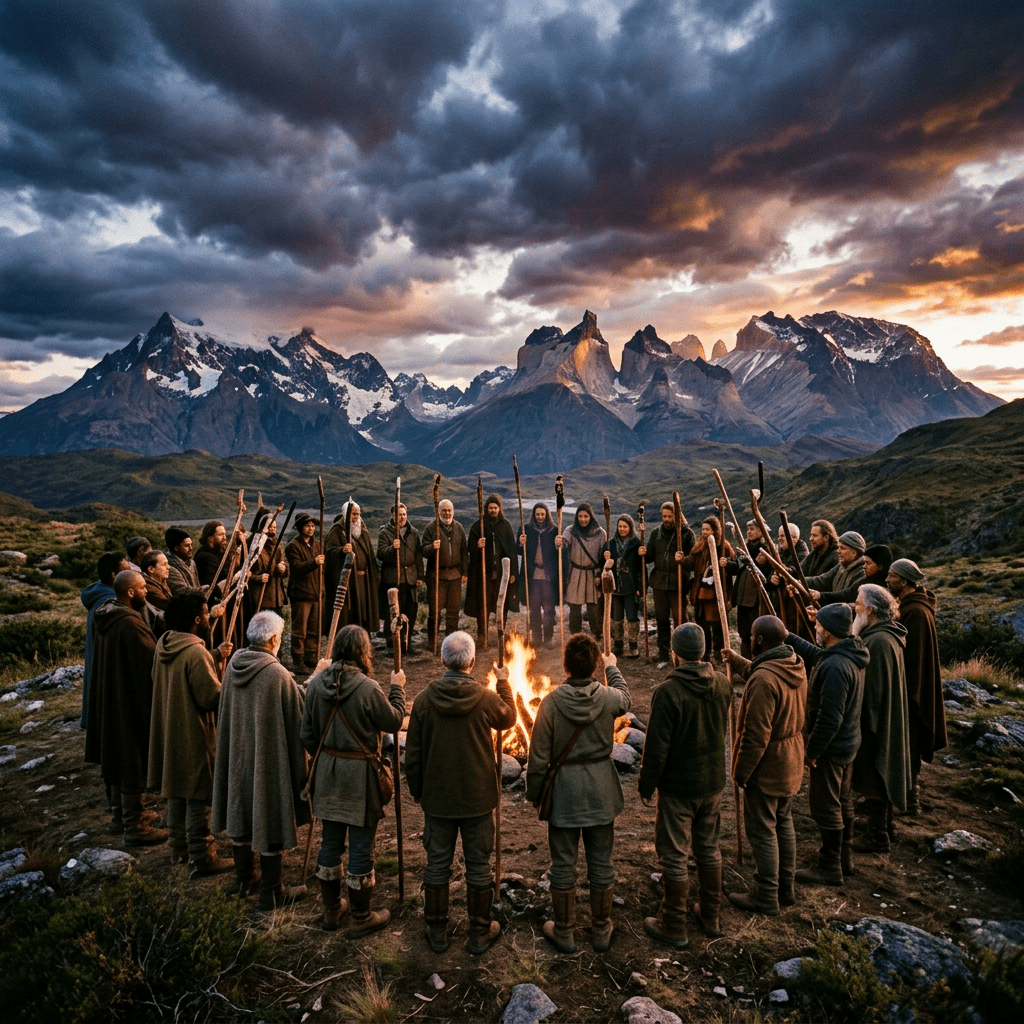
The old man sat beneath a sycamore tree, his weathered hands wrapped around a wooden staff. Before him, a group of children listened with wide eyes as he spoke. His voice was low, deliberate—the voice of one who had seen seasons turn and generations pass.
“Namni hin jijjiirramne, nama hin jiraanne,” he said. “One who does not change has not truly lived.”
The children frowned. They had been taught that their culture was eternal—that the ways of their ancestors were sacred and unchanging. How could change be a good thing?
The elder smiled. He had been young once, too. He had asked the same question. And now, after eighty harvests, he understood the answer.
—
The Gadaa: A System Built on Transformation
For the Oromo people, change is not an interruption of tradition—it is the very engine of tradition. Nowhere is this more evident than in the Gadaa system, the indigenous democratic governance structure that has organised Oromo society for centuries. Recognised by UNESCO as an Intangible Cultural Heritage of Humanity, the Gadaa system divides life into distinct stages, each carrying specific responsibilities, rituals, and ceremonies.
The Gadaa has eleven grades, each spanning eight years. From childhood to old age, every Oromo moves through these formal steps, each marked by a transition ceremony that defines what is permitted and what is forbidden. A boy becomes a warrior. A warrior becomes an elder. An elder steps aside to make way for the next generation.
This is change written into the very fabric of society.
Professor Gemetchu Megerssa, a scholar of Oromo philosophy, describes seven interconnected phases of social development: Guudina, gabbina, ballina, badhaadha, hoormata, dagaaga, and dagaa-hoora. Each phase represents a transformation—a shedding of the old self and an embrace of the new. The goal is not stability but wholeness: a state where there is no conflict, no poverty, no disease.
To be Oromo is to be in a constant state of becoming.
—
The Rites of Passage: Dying to Be Born
The Shinooyyee celebration marks the transition of young Oromo men and women into adulthood. It is not merely a party—it is a ritual death and rebirth. The child that entered the ceremony is gone. An adult emerges, ready to marry, to lead, to contribute.
The Muusoo and Dhokhisuu rituals grant young men permission to marry. These are not casual affairs. They are ordeals—tests of endurance, wisdom, and character. To pass through them is to be transformed.
Even the names of the Gadaa grades tell a story of change. From Gaammee Gurguddaa (childhood) to Kuusaa (youth) to Raaba (adulthood), each stage carries a new identity. The progression is marked by ceremonies like Walargii, a grand gathering where children from various regions convene before advancing. They do not simply grow older—they become something new.
As John Hinnant observed, the Gadaa divides the stages of life into a series of formal steps, each distinguished by a transition ceremony. Every eight years, the Oromo people change. Every eight years, they are reborn.
—
The Forces of External Change
But not all change is internal. The Oromo have also been shaped by forces beyond their control—sometimes violent, sometimes subtle.
For centuries, the Oromo faced dominance from neighbouring groups, which eroded aspects of their cultural identity. The Gadaa system itself has been weakened by modernisation and external political pressures. Missionaries brought Christianity, and traders brought Islam. Today, most Oromo practice one of these religions, often alongside elements of their ancestral Waaqeffanna faith. The indigenous belief in Waaqa (God) did not disappear—it adapted.
Even personal names have changed. In the post-1991 political landscape, many Oromo have adopted new naming practices—a reflection of shifting social values and a reclamation of identity. A name is not just a label. It is a story. And stories, like people, evolve.
—
The Philosophy of Jijjiiramuu
In Afaan Oromo, the word for change is jijjiiramuu. But it carries a weight that the English translation cannot capture.
Jijjiiramuu is not simply becoming different. It is growth. It is adaptation. It is the recognition that to remain the same is to stagnate, and to stagnate is to die.
Consider the Oromo proverb: “Akkuma bishaan yaa’uu qaba, namni jijjiiramuu qaba.” “Just as water must flow, a person must change.”
The Oromo understand that change is not a betrayal of tradition—it is the fulfilment of tradition. The Gadaa system itself undergoes transformation every 360 years, a cycle known as jaatama, when it rejuvenates itself. The system does not cling to the past. It renews.
—
The Continuity Within Change
Yet for all this transformation, something remains constant. The Oromo have not lost their identity. They have carried it forward—reshaped, reimagined, but never abandoned.
The Irreechaa festival, a thanksgiving ritual held at riversides and mountaintops, draws thousands of Oromo today. It is not a relic of the past—it is a living tradition, a symbol of Oromo identity and resilience.
Change, in Oromo culture, is not about discarding the old. It is about building upon it. The child who becomes an adult does not forget childhood—he carries its lessons forward. The elder who steps down from leadership does not disappear—he becomes a guide, a source of wisdom for the next generation.
—
A Final Reflection
The old man beneath the sycamore tree finished his story. The children sat in silence, their young minds wrestling with the paradox: how could change and tradition exist together?
He rose slowly, his joints creaking like old wood. He looked at the children—the future of his people—and spoke his final words.
“Jijjiiramuu hin sodaatinaa. Sodaan isa hin jijjiirramne.”
“Do not fear change. Fear only that which refuses to change.”
And with that, he walked away, his staff tapping against the earth—a sound as old as the hills, as steady as the seasons, and as constant as the Oromo spirit itself.
—
Because to be Oromo is not to be static. It is to be a river—always flowing, always becoming, always carrying the waters of the past toward the sea of the future.
The Sacred Feast: Guyyoo Gobba Community Gathers for the Nyaachisaa Ceremony
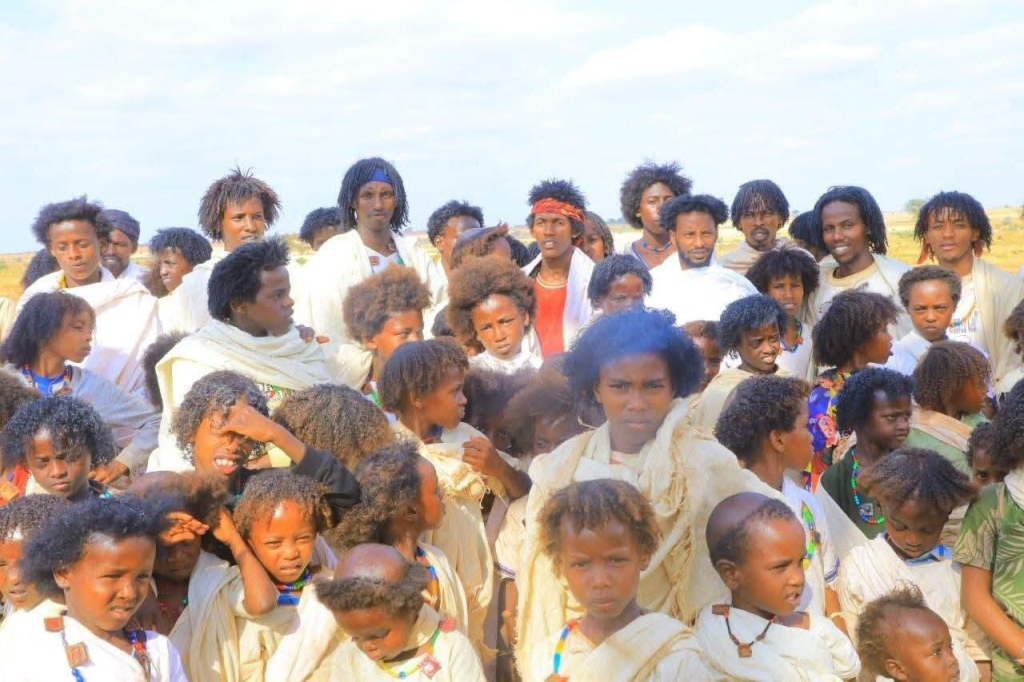
Under the leadership of the 70th Abbaa Gadaa, the Oromo people come together to honour their ancient traditions and celebrate the bonds that unite generations
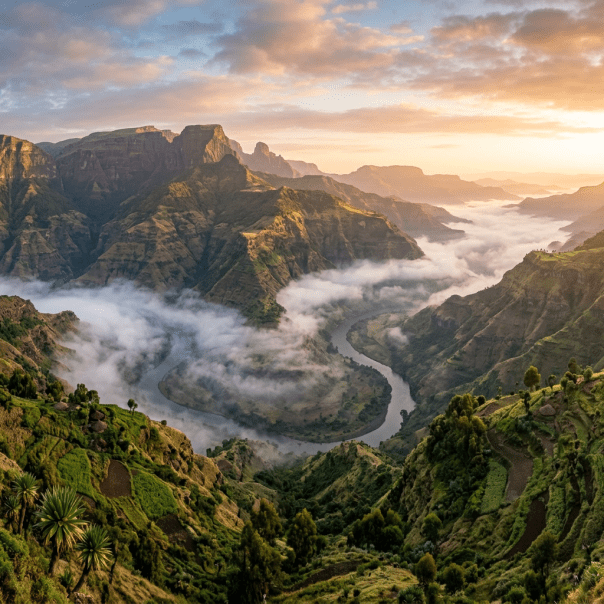
BORANA ZONE, OROMIYA — As the sun begins its descent over the vast plains of Borana, a sacred gathering is taking place. The sons of Guyyoo Gobba, descendants of the 70th Abbaa Gadaa, are converging at Ardaa Gaayoo, the ancestral seat of their leader. The air is filled with anticipation, for tonight marks the beginning of the Nyaachisaa ceremony—a ritual of profound significance in the Gadaa tradition.
The ceremony, known as “Jala Bultii Nyaachisaa,” is a sacred feast that brings the community together to honour their heritage, celebrate their unity, and strengthen the bonds that connect past, present, and future.
“Ilmaan Guyyoo Gobbaa Ardaa Gaayootti Jala Bultii Nyaachisaa Irra Jiru!”
The sons of Guyyoo Gobba are at Ardaa Gaayoo, engaged in the Nyaachisaa overnight ceremony!
The Gathering
“Ilmaan Abbaa Gadaa Boorana 70ffaa, Yuubaa Guyyoo Gobbaa, galgala kana Ardaa Gaayoo, qe’ee Abbaa Gadaatti walitti dhufaa jiru.”
The descendants of the 70th Abbaa Gadaa of Borana, the Yuubaa of Guyyoo Gobba, are gathering this evening at Ardaa Gaayoo, at the seat of the Abbaa Gadaa. This is not a casual meeting—it is a sacred assembly, a coming together of a community bound by blood, tradition, and shared destiny.
The Yuubaa are the elders of the Gadaa system—those who have passed through all the stages of life and now serve as the wise guardians of tradition. Their presence at this gathering signifies the continuity of the Gadaa system and the transmission of wisdom from one generation to the next.
“Sirna jala bultii nyaachisaa kabajuun sangaa qalanii eebbifachuuf qophii isaanii xumuraa jiru.”
They are making their final preparations to honour the Nyaachisaa overnight ceremony by slaughtering an ox and seeking blessings. The sacrifice of the ox is not a mere act of slaughter—it is a sacred ritual, a symbol of gratitude, a recognition of the interconnectedness of all life, and a petition for divine blessing.
The Significance of Nyaachisaa
“Sirni nyaachisaa kun Aadaa fi duudhaa Gadaa keessatti bakka olaanaa Kan qabu yoo ta’u, walitti dhufeenya hawaasaa, kabaja Aadaa fi dhaloota itti aanutti dabarsuuf taasifamu keessaa isa tokkodha.”
The Nyaachisaa ceremony holds a place of great importance in Gadaa culture and tradition. It is one of the key expressions of community solidarity, cultural reverence, and the transmission of heritage to future generations.
In the Gadaa system, the Nyaachisaa is more than a feast—it is a ritual of renewal and reaffirmation. Through the sharing of food, the community reaffirms its bonds of kinship and solidarity. Through the observance of tradition, the community honours the wisdom of the ancestors. Through the involvement of the younger generation, the community ensures the continuity of its culture.
The Nyaachisaa represents the sacred relationship between the people and their Creator, between the community and its traditions, and between the present and the future.
The Overnight Ceremony
“Jiltii Nyaachisaa kun Ardaa Gaayootti haala gammachuu, wal kabajuu fi aadaa leellisuun guutamee kan jiru yoo ta’u, sirni nyaachisaa kun bor ganama eebbaa fi sirna aadaatiin itti fufa.”
The Nyaachisaa night at Ardaa Gaayoo is filled with joy, mutual respect, and the celebration of culture. The ceremony will continue tomorrow morning with blessings and traditional rituals.
The overnight gathering is a time of singing, storytelling, and sharing. It is a time when the community comes together to remember their history, to honour their ancestors, and to reaffirm their commitment to each other. The fires burn bright, the voices rise in song, and the bonds of community are strengthened.
Tomorrow morning, the ceremony will continue with prayers and traditional rituals. The elders will bless the community, the younger generation will receive the wisdom of their elders, and the entire community will go forward strengthened by the experience.
The Gadaa Tradition
The Gadaa system is one of the most sophisticated indigenous governance structures in the world. It is a system that has guided the Oromo people for centuries—organizing their society, managing their resources, resolving their conflicts, and preserving their culture.
The Gadaa system is built on a foundation of values:
- Respect for Elders: The wisdom of the elders is recognized and honoured. They are the keepers of tradition, the guides for the community.
- Community Solidarity: The well-being of the individual is inseparable from the well-being of the community. Everyone has a role to play, and everyone is valued.
- Cultural Continuity: The traditions of the ancestors are preserved and passed on to the next generation. The past is not forgotten but honoured.
- Spiritual Connection: The relationship with the Creator is central to the Gadaa system. Rituals and ceremonies are expressions of gratitude and petitions for blessing.
- Justice and Equality: The Gadaa system is a democratic system that values fairness, justice, and the participation of all members of the community.
The Role of the Abbaa Gadaa
The Abbaa Gadaa is the leader of the Gadaa system—a figure who embodies the wisdom, authority, and responsibility of the community. The 70th Abbaa Gadaa of Borana holds a position of immense significance, representing the continuity of a tradition that stretches back centuries.
“Ilmaan Abbaa Gadaa Boorana 70ffaa…”
The sons of the 70th Abbaa Gadaa are gathering to honour their father’s legacy, to participate in the rituals of their culture, and to prepare themselves to carry forward the tradition into the future.
The Abbaa Gadaa is not merely a political leader—he is a spiritual leader, a cultural guardian, and a symbol of the community’s identity. His leadership is rooted not in force but in wisdom, not in coercion but in consensus, not in self-interest but in service.
A Community United
The gathering at Ardaa Gaayoo is a powerful expression of Oromo unity. It brings together:
- Elders who carry the wisdom of the ages
- Adults who are actively engaged in the life of the community
- Youth who are being prepared to take on their responsibilities
- Children who are learning the traditions that will guide their lives
Together, they form a single community, bound by their shared heritage and their common destiny.
The Meaning of the Feast
The Nyaachisaa ceremony is a feast of gratitude. It is a celebration of the abundance that the Creator has provided—the livestock, the land, the harvest, and the health of the community. It is an expression of thanks for the blessings of the past year and a petition for the blessings of the year to come.
But it is also a feast of community. The sharing of food is a powerful act of solidarity. When we eat together, we are not just nourishing our bodies—we are nourishing our relationships. We are saying to each other: “We are one. We share the same table. We share the same destiny.”
The feast is a reminder that we are not alone—that we are part of something larger than ourselves.
Looking to the Future
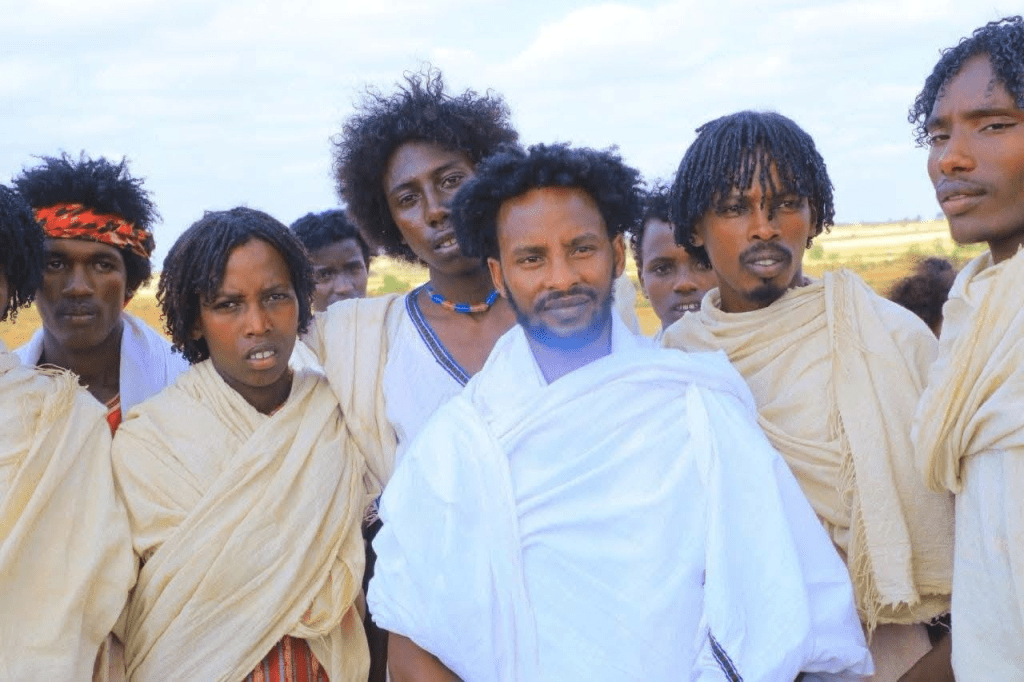
As the community gathers at Ardaa Gaayoo, they are not just honouring the past—they are preparing for the future. The younger generation is present, learning the traditions, absorbing the wisdom, and preparing to carry the culture forward.
The Nyaachisaa ceremony is a bridge between generations. It connects the ancestors who established the tradition to the children who will carry it forward. It ensures that the culture is not lost but preserved, not forgotten but renewed, not diminished but strengthened.
“Ilmaan Guyyoo Gobbaa Ardaa Gaayootti Jala Bultii Nyaachisaa Irra Jiru!”
A Blessing for All
As the dawn breaks over Ardaa Gaayoo and the ceremony continues with prayers and blessings, the community will go forward strengthened and renewed. They will carry the spirit of the Nyaachisaa with them—the spirit of gratitude, community, and cultural pride.
May the blessings of the ceremony extend to all who participate.
- May the elders continue to guide the community with wisdom.
- May the youth carry the culture forward with pride.
- May the community remain united in solidarity.
- May the traditions of the Gadaa system continue to flourish.
Conclusion
“Jiltii Nyaachisaa kun Ardaa Gaayootti haala gammachuu, wal kabajuu fi aadaa leellisuun guutamee kan jiru yoo ta’u, sirni nyaachisaa kun bor ganama eebbaa fi sirna aadaatiin itti fufa.”
The Nyaachisaa night at Ardaa Gaayoo is filled with joy, mutual respect, and the celebration of culture. The ceremony will continue tomorrow morning with blessings and traditional rituals.
The sons of Guyyoo Gobba, descendants of the 70th Abbaa Gadaa of Borana, have gathered to honour their heritage and celebrate their unity. Through the Nyaachisaa ceremony, they have reaffirmed the bonds that connect them to each other, to their ancestors, and to their Creator.
The tradition lives on. The community endures. And the Oromo people continue to celebrate their culture with pride.
“Ilmaan Guyyoo Gobbaa Ardaa Gaayootti Jala Bultii Nyaachisaa Irra Jiru!”
The sons of Guyyoo Gobba are at Ardaa Gaayoo, engaged in the Nyaachisaa overnight ceremony!
May the blessings of the ceremony be upon them all.

The Root of Seven Generations: Marriage, Bloodlines, and the Oromo Law of Continuity
By Dhabessa Wakjira
—
The fire crackled low in the center of the mana (homestead). Outside, the night wind carried the scent of wild sage and distant rain. Inside, a circle of elders sat in contemplative silence, their white turbans glowing faintly in the ember-light. Before them stood a young man—tall, strong, and visibly nervous. He had come to ask for a bride.
But before any blessing could be spoken, before any milk could be shared, the elders would ask the question that has governed Oromo marriage since time immemorial:
“Sanyiin kee eenyu? Hiddi kee eessa taa’e?” — “Who is your lineage? Where does your root lie?”
For in Oromo culture, marriage is not merely the joining of two hearts. It is the grafting of two ancestral trees. And if those trees are too closely related, the fruit will be weak. If they are too distant, the bond will lack the warmth of shared blood. The balance is found in a sacred number: seven.
—
The Mature Son and the Ripened Daughter
The ancient decree, passed from grandfather to grandson, begins with a command of readiness:
“Ilmi gahe haa fuudhu; intalli geesses haa heerumtu.”
“Let the son who has matured take a wife; let the daughter who has ripened be given in marriage.”
In the highlands of Oromia, these words are not mere suggestions. They are biological and social imperatives. Gahe—maturity—signifies a young man who has passed through the crucible of the Gadaa grades, who has proven his courage and earned the calluses of hard labour. Geesse—ripeness—speaks of a daughter who has completed her rites of passage, who understands the weight of motherhood and the dignity of homemaking.
This is not about arbitrary age. It is about readiness of body, mind, and spirit. The Oromo understand that strong families begin with strong individuals. A boy who marries before he can defend a homestead invites disaster. A girl who bears children before her hips have widened risks her life. The elders watch, and they wait. They do not rush the river, and they do not rush the harvest.
—
The Sacred Distance: Seven Generations
Then comes the law that sets Oromo marriage apart—a precept so deeply embedded in the culture that it rivals the Gadaa itself in its authority:
“Dhalooti walfuudhan, sanyii dhaloota torba booda haa ta’u.”
“Let the lineages intermarry only after [the separation of] seven generations.”
This is the exogamy rule—the absolute prohibition against marrying anyone within seven paternal generations of one’s own clan. The Oromo do not trace this to modern genetics; they arrived at it through centuries of observation. They saw that when cousins married, children were often sickly. When distant clans intermarried, children were robust. The earth taught them what science would later confirm: genetic diversity creates strength.
But this rule is not merely biological—it is deeply social. Seven generations represent a clean break. By the time seven fathers have passed, the ancestral spirits of the two families have “forgotten” their closeness. The bloodlines have cooled. The sanyii (seed) can be safely mixed without angering the ancestors or weakening the clan.
To violate this law is to commit akka hin taane—the unforgivable. It brings drought, stillbirth, and the displeasure of Waaqa (God). The Oromo elders are the gatekeepers of this sacred distance, reciting genealogies that stretch back two hundred years to ensure that the young couple stands on opposite branches of the family tree.
—
The Root That Must Not Be Severed
But the Oromo do not marry merely to create healthy children. They marry to continue the root itself:
“Gaa’elli karaa itti hiddi dhalootaa itti fufu.”
“Marriage is the path by which the root of the generations continues.”
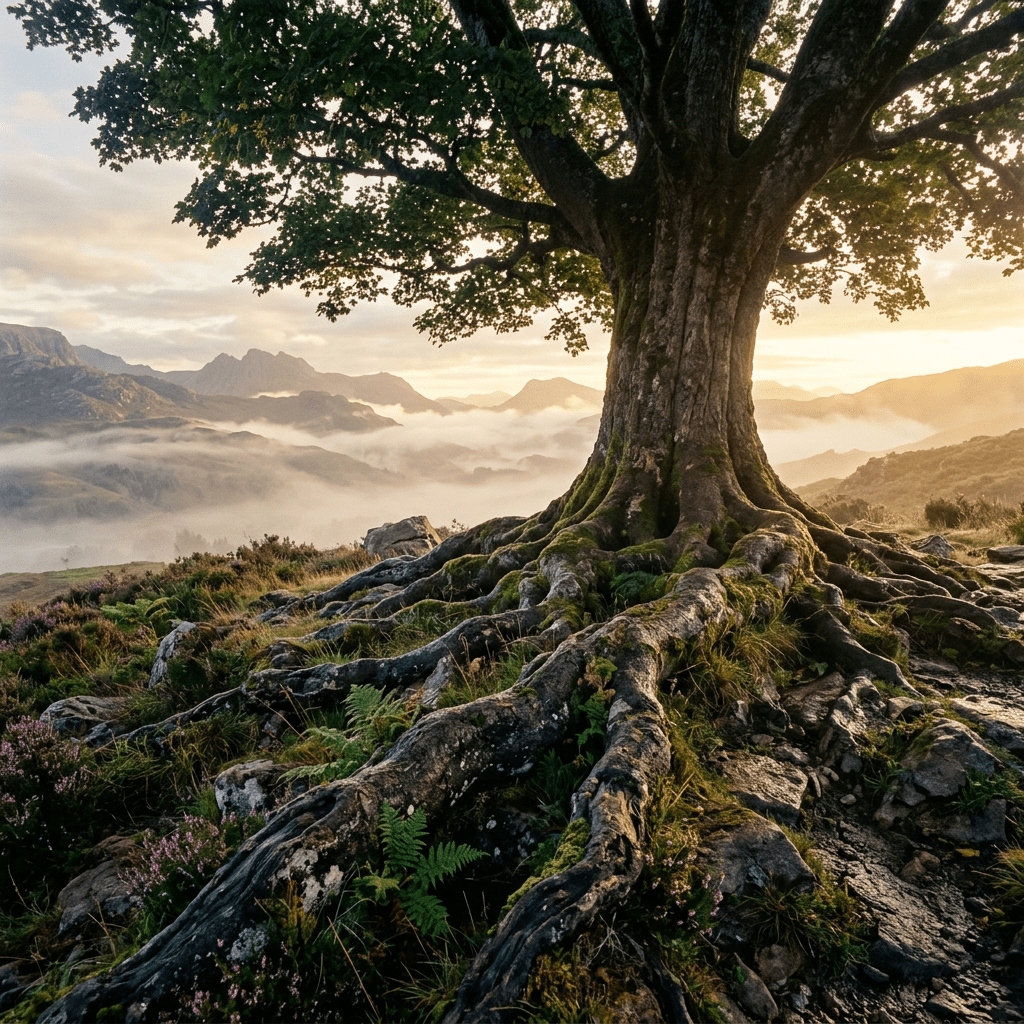
Imagine an ancient sycamore. Its branches reach for the sky, but its strength lies beneath the earth. Each child born is a new branch; each generation is a new layer of rings. If the tree stops producing new shoots, it dies. Similarly, the Oromo believe that a family line that ceases to reproduce ceases to exist—not just physically, but spiritually. The ancestors who came before, the hundreds who tilled the soil and fought the wars and sang the songs, rely on the living to keep their names alive.
Marriage, therefore, is not a romantic luxury. It is a sacred debt. The young man who takes a wife is not just seeking companionship—he is paying back the ancestors who gave him life. The young woman who bears children is not just fulfilling a social role—she is threading the needle of time, sewing the past to the future.
When an Oromo couple stands before the elders, they are not just looking at each other. They are looking backward at the seven generations who made them, and forward at the seven generations who will come from them.
—
The Final Seal: Blessings and Abundance
And so, when all the genealogies are recited, when the seven-generation gap is confirmed, when the bride-price is negotiated and the Qaallu (spiritual leader) has offered the libation of milk to Waaqa, the elders rise. They lift their right hands to the sky. They speak the final, triumphant words:
“Eebbaa fi marabbaan haa raawwatu.”
“Let it be completed with blessings and abundance.”
Eebbaa—blessing. The approval of God, the smile of the ancestors, the goodwill of the community.
Marabbaa—abundance. Not just wealth, but fertility of the womb, richness of the soil, fatness of the cattle, and joy in the household.
These are not empty wishes. In the days that follow the wedding, the community will bring gifts of butter, honey, and grain. The couple will eat together from a single gibira (wooden platter), symbolising their shared fate. The elders will return to their homesteads, satisfied that the lineage is safe for another generation.
—
A Living Law
Today, as globalisation and urbanisation reshape Oromo society, some young people question the old rules. “Seven generations is too long,” some say. “We are modern now. We follow our hearts, not a counting cord.”
But the elders smile. They have heard this before. And they know that a river may change its course, but it never forgets its source. The rule of seven generations is not a chain that binds—it is a shield that protects. It ensures that the Oromo people remain strong, healthy, and connected to their roots.
In the diaspora, too, the Oromo carry this law. They trace their lineages through apps and family elders, seeking out potential partners from clans far removed from their own. They understand that marrying within the bloodline invites not just genetic risk, but spiritual fragmentation. They know that their strength lies in diversity, their continuity lies in discipline, and their future lies in their past.
—
The Eternal Cycle
As the fire dies down and the young man departs with the elders’ blessing, he carries more than a wife’s name on his lips. He carries the weight of a thousand years. He carries the hope of his ancestors that he will not fail. He carries the DNA of seven generations—and the responsibility to ensure that the seventh generation after him will carry his.
Because in Oromo tradition, a person is never truly an individual. They are a living link in an endless chain. And marriage is the forge where that chain is reforged, stronger with every generation.
“Dhaloonni jajjaboo akka dhalataniif…” — “So that strong offspring may be born…”
The words echo across the valley, carried by the wind, whispered by the grass, repeated by the elders. They are a prayer. They are a law. They are the heartbeat of a people who understand that love is beautiful, but lineage is sacred; that romance is sweet, but the root is eternal.
And so, generation upon generation, the Oromo marry—not just for today, but for the seven tomorrows yet to come.






