Learning from Oromo Eegumsa Naannoo: Indigenous Wisdom for a Sustainable Future
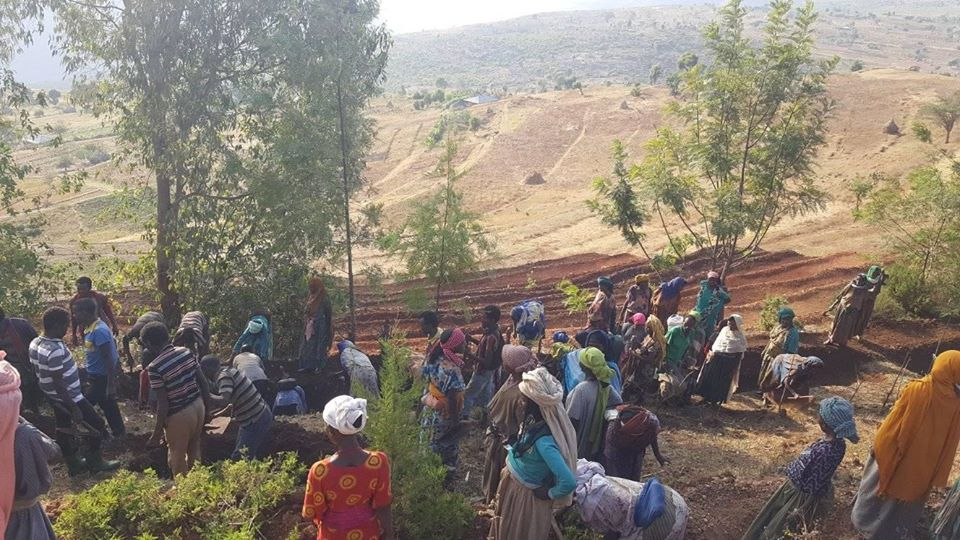
In a world facing unprecedented environmental challenges, the ancient environmental stewardship practices of the Oromo people offer profound lessons in sustainable living, community responsibility, and our sacred relationship with the natural world
There is a saying among the Oromo people: “If individuals do not engage with the environment or understand it, they may overlook its advantages or resources” . This proverb, simple yet profound, captures the essence of a worldview that has sustained the Oromo people for generations—a worldview that recognizes the intimate connection between human well-being and the health of the natural world.
The Oromo concept of eegumsa naannoo (environmental protection) is not merely a set of rules or regulations. It is a way of life, a philosophy, and a sacred responsibility that has been passed down through generations. In an age of climate crisis and environmental degradation, the wisdom embedded in Oromo eegumsa naannoo offers valuable lessons that the modern world urgently needs to learn.
The Foundation of Oromo Environmental Philosophy
At the heart of Oromo environmental stewardship lies a sophisticated worldview that sees the physical, human, and spiritual worlds as deeply interconnected. This holistic perspective, rooted in the ancient principles of Safuu (moral and ethical order) and Ayyaana (spiritual connection), guides every aspect of Oromo life, including how they relate to the natural world.
For the Oromo, the environment is not a resource to be exploited—it is a sacred trust to be protected. Land, forest, and water resources are natural resources of high value upon which relationships among human and non-human nature are founded . This understanding transforms environmental protection from a duty into a spiritual calling.
“The Oromo culture interweaves a narrative of respect for the environment, community values and ethical principles,” scholars note . This narrative is not abstract philosophy but practical wisdom, embedded in everyday practices, rituals, and governance structures.
The Gadaa System: Environmental Governance in Practice
The Gadaa system, recognized by UNESCO as an Intangible Cultural Heritage of Humanity, is one of the most sophisticated indigenous governance structures in the world. Among its many functions, the Gadaa system plays a crucial role in environmental protection.
“The Gadaa System advocates for environmental protection as one of its core principles” . Through the Gumi Gayo (the supreme assembly of Gadaa leaders), laws were passed that legislated penalties for environmental offences, including the misuse of water resources.
The Gadaa system’s environmental wisdom is reflected in:
Sustainable Grazing Practices: The Oromo established a grazing pattern where during the rainy season, livestock would travel far from settlement areas to locations called Forr or Gadhamoji. During the dry season, they would return to their homes, allowing vegetation to regrow in the Forr areas . This rotational grazing ensured that livestock had sufficient water and pasture throughout the seasons while preventing overgrazing.
Sacred Grove Preservation: Certain trees and areas were designated as sacred and fully protected. The sycamore tree (Odaa), symbolically associated with the Qaalluu (high priests), was revered, and most Gadaa rituals were performed in its shade. The Ardaa Jilaa (the area surrounding sacred trees) was also protected. Other trees, like the Dhaddacha (Acacia Tortilis), were protected because of their cultural significance and positive association with grass growth and palatable fruits.
Communal Resource Management: The Gadaa system ensured that natural resources were managed collectively for the benefit of the entire community, preventing over-exploitation and ensuring equitable access.
The Principle of Safuu: Moral Order and Environmental Ethics
Central to Oromo environmental philosophy is the concept of Safuu—a moral and ethical code that governs all relationships, including those between humans and nature .
As one study explains, the Oromo worldview is founded on “the knowledge of the organization of the three worlds, the physical, the human, and the spiritual world unity to function the whole” . Safuu is the principle that maintains this unity, ensuring that each world respects its place in the larger order.
Safuu manifests in environmental practices through:
Prohibition of Harm: Shaking trees to drop pods for animals was prohibited, as the community believed they should wait for the wind to naturally blow down the pods. Such beliefs ensure that the community harms no trees.
Sacred Water Sources: Water points were referred to as “a home” and religiously protected. Wells were considered sacred places where prayers and ceremonies were held after every rain. The “merry concept” (a form of pollution control) informed the polluter pays principle.
Wildlife Care: Wild animals were given water from community water resources, with the belief that if they were not provided with water, they would seek it at community streams. The final member of the community to use the troughs during the day was responsible for ensuring they were refilled for the night users (wild animals).
Protection of Sacred Soils: Specific soils traditionally referred to as Jawar were not to be extracted because they were believed to be sacred and used for anointment.
Rituals and Ceremonies: Honoring Nature
Oromo rituals and ceremonies are not merely cultural performances—they are expressions of environmental stewardship that reinforce the community’s relationship with the natural world.
Agricultural Rites: The Maccaa Oromo agricultural rites demonstrate “how Oromo agricultural rites are important in maintaining harmony between nature and spiritual forces, and in balancing human ecology solidarity” . During seed blessing rituals, prayers are offered not to eliminate weeds but for them to grow and decompose in the crops, contributing to soil fertility.
The Irreecha Festival: The Irreecha festival is a cultural event celebrated by the Oromo people to give thanks to Waaqa (God) for the blessings of the past year and to pray for abundance in the upcoming seasons. This demonstrates the Oromo people’s holistic approach to environmental stewardship.
Rites of Passage: These occurred at specific times of the year and in different locations. Communities relocated to designated areas called Ardaa Jilaa where ceremonies were held, allowing grasses and vegetation in their settlement homes to regrow and preventing soil degradation from overgrazing.
Practical Conservation Mechanisms
Beyond philosophy and ritual, the Oromo developed practical mechanisms for environmental protection that are remarkably sophisticated:
Seasonal Grazing (Caffaa): A rotational grazing system that ensures sustainable pasture use.
Agroforestry: Integration of trees into farming systems, enhancing soil fertility and biodiversity.
Selective Harvesting: Taking only what is needed and leaving enough for regeneration.
Traditional Fire Management: Controlled burning practices that prevent catastrophic wildfires and promote new growth.
Beekeeping: Sustainable harvesting of honey that also supports pollination and biodiversity.
Sacred Grove Preservation: Protecting certain forest areas as sacred, ensuring biodiversity conservation.
These practices reflect what scholars have described as Oromo Traditional Ecological Knowledge (TEK)—”a holistic framework that integrates ecological, spiritual, and governance dimensions”.
Challenges to Traditional Knowledge
Despite its effectiveness, Oromo TEK faces significant threats:
Epistemic Marginalization: Indigenous knowledge is often dismissed or undervalued in formal education and policy frameworks .
Colonial Legacies: Historical suppression of indigenous institutions has weakened their effectiveness.
Climate Change: Environmental changes are disrupting traditional practices that depend on predictable seasonal patterns.
Land Annexation: The expansion of cultivation and settlement has reduced access to traditional grazing lands and forests.
Cultural Erosion: The influence of external cultures and religions has led to the decline of some traditional institutions.
“The indigenous communal natural resource use and mutual assistance has also become ineffective,” researchers note . “Resource use conflict in the area is frequent.”
Learning from Eegumsa Naannoo
The Oromo concept of eegumsa naannoo offers several profound lessons for the modern world:
1. Holistic Thinking: Environmental problems cannot be solved in isolation. They require an understanding of the interconnectedness of all life—physical, human, and spiritual.
2. Intergenerational Responsibility: The Oromo proverb “Ama duggan hin argine, ama qillansa hin argine” reminds us that if we do not engage with or understand the environment, future generations will suffer the consequences . Environmental protection is not just for our benefit but for the benefit of those yet to come.
3. Community-Based Conservation: The most effective environmental protection happens when communities are engaged and have a stake in the outcome. As Professor Wangari Maathai argued, “when communities are engaged in conservation efforts, they not only safeguard the natural resources but also uplift their social and economic conditions” .
4. Sacred Responsibility: Viewing the environment as sacred transforms conservation from a duty into a calling. When we see the natural world as deserving of respect and protection, we are more likely to care for it.
5. Practical Wisdom: Indigenous knowledge is not abstract philosophy but practical wisdom tested over generations. Integrating this knowledge with scientific conservation offers a promising pathway for inclusive, adaptive, and culturally grounded environmental governance .
The Way Forward
The integration of Oromo TEK with scientific conservation offers “a promising pathway for inclusive, adaptive, and culturally grounded environmental governance” . To achieve this, scholars recommend:
- Community-led documentation of traditional practices
- Gendered knowledge transfer to ensure the preservation of women’s environmental knowledge
- Digital archiving of indigenous knowledge
- Incorporation of TEK into education and policy
- Co-production of knowledge with Indigenous communities
“By recognizing Oromo TEK as a dynamic and living system,” one study concludes, “conservation can move beyond top-down models toward more equitable and sustainable outcomes”.
Conclusion
The Oromo concept of eegumsa naannoo is not a relic of the past—it is a living wisdom that speaks directly to the environmental challenges of our time. In a world facing climate change, biodiversity loss, and environmental degradation, the Oromo people offer a model of sustainable living that has been tested and refined over generations.
“Different practices upheld by the Oromo Community in their conservation efforts reflect a profound respect for nature. These practices not only protected the environment but also fostered a sense of responsibility, commitment and stewardship”.
As we confront the environmental crisis of our time, we would do well to learn from the Oromo—to listen to their wisdom, to respect their practices, and to embrace their vision of a world where humans and nature coexist in harmony.
“Such sustainable practices and the philosophical wisdom of indigenous culture can guide us towards a more harmonious co-existence with the environment”.
In the spirit of eegumsa naannoo, may we all become better stewards of the Earth we share.




 Advocacy for Oromia