The Mothers of a Nation: How Oromo Women Shape the New Generation
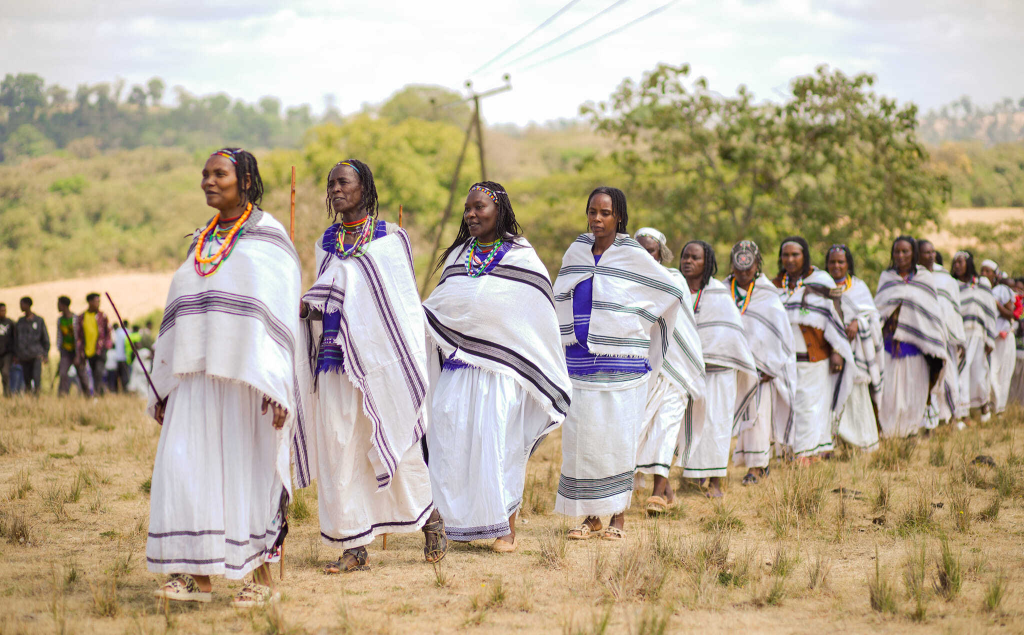
Beyond the home and hearth, Oromo women stand as the architects of cultural continuity, the guardians of identity, and the shapers of tomorrow’s leaders
“A nation’s strength is not measured by its armies or its wealth, but by the character of its children—and the hands that shaped them.”
This timeless truth finds its most vivid expression among the Oromo people, where women have long been the pillars upon which families, communities, and the entire nation are built. Their role in shaping new generations extends far beyond the domestic sphere, encompassing the preservation of culture, the transmission of values, and the cultivation of resilience in the face of immense challenges.
The Keepers of Culture and Identity
“Oromo mothers are the primary caregivers in their families, responsible for raising children, maintaining households, and ensuring the well-being of their loved ones. Their nurturing role lays the foundation for strong, healthy families” .
In Oromo society, women have been described as “the keepers of culture and tradition” . This is not merely a ceremonial designation—it is a living, breathing responsibility that shapes every aspect of Oromo life. From storytelling to teaching traditional practices, Oromo women stand in the front line of passing down the knowledge, values, and customs of their people to the next generation.
The transmission of Oromo identity is not an abstract process; it happens in the everyday moments of family life: the stories told at dusk, the songs sung while working, the food prepared for celebrations, the rituals observed in times of joy and sorrow. These are the threads from which the fabric of Oromo identity is woven, and women are the master weavers.
The Addooyyee: Sisterhood and Solidarity
One of the most remarkable institutions of Oromo society is Addooyyee, an indigenous sisterhood that prepares young women for their roles in the community. This institution, described as a “platform meant for unmarried girls in Oromo communities” , is far more than a social club—it is a comprehensive system of education, empowerment, and mutual support.
“Addooyyee is a platform meant for unmarried girls in Oromo communities and goes by different names depending on the area. Some of the names of the institution include addaarroo, goshoo, daraboo, miilto and mari” .
Through Addooyyee, young Oromo women learn:
- Decision-making: Through open discussion and deliberation, young women learn to make informed decisions about their lives.
- Solidarity: The institution creates “a lifetime bond of sisterhood” where members support each other through life’s challenges .
- Cultural knowledge: Traditional songs, rituals, and values are transmitted within the safe space of the Addooyyee.
- Protection: The group provides a forum to address issues like harassment, abuse, and exploitation .
The Addooyyee institution embodies a profound truth: the empowerment of the next generation begins with the solidarity of the current one. When young women learn to support each other, to make decisions collectively, and to assert their rights within the framework of their culture, they are being prepared for lives of purpose and resilience.
The Siinqee: Sacred Symbol of Women’s Power
Perhaps no symbol captures the role of Oromo women more powerfully than the Siinqee, a ritual stick held by married women in the Gadaa system. The Siinqee is not merely a physical object—it is a symbol of women’s rights, dignity, and authority.
“Siinqee is an Afan Oromo word that symbolizes the thin stick females hold after marriage. It is one of the material cultures that has a social and religious power in the Gadaa System. Mothers give ‘Siinqee’ to their daughters during marriage so that they can ensure their rights by using it and play cultural, economic, political, and religious roles in their society” .
The significance of the Siinqee cannot be overstated. According to research, “if a woman has a Siinqee, she has to be respected, and nobody should fight with her” . The Siinqee empowers women to assert their rights, to participate in decision-making, and to be heard in their communities.
The Siinqee is also a powerful symbol of intergenerational transmission. “The anointing of Haadha Siiqqee was necessary for Abbaa Gadaa to be empowered” . This reveals a profound truth: the legitimacy of Oromo leadership itself depends on the recognition and respect of women’s authority.
Women in the Gadaa System: Partners in Governance
The Gadaa system, recognized by UNESCO as an Intangible Cultural Heritage of Humanity, has traditionally been understood as a male-dominated institution. However, recent scholarship has revealed the depth of women’s participation and influence within the system.
A study on the Macca Oromo Gadaa system through the ‘Shanee-Salgee’ structure found that “women have always had the same rights as men under the system. They start with an equal proportion of seats with males across ages, allowing them to make their voices heard in the assembly of lawmakers and pass decisions” .
This finding challenges conventional assumptions about gender roles in indigenous governance. The Gadaa system, far from being exclusively male, provides spaces for women to participate in lawmaking and decision-making. As the UNESCO decision notes, “women are consulted for decision-making on protecting women’s rights” .
The active participation of women in the Gadaa system serves as a powerful model for the new generation: it demonstrates that governance is not the preserve of men alone, that women’s voices matter, and that justice requires the inclusion of all members of society.
Cultural Guardians: Rituals and Festivals
Oromo women play a central role in major cultural festivals, particularly the Irreechaa Festival, which is one of the most important Oromo celebrations.
“Women actively participate in various activities, from organizing cultural performances to preparing traditional foods and drinks for the gatherings. Their contributions ensure that the festival is a true reflection of Oromo culture” .
The Irreechaa Festival is not just a celebration—it is a moment of cultural renewal and identity affirmation. When young Oromo girls see their mothers, grandmothers, and aunts actively participating in the festival, they learn that their culture is something to be proud of, something to be preserved, something to be celebrated.
“Scholars believe that the presence of strong Oromo women during the Irreechaa Festival inspires younger generations to embrace their cultural roots and take pride in their identity. By witnessing the active participation of women in the festival, young girls would be encouraged to pursue education, leadership roles, and community involvement, fostering a sense of empowerment” .
The Challenges Faced by Oromo Mothers
The contributions of Oromo women come at a cost. They face significant challenges that must be acknowledged and addressed:
The Double Burden: Oromo mothers “often bear a double burden, balancing their responsibilities at home with their roles in society and the economy. Despite these challenges, they continue to excel in both domains” .
The Impact of Conflict and Displacement: “Many Oromo mothers have endured the hardships of conflict, displacement, and loss. Their ability to rebuild their lives and support their families in the face of adversity is a testament to their resilience” .
Systemic Gender Inequality: “Oromo mothers face systemic gender inequality, including limited access to education, healthcare, and economic opportunities. Despite these barriers, they continue to fight for a better future for themselves and their children” .
The Erosion of Traditional Institutions: Religious conversion and the influence of modernity have led to the decline of women’s institutions. As one study notes, “the emergence of modernity and education are contributing to the heightened social change in Arsi culture. Today’s generation, especially the young and educated ones, are viewing cultural institutions as a tradition of the past, not present” .
The Legacy and the Future
“The contributions of Oromo mothers have paved the way for future generations of Oromo women to take on leadership roles and continue the struggle for justice and equality” .
The legacy of Oromo women is visible in every sphere of Oromo life:
In the Family: They are the “emotional anchors” who provide stability and support through hardship .
In Society: They are “community builders” who “organize events, resolve conflicts, and foster unity” .
In Politics: They are “political activists” who “have been at the forefront of political movements, advocating for the rights and freedoms of the Oromo people” .
In Culture: They are “cultural ambassadors” who “promote Oromo traditions, music, and art both within Ethiopia and in the diaspora” .
A Vision for the New Generation
The role of Oromo women in shaping the new generation is not simply about preserving the past—it is about building the future. Through their nurturing, teaching, and leadership, Oromo women are creating a generation that will continue the struggle for justice, equality, and self-determination.
“Their strength and resilience undoubtedly shape the future of the Oromo community for generations to come” .
Conclusion
“Oromo mothers are the unsung heroes of their families, communities, and nation. Their contributions to the family, society, and country are immeasurable, encompassing nurturing, cultural preservation, community building, economic production, and political activism” .
The new generation of Oromo youth stands on the shoulders of these remarkable women. From the stories told at their mothers’ knees to the rituals they participate in, from the values they learn to the resilience they inherit, the Oromo women who came before have shaped who they are and who they will become.
“As the Oromo people continue their struggle for freedom and equality, the role of Oromo mothers will remain central to their success. Their resilience, strength, and love are a source of inspiration for all” .
The mothers of the Oromo nation are not just raising children—they are raising the future. And in their hands lies the hope of generations yet unborn.






