Category Archives: Finfinne

Reclaiming Oromo Identity: The First Step in the Struggle
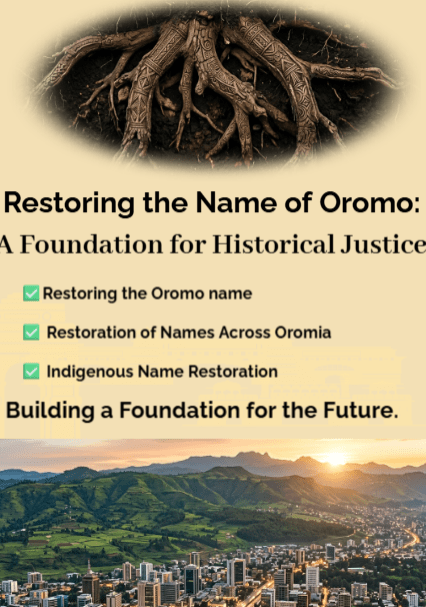
Restoring the Name of Oromo – A Foundation for Historical Justice
By Dhabessa Wakjira
The Oromo struggle for liberation, justice, and self-determination is multifaceted. It encompasses political rights, land rights, economic empowerment, and cultural preservation. But among all the objectives of the struggle, there is a first and foundational task—one that must be addressed before any other can be fully realized:
Restoring the Oromo name wherever it has been distorted, altered, or erased.
For centuries, the Oromo people have endured a systematic campaign of identity erasure. Their names—of people, places, and institutions—have been changed, distorted, and replaced. This is not a coincidence. It is a deliberate strategy of domination, designed to sever the Oromo people from their history, their heritage, and their sense of self.
The first step in the Oromo struggle, therefore, must be the restoration of the Oromo name. Without this, the history of the Oromo people cannot be told truthfully. Without this, the identity of the Oromo people cannot be fully reclaimed. Without this, the future of the Oromo people cannot be built on a foundation of truth.
The Significance of Names: More Than Words
In Oromo culture, names are not merely labels. They carry history, identity, meaning, and connection to the land. A name tells a story—of a person, a place, or a community. It embodies the values, the struggles, and the aspirations of those who bear it.
When names are changed or erased, something profound is lost. The connection to the past is broken. The continuity of culture is interrupted. The identity of a people is called into question.
For the Oromo people, the changing of names has been a tool of colonization and domination. Under successive regimes—from the expansion of the Ethiopian Empire under Menelik II to the Derg and beyond—Oromo names have been systematically replaced with Amharic or other names. This was not an innocent act. It was a deliberate strategy to erase Oromo identity and to impose a new, alien identity on the Oromo people.
Finfinne: A Case Study in Identity Erasure
Perhaps the most powerful example of this phenomenon is the city of Finfinne—the city known internationally as Addis Ababa.
The name “Finfinne” is Oromo. It means “place of hot springs.” This name reflects the history, geography, and culture of the area long before the establishment of the modern city. It is a name that connects the Oromo people to their ancestral land.
However, when Emperor Menelik II established the city in 1886, he gave it a new name: Addis Ababa, meaning “New Flower” in Amharic. This was not a neutral choice. It was a political act—an assertion of imperial power and a denial of Oromo identity.
The renaming of Finfinne to Addis Ababa was part of a broader campaign to erase Oromo presence and history. By changing the name, the empire sought to claim the city as its own and to sever the Oromo people’s connection to their ancestral homeland.
Today, the name “Finfinne” is increasingly being recognized alongside “Addis Ababa.” This is a positive development—a sign that the Oromo people’s historical connection to the city is being acknowledged. But it is not enough. The name “Finfinne” must be fully restored, and the history of the Oromo people in the city must be recognized.
The Broader Pattern: Changing Names Across Oromia
Finfinne is not the only example. Across Oromia, Oromo names have been changed, distorted, or replaced:
- Mountains, rivers, and valleys that once bore Oromo names have been renamed with Amharic or other names.
- Towns and villages have had their names changed to reflect the dominant culture.
- Historical sites have been given new names that obscure their Oromo heritage.
- Institutions and organizations have been named in ways that erase Oromo identity.
This pattern is not accidental. It is a deliberate strategy of cultural erasure—an attempt to make the Oromo people invisible in their own homeland. By changing names, the oppressor seeks to change history. By erasing names, the oppressor seeks to erase identity.
Why the Restoration of Names Matters
The restoration of Oromo names is not a symbolic gesture. It is a fundamental act of justice and a necessary step in the Oromo struggle.
1. Reclaiming History
History is told through names. When names are changed, history is distorted. To restore the Oromo name is to restore the Oromo narrative—to tell the story of the Oromo people in their own words, on their own terms.
2. Affirming Identity
Names are central to identity. To restore the Oromo name is to affirm that the Oromo people exist, that they have a history, and that they have a right to their identity. It is a declaration that the Oromo people will not be erased.
3. Healing Historical Wounds
The changing of Oromo names is a form of violence—a psychological and cultural assault on the Oromo people. Restoring these names is an act of healing. It acknowledges the harm that has been done and begins the process of repair.
4. Building a Foundation for the Future
The Oromo struggle is about building a future of justice, equality, and self-determination. But that future must be built on a foundation of truth. Restoring Oromo names is an essential part of that foundation.
5. Educating Future Generations
If the next generation of Oromo people does not know their own names—the names of their ancestors, their places, and their history—they will be disconnected from their heritage. Restoring names is a way of passing that heritage on.
The Global Context: Indigenous Name Restoration
The Oromo struggle to restore names is part of a global movement. Indigenous peoples around the world are reclaiming their names and their histories.
- In New Zealand, the Māori people have fought to restore Māori names to places that were renamed by European colonizers.
- In Australia, Aboriginal communities have worked to restore traditional names to landmarks and sites.
- In Canada, Indigenous peoples have successfully restored traditional names to places that were renamed during colonization.
- In the United States, Native American tribes have advocated for the restoration of Indigenous names for mountains, rivers, and other landmarks.
These movements are not about nostalgia. They are about justice. They are about recognition. They are about the fundamental right of a people to define themselves on their own terms.
The Oromo struggle for name restoration is part of this global movement. It is a demand for the same recognition and respect that other Indigenous peoples are seeking.
The Role of the Oromo Diaspora
The Oromo diaspora has a critical role to play in the restoration of Oromo names. In communities across the world—in the United States, Canada, Europe, Australia, and beyond—the Oromo diaspora can:
- Use Oromo names in their daily lives, businesses, and organizations.
- Advocate for the recognition of Oromo names in international forums.
- Educate others about the history and significance of Oromo names.
- Support efforts in Oromia to restore names and reclaim history.
- Build institutions that preserve and promote Oromo language and culture.
The diaspora is not separate from the struggle; it is an integral part of it. The restoration of Oromo names is a project that connects Oromo people across borders and generations.
The Challenge and the Hope
The restoration of Oromo names is not without challenges. There are forces that resist this change—those who benefit from the erasure of Oromo identity and who fear the power of a people reclaiming their history.
But there is also hope. The Oromo people are increasingly asserting their identity. The name “Finfinne” is being used alongside “Addis Ababa.” Oromo language and culture are being revitalized. And a new generation of Oromo youth is demanding recognition and justice.
The restoration of Oromo names is not just a demand—it is a movement. It is a declaration that the Oromo people are here, that they have a history, and that they will not be erased.
Conclusion: The First Step in the Struggle
The Oromo struggle is long and complex. It encompasses political, economic, social, and cultural dimensions. But among all these objectives, there is a first and foundational task:
To restore the Oromo name wherever it has been distorted, altered, or erased.
Without this, the Oromo people cannot fully reclaim their history. Without this, the Oromo people cannot fully affirm their identity. Without this, the Oromo people cannot fully build their future.
Finfinne must be called by its Oromo name.
Every place that has been renamed must have its Oromo name restored.
Every person who has been given a foreign name must have the right to reclaim their Oromo identity.
This is not just a cultural project—it is a political project. It is a declaration of self-determination. It is the first step in the struggle for justice.
Finfinne is Oromo.
Oromummaa is not negotiable.
The restoration of Oromo names is the foundation of the struggle.
Injifannoon Ummata Oromoo!
Maqaan Oromoo haa deebi’u!
Finfinne haa jabaattu!
This feature article is dedicated to all those who are working to restore Oromo names and reclaim Oromo history. The struggle continues, and the foundation is being laid.

Wealth Creation Strategies for Indigenous Oromians

Taking Control of Your Financial Destiny
Join the growing movement of Oromo people taking control of their financial future. Are you an Indigenous Oromian looking to build wealth and secure a future for your family? Struggling to navigate the complexities of property investment, finance, and long-term savings? Imagine having tailored insights that guide you on the path to financial independence and generational wealth—For Indigenous Oromias, By Indigenous Oromias.
Why Wealth Creation Matters Now
The Oromo people have historically been excluded from economic opportunities across Ethiopia. Successive regimes systematically prevented Oromos from building economic assets, with more than 60% of Ethiopia’s exportable commodities, over 60% of staple food, 70% of industrial raw materials, and 80% of hydro power coming from Oromia—yet no Oromo has been able to qualify among the top 10 richest people in the country. This is not a coincidence; it is the result of deliberate economic marginalization.
But the Oromo people have always had the tools for economic resilience. The Gadaa system contains powerful economic principles that our ancestors used to build and sustain wealth: hard work, planning, mutual assistance, and community-based resource management. The proverb “Tuulamanii taa’anii, Waaqa ofii hin komatan” reminds us: “It is not right to blame God for not working hard.” Hard work and commitment are the sources of wealth.
What Indigenous Wealth Offers
Indigenous Wealth is a 100% Oromo-owned and operated consultancy dedicated to helping our people build generational wealth and achieve financial independence. Our team understands the unique challenges Oromo people face—and we have the strategies to overcome them.
Our Services Include:
Property Investment: We help you gain access to quality investment properties, connect you with finance professionals, and guide you through the property market to build long-term wealth.
Finance & Loans: We connect you with mortgage professionals who can assist with tailored home loans, equipment and business loans, as well as competitive finance for rural Oromo communities.
Wealth Strategy: We create personalized wealth-building plans designed specifically to help you achieve your financial goals.
Our Proven Results
We have successfully supported Oromo people across Ethiopia in achieving financial independence. Across similar models in other communities, Indigenous-owned wealth consultancies have helped create over 110 new property investors in just four years, with a goal of building a community of millionaires .
The Gadaa Foundation for Wealth
Our approach is rooted in the economic wisdom of the Gadaa system:
Hard Work and Planning
“Jabaatan jabaa nyaatu, laafan foxxoqxuu nyaatu” — “The strong eat the strong, and the weak eat the weak.” This proverb reminds us that hard work is mandatory in daily life, and that everyone needs to plan to work hard and secure their future.
Community Support Systems
Traditional Oromo institutions like dabo (labour cooperation) and daadoo (mutual work groups) demonstrate the power of collective effort. When communities work together, they achieve more than individuals working alone. We apply these same principles to modern wealth building.
Guddifachaa (Adoption)
The Oromo practice of guddifachaa demonstrates the belief that children are assets and the community shares responsibility for their welfare and education. This is the foundation of generational wealth—investing in the next generation’s education, skills, and economic opportunities.
Hard Work and Self-Reliance
The Gadaa system emphasizes that people should not wait for others to solve their economic problems. “Hojii hojjechuu isa malee gaafa du’aa hin galus” — “Without work, the day does not end.”.
How It Works: Your Free Wealth Strategy
Take advantage of our No-Obligation, Completely FREE Wealth Strategy. This isn’t just another generic report—it’s a highly personalized plan where you’ll receive unique suggestions on how to:
✅ Build generational wealth for your family and community
✅ Invest in property and understand the market
✅ Secure financial independence and plan for retirement
No cost, no commitment—just a clear path forward.
Real Stories: Oromo Success
Across Ethiopia, Oromo people are already building wealth through determination and community:
Fedhi Gudina Community Saving for Investment in Agribusiness Group: Founded in 2019 with just $141 raised by 20 members (15 women), this Oromo group grew their savings to $28,530 through strategic investment in crop cultivation and processing. They now operate a grain milling service that serves their entire community.
Safiya, an Oromo entrepreneur: Forced to flee Ethiopia, she built a successful business making traditional Oromo beadwork in Nairobi. Her handmade designs are sold for special occasions like weddings, and she now supports her family independently. She says: “I have hope in what I am making with my hands. I believe in it, I believe in myself.“.
Reach for Change Entrepreneurship Training: In April 2025, 83 Oromo women in Me’so, Babile, and Chinaksan woredas participated in entrepreneurship training designed to turn ideas into viable businesses. They are building off-farm businesses that sustain livelihoods and create economic independence.
Taking the First Step
The Oromo people have always been resilient. Despite centuries of oppression, forced displacement, and economic exclusion, we have survived—and now it is time to thrive.
Start your journey today. Complete our quick survey and begin taking control of your financial future. Whether you are looking to invest in property, start a business, or build generational wealth, Indigenous Wealth is here to guide you every step of the way.
Indigenous Wealth — 100% Oromo-owned and operated.
For Indigenous Oromias, By Indigenous Oromias.
Take control of your financial destiny today.

Finfinne and Dirree Dhawaa: The Macha-Tulama Association Declares That Their Inclusion in National Dialogue Is an Attempt to Weaken the Oromo People
A Historic Statement on the Struggle for Oromo Land, Identity, and Justice
By Daandii Ragabaa
(SBO/VOL — HAGAYYA 10, 2026) In a powerful and uncompromising statement, the Waldaa Maccaa fi Tuulamaa (Macha-Tulama Self-Help and Development Association) has declared that the inclusion of Finfinne and Dirree Dhawaa in the national dialogue agenda is a deliberate attempt to weaken and undermine the Oromo people. The association, which has long been a voice for Oromo rights and historical justice, has issued a clear warning: the Oromo people will not accept the theft of their ancestral land, and the struggle for justice will continue.
The Macha-Tulama Association’s statement comes at a critical moment, as Ethiopia’s national dialogue process unfolds and the status of Finfinne—the city known internationally as Addis Ababa—and its surrounding areas, including Dirree Dhawaa, remain deeply contested.
A Declaration of Historical Truth
The Macha-Tulama Association has issued its statement as a direct response to the agenda items concerning Oromia and Oromo rights being brought before the national dialogue. The association has made its position clear:
“Even today, our ancestral land is being stolen.”
“Finfinne and Dirree Dhawaa are Oromo.”
These declarations are not political slogans; they are assertions of historical truth. The association has reminded the Oromo people and the world of the atrocities committed during the Menelik era, when the Oromo people were systematically dispossessed of their land, their dignity, and their lives.
Remembering the Atrocities of the Menelik Era
The Macha-Tulama Association has brought the dark history of the Menelik era back into the spotlight, reminding the Oromo people of the crimes committed against their ancestors.
“Menelik committed an unforgivable crime against the Oromo people when he separated Finfinne from its Oromo owners,” the association declared.
The association detailed the atrocities of that era, naming specific victims and families who suffered under Menelik’s expansionist campaign:
- Abbaa Gadaa Guraaraa Lataa was executed by hanging.
- His father, mother, and three children were killed in a brutal and inhumane manner.
- Qajeelaa Dooyyoo and Guraaraa Dooyyoo were also executed, along with their mother, in a similarly horrific fashion.
- Shubbuu Ejersoo had his hands and feet severed before being killed.
- Aaxalee Jaatanii was starved to death in detention—denied food until life was extinguished.
These were not random acts of violence. They were part of a systematic campaign to break the spirit of the Oromo people, to erase their presence from Finfinne, and to establish a new political order built on Oromo suffering.
The Suffering Continues: Three Generations of Pain
The Macha-Tulama Association declared that the suffering of the Oromo people over Finfinne has now spanned three generations. From the initial dispossession under Menelik to the brutal repression under the Derg regime and now to the present day—the Oromo people have paid a heavy price.
“During the Derg era, many Oromo paid a great price for Finfinne,” the association stated. “The wound is still not healed.”
The association raised a pointed and urgent question:
“As long as this truth exists on this earth, the question of ‘Whose Finfinne is it?’ will always be asked. What has brought us to this point?”
The answer, according to the association, lies in the persistent refusal of successive Ethiopian regimes to acknowledge Oromo rights.
A Challenge to the Current Regime
The Macha-Tulama Association has posed a direct challenge to the architects of the ongoing injustice:
“Oromo people are struggling to reclaim their land and their rights. How can you govern on someone else’s land? What right do you have to claim authority over people who do not belong to you? It would have been better for you to struggle for your own land rather than occupy ours.”
The association’s statement is a fundamental challenge to the legitimacy of the Ethiopian state as it currently exists. It questions not just the governance of Finfinne but the entire framework of domination that has denied Oromo people their rights for over a century.
The National Dialogue: A Tool of Deception?
The Macha-Tulama Association expressed deep concern about the ongoing national dialogue and how the issues of Finfinne and Dirree Dhawaa are being treated within it.
According to the association, the dialogue is not being used as a genuine mechanism for reconciliation and justice. Instead, it is being manipulated to further marginalize the Oromo people and to legitimize the ongoing dispossession of Oromo land.
“The agenda of Finfinne and Dirree Dhawaa has been brought to the national dialogue to weaken the Oromo people,” the association declared. “The old politics of the Abyssinian elite continues, refusing to step back from the land that rightfully belongs to Oromo.”
The association emphasized that the ongoing process is not just disrespectful—it is a violation of basic rights and dignity. The association described the current situation as “an insult that crosses all boundaries” and declared that “something that did not exist before has now arrived” —a reference to the unprecedented nature of the current assault on Oromo rights.
A Call to Resistance and Unity
In the face of these challenges, the Macha-Tulama Association issued a clear and urgent call to the Oromo people:
“The Oromo people must fight for their land and their rights.”
The association’s call to action is not a call to violence—it is a call to resistance, to unity, and to the defense of Oromo rights through every legitimate means available. It is a call to refuse subjugation, to refuse silence, and to refuse to accept the theft of Oromo land as a settled fact.
The association also addressed the issue of Dirree Dhawaa—the area that has become a symbol of Oromo resistance and a flashpoint of conflict. The association’s declaration that Finfinne and Dirree Dhawaa are inseparable from the broader Oromo struggle serves as a reminder that these are not isolated issues—they are part of a continuous thread of resistance that stretches back over a century.
The Historical Context: Dirree Dhawaa as a Symbol of Resistance
Dirree Dhawaa is more than just a piece of land—it is a symbol of Oromo resilience and a monument to the struggle for justice. It is the site where Oromo people have gathered to demand their rights, where they have faced brutal repression, and where they have continued to return in defiance of all efforts to silence them.
The association’s statement linking Finfinne and Dirree Dhawaa in the same breath is significant. It sends a clear message: the Oromo people will not accept piecemeal solutions. They will not accept partial recognition. They will not accept the suggestion that one part of their historical homeland can be compromised while another is defended.
Both Finfinne and Dirree Dhawaa are Oromo.
A Historical Challenge to the Ethiopian State
The Macha-Tulama Association’s statement is not just a declaration of grievance—it is a fundamental challenge to the legitimacy of the Ethiopian state as it currently exists.
By raising the question “Whose Finfinne is it?” —and by insisting that Oromo people have the right to live on their own land with dignity, self-respect, and self-determination—the association is questioning the foundational narrative upon which the Ethiopian state was built.
The association’s demand is not for charity or concessions. It is for recognition of historical truth, for justice for past crimes, and for a future in which Oromo people are treated as equals in their own homeland.
The Path Forward: Recognition, Justice, and Peace
The Macha-Tulama Association’s statement concludes with a clear vision for what must happen:
The wounds of the past must be acknowledged. The atrocities committed against the Oromo people—from the Menelik era to the present—cannot be ignored or forgotten. They must be named, documented, and taught.
Justice must be pursued. Those who committed crimes against the Oromo people must be held accountable. This is not revenge—it is the foundation of lasting peace.
Oromo rights must be recognized. The Oromo people have the right to their land, their language, their culture, and their self-determination. This is not negotiable.
The national dialogue must be genuine. If the dialogue is to be meaningful, it must include a full and honest discussion of Finfinne, Dirree Dhawaa, and all the historical injustices suffered by the Oromo people.
Conclusion: The Struggle Continues
The statement of the Macha-Tulama Association is a powerful reminder that the struggle for Oromo justice is far from over. The wounds of the past remain open. The injustices of the present continue. And the future remains uncertain.
But one thing is clear: the Oromo people will not give up their land, their rights, or their dignity. They will continue to resist. They will continue to demand justice. And they will continue to remember the sacrifices of those who came before—from Abbaa Gadaa Guraaraa Lataa to the thousands of unnamed Oromo who have given their lives for Finfinne and for Oromia.
As the association stated:
“Oromo people are struggling to reclaim their land. This struggle has not ended—it continues. And it will continue until justice is done.”
Finfinne is Oromo.
Dirree Dhawaa is Oromo.
Oromia is Oromo.
The struggle continues.
For the memory of Abbaa Gadaa Guraaraa Lataa, Qajeelaa Dooyyoo, Guraaraa Dooyyoo, Shubbuu Ejersoo, Aaxalee Jaatanii, and all the Oromo martyrs who gave their lives for the land.
Injifannoon Ummata Oromoo!
Finfinne haa jabaattu!
Dirree Dhawaa haa jabaattu!
This feature article is dedicated to the Macha-Tulama Self-Help and Development Association and all those who continue to speak truth to power in the pursuit of justice for the Oromo people.
Finfinne: The Living Sacrifice of the Oromo People for Identity, Dignity, and Oromummaa

The Land Where Ancestors Poured Their Blood — and Where the Struggle Continues
By Daandii Ragabaa
There are places that are more than geography. There are places that are memory, identity, and the very soul of a people. Finfinne—the city known internationally as Addis Ababa—is such a place for the Oromo people. It is not merely a capital city; it is the historical heart of Oromia, the ancestral homeland of the Oromo nation, and the site of an ongoing struggle for recognition, dignity, and justice.
Throughout history, the Oromo people have paid a heavy price to defend their connection to Finfinne. They have sacrificed their lives, their freedom, and their dreams—all for the sake of their identity, their dignity, and their Oromummaa (Oromo identity). The land itself is soaked with the blood of ancestors who refused to surrender their heritage.
Tufa Aredo, Jara Jarra, and Jara Tuturu —these names are not merely historical figures. They are living witnesses to the sacrifice that the Oromo people have made for Finfinne. Their stories are etched into the memory of the Oromo nation, a testament to the unwavering commitment of a people who refuse to be erased from their own homeland.
Finfinne: Not Just a City, But a Sacred Trust
For the Oromo people, Finfinne is not a piece of real estate to be negotiated or bartered. It is the place where their ancestors lived, loved, prayed, and died. It is the site of their cultural heritage, the cradle of their language, and the symbol of their historical presence in the region.
Long before the expansion of the Ethiopian Empire under Menelik II, the area known as Finfinnee was inhabited by the Oromo people. The city’s very name is Oromo—meaning “place of hot springs.” This is not a coincidence; it is a testament to the Oromo people’s deep and enduring connection to the land.
But this connection has been contested. The establishment of the city and the subsequent displacement of the Oromo people were acts of dispossession that have never been fully acknowledged or addressed. For generations, the Oromo people have been told that they are not the rightful owners of Finfinne, that their history is a myth, and that their claims are illegitimate.
Yet the Oromo people have never accepted this narrative. They have continued to assert their identity, to demand recognition, and to sacrifice for their homeland.
The Sacrifice of Tufa Aredo, Jara Jarra, and Jara Tuturu
Among the countless Oromo martyrs who have given their lives for Finfinne, the names of Tufa Aredo, Jara Jarra, and Jara Tuturu stand out as symbols of resistance, courage, and unwavering commitment to Oromummaa.
These individuals were not merely victims of oppression; they were active participants in the struggle to defend Oromo identity and land. They understood that Finfinne was not just a city—it was the heart of their nation, the embodiment of their history, and the foundation of their future.
Their sacrifices were not in vain. Their memory inspires a new generation of Oromo youth who continue to demand justice and recognition. Their names are spoken with reverence in Oromo homes, in cultural gatherings, and in the stories passed down from elders to children.
They are the living witnesses—even in death—to the truth that Finfinne is Oromo land, and the Oromo people will never abandon it.
The Historical Context: A Legacy of Dispossession
To understand the significance of the Oromo people’s sacrifice for Finfinne, one must understand the history of dispossession that the Oromo people have endured.
In the late 19th century, the expansion of the Ethiopian Empire under Menelik II brought the Oromo people under the control of a new political order. The establishment of Finfinne as the capital of the empire was accompanied by the displacement of Oromo communities, the confiscation of Oromo land, and the systematic erasure of Oromo identity.
This dispossession was not accidental; it was a deliberate policy of the empire to consolidate control over the region and to marginalize the Oromo people. The Oromo people were excluded from political power, denied access to their own resources, and subjected to cultural and linguistic oppression.
Despite these challenges, the Oromo people have never surrendered their identity. They have continued to speak their language, practice their culture, and assert their rights. And they have continued to sacrifice—in ways both great and small—for their connection to Finfinne.
The Struggle Continues: A New Generation Rises
Today, a new generation of Oromo youth is carrying forward the legacy of Tufa Aredo, Jara Jarra, Jara Tuturu, and countless others who came before them.
They are the Qeerroo—the young people who have taken to the streets to demand justice, who have faced tear gas and bullets, who have been imprisoned and tortured, and who have refused to be silenced. They are the cultural activists who are reviving Oromo language, music, and art. They are the intellectuals who are documenting Oromo history and challenging the narratives that have been used to marginalize their people.
They are the ones who remind the world that Finfinne is Oromo, that Oromummaa is not a political slogan but a deep and abiding identity, and that the struggle for justice will continue until the Oromo people are fully recognized and respected.
The Meaning of Sacrifice in Oromo Culture
In Oromo culture, sacrifice is not a burden—it is a sacred duty. The Oromo people understand that freedom and dignity are not given; they are won. They understand that the land is not just a resource—it is a sacred trust passed down from ancestors to future generations.
The sacrifice of Tufa Aredo, Jara Jarra, and Jara Tuturu is a reflection of this cultural value. Their willingness to give their lives for Finfinne is not an act of desperation; it is an act of profound love and commitment to their people, their culture, and their homeland.
It is the same spirit that animated the Oromo resistance against the Derg regime, the same spirit that fueled the Qeerroo movement, and the same spirit that continues to inspire Oromo activism around the world.
A Message to the World
The Oromo people’s connection to Finfinne is not a matter of political convenience; it is a matter of historical truth and moral justice. The Oromo people have lived on this land for generations, and their connection to it is inseparable from their identity.
The world must recognize that the Oromo people’s claim to Finfinne is not an act of aggression or a threat to others. It is a demand for justice, a recognition of historical truth, and an affirmation of a people’s right to their own land.
The world must also recognize that the Oromo people’s struggle for Finfinne is part of a broader struggle for human rights, self-determination, and dignity—a struggle that is shared by indigenous peoples everywhere.
Conclusion: The Land Lives On
The sacrifice of the Oromo people for Finfinne is not a story of defeat; it is a story of resilience, courage, and enduring hope. Though Tufa Aredo, Jara Jarra, and Jara Tuturu have passed from this world, their spirit lives on in the hearts of the Oromo people.
Their sacrifice is a reminder that Finfinne is not just a city—it is a symbol of the Oromo people’s indomitable spirit, their refusal to be erased, and their unwavering commitment to justice.
As the Oromo saying goes: “Biyya abbaa keessaa hin ba’inu” —”One does not abandon the land of one’s father.”
The Oromo people have not abandoned Finfinne, and they never will.
Finfinne is Oromo.
The sacrifice of the ancestors is not forgotten.
The struggle for justice continues.
Oromummaa lives on.
Injifannoon Ummata Oromoo!
Finfinne haa jabaattu!
Tufa Aredo, Jara Jarra, fi Jara Tuturu haa barabaraan jabaatan!
This feature article is dedicated to Tufa Aredo, Jara Jarra, Jara Tuturu, and all the Oromo martyrs who have given their lives for Finfinne and for the dignity and identity of the Oromo people.

Revitalizing Oromo History: The Gadaa System as a Source of Democratic Thought
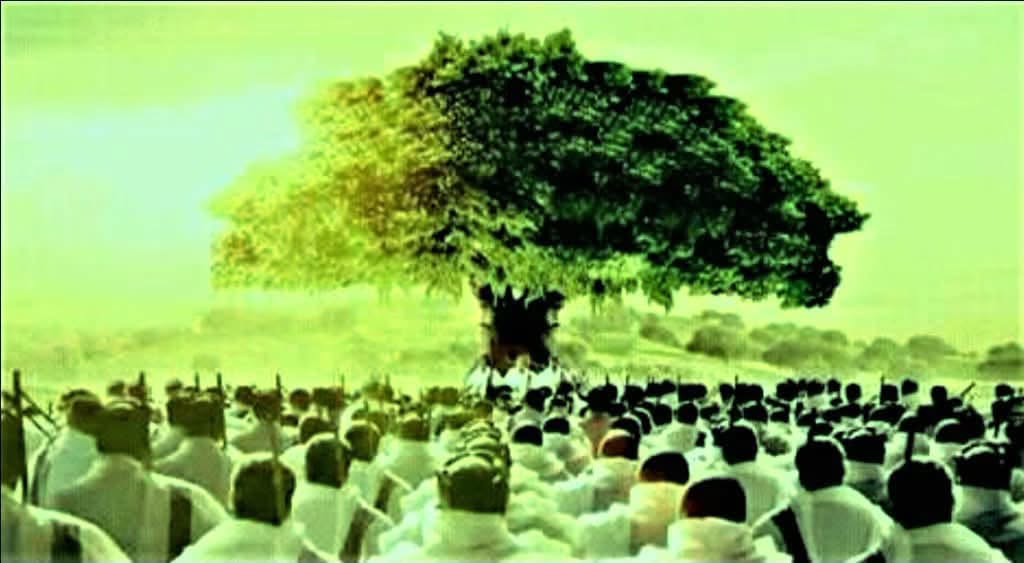
Beyond Culture — Gadaa as a Living Philosophy of Governance, Accountability, and Coexistence
By Hailu Gonfa
As I promised in the first part of this series on “Revitalizing Oromo History,” this second installment delves deeper into the Gadaa system—not merely as a cultural artifact, but as a profound source of democratic principles, governance, and social philosophy that holds invaluable lessons for the Oromo people today.
For too long, Gadaa has been reduced to folklore, song, dance, and ceremonial dress. But to confine Gadaa to the realm of culture alone is to miss its essence. Gadaa was—and remains—a system of governance, law, power-sharing, accountability, and conflict resolution. It is a philosophy of life that offers timeless wisdom on how to organize society, distribute power, and build lasting peace.
2.1. Gadaa Is Not Just Culture
When we speak of Gadaa, we often reduce it to traditional clothing, songs, ceremonies, or rites of passage. These are indeed elements of Gadaa, but they represent only a fraction of its meaning. To see Gadaa only as culture is to miss the forest for the trees.
Gadaa was a comprehensive system of governance that encompassed:
- Leadership and administration — How society was organized and governed.
- Law and justice — How rules were made, interpreted, and enforced.
- Power-sharing — How authority was distributed and transferred.
- Accountability — How leaders were held responsible for their actions.
- Deliberation and decision-making — How collective decisions were reached.
- Conflict resolution — How disputes were mediated and peace restored.
- Resource distribution — How resources were allocated and managed.
To study Gadaa is not merely to study Oromo history; it is to study a sophisticated political and social system that functioned for centuries. It raises fundamental questions: How did a people organize governance long before modern states? Who ruled? How were rulers checked? How were laws made? How was power transferred? How were conflicts resolved?
These are questions that remain relevant today.
2.2. What Is Democracy?
Democracy is often reduced to elections. But elections are only one part of democracy. True democracy encompasses:
- Public participation — The involvement of citizens in decision-making.
- Deliberation — The exchange of ideas and arguments.
- Consensus-building — The search for common ground.
- Accountability — The responsibility of leaders to the people.
- Rule of law — The supremacy of law over individuals.
- Human rights — The protection of fundamental freedoms.
- Limits on power — The prevention of tyranny and abuse.
When we examine Gadaa through this lens, we find striking parallels. Gadaa featured public deliberation, collective decision-making, accountable leadership, and a system of checks and balances. It offered a model of governance that, while distinct from modern democracy, shared many of its core principles.
However, we must be cautious. Gadaa is not identical to modern democracy. And not all modern democracy is derived from Gadaa. The two systems emerged in different historical contexts and reflect different societies. But the parallels are significant enough to merit serious study.
The goal is not to claim that Gadaa was “better” or “worse” than modern democracy, but to understand its principles, learn from its strengths, and apply its lessons to the challenges of today.
2.3. Power Was Never Concentrated in One Person
One of the greatest dangers in any political system is the concentration of power in the hands of a single individual or group. Power, when unchecked, tends to corrupt. When held too long, it becomes tyranny.
In Gadaa, power was never absolute.
Power was distributed, limited, and transferred regularly. It was tied to:
- Time — Power was held for a fixed period.
- Law — Power was exercised within legal boundaries.
- Social roles — Power was shared among different groups and institutions.
- Collective responsibility — Leaders were accountable to the community.
This is a profound lesson: Good governance does not depend solely on good leaders; it depends on a good system. A system that limits power, distributes authority, and holds leaders accountable is more important than the personal qualities of any individual leader.
The Gadaa system understood this. It did not rely on the virtue of a single ruler; it created institutions and processes that prevented the abuse of power.
2.4. Limiting Power: A Lesson from Gadaa
True democracy asks a fundamental question: “Who checks the one who holds power?”
If the answer is “no one,” then democracy is in danger. The Gadaa system offers a powerful answer: power was checked by time, law, social roles, and collective institutions.
- Power was temporary. Leaders served for a fixed term and could not extend their rule arbitrarily.
- Power was bound by law. Even the most powerful leaders were subject to the laws and customs of the community.
- Power was shared. Leadership was distributed among different groups and generations, preventing domination by a single faction.
- Power was accountable. Leaders were expected to answer to the community and could be removed if they failed.
The lesson is clear: Power is not a personal possession; it is a public trust. It carries responsibility, not privilege.
2.5. Deliberation Is the Foundation of Decision-Making
In any society, decisions made without deliberation—without discussion, debate, and the exchange of ideas—may be executed quickly, but they often lack legitimacy and sustainability.
In Gadaa, deliberation was central to decision-making.
- Issues were discussed openly.
- Diverse opinions were heard.
- Consensus was sought.
- Decisions were made collectively.
But deliberation is not just about speaking. It is about listening. It is about considering different perspectives, seeking common ground, and building collective ownership of decisions.
This is a vital lesson for today: Democracy is not just about majority rule; it is about listening to minorities. The loudest voice is not always the right one. The smallest voice deserves to be heard.
2.6. Consensus: From Democracy to Peace
In any society, the existence of diverse opinions is not a problem. The problem arises when diversity of opinion becomes conflict, and conflict becomes chaos.
In Gadaa, reconciliation, deliberation, consensus, and peace were central values. The system understood that unity is not the absence of disagreement, but the ability to manage disagreement peacefully.
Consensus is not a sign of weakness; it is a sign of political maturity. It requires patience, listening, compromise, and a commitment to the common good.
The lesson is clear: Victory is not measured by defeating an enemy, but by bringing that enemy into a relationship of mutual respect and coexistence.
2.7. The Supremacy of Law
Good governance is not defined by the quality of the ruler, but by the supremacy of the law. When the law is applied differently to rulers and to the ruled, injustice prevails.
In Gadaa, law, ethics, and accountability were intertwined. Law was not a tool of the powerful; it was a framework for justice that applied to all.
The lesson is profound: Freedom is not the absence of limits; it is the presence of just limits. True freedom exists within a framework of law, accountability, and mutual respect.
2.8. Reconciliation and Justice
Conflict is inevitable in any society. The question is how it is resolved.
In Gadaa, reconciliation was central to conflict resolution. It was not about forgetting or ignoring harm; it was about:
- Acknowledging the truth — Recognizing the harm that was done.
- Seeking accountability — Holding those responsible to account.
- Repairing relationships — Restoring trust and social bonds.
- Preventing recurrence — Addressing the root causes of conflict.
This is a powerful model for today: reconciliation is not a soft option; it is a demanding process that requires truth, justice, and a commitment to rebuilding relationships.
2.9. Leadership and Accountability
A leader is not merely someone who holds power; a leader is someone in whom the people have placed their trust. This trust is not unconditional.
In Gadaa, leaders were expected to:
- Listen to the people
- Respect the law
- Be accountable for their decisions
- Use power for the public good
- Step down with dignity at the end of their term
The lesson is clear: Leadership is a service, not a privilege. A good leader is not someone who commands obedience, but someone who earns trust and exercises power with accountability.
2.10. The Transfer of Power
One of the greatest challenges in any political system is the peaceful transfer of power. When leaders cling to power as if it were personal property, they create instability.
In Gadaa, the transfer of power was institutionalized and ritualized. It was seen not as a loss, but as a natural and necessary part of the political cycle.
The lesson is clear: Power is not for individuals; it is for the community. The ability to transfer power peacefully is a sign of a mature political system.
2.11. Participation and Inclusion
Governance cannot be separated from the people. People are not passive subjects; they are active participants in their own governance.
In Gadaa, participation was not limited to elites. Different groups—families, clans, age sets, and leaders—had roles and responsibilities in the system.
The lesson is clear: Democracy is not just something that happens in parliament; it must be practiced in families, schools, communities, and every sphere of life.
2.12. A Critical Examination of Gadaa
To revive Oromo history, we must not romanticize Gadaa. We must examine it critically.
- What were its strengths? Its participatory governance, accountability mechanisms, and peaceful conflict resolution.
- What were its limitations? The exclusion of certain groups, particularly women, from full participation in decision-making.
A critical examination of Gadaa does not diminish its value. On the contrary, it gives us a more complete and honest picture of our history—and a richer source of lessons for today.
2.13. Gadaa as a Source of Ideas
The danger is that Gadaa becomes a symbol, a flag, or a costume—something we wave but do not think about. If we want to learn from Gadaa, we must ask the hard questions:
- How do we limit power?
- How do we hold leaders accountable?
- How do we make decisions through deliberation?
- How do we resolve conflicts through reconciliation?
- How do we transfer power peacefully?
- How do we make law supreme?
- What do we pass on to future generations?
These are not just historical questions. They are questions for today and tomorrow. Gadaa offers a starting point for answering them.
2.14. Gadaa and Modern Democracy
We should not isolate Gadaa from the world, nor should we uncritically adopt foreign models. The way forward is to combine:
- Our own experience — The wisdom of Gadaa.
- Global knowledge — Insights from democratic theory and practice.
- Scientific inquiry — Rigorous research and analysis.
Gadaa + Global Democracy + Scientific Inquiry = A Path Forward.
2.15. Is Gadaa Oromo Property or Human Property?
This is a profound question. Gadaa is Oromo history and heritage. But the values embedded in it—deliberation, reconciliation, accountability, limits on power—are universal human values.
Gadaa is Oromo heritage. But its lessons are not for Oromo alone. And at the same time, universalizing Gadaa does not erase its Oromo identity.
The challenge is to honor Gadaa as Oromo history while sharing its wisdom with the world.
2.16. A Message to the New Generation
To the Oromo youth of today:
Do not reduce Gadaa to song, dance, or costume. Carry its ideas.
- See power as accountability, not privilege.
- See deliberation as strength, not weakness.
- See consensus as victory, not surrender.
- See diversity as wealth, not conflict.
- See law as supreme, not individual will.
- See leadership as service, not domination.
- See history as learning, not nostalgia.
If you do this, Gadaa will not be a relic of the past; it will be a living guide for the future.
Conclusion: Revitalizing History, Building the Future
Gadaa is not just about remembering the past. It is about engaging with the questions of today and tomorrow. Oromo history is not a museum; it is a living source of ideas, values, and lessons.
The new generation of Oromo must carry Gadaa forward—not as a heritage to be preserved in isolation, but as a philosophy to be applied in the modern world.
Let us not worship our history; let us study it critically. Let us not only celebrate our heroes; let us also learn from their accountability. Let us not only remember our victories; let us also learn from our defeats.
This is how we revitalize Oromo history. This is how we build the future.
Injifannoon Ummata Oromoo!
Gadaan haa jabaattu!
Seenaan Oromoo haa haaromfu!
This feature article is based on the reflections of Hailu Gonfa and is dedicated to all those who are committed to revitalizing Oromo history, studying the Gadaa system with honesty and rigor, and applying its lessons to the challenges of today.

The Question of Finfinne and Dirree Dhawaa: Toward a Balanced and Sustainable Solution
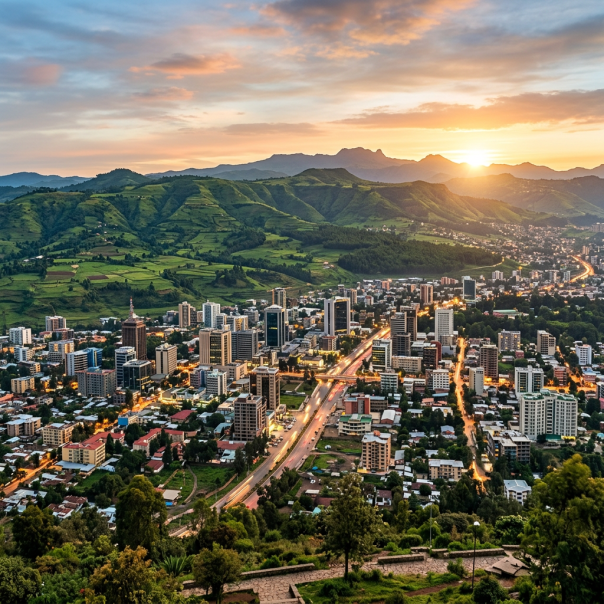
Navigating History, Constitutional Rights, and the Complex Realities of Governance
By Jafer Ali
The question of Finfinne—the city known internationally as Addis Ababa—and its surrounding areas, including Dirree Dhawaa, has long been one of the most contentious and emotionally charged issues in Ethiopian political discourse. For the Oromo people, Finfinne is not merely a city; it is the heart of their ancestral homeland, a symbol of their historical presence, and a constitutional matter that has yet to be resolved. For others, it is the capital of Ethiopia, the seat of the federal government, and a city that belongs to all Ethiopians.
The debate has intensified as the national dialogue process unfolds, and the question of how to resolve the status of Finfinne and Dirree Dhawaa has become central to discussions about the future of Ethiopia’s federal system, ethnic relations, and governance structure.
This article seeks to explore the key questions surrounding Finfinne and Dirree Dhawaa, examining the constitutional, historical, political, and practical dimensions of the issue. It argues that a sustainable solution must move beyond simplistic claims of ownership and instead focus on a framework of mutual consent, shared benefit, and constitutional fidelity.
The Key Questions
The debate over Finfinne and Dirree Dhawaa can be distilled into two fundamental questions:
1. What does the Constitution say?
The Ethiopian Constitution, adopted in 1995, establishes the federal structure of the country and recognizes the rights of nations, nationalities, and peoples. Article 49(5) specifically recognizes Oromia’s “special interest” in Finfinne regarding social services, natural resources, and joint administrative matters arising from the city’s location within the State of Oromia.
This constitutional provision has been the subject of intense debate. For Oromo advocates, it represents a legal acknowledgment of the city’s historical and geographical connection to Oromia—a connection that has never been fully implemented. For others, the provision is a compromise that balances the city’s role as the federal capital with the rights of the surrounding region.
2. What does the people demand?
The Oromo people’s demand regarding Finfinne and Dirree Dhawaa is clear and consistent: the city is Oromo land, and its rightful owners are the Oromo people. The demand is often framed as a call for the city to be placed under the administrative jurisdiction of the Oromia Regional Government or for the Oromo people to have greater control over the city’s governance and resources.
This demand is rooted in a historical narrative that the city was established on Oromo land through conquest and dispossession, and that the Oromo people have never consented to the city’s status as a separately administered entity.
The Need for a Balanced Approach
The challenge of resolving the status of Finfinne and Dirree Dhawaa lies in reconciling these two perspectives. On one hand, the Oromo people’s historical and constitutional claims cannot be ignored. On the other hand, the city’s role as the federal capital, its international significance, and the presence of diverse communities cannot be dismissed.
A balanced approach must consider the following dimensions:
1. The Constitutional Dimension
The Constitution provides a starting point for resolving the issue. Article 49(5) recognizes Oromia’s special interest in Finfinne, but the provision has never been fully implemented. A sustainable solution must begin by implementing this constitutional provision through joint administrative mechanisms, resource-sharing agreements, and coordinated governance frameworks.
However, any implementation must respect the city’s role as the federal capital and the rights of all its residents. The Constitution does not provide for the city to be placed under Oromia’s exclusive administrative control. Rather, it envisions a framework of cooperation and shared responsibility.
2. The Historical Dimension
The Oromo people’s historical connection to Finfinne is a fact that must be acknowledged. The area known as Finfinnee was inhabited by Oromo people before the expansion of the Ethiopian Empire, and the city’s name itself is Oromo, meaning “place of hot springs.”
But historical claims alone cannot determine the city’s future. The city has evolved over the past century into a multi-ethnic metropolis that is home to people from across Ethiopia. The current residents—Oromo, Amhara, Gurage, Tigrayan, and others—have legitimate claims to the city as their home. A just solution must respect both the historical rights of the Oromo people and the contemporary rights of all residents.
3. The Political Dimension
The status of Finfinne and Dirree Dhawaa is a political question that requires political solutions. It cannot be resolved through unilateral declarations or zero-sum demands. It requires negotiation, compromise, and good-faith dialogue between the federal government, the Oromia regional government, and other stakeholders.
The political dimension also includes considerations of power, representation, and resource allocation. Any solution must ensure that the Oromo people have a meaningful voice in the governance of the city while also ensuring that all residents are treated equally and fairly.
4. The Practical Dimension
Finfinne is not just a symbol; it is a functioning city with millions of residents, extensive infrastructure, and a critical role in Ethiopia’s economy and international relations. The city is home to the African Union headquarters, numerous diplomatic missions, and major economic enterprises.
Any change in the city’s governance must consider the practical implications for its residents, businesses, and international partners. Disruption to the city’s administration could have far-reaching consequences that extend beyond Oromia.
The Complexities of the Dirree Dhawaa Question
While the focus has often been on Finfinne, the question of Dirree Dhawaa is equally significant. Dirree Dhawaa is a symbol of Oromo resistance—a site where the Oromo people have gathered to demand their rights and have faced repression from state forces.
The status of Dirree Dhawaa is closely linked to the broader question of Oromo land rights and the expansion of the capital. The area is located within Oromia and has been the focus of protests and resistance. A sustainable solution for Finfinne must also address the concerns of communities in Dirree Dhawaa and other surrounding areas.
The Risk of Unilateral Decisions
The debate over Finfinne and Dirree Dhawaa is not without risk. Unilateral decisions—whether by the federal government or the Oromia regional government—could have serious consequences. As history has shown, when the boundaries of the capital were previously redrawn, it led to widespread protests, conflict, and political instability.
The controversy over the 2014 Finfinne Integrated Development Master Plan highlighted these risks. The proposed expansion of the capital into surrounding Oromia districts led to widespread protests that spread throughout Oromia and eventually led to the cancellation of the plan. The experience demonstrated that decisions made in the capital directly affect neighboring Oromo communities, and that meaningful consultation and participation are essential.
The Need for Comprehensive Analysis
Before any decision is made on the status of Finfinne and Dirree Dhawaa, a comprehensive analysis is needed. This analysis should consider:
- The interests of all residents: The rights and needs of all residents of the city must be respected.
- The interests of the Oromo people: The historical and constitutional claims of the Oromo people must be acknowledged.
- The interests of the federal government: The city’s role as the federal capital must be protected.
- The interests of the Oromia regional government: The region’s constitutional rights and interests must be respected.
- The interests of the broader Ethiopian people: The solution must serve the long-term stability and unity of the country.
A Possible Framework for Resolution
A sustainable resolution to the status of Finfinne and Dirree Dhawaa must be based on mutual consent, shared benefit, and constitutional fidelity. A possible framework could include:
1. Implementation of Constitutional Provisions
Oromia’s special interest in Finfinne, as recognized in Article 49(5), should be implemented through joint administrative mechanisms that ensure meaningful Oromo participation in decisions affecting the city and surrounding communities. This could include joint committees, shared decision-making structures, and resource-sharing agreements.
2. Recognition of Historical Rights
The Oromo people’s historical connection to Finfinne and Dirree Dhawaa should be recognized through cultural institutions, public acknowledgment, and educational programs that celebrate the city’s diverse history.
3. Fair Development and Consultation
Urban expansion and development should be planned with meaningful consultation with affected communities, ensuring fair compensation, environmental protection, and shared benefits.
4. Inclusive Governance
All residents of Finfinne—regardless of ethnicity—should have equal rights to participation, public services, and legal protection. The city’s governance should reflect its diversity and ensure that all voices are heard.
5. Shared Prosperity
The economic benefits of the capital’s growth should be shared with surrounding communities, creating a virtuous cycle of development rather than a pattern of exploitation.
The Role of Dialogue and Mutual Consent
Ultimately, the solution to the status of Finfinne and Dirree Dhawaa must be based on dialogue and mutual consent. The federal government and the Oromia regional government must engage in good-faith negotiations to find a mutually acceptable governance framework.
The national dialogue process provides an opportunity to address this issue in a comprehensive and inclusive manner. However, the dialogue must be genuine, transparent, and committed to finding a solution that serves the interests of all parties.
Conclusion: Toward a Just and Sustainable Future
The question of Finfinne and Dirree Dhawaa is one of the most complex and consequential issues facing Ethiopia today. It touches on history, identity, constitutional rights, governance, and the future of the nation.
A sustainable solution cannot be based on unilateral declarations, zero-sum demands, or the denial of legitimate rights. It requires a commitment to dialogue, constitutional fidelity, and the recognition that the interests of all parties—the Oromo people, the residents of the city, the federal government, and the broader Ethiopian people—must be balanced.
The status of Finfinne and Dirree Dhawaa is not just a question of ownership—it is a question of justice, governance, and the future of Ethiopia itself.
Injifannoon Ummata Oromoo!
Finfinne haa jabaattu!
Nagaan haa bulaa!
This feature article is dedicated to all those who are committed to finding a just, constitutional, and sustainable solution to the status of Finfinne and Dirree Dhawaa.

Irreechaa: The Oromo Thanksgiving — A Celebration of Creation, Renewal, and Gratitude
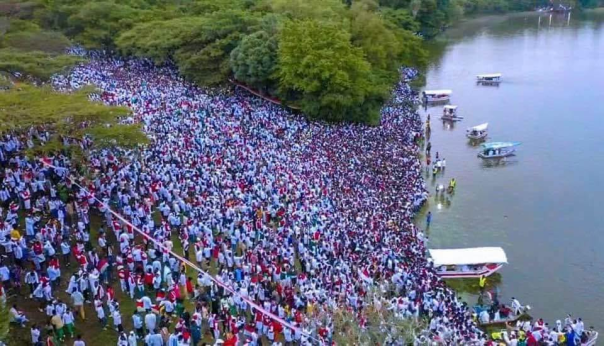
Honouring Waaqa Through Ancient Rituals of Rain, Peace, and Fertility
By Dhabessa Wakjira
In the heart of the Oromo nation, a sacred tradition unfolds each year—a celebration that connects the living to their creator, their ancestors, and the natural world that sustains them. Irreechaa is more than a cultural festival; it is the spiritual heartbeat of the Oromo people, a profound expression of thanksgiving to Waaqa (God) for the gift of life, the renewal of the seasons, and the promise of abundance.
As the Oromo people gather at sacred sites—atop mountains, along riverbanks, and around the shores of lakes—they carry bunches of fresh grass and flowers, symbols of creation and gratitude. They sing, they pray, and they reaffirm their faith in the one universal creator. This is Irreechaa: the Oromo Thanksgiving Day.
The Oromo Belief in One God: Waaqa Tokko
The Oromo people are one of the indigenous peoples of East Africa, with a rich cultural heritage that stretches back millennia. Central to their worldview is a profound and unwavering belief in monotheism—the belief in one God, whom they call Waaqa.
The Oromo are not fetishists. They do not worship the forces of nature; rather, they see in them the manifestations of Waaqa’s power and wisdom. The Oromo people hold this faith so deeply that any expression of doubt regarding the unity of God is met with strong protest. For the Oromo, there is and will always be but one God—Waaqa Tokko—the unique, universal creator and master of all existence.
This belief is the foundation upon which the Irreechaa ceremony is built. It is a celebration not of nature itself, but of the creator whose wisdom and power are revealed through nature’s beauty, fertility, and renewal.
The Gadaa System and Qaalluu Institution: The Framework of Irreechaa
To fully understand Irreechaa, one must understand the broader cultural and political systems of the Oromo people, particularly the Gadaa system and the Qaalluu institution.
The Gadaa system is a millennia-old democratic governance structure based on generational age sets, egalitarian principles, and rotating leadership. It has been recognized by UNESCO as part of the Intangible Cultural Heritage of Humanity. The Qaalluu institution, on the other hand, is the spiritual authority that maintains harmony between society, nature, and the spiritual realm.
Irreechaa is intimately connected to both. The Qaalluus (spiritual leaders) and the Abbaa Malkaas (lineal chiefs of the areas) are at the top hierarchies of the ritual. The Qaalluus give instructions and directives regarding the location and timing of the ritual, ensuring that it is conducted in accordance with ancient traditions.
The Philosophy of Irreechaa: Life, Death, and Resurrection
Irreechaa is not merely a ritual; it is a comprehensive philosophical worldview that reflects the Oromo people’s understanding of existence.
The ceremony embodies a profound admiration for the miraculous spiritual powers of Waaqa and the living secret of generation. The ever-greenness and productivity of plants, the regeneration of life, the replacement of the old by the new, and the death and resurrection of fruits are seen as manifestations of Waaqa’s wisdom.
According to this belief, all is accomplished by the will of Waaqa.
The cycle of seasons—the death of vegetation in the dry season and its resurrection with the rains—is likened to the cycle of life itself. It reflects a philosophy of life after death, of renewal, and of hope.
Historically, this worldview is believed to have originated from the ancient Cushitic people living along the Nile Valley. While the Oromo Waaqeffannaa is not identical to the religious practices of these ancient peoples, it shares a common origin in the Nile Valley Cushitic civilization.
The Two Major Irreechaa Celebrations
The Irreechaa ritual ceremony is conducted at different places and times, governed by its own system and portrayed by its own ritual practices. By and large, it takes place at two major areas:
1. Irreechaa Tulluu — The Mountain Celebration
Irreechaa Tulluu is the ritual ceremony conducted at the top of mountains. It is performed at the beginning of the spring season, usually in the month of March.
For three months prior, the land has endured the harshness of the dry season (bona) . Both people and cattle suffer from drought, shortage of water, and scarcity of grasses. It is during this time of hardship that the Oromo people gather on the mountain tops to pray to Waaqa to send rain, to bring relief, and to restore life to the land.
The mountain tops are solitary places characterized by moisture conducive for praying. This ritual ceremonial practice is said to have closely related to the worship practiced by ancient settlers of peoples of the Nile Valley.
2. Irreechaa Malkaa — The Riverbank Celebration
Irreechaa Malkaa is celebrated immediately after the end of the rainy season, in the middle of September (Fulbaana). It is a time of transition—when the darkness and fog of the rainy season give way to the brightness of spring (Birraa) .
This ritual ceremony is accomplished not only along the banks of rivers but also around lakes and their vicinities. The most famous of these celebrations takes place at Hora Arsadi, near Bishoftu town, a site of profound historical and cultural significance.
This Irreechaa holiday is sometimes known as Ayyaana Birraa (the Birraa holiday). It is the time when relatives, families, and clans, separated by rivers and floods during the rainy season, are able to meet and reconnect.
The Significance of Hora Arsadi
Hora Arsadi, the iconic site of Irreechaa Malkaa, is located adjacent to Bishoftu town, not far from Oda Nabe—one of the Oromo religious, political, and historical centers of ancient times.
The name “Hora Arsadi” is derived from a man named Arsadi, who is said to have belonged to the Liban lineage. The site is a sacred space, where the Oromo people gather annually to give thanks, to pray, and to renew their connection to Waaqa and to each other.
At this site, the Abbaa Malkaas and the Abbaa Gadaas have vital participatory roles. Communities carrying bunches of lovely grasses and flowers in their hands—symbols of creation and abundance—praise, bless, and pray to Waaqa.
The Rituals of Irreechaa
The Irreechaa ceremony is a rich tapestry of song, dance, prayer, and community fellowship.
Carrying the Bunch of Grasses and Flowers
Participants hold in their hands fresh grass and flowers—symbols of the creation they are praising. This act embodies the essence of Irreechaa: “Uumamaan uumaa raajjeeffanna” —we pray and admire the creator having creations in hands.
After the thanksgiving songs are sung, the bunches of flowers and grasses are laid over, symbolizing the offering of gratitude to Waaqa.
The Songs of Irreechaa
The songs of Irreechaa are deeply moving and spiritually charged. The women, decorated in Caaccuu (beads) cultural suits and holding Siiqqee (cultural slender sticks), sing the melody:
“Maareyoo! Maareyoo…!”
The men, holding Harooressa (male sticks), respond with:
“Irrechoo yaa irrecha malkaa roobaafi nagaa…”
This call and response is a prayer for rain, peace, and fertility—for the well-being of the community and the promise of abundance.
The Return Home
After the prayers, all participants return to their villages, accompanying the Abbaa Malkaa and their clan leaders. The journey back is marked by joy, fellowship, and the reaffirmation of community bonds.
Children and Youth Celebrations
Children with peer groups sing seasonal and love songs. This is the season when young people select their partners, give and receive gifts, and express their best wishes to one another through cultural songs. It is a time of hope, renewal, and the celebration of life.
The Cultural and Spiritual Meaning of Irreechaa
Irreechaa embodies the core values of Oromo culture and spirituality:
1. Gratitude to the Creator
The ceremony is an act of thanksgiving, acknowledging that all life and abundance come from Waaqa.
2. Renewal and Hope
Irreechaa marks the transition from hardship to hope, from the scarcity of the dry season to the abundance of spring.
3. Community and Unity
The celebration brings together families, clans, and communities, reinforcing the bonds of kinship and solidarity.
4. Connection to Nature
The use of fresh grass and flowers symbolizes the Oromo people’s deep connection to the natural world and their role as stewards of creation.
5. Peace and Reconciliation
Irreechaa is also a time for reconciliation—for mending relationships, resolving conflicts, and fostering peace within the community.
Irreechaa in the Modern Era
Today, Irreechaa has grown beyond its traditional boundaries. The annual celebration at Hora Arsadi now draws hundreds of thousands of Oromo people from across Ethiopia and the diaspora. It has become a powerful expression of Oromo identity, unity, and cultural pride.
The ceremony has also garnered international recognition. It serves as a reminder of the Oromo people’s rich cultural heritage and their enduring connection to their land, their faith, and their traditions.
In the diaspora, Oromo communities in cities like Minneapolis, Seattle, Melbourne, and Toronto have also begun to celebrate Irreechaa, ensuring that the tradition continues across borders. These celebrations preserve cultural identity, connect younger generations to their heritage, and create spaces for community bonding.
A Call to Preserve and Celebrate
As the Oromo people continue to navigate the challenges of the modern world, Irreechaa remains a source of strength, hope, and identity. It is a reminder of who they are, where they come from, and the values that unite them as a people.
Irreechaa is more than a holiday—it is a way of life. It is a philosophy of gratitude, a celebration of creation, and a reaffirmation of faith in the one universal creator.
As the participants gather at Hora Arsadi and other sacred sites, they carry not just bunches of grass and flowers, but the hopes, prayers, and dreams of an entire nation.
Irreechoo yaa irrecha malkaa roobaafi nagaa!
Injifannoon Ummata Oromoo!
Irreechaa haa jabaattu!
Waaqa haa galatannu!
This feature article is dedicated to the Oromo people—past, present, and future—who carry the spirit of Irreechaa in their hearts, and to the generations yet to come who will continue this sacred tradition.

Finfinne: A Question of Law, Governance, and Political Will
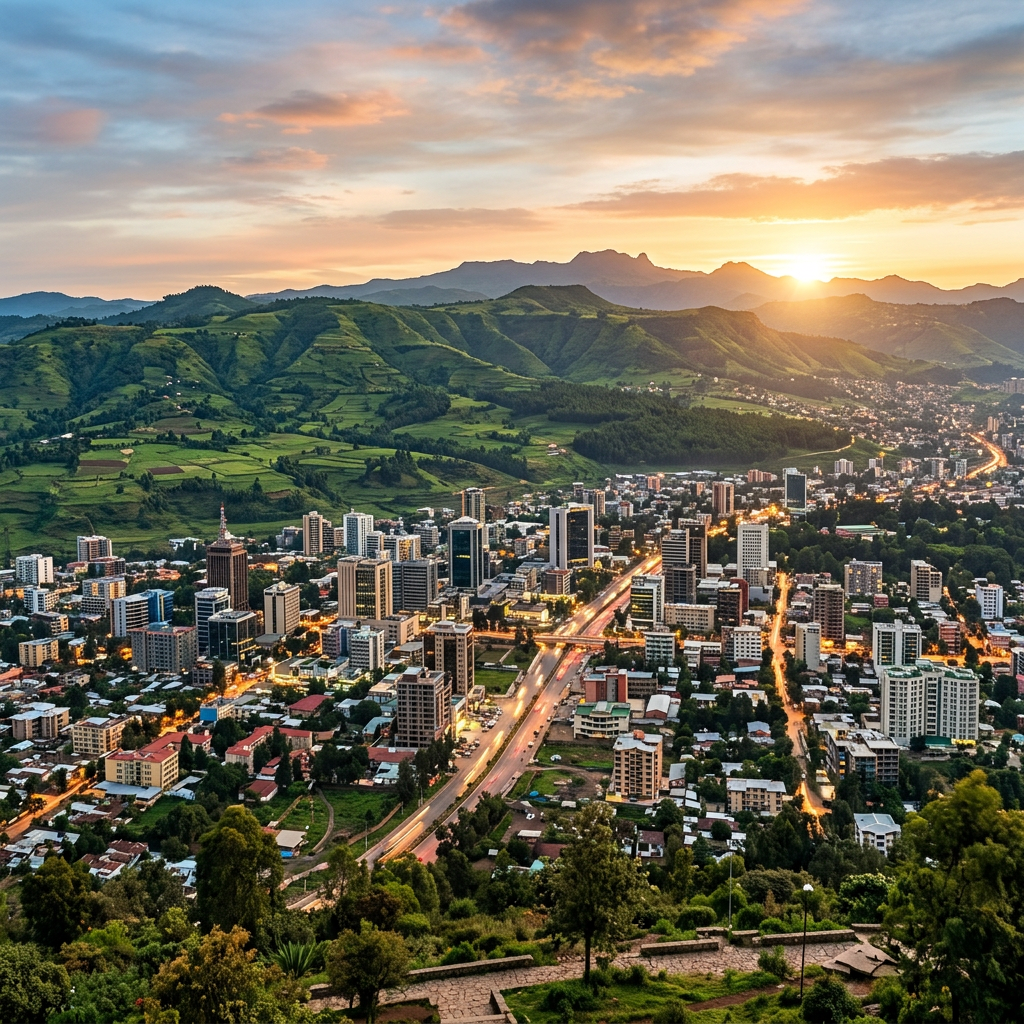
Moving Beyond History to Constitutional and Administrative Solutions
By Birhanu Lenjiso (PhD)
The debate surrounding Finfinne—the city known internationally as Addis Ababa—has long been entangled in competing historical narratives, emotional appeals, and identity politics. But at its core, the question of Finfinne’s status is not primarily historical or geographical. It is a question of law, governance, and political will.
Finfinne is the capital of the Federal Democratic Republic of Ethiopia. It serves as the seat of the federal government. But it is also a city located within the boundaries of Oromia, and this geographical reality carries constitutional implications that cannot be ignored. The distinction between the city’s role as a federal capital and its regional location must be clearly understood if we are to find a sustainable solution.
The Constitutional Framework: A City Within Oromia
Finfinne did not become the capital of Ethiopia because it lacked an owner. It became the capital because the Oromo people—the rightful owners of the land—consented to its role as the seat of the federal government. This consent was formalized in the Ethiopian Constitution, which recognized Oromia’s “special interest” in the city concerning social services, natural resources, and joint administrative matters.
This constitutional recognition is not a declaration of Oromo ownership in the exclusive sense. Rather, it acknowledges a practical reality: the city is located within Oromia, and its daily functioning and development depend on resources, infrastructure, and cooperation from surrounding Oromo communities.
Two distinct dimensions must be clearly distinguished:
- The city’s regional status — its location within Oromia and its relationship with the surrounding communities.
- The city’s federal status — its role as the capital of Ethiopia and the seat of the federal government.
Both dimensions are legitimate and must be respected. The challenge is to find a governance framework that honours both.
The Oromo Position: A Clear and Legitimate Demand
The Oromo people’s demand regarding Finfinne is clear and straightforward: Finfinne should remain the capital of Ethiopia, but its administration should be placed under the jurisdiction of Oromia.
This demand is rooted in the following considerations:
- Geographical Reality: Finfinne is surrounded by Oromia and is an integral part of the Oromo homeland.
- Historical Connection: The area known as Finfinnee has been inhabited by Oromo people for generations and holds deep cultural significance.
- Constitutional Recognition: The Constitution recognizes Oromia’s special interest in the city, a provision that has never been fully implemented.
- Practical Necessity: The city’s development and the well-being of surrounding communities are interconnected and require coordinated governance.
The Oromo position is not a rejection of Finfinne’s role as the federal capital. It is a demand for constitutional implementation, administrative justice, and practical cooperation.
The Importance of Legal and Administrative Clarity
The debate over Finfinne should not be reduced to competing historical claims or identity-based appeals. While history and geography provide important context, the core question is one of law and governance.
What is the legal status of Finfinne?
How should its relationship with Oromia be governed?
How can the constitutional provisions regarding Oromia’s special interest be implemented?
These are the questions that demand answers. Repeatedly invoking historical grievances or geographical arguments without addressing the legal and administrative dimensions does not move the debate forward. It only complicates the process and deepens divisions.
Separating History, Law, Politics, and Identity
To make progress on the Finfinne question, we must develop the discipline of separating different dimensions of the issue:
- History: The historical connection between the Oromo people and the land on which Finfinne was built is a fact. It is not a question—it is a reality that must be acknowledged.
- Geography: The city is located within Oromia. This is a geographical fact, not a political claim. It has implications for governance, resource sharing, and administrative cooperation.
- Constitutional Law: The Constitution recognizes Oromia’s special interest in Finfinne. This is a legal provision that requires implementation. How this implementation should occur is a matter of legal interpretation and political negotiation.
- Politics: The demand for administrative control over Finfinne is a political question. It is subject to debate, negotiation, and compromise. It is not a historical or geographical inevitability—it is a matter of political will and constitutional interpretation.
- Identity: Finfinne holds deep cultural and symbolic meaning for the Oromo people. This identity dimension must be respected, but it should not dominate the legal and administrative discussions.
By separating these dimensions, we can engage in a more productive and less emotionally charged debate.
The Need for a Framework Agreement
The Finfinne question will not be resolved through unilateral declarations or zero-sum demands. It requires a framework agreement that addresses the following key issues:
- Constitutional Implementation: How can Oromia’s special interest in Finfinne be implemented in practice? What joint administrative mechanisms are needed?
- Administrative Relations: How should the federal government, the Oromia regional government, and the city administration coordinate their activities?
- Resource Sharing: How should the city’s resources—including land, water, and infrastructure—be managed in a way that benefits both the city and surrounding communities?
- Development Planning: How can urban expansion and development be planned in a way that respects the rights and interests of affected communities?
- Citizen Participation: How can all residents of Finfinne—regardless of ethnicity—participate in the governance of the city?
Such an agreement must be based on mutual respect, constitutional fidelity, and a commitment to justice.
The Danger of Historical Simplification
One of the greatest obstacles to resolving the Finfinne question is the tendency to reduce complex issues to simplistic historical claims.
Those who argue that Finfinne is simply “Oromo land” or that it is simply “Ethiopian capital” are missing the point. The city is both. It is the capital of Ethiopia and the historical heart of Oromia. These two truths are not contradictory—they are complementary.
The challenge is to create governance arrangements that honour both truths. This requires moving beyond historical claims and engaging in practical, constitutional discussions.
A Call for Pragmatism and Cooperation
The Finfinne question has been debated for decades. It has been the source of conflict, protest, and political tension. It has divided communities and strained relationships. But it does not have to be a source of endless conflict.
A sustainable solution requires:
- Acknowledgment of Historical Facts: The Oromo people’s historical connection to Finfinne must be acknowledged. This is not a concession—it is an acknowledgment of reality.
- Respect for Constitutional Provisions: Oromia’s special interest in the city, as recognized in the Constitution, must be implemented. The Constitution is not a suggestion—it is the supreme law of the land.
- Political Will: The federal government and the Oromia regional government must engage in good-faith negotiations to find a mutually acceptable governance framework.
- Focus on Practical Solutions: The debate should focus on practical questions of governance, resource sharing, and administrative coordination—not on abstract claims of ownership or identity.
Conclusion: A Path Forward
The Finfinne question is ultimately a question of law and governance. It is about how the city should be administered, how resources should be shared, and how the relationship between the city and surrounding communities should be governed.
The Oromo people’s demand—that Finfinne remain the capital of Ethiopia while its administration is placed under Oromia—is a legitimate political claim. It is rooted in constitutional provisions, historical realities, and practical considerations. It deserves to be taken seriously.
But the resolution of this question will not come from historical debates or identity-based appeals. It will come from good-faith negotiations, constitutional implementation, and a commitment to justice.
Let us focus on the law.
Let us focus on governance.
Let us focus on practical solutions.
Let us build a future where Finfinne serves as a city for all Ethiopians while honouring its historical and constitutional relationship with Oromia.
Injifannoon Ummata Oromoo!
Finfinne haa jabaattu!
Oromia fi Finfinne walitti haa qabatan!
This feature article is based on the reflections of Dr. Birhanu Lenjiso and is dedicated to all those who are committed to finding a just, constitutional, and lasting solution to the question of Finfinne.

A Historical Reflection on the Betrayal of Abiishee Garbaa: Lessons for the Oromo Struggle Today
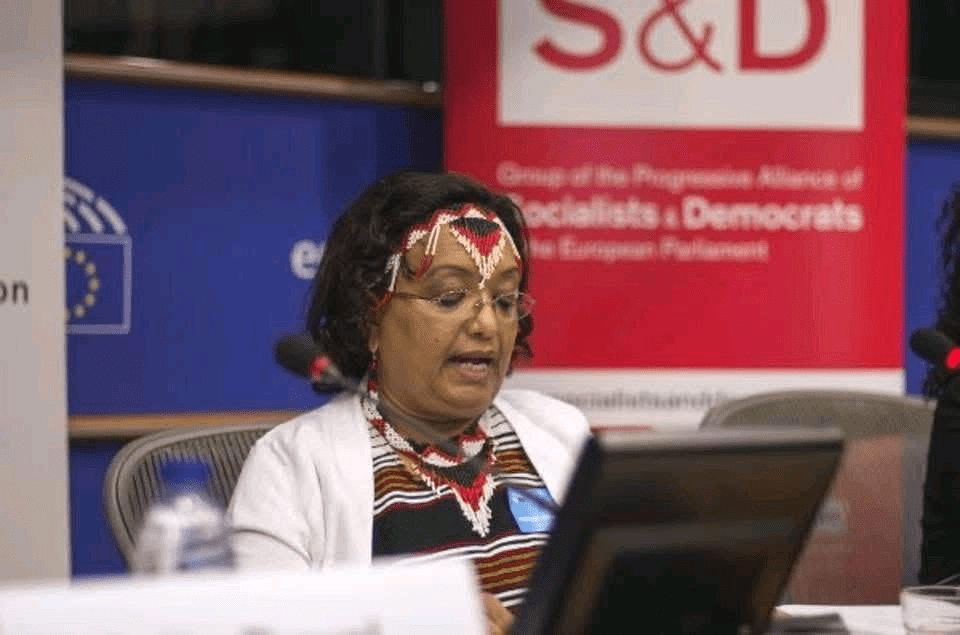
How Deception, Diplomacy, and Divide-and-Rule Tactics Defeated a Leader—and What the Oromo Liberation Army Must Learn
By Dinknesh Dheeressaa
As I observe the events unfolding in our midst today, I am reminded of a painful chapter in Oromo history—the story of Abiishee Garbaa, a leader whose fate was sealed not by the strength of his enemies on the battlefield, but by their cunning, deception, and manipulation of Oromo unity.
This is not merely a tale of the past. It is a mirror held up to the present. The same tactics that brought down Abiishee Garbaa are being employed today against the Oromo people and their liberation struggle. The question we must ask ourselves is: Have we learned the lessons of history?
The Historical Context: Abiishee Garbaa and the Gojjam Invasion
According to the authoritative book “Seenaa Abiishee Garbaa fi Gootota Oromoo Biroo” by Ginbaar Nagaraa Kumsaa (2013), the story of Abiishee Garbaa is one of betrayal, deception, and the tragic fragmentation of Oromo unity .
In the years 1854/55, following the death of Garbaa Huruubaa—the ruler of Horro and Abiishee’s father—the region fell into political turmoil. No new leader had been appointed to rule Horro, and this power vacuum was exploited by the Gojjam forces. They crossed the Mormor River through Amuru and launched a devastating campaign against the Horro people .
Abiishee, compelled to defend his people and claim his father’s legacy, mobilized his forces. He gathered the Qondaaltota (warriors) of Horro and successfully repelled the Gojjam invaders. Despite multiple attempts, the Gojjam forces could not defeat Abiishee in direct military confrontation .
But they did not need to.
The Tactics of Deception: Divide, Bribe, and Betray
Unable to defeat Abiishee through conventional warfare, the Gojjam forces turned to a different strategy: division and deception.
They exploited internal rifts within the Horro leadership. One of Abiishee’s own commanders, Soorii Galaa, who had opposed Abiishee’s leadership, defected to the enemy. Soorii Galaa fled to Gojjam, where he was received and employed. He then conspired to betray his people, using his insider knowledge to undermine Oromo resistance .
This pattern is all too familiar. As the Oromo proverb says: “Soogiddaan soogidda cabsu” —”Salt breaks salt.” The enemy does not always need to destroy you from the outside. Often, they find someone from within to do the work for them.
The Gojjam forces used a combination of modern weaponry, espionage, bribery, and deception. They pitted Oromo leaders against each other, spreading rumours, creating alliances based on false promises, and exploiting personal ambitions and grievances to shatter the unity of the Oromo people .
The Role of Qadiidaa Wannabee: False Diplomacy and Betrayal
The most infamous act of deception was the role of Qadiidaa Wannabee. Unable to defeat Abiishee through force, the Gojjam forces enlisted Qadiidaa to lure Abiishee into a trap through the promise of peace. Qadiidaa went to Abiishee, swore oaths of friendship, and assured him that the Gojjam forces were sincere in their desire for reconciliation .
Abiishee, believing in the promise of peace, agreed to meet the Gojjam forces at a location they had prepared. He set out without his weapons—unarmed, trusting in the word of Qadiidaa.
But it was a trap.
As Abiishee entered the camp of the Gojjam forces, the Amhara forces, who had been lying in wait, surrounded him. Soorii Galaa—the defector—served as the translator. Abiishee was disarmed and taken captive .
The Humiliation and Tragic End
Abiishee was not given a warrior’s death. Instead, he was subjected to unspeakable humiliation. He was bound with heavy wooden yokes—the same yokes used to bind oxen. He was paraded and forced to walk to Gojjam. Stripped of his dignity, his clothing, and his freedom, he was led like an animal before his enemies.
According to the account, when Abiishee realized the depth of the deception and the humiliation he had been forced to endure, his grief and rage were so overwhelming that he chewed off his own fingers in despair .
This tragic ending is a searing reminder: when unity is broken, when trust is misplaced, when the enemy’s diplomacy is a mask for violence, the price is catastrophic.
The Relevance of History: The Oromo Liberation Army Today
The story of Abiishee Garbaa is not just a historical curiosity. It is a lesson for the Oromo Liberation Army (WBO) today. As the armed wing of the Oromo struggle, the WBO faces challenges that echo the past:
1. The Danger of Deception and False Diplomacy
Today, the Ethiopian government and its allies are skilled in the same tactics that defeated Abiishee. They offer peace, dialogue, and reconciliation—but often, these are merely tools for disarmament and control. The legacy of Qadiidaa Wannabee lives on. Abiishee’s mistake was trusting the word of an enemy who offered peace while preparing to destroy him.
The WBO must remain vigilant. Not every hand extended in peace is sincere. Some are reaching for a weapon.
2. The Need for Unity
Abiishee’s downfall was accelerated by division within his own leadership. The defection of Soorii Galaa and the internal conflicts among the Horro commanders fractured their resistance. The enemy exploited these divisions masterfully.
The WBO must guard against internal fragmentation. The Oromo struggle is a collective effort, and unity is its greatest strength. As the Oromo saying goes: “Tokkummaan jabina” —”Unity is strength.”
3. The Power of Knowledge and Preparation
Abiishee’s defeat was also a failure of intelligence and preparation. He underestimated his enemies, overestimated their sincerity, and failed to anticipate the trap they had set.
The WBO must prioritize intelligence, strategy, and preparation. The enemy is often more cunning than they appear. Knowledge of history, awareness of tactics, and readiness for deception are essential weapons in the struggle.
The Broader Lesson: History Must Not Be Forgotten
The story of Abiishee Garbaa is part of the larger history of Oromo resistance—a history that has been systematically suppressed and erased. As one historian notes, studies focusing on the history of Oromo heroes like Abiishee Garbaa are relatively scarce, and the historical narratives have often been shaped by external perspectives .
Recovering and teaching Oromo history is therefore a political act. It is an act of resistance against the erasure of Oromo identity and memory. It is a way of ensuring that the mistakes of the past are not repeated.
The book “Seenaa Abiishee Garbaa fi Gootota Oromoo Biroo” is one such effort to reclaim that history. By telling the stories of Oromo heroes, it provides the younger generation with the knowledge they need to continue the struggle with wisdom and determination.
A Call to Action: Learn from the Past, Build for the Future
The story of Abiishee Garbaa is a cautionary tale. It reminds us that the struggle for Oromo liberation is not only a battle against external enemies but also against internal divisions and naivety.
Today, the Oromo Liberation Army and the broader Oromo movement face challenges that require wisdom, unity, and vigilance. The Ethiopian government continues to use the same tactics of divide-and-rule that were employed against Abiishee. False diplomacy, offers of peace, and political manipulation are still weapons in their arsenal.
The lesson is clear: the enemy does not always come with guns. Sometimes they come with promises.
The WBO and all Oromo people must learn from the mistakes of the past. They must:
- Study history to understand the tactics of their enemies.
- Remain united and guard against internal division.
- Be vigilant in the face of false diplomacy.
- Prepare strategically for both political and military challenges.
Conclusion: Honouring the Memory of Abiishee Garbaa
Abiishee Garbaa was a leader who fought bravely to defend his people and his land. He was defeated not by a stronger enemy on the battlefield, but by betrayal, division, and deception. His story is a tragedy—but it is also a lesson.
As Dinknesh Dheeressaa reminds us: “The wounds of history are not just memories; they are warnings. They tell us what we must not do again.”
The Oromo struggle has been marked by many such tragedies. But each tragedy has also produced heroes, martyrs, and lessons. If we honour the memory of Abiishee Garbaa, we must do so by learning from his story—by ensuring that the same mistakes are not repeated.
Let us learn from the past so that the future may be free.
Injifannoon Ummata Oromoo!
Seenaa haa barannu!
WBO haa jabaattu!
This feature article is based on the reflections of Dinknesh Dheeressaa and is dedicated to all those who continue to struggle for Oromo liberation and who seek wisdom from the lessons of history.

The Unrelenting Reactionary Force: A Reflection on Ethiopia’s National Dialogue and the Battle for Constitutional Integrity
Confronting the Forces That Seek to Undermine Ethiopia’s Federal Foundation
By Dereje Gerefa Tullu
For over three decades, the Ethiopian Constitution has served as the foundational document upon which the country’s federal system was built. It enshrined the rights of nations, nationalities, and peoples—including the right to self-determination, cultural recognition, and political participation. It was a historic compromise, an attempt to address the historical grievances of marginalized communities and build a new Ethiopia based on equality and justice.
Yet, from the moment it was adopted, there have been forces that have sought to undermine it. These forces—reactionary in their orientation—have never accepted the constitutional order. They have never reconciled themselves to the reality that Ethiopia is a country of diverse nations and nationalities with equal rights. And now, as the national dialogue unfolds, they have emerged once again, more vocal and more aggressive than ever.
This is a reflection on the reactionary forces that have dominated Ethiopia’s political discourse for decades—forces that, under the guise of unity, seek to reimpose a centralized, assimilationist order that has been rejected by the Ethiopian people.
The Assault on the Constitution: Erasing Nations and Nationalities
The reactionary forces have made their agenda clear. They have targeted the very language of the Constitution, particularly the phrase “nations and nationalities” that appears in its preamble. They argue that this language is divisive, that it undermines national unity, that it must be replaced with something more “inclusive”—a term that, in practice, means something far more sinister.
“The phrase ‘nations and nationalities’ bothers me,” they declare. “It should be removed.”
When the ruling Prosperity Party proposed replacing it with “Ethiopian nationalities” —a gesture toward the reactionaries—it was not enough. They demanded more. They insisted that the very recognition of distinct nationalities be erased entirely, replaced by a homogenized “Ethiopian” identity that denies the reality of the country’s diversity.
No one outside the reactionary camp has asked for this. No one has demanded that the Constitution’s recognition of nations and nationalities be removed. This is not a popular demand—it is the agenda of a minority that refuses to accept the constitutional order.
The Attack on Self-Determination: Article 39 Under Fire
If the preamble was the first target, Article 39 of the Constitution—which enshrines the right to self-determination, up to and including secession—has been the primary focus of the reactionary assault.
“Remove the right to secession,” they demand. “Why should the Constitution include such a dangerous provision?”
Despite the fact that the right to self-determination is a fundamental principle of international law, despite the fact that it is recognized in constitutions around the world, the reactionaries have never accepted it. They see it as a threat to their vision of a centralized Ethiopian state.
“We Ethiopians are not interested in secession,” they insist. “We are interested in unity, equality, and brotherhood/sisterhood.”
But if the right to self-determination is not a threat, if it is simply a constitutional safeguard, then why do they want it removed? The answer is clear: because they do not trust the Ethiopian people. They do not believe in democracy. They do not believe that the people, if given the choice, would choose to remain united. They want to deny the people that choice—not because they believe in unity, but because they believe in control.
The Land Question: Undermining Oromo’s Constitutional Rights
The reactionary forces have also targeted Article 49(5) of the Constitution, which recognizes Oromia’s “special interest” in Finfinne concerning social services, natural resources, and joint administrative matters.
“Remove Oromia’s special interest,” they demand. “Why should Oromia have a special interest in the capital?”
They argue that because Finfinne is surrounded by Oromia, and because the city’s daily activities and development depend on resources from Oromia, this constitutional provision is somehow unfair. They have called for the complete removal of any reference to Oromia in the Constitution’s treatment of the capital.
“The national dialogue is completely under the control of Oromia’s Prosperity Party,” they have claimed on social media. “It is rigged.”
Despite the fact that Finfinne has historically been the capital of Ethiopia and the seat of the federal government, the reactionary forces have framed Oromia’s constitutional interests as a threat. They have campaigned relentlessly to delegitimize these provisions and to marginalize the Oromo people in their own capital.
The Land Question: Property, Access, and Control
The reactionary forces have also weighed in on the land question, challenging the constitutional principle that land is the common property of the state and the people. They have demanded that private property rights be expanded to include land—a demand that would fundamentally alter the socio-economic order of Ethiopia.
“Land should be private,” they declare.
When it was suggested that some form of private land ownership could be introduced, the reactionary forces were not satisfied. They insisted that the only reason private land ownership was not already enshrined in the Constitution was the treachery of the previous regime, the EPRDF. They dismissed any attempt at compromise and insisted on the full privatization of land—a demand that would disproportionately benefit the wealthy at the expense of farmers and rural communities.
The Historical Revisionism: A Convenient Amnesia
The reactionary forces have also engaged in historical revisionism. They have argued that Finfinne has always been the capital of Ethiopia, that it has always been the capital of the Shoa region, and that there is nothing exceptional about this arrangement.
“Under the Emperor, Finfinne was the capital of Ethiopia and Shoa. Under the Derg, it was the capital of Ethiopia, the Shoa Province, and the Administrative Region. Under the EPRDF and Prosperity Party, it has been the capital of Ethiopia and Oromia. Nothing has changed.”
But this is a convenient amnesia. The fact that Finfinne has served as the capital is not in dispute. What is in dispute is whether the Oromo people have a constitutional and historical stake in the city. Article 49(5) was not invented by the current regime—it was a product of the EPRDF era, adopted with the consent of all parties.
The reactionary forces have conveniently forgotten that the EPRDF itself faced a crisis when it attempted to revise the capital’s status. The Oromo people protested, and the attempt failed. The current regime itself is a product of that crisis—a crisis that was caused precisely by the refusal to respect Oromo rights.
“If the Prosperity Party does not change Oromia’s capital from Finfinne to something else,” the reactionaries now declare, “then Prosperity Party itself is OLF.”
The Flag: A Symbol of Unity or Division?
The reactionary forces have even gone after the Ethiopian flag, arguing that the star represents nations and nationalities and that this is somehow divisive.
“If the star is meant to represent the equality and unity of the nationalities, then it must be removed,” they insist. “Otherwise, I am willing to go to death.”
When it was suggested that the flag could be discussed as part of the national dialogue, the reactionary forces attacked the dialogue commission and its members for even raising the issue. They accused the Prosperity Party of being willing to “sell out” by even considering changes to the flag.
“The flag is sacred,” they claimed. “Why should it be changed?”
But the flag has been changed before—under the Derg, under the EPRDF, and under the current regime. The Ethiopian flag has always reflected the political order of the time. The reactionaries’ demand that the flag be frozen in amber, that it never change, is not a demand for tradition—it is a demand for control.
The Deception of the Reactionary Forces
The reactionary forces have attempted to frame themselves as defenders of Ethiopian unity. They have attacked the Prosperity Party for being too “soft” on Oromo rights. They have attacked the national dialogue commission for being too “Oromo-dominated.” They have attempted to claim the mantle of Ethiopian nationalism for themselves.
But their actions betray them.
- They refuse to accept the constitutional recognition of nations and nationalities.
- They refuse to accept the right to self-determination.
- They refuse to accept Oromia’s special interest in the capital.
- They refuse to accept the principle of land as common property.
- They have delegitimized the national dialogue before it even began.
They are not defending Ethiopian unity—they are defending their own power. They fear that any recognition of Oromo rights, any acknowledgment of the constitutional order, will diminish their influence. And so they fight tooth and nail to preserve a system that has already been rejected by history.
The Failure of the National Dialogue
The reactionary forces are now attempting to sabotage the national dialogue. They have engaged in a social media campaign to discredit the dialogue commission, to attack its members, and to delegitimize its proceedings.
“The dialogue is a sham,” they have claimed. “It is entirely controlled by Oromia’s Prosperity Party.”
But the reality is different. The national dialogue has brought together a wide range of voices from across Ethiopia. The Oromo representatives, including Qajeelaa Mardaasaa, Sanyii Nagaasaa, and Dr. Saamuel Kiflee, have presented their views. The issues of Finfinne, the capital status, and the constitutional rights of the Oromo people have been discussed.
But the reactionary forces have not accepted the dialogue—they have sought to undermine it. They have attacked the dialogue commission, they have attacked the participants, and they have demanded that the agenda be changed to suit their preferences.
They are not interested in dialogue. They are interested in dictation.
The Need to Confront the Reactionary Forces
The reactionary forces have been allowed to dominate the political discourse for too long. They have been allowed to attack the Constitution, to deny Oromo rights, and to undermine the national dialogue—all in the name of “unity.”
But silence is not a strategy. It is a surrender.
If the reactionary forces are not challenged, they will continue to dominate. They will continue to attack the constitutional order. They will continue to undermine the national dialogue. And they will continue to marginalize the Oromo people and other communities that seek justice and equality.
“If you don’t say ‘enough,’ the reactionary forces will not retreat. They will only grow bolder.”
The time for confrontation is now.
Conclusion: A Choice Between Two Futures
The reactionary forces have made their agenda clear. They want to roll back the constitutional gains of the past thirty years. They want to deny the Oromo people their rights. They want to centralize power and impose a homogenized Ethiopian identity.
But that is not the only future available.
The Oromo people have made their voice heard. They have insisted on the recognition of their rights, the acknowledgment of their history, and the respect of their constitutional position. They have demonstrated that they will not accept a system that denies them justice.
“Finfinne is Oromo. Oromia’s rightful capital must be recognized. The struggle for justice continues.”
The choice is now before the Ethiopian people: Will they allow the reactionary forces to dominate? Will they accept the denial of Oromo rights? Will they embrace a future of equality and justice—or a return to the past?
The time to say “enough” is now.
The time to confront the reactionary forces is now.
The time to build a future of justice and equality is now.
Finfinne is Oromo.
The Constitution must be respected.
The national dialogue must serve the people, not the reactionaries.
The struggle for justice continues.
Injifannoon Ummata Oromoo!
Finfinne haa jabaattu!
This feature article is based on the reflections of Dereje Gerefa Tullu and is dedicated to all those who continue to struggle for justice, equality, and constitutional integrity in Ethiopia.




 Advocacy for Oromia