Revitalizing Oromo History: The Gadaa System as a Source of Democratic Thought
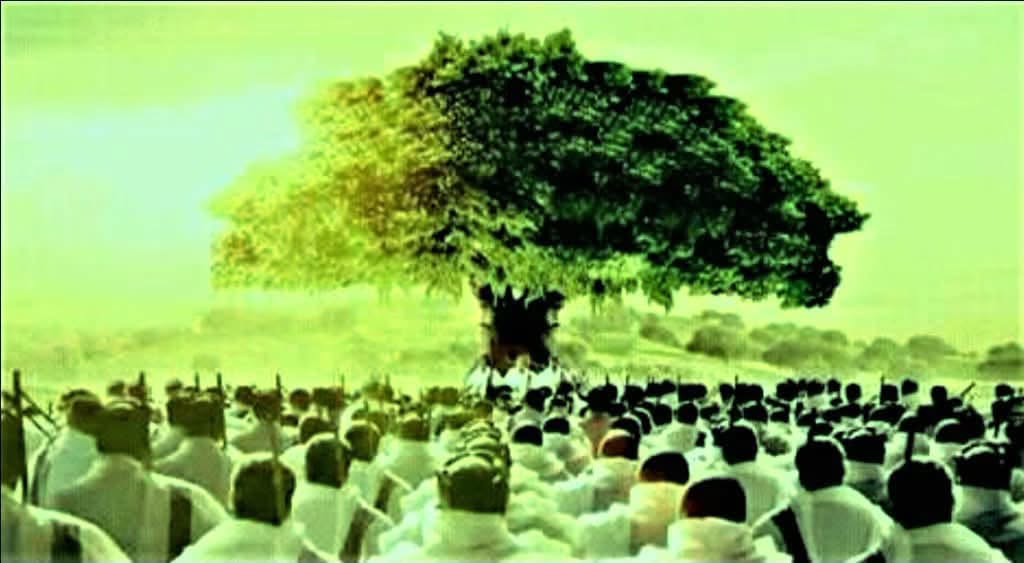
Beyond Culture — Gadaa as a Living Philosophy of Governance, Accountability, and Coexistence
By Hailu Gonfa
As I promised in the first part of this series on “Revitalizing Oromo History,” this second installment delves deeper into the Gadaa system—not merely as a cultural artifact, but as a profound source of democratic principles, governance, and social philosophy that holds invaluable lessons for the Oromo people today.
For too long, Gadaa has been reduced to folklore, song, dance, and ceremonial dress. But to confine Gadaa to the realm of culture alone is to miss its essence. Gadaa was—and remains—a system of governance, law, power-sharing, accountability, and conflict resolution. It is a philosophy of life that offers timeless wisdom on how to organize society, distribute power, and build lasting peace.
2.1. Gadaa Is Not Just Culture
When we speak of Gadaa, we often reduce it to traditional clothing, songs, ceremonies, or rites of passage. These are indeed elements of Gadaa, but they represent only a fraction of its meaning. To see Gadaa only as culture is to miss the forest for the trees.
Gadaa was a comprehensive system of governance that encompassed:
- Leadership and administration — How society was organized and governed.
- Law and justice — How rules were made, interpreted, and enforced.
- Power-sharing — How authority was distributed and transferred.
- Accountability — How leaders were held responsible for their actions.
- Deliberation and decision-making — How collective decisions were reached.
- Conflict resolution — How disputes were mediated and peace restored.
- Resource distribution — How resources were allocated and managed.
To study Gadaa is not merely to study Oromo history; it is to study a sophisticated political and social system that functioned for centuries. It raises fundamental questions: How did a people organize governance long before modern states? Who ruled? How were rulers checked? How were laws made? How was power transferred? How were conflicts resolved?
These are questions that remain relevant today.
2.2. What Is Democracy?
Democracy is often reduced to elections. But elections are only one part of democracy. True democracy encompasses:
- Public participation — The involvement of citizens in decision-making.
- Deliberation — The exchange of ideas and arguments.
- Consensus-building — The search for common ground.
- Accountability — The responsibility of leaders to the people.
- Rule of law — The supremacy of law over individuals.
- Human rights — The protection of fundamental freedoms.
- Limits on power — The prevention of tyranny and abuse.
When we examine Gadaa through this lens, we find striking parallels. Gadaa featured public deliberation, collective decision-making, accountable leadership, and a system of checks and balances. It offered a model of governance that, while distinct from modern democracy, shared many of its core principles.
However, we must be cautious. Gadaa is not identical to modern democracy. And not all modern democracy is derived from Gadaa. The two systems emerged in different historical contexts and reflect different societies. But the parallels are significant enough to merit serious study.
The goal is not to claim that Gadaa was “better” or “worse” than modern democracy, but to understand its principles, learn from its strengths, and apply its lessons to the challenges of today.
2.3. Power Was Never Concentrated in One Person
One of the greatest dangers in any political system is the concentration of power in the hands of a single individual or group. Power, when unchecked, tends to corrupt. When held too long, it becomes tyranny.
In Gadaa, power was never absolute.
Power was distributed, limited, and transferred regularly. It was tied to:
- Time — Power was held for a fixed period.
- Law — Power was exercised within legal boundaries.
- Social roles — Power was shared among different groups and institutions.
- Collective responsibility — Leaders were accountable to the community.
This is a profound lesson: Good governance does not depend solely on good leaders; it depends on a good system. A system that limits power, distributes authority, and holds leaders accountable is more important than the personal qualities of any individual leader.
The Gadaa system understood this. It did not rely on the virtue of a single ruler; it created institutions and processes that prevented the abuse of power.
2.4. Limiting Power: A Lesson from Gadaa
True democracy asks a fundamental question: “Who checks the one who holds power?”
If the answer is “no one,” then democracy is in danger. The Gadaa system offers a powerful answer: power was checked by time, law, social roles, and collective institutions.
- Power was temporary. Leaders served for a fixed term and could not extend their rule arbitrarily.
- Power was bound by law. Even the most powerful leaders were subject to the laws and customs of the community.
- Power was shared. Leadership was distributed among different groups and generations, preventing domination by a single faction.
- Power was accountable. Leaders were expected to answer to the community and could be removed if they failed.
The lesson is clear: Power is not a personal possession; it is a public trust. It carries responsibility, not privilege.
2.5. Deliberation Is the Foundation of Decision-Making
In any society, decisions made without deliberation—without discussion, debate, and the exchange of ideas—may be executed quickly, but they often lack legitimacy and sustainability.
In Gadaa, deliberation was central to decision-making.
- Issues were discussed openly.
- Diverse opinions were heard.
- Consensus was sought.
- Decisions were made collectively.
But deliberation is not just about speaking. It is about listening. It is about considering different perspectives, seeking common ground, and building collective ownership of decisions.
This is a vital lesson for today: Democracy is not just about majority rule; it is about listening to minorities. The loudest voice is not always the right one. The smallest voice deserves to be heard.
2.6. Consensus: From Democracy to Peace
In any society, the existence of diverse opinions is not a problem. The problem arises when diversity of opinion becomes conflict, and conflict becomes chaos.
In Gadaa, reconciliation, deliberation, consensus, and peace were central values. The system understood that unity is not the absence of disagreement, but the ability to manage disagreement peacefully.
Consensus is not a sign of weakness; it is a sign of political maturity. It requires patience, listening, compromise, and a commitment to the common good.
The lesson is clear: Victory is not measured by defeating an enemy, but by bringing that enemy into a relationship of mutual respect and coexistence.
2.7. The Supremacy of Law
Good governance is not defined by the quality of the ruler, but by the supremacy of the law. When the law is applied differently to rulers and to the ruled, injustice prevails.
In Gadaa, law, ethics, and accountability were intertwined. Law was not a tool of the powerful; it was a framework for justice that applied to all.
The lesson is profound: Freedom is not the absence of limits; it is the presence of just limits. True freedom exists within a framework of law, accountability, and mutual respect.
2.8. Reconciliation and Justice
Conflict is inevitable in any society. The question is how it is resolved.
In Gadaa, reconciliation was central to conflict resolution. It was not about forgetting or ignoring harm; it was about:
- Acknowledging the truth — Recognizing the harm that was done.
- Seeking accountability — Holding those responsible to account.
- Repairing relationships — Restoring trust and social bonds.
- Preventing recurrence — Addressing the root causes of conflict.
This is a powerful model for today: reconciliation is not a soft option; it is a demanding process that requires truth, justice, and a commitment to rebuilding relationships.
2.9. Leadership and Accountability
A leader is not merely someone who holds power; a leader is someone in whom the people have placed their trust. This trust is not unconditional.
In Gadaa, leaders were expected to:
- Listen to the people
- Respect the law
- Be accountable for their decisions
- Use power for the public good
- Step down with dignity at the end of their term
The lesson is clear: Leadership is a service, not a privilege. A good leader is not someone who commands obedience, but someone who earns trust and exercises power with accountability.
2.10. The Transfer of Power
One of the greatest challenges in any political system is the peaceful transfer of power. When leaders cling to power as if it were personal property, they create instability.
In Gadaa, the transfer of power was institutionalized and ritualized. It was seen not as a loss, but as a natural and necessary part of the political cycle.
The lesson is clear: Power is not for individuals; it is for the community. The ability to transfer power peacefully is a sign of a mature political system.
2.11. Participation and Inclusion
Governance cannot be separated from the people. People are not passive subjects; they are active participants in their own governance.
In Gadaa, participation was not limited to elites. Different groups—families, clans, age sets, and leaders—had roles and responsibilities in the system.
The lesson is clear: Democracy is not just something that happens in parliament; it must be practiced in families, schools, communities, and every sphere of life.
2.12. A Critical Examination of Gadaa
To revive Oromo history, we must not romanticize Gadaa. We must examine it critically.
- What were its strengths? Its participatory governance, accountability mechanisms, and peaceful conflict resolution.
- What were its limitations? The exclusion of certain groups, particularly women, from full participation in decision-making.
A critical examination of Gadaa does not diminish its value. On the contrary, it gives us a more complete and honest picture of our history—and a richer source of lessons for today.
2.13. Gadaa as a Source of Ideas
The danger is that Gadaa becomes a symbol, a flag, or a costume—something we wave but do not think about. If we want to learn from Gadaa, we must ask the hard questions:
- How do we limit power?
- How do we hold leaders accountable?
- How do we make decisions through deliberation?
- How do we resolve conflicts through reconciliation?
- How do we transfer power peacefully?
- How do we make law supreme?
- What do we pass on to future generations?
These are not just historical questions. They are questions for today and tomorrow. Gadaa offers a starting point for answering them.
2.14. Gadaa and Modern Democracy
We should not isolate Gadaa from the world, nor should we uncritically adopt foreign models. The way forward is to combine:
- Our own experience — The wisdom of Gadaa.
- Global knowledge — Insights from democratic theory and practice.
- Scientific inquiry — Rigorous research and analysis.
Gadaa + Global Democracy + Scientific Inquiry = A Path Forward.
2.15. Is Gadaa Oromo Property or Human Property?
This is a profound question. Gadaa is Oromo history and heritage. But the values embedded in it—deliberation, reconciliation, accountability, limits on power—are universal human values.
Gadaa is Oromo heritage. But its lessons are not for Oromo alone. And at the same time, universalizing Gadaa does not erase its Oromo identity.
The challenge is to honor Gadaa as Oromo history while sharing its wisdom with the world.
2.16. A Message to the New Generation
To the Oromo youth of today:
Do not reduce Gadaa to song, dance, or costume. Carry its ideas.
- See power as accountability, not privilege.
- See deliberation as strength, not weakness.
- See consensus as victory, not surrender.
- See diversity as wealth, not conflict.
- See law as supreme, not individual will.
- See leadership as service, not domination.
- See history as learning, not nostalgia.
If you do this, Gadaa will not be a relic of the past; it will be a living guide for the future.
Conclusion: Revitalizing History, Building the Future
Gadaa is not just about remembering the past. It is about engaging with the questions of today and tomorrow. Oromo history is not a museum; it is a living source of ideas, values, and lessons.
The new generation of Oromo must carry Gadaa forward—not as a heritage to be preserved in isolation, but as a philosophy to be applied in the modern world.
Let us not worship our history; let us study it critically. Let us not only celebrate our heroes; let us also learn from their accountability. Let us not only remember our victories; let us also learn from our defeats.
This is how we revitalize Oromo history. This is how we build the future.
Injifannoon Ummata Oromoo!
Gadaan haa jabaattu!
Seenaan Oromoo haa haaromfu!
This feature article is based on the reflections of Hailu Gonfa and is dedicated to all those who are committed to revitalizing Oromo history, studying the Gadaa system with honesty and rigor, and applying its lessons to the challenges of today.

Posted on August 10, 2026, in Aadaa, Afaan, Bokkkuu, Diaspora, Election, Events, Face of Injustice, family violence, Finfinne, freedom, gadaa, Grief Support, Gumaa, health, Information, Kindness, Language. Bookmark the permalink. Leave a comment.






Leave a comment
Comments 0