Category Archives: OSFANA

Finfinne: A Question of Law, Governance, and Political Will
Moving Beyond History to Constitutional and Administrative Solutions
By Birhanu Lenjiso (PhD)
The debate surrounding Finfinne—the city known internationally as Addis Ababa—has long been entangled in competing historical narratives, emotional appeals, and identity politics. But at its core, the question of Finfinne’s status is not primarily historical or geographical. It is a question of law, governance, and political will.
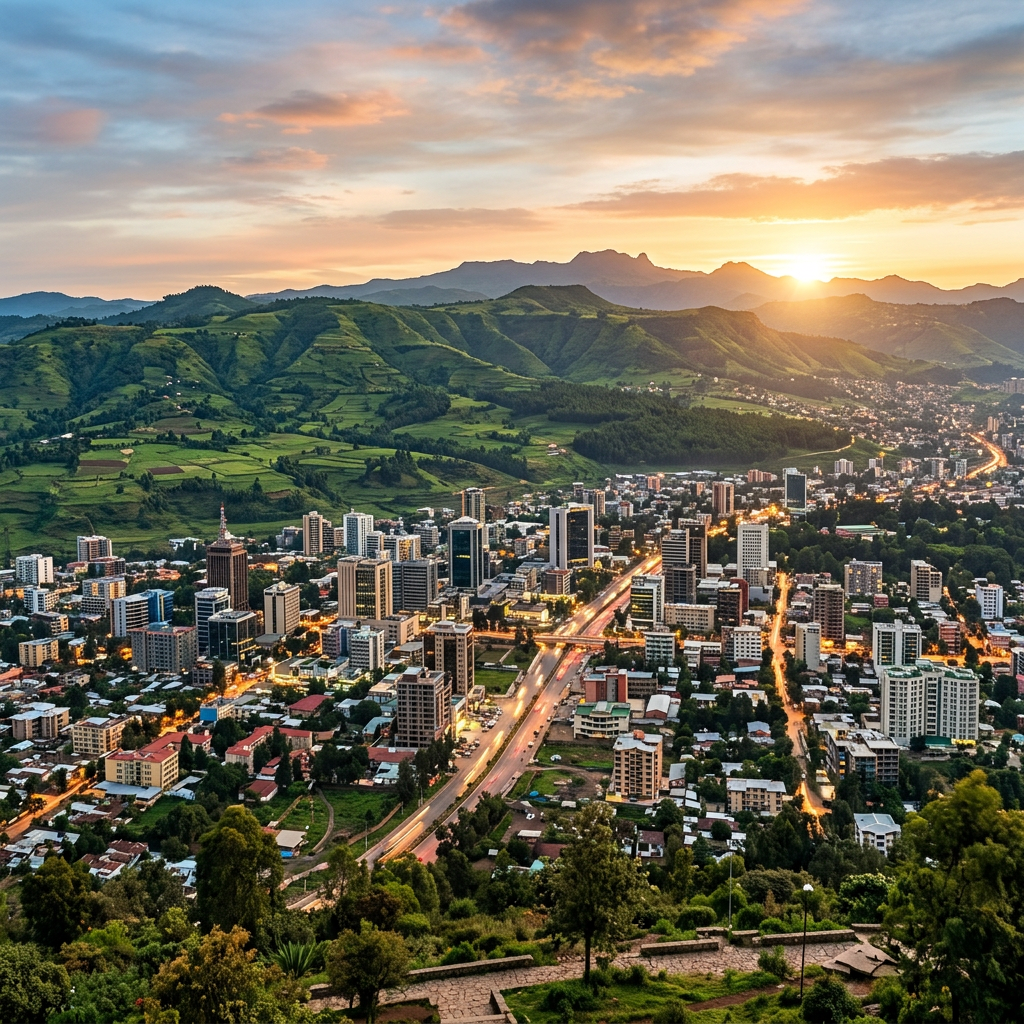
Finfinne is the capital of the Federal Democratic Republic of Ethiopia. It serves as the seat of the federal government. But it is also a city located within the boundaries of Oromia, and this geographical reality carries constitutional implications that cannot be ignored. The distinction between the city’s role as a federal capital and its regional location must be clearly understood if we are to find a sustainable solution.
The Constitutional Framework: A City Within Oromia
Finfinne did not become the capital of Ethiopia because it lacked an owner. It became the capital because the Oromo people—the rightful owners of the land—consented to its role as the seat of the federal government. This consent was formalized in the Ethiopian Constitution, which recognized Oromia’s “special interest” in the city concerning social services, natural resources, and joint administrative matters.
This constitutional recognition is not a declaration of Oromo ownership in the exclusive sense. Rather, it acknowledges a practical reality: the city is located within Oromia, and its daily functioning and development depend on resources, infrastructure, and cooperation from surrounding Oromo communities.
Two distinct dimensions must be clearly distinguished:
- The city’s regional status — its location within Oromia and its relationship with the surrounding communities.
- The city’s federal status — its role as the capital of Ethiopia and the seat of the federal government.
Both dimensions are legitimate and must be respected. The challenge is to find a governance framework that honours both.
The Oromo Position: A Clear and Legitimate Demand
The Oromo people’s demand regarding Finfinne is clear and straightforward: Finfinne should remain the capital of Ethiopia, but its administration should be placed under the jurisdiction of Oromia.
This demand is rooted in the following considerations:
- Geographical Reality: Finfinne is surrounded by Oromia and is an integral part of the Oromo homeland.
- Historical Connection: The area known as Finfinnee has been inhabited by Oromo people for generations and holds deep cultural significance.
- Constitutional Recognition: The Constitution recognizes Oromia’s special interest in the city, a provision that has never been fully implemented.
- Practical Necessity: The city’s development and the well-being of surrounding communities are interconnected and require coordinated governance.
The Oromo position is not a rejection of Finfinne’s role as the federal capital. It is a demand for constitutional implementation, administrative justice, and practical cooperation.
The Importance of Legal and Administrative Clarity
The debate over Finfinne should not be reduced to competing historical claims or identity-based appeals. While history and geography provide important context, the core question is one of law and governance.
What is the legal status of Finfinne?
How should its relationship with Oromia be governed?
How can the constitutional provisions regarding Oromia’s special interest be implemented?
These are the questions that demand answers. Repeatedly invoking historical grievances or geographical arguments without addressing the legal and administrative dimensions does not move the debate forward. It only complicates the process and deepens divisions.
Separating History, Law, Politics, and Identity
To make progress on the Finfinne question, we must develop the discipline of separating different dimensions of the issue:
- History: The historical connection between the Oromo people and the land on which Finfinne was built is a fact. It is not a question—it is a reality that must be acknowledged.
- Geography: The city is located within Oromia. This is a geographical fact, not a political claim. It has implications for governance, resource sharing, and administrative cooperation.
- Constitutional Law: The Constitution recognizes Oromia’s special interest in Finfinne. This is a legal provision that requires implementation. How this implementation should occur is a matter of legal interpretation and political negotiation.
- Politics: The demand for administrative control over Finfinne is a political question. It is subject to debate, negotiation, and compromise. It is not a historical or geographical inevitability—it is a matter of political will and constitutional interpretation.
- Identity: Finfinne holds deep cultural and symbolic meaning for the Oromo people. This identity dimension must be respected, but it should not dominate the legal and administrative discussions.
By separating these dimensions, we can engage in a more productive and less emotionally charged debate.
The Need for a Framework Agreement
The Finfinne question will not be resolved through unilateral declarations or zero-sum demands. It requires a framework agreement that addresses the following key issues:
- Constitutional Implementation: How can Oromia’s special interest in Finfinne be implemented in practice? What joint administrative mechanisms are needed?
- Administrative Relations: How should the federal government, the Oromia regional government, and the city administration coordinate their activities?
- Resource Sharing: How should the city’s resources—including land, water, and infrastructure—be managed in a way that benefits both the city and surrounding communities?
- Development Planning: How can urban expansion and development be planned in a way that respects the rights and interests of affected communities?
- Citizen Participation: How can all residents of Finfinne—regardless of ethnicity—participate in the governance of the city?
Such an agreement must be based on mutual respect, constitutional fidelity, and a commitment to justice.
The Danger of Historical Simplification
One of the greatest obstacles to resolving the Finfinne question is the tendency to reduce complex issues to simplistic historical claims.
Those who argue that Finfinne is simply “Oromo land” or that it is simply “Ethiopian capital” are missing the point. The city is both. It is the capital of Ethiopia and the historical heart of Oromia. These two truths are not contradictory—they are complementary.
The challenge is to create governance arrangements that honour both truths. This requires moving beyond historical claims and engaging in practical, constitutional discussions.
A Call for Pragmatism and Cooperation
The Finfinne question has been debated for decades. It has been the source of conflict, protest, and political tension. It has divided communities and strained relationships. But it does not have to be a source of endless conflict.
A sustainable solution requires:
- Acknowledgment of Historical Facts: The Oromo people’s historical connection to Finfinne must be acknowledged. This is not a concession—it is an acknowledgment of reality.
- Respect for Constitutional Provisions: Oromia’s special interest in the city, as recognized in the Constitution, must be implemented. The Constitution is not a suggestion—it is the supreme law of the land.
- Political Will: The federal government and the Oromia regional government must engage in good-faith negotiations to find a mutually acceptable governance framework.
- Focus on Practical Solutions: The debate should focus on practical questions of governance, resource sharing, and administrative coordination—not on abstract claims of ownership or identity.
Conclusion: A Path Forward
The Finfinne question is ultimately a question of law and governance. It is about how the city should be administered, how resources should be shared, and how the relationship between the city and surrounding communities should be governed.
The Oromo people’s demand—that Finfinne remain the capital of Ethiopia while its administration is placed under Oromia—is a legitimate political claim. It is rooted in constitutional provisions, historical realities, and practical considerations. It deserves to be taken seriously.
But the resolution of this question will not come from historical debates or identity-based appeals. It will come from good-faith negotiations, constitutional implementation, and a commitment to justice.
Let us focus on the law.
Let us focus on governance.
Let us focus on practical solutions.
Let us build a future where Finfinne serves as a city for all Ethiopians while honouring its historical and constitutional relationship with Oromia.
Injifannoon Ummata Oromoo!
Finfinne haa jabaattu!
Oromia fi Finfinne walitti haa qabatan!
This feature article is based on the reflections of Dr. Birhanu Lenjiso and is dedicated to all those who are committed to finding a just, constitutional, and lasting solution to the question of Finfinne.

A Historical Reflection on the Betrayal of Abiishee Garbaa: Lessons for the Oromo Struggle Today
How Deception, Diplomacy, and Divide-and-Rule Tactics Defeated a Leader—and What the Oromo Liberation Army Must Learn
By Dinknesh Dheeressaa
As I observe the events unfolding in our midst today, I am reminded of a painful chapter in Oromo history—the story of Abiishee Garbaa, a leader whose fate was sealed not by the strength of his enemies on the battlefield, but by their cunning, deception, and manipulation of Oromo unity.
This is not merely a tale of the past. It is a mirror held up to the present. The same tactics that brought down Abiishee Garbaa are being employed today against the Oromo people and their liberation struggle. The question we must ask ourselves is: Have we learned the lessons of history?
The Historical Context: Abiishee Garbaa and the Gojjam Invasion
According to the authoritative book “Seenaa Abiishee Garbaa fi Gootota Oromoo Biroo” by Ginbaar Nagaraa Kumsaa (2013), the story of Abiishee Garbaa is one of betrayal, deception, and the tragic fragmentation of Oromo unity .
In the years 1854/55, following the death of Garbaa Huruubaa—the ruler of Horro and Abiishee’s father—the region fell into political turmoil. No new leader had been appointed to rule Horro, and this power vacuum was exploited by the Gojjam forces. They crossed the Mormor River through Amuru and launched a devastating campaign against the Horro people .
Abiishee, compelled to defend his people and claim his father’s legacy, mobilized his forces. He gathered the Qondaaltota (warriors) of Horro and successfully repelled the Gojjam invaders. Despite multiple attempts, the Gojjam forces could not defeat Abiishee in direct military confrontation .
But they did not need to.
The Tactics of Deception: Divide, Bribe, and Betray
Unable to defeat Abiishee through conventional warfare, the Gojjam forces turned to a different strategy: division and deception.
They exploited internal rifts within the Horro leadership. One of Abiishee’s own commanders, Soorii Galaa, who had opposed Abiishee’s leadership, defected to the enemy. Soorii Galaa fled to Gojjam, where he was received and employed. He then conspired to betray his people, using his insider knowledge to undermine Oromo resistance .
This pattern is all too familiar. As the Oromo proverb says: “Soogiddaan soogidda cabsu” —”Salt breaks salt.” The enemy does not always need to destroy you from the outside. Often, they find someone from within to do the work for them.
The Gojjam forces used a combination of modern weaponry, espionage, bribery, and deception. They pitted Oromo leaders against each other, spreading rumours, creating alliances based on false promises, and exploiting personal ambitions and grievances to shatter the unity of the Oromo people .
The Role of Qadiidaa Wannabee: False Diplomacy and Betrayal
The most infamous act of deception was the role of Qadiidaa Wannabee. Unable to defeat Abiishee through force, the Gojjam forces enlisted Qadiidaa to lure Abiishee into a trap through the promise of peace. Qadiidaa went to Abiishee, swore oaths of friendship, and assured him that the Gojjam forces were sincere in their desire for reconciliation .
Abiishee, believing in the promise of peace, agreed to meet the Gojjam forces at a location they had prepared. He set out without his weapons—unarmed, trusting in the word of Qadiidaa.
But it was a trap.
As Abiishee entered the camp of the Gojjam forces, the Amhara forces, who had been lying in wait, surrounded him. Soorii Galaa—the defector—served as the translator. Abiishee was disarmed and taken captive .
The Humiliation and Tragic End
Abiishee was not given a warrior’s death. Instead, he was subjected to unspeakable humiliation. He was bound with heavy wooden yokes—the same yokes used to bind oxen. He was paraded and forced to walk to Gojjam. Stripped of his dignity, his clothing, and his freedom, he was led like an animal before his enemies.
According to the account, when Abiishee realized the depth of the deception and the humiliation he had been forced to endure, his grief and rage were so overwhelming that he chewed off his own fingers in despair .
This tragic ending is a searing reminder: when unity is broken, when trust is misplaced, when the enemy’s diplomacy is a mask for violence, the price is catastrophic.
The Relevance of History: The Oromo Liberation Army Today
The story of Abiishee Garbaa is not just a historical curiosity. It is a lesson for the Oromo Liberation Army (WBO) today. As the armed wing of the Oromo struggle, the WBO faces challenges that echo the past:
1. The Danger of Deception and False Diplomacy
Today, the Ethiopian government and its allies are skilled in the same tactics that defeated Abiishee. They offer peace, dialogue, and reconciliation—but often, these are merely tools for disarmament and control. The legacy of Qadiidaa Wannabee lives on. Abiishee’s mistake was trusting the word of an enemy who offered peace while preparing to destroy him.
The WBO must remain vigilant. Not every hand extended in peace is sincere. Some are reaching for a weapon.
2. The Need for Unity
Abiishee’s downfall was accelerated by division within his own leadership. The defection of Soorii Galaa and the internal conflicts among the Horro commanders fractured their resistance. The enemy exploited these divisions masterfully.
The WBO must guard against internal fragmentation. The Oromo struggle is a collective effort, and unity is its greatest strength. As the Oromo saying goes: “Tokkummaan jabina” —”Unity is strength.”
3. The Power of Knowledge and Preparation
Abiishee’s defeat was also a failure of intelligence and preparation. He underestimated his enemies, overestimated their sincerity, and failed to anticipate the trap they had set.
The WBO must prioritize intelligence, strategy, and preparation. The enemy is often more cunning than they appear. Knowledge of history, awareness of tactics, and readiness for deception are essential weapons in the struggle.
The Broader Lesson: History Must Not Be Forgotten
The story of Abiishee Garbaa is part of the larger history of Oromo resistance—a history that has been systematically suppressed and erased. As one historian notes, studies focusing on the history of Oromo heroes like Abiishee Garbaa are relatively scarce, and the historical narratives have often been shaped by external perspectives .
Recovering and teaching Oromo history is therefore a political act. It is an act of resistance against the erasure of Oromo identity and memory. It is a way of ensuring that the mistakes of the past are not repeated.
The book “Seenaa Abiishee Garbaa fi Gootota Oromoo Biroo” is one such effort to reclaim that history. By telling the stories of Oromo heroes, it provides the younger generation with the knowledge they need to continue the struggle with wisdom and determination.
A Call to Action: Learn from the Past, Build for the Future
The story of Abiishee Garbaa is a cautionary tale. It reminds us that the struggle for Oromo liberation is not only a battle against external enemies but also against internal divisions and naivety.
Today, the Oromo Liberation Army and the broader Oromo movement face challenges that require wisdom, unity, and vigilance. The Ethiopian government continues to use the same tactics of divide-and-rule that were employed against Abiishee. False diplomacy, offers of peace, and political manipulation are still weapons in their arsenal.
The lesson is clear: the enemy does not always come with guns. Sometimes they come with promises.
The WBO and all Oromo people must learn from the mistakes of the past. They must:
- Study history to understand the tactics of their enemies.
- Remain united and guard against internal division.
- Be vigilant in the face of false diplomacy.
- Prepare strategically for both political and military challenges.
Conclusion: Honouring the Memory of Abiishee Garbaa
Abiishee Garbaa was a leader who fought bravely to defend his people and his land. He was defeated not by a stronger enemy on the battlefield, but by betrayal, division, and deception. His story is a tragedy—but it is also a lesson.
As Dinknesh Dheeressaa reminds us: “The wounds of history are not just memories; they are warnings. They tell us what we must not do again.”
The Oromo struggle has been marked by many such tragedies. But each tragedy has also produced heroes, martyrs, and lessons. If we honour the memory of Abiishee Garbaa, we must do so by learning from his story—by ensuring that the same mistakes are not repeated.
Let us learn from the past so that the future may be free.
Injifannoon Ummata Oromoo!
Seenaa haa barannu!
WBO haa jabaattu!
This feature article is based on the reflections of Dinknesh Dheeressaa and is dedicated to all those who continue to struggle for Oromo liberation and who seek wisdom from the lessons of history.

Celebrating Qaammee: A Sacred Oromo Tradition of Womanhood, Unity, and Cultural Pride
The Rituals of Buqqisaa and Daddarbaa — A Timeless Celebration of Young Women
By Daandii Ragabaa
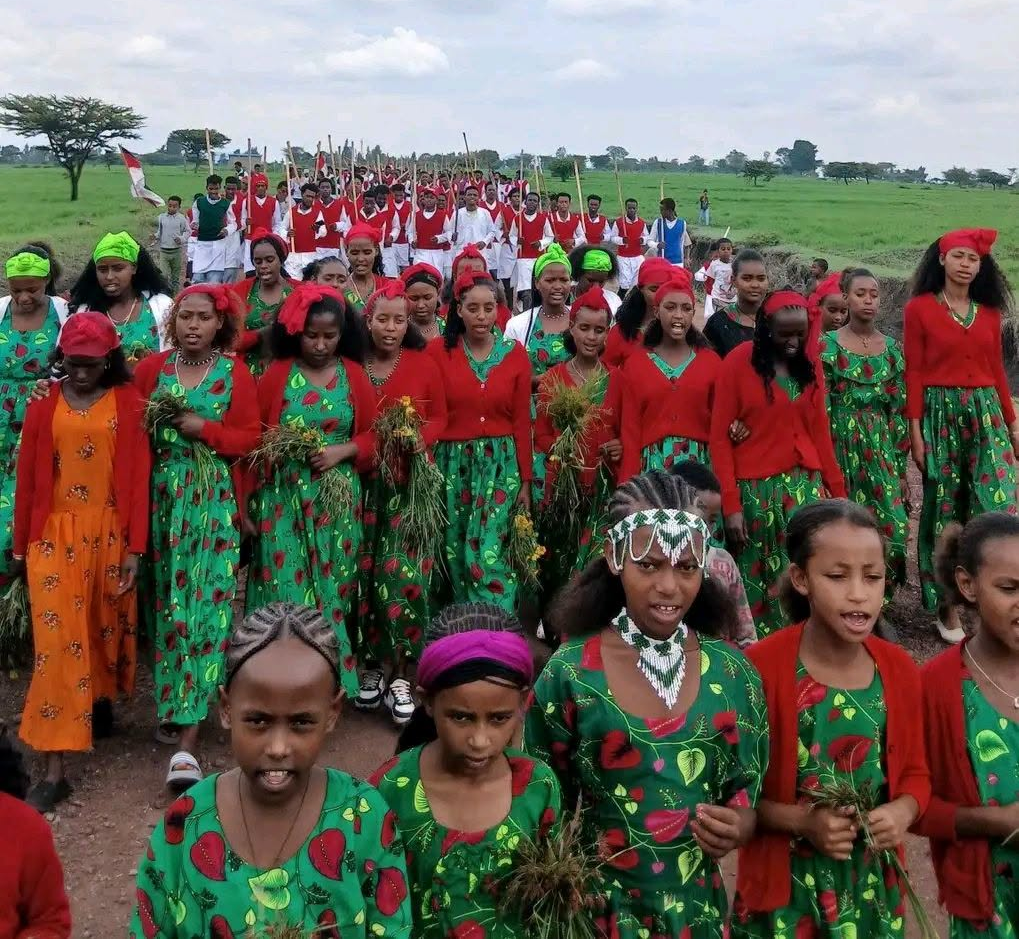
The Oromo people are blessed with a rich tapestry of cultural traditions that have been passed down through generations. Among these, the Ayyaana Qaammee stands as one of the most beautiful and significant celebrations—a sacred festival honouring young unmarried women, their transition into adulthood, and their vital role in the continuity of Oromo society.
The word Qaammee refers to a young unmarried woman who participates in this sacred festival. The celebration embodies the essence of youthful femininity, purity, and the promise of a bright future. It is a rite of passage, a communal blessing, and a moment of profound cultural significance.
This year, as the community gathers to celebrate Qaammee, we extend our warmest greetings: “Baga Nagaan Ayyaana Qaammee geessan!” —Happy Qaammee Festival!
Understanding Qaammee: More Than a Celebration
The Qaammee festival is more than just a cultural event—it is a sacred tradition that connects the Oromo people to their ancestors, their community, and the natural world around them. It is a celebration of womanhood, a blessing for the future, and a reaffirmation of Oromo identity.
The festival takes place annually, beginning in the month of Hagayya (roughly July-August) and continuing through the month of Fulbaana (September-October). The timing coincides with the end of the rainy season—a time of renewal, abundance, and new beginnings. This year’s celebration is a continuation of this sacred tradition, bringing communities together in joy, song, and blessing.
Central to the Qaammee celebration are two key rituals:
- Buqqisaa — The “Breaking” or preparation ceremony
- Daddarbaa — The “Passing” or blessing ceremony
The Buqqisaa Ceremony: Preparation and Unity
The Qaammee celebration begins with the Buqqisaa ceremony, a vibrant evening of preparation and community bonding.
Gathering by the Water
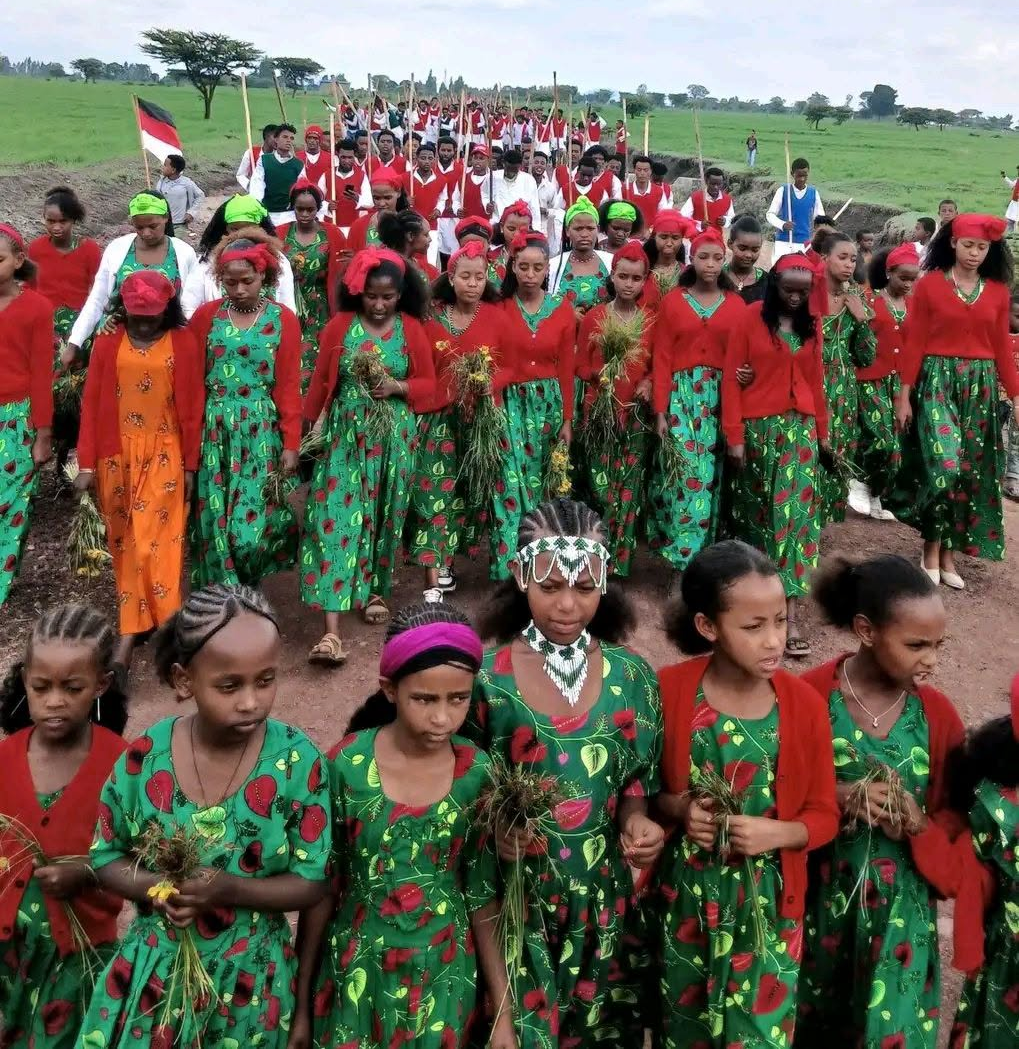
On the evening of Buqqisaa, young unmarried women (Qaammeen) gather in groups and make their way to a nearby river or stream (laga or caffee). This is a time of sisterhood, joy, and anticipation. The women come together in large numbers, united by their shared identity and purpose.
The Breaking of Qunnii
At the water’s edge, the women perform the ritual of Buqqisaa—the breaking or preparation of Qunnii, a special plant similar to grass that has a fragrant fruit (gumaa/firii) at its base. When the Qunnii blooms, it becomes Dhallaadduu, ready for use.
The Qunnii plant is significant for several reasons:
- It produces a natural fragrance that is pleasing to the senses
- It has medicinal properties that are beneficial for women’s health
- It is used as a natural perfume (Qayya) by the young women
Songs, Dance, and Celebration
The Buqqisaa ceremony is accompanied by traditional songs, dances, and celebrations that continue well into the night. The women sing Faaruu Qaammee (Abaabilee)—special songs composed for the occasion—as they prepare the Qunnii together.
The women break and prepare the Qunnii, sharing in the work and the joy of the occasion. The atmosphere is filled with laughter, song, and the spirit of unity.
Returning Home with Blessings
After the preparation is complete, each woman returns to her home with the Qunnii she has prepared. She places it on the doorstep (balbala irra kaawwatanii) as she enters, symbolizing the blessings she brings into her home.
The Ashaashullaa Tradition
On this same evening, young girls (ijoolleen dubaraa) participate in a special tradition involving Ashaashullaa—a plant similar to moss or creeping vine. The Ashaashullaa is tied to their hands and feet (harkaa fi quba miilatti hidhatanii bulu), and they sleep with it overnight.
In the morning, the plant has turned their hands and feet red—a beautiful decoration that adds to their adornment. The plant is considered a traditional ornament for girls, enhancing their beauty and connection to nature.
The Daddarbaa Ceremony: Blessings and Passing Forward
The following day is the Daddarbaa ceremony—the Passing or Blessing ceremony. This is the main day of the Qaammee celebration, when the young women receive the community’s blessings and are honoured for their transition.
Gathering at the Meeting Place
In the morning, the young women take the Qunnii they prepared the previous evening and gather at a designated meeting place, known as the Mootii Durbaa (the place of the chosen leader). The Mootii Durbaa is the eldest or most respected among the young women, chosen by the group.
The Journey Through the Community
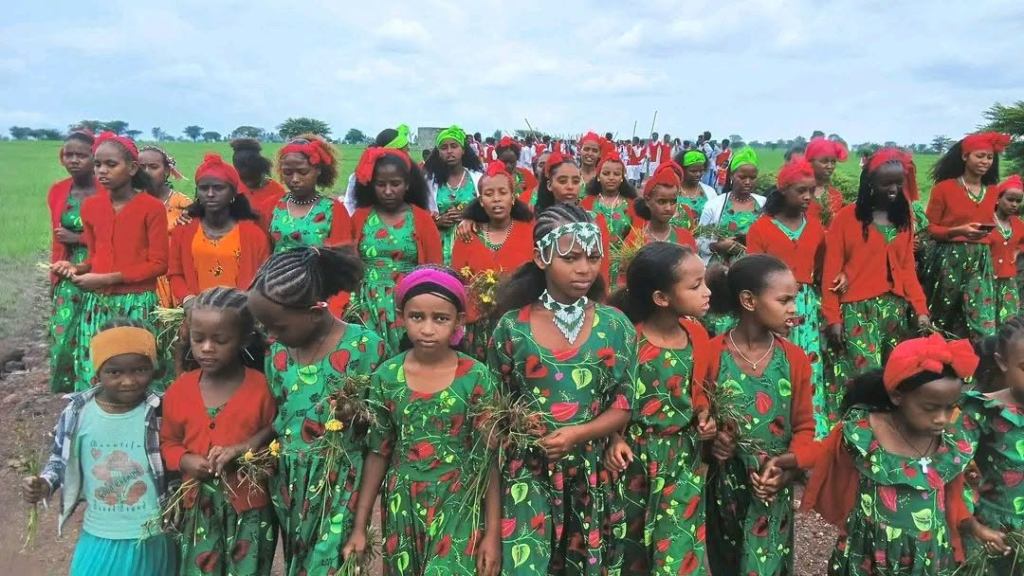
From the Mootii Durbaa, the women begin their journey through the community. Walking in groups, they sing the Abaabilee songs as they go from house to house. They start with the Warra Angafaa (the elders/leaders of the clan) and then visit every household in their community.
The Ritual of Daddarbaa
At each household, the women perform the Daddarbaa ritual. They pass the Qunnii from the previous day to the household, receiving blessings in return. They eat and drink a little at each home, and the elders offer prayers and blessings for their future.
The women continue this journey until they have visited all the households in their community, spreading joy, receiving blessings, and reinforcing the bonds of community.
The Role of Young Men in Qaammee
While Qaammee is primarily a celebration of young women, young men also play an important role—though it is very different from that of the women.
Young unmarried men (who are not yet married) do not participate in the Buqqisaa or Daddarbaa ceremonies in the same way as the women. However, they accompany the women during the celebrations, walking alongside the groups and participating in the songs and dances.
The Wadaajii Tradition
The most notable tradition involving young men is the Wadaajii Dhungachuu—a ritual that is eagerly awaited, especially by the men. This tradition is unique to the Oromo culture and reflects the playful and respectful nature of the Qaammee celebration.
During the procession, when the women leave one household to go to the next, the young men position themselves along the route. As the women pass, the men suddenly fall to the ground in front of them and attempt to “drink” (dhungachuu) from them. The women, in turn, push the men away using their hands and the Dhallaadduu they are carrying.
This is a playful ritual, not a violation. The men approach with respect, and the women respond with good-natured resistance. The location for this ritual is often a boqoo/maddii—a designated area along the route.
After the ritual, the women continue on their way, laughing and continuing their songs. The men, having participated in the tradition, rejoin the procession. This tradition is an important part of Oromo youth culture, reinforcing bonds between young men and women while maintaining cultural protocols.
Important note: Men who participate in the Wadaajii ritual are not allowed to marry the women they “drink” from—it is a matter of cultural respect and propriety.
The Spiritual Significance of Qaammee
At its heart, the Qaammee celebration is a spiritual experience. The rituals are conducted with reverence and respect, invoking the blessings of Waaqa (God) and the ancestors.
The young women receive the prayers of the elders, the admiration of the community, and the hope of their families. The celebration is an act of thanksgiving—giving thanks for the rain, the harvest, and the continuity of Oromo culture.
The songs of Qaammee, known as Abaabilee, carry deep meaning and are an essential part of the celebration:
“Aababilee haa doolee” — Let the Abaabilee songs be sung
“Haayee yaa shoroorootoo” — Oh, the beautiful songs
“Shoororoo haati deechee” — The mother has sung the Shoororoo
“Yaa qal’oo qaammen geechee” — The Qaammee women have come
A Celebration of Promise and Renewal
As the Qaammee festival concludes, the participants and their families are filled with a sense of pride, joy, and hope. The young women who have been blessed and celebrated carry with them the strength and support of their community as they embark on their journeys into adulthood.
The festival is also a reminder of the beauty and resilience of Oromo culture—a culture that has survived centuries of oppression and continues to thrive in the hearts of its people.
The Challenge of Cultural Erosion
It is important to note that the Qaammee festival is in danger of being forgotten in many areas. In some places, it is no longer celebrated at all. In others, a modified version called “Qaammee Sidaamaa” is celebrated on October 1st (Fulbaana 1, ALH), but even this is not the same as the traditional celebration.
This erosion of cultural traditions is a loss for the Oromo people. These traditions are not just customs—they are expressions of Oromo identity, resilience, and continuity. They connect the present generation to their ancestors and provide a foundation for the future.
The responsibility of reviving and preserving these traditions falls on the current generation. As the saying goes, “Duudhaaleen Oromoo hedduun isaanii bakka hin jiran. Bakkatti deebisuun dirqama dhaloota ammaa ti” —Many Oromo traditions are no longer practiced. It is the duty of the current generation to bring them back.
Conclusion: The Eternal Light of Qaammee
Qaammee is more than a celebration—it is a sacred tradition that connects the Oromo people to their past, their present, and their future. It is a moment to honour young women, to bless their journey, and to affirm the enduring strength of Oromo culture.
As the community gathers to celebrate, let us remember the beauty, grace, and resilience of the Oromo people. Let us honour the young women who carry the hopes of their community. And let us commit ourselves to preserving and reviving these sacred traditions for future generations.
“Kan Baranaa kan egeree nuun haa jedhu!” —May this year’s celebration be one of abundance and joy!
Baga Nagaan Ayyaana Qaammee geessan!
This feature article is dedicated to all the young Oromo women—past, present, and future—who carry the spirit of Qaammee in their hearts, and to the communities who are working to preserve this beautiful tradition.

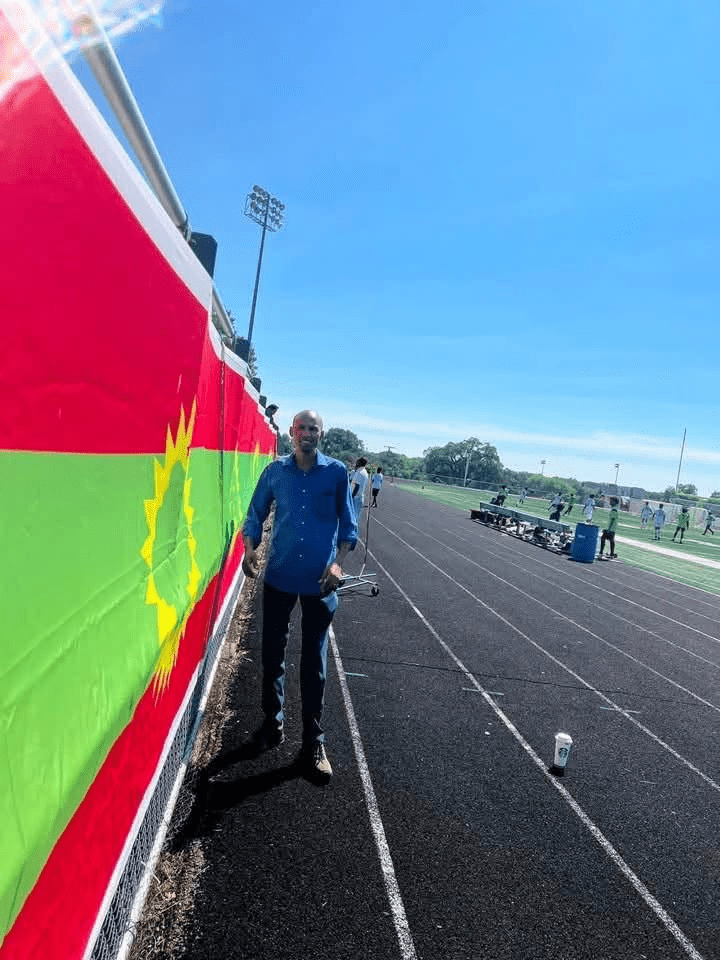
Thirty Years of Unity: OSFNA Celebrates a Legacy of Culture, Community, and Connection (1996–2026)
In the summer of 1996, a simple yet profound idea took root in Toronto, Canada. A group of visionary members of the Oromo diaspora, driven by a desire to foster community cohesion and celebrate their rich heritage, launched the inaugural soccer tournament of what would become the Oromo Sports Federation in North America (OSFNA). Thirty years later, as the organization celebrates its 30th anniversary in 2026, that initial gathering of six clubs has blossomed into a monumental week-long festival of sport, culture, and solidarity. OSFNA’s journey is a powerful testament to the enduring spirit of the Oromo people and their unwavering commitment to unity, awareness, and the celebration of Oromummaa.
From Humble Beginnings to a Continental Movement
What started on local park fields has grown into one of the most significant annual gatherings for the Oromo diaspora. The inaugural tournament in 1996 featured teams from across North America, including Rissa from Minnesota, Madaa Walabuu from Seattle, Oromia from Toronto, and others from Canada, Atlanta, and Ottawa. The immediate success of this event showcased not only the athletic talent within the community but also its deep-seated need for connection. The following year saw rapid expansion, leading to the democratic establishment of the OSFNA Board, a milestone that formalized the organization’s structure and solidified its future. Over three decades, OSFNA has evolved into a cornerstone of Oromo diaspora life, consistently captivating members year after year with a rich tapestry of cultural and sporting events.
More Than a Game: A Platform for Culture and Awareness
OSFNA’s impact extends far beyond the soccer field. While the annual tournament remains the centerpiece, the event has become a powerful platform for cultural exchange and community building. It serves as a vibrant space where Oromos can reconnect with their roots, celebrate their identity, and forge lasting bonds across borders. The organization’s dedication to promoting Oromo heritage and culture on a broader scale is evident as the tournament travels to various cities, fostering connections and solidarity among Oromo communities across the country and beyond. By bringing people together, OSFNA plays a vital role in beek sisuu—raising awareness of the Oromo people and Oromia—and in walitti fiduu—uniting a diaspora scattered across a vast continent.
A Legacy of Unity and Recognition
The unifying power of OSFNA has not gone unnoticed. The organization’s contributions have been formally recognized by the mayor’s offices of both Minneapolis and Saint Paul, which have designated a special “Oromo Week” to celebrate the community’s cultural contributions. This official acknowledgment underscores the significant role OSFNA plays in bridging cultural gaps and enriching the broader social fabric of its host communities. The spirit of unity fostered by the federation echoes the wider Oromo liberation movement’s calls for tokkummaa (unity) and speaking with one voice. In a diaspora where maintaining cultural identity can be challenging, OSFNA has become a beacon, ensuring that the language, traditions, and spirit of the Oromo people are preserved and passed on to future generations.

Celebrating 30 Years of Excellence in 2026
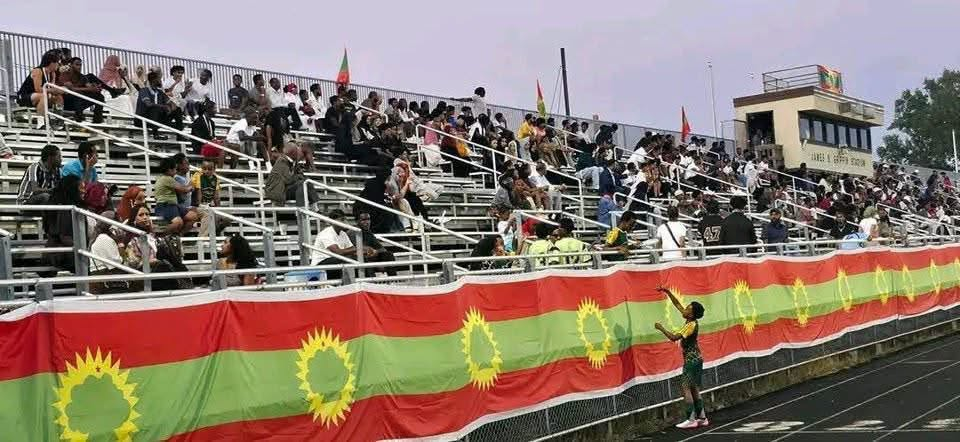
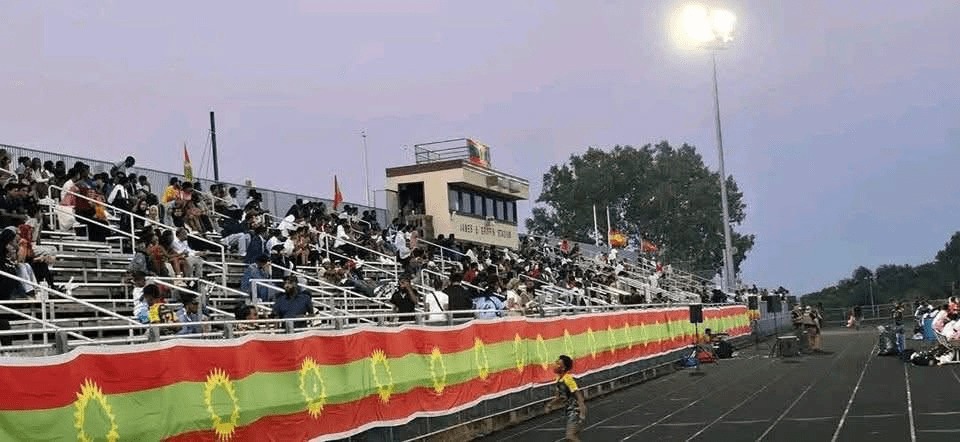
The year 2026 marks a momentous occasion: OSFNA’s 30th anniversary, a celebration of three decades of resilience, community, and cultural pride. The festivities, held from August 1st to 8th, have been nothing short of historic. This milestone year saw the tournament elevated to professional stages, with games played at Allianz Field and James Griffin Stadium in the Twin Cities of Minnesota. The week-long celebration of sports, culture, and community culminated in a grand closing concert at the historic Palace Theatre in St. Paul, drawing attendees from across North America and beyond. The 2026 anniversary was not just a look back at past achievements but a powerful affirmation of OSFNA’s ongoing mission and a promise for the future.
The Next Thirty Years
For thirty years, OSFNA has stood as a pillar of the Oromo diaspora, proving that sport can be a powerful vehicle for cultural preservation, political awareness, and communal unity. As it moves forward, the federation remains dedicated to its founding principles: bringing the Oromo community together, empowering its youth, and celebrating the beauty and resilience of Oromo culture. The journey from a small tournament in Toronto to a major continental event is a story of vision, determination, and the unbreakable bonds of a people. As OSFNA embarks on its next chapter, its legacy as a unifying force and a vibrant symbol of Oromo identity in North America is assured.