The Cry of Oromo Women: A Testament to Resilience and Resistance
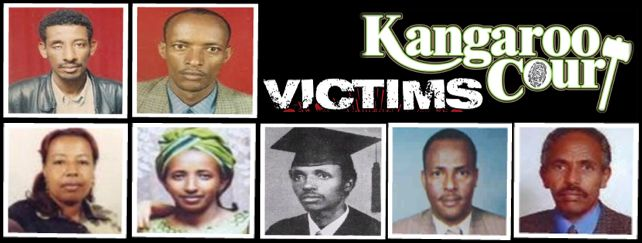
Booree Shamarran Oromiyaa — The Voice of Oromo Daughters Against Oppression
By Siiqqee Dhugaatiin (May 27, 2012)
“Ana hiite malee, kaayyoo koo hidhuu hin dandeessu!”
“Without breaking me, you cannot bind my purpose!”
This is the voice of Oromo women—a voice that echoes across the mountains and valleys of Oromia, refusing to be silenced. It is a voice of defiance, of resilience, and of an unbreakable spirit that has endured decades of systematic oppression.
Today, the Ethiopian government, through its ongoing campaign of suppression, continues to wage a brutal war against the Oromo people. The aim is clear: to break the Oromo spirit, to divide the Oromo nation, and to subjugate the Oromo people through violence, dispossession, and psychological terror. At the heart of this campaign, Oromo women bear the heaviest burden—subjected to unspeakable atrocities that demand the urgent attention of the world.
The Systematic Oppression of Oromo Women
The oppression of Oromo women is not incidental; it is a deliberate strategy employed by the ruling regime. Through a combination of state violence, economic marginalization, and cultural denigration, the regime seeks to destroy the fabric of Oromo society by targeting its women.
The Oromo people have faced waves of oppression for over a century—from the expansion of the Ethiopian Empire under Menelik II to the brutal repression of the Derg regime and the continued marginalization under the current system. Oromo women have been at the forefront of resistance, and they have also been the primary targets of state violence.
Oromo women have suffered:
- Arbitrary arrests and detention without charge or trial
- Torture and sexual violence in detention centers
- Extrajudicial killings and enforced disappearances
- Displacement and forced exile from their ancestral lands
- Economic marginalization and denial of livelihood
- Cultural and linguistic oppression
The Testimony of Asilii Oromoo: A Voice from the Grave
Among the countless stories of Oromo women who have suffered under state oppression, the story of Asilii Oromoo stands as a powerful testament to the resilience and courage of Oromo women.
Asilii was a freedom fighter who, like many Oromo men and women, took up arms against the Derg regime before being captured. During the transition period, she continued to fight for the rights of her people. For this, she was arrested, tortured, and ultimately sentenced to death—a sentence carried out by the regime.
Her voice, preserved in testimony, speaks of the horrors she endured:
“Those people do not resemble human beings. They have stolen our rights on our own land, and worse, they accuse us of being the aggressors. They hate what they see with their own eyes. They have imposed unjust sentences upon us.”
Asilii’s story is not unique. It represents the experience of countless Oromo women who have been imprisoned, tortured, and killed for the crime of asserting their identity and fighting for their rights.
The Story of Aayishaa Alii: A Symbol of Brutality
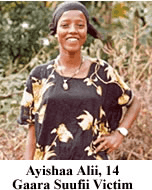
The story of Aayishaa Alii, a young Oromo woman from eastern Oromia, represents the depth of brutality inflicted upon Oromo women. Aayishaa was forcibly taken from her home by government soldiers, subjected to unimaginable violence, murdered, and her body thrown on the mountainside to be devoured by wild animals.
This act of savagery was not an isolated incident. It is part of a systematic campaign of terror designed to break the spirit of the Oromo people and demonstrate the regime’s absolute power over life and death.
The story of Aayishaa Alii serves as a grim reminder of the fate that awaits those who resist. It is a story that must be told, not only to honour her memory but to expose the crimes committed against the Oromo people.
The Testimony of Maaliyaa Mohammad: Escape and Exile
Maaliyaa Mohammad, like many Oromo women, was forced to flee her homeland to escape state violence. Her testimony reveals the ongoing persecution of Oromo women even after they have sought refuge abroad:
“The security forces of Ethiopia have harmed me and my family. The trauma of my Oromummaa (Oromo identity) has reached me and my siblings; it cannot be fully expressed. I have now escaped from that country physically. But the trauma remains with me; it is a wound that will not heal.”
Maaliyaa’s story is shared by thousands of Oromo women who have been forced to flee their homeland, only to continue suffering the psychological and emotional scars of persecution. Even in exile, they face harassment, surveillance, and the constant fear of forced return to a country where their lives are in danger.
The Voices of Prison: Resilience in Captivity
Despite the immense suffering they endure, Oromo women in prison have not been silenced. Their voices continue to speak of their determination to survive and resist:
“In prison, I was punished for writing poems. Everything I wrote was taken from me. Because of this, I was transferred to a secret detention center.”
— Durbee Masarat Taaddasaa
Masarat’s experience is a testament to the regime’s determination to erase Oromo identity. Even in prison, where the state has total control, Oromo women assert their identity through language, culture, and resistance.
“We cannot be silenced. We will not be erased. Our voices will continue to speak for justice.”
The Suffering Continues: A Living Crisis
Today, thousands of Oromo women remain in detention centers across Ethiopia, including Qaallittii, Maa’ikalaawwii, Zuwaayi, and other prisons. They are held without charge, subjected to torture and sexual violence, and denied access to justice.
The atrocities committed against Oromo women include:
- Sexual violence as a weapon of war
- Torture and cruel treatment in detention
- Forced displacement from their communities
- Economic marginalization and denial of livelihoods
- Cultural and linguistic oppression
These crimes are not aberrations; they are part of a systematic campaign of state violence designed to break the Oromo people and erase their identity. They are crimes against humanity that demand accountability.
The Missing and the Murdered
The following is a partial list of Oromo women who have been killed, imprisoned, or subjected to state violence. This list is not exhaustive—it represents only those whose names are known:
Those Who Have Been Executed:
- Aslii Oromoo — Death sentence
- Algaanash — Death sentence
- Dinqinash Dheeressaa — Death sentence
Those Imprisoned:
- Feeruzaa Abdii — 10 years
- Tsahaay Garbii — Released
- Sawunnati Taammanaa — Released
- Simmanyi Dayyaasaa — 3 years
- Dirree Qamar — Released
- Kadijjaa Abdallaa — Released
- Lalisee Taaddasaa — Released
- Massaluu Taaddasaa — Released
- Tolashii Qansii — Released
- Cuucee Alamayyoo — Released
- Lamlam Tsegayee — Released
- Wasanee Taddalaa — Released
- Haraaree Booranaa — 3 years
- Boontuu Shuggii — 6 years and 6 months
- Ruuqiyaa Obsee — 5 years
- Waaritee Huseen — 5 years
- Masarat Taaddasaa — 5 years
- Warqee Guutee — 2 years
- Abbabach Ajjamaa — Released
- Atsadee Imaanaa — 3 years
- Lalisee Wadaajoo — 4 years, released
- Faaxee Uummee — Unknown
Currently in Qaallittii Prison:
- Dirribee Ittaanaa — Sentenced to death
- Urgee Abbabaa — Sentenced to death
- Alimaa Abdallaa — Life sentence
- Baaccuu Margaa — 18 years
- Caaltuu Taakkalaa — 12 years
- Abarraash Yaadataa — 12 years
- Hawwii — Unknown
- Boontuu — Unknown
These names represent real women with real lives, real families, and real dreams. They are mothers, daughters, sisters, and grandmothers. They are the heart of the Oromo nation, and their suffering must not be ignored.
The Role of the International Community
The systematic oppression of Oromo women constitutes a crime against humanity that demands a response from the international community. The Ethiopian government’s actions violate international human rights law, including the Universal Declaration of Human Rights, the Convention on the Elimination of All Forms of Discrimination Against Women (CEDAW), and the Geneva Conventions.
The international community must:
- Condemn the atrocities committed against Oromo women
- Impose targeted sanctions on regime officials responsible for human rights violations
- Support international accountability mechanisms, including the International Criminal Court (ICC)
- Demand the immediate release of all political prisoners
- Provide humanitarian assistance to Oromo refugees and internally displaced persons
- Support the Oromo people’s right to self-determination and justice
A Call to Action
The suffering of Oromo women is not a distant tragedy—it is a living crisis that demands immediate action. We call upon:
- Human rights organizations to document and expose the crimes against Oromo women
- The international community to impose sanctions and demand accountability
- The United Nations to investigate human rights violations in Oromia
- Civil society organizations to support Oromo women and their communities
- The Oromo diaspora to amplify the voices of their sisters in the homeland
The Unbreakable Spirit of Oromo Women
Despite the unimaginable suffering they have endured, Oromo women have not been broken. Their spirit remains unbroken, their resistance continues, and their voices remain strong.
Booree Oromoo ti! —The cry of Oromo women is the cry of Oromo daughters, of the Oromo nation, of resistance against oppression.
As the Oromo saying goes: “Kan bilisummaaf falmatu garbummaatti hin hafu.” —Those who fight for freedom will not remain in slavery.
The struggle for the liberation of Oromia and the dignity of Oromo women continues. The resilience of Oromo women is a testament to the strength of the Oromo nation. Their suffering will not be forgotten, and their resistance will not be silenced.
Booree Booranaa ti! Booree Baarentuu ti! Booree Oromoo ti!!
Injifannoon Ummata Oromoo!
Dubartoonni Oromoo haa jabaatan!
Bilisummaan Oromoo ni dhufa!
This feature article is based on the reflection of Siiqqee Dhugaatiin (May 27, 2012) and is dedicated to all Oromo women—past, present, and future—who have suffered, resisted, and continue to fight for justice and freedom.






