Irreechaa: The Oromo Thanksgiving — A Celebration of Creation, Renewal, and Gratitude
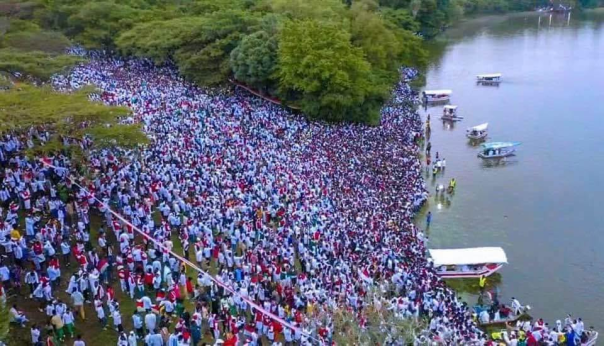
Honouring Waaqa Through Ancient Rituals of Rain, Peace, and Fertility
By Dhabessa Wakjira
In the heart of the Oromo nation, a sacred tradition unfolds each year—a celebration that connects the living to their creator, their ancestors, and the natural world that sustains them. Irreechaa is more than a cultural festival; it is the spiritual heartbeat of the Oromo people, a profound expression of thanksgiving to Waaqa (God) for the gift of life, the renewal of the seasons, and the promise of abundance.
As the Oromo people gather at sacred sites—atop mountains, along riverbanks, and around the shores of lakes—they carry bunches of fresh grass and flowers, symbols of creation and gratitude. They sing, they pray, and they reaffirm their faith in the one universal creator. This is Irreechaa: the Oromo Thanksgiving Day.
The Oromo Belief in One God: Waaqa Tokko
The Oromo people are one of the indigenous peoples of East Africa, with a rich cultural heritage that stretches back millennia. Central to their worldview is a profound and unwavering belief in monotheism—the belief in one God, whom they call Waaqa.
The Oromo are not fetishists. They do not worship the forces of nature; rather, they see in them the manifestations of Waaqa’s power and wisdom. The Oromo people hold this faith so deeply that any expression of doubt regarding the unity of God is met with strong protest. For the Oromo, there is and will always be but one God—Waaqa Tokko—the unique, universal creator and master of all existence.
This belief is the foundation upon which the Irreechaa ceremony is built. It is a celebration not of nature itself, but of the creator whose wisdom and power are revealed through nature’s beauty, fertility, and renewal.
The Gadaa System and Qaalluu Institution: The Framework of Irreechaa
To fully understand Irreechaa, one must understand the broader cultural and political systems of the Oromo people, particularly the Gadaa system and the Qaalluu institution.
The Gadaa system is a millennia-old democratic governance structure based on generational age sets, egalitarian principles, and rotating leadership. It has been recognized by UNESCO as part of the Intangible Cultural Heritage of Humanity. The Qaalluu institution, on the other hand, is the spiritual authority that maintains harmony between society, nature, and the spiritual realm.
Irreechaa is intimately connected to both. The Qaalluus (spiritual leaders) and the Abbaa Malkaas (lineal chiefs of the areas) are at the top hierarchies of the ritual. The Qaalluus give instructions and directives regarding the location and timing of the ritual, ensuring that it is conducted in accordance with ancient traditions.
The Philosophy of Irreechaa: Life, Death, and Resurrection
Irreechaa is not merely a ritual; it is a comprehensive philosophical worldview that reflects the Oromo people’s understanding of existence.
The ceremony embodies a profound admiration for the miraculous spiritual powers of Waaqa and the living secret of generation. The ever-greenness and productivity of plants, the regeneration of life, the replacement of the old by the new, and the death and resurrection of fruits are seen as manifestations of Waaqa’s wisdom.
According to this belief, all is accomplished by the will of Waaqa.
The cycle of seasons—the death of vegetation in the dry season and its resurrection with the rains—is likened to the cycle of life itself. It reflects a philosophy of life after death, of renewal, and of hope.
Historically, this worldview is believed to have originated from the ancient Cushitic people living along the Nile Valley. While the Oromo Waaqeffannaa is not identical to the religious practices of these ancient peoples, it shares a common origin in the Nile Valley Cushitic civilization.
The Two Major Irreechaa Celebrations
The Irreechaa ritual ceremony is conducted at different places and times, governed by its own system and portrayed by its own ritual practices. By and large, it takes place at two major areas:
1. Irreechaa Tulluu — The Mountain Celebration
Irreechaa Tulluu is the ritual ceremony conducted at the top of mountains. It is performed at the beginning of the spring season, usually in the month of March.
For three months prior, the land has endured the harshness of the dry season (bona) . Both people and cattle suffer from drought, shortage of water, and scarcity of grasses. It is during this time of hardship that the Oromo people gather on the mountain tops to pray to Waaqa to send rain, to bring relief, and to restore life to the land.
The mountain tops are solitary places characterized by moisture conducive for praying. This ritual ceremonial practice is said to have closely related to the worship practiced by ancient settlers of peoples of the Nile Valley.
2. Irreechaa Malkaa — The Riverbank Celebration
Irreechaa Malkaa is celebrated immediately after the end of the rainy season, in the middle of September (Fulbaana). It is a time of transition—when the darkness and fog of the rainy season give way to the brightness of spring (Birraa) .
This ritual ceremony is accomplished not only along the banks of rivers but also around lakes and their vicinities. The most famous of these celebrations takes place at Hora Arsadi, near Bishoftu town, a site of profound historical and cultural significance.
This Irreechaa holiday is sometimes known as Ayyaana Birraa (the Birraa holiday). It is the time when relatives, families, and clans, separated by rivers and floods during the rainy season, are able to meet and reconnect.
The Significance of Hora Arsadi
Hora Arsadi, the iconic site of Irreechaa Malkaa, is located adjacent to Bishoftu town, not far from Oda Nabe—one of the Oromo religious, political, and historical centers of ancient times.
The name “Hora Arsadi” is derived from a man named Arsadi, who is said to have belonged to the Liban lineage. The site is a sacred space, where the Oromo people gather annually to give thanks, to pray, and to renew their connection to Waaqa and to each other.
At this site, the Abbaa Malkaas and the Abbaa Gadaas have vital participatory roles. Communities carrying bunches of lovely grasses and flowers in their hands—symbols of creation and abundance—praise, bless, and pray to Waaqa.
The Rituals of Irreechaa
The Irreechaa ceremony is a rich tapestry of song, dance, prayer, and community fellowship.
Carrying the Bunch of Grasses and Flowers
Participants hold in their hands fresh grass and flowers—symbols of the creation they are praising. This act embodies the essence of Irreechaa: “Uumamaan uumaa raajjeeffanna” —we pray and admire the creator having creations in hands.
After the thanksgiving songs are sung, the bunches of flowers and grasses are laid over, symbolizing the offering of gratitude to Waaqa.
The Songs of Irreechaa
The songs of Irreechaa are deeply moving and spiritually charged. The women, decorated in Caaccuu (beads) cultural suits and holding Siiqqee (cultural slender sticks), sing the melody:
“Maareyoo! Maareyoo…!”
The men, holding Harooressa (male sticks), respond with:
“Irrechoo yaa irrecha malkaa roobaafi nagaa…”
This call and response is a prayer for rain, peace, and fertility—for the well-being of the community and the promise of abundance.
The Return Home
After the prayers, all participants return to their villages, accompanying the Abbaa Malkaa and their clan leaders. The journey back is marked by joy, fellowship, and the reaffirmation of community bonds.
Children and Youth Celebrations
Children with peer groups sing seasonal and love songs. This is the season when young people select their partners, give and receive gifts, and express their best wishes to one another through cultural songs. It is a time of hope, renewal, and the celebration of life.
The Cultural and Spiritual Meaning of Irreechaa
Irreechaa embodies the core values of Oromo culture and spirituality:
1. Gratitude to the Creator
The ceremony is an act of thanksgiving, acknowledging that all life and abundance come from Waaqa.
2. Renewal and Hope
Irreechaa marks the transition from hardship to hope, from the scarcity of the dry season to the abundance of spring.
3. Community and Unity
The celebration brings together families, clans, and communities, reinforcing the bonds of kinship and solidarity.
4. Connection to Nature
The use of fresh grass and flowers symbolizes the Oromo people’s deep connection to the natural world and their role as stewards of creation.
5. Peace and Reconciliation
Irreechaa is also a time for reconciliation—for mending relationships, resolving conflicts, and fostering peace within the community.
Irreechaa in the Modern Era
Today, Irreechaa has grown beyond its traditional boundaries. The annual celebration at Hora Arsadi now draws hundreds of thousands of Oromo people from across Ethiopia and the diaspora. It has become a powerful expression of Oromo identity, unity, and cultural pride.
The ceremony has also garnered international recognition. It serves as a reminder of the Oromo people’s rich cultural heritage and their enduring connection to their land, their faith, and their traditions.
In the diaspora, Oromo communities in cities like Minneapolis, Seattle, Melbourne, and Toronto have also begun to celebrate Irreechaa, ensuring that the tradition continues across borders. These celebrations preserve cultural identity, connect younger generations to their heritage, and create spaces for community bonding.
A Call to Preserve and Celebrate
As the Oromo people continue to navigate the challenges of the modern world, Irreechaa remains a source of strength, hope, and identity. It is a reminder of who they are, where they come from, and the values that unite them as a people.
Irreechaa is more than a holiday—it is a way of life. It is a philosophy of gratitude, a celebration of creation, and a reaffirmation of faith in the one universal creator.
As the participants gather at Hora Arsadi and other sacred sites, they carry not just bunches of grass and flowers, but the hopes, prayers, and dreams of an entire nation.
Irreechoo yaa irrecha malkaa roobaafi nagaa!
Injifannoon Ummata Oromoo!
Irreechaa haa jabaattu!
Waaqa haa galatannu!
This feature article is dedicated to the Oromo people—past, present, and future—who carry the spirit of Irreechaa in their hearts, and to the generations yet to come who will continue this sacred tradition.

Posted on August 9, 2026, in Aadaa, Afaan, Asylum Seekers, Biography, Bokkkuu, Diaspora, Election, Events, Face of Injustice, family violence, Finfinne, freedom, gadaa, Grief Support, Gumaa, health, Information, Kindness, Language, Media, mental health, News, Oromia, Oromo diaspora, Oromo truth telling. Bookmark the permalink. Leave a comment.






Leave a comment
Comments 0