Category Archives: Who is Who

A life of resilience, philanthropy, and service to the city of Bishoftu
From Farm to Honor Guard: The Legacy of Assefa Abebe (Assefa Korenti)
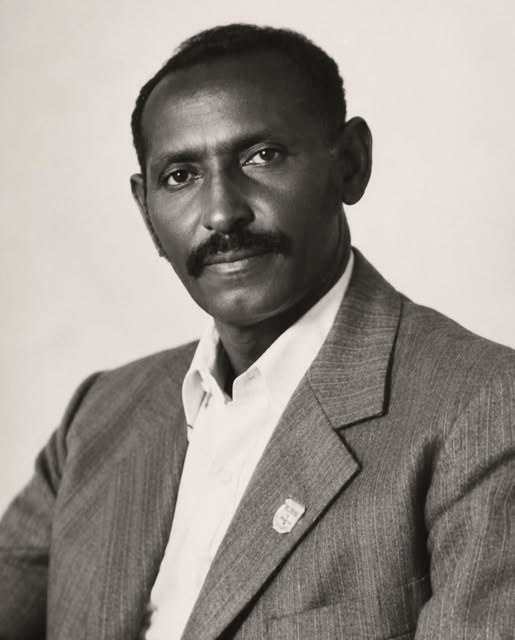
BISHOFTU, OROMIA — In the annals of community service and quiet heroism, some names deserve to be remembered not for titles or wealth, but for the lives they touched and the legacy they left behind.
Mr. Assefa Abebe, known affectionately as Assefa Korenti, was one such figure. From humble beginnings as a farm laborer to serving in the elite Imperial Bodyguard, from working as an electrician to becoming a successful entrepreneur and philanthropist, his life story is a testament to the power of hard work, generosity, and unwavering commitment to community .
A Journey of Many Hats
Assefa Abebe’s life was a tapestry of varied and remarkable experiences. He worked as a farm laborer, served as a soldier in the Imperial Bodyguard, and later became a skilled electrician. It was during his time at the Electric Light and Power Authority, earning a modest salary of 40 birr, that he earned the nickname “Assefa Korenti” (Assefa the Electrician) for his tireless work installing and repairing electrical poles across Bishoftu, often working after hours to serve his community.
His entrepreneurial spirit led him to establish the first fuel station in Bishoftu, then known as Debre Zeyit, and later the Bishoftu Afaf Hotel, situated on the shores of Lake Bishoftu. Yet, what truly set him apart was his generous heart.
The Generosity That Defined a Legacy
In a time of severe drought, a group of farmers from the surrounding Ada’a district approached Assefa Abebe for help. Without hesitation, he offered them an incredible act of trust and generosity: he handed over his hotel for two years, telling them, “Manage the hotel yourselves and keep all the income until the drought passes.”
When the farmers returned after two years, they were no longer in need, but they made a request: that he rename the hotel in their honor. He complied, renaming it the “Farmers Hotel” (Ye Aresha Hotel) . This humble story of generosity and gratitude became a symbol of the bond between Assefa and his community. It was later recounted by Ethiopia’s Prime Minister Abiy Ahmed during the launch of the Goodwill Project as an example of selfless community service .
A Life of Service and Legacy
Assefa Abebe’s contributions to Bishoftu are numerous. He was an early adopter and distributor of clean energy, introducing “white gas” (smokeless fuel) and cylinder gas to the city, improving public health and living standards .
He was deeply involved in education, supporting schools like Lebe Dengel, Ada’a Model, and Teodros, both financially and as a member of their administrative boards. He also established numerous grain mills, many of which continue to serve the community. In the 1970s, he was the only hotelier in Bishoftu at the time, and a pioneer in many sectors, including a gas station .
A Call for Recognition
Mr. Assefa Abebe (Assefa Korenti), who passed away tragically, leaves behind a legacy that has touched thousands of lives. It is a legacy that many believe should be formally recognized, and community members have called for him to be honored at the 6th Bishoftu Philanthropy Award . His story remains a powerful reminder that true heroes are not always the famous or wealthy, but those who build up their communities with quiet strength and open hearts.
“Hard work, resilience, and giving back to the community are the hallmarks of a life that leaves a legacy.”
Who is Who in the Oromo Resistance Struggle?
Demissie Kebede Serda

Obb. Demissie Kebede Serda, is the son of Ade’a Oromo, born in Ade’a Berga around Holota, some 40 km away in the rural area of Oromia.
His resistance struggle for the Oromo people stems from the protest his grandfather, his father and his uncles played against the Netegna system.
During the reign of Menilk II when Oromo was defeated by the Abyssinian kingdom of Shewa, Oromo land was confiscated and settlers were appointed in every village. Mr. Serda who was very conscious of this injustice represented his community as a lawyer in Menilik court and protested against the confiscation. Because of his aggressive move, he was banned from entering Menilk palace.
During the Italian occupation of Ethiopia in 1936, there was a serious dispute in the community whether to support the Neftegna to fight the Italians or to abstain. Serda, though aged, was, serious that they rather should fight the Neftegna who were worse than the Italians and he organized a group that would fight the Neftegnas who reduced the Oromo to serfdom. However, he was ambushed by betrayers.
As a consequence more than 30 people died from both (Serda side and his opponents). Later the grudge between Seda’s relatives and his opponents was intensified and three of Seda’s sons including Demissie’s father were ambushed on another incident and buried in same grave on a single day. The widow of Kebede, Demissies’ mom, the cousin of Feyisa Ejeta, was forced to flee her husband’s place with her children, including Demisse. She moved to Badii, her birth area around Sheger and reared her children under serious difficulties.
Demisse went to an elementary school in Holota. Then he moved to Finfinne and completed a high school.
While he was in the high school he frequently attended Macca and Tulamaa gatherings and he was groomed with Oromo self-consciousness as a result. When the government cracked down on Macca and Tulama Association, Oromo youth of those days who saw there was no alternative for the Oromo people than a political solution, formed an OLF and Demissie is one of the founders of OLF.
Demissie joined the industrial sector as a worker and became the chairperson of Ethiopian Agricultural and Industrial Labour Union, which had 150,000 members.
When the Ethiopian Trade Union was formed Demissie became vice president of the Union. He was still organizing a clandestine OLF in the Trade Union, chairing one of the cell committees in the trade sector.
However, he and his comrades were identified by the Derg secretive services and jailed in January 1980. Demissie was tortured in prison, languished for almost 12 years in jail and released in 1991 when the Derg regime collapsed. After, his release he went back to Oromo political business from day one of his release, without even visiting his aging mom. He was one of OLF representatives during the Transitional Charter Conference.
Demisse became a member of the transitional Parliament and OLF CC member during that period. When OLF withdrew from the Transitional government Demisse was abroad for medical treatment because of the complexities he sustained as a result of torture. He moved to Canada from the Netherlands and he has devoted all his life to Oromo struggle up to now. He is one of the icons who is in the forefront for Oromo refugees and Oromo issues in the community in North America.
Who is Who in the Oromo Resistance Struggle?
#Ejjeta Feyissa of Tulema
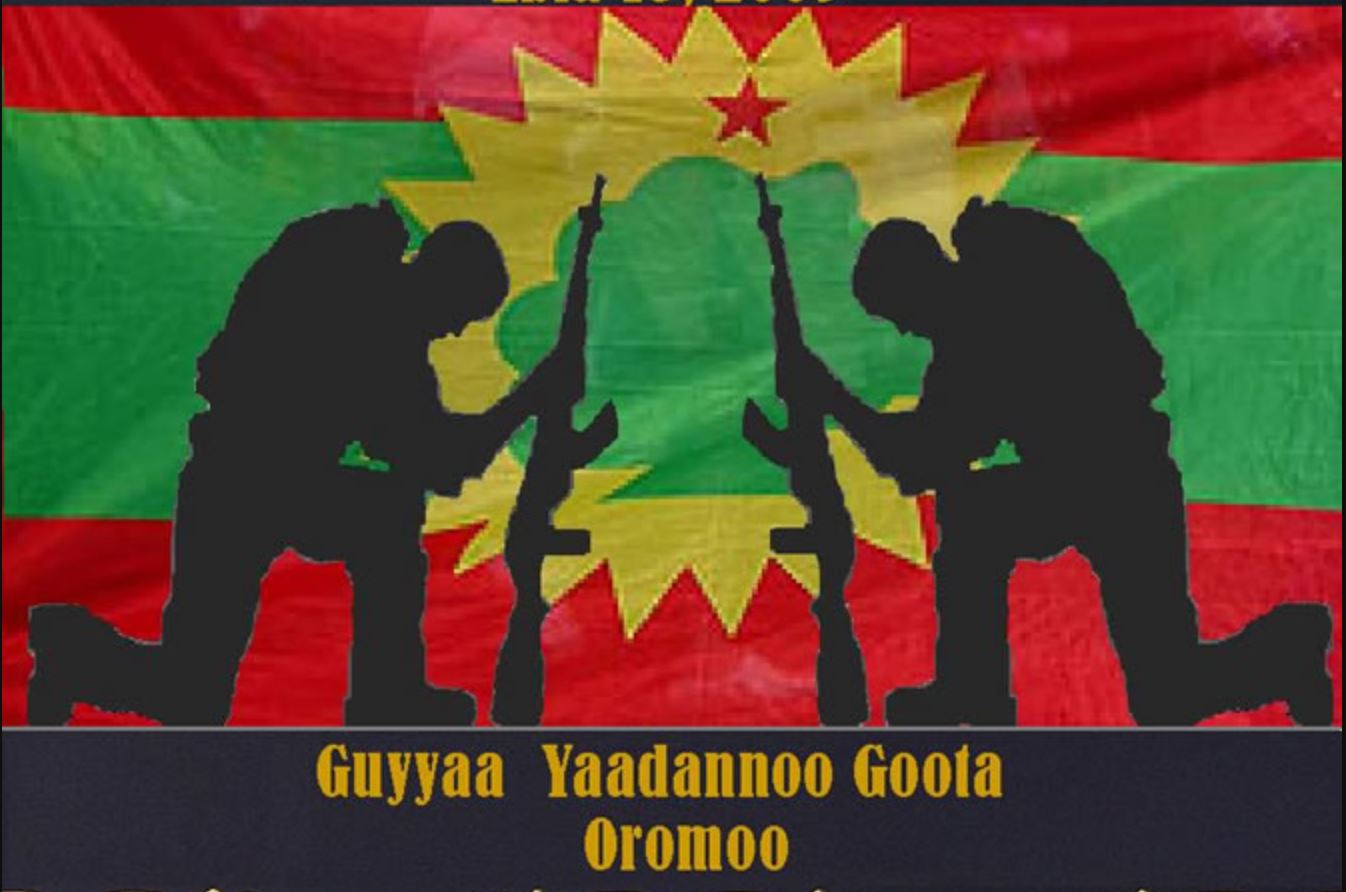 As of today, I am starting to post short pieces that highlight the contributions of some brilliant Oromo figures in the resistance struggle against tyranny. The writings I am providing are not complete by any measure. However, they could be informative and helpful to dig out the patriotic deeds of our fallen heroines and heroes. I feel, as a society, we lack the experience of keeping things in record. We tend to adore oral stories. We need to change this tradition. We have to be able to provide our children and grandchildren in writing stories of their fathers and forefathers.
Needless to say, the Oromo resistance struggle has never stopped after the formation of the Ethiopian empire in is the current shape. The struggle has consumed countless precious lives. Unfortunately, it continued to take away more and more lives. Sad enough, the very people who claim to be Oromos have remained to be tools used against their own people. Abiy Ahmed Ali, the current Prime Minister of Ethiopia is a living example with all his Oromo followers.
We can’t count by name all brave men and women who devoted their knowledge, time, energy and their precious lives for the cause of the Oromo people and for oppressed masses beyond. Yet, we have the moral obligation to bring to light those whose accounts are available to us, no matter how scanty. We have the responsibility to pass down to the next generations accounts for our heroines and heroes so that our children can learn lessons and acknowledge those selfless souls who paid the ultimate price for freedom. Our fathers need due credit for their bravery in the fight against dictatorial systems that subjugated, distressed, impoverished and dehumanized their fellow citizens. Today I start my postings with Ejeta Feyyissa
Ejjeta Feyyissa was one of the post-Italian occupation enlightened Oromos from Tulema, in the Holotota area. He was a lawyer by trade and a close friend of Hailemarima Gemmeda. He was not only a lawyer but also a court interpreter from English to Amharic for British Magistrates who were appointed to the Ethiopian courts after Italian evacuation. Britain was a defacto colorizer of Ethiopia replacing Italy for some 10 years, even though they nominally reinstated the monarchy. And Obb Ejjeta was one of the founders of Mecha and Tulema Welfare Association. He was not only a member but also a spokesperson. When Mecha and Tulema Association was preparing for the historic Dhera Assembly, the Arsi Territorial Ruler (Teklay Gezye) Dejazmach Sahilu Defaye sent a press release that was published in Addis Zemen newspaper stating the Arsi people announced not to host any assembly and that they wouldn’t welcome anybody coming to them from Shewa.
Obb Ejjta Feyissa wrote to Addis Zeman a counter press release that the statement published in the name of Arsi people in Addis Zemen was a white lie and that the Arsi people were ready to welcome the Mecha Tulema Association. Addis Zemen refused to publish the press release. Obb Ejjeta, the fearless man, duplicated the Mecha Tulema Association press release by tensile and distributed it throughout Addis Ababa and beyond.
When the Helasisllese government jailed and persecuted the Mecha Tulema Association leaders, Obb Ejjeta was working in Tigray as a civil servant and he immediately left Tigray and crossed to Eritrea. Then he fled to Khartoum, Sudan. While in Sudan he changed his profession from law to pharmacy. He helped many Ethiopians who escaped crackdowns from the Hailesillassie regime. He also organized different groups to struggle against the feudal system, to the extent of sending insurgents to fight the system.
Obb Ejjeta Feyissa was the first person to openly introduce the three colored (Black, Red and White) Oromo flag. While in Khartoum, he duplicated the flag and sent an insurgent group to Ethiopia with it. The group was captured after crossing to Ethiopia by border security and jailed. Baro Tumssa, a man who was always attentive to such misfortune Oromos, learnt about the arrest of a mission sent from Obb Ejjeta and managed to get those messengers out of prison.
After the revolution of 1974 Obb Ejjeta Feyissa returned to Ethiopia when the Dergue government declared an amnesty for those who were in the bush and abroad in protest of the Hailessilasse system.
Unfortunately, it didn’t take the Dergue long to arrest Obb Ejjeta Feyissa. He was tortured and jailed without any due legal process for 10 years. When released from prison, he filed a request to the Ethiopian Pension Commission that he deserves a retirement pension stating that he served the Ethiopian government and was not convicted of any crime. The Commission rejected his request. He took the case to the Ethiopian Ministry of Justice. You know what? The State Minister of Justice of Ethiopia said to Obb Ejjeta “You are lucky to get out of prison alive. That is sufficient to be your pension”
Obb Ejjeta who had nothing to live on, who was also a diabetic, had no pennies to buy insulin. He was destined to die like nobody, like a needy on the street. Guys, can you see how our giants ended up? Such is the Oromo nationalism that Abiy Ahmed and the hooligans in OPDO try to ridicule.
See you soon with another story




 Advocacy for Oromia