Category Archives: gender

A Gathering of Purpose: Oromo Diaspora Unites in St. Paul for Historic Council Meetings

The Joint Session of the ABO Diaspora Structure Council and ABO North America Structure Council Commences with Blessings, Song, and a Memorial for the Fallen
By Daandii Ragabaa
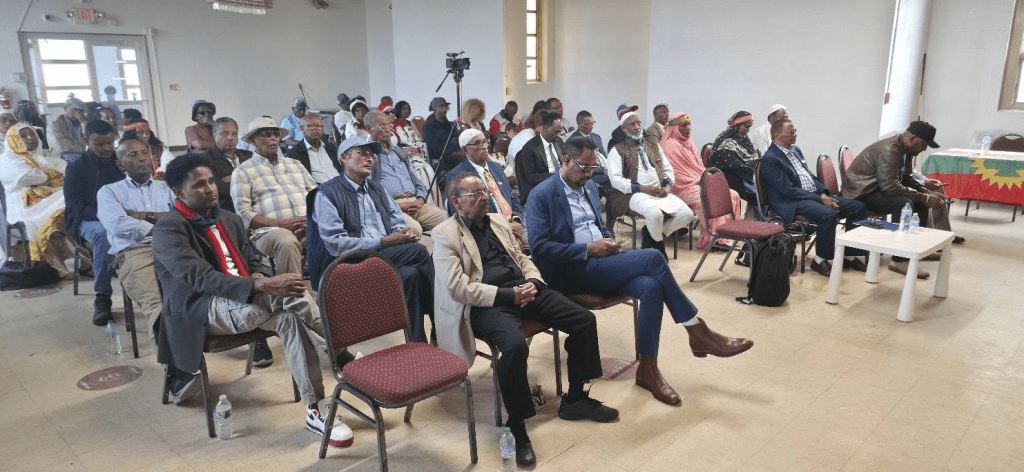
(St. Paul, Minnesota — August 7, 2026)- In a powerful display of organizational unity and cultural resilience, the Walgayiin Hawaasaa —the community gathering—has commenced in St. Paul, Minnesota. This historic event unites the Kora Caasaa ABO Biyyoota Alaa (Diaspora Structure Council of the Oromo Liberation Front) and the Kora Gamtaa Caasaa ABO Amerikaa Kaabaa (Joint Structure Council of the ABO North America), marking a significant moment in the institutional consolidation of the Oromo liberation movement abroad.
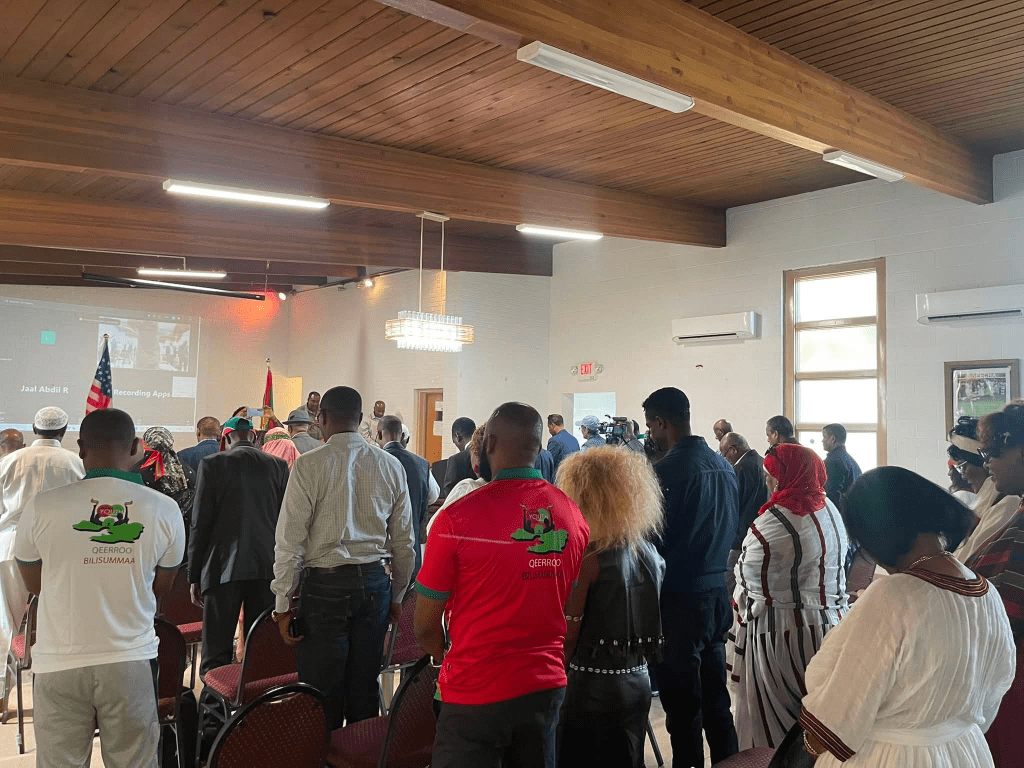
The proceedings opened with the solemn recitation of Eebba Manguddoo —the Great Blessing—and the singing of Faaruu Alaabaa, the national anthem of the Oromo people. This was followed by a memorial ceremony honoring the Jaallan —the beloved fallen heroes of the struggle—whose sacrifices continue to inspire the movement.
The choice of St. Paul, Minnesota, as the host city is no accident. Over the past three decades, Minnesota has earned the affectionate title “Little Oromia” for hosting one of the largest Oromo populations outside of East Africa. In this space, the past meets the present—elders who witnessed the early days of the OLF sit alongside youth born in the West, forging an intergenerational bond that strengthens the movement’s resilience.
The Opening Ceremony: Blessings, Song, and Memory
The commencement of the joint session was marked by traditional Oromo cultural and spiritual practices that have sustained the community across generations. The Eebba Manguddoo, or Great Blessing, is a ritual invocation that calls upon Waaqa (God) for peace, prosperity, and the success of the Oromo people in their collective endeavors.
Oromo oral literature encompasses multiple forms of expression, including eebba (blessings) and faaruu (songs of praise), which are performed across generations in different social and cultural contexts. The recitation of the Great Blessing and the singing of the national anthem served as a spiritual and cultural foundation for the political work that followed.
The memorial ceremony for the Jaallan —the beloved pillars of the struggle—honored those who have given their lives for the liberation of Oromia. As one OLF leader declared: “If we are people of truth, our people will never abandon us under any circumstances. But if we are people of falsehood, even if we hold something, we will lose it”. This commitment to truth and integrity is central to the movement’s ethos.

Institutional Strength: The Core of the Council’s Work
The joint session of the two councils underscores a central theme in the Oromo movement’s recent history: the strength of the institution . This represents a mature evolution in diaspora political consciousness—the understanding that liberation requires not just passion or grievance, but organizational resilience, strategic continuity, and the mechanisms required to sustain a movement across decades and continents.
The meticulous preparation of these councils and their joint session is itself a direct, tangible contribution to the struggle, ensuring that support and sustenance for the freedom struggle continues to receive continuity.
The flyer circulating among community groups carries a powerful mantra: “As always, consistency and determination remain the foundation of lasting progress and success“. These words are not empty rhetoric. In the long and often brutal struggle for Oromo self-determination, fads and fleeting passions have no place. What sustains the movement is the dogged, day-in and day-out commitment of a people who refuse to be erased.
Why St. Paul? The Heart of the Oromo Diaspora
The choice of Minnesota for this historic gathering is deeply significant. Since the 1990s, Minnesota has become a sanctuary and a springboard for Oromo activism. From the bustling neighborhoods of Minneapolis to the suburban cities of St. Paul, Oromo culture thrives—through language, music, faith, and political organization.
The Oromo Community Centre in St. Paul has become a hub for diaspora organizing. Recent events include the Oromo Studies Association’s 40th Anniversary Celebration at the centre on July 31, 2026, and the “Mara: 40 Years of Oromo Knowledge Making” art exhibition, which opened on August 6, 2026, at the Soomaal House of Art. The week also featured the Oromo Sports Federation of North America’s 30th Anniversary celebration, concluding with a concert at the Palace Theatre in St. Paul on August 8.
Holding the joint session of the ABO councils here acknowledges the diaspora not as a distant bystander, but as a vital pillar of the liberation project.

The ABO’s Global Reach: Building Oromia Without Borders
The joint session brings together two critical components of the ABO’s diaspora structure: the global Diaspora Structure Council (Korri Caasaa ABO Biyyoota Alaa) and the North America regional structure (Kora Gamtaa Caasaa ABO Amerikaa Kaabaa). This integration reflects the ABO’s recognition that the work of building Oromia extends beyond Ethiopia’s borders.
The ABO has a significant diaspora presence, with offices in Washington, D.C., and Berlin, serving as hubs for organizing, advocacy, and communication. These offices also operate radio stations broadcasting in both Amharic and Oromo, ensuring the organization’s message reaches Oromo communities worldwide. This global reach allows the ABO to advocate for the Oromo cause on the world stage, build solidarity with other movements, and sustain the struggle even when political space is closed inside Ethiopia.
The joint session in St. Paul is a testament to this global network in action.
A Renewed Vow: “Ni Jirra!” – We Are Here
Throughout the proceedings, the community has echoed the rallying cry that unites Oromo people across continents: “IUOf!” —Victory to the Oromo people. This declaration resonates across generations, affirming the unshakable belief in the Oromo nation’s future.
The gatherings in St. Paul mirror the spirit of the Oromo diaspora’s New Year affirmation in Edmonton, where the simple, powerful declaration “Ni jirra!” —”We are here!”—served as an existential, geopolitical, and institutional affirmation. It declares that the Oromo people persist, that they are present and active in diaspora communities, and that the OLF/ABO, as the vehicle of their aspirations, is alive and organizing.

Conclusion: A Foundation for the Future
The commencement of the Walgayiin Hawaasaa in St. Paul marks a milestone in the organizational history of the Oromo liberation movement. The joint session of the ABO Diaspora Structure Council and the ABO North America Structure Council, opened with blessings, song, and memorial, represents the integration of global and regional diaspora structures under a unified vision.
As the flyer for the event declares, consistency and determination remain the foundation of lasting progress and success. The hundreds of Oromo community members gathering in St. Paul this week embody that spirit.
The work continues. The structure is in place. The foundation is strong.

ABO haa waaru!
Injifannoon Ummata Oromoo!
IUOf!
This feature article is dedicated to all the fallen heroes of the Oromo liberation struggle—the Jaallan—whose memory inspires the work of the diaspora. Their sacrifice is not forgotten, and their legacy lives on in the structures and institutions built in their honor.

A Milestone Achieved: The ABO Diaspora Structure Council Successfully Concludes
A Historic Gathering in Minneapolis Marks a New Chapter for the Oromo Liberation Front’s Global Organization
By Daandii Ragabaa
Minneapolis, MN — August 6, 2026
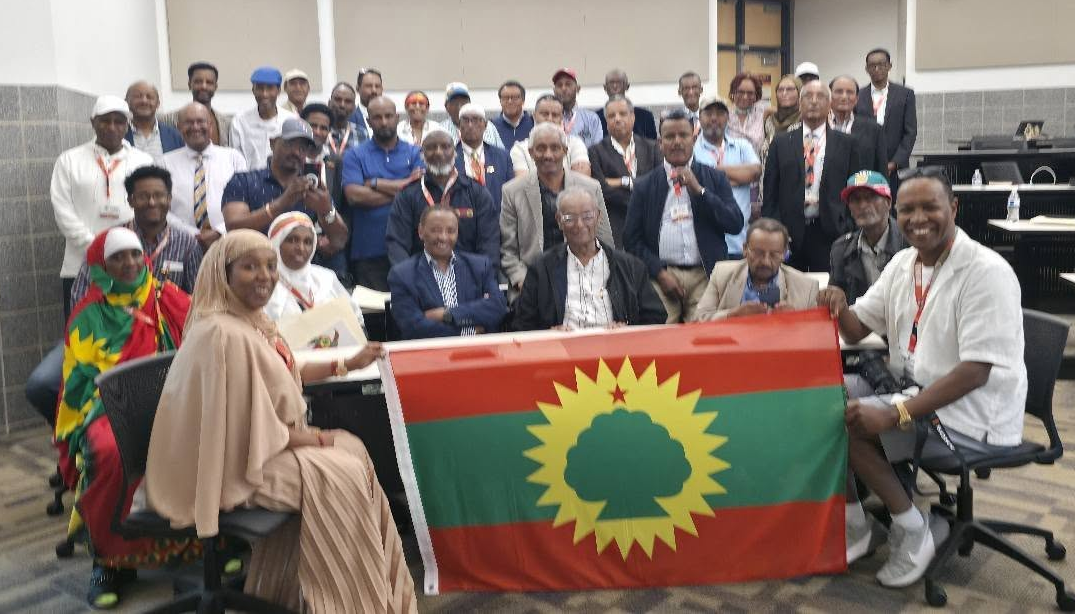
In a significant development for the Oromo liberation movement, the Korri Caasaa ABO Biyyoota Alaa —the Diaspora Structure Council of the Oromo Liberation Front (OLF/ABO)—has successfully concluded its proceedings. The event, held in Minneapolis, Minnesota, marks a pivotal moment in the organizational consolidation of the Oromo struggle beyond the borders of Oromia.
The council’s conclusion, announced on August 6, 2026, represents more than a routine organizational meeting. It signals the maturation of the diaspora as a structured, institutional pillar of the liberation movement—a recognition that the struggle for Oromo self-determination is not confined to the homeland but spans continents, uniting Oromo people wherever they reside.
Why Minneapolis? The Heart of the Oromo Diaspora
The choice of Minneapolis as the host city for this historic gathering is no accident. Over the past three decades, Minnesota has become a sanctuary and a springboard for Oromo activism, earning the affectionate title “Little Oromia” for hosting one of the largest Oromo populations outside of East Africa .
From the bustling neighborhoods of Minneapolis to the suburban cities of St. Paul, Oromo culture thrives—through language, music, faith, and political organization. Holding the Diaspora Structure Council here acknowledges the diaspora not as a distant bystander but as a vital pillar of the liberation project .
In this space, the past meets the present. Elders who witnessed the early days of the OLF sit alongside youth born in the West, forging an intergenerational bond that strengthens the movement’s resilience. It is a living classroom where history is taught, grievances are voiced, and hope is rekindled .
The Significance of Institutional Strength
The successful conclusion of the Diaspora Structure Council underscores a central theme that has emerged in the Oromo movement’s recent history: the strength of the institution.
As emphasized at the Oromo New Year celebrations in Edmonton, the focus is increasingly on “jabeenya jaarmiyaa”—the strength of the institution . This represents a mature evolution in diaspora political consciousness: the understanding that liberation requires not just passion or grievance, but organizational resilience, strategic continuity, and the mechanisms required to sustain a movement across decades and continents .
The Diaspora Structure Council’s work, meticulously prepared and executed, was itself a direct, tangible contribution to the struggle. It ensured that “deeggarsii fi tumsi qabsoo bilisummaa akka itti fufiinsa argatu”—that “support and sustenance for the freedom struggle continues to receive continuity” .
The OLF/ABO’s Vision: Building Oromia Without Borders
The successful conclusion of this council aligns with the broader vision of the OLF/ABO leadership, who have consistently emphasized that the work of building Oromia extends beyond Ethiopia’s borders.
As senior OLF leader Jaal Abdii Raggaasaa stated at a February 2026 consultative meeting in Gullallee: “Our foundational organizing must begin at the grassroots level, starting from the village” . This principle applies equally to the diaspora. Wherever Oromos reside—in the villages of Oromia, the refugee camps of Kenya, the community centers of North America and Europe—the work of building Oromo consciousness, organization, and national identity continues .
The council’s successful conclusion demonstrates that the diaspora is not merely a source of financial support or cultural preservation. It is an active, organized, and strategic component of the liberation project.
A Foundation of Truth and Integrity
Throughout its proceedings, the Diaspora Structure Council was guided by the principles that have defined the OLF/ABO’s decades-long struggle. As Abdii Raggaasaa declared: “If we are people of truth, our people will never abandon us under any circumstances. But if we are people of falsehood, even if we hold something, we will lose it” .
This commitment to truth and integrity was central to the council’s work. The diaspora structure is not built on empty rhetoric or political opportunism. It is built on the sacrifice of generations—on the “struggle of blood and bone” that has defined the Oromo liberation movement .
The Cry That Echoes: IUOf!
As the Diaspora Structure Council concluded its work, the hall undoubtedly echoed with the rallying cry that unites Oromo people across continents: “IUOf!” —Victory to the Oromo people .
The abbreviation, derived from the Oromo phrase for victory, resonates across generations, declaring the unshakable belief in the Oromo nation’s future . It is a cry that has been heard in the hidden clearings of Oromia, in the community halls of the diaspora, and now, in the organized structures of the OLF/ABO abroad.
A New Chapter: Consistency and Determination
The flyer circulating for the conclusion of the Diaspora Structure Council carried a powerful mantra: “As always, consistency and determination remain the foundation of lasting progress and success” .
These words are not empty rhetoric. In the long and often brutal struggle for Oromo self-determination, fads and fleeting passions have no place. What sustains the movement is the dogged, day-in and day-out commitment of a people who refuse to be erased. The successful conclusion of the Diaspora Structure Council is the embodiment of this ethic—a ritual of endurance, a moment to recalibrate, to reaffirm, and to recommit .
Consistency means showing up, year after year, regardless of the political winds. Determination means turning setbacks into stepping stones. The OLF/ABO has weathered imprisonment, exile, and state-sponsored repression, yet here it stands, its diaspora structure organized and functioning in the heart of America. That is the quiet power of persistence .
Looking Forward: The Seventh Round and Beyond
The successful conclusion of the Diaspora Structure Council arrives at a crucial moment. As the OLF/ABO prepares for the upcoming 7th round elections, the diaspora structure will play a vital role in mobilization, advocacy, and organizational strengthening .
The council’s work ensures that the diaspora is not a passive observer of political developments in Oromia but an active participant. As one OLF official stated: “OLF is the center of Oromo peace” . The diaspora structure, now successfully organized and concluded, extends that center across the globe.
Conclusion: A Milestone, Not an End
The conclusion of the Korri Caasaa ABO Biyyoota Alaa is not an end but a beginning. It marks the formalization of a structure that will continue to serve the Oromo people’s aspirations for self-determination, dignity, and democratic rights.
As participants departed Minneapolis, the message was clear: the diaspora is organized, the structure is in place, and the work continues. The struggle for Oromo liberation is not confined to the homeland—it is a global movement, sustained by a global community, guided by a global organization.
ABO haa waaru!
Injifannoon Ummata Oromoo!
Korri Caasaa ABO Biyyoota Alaa
Milkiin Xumurameera
Hag. 08/06/2026
Minneapolis, MN
This feature article is dedicated to all those who built the diaspora structures of the Oromo Liberation Front—from the founders to the newest members—and to the generations yet to come who will carry forward the torch of liberation.

The Architects of Tomorrow: The Role of Oromo Youth in Building Oromia
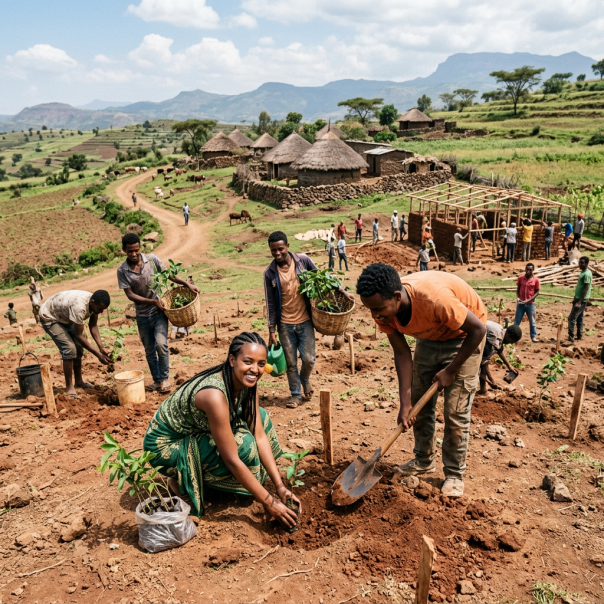
In the sweeping highlands of Oromia, beneath a sky that has witnessed centuries of both triumph and turmoil, a quiet but powerful transformation is taking root. It is not being driven by politicians in distant capitals, nor by the decrees of aging elders alone. Instead, it is being shaped by the hands, minds, and unyielding spirits of the young—the Qeerroo (young men) and Qarree (young women) of Oromia.
For generations, Oromo youth have been the backbone of their nation’s resistance. Today, however, they are stepping into a new role: not merely as protesters against oppression, but as architects of a new Oromia. They are builders of infrastructure, pioneers of technology, guardians of culture, and the driving force behind a national renaissance that is redefining what it means to be Oromo in the 21st century.
A Legacy of Resistance, A Future of Building
The term Qeerroo traditionally described an unmarried young man, but over the past decade, it has evolved into a powerful symbol of generational awakening. The Oromo youth political movement, which gained significant momentum between 2014 and 2018, was driven by deep-seated concerns: youth unemployment, the consequences of rapid urbanization, and a profound sense of marginalization. They were excluded from a rural future through land grabbing and population growth, and equally shut out from a modernist development that unequally distributed the fruits of economic growth.
Yet, frustration has given way to construction. As Minister Deetan, speaking at a youth forum in Bole Sub-City, recently affirmed, the role of young people in nation-building is paramount. The youth are no longer waiting for change to be handed to them; they are actively shaping it. “Dargaggoonni jijjiiramni siyaasaa biyya keenyatti akka dhufu taasisuu qofa osoo hin taanee, jijjiiraamichi qormaatawwan hedduu keessa darbee milkaa’inoota hedduu akka galmeessuuf gahee isaan irraa eegamu bahachaa jira” (The youth are not only bringing political change but are expected to register many successes through numerous challenges).
Pillars of Unity and National Cohesion
One of the most significant contributions of Oromo youth has been their role in fostering national unity and building a cohesive Ethiopian identity. For too long, young people were confined to their regional identities, but this is changing. Minister of Peace Binnaalif Andu’aleem has emphasized that young people have a duty to participate in building the country and fostering national consensus.
Through a new national volunteer service program, youth from various universities—armed with diverse skills—are being deployed across the country to serve communities beyond their own regions. This initiative is breaking down regional barriers and forging a sense of shared destiny. As Minister Andu’aleem noted, for the past 30 years, Ethiopia’s political landscape focused more on division than unity. Today’s youth are actively reversing that trend, stepping out of their regional silos to build a unified national identity through service and collaboration.
The Economic Engine: Creating Dignified Work
Perhaps nowhere is the youth’s impact more visible than in the economic sphere. The challenge of unemployment has been a primary driver of youth activism, but it has also sparked a wave of entrepreneurial and employment initiatives.
The Agricultural Dignified Employment for Youth (ADEY) Program, funded by the Mastercard Foundation and implemented in partnership with organizations like HUNDEE, aims to create 611,000 dignified jobs for youth—80% of them women—across eight Ethiopian regional states, including Oromia. This is not just about filling positions; it is about creating meaningful, dignified livelihoods that empower young people to build their futures with pride.
In addition, massive industrial projects, such as the Busa Gonofa Oromia Integrated Food Industry, are being launched with a clear focus on generating large-scale employment for the youth. These initiatives represent a fundamental shift: the recognition that the nation’s economic future rests squarely on the shoulders of its young population.
The Classroom and the Laboratory: Building Minds
Education is the cornerstone of any nation’s development, and Oromo youth are at the forefront of a revolution in learning. In a powerful act of giving back, world-renowned Oromo scientist Professor Gabbisaa Ejjetaa funded and built the “Mootuu Ayyaanoo Secondary School” in his hometown of Oolankomii, naming it after his late mother. “This is not just a building; it is a beacon of hope,” said one elder at the inauguration. The school is a testament to the idea that true development begins with education and that the youth must be empowered through rigorous academics grounded in cultural identity.
Furthermore, the establishment of the Shaggar Institute of Technology (SIT) in Oromia marks a monumental leap forward. This new institution is dedicated to training elite students in cutting-edge fields such as Space Science, Artificial Intelligence, Nuclear Science, Biotechnology, and various engineering disciplines. The institute, built with a multi-billion birr budget, is designed to produce a generation of Oromo and Ethiopian youth capable of competing on the global stage.
A Cultural Renaissance: Reclaiming Identity
Beyond politics and economics, Oromo youth are leading a profound cultural renaissance. Across Oromia, young people are reclaiming their names, their language, and their heritage with a pride that their parents could scarcely have imagined.
They are celebrating Irreechaa, the ancient Oromo thanksgiving festival, not just as a religious ritual but as a powerful assertion of national identity. The festival serves as a vital platform for youth engagement and community identity. Young people are also at the forefront of efforts to have Irreechaa recognized by UNESCO as a world heritage, ensuring its preservation for future generations.
This cultural awakening extends to the digital realm as well. Young Oromo innovators are developing learning platforms in Afaan Oromoo, and initiatives like the “Gadaa Eco Builder” game are using interactive play to teach the UNESCO-recognized Oromo Gadaa system while funding real-world reforestation in Oromia. The youth are ensuring that their culture is not a relic of the past but a living, breathing force for the future.
The Challenges Ahead
Despite these remarkable contributions, the path forward is not without obstacles. Many Oromo youth still face significant challenges: educated unemployment, landlessness, and the persistent pull of migration, both internal and international. Research shows that youth in Oromia often migrate to larger towns or even abroad in search of better opportunities.
The government and various organizations are actively working to address these issues through economic empowerment projects, skills development, and job creation programs. However, the scale of the challenge requires sustained effort and a continued commitment to placing youth at the center of the development agenda.
Conclusion: The Architects of Tomorrow
The Oromo youth of today are not waiting for a future to be given to them; they are building it with their own hands. They are engineers building infrastructure, entrepreneurs creating jobs, scientists pushing the boundaries of knowledge, and cultural guardians preserving their heritage.
As Minister of Culture and Sport Nafiisaa Almahaadii recently stated, “Dargaggoonni birmadummaa fi tokkummaa biyyaasaanii eegsisuuf ejjennoo waliinii qabachuu qaban” (Youth must have a unified stance to protect the freedom and unity of their country).
From the battlefields of political struggle to the classrooms of cutting-edge institutes, from the economic hubs of industry to the spiritual grounds of Irreechaa, the youth of Oromia are proving that they are not just the leaders of tomorrow—they are the architects of today.
The foundation they are laying now will determine the shape of Oromia for generations to come. And if their current trajectory is any indication, that future is bright, resilient, and undeniably Oromo.
S

Four Decades of Scholarship, One Enduring Legacy: The Oromo Studies Association at 40

From Exile to Global Recognition — How a Diaspora Institution Reclaimed a People’s History
By Dhabessa Wakjira
The year was 1986. In meeting rooms scattered across the diaspora, in the United States and Europe, a small group of Oromo and non-Oromo scholars gathered with a radical idea . They would build an independent academic home for the study of a people whose history, culture, and very existence had been systematically erased from mainstream scholarship. They would create a space where knowledge about the Oromo could be produced not by outsiders, but on its own terms.
They called it the Oromo Studies Association .
Four decades later, that audacious dream has become something far greater than its founders could have imagined. As the OSA marks its 40th anniversary in 2026, it stands as a global scholarly community spanning continents and disciplines—a testament to the power of knowledge as a form of justice.
The Birth of a Movement: Founding in Exile
The OSA was not born in a vacuum. It was founded in direct response to a crackdown that had led to those campaigning for greater recognition of the Oromo people being murdered, tortured, jailed, or driven out of the country. The founding was a response to a void—a void in which Oromo heritage was not merely absent from academia and state narratives but actively suppressed.
Under successive Ethiopian regimes, the Oromo—despite being the largest ethnolinguistic group in Ethiopia, numbering over 40 million people across the Horn of Africa—were systematically marginalized. They were deprived of their expropriated lands, their freedom through enslavement, their identity, and even the right to speak their own language. In Ethiopia, the history of the Oromo people was effectively written out of the national narrative.
Among the founders was Sisai Ibssa, a scholar-activist whose intellectual journey shaped the trajectory of Oromo studies for decades. Reflecting on the early days, one founding figure recalled attending an international Oromo conference in Berlin in 1984—”It was then that we started to think about organizing an Oromo studies association. A few years later, OSA was formally organized” .
Another towering figure was Professor Asmarom Legesse, whose landmark work Gada: Three Approaches to the Study of African Society (1973) brought the Oromo democratic system to international scholarly attention. Legesse passed away on January 31, 2026, just weeks before OSA’s 40th anniversary year—a loss deeply felt by the community he helped build.
A Full Gadaa Cycle: 40 Years of Scholarship
In Oromo tradition, the Gadaa system operates on eight-year cycles, with a full generational transition spanning forty years. This year’s anniversary is therefore not merely a milestone—it is a symbolic completion of a full Gadaa cycle, representing generational renewal, continuity, and the orderly transfer of knowledge and responsibility.
The OSA’s work over these four decades has been nothing short of transformative:
Before OSA, Oromo heritage was systematically erased. The Oromo language, Afaan Oromoo—the third most widely spoken language in Africa—was banned in schools and public life until 1992, and students were punished for speaking it or using Oromo names. A state ideology of “Ethiopianism” promoted Orthodox Christianity, the Amharic language, and Abyssinian culture as the sole legitimate national identity.
After four decades of OSA scholarship, the Oromo Gadaa system—a millennia-old democratic governance structure based on generational age sets, egalitarian principles, and rotating leadership—has been recognized by UNESCO as part of the Intangible Cultural Heritage of Humanity . Oromo studies is now a respected field in global academia. And the Journal of Oromo Studies, launched in 1993, has been indexed in Scopus—one of the world’s most prestigious academic databases.
The Journal of Oromo Studies: A Dream Come True
When the first issue of the Journal of Oromo Studies rolled off the presses in the summer of 1993, it was described as “a dream come true” . For scholars who had labored in obscurity, publishing in venues that often dismissed or distorted Oromo realities, the Journal offered something revolutionary: a platform where Oromo scholarship could stand on its own.
The first volume featured foundational essays by scholars like Asafa Jalata, whose work on “The Oromo, Change and Continuity in Ethiopian Politics” helped define the contours of a new field . Over the decades that followed, the Journal would publish research on everything from the Gadaa system to diaspora studies, from economic development to cultural preservation, from historical linguistics to contemporary politics.
Now fully open-access, the Journal publishes articles, research notes, and scholarly book reviews in both English and Afaan Oromoo, welcoming contributions from emerging and established scholars alike . The Journal’s entire archive—decades of scholarship—is now posted to the OSA website, making it available to anyone with an internet connection.
In June 2026, Scopus announced the addition of 242 new journals to its prestigious index. Among them was the Journal of Oromo Studies. For those unfamiliar with the world of academic publishing, Scopus indexing is the gold standard. It places JOS alongside publications from Springer, Elsevier, Wiley, and Cambridge University Press.
As Bonnie Holcomb, the Journal’s Editor-in-Chief, wrote to contributors and advisors: “This publication, and the indexing in Scopus, are notable achievements, all. We have come a long way together” .
Reclaiming Oromummaa: The Core of the Mission
Central to OSA’s four-decade effort is the concept of Oromummaa—a term embodying the collective values, institutions, and worldview of the Oromo people. Once dismissed, Oromummaa has been meticulously restored by OSA scholars through research that has redrawn the map of Horn of Africa studies.
The OSA’s scholarship has focused on three core institutions of Oromo indigenous democracy:
- The Gadaa System: A complex socio-political system featuring an eight-year leadership cycle, checks and balances, and principles of accountability and rule of law. Its global significance was recognized by UNESCO in 2016.
- Siinqee (Siiqee): A women’s institution that ensures gender balance and social justice .
- The Qaalluu: The spiritual authority maintaining harmony between society, nature, and the spiritual realm.
Together, these institutions embody values of democracy, peace (nagaa), and ecological stewardship that OSA argues offer lessons of “global relevance”.
Breaking the Silence: OSA in the Diaspora
For many years, the OSA could not hold its annual meetings on home ground. Meetings were held in the diaspora, usually in the United States. The Association promoted research and scholarship across the full range of Oromo studies, but the doors of Ethiopia remained closed.
Under successive regimes, protesting Oromo people were increasingly subject to widespread repression, arbitrary arrests, detention without charge, enforced disappearance, torture, and even death . Like all authoritarian regimes, the authorities sought to silence protesters, initially targeting intellectuals, journalists, and students. All exiles, international commentators, media representatives, and human rights movements were denied entry to the country—including the OSA.
The most significant change came in 2018 with the election of Dr. Abiy Ahmed, himself an Oromo, to the position of Prime Minister of Ethiopia. As one scholar observed: “He opened the doors of Ethiopia to the Oromo in exile, some of whom had not seen their homeland for 40 years or more, and whose children had never been allowed to set foot on Ethiopian soil“. Even the Oromo Liberation Front operatives were given the green light to fly back into the country.
The 2026 Conference: Honoring the Past, Investing in the Future
The OSA’s 40th Annual Conference, themed “Oromo on the Global Landscape: Honoring Asmarom Legesse as OSA Turns 40,” will be held July 31 – August 2, 2026, in Minneapolis, Minnesota .
The conference will bring together scholars, researchers, students, and community members from across the diaspora and the continent for three days of panels, roundtables, keynote addresses, and community dialogue . It will feature diaspora-connected parallel panels abroad, reflecting the conference’s commitment to centring Oromo communities wherever they are.
An opening night celebration will be held on Friday evening, July 31, at the Oromo Community Centre in Saint Paul—an evening of inspiration, culture, and community, featuring video greetings from former OSA presidents, cultural dance performances, live cultural music, and a delicious meal catered by Dilla Restaurant.
Challenges and the Road Ahead
This hard-won scholarly recognition is not without its challenges. The OSA has warned of “renewed attacks on Oromo scholars and scholarship” from actors seeking to “restore inequitable power relations” . These attacks have evolved from formal complaints accusing scholars of “hate speech” to coordinated social media campaigns that vilify Oromummaa itself as a dangerous ideology.
The OSA’s statement declares: “These attacks do not represent scholarly debate grounded in evidence. Rather, they reflect a politicized rejection of any scholarship that challenges centralized authoritarian narratives” . It draws a stark warning: “History demonstrates that vilification of a people’s identity is often a precursor to mass violence”.
Despite these challenges, the OSA remains committed to its mission. As the Association’s “Who We Are” page states: “We believe that knowledge is a form of justice“.
Conclusion: A Legacy Worth Celebrating
Forty years ago, a small group of exiled scholars dared to imagine a world in which Oromo knowledge was recognized as a contribution to the full breadth of human civilization. Today, that vision is reality .
The Journal of Oromo Studies, indexed in Scopus, stands as a monument to their courage and their persistence. The annual conference, now in its 40th year, brings together a global community of scholars and advocates. The website, with its full open-access archive, makes decades of scholarship available to anyone with an internet connection.
As Bonnie Holcomb wrote, with warmth that reflects decades of dedication: “Congratulations, one and all“.
The celebration is earned. The legacy is enduring. And the work continues.
The 40th Annual Conference of the Oromo Studies Association
July 31 – August 2, 2026
Augsburg University, Hagfors Center
Minneapolis, Minnesota
Details at www.oromostudies.org
Injifannoon Ummata Oromoo!
OSA haa jabaattu!
Four decades of scholarship, community, and the enduring pursuit of justice for the Oromo people.

The Macha-Tulama Self-Help Association Speaks: Finfinne, Dirree Dhawaa, and the Unfinished Struggle for Oromo Justice

A Historic Statement on the National Dialogue, Colonial Atrocities, and the Demand for Recognition
By Daandii Ragabaa
In a powerful and historic statement, the Waldaan Walgargaarsa Misoomaa fi Hawaasummaa Maccaa Tuulamaa (Macha-Tulama Self-Help and Development Association) has declared that the issue of Finfinne and Dirree Dhawaa has been brought before the national dialogue not as a genuine attempt at resolution, but as a deliberate effort to undermine and weaken the Oromo people.
The Association has asserted that the old wounds of the past—the wounds inflicted by the Menelik era—remain unhealed. And today, the same forces of dispossession and denial continue to operate, refusing to recognize Oromo rights and refusing to step back from the land that was stolen.
“The wound of Oromo is still not healed,” the Association declared. “Even today, we are witnessing the theft of our ancestral land.”
The Historical Atrocity: Menelik’s Genocide Against the Oromo
The Association’s statement took the Oromo people and the wider world back to a dark chapter in Ethiopian history—the era of Emperor Menelik, when the Oromo people were systematically dispossessed of their land, their dignity, and their lives.
“Menelik committed a great crime against the Oromo people when he separated Finfinne from its Oromo owners,” the Association stated.
The atrocities of that era are well-documented, but the Association has brought them into stark relief by naming specific victims and families who suffered under Menelik’s expansionist campaign:
- Abbaa Gadaa Guraaraa Lataa was executed by hanging.
- His father, mother, and three children were killed in a brutal and inhumane manner.
- Qajeelaa Dooyyoo and Guraaraa Dooyyoo were also executed, along with their mother, in a similarly horrific fashion.
- Shubbuu Ejersoo had his hands and feet severed before being killed.
- Aaxalee Jaatanii was starved to death in detention—denied food until life was extinguished.
These were not random acts of violence. They were part of a systematic campaign to break the spirit of the Oromo people, to erase their presence from Finfinne, and to establish a new political order built on Oromo suffering.
The Association’s statement serves as a reminder that these crimes were not isolated incidents—they were part of a broader pattern of atrocity committed against the Oromo people who lived on the land now known as Finfinne.
The Legacy of Suffering: Three Generations of Pain
The Association declared that the suffering of the Oromo people over Finfinne has now spanned three generations. From the initial dispossession under Menelik, to the brutal repression under the Derg regime, and now to the present day—the Oromo people have paid a heavy price.
“During the Derg era, many Oromo paid a great price for Finfinne,” the Association stated. “Even today, the wound is still not healed.”
The Association raised a pointed and urgent question:
“As long as this truth exists on this earth, the question of ‘Whose Finfinne is it?’ will always be asked. What has brought us to this point?”
The answer, according to the Association, lies in the persistent refusal of successive Ethiopian regimes to acknowledge Oromo rights. The Association posed a direct challenge to the architects of this injustice:
“Oromo people are struggling to reclaim their land and their rights. How can you govern on someone else’s land? What right do you have to claim authority over people who do not belong to you? It would have been better for you to struggle for your own land rather than occupy ours.”
The National Dialogue: A Tool of Deception?
The Association expressed deep concern about the ongoing national dialogue and how the issues of Finfinne and Dirree Dhawaa are being treated within it.
According to the Association, the dialogue is not being used as a genuine mechanism for reconciliation and justice. Instead, it is being manipulated to further marginalize the Oromo people and to legitimize the ongoing dispossession of Oromo land.
“The agenda of Finfinne and Dirree Dhawaa has been brought to the national dialogue to weaken the Oromo people,” the Association declared. “The old politics of the Abyssinian elite continues, refusing to step back from the land that rightfully belongs to Oromo.”
The Association emphasized that the ongoing process is not just disrespectful—it is a violation of basic rights and dignity. The Association described the current situation as “an insult that crosses all boundaries” and declared that “something that did not exist before has now arrived” —a reference to the unprecedented nature of the current assault on Oromo rights.
A Call to Resistance and Unity
In the face of these challenges, the Macha-Tulama Self-Help and Development Association issued a clear and urgent call to the Oromo people:
“The Oromo people have not yet paid the price that is required. We must fight.”
The Association’s call to action is not a call to violence—it is a call to resistance, to unity, and to the defense of Oromo rights through every legitimate means available. It is a call to refuse subjugation, to refuse silence, and to refuse to accept the theft of Oromo land as a settled fact.
The Association also addressed the issue of Dirree Dhawaa—the area that has become a symbol of Oromo resistance and a flashpoint of conflict. The Association’s declaration that Finfinne and Dirree Dhawaa are inseparable from the broader Oromo struggle serves as a reminder that these are not isolated issues—they are part of a continuous thread of resistance that stretches back over a century.
The Symbolism of Dirree Dhawaa
Dirree Dhawaa is more than just a piece of land—it is a symbol of Oromo resilience and a monument to the struggle for justice. It is the site where Oromo people have gathered to demand their rights, where they have faced brutal repression, and where they have continued to return in defiance of all efforts to silence them.
The Association’s statement linking Finfinne and Dirree Dhawaa in the same breath is significant. It sends a clear message: the Oromo people will not accept piecemeal solutions. They will not accept partial recognition. They will not accept the suggestion that one part of their historical homeland can be compromised while another is defended.
Both Finfinne and Dirree Dhawaa are Oromo.
A Historical Challenge to the Ethiopian State
The Association’s statement is not just a declaration of grievance—it is a fundamental challenge to the legitimacy of the Ethiopian state as it currently exists.
By raising the question “Whose Finfinne is it?” —and by insisting that Oromo people have the right to live on their own land with dignity, self-respect, and self-determination—the Association is questioning the foundational narrative upon which the Ethiopian state was built.
The Association’s demand is not for charity or concessions. It is for recognition of historical truth, for justice for past crimes, and for a future in which Oromo people are treated as equals in their own homeland.
The Path Forward: Recognition, Justice, and Peace
The Association’s statement concludes with a clear vision for what must happen:
The wounds of the past must be acknowledged. The atrocities committed against the Oromo people—from the Menelik era to the present—cannot be ignored or forgotten. They must be named, documented, and taught.
Justice must be pursued. Those who committed crimes against the Oromo people must be held accountable. This is not revenge—it is the foundation of lasting peace.
Oromo rights must be recognized. The Oromo people have the right to their land, their language, their culture, and their self-determination. This is not negotiable.
The national dialogue must be genuine. If the dialogue is to be meaningful, it must include a full and honest discussion of Finfinne, Dirree Dhawaa, and all the historical injustices suffered by the Oromo people.
Conclusion: The Struggle Continues
The statement of the Macha-Tulama Self-Help and Development Association is a powerful reminder that the struggle for Oromo justice is far from over. The wounds of the past remain open. The injustices of the present continue. And the future remains uncertain.
But one thing is clear: the Oromo people will not give up their land, their rights, or their dignity. They will continue to resist. They will continue to demand justice. And they will continue to remember the sacrifices of those who came before—from Abbaa Gadaa Guraaraa Lataa to the thousands of unnamed Oromo who have given their lives for Finfinne and for Oromia.
As the Association stated:
“Oromo people are struggling to reclaim their land. This struggle has not ended—it continues. And it will continue until justice is done.”
Finfinne is Oromo.
Dirree Dhawaa is Oromo.
Oromia is Oromo.
The struggle continues.
For the memory of Abbaa Gadaa Guraaraa Lataa, Qajeelaa Dooyyoo, Guraaraa Dooyyoo, Shubbuu Ejersoo, Aaxalee Jaatanii, and all the Oromo martyrs who gave their lives for the land.
Injifannoon Ummata Oromoo!
Finfinne haa jabaattu!
Dirree Dhawaa haa jabaattu!
End.

The Unbroken Backbone: The Role of Oromo Women in the Struggle for Liberation

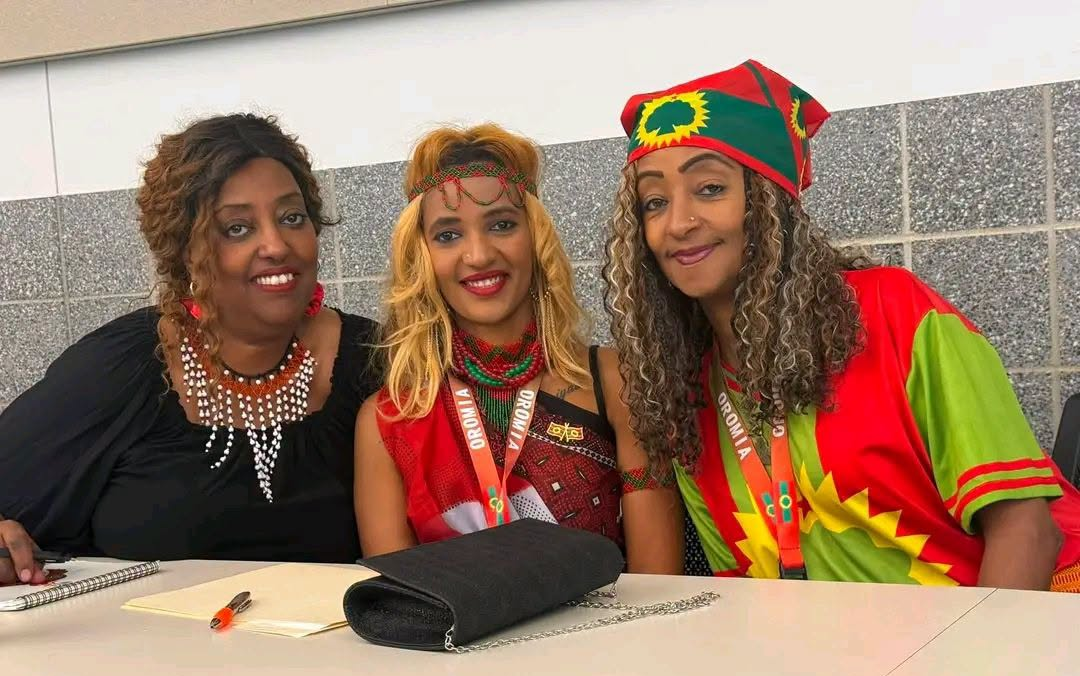
For decades, the story of the Oromo liberation struggle has been told as a chronicle of resistance against a sprawling empire. But within that narrative, there is a deeper, more powerful current—one that has flowed quietly yet inexorably beneath the surface. This is the story of Oromo women, who have not merely supported the movement, but have stood as its very backbone: its fighters, its strategists, its memory keepers, and its soul.
A Struggle on Three Fronts
The Oromo people have been engaged in a struggle for liberation since their colonization by the Abyssinian Empire, which evolved into modern-day Ethiopia. However, Oromo women face a unique and intersecting burden. They are not only fighting against what scholar Madeline Bass describes as the “settler colonial state rulers of Ethiopia” and “global anti-Blackness,” but they must also contend with “cisheteropatriarchy”—a struggle against patriarchal oppression that is uniquely Oromo in its application.
This triple oppression means that Oromo women have always had to fight for the liberation of their nation while simultaneously battling for their own dignity and rights within their own communities. As one source notes, “the Abyssinian system oppresses Oromo people, and women in particular.” The state of oppression is deep in general, but Oromo women face even greater difficulty.
Pillars of the Movement: From the Battlefield to the Ballot
Within the Oromo Liberation Front (OLF/ABO), Oromo women have served as “utubaa cimaa”—strong pillars—whose contributions have shaped every facet of the liberation movement. Their involvement has been both visible and behind-the-scenes.
· On the Battlefield: Many Oromo women have joined the Oromo Liberation Army (OLA), the armed wing of the OLF, taking up arms to defend their people and land. Women like Aradoolaa Abdalla, who joined the OLA in 1985 and participated in ten major battles in western Oromia, rose through the ranks to become a platoon commander because of her bravery. Women have participated in every sector—military, medical, and communication—as combatants and supporters.
· In Political Organizing: Beyond the battlefield, Oromo women have been active in political movements for decades, serving as leaders, organizers, and advocates within the OLF and other nationalist groups. They have organized protests and worked tirelessly to inform other women of their rights.
The Unbreakable Spirit of Siinqee
One cannot speak of Oromo women’s resistance without understanding Siinqee. It is not merely a wooden stick; it is a profound cultural and spiritual institution. A Siinqee is a ritual stick given to an Oromo woman by her mother on her wedding day. Once a woman holds this stick, she commands respect from everyone in the community.
More than a symbol, Siinqee is a lived practice of mutual protection, a “covenant of resistance against all forms of oppression.” Women use the power of Siinqee to exercise their rights, control their own economy, and participate in solidarity activities. This tradition, which predates Western feminist thought, represents an Oromo philosophy of womanhood and solidarity that has been passed down through generations.
Martyrs and Heroes: The Price of Freedom
The contribution of Oromo women has come at a devastating cost. The liberation struggle has demanded sacrifices that extend far beyond the battlefield, imposing a heavy burden on the families left behind.
One of the most iconic figures in this struggle is Martha Kuwee Kumsa, an Oromo journalist and scholar whose story embodies the spirit of resistance. In 1980, during the Ethiopian Red Terror, she was arrested and detained without charges for nine years after writing an article that called for Oromo women to defy power structures and reclaim their cultural heritage. She was tortured and held until 1989, after which she escaped to Kenya and later Canada. Her activism is deeply rooted in Siinqee feminism—an Oromo philosophy that predates Western feminist thought and is a lived practice of mutual protection and solidarity. Today, she is a professor in Canada and continues to write and advocate on feminist and political issues.
Countless other women have paid the ultimate price—some were killed in battle, others were publicly executed. The story of Agarii Tulluu, who was hanged alongside her two brothers in a market, is just one of many tragic tales. The mothers, wives, and sisters of fallen fighters carry a grief that “does not fade from their minds,” enduring a wound that cannot be measured.
The Hiriira: A Modern Cry for Recognition
The struggle of Oromo women is not confined to the hills of Oromia; it has gone global. In September 2020, Oromo women marched through the streets of Berlin, Germany, in a protest march called a Hiriira—an Oromo word for a parade, demonstration, or queue. They were demanding recognition for their struggle.
This march was more than a protest; it was a powerful act of spatial and historical reckoning. It served as a case study into the entanglements between settler colonial Ethiopia, Germany’s post-empire, and the forces of oppression that link them. By marching through Berlin, Oromo women were mapping their liberation across borders, using a “Black and Blackened way of knowing space with a particularly Oromo perspective” known as geography guraacha. The women wore Oromo cultural garb, distinct to different regions of Oromia, turning the streets of a European capital into a living map of their homeland and their resistance.
Architects of a New Nation
The role of Oromo women extends beyond the struggle for liberation into the vision for what comes after. There is a growing consensus within the movement that the liberation of Oromia cannot be separated from the liberation of Oromo women. Any future Oromo state must be built with women’s full and equal participation from the ground up.
As one advocate powerfully stated, the aim is to ensure that Oromo women are “not just participants but architects of the next chapter.” From the battlefield to the political arena, from the cultural institution of Siinqee to the global stage of the Hiriira, Oromo women have proven that they are not waiting for liberation to be given to them—they are building it with their own hands, one courageous step at a time.
—
This feature article draws on academic research, historical accounts, and journalistic reports to highlight the indispensable role of Oromo women in their people’s long struggle for freedom and dignity.

Jaallan Utubaa Qabsoo: The Pillars of Oromo Liberation and Their Global Reach
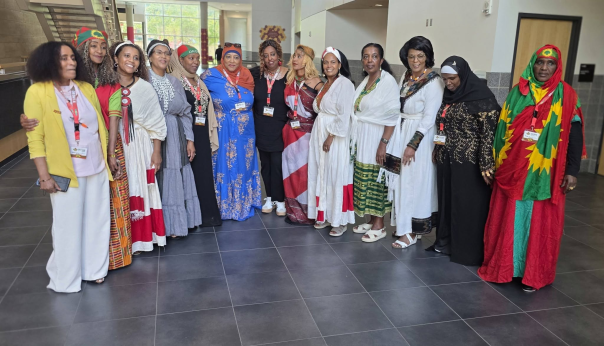
Honouring the Builders and Champions of the Oromo Struggle, and the Global Structure of the ABO
By Dhabessa Wakjira
In every liberation movement, there are those who carry the torch not for personal glory, but for the collective destiny of their people. They are the architects of consciousness, the builders of institutions, and the guardians of memory. They are Jaallan Utubaa Qabsoo—the beloved pillars of the struggle—and Jaallan Qabsoo—the beloved champions who have emerged from every corner of Oromia and the diaspora to advance the cause of Oromo liberation.
This is a tribute to them. And this is an exploration of the structure that unites them: the Adda Bilisummaa Oromoo (ABO) —the Oromo Liberation Front—and its global reach across nations.
The Pillars: Who Are the Utubaa Qabsoo?
The term Utubaa Qabsoo—pillars of the struggle—is not a title given lightly. It is earned through sacrifice, through decades of commitment, and through an unwavering dedication to the Oromo people’s right to self-determination . These are the individuals who, in the darkest hours, refused to let the flame of liberation die.
One such pillar was Cawwaaqaa Yaaddessaa, a renowned Oromo singer and artist whose music became the soundtrack of the resistance. Through his songs, he chronicled the pain and the hope of the Oromo people, composing works that stirred the hearts of a generation . His compositions—such as “Eemmoo yaa guraale hoo dangashe”—became anthems of defiance, performed even when political gatherings were banned . He served as a pillar of the struggle through his art, demonstrating that cultural expression is a weapon of resistance as powerful as any gun .
Another pillar is Ustaaz Raayyaa Abbaa Maccaa, who transitioned from the armed struggle within the ABO to become a teacher of Islamic faith and a composer of spiritual songs (manzuumaa) that reinforced Oromo identity and resilience . He was part of the ABO in its early years, receiving military training at the 24th training camp in Harawaacaa, and fought in numerous battles . Even after being captured and imprisoned for a long time, he never abandoned the struggle; he continued to strengthen the Oromo people through his teachings and songs . His story is a testament to the fact that the pillars of the struggle exist not only on the battlefield but also in the realms of faith, culture, and education .
Baaroo Tumsaa stands as another foundational pillar. He is remembered as a key figure in building the Oromo movement in the 1970s, working to organize youth and establish the infrastructure that would eventually lead to the formal founding of the ABO . He played a crucial role in the Macha-Tulama Self-Help Association and was instrumental in consolidating Oromo nationalism into a political force . His legacy is one of organization and vision, reminding us that liberation is built not just on passion but on structure.
The Champions: Jaallan Qabsoo and the Spirit of Resistance
Beyond the foundational pillars, there are the Jaallan Qabsoo—the beloved champions of the struggle. These are the fighters, the activists, the community organizers, and the everyday people who have taken up the mantle of resistance in their own ways .
The Qeerroo youth movement is perhaps the most powerful contemporary embodiment of this spirit. In traditional Oromo culture, the term means “bachelor” or “youth,” but within the political movement, it symbolizes the Oromo struggle for increased political freedom and greater ethnic representation . The Qeerroo have emerged as a dynamic and fearless force, challenging the state and demanding justice .
The champions are also found in the Oromo Liberation Army (OLA) —known in Oromo as Waraana Bilisummaa Oromoo (WBO) —the armed wing of the struggle . The OLA was formed in 1974 and has continued its armed resistance against successive Ethiopian regimes . Under the leadership of figures like Jaal Marroo (Kumsa Diriba), the OLA remains active in the Oromia Region, representing those who refused to disarm following the 2018 peace deal, skeptical of the government’s intentions .
The champions are also found in the diaspora—in Washington, D.C., Berlin, and other cities around the world, where the ABO maintains offices and radio stations that broadcast in Oromo and Amharic, keeping the spirit of resistance alive far from the homeland .
The ABO: Structure and Global Reach
The Adda Bilisummaa Oromoo (ABO) —or the Oromo Liberation Front (OLF)—is the political organization that unites these pillars and champions. It was founded in 1973 with the goal of promoting self-determination and independence for the Oromo people . Its structure has evolved over the decades, but its core mission remains unchanged: the total liberation of Oromia from what it characterizes as Ethiopian colonialism .
The ABO’s structure extends far beyond the borders of Oromia and Ethiopia. It has a significant diaspora presence, with offices in Washington, D.C., and Berlin . These offices serve as hubs for organizing, advocacy, and communication . They also operate radio stations that broadcast in both Amharic and Oromo, ensuring that the organization’s message reaches Oromo communities worldwide .
This global reach is critical. The ABO’s international structure allows it to advocate for the Oromo cause on the world stage, to build solidarity with other movements, and to sustain the struggle even when political space is closed inside Ethiopia . In a November 2025 position statement, the OLF declared that “the current regime has deliberately closed the political arena and obstructed the lawful activities of the Oromo Liberation Front” . In the face of such obstacles, the diaspora structure becomes even more vital as a space for organizing and resistance.
The Legacy of the Western Front: A Day of Sacrifice
The pillars and champions of the ABO are not abstract figures. They are real people who have paid the ultimate price for their commitment. The Western Front of the armed struggle serves as a powerful reminder of this sacrifice.
On April 15, 1980, the ABO appointed a new chairman in Shinnigga, marking a strategic decision to expand the armed struggle into the Western Front . The organization sent 17 commanders to ignite the resistance in the West. Their names—Daawud Ibsaa, Abbaa Caalaa Lataa, Jaal Tottoobaa Waaqwayyaa, and others—are etched in Oromo memory .
Tragically, these commanders were betrayed and poisoned by collaborators of the Derg regime in December 1981. Their deaths were a devastating blow to the movement . But their memory did not die. In 1985, the ABO leadership formally designated April 15 as Oromo Martyrs’ Day—a day to commemorate all those who have fallen in the struggle for Oromo liberation .
Today, April 15 is observed in the forests of Oromia and in diaspora communities around the world. It is a day of remembrance, of reflection, and of renewed commitment to the cause for which these pillars and champions gave their lives .
Unity, Truth, and the Path Forward
The struggle of the ABO has always been a struggle of self-reliance and truth. As senior ABO leader Jaal Abdii Raggaasaa emphasized in a recent consultative meeting with members: “If we are people of truth, our people will never abandon us under any circumstances. But if we are people of falsehood, even if we hold something, we will lose it” .
The leadership has also stressed that the work of building Oromia extends beyond Ethiopia’s borders . It is a task that belongs to Oromo people everywhere—in the villages of Oromia, in the refugee camps of Kenya, in the community centers of Europe and North America, and in the offices of the ABO in Washington and Berlin .
The unity of these diverse actors—the pillars, the champions, the diaspora, and the grassroots organizers—is the foundation of the Oromo liberation struggle. As another official, Jaal Yaasoo Kabbabaa Hordofa, declared: “OLF is the center of Oromo peace” . The organization calls on all Oromos to strengthen their resolve, to seize the opportunities that arise—such as the upcoming 7th round elections—and to never retreat into silence .
Conclusion: A Living Legacy
The story of the Oromo liberation struggle is not a history lesson; it is a living, breathing movement. It is embodied in the songs of Cawwaaqaa Yaaddessaa, the teachings of Ustaaz Raayyaa Abbaa Maccaa, the organizing of Baaroo Tumsaa, the sacrifice of the 17 commanders of the Western Front, and the tireless work of the ABO’s global network .
Jaallan Utubaa Qabsoo—the beloved pillars—have built the foundation. Jaallan Qabsoo—the beloved champions—continue to build upon it. And the ABO—in its structure, its global reach, and its unwavering commitment to the Oromo people—remains the vessel through which this struggle will achieve its destiny.
ABO haa waaru!
Injifannoon Ummata Oromoo!
This feature article is dedicated to all the pillars and champions of the Oromo liberation struggle—past, present, and future.

A Response from Within: Correcting the Narrative on Ethiopia’s National Dialogue

A four-year participant challenges the critique that the National Dialogue began with the “wrong first question,” offering a detailed defence of the process and an invitation for critics to join the table.
ADDIS ABABA, ETHIOPIA — In the ongoing public debate over Ethiopia’s National Dialogue, one critique has stood out: that the process began with the wrong question, focusing on divisions rather than shared aspirations. Mr Kebour Ghenna articulated this view in a widely discussed reflection, arguing that the Dialogue should have begun by asking, “What future do Ethiopians wish to build together?” rather than “What divides Ethiopians?”
Now, a direct participant in the Dialogue has responded. Mr Zenayeneh Girma, who has served for four years as a representative of Civil Society Organisations (CSOs) in the National Dialogue process, has offered a corrective perspective—one grounded in direct participation rather than external observation.
“The evidence contradicts your central claim that the Dialogue began with the ‘wrong first question,'” Zenayeneh wrote, respectfully challenging Kebour’s thesis.
A Painstaking Process
Zenayeneh begins by correcting what he describes as a factual error. The National Dialogue did not begin by collecting grievances alone. It began by collecting issues from across the country—over 10,000 specific concerns raised in consultations across all woredas .
These were systematically aggregated into 2,000 themes, then distilled into 8 major national agenda pillars . These pillars cover nation-building and identity; state structure and form of government; the status of federal cities; religious affairs; institution building and the rule of law; social and economic issues; corruption and good governance; and peacebuilding and national reconciliation .
“This was not a hurried exercise but a painstaking process designed to ensure every voice—no matter how remote or marginalised—was heard,” Zenayeneh states.
He challenges Kebour’s suggestion that only divisions were documented. “In every consultation, participants were asked what future they desired for their communities and Ethiopia collectively. The 8 pillars emerged not from ‘what divides us’ but from what Ethiopians chose to discuss as urgent national questions—including the most difficult and deadlocked ones.”
Unprecedented Inclusivity
Zenayeneh argues that the Ethiopian process is unprecedented in its inclusivity. For the first time in the country’s history, Ethiopians from all regions, ethnicities, religions, and political affiliations—including diaspora communities—were brought together to question issues once considered “untouchable”: the flag, federalism, the status of Addis Ababa, the constitutional order, corruption, and institutional reform .
“This is not ‘organising disagreement.’ This is building a foundation for consensus,” he writes.
A Call for Participation, Not Observation
One of Zenayeneh’s most pointed observations is directed at the role of intellectuals who critique the process from outside. “You critique from outside while refusing to enter,” he writes, directly addressing Kebour.
As a prominent intellectual, Zenayeneh notes, Kebour could have contributed expertise to advisory panels. Instead, he has consistently critiqued from a distance. “Observing by ‘sitting outside’ and then writing based on hearsay is an easy task. Building a process that engages 4,000+ communities across a vast, diverse country is not.”
Zenayeneh acknowledges that some opposition figures remain outside the process—some by choice, others by circumstance. But the Commission has extended invitations repeatedly. “A dialogue that waits for everyone to agree to participate may wait forever. The process must move forward while continuing outreach.”
What History Will Remember
Zenayeneh concludes with a prediction about what history will actually remember: a moment when Ethiopians—for the first time—sat together across all divides and spoke honestly about their deepest political questions. It will remember a Commission that organised not just grievances but aspirations, not just complaints but solutions.
“The Dialogue is not perfect. But perfection is not the standard—participation is. And by that measure, Ethiopia has achieved something unprecedented.”
His message to intellectuals and critics is clear: “Instead of theorising from outside, consider contributing your expertise. The nation needs thinkers like you inside the room—not just observers outside it.”
Conclusion
Zenayeneh’s response offers a powerful counter-narrative to critiques of Ethiopia’s National Dialogue. It defends the process as painstaking, inclusive, and historic. It acknowledges imperfections while arguing that participation—not perfection—is the standard by which the Dialogue should be judged.
“Thank you for keeping the debate alive,” Zenayeneh writes. “But please, let us not allow perfect to become the enemy of progress.”
This feature news is based on the response of Mr Zenayeneh Girma to Kebour Ghenna, published on July 31, 2026.

The Irreechaa Protocol: How an Ancient Festival Provides a Blueprint for Collective Mental Health Intervention
What if healing from trauma is not meant to be a solitary journey but a communal ritual—one that has been practised for centuries?
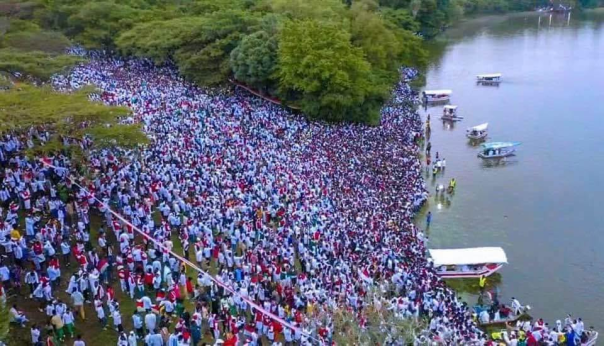
In an era where mental health professionals increasingly recognise the limitations of individual therapeutic models for addressing collective trauma, a centuries-old festival offers an unexpected but profoundly effective blueprint. The Oromo people’s Irreechaa—an annual thanksgiving celebration held at sacred water bodies like Hora Arsadii (Bishoftu) and Hora Finfinnee—functions as what scholars describe as “cultural therapy”: a cyclical, collective practice that restores dignity, cohesion, and hope after generations of political marginalisation .
For a people who have endured conquest, linguistic suppression, and systematic cultural erasure, Irreechaa is far more than a seasonal celebration. It is a sophisticated, community-based mental health intervention that has sustained Oromo resilience for centuries. By examining the Irreechaa protocol—its structure, its symbols, and its therapeutic mechanisms—we may find a model for collective healing that transcends cultural boundaries.
The Foundation of Collective Trauma
The Oromo experience of historical trauma is textbook in its severity. Late-19th-century imperial expansion violently incorporated Oromo homelands into the Ethiopian Empire, followed by over a century of political and cultural subordination . Oromo institutions, including aspects of the Gadaa governance system, were constrained or suppressed, and the public status of Afaan Oromoo was systematically diminished .
This represents what scholars term “cumulative, collective wounding”—mass harms that echo across generations through families and institutions . The result is not merely individual psychological distress but a community-wide experience of internalised devaluation, social fragmentation, and disconnection.
Conventional mental health approaches—individual therapy, medication, and cognitive interventions—can address symptoms but often fail to heal the underlying collective wounds. The Irreechaa protocol offers an alternative: a community-based intervention designed to restore what was broken collectively.
The Therapeutic Structure of Irreechaa
Irreechaa’s choreography follows a remarkably consistent pattern: pilgrimage to sacred water, symbolic washing, public prayer, group singing and dancing, and the leadership of elders . This structure is not accidental; it aligns precisely with what anthropologists identify as the key elements of “ritual repair.”
Recognition: Countering Internalised Devaluation
One of the most insidious effects of historical oppression is internalised inferiority—members of marginalised groups absorb the dominant society’s negative messages about their identity. Irreechaa counters this through public, mass affirmation . When millions gather in traditional white attire, singing Dhaanto, and performing the Shaggooyee dance, they are not just celebrating; they are visibly, collectively reclaiming dignity .
For Oromo youth—particularly those in the diaspora—this public celebration of their culture combats marginalisation and fosters confidence . It tells them that their identity is not something to hide but something to celebrate with pride.
Regulation: Choreographing Healing
The physical elements of Irreechaa serve a regulatory function that echoes evidence-based trauma interventions. Structured songs, rhythmic movement, and shared timing “calm bodies and synchronise emotion” . This mirrors approaches like EMDR (Eye Movement Desensitization and Reprocessing), where bilateral stimulation helps process traumatic material.
Psychologically, this is “psycho-bio-social regulation” . The body and mind work together to process emotional material, with collective synchrony amplifying the therapeutic effect. When tens of thousands move and sing together, the result is a form of community-wide emotional regulation that no individual therapist could replicate.
Reconnection: Rebuilding Social Bonds
Historical trauma isolates; ritual reconnects. Anthropologists have long described how public rituals generate what they call “communitas”—an intense sense of togetherness that suspends everyday hierarchies . At Irreechaa, this communitas creates “prosocial bonds that reduce isolation and renew civic agency” .
The festival’s multi-generational participation reinforces this reconnection . Elders demonstrate rituals like the Eebba (blessings) and traditional dances , while children and youth participate actively, creating a continuity of social bonds that bridges generations. This is not simply a pleasant experience; it is a vital antidote to the social fragmentation that oppression produces.
The Water Blessing: Symbolic Washing Away
The most iconic Irreechaa ritual involves participants entering sacred water and symbolically washing away hardship . This act operates on multiple levels simultaneously:
Symbolically, it represents cleansing from past trauma and preparation for renewal. Psychologically, it provides a physical mechanism for emotional release. Communally, it creates a shared experience that binds participants together.
For diaspora Oromo, adaptations of this water ritual in park settings serve similar functions, connecting a community separated by geography to the healing practices of their ancestors . Planting trees alongside these symbolic water rituals extends the theme of renewal to ecological consciousness .
The Shadow: When Healing Attracts Threat
The very power that makes Irreechaa therapeutic also makes it threatening to forces seeking to maintain dominance. The 2016 Bishoftu tragedy—where security forces’ crowd control triggered a stampede that killed scores—etched a deep collective trauma into Oromo memory . This event reinforced fears that peaceful cultural gatherings can be violently disrupted.
Subsequent Irreechaa celebrations have often featured heavy policing, preemptive arrests, and restrictions that rights groups criticise as disproportionate . The “securitisation” of Irreechaa reflects a fundamental reality: visible, unified collective identity threatens projects that rely on minimising that group’s visibility and power .
Yet the festival continues to grow. In 2025, tens of thousands gathered in Addis Ababa and Bishoftu, with Prime Minister Abiy Ahmed addressing the crowd . The celebration has become a complex space where cultural resurgence, political symbolism, and community grievance intersect .
A Blueprint for Collective Intervention
What can the Irreechaa protocol teach mental health practitioners, community organisers, and policymakers?
1. Collective Healing Requires Collective Ritual
Individual therapy cannot fully address historical trauma because the wound is communal. Interventions must create spaces where communities can heal together.
2. Symbolism Matters
Water, music, movement, and traditional attire are not superficial decorations; they are therapeutic vehicles that engage the whole person.
3. Intergenerational Participation Is Essential
Children and elders healing together creates continuity that individual approaches cannot achieve.
4. Regularity Builds Resilience
Irreechaa’s cyclical nature—held annually, marking seasonal change—provides ongoing, predictable support.
5. Cultural Grounding Is Strength
Cultural practices adapted to trauma healing are not barriers to evidence-based approaches; they are themselves evidence-based approaches refined over generations.
Conclusion
Irreechaa demonstrates that collective healing is not only possible but has been practised for centuries. Its protocol—recognition, regulation, and reconnection through public ritual—provides a template that could be adapted across cultures and contexts.
As scholars of historical trauma note, healing requires “shared remembrance, mourning, and culturally grounded practices that rebuild meaning and agency” . The Irreechaa protocol provides exactly that: a culturally grounded practice that rebuilds meaning and agency for millions.
For mental health professionals, the lesson is clear: the best interventions may not be found in clinical manuals but in the living traditions of communities that have survived and thrived despite centuries of attempted erasure. The Irreechaa protocol is not just a festival; it is a toolkit for collective mental health, refined over generations and proven effective by the very survival of the Oromo people.
“Irreechaa’s power is double-edged: the very practices that heal—public recognition, shared emotion, embodied solidarity—also unsettle projects that rely on minimising Oromo visibility. The path forward is not to shrink Irreechaa but to secure it: treat it as a national asset, protect rights equally, and let ritual do its quiet work of repair” .

Taaboree (Ukee): The Sacred Children’s Festival of the Oromo People
In the heart of the rainy season, a celebration of joy, freedom, and cultural continuity reminds us of the resilience of Oromo traditions
“Ayyaanni Taaboree, ayyaana ijoolleeti.”
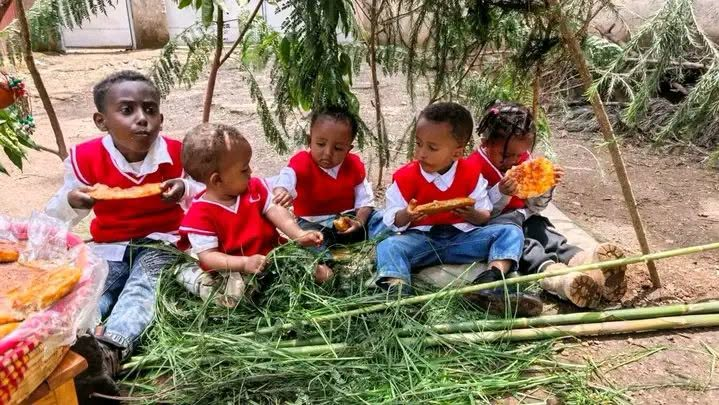
The Taaboree festival is a festival for children. These simple words capture the essence of one of the most cherished celebrations in Oromo culture—a day when the voices of children fill the air, laughter echoes across the fields, and the community comes together to honour the youngest among them.
Taaboree (also known as Ukee) is celebrated primarily among the Maccaa and Tuulamaa Oromo communities. It is a festival that embodies the Oromo people’s deep reverence for children, their commitment to community, and their resilience in the face of cultural suppression.
The Season of Celebration
“Waqtii Gannaa kana keessa ji’a Adoolessaa kana keessa ayyaaneffatama.”
The Taaboree festival is celebrated during the rainy season, in the month of Adoolessa/July. The exact date varies from place to place, reflecting the diversity of Oromo communities and their local traditions.
“Guyyaan isaa bakkaa bakkatti gargar ta’uu mala.”
The timing of the festival is not fixed by a single calendar date but by the rhythms of nature and community life. When the rains have come, when the fields are green, when the earth is renewed—that is the time for Taaboree.
“Guyyaa kana ijoolleen hojiirraa bilisa.”
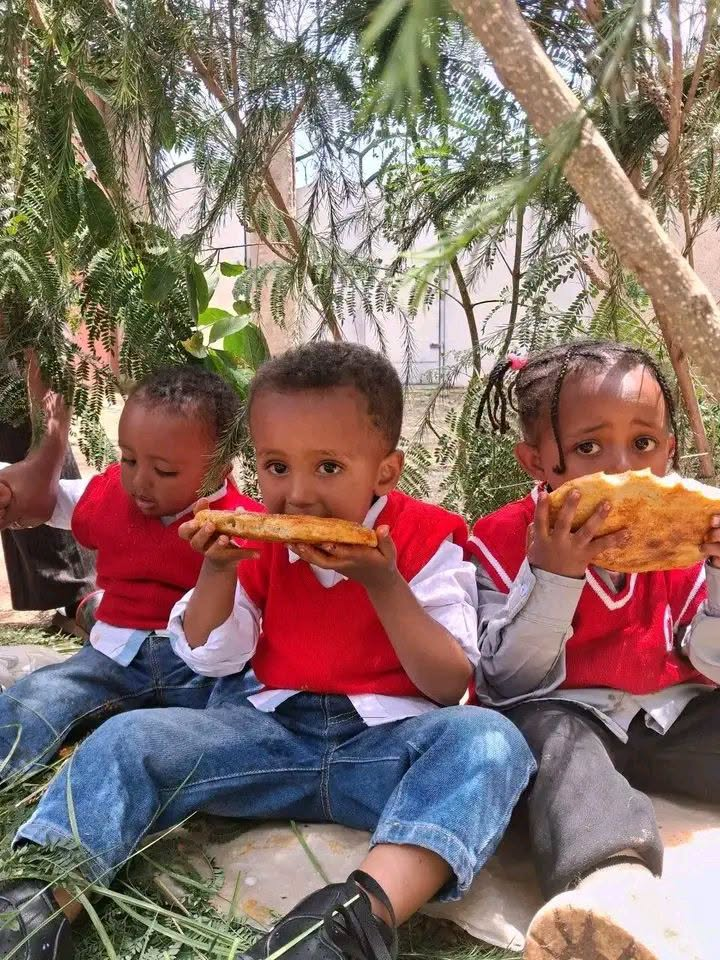
On this day, children are free from work. They are released from their chores, their responsibilities, and their daily duties. This is their day—a day of joy, of play, and of celebration.
“Nyaata mi’aawaa heddutu qophaaha; ijoolleen wal-geessee nyaatti.”
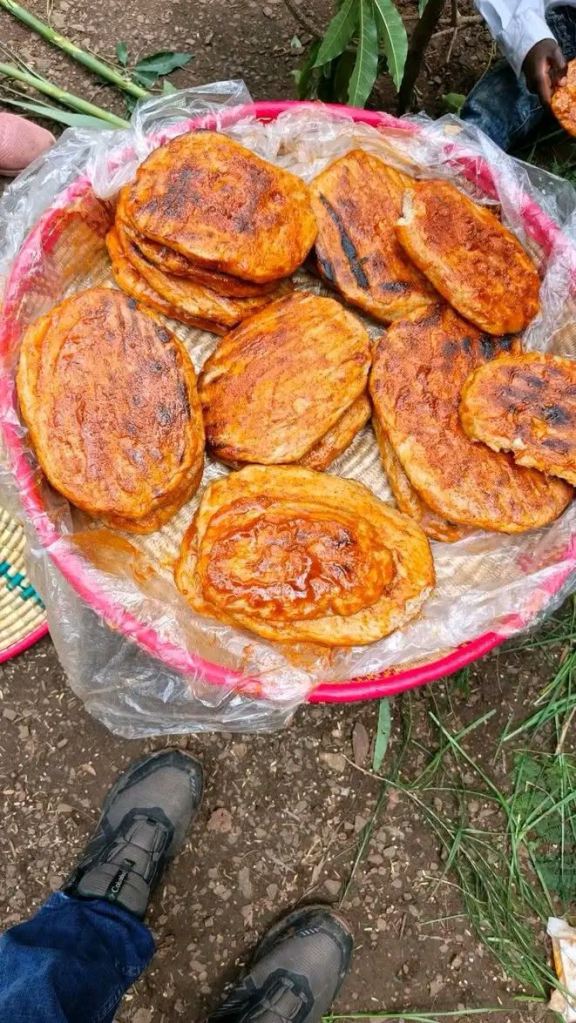
Delicious food is prepared, and the children gather together to eat. They share the meal in community, learning the values of generosity, togetherness, and mutual care.
“Ni dhiichisti.”
The community gathers around them, celebrating their youth, their energy, and their hope.
A Tapestry of Festivals
Taaboree is not the only festival in the Oromo calendar. The Oromo people have a rich tradition of seasonal celebrations, each with its own significance:
Ateetee: The women’s festival, celebrating the power and dignity of Oromo women.
Hingiccaa/Shinooyyee: The festival of young women, marking their transition to adulthood.
Booranticha: The father’s festival.
“Kana mara kan nurraa nyaate koloniidha.”
But all of these festivals have been eroded by colonialism. The colonial system that subjugated the Oromo people also sought to destroy their culture, their traditions, and their identity. The festivals that once united communities were suppressed, marginalized, and often forgotten.
The Nature of Colonization
“Qaamni si bituu fedhu, dursa waankee balleessa. Achii ofiikee gantee akka ati isa taatu godha.”
The one who seeks to buy you first destroys what you have. Then they offer you their own goods, making you believe that what they have is better.
This is a profound insight into the nature of colonization. The colonizer does not simply take what you have—they first destroy your culture, your traditions, your identity. They make you believe that your way of life is inferior, that your customs are primitive, that your identity is something to be ashamed of.
“Jarri dursa waan Oromoo, sirna isaa balleessuu irratti xiyyeeffatan.”
Those who came first were focused on destroying the Oromo identity and system. They understood that to control a people, you must first destroy their culture. You must make them forget who they are.
“Bakka baay’eetti waanti kun ta’eera.”
This has happened in many places. The suppression of Oromo culture, language, and traditions has been systematic and widespread.
The Resilience of Oromo Traditions
“Sirni Oromoo badee hin banne; cilaancilli isaa nu bira gaheera.”
The Oromo system has not been completely destroyed; only its shell has reached us. This is a statement of hope and resilience. While the colonial system has damaged Oromo traditions, the essence of Oromo culture survives.
“Amma aadaa babbareedaa daganne qorannee fuulduratti fiduu qabna.”
Now we must research the beautiful traditions we have forgotten and bring them back to life. This is a call to cultural revival—to remember, to reclaim, and to restore what was lost.
“Dhaloonni ammaa waan Oromoo bakkatti deebisuuf hojjachuu qaba.”
The current generation must work to restore Oromo culture. This is the responsibility of the present—to rebuild what was destroyed, to remember what was forgotten, and to pass on to future generations a living, thriving culture.
The Significance of Taaboree
The Taaboree festival is more than a celebration—it is an act of cultural resistance. In a world that has sought to erase Oromo identity, the celebration of Taaboree is a declaration that Oromo culture lives.
The festival teaches children:
- Their identity: They learn who they are and where they come from.
- Their community: They learn the values of sharing, togetherness, and mutual care.
- Their history: They learn the traditions of their ancestors.
- Their resilience: They learn that their culture has survived against the odds.
The Role of Children in Cultural Continuity
Children are not just the beneficiaries of culture—they are its carriers. The transmission of culture from one generation to the next depends on the active engagement of children in traditional practices.
Taaboree provides a space for children to experience their culture directly.
When children participate in the festival, they:
- Experience joy in their cultural identity
- Learn traditional songs and dances
- Share meals with their community
- Receive blessings from their elders
- Understand the rhythms of the natural world
These experiences become part of who they are. They shape their identity, their values, and their sense of belonging.
The Spiritual Dimension
The Taaboree festival, like all Oromo festivals, has a spiritual dimension. It is a time of giving thanks to Waaqa (God) for the blessings of life, for the rains, for the harvest, and for the children who carry the future.
The Oromo worldview recognizes the interconnectedness of all life. The spiritual, the human, and the natural are not separate—they are part of a single, harmonious whole.
When children participate in Taaboree, they are not just celebrating—they are connecting with the spiritual dimension of their culture. They are learning that their identity is not just about who they are now but about their place in a larger order.
The Challenge of Modernity
The Oromo cultural revival faces significant challenges. Modernity, urbanization, and the influence of external cultures have eroded traditional practices.
“Religious conversion and the influence of modernity have led to the decline of women’s institutions. Today’s generation, especially the young and educated ones, are viewing cultural institutions as a tradition of the past, not present.”
This is a challenge that the Oromo people must address. Cultural revival is not about rejecting modernity but about integrating traditional wisdom with contemporary life.
A Call to Cultural Revival
The Taaboree festival is not just a celebration—it is a call to action. It calls the Oromo people to:
Remember: Do not forget the traditions of the ancestors.
Reclaim: Take back what was taken.
Restore: Bring back what was destroyed.
Celebrate: Embrace your identity with pride.
The current generation has the responsibility to ensure that Taaboree—and all Oromo traditions—are passed on to the next generation.
Conclusion
“Ayyaanni Taaboree, ayyaana ijoolleeti.”
The Taaboree festival is a festival for children. But it is also a festival for the entire community—a celebration of identity, resilience, and hope.
In a world that has sought to erase Oromo culture, the Taaboree festival stands as a testament to the enduring spirit of the Oromo people. It is a reminder that culture cannot be destroyed by force—it lives in the hearts of those who remember, who celebrate, and who pass it on to the next generation.
“Amma aadaa babbareedaa daganne qorannee fuulduratti fiduu qabna.”
Now we must research the beautiful traditions we have forgotten and bring them back to life.
“Dhaloonni ammaa waan Oromoo bakkatti deebisuuf hojjachuu qaba.”
The current generation must work to restore Oromo culture.
In the children who celebrate Taaboree lies the hope of the Oromo nation. May their laughter echo through the generations, and may the traditions of the ancestors never be forgotten.




 Advocacy for Oromia