A Milestone Achieved: The ABO Diaspora Structure Council Successfully Concludes
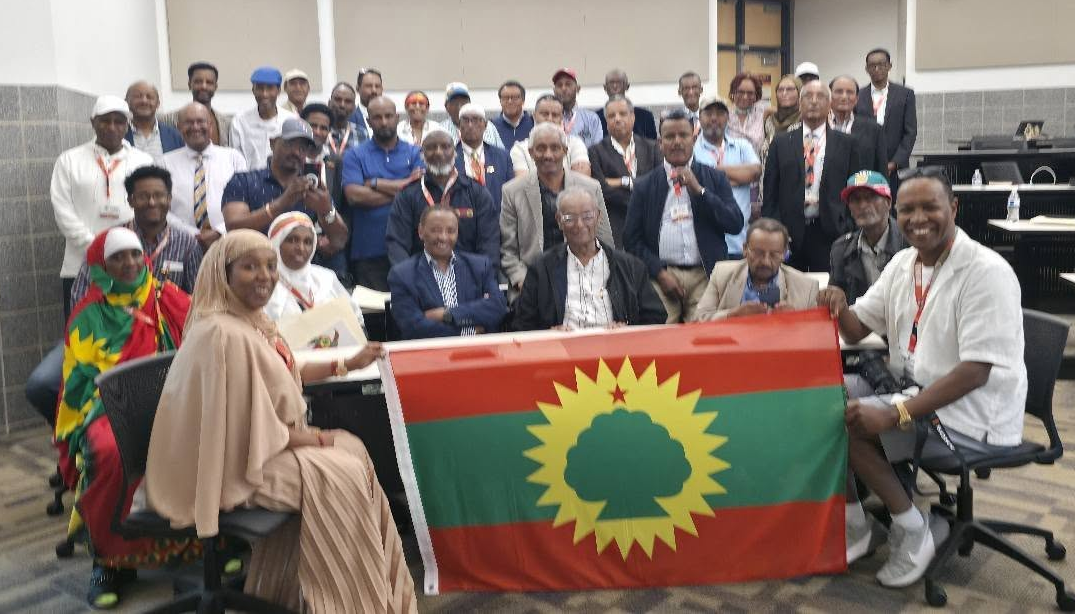
A Historic Gathering in Minneapolis Marks a New Chapter for the Oromo Liberation Front’s Global Organization
By Daandii Ragabaa
Minneapolis, MN — August 6, 2026
In a significant development for the Oromo liberation movement, the Korri Caasaa ABO Biyyoota Alaa —the Diaspora Structure Council of the Oromo Liberation Front (OLF/ABO)—has successfully concluded its proceedings. The event, held in Minneapolis, Minnesota, marks a pivotal moment in the organizational consolidation of the Oromo struggle beyond the borders of Oromia.
The council’s conclusion, announced on August 6, 2026, represents more than a routine organizational meeting. It signals the maturation of the diaspora as a structured, institutional pillar of the liberation movement—a recognition that the struggle for Oromo self-determination is not confined to the homeland but spans continents, uniting Oromo people wherever they reside.
Why Minneapolis? The Heart of the Oromo Diaspora
The choice of Minneapolis as the host city for this historic gathering is no accident. Over the past three decades, Minnesota has become a sanctuary and a springboard for Oromo activism, earning the affectionate title “Little Oromia” for hosting one of the largest Oromo populations outside of East Africa .
From the bustling neighborhoods of Minneapolis to the suburban cities of St. Paul, Oromo culture thrives—through language, music, faith, and political organization. Holding the Diaspora Structure Council here acknowledges the diaspora not as a distant bystander but as a vital pillar of the liberation project .
In this space, the past meets the present. Elders who witnessed the early days of the OLF sit alongside youth born in the West, forging an intergenerational bond that strengthens the movement’s resilience. It is a living classroom where history is taught, grievances are voiced, and hope is rekindled .
The Significance of Institutional Strength
The successful conclusion of the Diaspora Structure Council underscores a central theme that has emerged in the Oromo movement’s recent history: the strength of the institution.
As emphasized at the Oromo New Year celebrations in Edmonton, the focus is increasingly on “jabeenya jaarmiyaa”—the strength of the institution . This represents a mature evolution in diaspora political consciousness: the understanding that liberation requires not just passion or grievance, but organizational resilience, strategic continuity, and the mechanisms required to sustain a movement across decades and continents .
The Diaspora Structure Council’s work, meticulously prepared and executed, was itself a direct, tangible contribution to the struggle. It ensured that “deeggarsii fi tumsi qabsoo bilisummaa akka itti fufiinsa argatu”—that “support and sustenance for the freedom struggle continues to receive continuity” .
The OLF/ABO’s Vision: Building Oromia Without Borders
The successful conclusion of this council aligns with the broader vision of the OLF/ABO leadership, who have consistently emphasized that the work of building Oromia extends beyond Ethiopia’s borders.
As senior OLF leader Jaal Abdii Raggaasaa stated at a February 2026 consultative meeting in Gullallee: “Our foundational organizing must begin at the grassroots level, starting from the village” . This principle applies equally to the diaspora. Wherever Oromos reside—in the villages of Oromia, the refugee camps of Kenya, the community centers of North America and Europe—the work of building Oromo consciousness, organization, and national identity continues .
The council’s successful conclusion demonstrates that the diaspora is not merely a source of financial support or cultural preservation. It is an active, organized, and strategic component of the liberation project.
A Foundation of Truth and Integrity
Throughout its proceedings, the Diaspora Structure Council was guided by the principles that have defined the OLF/ABO’s decades-long struggle. As Abdii Raggaasaa declared: “If we are people of truth, our people will never abandon us under any circumstances. But if we are people of falsehood, even if we hold something, we will lose it” .
This commitment to truth and integrity was central to the council’s work. The diaspora structure is not built on empty rhetoric or political opportunism. It is built on the sacrifice of generations—on the “struggle of blood and bone” that has defined the Oromo liberation movement .
The Cry That Echoes: IUOf!
As the Diaspora Structure Council concluded its work, the hall undoubtedly echoed with the rallying cry that unites Oromo people across continents: “IUOf!” —Victory to the Oromo people .
The abbreviation, derived from the Oromo phrase for victory, resonates across generations, declaring the unshakable belief in the Oromo nation’s future . It is a cry that has been heard in the hidden clearings of Oromia, in the community halls of the diaspora, and now, in the organized structures of the OLF/ABO abroad.
A New Chapter: Consistency and Determination
The flyer circulating for the conclusion of the Diaspora Structure Council carried a powerful mantra: “As always, consistency and determination remain the foundation of lasting progress and success” .
These words are not empty rhetoric. In the long and often brutal struggle for Oromo self-determination, fads and fleeting passions have no place. What sustains the movement is the dogged, day-in and day-out commitment of a people who refuse to be erased. The successful conclusion of the Diaspora Structure Council is the embodiment of this ethic—a ritual of endurance, a moment to recalibrate, to reaffirm, and to recommit .
Consistency means showing up, year after year, regardless of the political winds. Determination means turning setbacks into stepping stones. The OLF/ABO has weathered imprisonment, exile, and state-sponsored repression, yet here it stands, its diaspora structure organized and functioning in the heart of America. That is the quiet power of persistence .
Looking Forward: The Seventh Round and Beyond
The successful conclusion of the Diaspora Structure Council arrives at a crucial moment. As the OLF/ABO prepares for the upcoming 7th round elections, the diaspora structure will play a vital role in mobilization, advocacy, and organizational strengthening .
The council’s work ensures that the diaspora is not a passive observer of political developments in Oromia but an active participant. As one OLF official stated: “OLF is the center of Oromo peace” . The diaspora structure, now successfully organized and concluded, extends that center across the globe.
Conclusion: A Milestone, Not an End
The conclusion of the Korri Caasaa ABO Biyyoota Alaa is not an end but a beginning. It marks the formalization of a structure that will continue to serve the Oromo people’s aspirations for self-determination, dignity, and democratic rights.
As participants departed Minneapolis, the message was clear: the diaspora is organized, the structure is in place, and the work continues. The struggle for Oromo liberation is not confined to the homeland—it is a global movement, sustained by a global community, guided by a global organization.
ABO haa waaru!
Injifannoon Ummata Oromoo!
Korri Caasaa ABO Biyyoota Alaa
Milkiin Xumurameera
Hag. 08/06/2026
Minneapolis, MN
This feature article is dedicated to all those who built the diaspora structures of the Oromo Liberation Front—from the founders to the newest members—and to the generations yet to come who will carry forward the torch of liberation.

Posted on August 7, 2026, in Aadaa, Afaan, Asylum Seekers, Bokkkuu, Census 2026, Diaspora, Election, Events, Face of Injustice, family violence, Finfinne, freedom, gadaa, gender, Grief Support, Gumaa, health, Information, Kindness, Language, Media, mental health, News, Oromia, Oromo diaspora, Oromo truth telling, Press Release, Promotion, SBO, SBS, Siinqee, Sirna Oromo. Bookmark the permalink. Leave a comment.






Leave a comment
Comments 0