The Lion Who Fell Fighting: Remembering Jaal Lammeessaa Boruu (1943–1992)
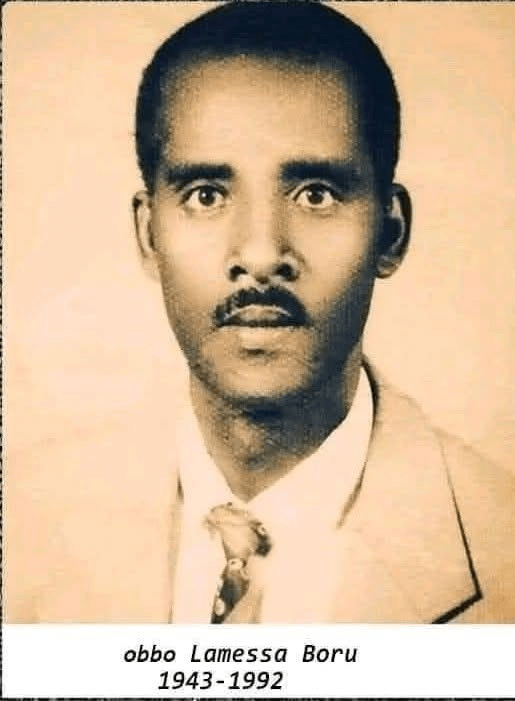
By Daandii Ragabaa (Adapted into a feature story based on various sources)
His name means “Lion” in Oromo. And like a lion, Jaal Lammeessaa Boruu lived with courage, fought with conviction, and died with his boots on—somewhere in the forests of western Oromia, in 1992. Three decades later, his grave remains unknown. But his story, carried by oral tradition and fragmentary records, refuses to be buried.
A Humble Beginning in Wallagga
Jaal Lammeessaa Boruu was born in 1943 in Billo, a town in the Bonayya district of East Wallagga, within the Waamaa region. According to those who knew him, he grew up in a typical Oromo farming community, at a time when the imperial government of Haile Selassie exercised firm control over the land and its people.
As a young man, he left his birthplace and moved to Finfinnee (Addis Ababa), where he lived for about 15 years as an adolescent. There, he entered school. But his education was interrupted by a different calling.
The Soldier with the Striking Physique
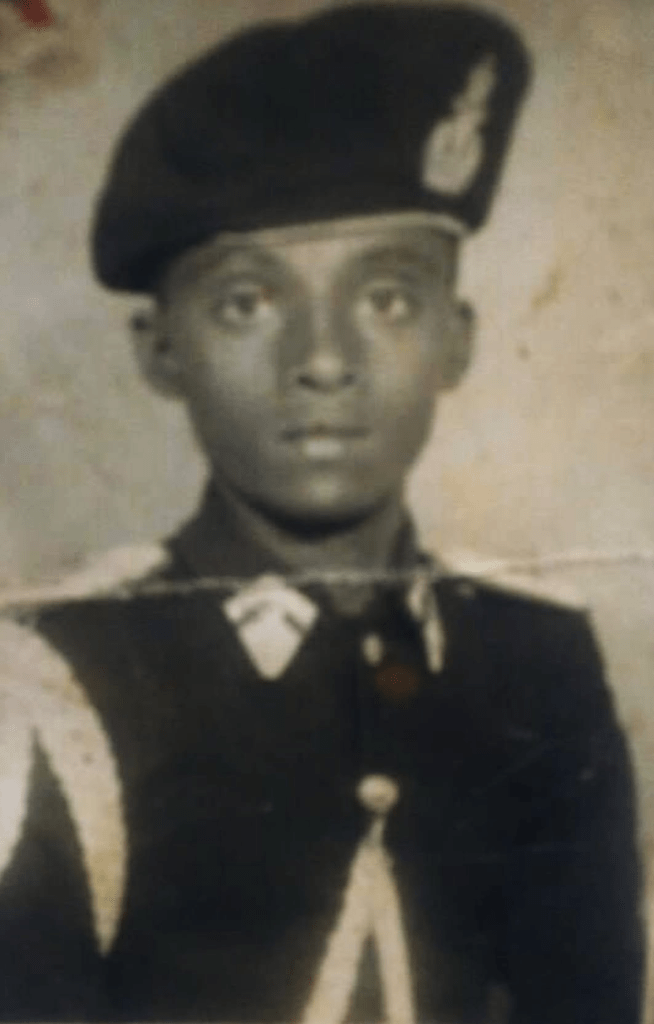
Contemporary accounts describe Jaal Lammeessaa as tall and physically impressive. It was this very stature that drew the attention of military recruiters. Under the imperial regime, he was selected to join a special unit known as “Kubur-Zabanya” and “Faxino-Darash” (likely special police or commando forces). Within the latter, he became known as “Faxino-Daraash Shalaqaa” and served under the command of General Tadesse Birru.
He proved to be an exceptional soldier. His superiors reportedly praised his dedication, and he rose to become a respected non-commissioned officer.
Joining the Machaa Tulema Association
The Machaa Tulema Association was founded as a development and civic organization, but it quickly became a political vehicle for Oromo nationalism. General Tadesse Birru was one of its key leaders. When the association began recruiting members, Jaal Lammeessaa was among those selected.
Initially, the organization’s goal was to work within the system—to address Oromo grievances through legal means. But as General Tadesse and others concluded that the imperial regime had no intention of recognizing Oromo rights, they shifted toward a more radical path. Jaal Lammeessaa became a trusted operative within the association’s secret military wing.
The Failed Plot Against Emperor Haile Selassie
On October 23 (Ethiopian calendar), the Emperor’s birthday, a plot was hatched to assassinate Haile Selassie during the annual celebrations at the site known as “Addabaaba’ii Minlik” (Menelik Square). General Tadesse Birru assigned four commandos to carry out the attack, selecting them for their courage and loyalty.
The four were:
· Lammeessaa Boruu (from the Faxino-Darash unit)
· Camadaa Sobbooqaa
· H/Mariyam Diimaa (from Kubur-Zabanya)
· Fixumaa Hiikisaa
They prepared extensively. But the plot was betrayed. Informants within the government learned of the plan just before it could be executed. The commandos were arrested.
When Jaal Lammeessaa was searched, a bomb intended for the Emperor was found on him. He was tortured severely. According to surviving members of the Machaa Tulema Association, his ribs were broken, and he suffered long-term disability from the interrogation. Despite the brutality, he refused to betray the organization’s deeper secrets—though under extreme duress, some information was extracted.
First Imprisonment and Release
Following the failed plot, General Tadesse and several others were sentenced to death. Jaal Lammeessaa received a five-year prison sentence. After serving his term, he was released. Upon release, he immediately rejoined his former commander, General Tadesse Birru, who had been transferred to Galamso in eastern Oromia. There, they continued to discuss the struggle for Oromo self-determination.
The Cinema Bombing and Second Arrest
As the Machaa Tulema Association continued its activities, the regime grew more determined to crush it. On December 10, 1959 (Ethiopian calendar), a bomb exploded inside a cinema in Addis Ababa where the film Zorba the Greek was being shown. Thirty-six people were wounded.
The government immediately blamed the Machaa Tulema Association. Propaganda claimed that a member named Maammoo Mazaamir had planted the bomb. The incident was used as a pretext for a massive crackdown. Jaal Lammeessaa was arrested again—this time as part of a sweeping roundup of Oromo nationalists.
He was among nine senior Machaa Tulema figures sentenced to long prison terms, while General Tadesse Birru and Maammoo Mazaamir received death sentences (later commuted or carried out, depending on the account).
Life Under the Derg and the Fourth Arrest
Jaal Lammeessaa spent more than 12 years in prison under the Derg regime that overthrew Haile Selassie in 1974. He was held in police stations and military camps, subjected to repeated interrogations. Yet even in detention, he remained committed to the Oromo cause.
After the Derg fell in 1991, Jaal Lammeessaa was released. He joined the Oromo Liberation Front (ABO – a reference to the OLF) and became a member of its central committee, working in the economic department. He lived in Wajjira Gullaallee, continuing his activism.
The Final Battle and Disappearance
In 1992, following a split within the transitional government of Ethiopia (the “Ce’umsaa” or transitional period), Jaal Lammeessaa and other Oromo fighters moved toward western Oromia. They joined ongoing armed confrontations against government forces (referred to as “Wayyaanee” – a term for the Ethiopian military or allied militias).
According to the source, Jaal Lammeessaa Boruu fell in battle near the Jimma Horroo area in Wallagga region. He was killed in armed combat. His body was never recovered, and to this day, the exact location and circumstances of his death remain unknown.
Legacy: The Unknown Grave, the Known Sacrifice
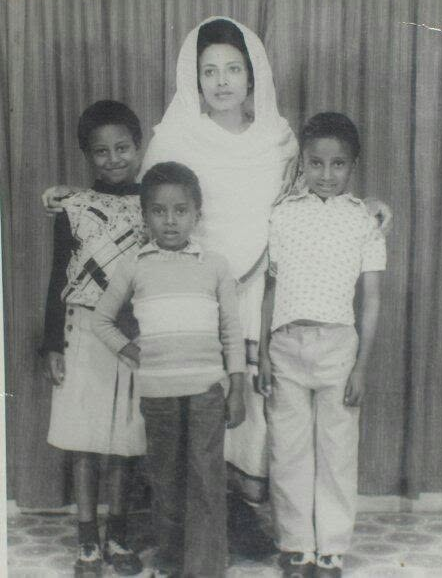
Jaal Lammeessaa Boruu was 49 years old when he died. He left behind three children: Mosisa Lamessa Boru, Lense Lemessa Boru and Tsegaye Lemessa Bouru. He is remembered as a devoted fighter who gave his entire adult life to the Oromo national struggle. From the imperial era through the Derg and into the transitional government, he never wavered.
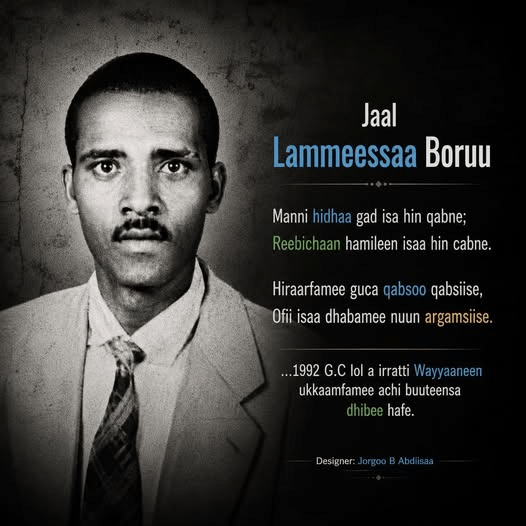
The biography ends with a poetic refrain:
“The fighter may fall. He may pass away. But Jaal Lammeessaa’s blood was not shed in vain. He has grown for us the plant of freedom.”
His grave may be lost to history. But for those who keep his memory, Jaal Lammeessaa Boruu remains one of the lions of Oromo resistance—a man who turned his back on personal safety and government favor, and chose instead the uncertain path of the forest and the battlefield.
—
*This feature story is based exclusively on various sources of the Oromo-language biography written by Daandii Ragabaa. It is presented as a journalistic adaptation of that source and does not constitute an endorsement of armed struggle or any political organization. The factual claims rest with the original author.

Posted on August 11, 2026, in Aadaa, Bokkkuu, Daaniyaa, Diaspora, Election, Events, Face of Injustice, family violence, Finfinne, freedom, gadaa, gender, Grief Support, Gumaa, health, Information, Kindness, Language, Media, mental health, News, Oromia, Oromo diaspora. Bookmark the permalink. Leave a comment.






Leave a comment
Comments 0