Constitutional Legitimacy and Federalism in Ethiopia: A Trap in the Making?
With constitutional amendments on the table and a national dialogue that critics call structurally rigged, Ethiopia stands at a crossroads that could determine the fate of its multinational federation
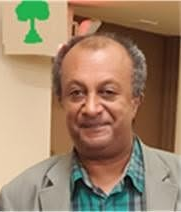
By Prof Asfaw Beyene
There is absolute consensus among Ethiopians on one fundamental truth: the country is bleeding, and a genuinely inclusive, transparent, and democratic dialogue is the only viable exit from the abyss . However, when the very architecture of a peace-building process is engineered to marginalise the country’s largest demographic constituency and dismantle its constitutional foundations, the process ceases to be a dialogue. It becomes a structural trap .
As the Ethiopian National Dialogue Conference commenced on July 15, 2026, the stakes could not be higher. The federal government is preparing a sweeping constitutional reform package that could redefine Ethiopia’s federal structure, with proposals that include amending Article 39—the constitutional provision that enshrines the right of nations, nationalities, and peoples to self-determination, including secession—and replacing ethnicity-based regional boundaries with geography-based ones .
These are not mere policy adjustments; they are existential threats to the constitutional order that has governed Ethiopia since 1995. As Asfaw Beyene’s analysis argues, the national dialogue may be heading toward a “barred trap” from which there is no easy escape .
The Mathematics of Disenfranchisement
At the heart of the controversy lies the decision-making framework of the National Dialogue Commission. According to the Commission’s documented multi-tier decision-making system, the ultimate power to pass or reject national agendas is vested in a Regional Representatives Assembly composed of 211 members .
Every region and city administration is granted exactly 14 representatives, alongside 15 representatives handpicked by the federal government. The result? Oromia, a region home to an estimated 40 million people—roughly 35% to 40% of the Ethiopian population—is granted the exact same voting power (14 seats) as city administrations like Dire Dawa or Harari, which have populations of approximately 500,000 .
Mathematically, Oromia is granted a mere 6.6% of the voting power in the assembly that will decide the fate of the country. This is not equality; it is the systematic erasure of the Oromo voice .
The Danger of Dismantling Federalism
“The outcome of dismantling federalism can be separation, not unity.”
Many constitutional democracies require broad consensus before fundamental constitutional changes take effect. Some do not allow even supermajority voices for constitutional amendment; they require unanimous vote .
In Germany’s Basic Law, the law that establishes Germany’s federalism cannot be amended at all, even by a unanimous vote. In Canada, unanimous provincial consent is required for certain constitutional amendments under the unanimity formula. These systems protect federalism at such high cost because they are aware the alternative would be separation and independence .
They recognize that constitutions should not be altered solely based on the political preferences of a temporary governing majority because they provoke a counter remedy: secession . Ethiopia’s elections did not provide even a majority vote to the ruling party; elections were not organized in many parts of the country for security reasons .
Article 39: A Constitutional Prerequisite, Not a Mere Provision
Article 39 of the Ethiopian constitution must be understood not merely as a constitutional provision, but as a prerequisite upon which the constitutional order itself rests. Recognition of the right to self-determination, including the possibility of secession under Article 39, establishes the foundational boundaries within which the state exists .
Because this principle defines the relationship between the state, its territory, and the peoples composing it, any amendment that would fundamentally alter or remove this guarantee must logically require unanimous consent of a duly established representative body—not a majority vote .
Article 39 is not, by itself, a sufficient condition to unite a country. But it is a prerequisite that establishes the boundaries and consent-based framework through which the country’s territorial and constitutional existence is maintained. An attempt to remove or fundamentally alter this prerequisite would forfeit the very foundation that gives the constitutional system some legitimacy .
The Eritrean precedent is instructive. When Haile Selassie dismantled Eritrea’s legally mandated autonomy and unilaterally dissolved the Eritrea-Ethiopian Federation, followed by full annexation of Eritrea in 1962, this action prompted an armed national movement, triggering the 30-year Eritrean War of Independence .
The Referendum Question
Where a legally recognized political actor has formally advanced a referendum proposal pursuant to the existing constitutional framework, and where the governing law provides a mechanism for a referendum under applicable circumstances, the constitutional process cannot be circumvented through a preemptive amendment designed to render that referendum unnecessary or ineffective .
Article 39 of the Constitution provides a clear procedure for secession: when a demand for secession has been approved by a two-thirds majority of the members of the Legislative Council of the Nation, Nationality or People concerned; and when the Federal Government has organized a referendum which must take place within three years from the time it received the concerned council’s decision for secession .
The referendum proposal submitted by the OLF for independent Oromia constitutes a pending constitutional process that must be addressed according to the law in force at the time it was initiated. Allowing a subsequent amendment to override, extinguish, or bypass a properly raised referendum petition would undermine constitutional certainty, procedural fairness, and the principle that constitutional change must follow established legal procedures .
The View from the Regions
Regional reactions to the proposed constitutional reforms are mixed. Oromia and Somali regions favor preserving the current model, while Amhara and parts of the Southern Nations, Nationalities, and Peoples’ Region (SNNPR) show growing support for change .
Mulatu Gemechu, vice chairman of the Oromo Federalist Congress (OFC), has argued that the amendment process lacks legitimacy: “One cannot just pop out of a commission and decide to amend [the Constitution]. I was there when it was created. Every element of the Constitution was put in intentionally” .
Dejen Mezgebe, chairman of the Tigray Independence Party, has warned that “this amendment proposal is dangerous, especially for Tigray, which currently has no official or legal representation in federal institutions. Any amendment before Tigray returns to the constitutional order would create a generational crisis” .
Conclusion: A Trap or a Solution?
The constitution amendment is widely seen as a trap to get rid of the Oromo regional state, which is a prerequisite for the secessionist referendum. The Constitution was created through a long, inclusive process of deliberation among all nations and nationalities—a process that reflected the free will of the peoples of Ethiopia . It is impossible to remove the right of secession from the Constitution without violating the foundations of the constitutional order and federalism .
How can the people whose constitutional rights the dialogue is supposed to address be structurally cheated out of their representation? You cannot legally bind a nation to a contract in which its signature was forged .
Instead of ending the tragic wars currently ravaging the country, including the ongoing conflict in Oromia, this manufactured consensus will inevitably exacerbate ethnic polarisation and institutionalise conflict for generations .
“A constitutional amendment cannot be used as a procedural shortcut to defeat a lawful petition or to prevent the electorate from exercising a right that has already been invoked under the existing constitutional order.”

Posted on July 31, 2026, in Aadaa, Afaan, Election, Events, Finfinne, freedom, health, Information, Kindness, Language, Media, News, Oromia, Press Release, Promotion, Uncategorized. Bookmark the permalink. Leave a comment.






Leave a comment
Comments 0