The Irreechaa Protocol: How an Ancient Festival Provides a Blueprint for Collective Mental Health Intervention
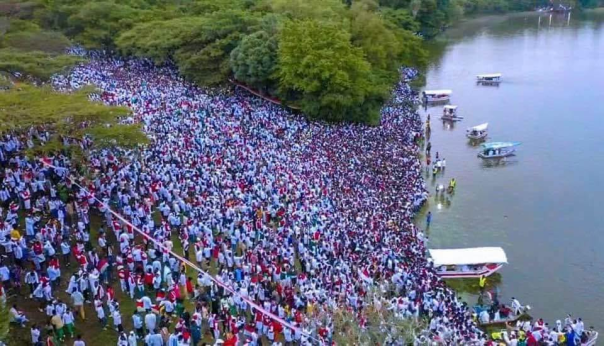
What if healing from trauma is not meant to be a solitary journey but a communal ritual—one that has been practised for centuries?
In an era where mental health professionals increasingly recognise the limitations of individual therapeutic models for addressing collective trauma, a centuries-old festival offers an unexpected but profoundly effective blueprint. The Oromo people’s Irreechaa—an annual thanksgiving celebration held at sacred water bodies like Hora Arsadii (Bishoftu) and Hora Finfinnee—functions as what scholars describe as “cultural therapy”: a cyclical, collective practice that restores dignity, cohesion, and hope after generations of political marginalisation .
For a people who have endured conquest, linguistic suppression, and systematic cultural erasure, Irreechaa is far more than a seasonal celebration. It is a sophisticated, community-based mental health intervention that has sustained Oromo resilience for centuries. By examining the Irreechaa protocol—its structure, its symbols, and its therapeutic mechanisms—we may find a model for collective healing that transcends cultural boundaries.
The Foundation of Collective Trauma
The Oromo experience of historical trauma is textbook in its severity. Late-19th-century imperial expansion violently incorporated Oromo homelands into the Ethiopian Empire, followed by over a century of political and cultural subordination . Oromo institutions, including aspects of the Gadaa governance system, were constrained or suppressed, and the public status of Afaan Oromoo was systematically diminished .
This represents what scholars term “cumulative, collective wounding”—mass harms that echo across generations through families and institutions . The result is not merely individual psychological distress but a community-wide experience of internalised devaluation, social fragmentation, and disconnection.
Conventional mental health approaches—individual therapy, medication, and cognitive interventions—can address symptoms but often fail to heal the underlying collective wounds. The Irreechaa protocol offers an alternative: a community-based intervention designed to restore what was broken collectively.
The Therapeutic Structure of Irreechaa
Irreechaa’s choreography follows a remarkably consistent pattern: pilgrimage to sacred water, symbolic washing, public prayer, group singing and dancing, and the leadership of elders . This structure is not accidental; it aligns precisely with what anthropologists identify as the key elements of “ritual repair.”
Recognition: Countering Internalised Devaluation
One of the most insidious effects of historical oppression is internalised inferiority—members of marginalised groups absorb the dominant society’s negative messages about their identity. Irreechaa counters this through public, mass affirmation . When millions gather in traditional white attire, singing Dhaanto, and performing the Shaggooyee dance, they are not just celebrating; they are visibly, collectively reclaiming dignity .
For Oromo youth—particularly those in the diaspora—this public celebration of their culture combats marginalisation and fosters confidence . It tells them that their identity is not something to hide but something to celebrate with pride.
Regulation: Choreographing Healing
The physical elements of Irreechaa serve a regulatory function that echoes evidence-based trauma interventions. Structured songs, rhythmic movement, and shared timing “calm bodies and synchronise emotion” . This mirrors approaches like EMDR (Eye Movement Desensitization and Reprocessing), where bilateral stimulation helps process traumatic material.
Psychologically, this is “psycho-bio-social regulation” . The body and mind work together to process emotional material, with collective synchrony amplifying the therapeutic effect. When tens of thousands move and sing together, the result is a form of community-wide emotional regulation that no individual therapist could replicate.
Reconnection: Rebuilding Social Bonds
Historical trauma isolates; ritual reconnects. Anthropologists have long described how public rituals generate what they call “communitas”—an intense sense of togetherness that suspends everyday hierarchies . At Irreechaa, this communitas creates “prosocial bonds that reduce isolation and renew civic agency” .
The festival’s multi-generational participation reinforces this reconnection . Elders demonstrate rituals like the Eebba (blessings) and traditional dances , while children and youth participate actively, creating a continuity of social bonds that bridges generations. This is not simply a pleasant experience; it is a vital antidote to the social fragmentation that oppression produces.
The Water Blessing: Symbolic Washing Away
The most iconic Irreechaa ritual involves participants entering sacred water and symbolically washing away hardship . This act operates on multiple levels simultaneously:
Symbolically, it represents cleansing from past trauma and preparation for renewal. Psychologically, it provides a physical mechanism for emotional release. Communally, it creates a shared experience that binds participants together.
For diaspora Oromo, adaptations of this water ritual in park settings serve similar functions, connecting a community separated by geography to the healing practices of their ancestors . Planting trees alongside these symbolic water rituals extends the theme of renewal to ecological consciousness .
The Shadow: When Healing Attracts Threat
The very power that makes Irreechaa therapeutic also makes it threatening to forces seeking to maintain dominance. The 2016 Bishoftu tragedy—where security forces’ crowd control triggered a stampede that killed scores—etched a deep collective trauma into Oromo memory . This event reinforced fears that peaceful cultural gatherings can be violently disrupted.
Subsequent Irreechaa celebrations have often featured heavy policing, preemptive arrests, and restrictions that rights groups criticise as disproportionate . The “securitisation” of Irreechaa reflects a fundamental reality: visible, unified collective identity threatens projects that rely on minimising that group’s visibility and power .
Yet the festival continues to grow. In 2025, tens of thousands gathered in Addis Ababa and Bishoftu, with Prime Minister Abiy Ahmed addressing the crowd . The celebration has become a complex space where cultural resurgence, political symbolism, and community grievance intersect .
A Blueprint for Collective Intervention
What can the Irreechaa protocol teach mental health practitioners, community organisers, and policymakers?
1. Collective Healing Requires Collective Ritual
Individual therapy cannot fully address historical trauma because the wound is communal. Interventions must create spaces where communities can heal together.
2. Symbolism Matters
Water, music, movement, and traditional attire are not superficial decorations; they are therapeutic vehicles that engage the whole person.
3. Intergenerational Participation Is Essential
Children and elders healing together creates continuity that individual approaches cannot achieve.
4. Regularity Builds Resilience
Irreechaa’s cyclical nature—held annually, marking seasonal change—provides ongoing, predictable support.
5. Cultural Grounding Is Strength
Cultural practices adapted to trauma healing are not barriers to evidence-based approaches; they are themselves evidence-based approaches refined over generations.
Conclusion
Irreechaa demonstrates that collective healing is not only possible but has been practised for centuries. Its protocol—recognition, regulation, and reconnection through public ritual—provides a template that could be adapted across cultures and contexts.
As scholars of historical trauma note, healing requires “shared remembrance, mourning, and culturally grounded practices that rebuild meaning and agency” . The Irreechaa protocol provides exactly that: a culturally grounded practice that rebuilds meaning and agency for millions.
For mental health professionals, the lesson is clear: the best interventions may not be found in clinical manuals but in the living traditions of communities that have survived and thrived despite centuries of attempted erasure. The Irreechaa protocol is not just a festival; it is a toolkit for collective mental health, refined over generations and proven effective by the very survival of the Oromo people.
“Irreechaa’s power is double-edged: the very practices that heal—public recognition, shared emotion, embodied solidarity—also unsettle projects that rely on minimising Oromo visibility. The path forward is not to shrink Irreechaa but to secure it: treat it as a national asset, protect rights equally, and let ritual do its quiet work of repair” .

Posted on July 25, 2026, in Aadaa, Afaan, Events, Finfinne, gender, Grief Support, health, Information, Language, Media, mental health, News, Oromia, Press Release, Promotion, Sirna Oromo. Bookmark the permalink. Leave a comment.




 Advocacy for Oromia
Leave a comment
Comments 0