Daily Archives: July 23, 2026

Borana National Park: A Sanctuary of Endangered Wonders in Southern Oromia
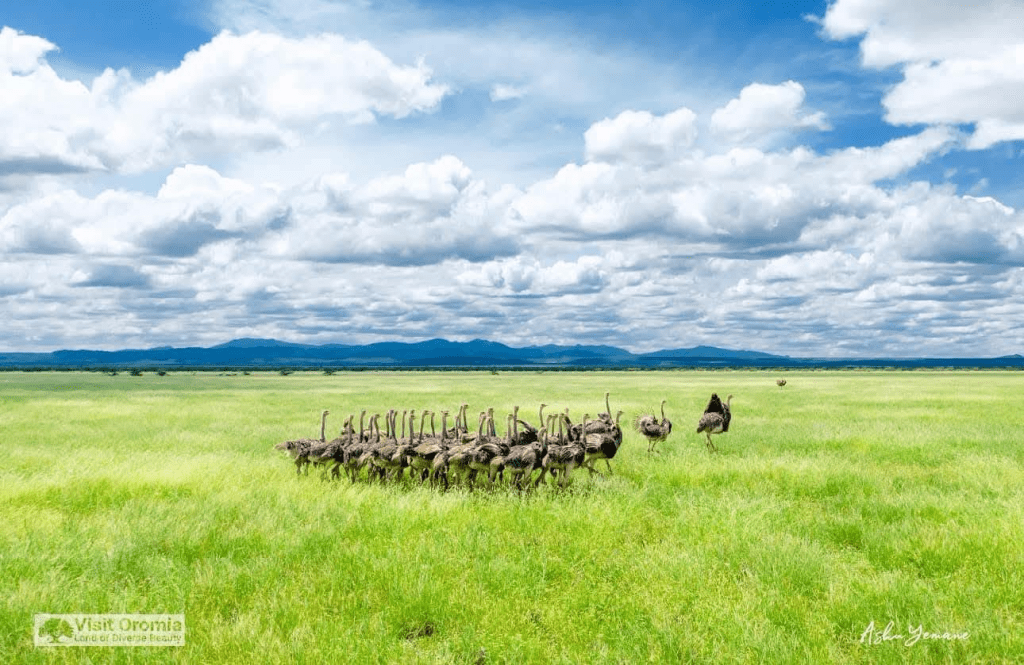
Home to rare zebras, endemic birds, and volcanic mysteries, this protected area stands as a beacon of biodiversity and cultural heritage
BORANA ZONE, OROMIA — Deep in the southern reaches of Oromia, where the highlands give way to vast savannas and the horizon stretches endlessly toward the Kenyan border, lies one of the country’s most extraordinary natural treasures. Borana National Park, established in 2017, is a protected area of immense ecological significance, spanning 45,366 square kilometres across the Borana Zone of Oromia and extending into the Liben Zone of the Somali Region.
The park sits roughly 565 to 570 kilometres south of Addis Ababa along the road to Moyale, with the town of Yabelo serving as the primary gateway and headquarters, located approximately 10 kilometres from the main entry points. Its conservation blocks—Yabello, Saarite, Dire Dida Soda, Danbala Dibayu, and Gammedo Mountain—encompass open acacia grasslands, rolling savannas, and the dramatic volcanic crater lake of El Sod.
A Refuge for Rare Species
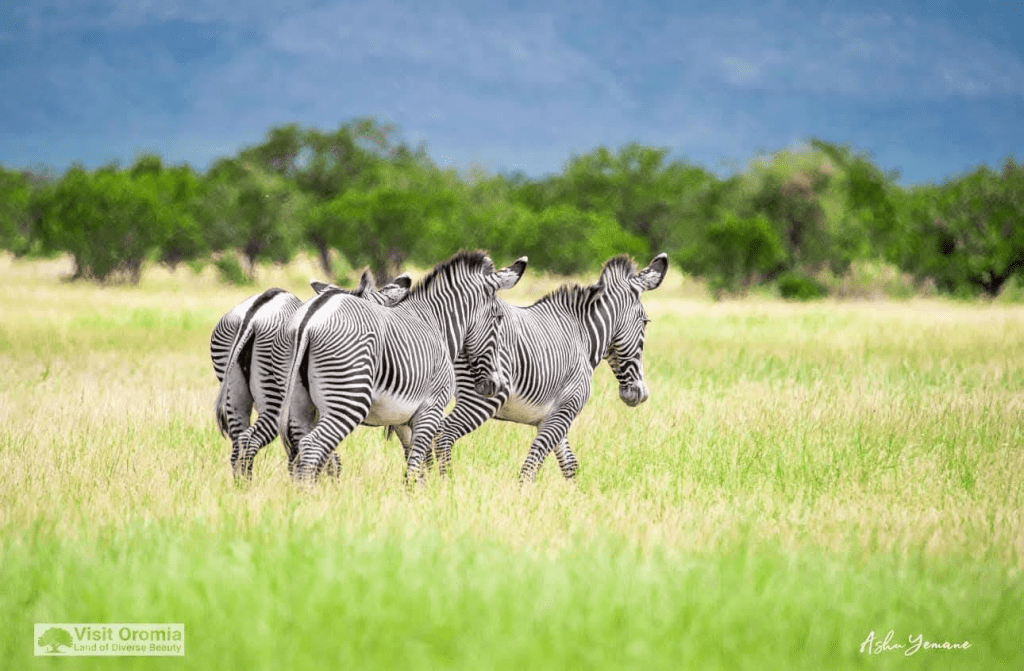
Borana National Park is perhaps best known as one of the few places on Earth where two zebra species coexist: the endangered Grevy’s zebra and the more common Burchell’s zebra. The Grevy’s zebra, distinguished by its narrower stripes and larger size, has experienced dramatic population declines across its range. In Ethiopia, aerial surveys in the 1990s revealed a sharp drop in numbers, with only approximately 130 individuals counted nationwide by 2003. The park’s conservation efforts focus on repopulating zebra species and protecting their habitat from threats such as drought and overgrazing.
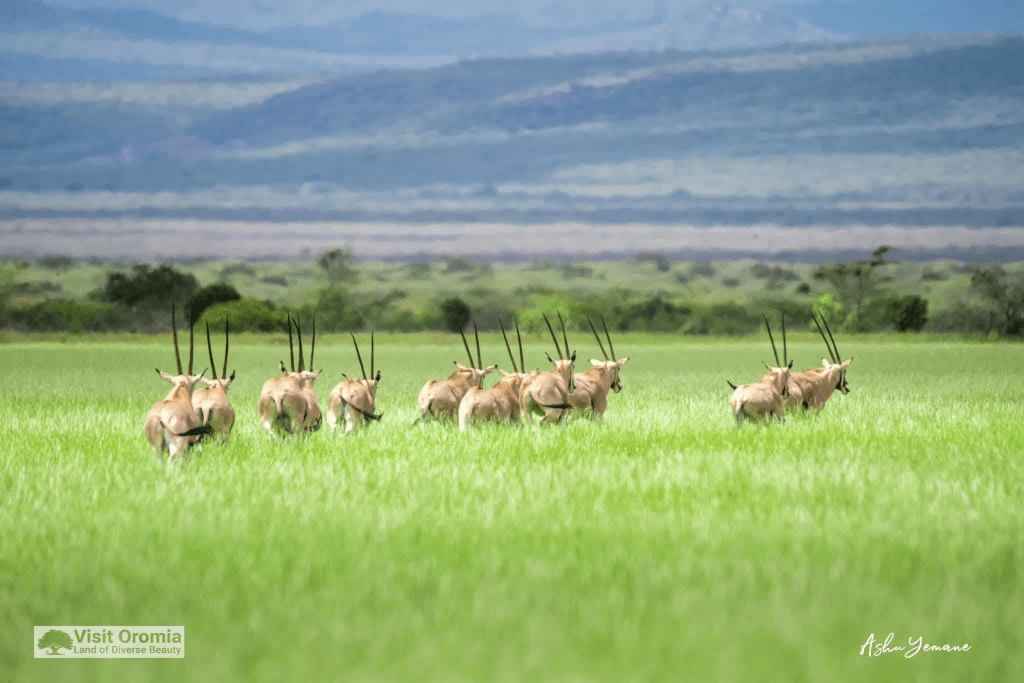
Beyond zebras, the park shelters a remarkable diversity of wildlife. Visitors may encounter Beisa oryx, Grant’s gazelle, greater and lesser kudu, gerenuk, cheetahs, leopards, and ostriches. The park is home to 327 plant species and 40 mammal species, making it a biodiversity hotspot in the Horn of Africa.
A Paradise for Birdwatchers
For bird enthusiasts, Borana National Park is nothing short of legendary. Over 280 bird species have been recorded, including several rare and endemic birds that exist nowhere else on Earth. Among the most remarkable is the endangered Ethiopian bush crow (Zavattariornis stresemanni), a charismatic corvid confined to a distinct climate pocket in the Borana zone.
The Ethiopian bush crow, also known as Stresemann’s bush-crow, is a pale grey bird measuring approximately 28 centimetres long. It prefers open short-grass savannas of grazed pasturelands with scattered stands of taller trees, particularly acacia species. With a range extending only 160 kilometres from north to south and less than 100 kilometres from east to west, the species is extremely vulnerable to habitat loss and climate change. Recent severe droughts in 2021, 2022, and early 2023 have raised fears that the species may face extinction much earlier than previously predicted.
Other rare birds found in the area include the white-tailed swallow and Prince Ruspoli’s turaco, which can be spotted in the nearby Arero forest.
The Volcanic Crater of El Sod
One of the park’s most unique attractions is El Sod, a volcanic salt-crater lake whose name means “the house of salt”. This inactive volcano, approximately 1.8 kilometres wide, contains a black lake that holds a deposit of raw salt crystals beneath its dark, slimy waters.
For centuries, the Borana herders have harvested salt from El Sod, a tradition steeped in legend. According to local lore, a shepherd discovered the crater a thousand years ago after noticing his ox had become physically different from the rest of the herd after tasting the salt. Today, a cooperative of expert salt extractors continues this ancient practice, producing three distinct qualities of black salt, with the finest, called ilkole, used in cooking.
The extraction process is arduous and requires exceptional skill. Miners descend a narrow 2.5-kilometre path, dropping 340 metres to the crater lake. When water levels recede at the end of the rainy season, experienced divers submerge to dig up the muddy salt, which is then washed, crushed, and dried in the sun. This salt remains largely unknown outside the Borana area and neighbouring communities.
Challenges and Conservation
Despite its ecological significance, Borana National Park faces numerous threats. Recurrent and severe droughts, exacerbated by climate change, are disrupting the delicate ecological balance that sustains the park’s wildlife. Invasive species, overgrazing by livestock, and road collisions also pose significant challenges.
The Ethiopian bush crow, with its highly restricted climatic requirements, is particularly at risk. Studies suggest that the species requires very specific average temperatures between 15 and 30 degrees Celsius, making it extremely vulnerable to the temperature fluctuations brought about by climate change. Researchers have called for urgent species-specific action plans at the national level to address the ever-increasing conservation challenges.
A Place of Wonder
Borana National Park is more than a protected area—it is a living testament to the natural and cultural heritage of the Oromo people. Its landscapes, from the acacia-dotted savannas to the volcanic crater of El Sod, tell stories of ancient traditions, endangered species, and the enduring relationship between the Borana people and their environment.
As the park continues to face the pressures of climate change and human activity, its preservation remains a shared responsibility. Whether for the rare Grevy’s zebras, the endangered Ethiopian bush crow, or the timeless salt harvest of El Sod, Borana National Park stands as a sanctuary of wonder in the heart of southern Ethiopia.
“Borana National Park is home to Booqee Sadeen, three maar lakes that were introduced as the main tourist attraction, including El Sod which is known for providing access to mineral water and salt varieties for the locals”.

Reclaiming the Dawn: The Renaissance of Waaqeffannaa Civilisation

After centuries of suppression, the Oromo people’s ancient faith is rising from the shadows to reclaim its place in the spiritual and cultural landscape of the Horn of Africa
In the sprawling, colourful tapestry of Ethiopian cultural heritage, few stories are as compelling as the centuries-long journey of the Oromo people’s indigenous faith. For millennia, Waaqeffannaa—the belief in a single, supreme Creator—served as the spiritual bedrock of a proud, pastoral people who structured their lives around the principles of truth, balance, and harmony with nature.
Yet for over a century, this faith was forced underground, hidden from the public eye, its practitioners marginalised, and its sacred sites endangered. Today, however, a powerful renaissance is unfolding. Waaqeffannaa is not merely surviving—it is being reborn. This is the story of a faith that refused to die, and the people who are reclaiming their spiritual birthright.
The Ancient Foundations
Waaqeffannaa is the indigenous, monotheistic religion of the Oromo people of Ethiopia and parts of Kenya. It centres on the worship of Waaqa—the One True God—the creator and sustainer of life, often referred to as Waaqa Tokkicha . The name itself derives from Waaqa, meaning “believing in Waaqa, following Waaqa, and directing one’s life toward Waaqa” .
This faith predates the arrival of Christianity and Islam in the Horn of Africa, representing the Oromo people’s “own ancient and authentic faith” . It is a sophisticated spiritual system, defined by several core pillars :
- Ayyaana (Divine Spirits): Manifestations or intermediaries of Waaqa, linked to natural forces like rivers and mountains.
- Uumaa (Sacred Nature): A deep reverence for the environment, with trees like the sacred Odaa (sycamore fig), water, and land holding immense spiritual significance.
- Safuu (Moral Order): An ethical framework of truth (dhugaa) and balance that guides human behaviour and aligns it with the divine will .
- Rituals and Ceremonies: Led by spiritual leaders (Qallu and Qallitti), these include thanksgiving prayers and the famous Irreechaa festival at lakesides .
A Faith Suppressed, Not Destroyed
The survival of Waaqeffannaa is a story of resilience. For generations, the faith was systematically marginalised by successive Ethiopian governments and the influence of missionary religions . It was driven underground, its adherents pressured to convert, and its sacred sites neglected.
As the Oromo spiritual tradition known as Wayyuu explains:
“Waaqeffannaa was suppressed but not abolished… Waaqeffannaa was hidden but not destroyed. It was hidden because the people abandoned Waaqeffannaa and began to live under oppression.”
Despite this suppression, the faith survived—not as a public institution, but as an “enduring spiritual memory” preserved in the hearts, traditions, and hidden practices of those who refused to forget . Today, an estimated 1 to 1.5 million Oromo actively follow the faith, while many more who identify as Christians or Muslims continue to maintain Waaqeffannaa beliefs and practices .
The Struggle for Sacred Sites
The renaissance of Waaqeffannaa is intrinsically linked to the struggle for its physical spaces. For centuries, colonial and religious interventions have led to the erasure of these vital sites . One such place is Andoodee Tumaa, a sacred Oromo ritual site in the Akaki district, near Finfinne (Addis Ababa).
This site was a crucial part of the Tuulamaa Oromo Gadaa law-making process, where laws were proclaimed to the public every eight years . However, the site now faces an existential threat. The systematic expansion of Addis Ababa, driven by a controversial Master Plan that was halted only after a youth-led struggle, has encroached upon Andoodee Tumaa, shrinking it to a fraction of its original size. A water supply facility has been constructed in this sacred location, with further encroachment from a newly constructed church .
The threat is symbolic of a wider issue: the erasure of Oromo spiritual geography. But the local community remains steadfast. As one assessment notes, “The Oromo people have never accepted the abandonment of their sacred ritual sites, despite facing heavy suppression” . The fight to preserve sites like Andoodee Tumaa is not just a battle for land; it is a battle for cultural memory.
The Heartbeat of the Renaissance: Irreechaa
If the sacred sites are the geography of the renaissance, the annual festival of Irreechaa is its heartbeat.
Irreechaa is a thanksgiving festival, held to thank Waaqa for rain, harvest, and the gift of life . The ritual of Irreechaa, which includes prayers at water bodies, simultaneously affirms the distinctiveness of the Oromo while connecting them to broader ancient African cultural traditions . Once a forbidden event, Irreechaa has undergone a dramatic transformation. It has evolved from a suppressed celebration to a recognised element of national cultural heritage .
Today, it is a major public celebration, symbolising Oromo unity and identity . Tens of thousands of people, predominantly from the Oromo ethnic group, gather annually, often at Lake Hora Arsadi, dressed in traditional white attire to express their gratitude . While the festival is a joyful assertion of an identity suppressed for over a century, it has also become a stage for political expression . The 2016 festival, which was met with a violent crackdown, became a catalyst for political change that ultimately ushered in the current prime minister .
This evolution reflects the growing public recognition of Oromo culture, facilitated by national policies, the work of activists, and the resurgence of Waaqeffannaa itself .
A Philosophical Renaissance
The resurgence of Waaqeffannaa is also a philosophical revival. Oromo intellectuals and activists are working to reclaim the faith as part of a broader cultural identity, to lift the “darkness” that has hidden its truth for so long . Strategies for this cultural preservation include documenting oral traditions, integrating Waaqeffannaa into educational curricula, and advocating for official recognition of its religious rights .
This renaissance is a movement to restore the spiritual and moral principles that have guided the Oromo for millennia. It is a reclaiming of Safuu—the justice and balance that is fundamental to the Oromo worldview . The ultimate message is one of hope. As the Wayyuu tradition declares:
“The day the darkness that has hidden the truth of Waaqeffannaa is lifted, goodness will spread across this land. When humanity returns to the truth of Waaqa, all people will rejoice.”
Conclusion: Reclaiming the Dawn
The renaissance of Waaqeffannaa civilisation is a testament to the resilience of a people and their faith. It is a story of reclaiming an identity, of reviving sacred practices and spaces, and of giving voice to a spiritual heritage that has been hidden for too long.
It is not merely about reviving a religion; it is about the survival and flourishing of the Oromo people’s soul. The dawn of this new era promises to restore not just a faith, but also the principles of truth, justice, and harmony that form the bedrock of a truly liberated people.






