The Gumaa Reconciliation Process
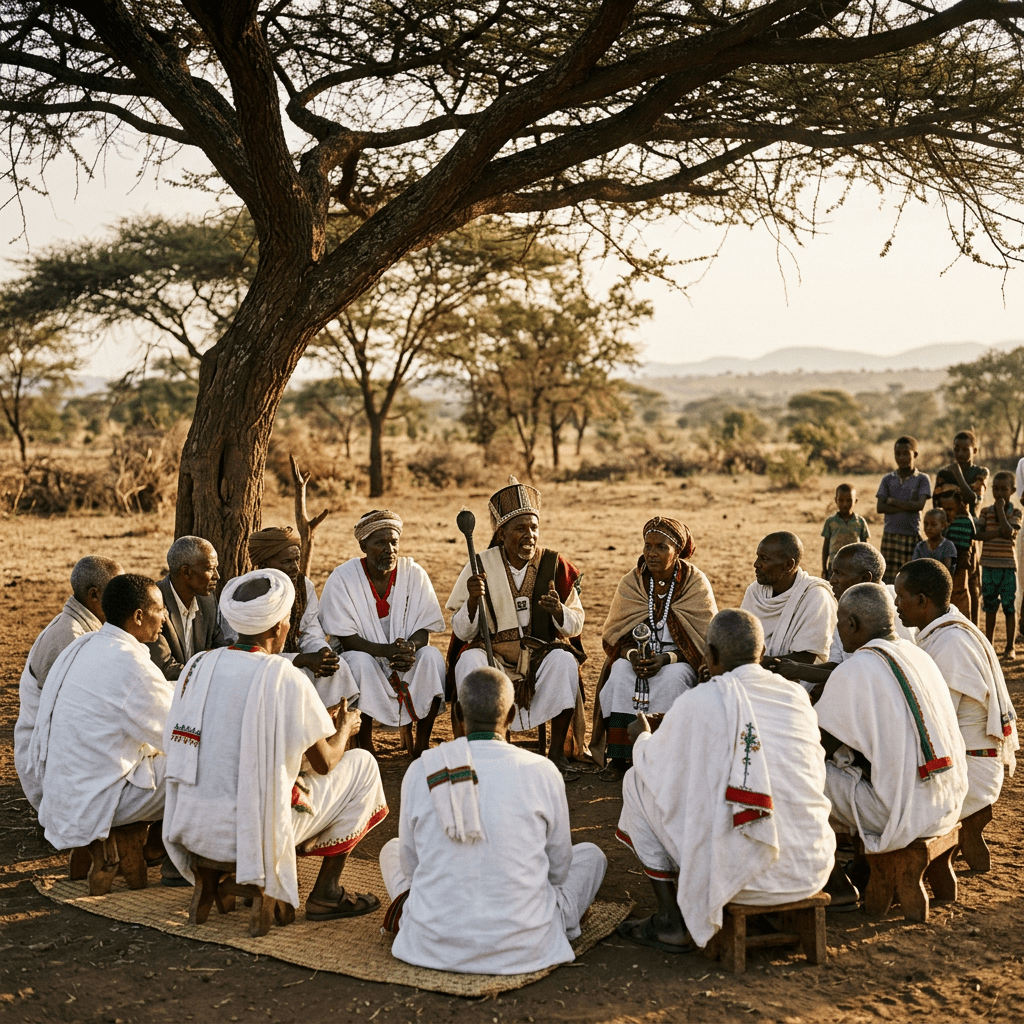
Gumaa is a sophisticated indigenous institution for resolving blood feuds, aiming to restore social harmony and reintegrate an offender back into the community. The process follows several key stages:
1. Collective Responsibility: The killer’s entire lineage is held corporately liable for the act. The group, not just the individual, is responsible for compensation and initiating the purification ritual. The goal is to restore social ties, not just punish an individual.
2. Negotiation & Compensation: Elders from both sides negotiate a “blood price” (gumaa), traditionally paid in cattle. The amount is determined by the nature of the offense (intentional vs. unintentional) and the severity of the injury, but does not vary based on the age or sex of the victim.
3. The Purification Ritual: This highly symbolic ceremony serves to cleanse the offender and the community.
· Preparation: The offender arrives with face covered, wearing the clothes from the day of the murder, symbolizing their unclean state.
· The Sacrifice: A lamb is sacrificed. The parties stand facing each other, signifying readiness to forgive and be forgiven.
· Symbolic Acts: Elders guide the parties to place their hands inside the sacrificed animal’s stomach to shake hands, symbolizing the “washing away” of the sin. The offender’s face is then uncovered, old clothes are removed, and new ones are put on, marking full reintegration.
4. Covenant & Reintegration: The process often concludes with a waadaa (covenant). The ritual concludes with a shared meal, publicly signifying the end of the feud and the offender’s full return to the community.
—
 The Irreecha Thanksgiving Festival
Irreecha is a vibrant bi-annual festival of thanksgiving, renewal, and unity, deeply rooted in the Oromo worldview.
· Timing and Types: It is celebrated twice a year:
· Irreecha Malkaa: Celebrated in September/October at lakesides or rivers to thank Waaqa for the end of the rainy season and the coming harvest.
· Irreecha Tulluu: Celebrated in Spring (around March) on hilltops to pray for rain and blessings for the upcoming planting season.
· Key Rituals and Symbols:
· Fresh Grass and Flowers: Participants carry freshly cut green grass and flowers to the sacred site, symbolizing fertility, life, and renewal.
· Water: Rituals are performed near bodies of water considered holy and pure. The grass is dipped in the water, and participants may sprinkle themselves with it as a blessing.
· Prayers and Songs: The festival features communal prayers, songs, and dances led by Qaalluu elders or Abba Gadaa leaders. It is a time to thank Waaqa for blessings and ask for peace (nagaa) and prosperity for the year ahead.
· Prohibitions: Participants are forbidden from attending with resentment or hatred in their hearts.
· Social and Cultural Significance: Beyond its religious roots, Irreecha is a powerful symbol of Oromo identity, unity, and cultural pride. It fosters social bonds and reinforces collective identity. While rooted in Waaqeffannaa, it is now celebrated by many Oromo people regardless of their religion.

Posted on July 29, 2026, in Aadaa, Afaan, Events, gadaa, Gumaa, health, Information, Language, Media, Press Release, Promotion. Bookmark the permalink. Leave a comment.




 Advocacy for Oromia
Leave a comment
Comments 0