The Irreechaa Protocol: From Ancient Healing to Modern Stroke Recovery
What if the path to physical recovery after a stroke lies not in isolation but in community, not in medicine alone but in the sacred rituals that have healed generations?
When we think of stroke rehabilitation, we typically imagine hospital beds, physical therapists, and repetitive exercises. The journey is often described as isolating—a solitary struggle against the body’s betrayal. But what if the most effective recovery intervention has been practiced for centuries, not in clinics, but at the water’s edge, surrounded by thousands of voices raised in song?
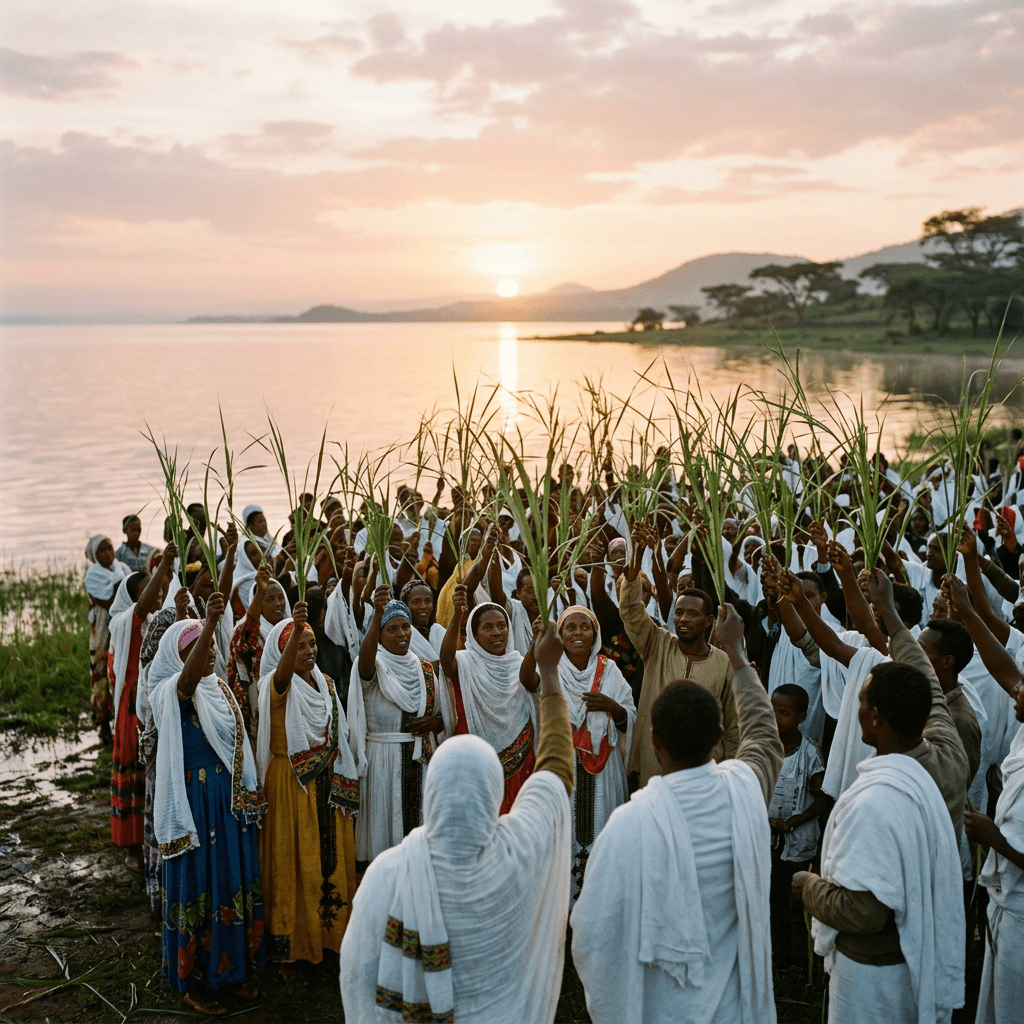
The Oromo people’s Irreechaa festival—a thanksgiving celebration held at sacred water bodies like Hora Arsadii and Hora Finfinnee—offers a blueprint for stroke recovery that transcends conventional rehabilitation. It is not merely a cultural festival; it is a sophisticated, community-driven healing protocol that addresses the physical, psychological, and spiritual dimensions of recovery.
The Foundation: Why Ritual Matters in Recovery
Stroke, as a form of brain tissue damage caused by a sudden disruption of blood supply, often results in muscle weakness or paralysis on one side of the body, known as hemiparesis or hemiplegia . Beyond the physical challenges, stroke profoundly affects patients’ psychological and spiritual well-being.
Conventional rehabilitation focuses on regaining motor function through physical therapy, strength training, and range-of-motion exercises. Yet research increasingly recognises that recovery is not purely mechanical. The emotional isolation, loss of identity, and spiritual questioning that accompany stroke require interventions that address the whole person.
This is where Irreechaa enters the picture. For the Oromo people, who have endured generations of political marginalisation and cultural suppression, Irreechaa has functioned as what scholars describe as “cultural therapy”—a cyclical, collective practice that restores dignity, cohesion, and hope . Its choreography—pilgrimage to sacred water, symbolic washing, public prayer, group singing and dancing—provides a template that can be adapted for physical rehabilitation.
The Three Therapeutic Pillars of Irreechaa for Stroke Recovery
1. Recognition: Reclaiming Identity and Agency
One of the most devastating effects of stroke is the loss of identity. A person who once moved freely, worked, and cared for family suddenly becomes dependent on others. This loss mirrors the experience of colonised peoples—the internalised devaluation that comes from being told, directly or indirectly, that you are less than what you were .
Irreechaa counters this through public, mass affirmation . When thousands gather in traditional white attire, singing and performing traditional dances, they are not just celebrating; they are visibly, collectively reclaiming dignity . For a stroke survivor, participation—even passive observation—reaffirms that they remain part of the community. Their identity is not erased by their condition.
The festival’s impact on psychological well-being is significant. Scholars document that the joyful atmosphere counters trauma, while participants see their culture celebrated, combating marginalisation and fostering confidence . For stroke survivors, this sense of belonging and self-worth is a powerful motivator for recovery.
2. Regulation: Movement, Music, and Healing the Body
The physical elements of Irreechaa serve a regulatory function that aligns precisely with evidence-based rehabilitation. Structured songs, rhythmic movement, and shared timing “calm bodies and synchronise emotion” . This mirrors approaches like EMDR (Eye Movement Desensitization and Reprocessing), where bilateral stimulation helps process traumatic material.
Traditional Oromo songs, known as geerarsa, have a particularly powerful healing function. One form of folksong is designed to “divert the thought of the distressed individual by persuading him through the intricate terminologies” . Even individuals with physical and cognitive impairments can be drawn into the healing experience through these songs.
Scientifically, the combination of water and sound creates immersive environments. Chanting reduces stress hormones and triggers dopamine, promoting transcendence . Movement—however limited—stimulates blood flow and helps maintain flexibility. When tens of thousands move and sing together, the result is a form of community-wide emotional and physical regulation that no individual therapist could replicate.
Research on spiritual practices in stroke rehabilitation supports this approach. One study found that dhikr therapy—practiced by flexing and moving the knuckles of the hand—can reduce stiffness in the joints of stroke patients, supporting muscle flexibility and strength . Irreechaa offers this same principle on a massive scale: repetitive, meaningful movement embedded in a spiritual and social context.
3. Reconnection: Healing the Social Wound
Historical trauma isolates; ritual reconnects . Anthropologists describe how public rituals generate “communitas”—an intense sense of togetherness that suspends everyday hierarchies . At Irreechaa, this communitas creates “prosocial bonds that reduce isolation and renew civic agency” .
For a stroke survivor, social isolation is a major barrier to recovery. Depression, anxiety, and loneliness compound physical limitations. The festival’s intergenerational participation—elders demonstrating rituals, children and youth participating actively—creates a continuity of social bonds that bridges generations . The stroke survivor is not left behind; they remain part of the living chain.
Irreechaa’s role in fostering inclusivity and national healing has been widely recognised, described as “a catalyst for inclusivity in Ethiopia” that “promotes a sense of togetherness” . For the individual survivor, the lesson is clear: recovery is not a solitary journey but a communal one.
The Water Blessing: Symbolic and Practical Healing
The most iconic Irreechaa ritual involves participants entering sacred water and symbolically washing away hardship . This act operates on multiple levels:
- Symbolically, it represents cleansing from past trauma and preparation for renewal.
- Psychologically, it provides a physical mechanism for emotional release.
- Communally, it creates a shared experience that binds participants together.
For a stroke survivor, water also offers practical therapeutic benefits. Hydrotherapy is a recognised rehabilitation technique that reduces joint stress, improves circulation, and provides gentle resistance for muscle strengthening. The sacred waters of Irreechaa offer this benefit within a context of profound meaning.
For diaspora Oromo communities, adaptations of these water rituals in park settings or hilltops serve similar functions . When a traditional water body is unavailable, communities transform other spaces into sacred gathering points. This adaptability suggests that the Irreechaa protocol can be adapted to any setting—including rehabilitation centres, community halls, or home environments.
A Blueprint for Stroke Recovery Intervention
What can the Irreechaa protocol teach rehabilitation professionals, caregivers, and stroke survivors?
1. Recovery Requires Community
The individualised model of rehabilitation misses a crucial element: the healing power of belonging. Interventions that create spaces for group participation, shared music, and collective movement may enhance outcomes.
2. Symbolism Matters
Water, music, movement, and traditional attire are not superficial decorations; they are therapeutic vehicles that engage the whole person—body, mind, and spirit.
3. Repetition Builds Strength
The cyclical, annual nature of Irreechaa mirrors the repetitive practice essential to stroke rehabilitation. Regularity, predictability, and ritualised practice build resilience.
4. Cultural Grounding Is Therapeutic
Cultural practices are not barriers to evidence-based approaches; they are themselves evidence-based approaches refined over generations . Adapting indigenous healing traditions to modern rehabilitation can improve engagement and outcomes.
5. Hope Is a Medicine
Irreechaa’s central message—that renewal is possible—is exactly what a stroke survivor needs to hear. Hope, meaning, and purpose are not sentimental extras; they are essential drivers of recovery.
Conclusion: The Quiet Work of Repair
Irreechaa demonstrates that healing is not only possible but has been practised for centuries. Its protocol—recognition, regulation, and reconnection through public ritual—provides a template that could be adapted for stroke recovery across cultures and contexts.
As scholars of historical trauma note, healing requires “shared remembrance, mourning, and culturally grounded practices that rebuild meaning and agency” . For stroke survivors, the same principle applies. Recovery is not just about regaining muscle strength; it is about rebuilding meaning, reconnecting with community, and reclaiming identity.
Irreechaa’s power is double-edged: the very practices that heal—public recognition, shared emotion, embodied solidarity—can also unsettle established systems of control . But for the stroke survivor seeking to recover, this is not a threat. It is an invitation to reclaim what was lost.
The path forward is not to shrink the wisdom of the ancestors but to secure it. Treat it as a healing asset, adapt its principles to modern practice, and let ritual do its quiet work of repair.
“Irreechaa’s power is double-edged: the very practices that heal—public recognition, shared emotion, embodied solidarity—also unsettle projects that rely on minimising Oromo visibility. The path forward is not to shrink Irreechaa but to secure it: treat it as a national asset, protect rights equally, and let ritual do its quiet work of repair” .

Posted on July 25, 2026, in Aadaa, Afaan, Finfinne, health, Language, Media, mental health, News, Oromia, Sirna Oromo, Waaqeffannaa. Bookmark the permalink. Leave a comment.






Leave a comment
Comments 0