The Ethiopia’s barbaric ruler PM, Colonel Abiy Ahmed, who is supported by the opportunistic Oromo and Amhara elite politicians has done all at his capacity to remove the Oromo’s lifelong freedom fighter (the current original OLF leader), Obbo Dawu Ibssa from his position to replace him with tripartite selected opportunistic OLF deserters.
The plot is believed to be masterminded by all those who wish to benefit from the subjugation of the Oromo nation that is already paying heavy prices and the entire subjugated nations and peoples of political south in Ethiopia in general.
The OLF’s chair, Obbo Dawud Ibsa and his OLF office’s 24/7 guards who work on three shifts were all removed since the afternoon of July 25, 2020 from his Finfinnee office.
The plan was similar with Colonel Abiy’s regime October 2019 failed attempts to assassinate Obbo Jawar Mohammed due to the bravery of his body guards who have refused to be removed in the middle of night. In the case of Obbo Dawud Ibssa, the culprits used different method by deploying the enemies within the OLF to claim that Obbo Dawud has been replaced by the OLF deserters to justify the transfer of power is a genuine party decision.
The plotters however failed to assert that, at this difficult time not only for the Oromo nation, but also for the entire country- as citizens are executed day and night, no Oromo imagines this will be plausible. Therefore, any sane person can assert the plot is the dirty work of the Oromo’s national enemies.
Therefore, it is imperative to rationalise that the plot of the tripartite quislings against the Oromo’s national interest came into effect in the midst of war waged on the nation by the unionist incumbent that is hell bent on dehumanising Oromo; after masterminding the assassination of the Oromo national icon, poetic singer, song writer and staunch Oromo’s human rights defender, Hacaaluu Hundessa on the 29th of June 2020.
It is also worth mentioning, following Hacaaluu’s PM and his unionist advisers masterminded assassination, numerous Oromo’s high profile politicians including Obbo Bekele Gerba, Obbo Jawar Mohammed, OLF leadership including Abdi Ragassa (for over 2 months), Michael Boran, Dr Shigut Geleta, Lemi Benya, Kenessa Ayana, and Colonel Gemechu Ayana following Hacaalu’s assassination. Moreover, over 15,000 Oromo civilians are unlawfully incarcerated and the entire Oromia is made a war zone.
The Oromo citizens are denied fundamental freedom to movement and existence in their own soil as state of emergency and concomitant state terrorism takes its toll.
As we speak, the Oromos are hunted like predators hunt on their pray; extremely barbaric action that all mankind should denounce and demand the Ethiopia’s PM who is acting like mad dog as he behaves like a psychopath to unconditionally stop!
As the Oromo people of all walks of life globally with like minded federalist groups is united to defend their national interests; its enemies within have inadvertently exposed themselves as they plot to derail the hope of the nation at this difficult time by planning to remove the Oromo’s lifelong freedom fighter from his leadership position.
Parts Of The Indicated Tripartite Plotters From OPP/PP Include;
Parts Of the Indicated Tripartite Plotters From Oromo Democratic Front (ODF):-1. Obbo Lenco Leta (embarrassing life ling opportunist who is also responsible for dismantling OLF’s army during 1992 transition by conspiring with the enemy) 2. Lenco Bati (who is also one of the OLF’s former leaders who has deserted the cause to join the very project that he has claimed was fighting against)3. Dr Beyan Assoba (who is also one of the OLF’s former leaders who has deserted the cause to join the very project that he has claimed was fighting against)
Parts of The Indicated Tripartite Plotters From OLF Include:-1). Ibsa Nagaw (group leader), 2) Tolera Adaba, 3) Atomsa Kumsa 4) Qajjeela (Kajela) Merdasa, 5) Ararsso Bikila, 6) Jawessa Gabissa, 7) Milikias Irko, 8)Waqo (Wako) Kune All three parties have betrayed the Oromo nation and its national cause.
While the Oromo nation and the supporters of the Oromo cause move hand in hand in rejecting state terrorism in Oromia by unanimously denouncing the ongoing executions of hundreds and incarcerations of the Oromo politicians; the surrender of the OLF’s leadership is double crime although no Oromo expected any good from group one and two.
The actions of the third group defy sane beliefs therefore beyond comprehension. The Oromo nation is on war and the nation and their closest allies such the Sidama and the rest are yet in the process of mourning the assassination of the Oromo iconic son, Hacaaluu. Additionally, the Oromo’s noble sons are unlawfully incarcerated and are taken to unknown places.
During such national upheaval for the Oromo nation, the actions of the third party are beyond belief. Paradoxically such coward and egoist actions of the OLF’s deserters are one of the top betrayals of the century in the struggle of the Oromo nation. The leader of the second group is known for his betrayal since 1992 and no one cares about thuggish actions. However, it is difficult to swallow the hardest truth when the comrades who have fought for decades for the same cause along with their comrades during both difficult and good times betray all together.
These groups have betrayed:-
1. The Oromo’s national cause
2. The OLF’s comrades as they remain unlawfully incarcerated – some of them taken to unknown locations
3. The OLF’s lifelong freedom fighter and their leader
4. The heroic and selfless sacrifices of the Oromo’s icon Hacaaluu Hunbdessa.
We denounce with all possible terms the selfish actions of the reckless plotters and demand the Ethiopia’s regime to unconditionally stop state terrorism in Oromia by freeing all Oromo’s political prisoners.
We demand the regime to unconditionally stop its plots to remove obbo Dawud Ibsa.
We denounce the actions of tripartite coalitions and advise them that their reckless actions only add to the ongoing volatility in Oromia and in the country with wider regional ramifications.
Finally, once again we, the Sdiama nation assure the Oromo that, we always stand by you – the Oromo nation, our closest brother and fight together for a common good to the last drop of our blood.
A press release by members of the OLF leaders in the Diaspora
The current political turmoil and security crisis in Oromia as well as Ethiopia is worsening from time to time, severely straining the daily life of citizens. The current machinations to turn Oromia in to a war zone and the catastrophic consequences in terms of human and material destruction is becoming unbearable. In the aftermath of the assassination of our beloved artist Hacaaluu Hundessaa, members of Ethiopia’s armed forces deployed throughout Oromia are tasked with the duty of killing, maiming, imprisoning, and torturing the Oromo people for their alleged membership or support of the OLF.
The OLF had repeatedly issued press releases regarding the worsening situation in the country. Among the alarming signals regarding the immediate jeopardy that the OLF and OFC are about to face include; 1. The residence of Mr. Daawud Ibsa, Chairman of the OLF, is currently under siege by members of the Ethiopian security and armed forces. Mr. Ibsaa’s telephone line is completely disconnected at this time. 2. Government security vehicles are seen driving in and out of the compound of OLF headquarter in the Gullalle subdistrict of Addis Ababa. The surroundings of the OLF head quarter are also under strict surveillance. 3. Reliable sources are indicating that a number of government media outlets are directed to be at the OLF office in Gullallee on Sunday for the purpose of airing a would-be breaking news. 4. Members of the OLF are being deprived of freedom of movement and unable to perform their daily routines of duty. 5. Almost all OLF branch offices throughout Oromia have been destroyed & plundered while leaders and representatives of the organization are jailed. 6. All OLF offices in the suburbs of Finfinne are looted and ransacked. 7. OLF headquarter offices in Gullalle are being searched without any warrant and the imprisonment of members occupying these offices has continued unabated. 8. Ethiopia’s ruling party has embarked on luring some of the gullible and the vulnerable among OLF and OFC rank & file to some petty benefits as a mechanism to divide the integrity of the OLF with an ultimate goal of forcing the Oromo people’s quest for freedom to succumb to the aspirations of the Neo-Naftagna. 9. Oromo intellectuals and business owners are being imprisoned for their alleged support of the OLF. 10. Some members of the government’s police force and the army suspected of supporting or sympathizing with the OLF are being imprisoned while others are being fired from the government structure as employees.
In conclusion, the overall situation of the Oromo peoples’ struggle for freedom, the Oromo Liberation Front and the Oromo Federalist Congress is worrisome. Therefore, we call upon the Oromo people to be vigilant about the machinations of our enemies and to protect the national interest of Oromia, safeguard the integrity of its lead organizations, the OLF & OFC, and the unity of the leaders of our struggle for freedom. The heroic deeds the Oromo people, both at home and abroad, had hitherto exhibited are very much appreciated and unparalleled by any account. We reiterate the imperative for the Oromo people to stay the course and remain the vanguard of the Oromo Peoples’ struggle for freedom in unison.
(A4O, 19 July 2020) Oromia Global Forum held its frist conference over webnar on 18 July 2020.
Many Oromo intellectuals presented thier valuable presentation on this unique conference.
Oromia Global Forum is a global alliance of Oromo Civic, Professional and Faith-Based Organizations and individual proponents of Human Rights, residing in North America, Europe, Australia, Asia and Africa.
Here below is Dr Asafa Jalata’s, The University of Tennessee at Knoxville, presentation on ‘Institutionalizing the Oromo Movement’: PREREQUISITES FOR BUILDING A DEMOCRATIC OROMIA STATE.
Press Release on the Assassination of Haacaaluu Hundeessaa and the Current Situation in Oromia, Ethiopia
The Oromo Studies Association (OSA) joins millions of Oromos and allies of Oromos in strongly condemning the senseless assassination of the famous artist and political activist Haacaaluu Hundeesaa. Through his music, oratory, and activism, Haacaaluu played a vital role in articulating and communicating the essence of Oromummaa and the objectives of Oromo struggle for liberation and social justice. Consequently, as an Oromo cultural hero, he has captured the hearts and minds of millions of Oromos as the demonstrations of Oromos in Oromia and in the different parts of the world revealed.
The Oromo Studies Association denounces the brutal killings, imprisoning of thousands of Oromos for protesting against the assassination and government policies of labelling, attacking, and destroying the Oromo movement for self-determination, freedom, and democracy. Th Association finds the steps the Ethiopian government has taken to investigate Haacaaluu’s death unsettling. OSA also finds the government’s violent suppression of the peaceful protesters undemocratic and lacks legal credibility. Instead of carrying out a thorough investigation to find out the the killers of Haacaaluu, the investigating team is focusing on the political opponents of the regime and publizing unconfirmed conspiracy theories to deflect the attention from the real assassins.
Furthermore, instead of addressing genuine Oromo demands, the regime of Prime Minister Abiy Ahmed has collaborated with the forces that are subjugating the Oromo, and has taken ideological, political, and military measures that are intended to delegitimize, discredit and destroy democratic Oromo leadership and institutions. We believe that these anti-Oromo forces are after all responsible for the current violence and crisis in Oromia.
The day after Haacaaluu’s assassination, the Ethiopian government blocked the Internet and telephone services, and independent Oromo media in the state of Oromia to restrict the flow of information. This was followed by a violent crackdown on thousands of civilians who wanted to give Haacaaluu a hero’s send off. It is disheartening that government security forces summarily executed members of Haacaaluu’s family as if the assassination of the artist was not enough. On the very same day, prominent political activists and opposition leaders like Jawar Mohammed, Bekele Gerba, Hamza Borana and thirty-five other Oromo leaders were arrested.
Later Dr. Shigux Galata, Michael Booran, Kennesaa Ayaanaa and several others were arbitrarily arrested. These actions were the continuation of imprisoning prominent OLF leaders such as Yasoo Kabada, Lammii Beenyae, Kaayyo Fufaa, Professor Bayana Ruudaa, Gadaa Bulti, and Abdii Raggaasa. They also imprisoned several members of the Oromo Federalist Congress including Dajanee Taafaa. Interestingly, some of those detained hold foreign passports. For example, Dr. Shigux Galata is a citizen of Germany, while Redwaan Amaan, Yuusuf Bashir, and Micah Chiri are United Stated citizens. A Kenyan journalist, Yasin Juma was also arrested while covering the protests and government crackdown in Ethiopia. Trusting the prime minister’s initial promise to lead the reform process, Jawar Mohammed renounced his US citizenship only to fall into the prime minister’s trap and find himself in the notorious Ethiopian prison.
The Oromo Studies Association finds these arbitrary arrests and extra judicial killings extremely concerning. Such violent actions by the government illustrates a complete disregard for freedom of speech and human rights, which are the corner stone of a free and democratic society. It is a breach to the prime minister’s promises to the nation in his inaugural speech. It is contrary to the core principles of the Nobel Peace Prize which was given to him in 2019.
OSA strongly and resoundingly condemns violence perpetuated by the state against political opposition and civilians alike. Therefore, we demand the government of Ethiopia to:
Establish without delay, an independent commission (including members from international forensic experts) to investigate the assassination of Haacaaluu Hundeessaa;
Refrain from acts of violence and release all political prisoners without precondition immediately;
End the illegal military Command Posts in Borana, Guji, Wallagga and Western Shewa immediately and return the army to its barracks, and stop the indiscriminate killing of Oromos;
Address the fundamental demands of the Oromo people for justice, equality and democracy that propelled the prime minister to power in 2018 promising that he would address the demands but turned against it once in power;
Stop harassing, jailing and killing Oromos and members of opposition parties, and immediately start making peace with all including with those who are engaged in armed struggle;
Compensate the Oromo people for the destructions caused by the violence and by the notorious Command Post; and
Ensure the democratic transition that was initiated by the Qerroo and Qarree movement within a few months in order to avoid further political crisis and bloodshed.
Finally, OSA expresses its utter disappointment with hostile media outlets who, in their broadcasts, portray the Oromo people as hatemongers and killers. We are particularly concerned by the way tax-payer funded and government-supported media outlets such as VOA, Deutsche Welle, and BBC Amharic programs are presenting news stories and analyses about the current violence in Oromia. We believe that the interviews are staged, the sources are unbalanced and unverified; and contrary to journalistic professional ethnics their questions are leading to draw a desired conclusion.
In so doing, the journalists at these media outlets are not only propagating baseless and hostile propaganda against the Oromo people, but they are also complicating Ethiopia’s already too complicated problems. We demand that the journalists covering the Amharic program at of VOA, DW and BBC adhere to true professional principles of journalism by being fair and balanced. We plead to the respective boards of directors of these outlets to take all necessary measures to restrain their journalists from targeting the Oromo people.
Melbourne, Australia: Dabessa, who came to Australia from Ethiopia seeking refuge, at their home in Melbourne. Photo: Kim Landy/Oxfam Australia
Dabessa Gemelal is one of many refugees in Australia who have been working in their communities to tackle COVID-19.
Through community education and information program and other initiatives he has been providing valuable community education and information about COVID-19 in Oromo language to make sure people know about and understand government measures and support services.
Dabessa is director of Advocacy for Oromia, which started the community education and information program to share verified information with refugee communities, especially Oromo community, about the coronavirus.
Dabessa believes we will get through these times because we are working together.
“A4O community education and information program showcases the positive contribution of our community and how they have come together in this unprecedented time to help everyone,” he said.
In addition to the community education and information program Dabessa has been organising online conversations with various Oromo community organisations and members to give information in Oromo language.
“I am working with the various Oromo Community associations, running online workshops to build the capacity of our people from refugee backgrounds in accessing timely and accurate information during COVID-19.”
Dabessa has experienced more in his life than most people can say from a lifetime of experiences. Dabessa fled Oromia in fear of political persecution.
He landed in Kenya as refugee, with no rights or access to work, education, health care or housing.
“I was always under threat of being arrested. I never felt safe in Kenya,” Dabessa said.
While Dabessa was in Nairobi, applying for refugee status, his worst fears were confirmed: “I got the news my wife was arrested.”
Just like her husband, Lelisse was falsely imprisoned for three years. In that time, Dabessa arranged for their children to be brought to Nairobi, and the family made their way to Australia — without Lelisse — as refugees.
After registering with the UNHCR and after three years, Dabessa’s family received a humanitarian visa for Australia and resettled in Adelaide in September 2009.
“I had mixed feelings the first few months after my arrival, however, I was very relieved that I was finally safe from harm and be an active citizen and get an education.”
Dabessa was thankful for the safety and freedom his new home afforded him. But his continued separation from Lelisse made it hard to settle in or get ahead.
“Until Lelisse arrived, I never think about a job because I’m caring [for the] children,” he explains. “I need to be home when the children come home. I’m going shopping, cooking, and making them to be stronger.”
Dabessa believes Australia has given him so many chances to succeed with challenges.
“The biggest success for me was that Australia gave me the opportunity to further my education. Within the 10 years, I hold Diploma of Community Services Work, Diploma of Case Management and recently hold a Bachelor of Social Work.”
Through his own personal experiences, Dabessa is determined to contribute in influencing change where people with lived experience are part of the decision-making process so that we better address the needs of refugees and people seeking asylum in Australia and around the world.
Advocacy for Oromia was established in 2010 with the purpose of enabling and empowering Oromo people by providing accurate and timely information that will help to make better choices to create the kind of future in which they wish to live.
It also provides information focus on the major issues facing us in the 21st century and it is going to try and bring a balanced approach with factual information that is positive and solution based.
The website has been in operation for the last nine years with the mission of promoting and advancing causes of Oromo people through advocacy, community education, information service, capacity building, awareness raising and promotion.
The website is also the official site of Advocacy for Oromia Association in Victoria Australia Inc., a non-profit organisation, registered under the Associations Incorporation Reform Act 2012 in Victoria as April 2014.
Our team already had considerable community development experience and expertise. Our various projects helped to develop our confidence and the capacity of our agency. Our team used every gained knowledge, skills and experiences as an opportunity to design and develop new approaches, to documenting progress, supporting positive employment outcomes, liaising with community stakeholders, and conduct evaluation.
Advocacy for Oromia is devoted to establishing Advocacy for Oromia organisation to close the gaps where we can stand for people who are disadvantaged and speaking out on their behalf in a way that represents the best interests of them. We are committed to supporting positive settlement and employment outcomes for Victoria’s Oromo community.
Advocacy for Oromia Office
Addresses:
39 Clow St,
Dandenong VIC 3175
=====================
247-251 Flinders Lane
Melbourne VIC 3000
Activities Address
Springvale Neighbourhood House Inc
Address: 46-50 Queens Ave, Springvale VIC 3171
Postal Address:
P. O. Box 150
Noble Park, Vic 3174
With your support, we can continue to help community build a better future.
Advocacy for Oromia Mental Health Program
The aim of the program is to improving the mental health and well-being of Oromo community in Victoria. It aims to assist those experiencing, mental ill-health, their families and carers of all ages within this community to address the social determinants of mental health for Oromo community. It helps:
Identify and build protective factors,
Reduce stigma and discrimination
Build capacity for self-determination
Better understand mental wellbeing, mental ill-health and the impacts of trauma
The goal of the project is to increase mental health literacy of Oromo community that aims:
To assist people with mental health issues
To increase the capacity of mental health worker
To better understand mental wellbeing
To provide mental health education and information
To address the social and cultural causes of mental health issues
Advocacy for Oromia will organise information session, women performance, radio programs, culturally adopted conversations on Oromo Coffee Drinking ceremony, providing training for mental health guides and forum and producing educational materials on the selected groups and geographical area.
Human Rights Education Program
The Human Rights Education Program is a community based human rights program designed to develop an understanding of everyone’s common responsibility to make human rights a reality in each community.
Human rights can only be achieved through an informed and continued demand by people for their protection. Human rights education promotes values, beliefs and attitudes that encourage all individuals to uphold their own rights and those of others.
The aim of the program is to build an understanding and appreciation for human rights through learning about rights and learning through rights. We aimed at building a universal culture of human rights. Thus, we aimed:
To build an understanding and appreciation for human rights through learning about rights and learning through rights.
To build capacities and sharing good practice in the area of human rights education and training
To develop human rights education and training materials and resources
The goal of the project is to increase human rights literacy of Oromo community that aims:
To better understand human rights
To increase the capacity of human rights worker
To analyse situations in human rights terms
To provide human rights education and information
To develop solidarity
To strategize and implement appropriate responses to injustice.
The ultimate goal of education for human rights is empowerment, giving people the knowledge and skills to take control of their own lives and the decisions that affect them.
Human rights education constitutes an essential contribution to the long-term prevention of human rights abuses and represents an important investment in the endeavour to achieve a just society in which all human rights of all persons are valued and respected.
Advocacy for Oromia will organise information session, performance, radio programs, culturally adopted conversations on Oromo Coffee Drinking ceremony, providing training for Human Rights guides and forum and producing educational materials on the selected groups and geographical area.
Community Safety Program
The program aims to strengthen existing collaborations and identify opportunities for the development of partnerships aimed at community safety and crime prevention activities. This approach seeks to improve the individual and collective quality of life by addressing concerns regarding the wider physical and social environment. Importantly, community safety means addressing fear of crime and perceptions of safety as without this any actions to address the occurrence of crime and anti-social behaviour are of less value.

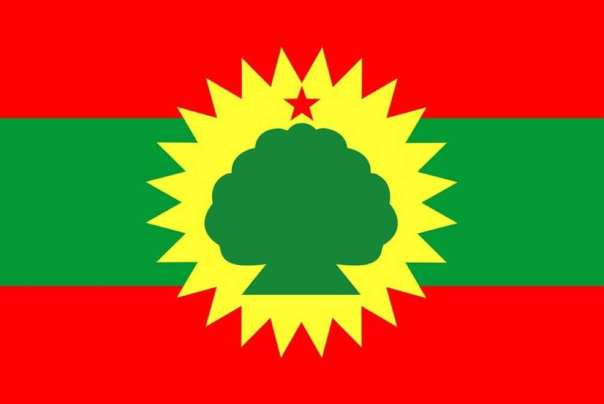
 The green stripe symbolizes the riches & the nature of Oromo land.
  The red stripes represents the sacrifices paid during the long Oromo struggle for freedom.
 The rising sun symbolizes the dawning of freedom.
 The Odaa tree is a hallmark of the indigenous Gadaa democracy of the Oromo people.
 The five-pointed red star symbolizes Oromo struggle for peace, prosperity, freedom, democracy & unity.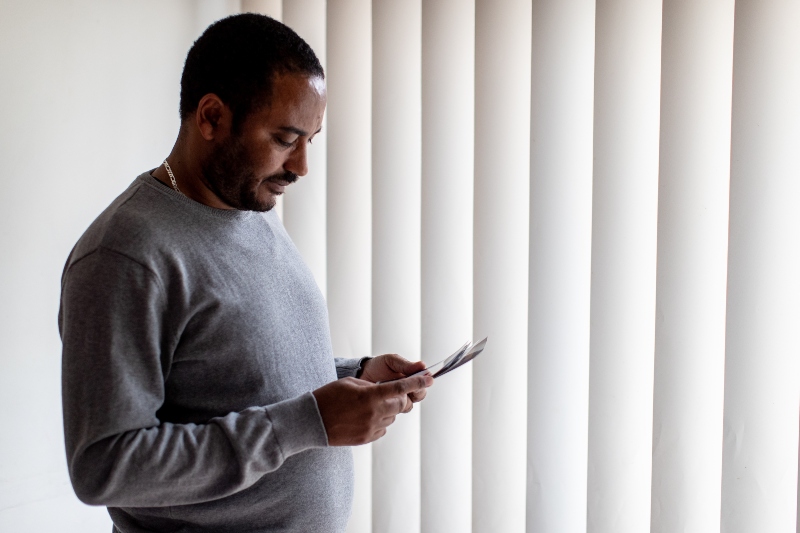





 Advocacy for Oromia