The Sound of Resistance: How Afran Qallo Band Defied an Empire and Changed Oromo Music Forever
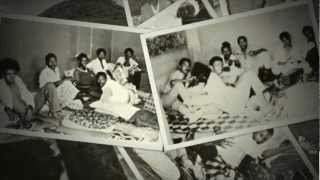
In 1962, when singing in Oromo was an act of rebellion, a small group of activists in Dire Dawa formed the first Oromo music band—and lit a cultural fire that still burns today
—
On a warm evening in Dire Dawa, a band of young men gathered around borrowed instruments in a cramped courtyard. They had no stage, no formal training, and no permission. What they had was a burning conviction: it was time for the Oromo people to hear their own voice.
The year was 1962. In Emperor Haile Selassie’s Ethiopia, singing in Afaan Oromo was forbidden—the language was blocked from schools, radio, and any form of public expression. Amharic was the official tongue, the only medium deemed worthy of airwaves and classrooms .
But when a Harari music band at an Oromo wedding refused to play in Afaan Oromo, dismissing the language as unfit for their instruments, the insult became the catalyst for something extraordinary .
“The absence of any cultural space for the Oromo inspired individuals to form an organization and create a musical space for themselves,” historian Dr. Mohammed Hassan explains .
What emerged was Urji Bakkalcha—the Morning Star—later renamed Afran Qallo, the first-ever Oromo music band. Its founders—Ismail Mummad Adam, Abubaker Mussa, Ali Shabbo, and others—had no idea they were about to spark a cultural revolution that would echo across generations .
—
The Language of Defiance
At the time, four musical bands emerged almost simultaneously in different neighborhoods of Dire Dawa, a bustling multi-ethnic city in eastern Oromia: Mascob Tokkumma Jaalala, Hiriyaa Jaalala, Biftu Ganama, and Urji Bakkalcha .
The Somalis, Amharas, and Hararis had their own music bands. The Oromo had nothing.
“When there was a need for wedding celebration, Oromo families had to pay for Somali or Harari musical bands because the Amhara bands did not deal well with the Oromo,” says Professor Mohammed Hassen .
The band’s first anthem was a call to awakening:
Ijoolleen Afran Qallo dardara amman tana
Kootta wal-barranaa yeroon keenya ammaa
Sons of Afran Qallo, the youth of this day
Let us come together, our time is now
The message was clear: wake up, know each other, reclaim your culture.
—
The Price of Freedom
The Haile Selassie regime responded with predictable hostility. The government demanded that all lyrics be translated into Amharic for censorship. Studios were raided, instruments destroyed, members arrested .
When the band received an invitation to perform in Djibouti, the authorities refused permission with the mocking question: “Have you reached this level?”
The band went anyway.
They fled to Djibouti without travel documents, performing to rapturous audiences. But the Emperor pressured French authorities to return them. Some members were jailed upon their return .
By 1965, the pressure became unbearable. The government systematically hunted down Oromo musicians. Many were arrested; others fled to Somalia, where they continued broadcasting Afaan Oromo music and news across the border—a lifeline for the Oromo people inside Ethiopia .
Among those forced into exile was Ayub Abubakar, a journalist who started the Oromo radio program from Mogadishu. “The radio program was so effective in mobilizing public opinion against Emperor Haile Selassie that the regime sent a secret agent to Mogadishu and murdered Ayub Abubakar in 1966,” says Professor Hassan .
—
Ali Birra: The Voice of a Nation
No figure embodies Oromo music’s journey from rebellion to legend more than Ali Birra.
Born Ali Mohammed Mussa in Dire Dawa in 1948, he joined the Afran Qallo movement at age 13. His first song, “Birra dha Bari’e” (Spring Has Dawned), earned him his nickname—Ali Birra, “Ali the Spring” .
What made Ali Birra revolutionary wasn’t just his voice. It was his unwavering commitment to speaking truth to power.
“His lyrics always speak to the moment, explaining events and processes, counseling restraint when times are tough and encouraging protest when political impact seems possible,” writes scholar Ezekiel Gebissa .
Take his iconic song about the Gada system—the traditional Oromo democratic governance structure dismantled by imperial conquest:
Karaan galma abbaa Gadaa eessaa?
Dhaqeen galma isaa jajjabeessa
Taa’een seenaa isaa babarreessa
Where is the path to Abba Gadaa’s assembly?
I will go and fortify its purpose
I will sit and write its history
This wasn’t just music. It was an act of historical reclamation, a refusal to let Oromo heritage be erased.
Ali Birra’s fame spread across Ethiopia and beyond. He sang in Oromo, Amharic, Arabic, Harari, and Somali. He collaborated with Sudan’s Mohammed Wardi. He performed in large venues like Hager Fiker and Ras Teyater—though, as he told one interviewer, a frank conversation with his father convinced him to leave the capital for his safety .
—
The Movement That Shook a Kingdom
Afran Qallo wasn’t alone. In central Ethiopia, the Macha-Tulama Self-Help Association was gathering momentum. In the southeast, the Bale people’s revolt was threatening to take back land from absentee feudal lords .
The Oromo, Ethiopia’s largest ethnic group, were waking up.
“By producing powerful poems that demonstrated the richness and beauty of the Oromo language, scholars like Shaykh Bakri Saphalo set in motion a generation of famous poets and singers,” writes Professor Hassan .
The Afran Qallo band became a cultural weapon. Their songs didn’t just entertain—they educated, mobilized, and inspired pride in an identity that the state wanted to erase.
Some of their most powerful lyrics directly challenged the land confiscation that had impoverished Oromo farmers for generations. Singers like Gaddisa (Mohammed Abdullahi Sani) performed at the Oromo musical festival in 1977 with songs that urged:
Qeerroo mataa tutaa, hin jarjartuu suutaa
Tullu gubbaan darbii, hallayyaarraa gorii
Youth of thick hair, do not hurry
Cross over the mountain, turn through the cliffs
The song spoke of the long journey to freedom—crossing mountains, rivers, and fields—and the determination to fight for justice.
—
Legacy of Resistance
Afran Qallo’s influence continues to this day.
Dr. Ali Shabo—the band’s pioneering singer—received an honorary Doctorate from Haramaya University in 2011 and was recently honored by the City of Minneapolis for his contributions to Oromo culture .
Ali Birra became the undisputed “king of Oromo music,” producing his first album in 1971. He received the Toronto African Merits Award in 1995 and an honorary Doctorate from Jimma University in 2010. When he passed away in November 2022, tens of thousands gathered in Dire Dawa to say farewell . His wife Lily Marcus told the mourners: “Love, harmony, and peace for all were Ali’s legacies” .
The tradition continues with artists like Hachalu Hundessa, a young singer whose protest songs during the 2014–2018 Oromo protests galvanized millions. His 2017 performance of “Araat Kiiloof Situu Aane” (You Deserve Arat Kilo Palace) became a defining moment in the Oromo struggle. Hachalu was murdered in June 2020, but his music lives on as a weapon of resistance .
—
The Afran Qallo band’s story is not just about music. It is a testament to the power of culture as resistance.
In 1962, in a city where Oromo voices were silenced, a small group of young men decided to sing anyway. They risked arrest, exile, and death—not for fame or fortune, but for the simple dignity of hearing their mother tongue in song.
Fifty years later, when the Afran Qallo band marked its golden jubilee in Toronto, the organizers celebrated more than a musical milestone. They celebrated a movement that refused to be silenced .
“It created a tide of anger against the Ethiopian government because the Oromo realized they were denied the opportunity to enjoy their own music,” said Professor Hassan .
That anger—and that music—has shaped modern Oromo identity and politics ever since.
—
Degu Demissie’s thesis, “A Historical Study of Oromo Music Bands in East Hararghe (1961-1992),” was completed at Haramaya University in 2021. This article draws extensively on that research and other sources.






