The Power of the Sacred Rod: How Oromo Women Have Kept Peace for Generations
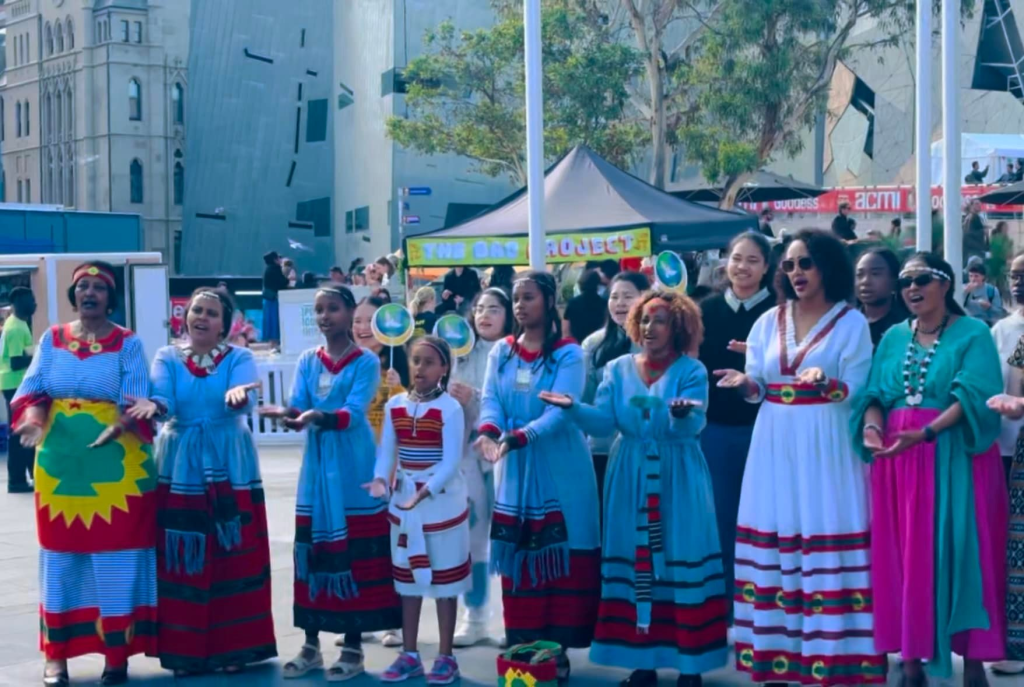
In a society where men hold formal power, an ancient women’s institution wields a moral authority that can stop bloodshed and bring warring parties to their knees
—
In the highlands of southern Ethiopia, when a man raises his hand against his wife, something remarkable happens. Women from the neighborhood gather, march to his house, and plant a thin wooden rod called a siinqee at his doorstep. They will not leave until he submits, apologizes, and offers a sacrifice .
This is not a modern feminist protest. It is the Atete—an ancient institution run exclusively by Oromo women that has served as a powerful mechanism for conflict resolution, human rights protection, and social justice for generations .
The Mothers of Peace
Among the Oromo people—the largest ethnic group in Ethiopia and one of the largest indigenous nations in Africa—women are considered woyyu: sacred, partly divine beings who share a special connection to Waaqa (God) . In Oromo mythology, the divine has two manifestations: Oglia (male) and Atete (female) .
This spiritual status translates into real-world authority. “The Oromo society developed a highly sophisticated Atete institution to safeguard women’s rights and protect the rights of the weak,” writes Temam Hussein in his research on the subject. “Ever since, they also used it for solving arising conflicts in Oromo society” .
The institution takes many names across Oromo regions—siinqee among the Arsi, Atete among the Borana—but its purpose remains consistent: women protecting their rights and maintaining peace through collective action .
More Than a Stick: The Rituals of Resolution
The siinqee is not merely a stick. It symbolizes women’s sacred authority and their role as peacemakers. “The women’s role is very pivotal in halting the conflict immediately,” explains scholar Hamdesa Tuso, himself an Oromo from Ethiopia .
When intra-Oromo conflict threatens to escalate into violence, women make distress calls to their neighborhoods, organize themselves into a human chain, physically enter between the conflicting parties, and lie on the ground .
This act is so powerful that no Oromo would dare attack women or ignore their plea. The chain of human bodies serves as an unbreachable barrier that stops fighting immediately.
Once violence is halted, elders approach the parties and initiate the peace process. But it is the women’s initial intervention—their willingness to place their own bodies in harm’s way—that makes the peace possible .
The Divorce That Stops a War
Research by Bedria Mohammed Demie reveals that women also use Atete to resolve group conflicts—sometimes those that have cost lives .
One case study shows how a years-long dispute between the Samuu and Shedama clans over a killing was ultimately resolved through the combined efforts of yaa’aa (elder councils) and Atete. The original conflict began when a father killed a young man he found with his daughter. The resulting blood feud persisted for seven years until women’s intervention helped broker peace .
Women are often called “mothers of peace” in Oromo society, a title they have earned through their consistent role in mediating, negotiating, and fostering social cohesion .
When a Husband Must Submit
Even in domestic disputes, the Atete institution provides women with an effective means of seeking justice. Professor Paul Baxter, a British anthropologist who studied the Oromo extensively, observed that women could call an Atete gathering to “discipline an erring male” .
“Based on the evidence presented, they proceed to examining the complaints,” Baxter noted. When a woman’s grievance is accepted as credible, the women “march to the house of the husband and hang a siinqee. Once that step is taken, the women will not depart until the concerned man submits” .
The ritual concludes with blessing the offender’s family, and the process of “conflict transformation is completed.” Husbands become “apologetic and repentant and eager to please” after the display of women’s collective power .
Sacred Women, Sacred Duties
Women’s sacred status also gives them responsibility during natural disasters. During drought, women organize themselves and march singing “arraro Rabio” (Oh our God have mercy on us and give us rain) to the nearest river, where they plead with the Creator for rain. They undertake these activities of their own volition—no man orders them .
The symbolism reinforces the belief that women, as the woyyu (sacred), will receive special recognition from the universal Creator when they petition for mercy.
Challenges and Continuity
The Atete institution faces significant challenges today. Mainstream religions, government policies, urbanization, and modernization have all affected women’s indigenous institutions .
“The periods of political instability had negatively affected the roles of women institutions,” researchers note. In some areas, “the roles of atete in preserving culture and protecting women’s human rights were jeopardized” .
Yet the institution endures, particularly in rural areas where formal justice systems remain inaccessible or untrusted. Women continue to use Atete to resolve conflicts that the state cannot or will not address.
A Model for the World
In an era of global conflict, the Oromo women’s approach to peacemaking offers valuable lessons. Their system is built on shared moral values, collective action, and the recognition that sacred authority resides not in official positions but in the courage to stand between warring parties.
“Conflict resolution is far from enjoying a depth and breadth of theoretical and practical knowledge that allows it to interact with different cultures,” Tuso writes. Indigenous systems like Atete offer perspectives that Western models of mediation—with their emphasis on neutrality and professionalism—often miss .
For the Oromo women, the goal is not just to end conflict but to achieve arara—reconciliation that repairs the relationship between the supernatural, human beings, and nature .
And when that reconciliation comes, it is sealed with a feast, a blessing, and a celebration of the women whose courage made peace possible.
—
Sources for this article include Hamdesa Tuso’s “The Role of Women in Conflict Resolution: Perspectives from an Indigenous System” (A Leadership Journal, George Mason University), along with research by Temam Hussein, Bedria Mohammed Demie, and others. The Oromo people are estimated to number approximately 30 million across Ethiopia, Kenya, and Somalia.






