Daily Archives: September 4, 2026

Oromo Literacy Day: Celebrating the Power of Stories Held in Oromia
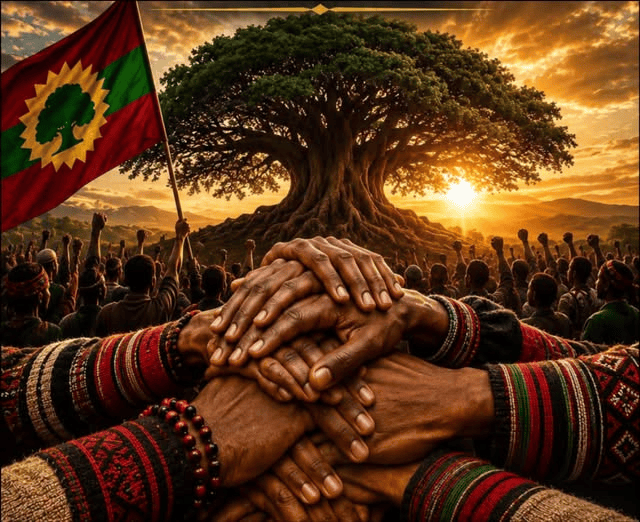
By Maatii Sabaa
—
Every year, Oromo Literacy Day is more than a date on a calendar—it’s a living tribute to the resilience of a people and their language. It celebrates Afaan Oromoo, a language that carries the weight of history, the songs of ancestors, and the dreams of a nation. But how did the Oromo people arrive at this moment, where their stories can finally be written, read, and shared with the world? The answer lies in a long and courageous journey toward literacy.
A Written History of Resistance and Revival
The story of Oromo literacy is one of relentless struggle. The Oromo people have long possessed a rich oral tradition, but for much of Ethiopia’s modern history, their language was marginalized. It was a household language—spoken, sung, and whispered—but rarely seen on paper . The first major push to change this came in the late 19th and early 20th centuries.
A pivotal figure was Onesimos Nasib, an Oromo freed from slavery who trained as a teacher in Sweden. Upon his return, he and his colleague Aster Ganno worked with an almost missionary zeal to promote literacy in Afaan Oromoo. Onesimos created the Oromo Reader, a book filled with stories that were “short and funny” and designed to be both accessible and engaging. His aim was not just religious instruction but to cultivate a love for reading itself . He would famously ask young people he met, “Can you read and write?” and persuade them of its immense value .
However, their work met fierce opposition from the imperial government. In the mid-1940s, the Haile Selassie regime placed a total ban on Oromo literature . The language was effectively erased from public life, becoming a symbol of defiance.
The Quest for the Perfect Script
The suppression only intensified the desire for a written Oromo. The question of how to write the language became a central point of debate. Early works, like those of Onesimos, used the Ge’ez alphabet. But many activists and intellectuals believed this script was inadequate for Oromo sounds, failing to represent vowel length and consonant gemination—features that change a word’s meaning .
In the 1960s, the movement for a new script gained momentum. At Addis Ababa University, Oromo students began printing the first newspaper in Afaan Oromoo, Kana Beektaa? (“Do you know this?”), in 1968. The paper was a bold act of cultural preservation, collecting “Oromo songs, proverbs, war and grievance chants, Oromo prophecies, nuptials, baby lullabies, and others” . This was more than journalism—it was a declaration of identity. The paper was short-lived, forced to cease publication in 1971 .
Simultaneously, Oromo students in Europe were rigorously debating the script question. In 1968, a study group led by figures like Haile Fidaa concluded that a modified Latin alphabet was the most practical and linguistically sound choice for Oromo . This decision was not just technical; it was a political act of resistance, rejecting a script associated with the establishment.
A New Dawn: The Adoption of Qubee
After years of struggle, the fall of the military Derg regime in 1991 brought a turning point. The new Ethiopian constitution granted greater autonomy to regional states. Oromo was finally made the official language of the Oromia Regional State .
The Latin-based alphabet, known as Qubee, was officially adopted for writing Oromo . This was a victory decades in the making. The script’s simplicity and adaptability to modern technology made it a practical choice for a language finally stepping into the digital age. As one study noted, Qubee “enabled the language to grow faster as the script can be learned easily” .
However, the adoption was not without controversy. For some, the Ethiopic script held deep cultural significance, and the switch to a Latin alphabet was seen as an emotional and political break . Yet for the majority, Qubee represented liberation.
The Stories That Endure
The adoption of Qubee unlocked a literary explosion. Oromo youth and intellectuals began producing “newspapers, magazines, novels, translations and plays that describe their nation and their state in Afaan Oromoo” . Stories once confined to memory were now printed, preserved, and shared.
The journey has also involved recovering alternative scripts. A fascinating chapter is the story of Sheek Bakrii Saphaloo, a scholar who created a unique indigenous Oromo script. He developed an abugida, a writing system where each base glyph has multiple vocalic components, making it distinct from both the Ge’ez and Latin alphabets . This script has been used for over 70 years and is now being considered for digital preservation and inclusion in Unicode, highlighting the deep connection between literacy and cultural identity .
Why Oromo Literacy Day Matters
Oromo Literacy Day is a celebration of this entire journey. It honors the tenacity of Onesimos Nasib, the courage of student activists, and the vision of scholars who fought to give their language a written form. It is a day to recognize that literacy is not just about reading and writing; it is about power, identity, and survival.
The stories held in Oromia are now written down for the world to see. This day celebrates their liberation and their enduring power.
—
“The stories, with the exception of a couple of martyr stories, are short and funny, and the subjects vary in order to attract.” — Onesimos Nasib on the Oromo Reader
—
 Maatii Sabaa is a writer and advocate of the Oromo stories.

The Vanished Voice: Remembering Ob Dabbasaa Guyyoo and the Unfinished Work of Cultural Custodians
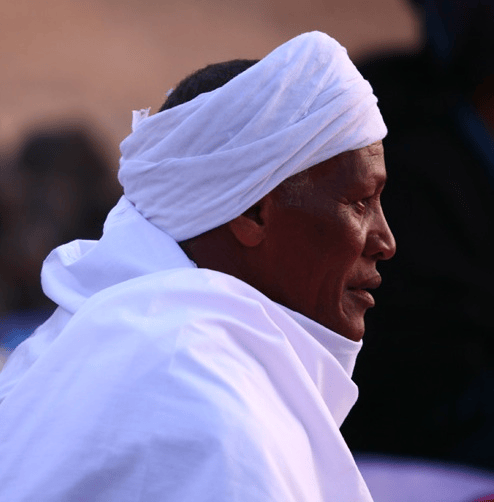
On the 27th of September in the year 2015, a quiet tragedy unfolded in the bustling streets of Nairobi. Ob Dabbasaa Guyyoo, an elder in his late seventies, disappeared. He was not a politician, nor a celebrity. He was something rarer and perhaps more precious: a living archive, a walking library of Oromo knowledge, a custodian of Gadaa—the indigenous democratic system that has governed Oromo society for centuries.
The United Nations (UN) has declared the 30th of Hagayya (August) as the International Day of the Victims of Enforced Disappearances. It is a day to remember those who have been forcibly taken, their fates unknown, their families left in a purgatory of uncertainty. For the family and students of Ob Dabbasaa Guyyoo, the 27th of Fulbaana is their personal day of reckoning.
The Life Before the Silence
To understand the weight of this loss, one must understand the life that was lived. Ob Dabbasaa Guyyoo’s world was not shaped by textbooks or university lectures. It was shaped by the Gadaa system, an ancient Oromo institution that governs everything from politics to social conduct, from justice to spirituality. He grew up in its embrace, was nurtured by its principles, and graduated into its senior councils.
But Ob Dabbasaa did not keep this knowledge for himself. He was a teacher, an arsaa-dhageettii—one who uses his eyes and ears to interpret the world and pass it on to others. His mission was profound and urgent: to teach the Oromo people that they possess a civilization of their own. He traveled through villages, and across borders into neighboring countries, preaching a message of cultural pride and historical awareness.
His teaching was a quiet resistance against the forces of erasure. He did not teach with a rod or a weapon; he taught with stories, with proverbs, and with the weight of lived experience. He reminded his people, whether they were Muslim, Christian, or followers of the indigenous Waaqeffannaa faith, that their identity was a gift, not a curse.
A Philosophy of Transmission
There is a profound Oromo philosophy that underpinned his work: a person who does not know their own history is like someone who cannot cross a river without clinging to another. They are dependent, lost, and vulnerable.
Ob Dabbasaa dedicated his life to ensuring that the Oromo would cross that river on their own strength. He took the abstract knowledge of the elders—the norms, the laws, the spiritual ties—and translated it into a curriculum for the youth. He educated and blessed countless students, sowing seeds of self-awareness across the land.
He understood that identity is not inherited automatically; it must be taught, discussed, and practiced. A person must learn who they are, and having learned, they must teach others. It is a duty, an unbroken chain. For as long as he was free, Ob Dabbasaa held that chain steady.
The Day the Chain Broke
On that fateful day in Fulbaana, the chain broke.
While traveling in Nairobi, Ob Dabbasaa Guyyoo vanished. The circumstances remain shrouded in the same ambiguity that haunts so many disappearances across the region. His family suspects the hand of the state, alleging that the authorities know his whereabouts. They live in the cruel limbo of enforced disappearance, clinging to hope while bracing for grief.
He was a man who had already known displacement. In the 1970s, as a refugee fleeing political turmoil in Ethiopia, he had crossed into Kenya, settling in the Machakos and Mlolongo areas with his family. He built a life there, far from his ancestral lands, yet he carried his homeland in his mind and heart. He was already a survivor of one kind of exile; now he has become a victim of another.
Why His Story Matters Now
In an age of information overload, where attention is fleeting, the story of Ob Dabbasaa Guyyoo might seem like a relic of a specific ethnic struggle. But it is not.
His story is a universal lesson about the power of cultural custodians. Every community, from the highlands of Oromia to the islands of the Pacific, relies on individuals who bridge the gap between the ancestors and the youth. When those individuals are silenced, a vital frequency is lost.
The UN’s call for the protection of human rights must include the protection of indigenous knowledge. It is not just a matter of political justice; it is a matter of cultural survival. The Oromo people have a saying: “Jiraachuun seenaa qabaachuudha”—To exist is to have a history.
Today, the whereabouts of Ob Dabbasaa Guyyoo remain unknown. His voice is silent. But the wisdom he imparted lingers in the minds of his students, in the stories told at the Gadaa centers, and in the prayers of his family.
The hope is that his fate will not remain hidden forever. The hope is that the UN’s resolutions against forced disappearances will transform from ink on paper into living justice. And the hope is that the work he started—the work of cultural reclamation—will continue, louder and more determined than before.
Because as long as one Oromo remembers the lessons of the elders, the chain of knowledge is not entirely broken. It is merely waiting for the next voice to pick it up.






