Category Archives: Events

The Legend of Waacoo Dabaloo: A Hero Who Defied an Empire
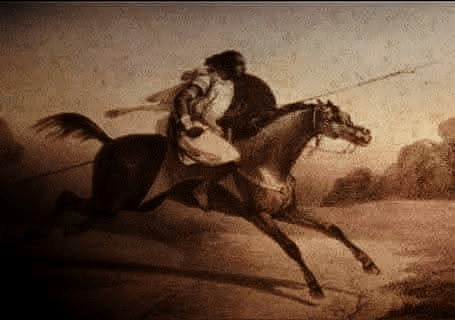
Remembering the Oromo Warrior Who Chose Resistance Over Submission
By Malkaamuu Taarikuu Amoosaa
(Asosa, August 11/2026)-In the oral traditions of western Oromia, few names command the reverence of Waacoo Dabaloo—a warrior whose defiance against the expansion of the Ethiopian Empire has become the stuff of legend. While his story remains largely unrecorded in formal histories, it lives on in the songs, proverbs, and collective memory of the Oromo people, particularly in the Jaarsoo district of East Wallagga.
A Lineage Rooted in Resistance
Waacoo Dabaloo was born in what is now the Jaarsoo district of East Wallagga Zone, a region known historically as “Citaa Akkumaa.” Today, the area lies approximately 525 kilometres west of Finfinne (Addis Ababa) and 103 kilometres west of Gimbi, the zonal capital. The district is bordered by Najjoo to the east, Baabboo Gaambel to the west, Gullisoo to the south, and Lataa Sibu to the north, covering an area of 491.6 square kilometres.
Waacoo Dabaloo belonged to the Sibuu clan of the Oromo people—a lineage that traces its origins to the Maccaa branch of the Oromo nation. The Sibuu are one of the seven sons of Daallee (or Daadhii), who was himself a descendant of the Oboo clan. This deep-rooted lineage gave Waacoo a profound connection to the land and people he would later defend.
The Context of Conflict
Waacoo Dabaloo came of age during the latter half of the 19th century, a period when Emperor Menelik II’s expansionist campaigns were sweeping through southern and western Oromia. This era was marked by brutal subjugation, land dispossession, and the systematic erasure of Oromo identity. While some local leaders chose to submit to the advancing forces, Waacoo Dabaloo stood firm.
The historical record suggests that Waacoo formed alliances with other prominent Oromo resistance figures, most notably Abiishee Garbaa of the Horro Guduru region. Together, they coordinated efforts to resist the encroaching empire, exchanging messengers and supporting each other during times of attack.
The Art of Guerrilla Warfare
What makes Waacoo Dabaloo’s resistance remarkable is that he fought without modern weaponry. Armed only with the traditional spear and shield, he employed guerrilla tactics—using his intimate knowledge of the forests and terrain of Jaarsoo and surrounding areas to launch ambushes and disappear before the enemy could retaliate.
Songs composed in his honour still echo in the region:
“Waacoon daggala galee,
Daggallikoo hin qabiniin.
Inni farda koomfatee,
Mootichi hin dhabamiin!”“Waacoo entered the forest,
He does not lack forest.
He led his horse forward,
The emperor will not find him!”
Another song praises his mount, a horse named Biichee:
“Mee fardaan dhufe jedhaa,
Biicheen Waacoo Dabaloo.
Gootni eeboo luqqisee,
Diinaaf laatu gadoo!”“They say he came on horseback,
Biichee, the horse of Waacoo Dabaloo.
The hero brandished his spear,
Brought death to the enemy!”
A Difference in Strategy
While some Oromo leaders, including a figure named Kuumsaa, chose to negotiate with Menelik’s forces—accepting titles and positions in exchange for submission—Waacoo Dabaloo refused. He saw such compromises as a form of enslavement.
“Paying tribute to the northern empire is servitude,” he is said to have declared. “We must not give away our ancestors’ land to anyone.”
His refusal to submit ultimately led to his capture through betrayal rather than defeat on the battlefield. Like many Oromo heroes, Waacoo Dabaloo was not conquered by force but brought down through deception—a pattern that echoes throughout Oromo history.
A Legacy Etched in the Land
Today, the memory of Waacoo Dabaloo is kept alive not only in song but also in the landscape. A hotel in Jaarsoo town, built by his descendants, bears his name as a testament to his enduring legacy. For the Oromo people, Waacoo Dabaloo represents the spirit of defiance—the refusal to submit to oppression, even at the cost of one’s life.
His story is part of a broader tapestry of Oromo resistance that includes figures like Waaqoo Guutuu, Aliyii Cirrii, and Bakar Waaree. Like them, Waacoo Dabaloo’s sacrifice reminds the current generation that freedom and dignity are worth fighting for.
Injifannoon Ummata Oromoo!
Gootummaa Waacoo Dabaloo haa jabaattu!
This feature article is based on oral histories and the reflections of Malkaamuu Taarikuu Amoosaa, dedicated to preserving the legacy of Oromo heroes.

More Than an Ancient Civilization: The Kingdom of Kush—A Powerful Empire of Land and Sea
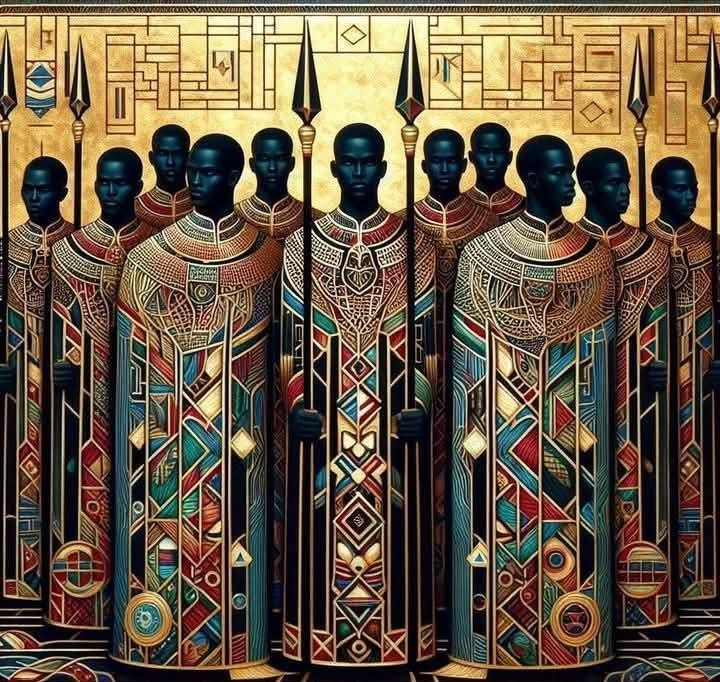
A people whose legacy challenges the very foundations of African history
When we speak of the great civilisations of antiquity, our minds often turn to Egypt, Greece, or Rome. But long before the Persian Empire rose to dominance, there existed in the heart of Africa a kingdom of extraordinary power, wealth, and sophistication—the Kingdom of Kush.
The Kingdom of Kush, with its three major cities of Meroe, Kerma, and Napata, emerged in the Nubian Desert south of Egypt along the Upper Nile River Valley from the 2nd millennium B.C. to the fourth century A.D. . For over a thousand years, Kush was a major power in the Nile valley, controlling an empire that at its height stretched from Central Sudan to the Mediterranean .
The achievements of this ancient civilisation challenge long-held beliefs that Egypt was the sole centre of advancement in the region. As renowned archaeologist Charles Bonnet’s excavations have revealed, Kush was not a mere vassal state of Egypt but a powerful and independent kingdom with its own distinctively indigenous culture . This sophisticated political state organised trade to the Mediterranean basin and built up a military strong enough to resist Egyptian forces .
The Black Pharaohs: A Legacy of Power
The Kushite rulers of Egypt’s 25th Dynasty, often referred to as the “Black Pharaohs,” represent a pivotal moment in the history of the Nile Valley. Emerging from the Kingdom of Kush at Napata in Nubia, these rulers not only unified Egypt after centuries of fragmentation but also reinvigorated pharaonic traditions .
The first major figure of this dynasty, King Piye, launched a campaign into Egypt during a period of political fragmentation known as the Third Intermediate Period. His Victory Stela records the subjugation of Delta rulers and proclaims his role as restorer of order . By 730 BCE, Piye had conquered Lower Egypt, establishing Kushite authority over both Upper and Lower Egypt .
The dynasty reached its zenith under Taharqa (690–664 BCE), whose reign is remembered for monumental building projects and ambitious foreign policy. Taharqa sponsored extensive temple construction at Karnak, Kawa, and Jebel Barkal, reinforcing his devotion to Amun and his claim to pharaonic legitimacy . He intervened in the Levant, supporting coalitions against Assyrian expansion, and is mentioned in both Biblical and Assyrian sources .
One of the most remarkable features of Meroitic civilisation was its powerful queens. The title “Candace,” meaning “sister,” was given to Kushite queens . Queens such as Amanirenas—who signed a peace treaty with the emperor Augustus—and Amanishakheto, whose treasure was looted in 1834, demonstrate the prominent role of women in Kushite society .
Kush: More Than a Footnote
The Kingdom of Kush was more than a civilisation; it was a power that commanded both land and sea. Kushite armies were formidable, and their military prowess allowed them to conquer and control Egypt itself . Kush also boasted a powerful navy, controlling trade routes along the Nile and beyond .
The economy of the ancient Kushites relied on trade in exotic African goods with Egypt and beyond. As middlemen, Kushite traders passed along ivory, ebony, incense, and other exotic goods from the South to the Egyptians, who then traded with other Mediterranean peoples . The city of Kerma, with its strategic location on the Nile River, controlled this crucial trade route .
Kush produced more gold than anywhere in the world at that time . Archaeologists have uncovered massive gold-processing operations at sites like Hosh el-Guruf, revealing the scale of Kush’s wealth . Minerals and high-quality stone were also mined for trade, and the Kushites introduced and developed iron metallurgy to the region .
A Sophisticated Society
The art and architecture of the Kushites reveal a sophisticated society of innovative craftsmen who constantly assimilated new artistic techniques from other lands . Notable architecture includes stone temple complexes such as the Lion Temple at Naqa and the steep-sided, solid pyramids found at Meroe and Jebel Barkal .
In fact, Sudan has more pyramids than all of Egypt—a testament to the grandeur of the Kushite civilisation . These tall, slender, graceful monuments bear witness to the lasting splendour of Kush .
Kushite art includes narrative tomb wall paintings and unique, eggshell-thin pottery with geometric patterns traded all over the Mediterranean . Stoic granite and bronze statues of gods and kings convey the religious beliefs of this ancient people .
The Question of Cush
The name “Kush” has been connected since at least the time of Josephus with the biblical character Cush, son of Ham (Genesis 10:6). Ham had four sons: Cush, Put, Canaan, and Mizraim (Egypt) . According to the Bible, Nimrod, a son of Cush, was the founder and king of Babylon, Erech, Akkad, and Calneh .
The Cushitic-speaking peoples, who are the ethnolinguistic groups speaking Cushitic languages natively, are today found primarily in the Horn of Africa, with minorities in Egypt, Sudan, Kenya, and Tanzania . Proto-Cushitic was spoken on the Ethiopian Highlands by 5000–4000 BC .
A Civilisation Worthy of Recognition
The Kingdom of Kush is not merely a footnote in the history of Africa—it is a testament to the power, ingenuity, and resilience of the peoples of the Nile Valley. As the American Journal of Archaeology notes in its review of The Nubian Pharaohs of Egypt, the term “Black Pharaohs” has sometimes been used to market exhibits, but the historical significance of Kush extends far beyond its interaction with Egypt . Sudanese colleagues and community members rightly resent the idea that the kings of ancient Sudan are only important because they ruled over Egypt . The Kingdom of Kush deserves to be remembered on its own terms.


A Reflection on Courage, Unity, and the Power of Truth
Honouring the Voices That Speak for the People’s Will
By Meseret Daba Kene
There are moments in the life of a nation when silence is not an option. There are times when the weight of history, the suffering of generations, and the hope of the future demand that we speak—clearly, boldly, and without fear. And when someone rises to that occasion, we must recognize them, honour them, and stand with them.
A Voice That Cannot Be Silenced
In the ongoing struggle for justice and self-determination, some voices stand out not because they are loud, but because they are true. I am thinking of figures like Aadde Sa’aadaa Abdurahamaan and others in the Caffee Oromiyaa who have spoken with courage and conviction about the question of Finfinne and the will of the Oromo people.

They have stood at the forefront, speaking truth to power, expressing the dreams and aspirations of a people who have been marginalized, dispossessed, and silenced for generations. They have not wavered. They have not been intimidated. They have spoken with the clarity of those who know that the truth is on their side.
And for that, we are grateful.
“Yoo dubbadhu jettan kaa,” —when they chose to speak, they spoke not for themselves, but for the millions who have no voice, for the ancestors who sacrificed, and for the generations yet to come.
The Will of the People
What has been expressed by these brave individuals is not a personal opinion—it is the will of the people. It is the collective desire of a nation that has been denied its rightful place in history. It is the demand for justice, dignity, and recognition.
When they spoke about Finfinne, they spoke about the heart of Oromia—a city that was built on Oromo land, a city that holds the blood and bones of Oromo martyrs, a city that must be recognized as an integral part of Oromo identity.
They expressed the will of the people with such conviction that it left us in awe—not of their words, but of their courage. And we must not let that courage go unrecognized. We must not let that truth be silenced.
The Foundation of Unity
The unity of the Oromo people is not something to be taken for granted. It is built on the foundation of truth, justice, and mutual respect. When we stand together, we are unstoppable. When we speak with one voice, we cannot be ignored.
This is why the work of those who speak for the people is so important. They remind us that we are not alone. They remind us that we have a collective destiny. They remind us that our strength lies in our unity.
“Waan hundi gaarummaaf ta’e!” —everything that happens is for the greater good. Even the challenges we face, the struggles we endure, and the sacrifices we make are all part of a larger purpose: the liberation and prosperity of our people.
A Future of Peace and Prosperity
There is no doubt in my mind that the future of our people is bright. The road may be long and difficult, but the destination is certain. Peace, security, and prosperity will come to our people—not as a gift from others, but as a result of our own efforts, our own unity, and our own determination.
“Nagaan, tasgabbii fi badhaadhinni biyyaafi saba keenyaaf ni ta’a!” —peace, security, and prosperity will be ours.
This is not a naive hope. It is a conviction born of history, experience, and faith. It is a belief that justice will prevail, that truth will triumph, and that the will of the people cannot be defeated.
The Power of Gratitude
In the midst of struggle, it is easy to focus on the difficulties—the losses, the pain, the setbacks. But we must also remember to be grateful. Grateful for those who have stood up for us. Grateful for those who continue to fight. Grateful for the unity that sustains us.
“Hundi keessanu galatoomaa” —thank you all.
Thank you to the leaders who have spoken truth to power. Thank you to the activists who have kept the flame of resistance alive. Thank you to the ordinary citizens who have refused to give up hope. Thank you to the ancestors who paved the way.
A Final Reflection
The struggle for justice is not a sprint—it is a marathon. There will be setbacks. There will be disappointments. There will be moments of doubt. But we must never lose sight of the goal: a free, just, and prosperous Oromia.
Those who have spoken out, who have risked their freedom and their lives for the cause of our people, are our heroes. They are the pillars upon which our future will be built. They are the architects of our liberation.
Let us not forget them. Let us not forget their sacrifice. And let us not forget the truth they have spoken.
Injifannoon Ummata Oromoo!
Nagaan fi tasgabbii haa jabaattu!
Hundi keessanu galatoomaa!
This reflection is dedicated to Aadde Sa’aadaa Abdurahamaan and all those who have dared to speak the truth on behalf of the Oromo people. Your courage inspires us, and your sacrifice will never be forgotten.

Irreecha: A Day of Thanksgiving and Renewal for the Oromo People

By Dhabessa Wakjira
Introduction: A Celebration Like No Other
As the golden hues of the Ethiopian spring—known as Birraa—begin to blanket the landscape, a profound spiritual and cultural awakening stirs across Oromia. This year, the 2018 Irreecha festival, celebrated on September 24th at Hora Finfinne and September 25th at Hora Arsadee-Bishooftuu, carries a particularly resonant theme: “Irreecha: Olka’iinsa Biyyaatiif” (Irreecha: For the Elevation of the Nation). Following a sacred itinerary, the Council of Oromo Gadaa Elders has announced the events will be observed consecutively, beginning with morning rituals.
This year’s Irreecha stands apart, marking a triumphant return to tradition after a long night of cultural suppression. The proclamation of the Oromo Cultural Renaissance, coinciding with the blessing of the Great Ethiopian Renaissance Dam (GERD), adds a layer of double joy and profound national significance. The very air hums with the promise of renewal.
The Soul of a Nation: Culture as Identity
Culture is the radiant mirror of a people’s soul. It is through their customs, rituals, and traditions that a community reveals its unique character to the world. For the Oromo people, one of the largest nations in the Horn of Africa, culture is not merely a collection of artifacts but the living fabric of daily existence.
The Oromo possess a rich cultural tapestry, interwoven with the rhythms of their environment. Their traditions—from the sacred union of marriage and the art of traditional attire to the intricate wisdom of the Gadaa system—all reflect a deep, symbiotic relationship with the land and the cosmos. Central to this worldview is a profound reverence for Waaqa (God), the Creator.
For centuries, Oromo life was guided by a seamless integration of work, social structure, governance, and spirituality. This harmony was, however, violently disrupted from the era of Emperor Menelik II through the oppressive Derg regime. The Oromo people endured systematic marginalization, their identity and cultural practices suppressed. Their language, customs, and even their names were targets of state-sanctioned denigration.
Yet, like the resilient birbirsaa plant that thrives after the rains, the Oromo spirit endured. The fall of the Derg in 1991 and the subsequent constitutional recognition of the Oromo language and culture heralded a new dawn. A people once forced into the shadows of history could now reclaim their heritage in the full light of day.
Waaqeffanna: The Oromo Spiritual Tradition
At the heart of Oromo identity lies Waaqeffanna, the indigenous belief system. The Oromo have been custodians of a monotheistic faith since time immemorial, believing in a single, omnipotent Waaqa who is the sole Creator of the universe.
Unlike other systems, Waaqeffanna does not worship idols or intermediary deities. It is a direct, personal connection between the worshipper and the Creator. The Oromo believe that Waaqa is the source of all life and power, and that this power manifests through the natural world. The rivers, mountains, trees, and lakes are not gods themselves but sacred creations through which Waaqa’s majesty is revealed.
This philosophy is elegantly expressed through Irreecha, the ultimate act of thanksgiving and spiritual communion. The elders teach that Irreecha is simply “giving thanks to the one God.” It is the pinnacle of Oromo religious and cultural expression, a testament to the enduring faith of a people in the face of adversity.
The Seasons of Life: Why Irreecha is Celebrated
To understand Irreecha, one must understand the Oromo calendar and the life-giving cycle of the seasons. Following the long, harsh rains of the Ganna (winter) season, the landscape transforms. Mighty rivers swell, roads turn to impassable mud, and communities are often separated. Nature, in its raw power, hibernates.
Then comes Birraa, the spring season. The rains recede. The sky clears to a brilliant blue. The mud dries, opening pathways. The once-dormant earth erupts in a spectacular bloom of yellow, white, and purple flowers. The oyiruu (crops) transform from green foliage to golden, life-sustaining grain. This is the season of hope, rebirth, and abundance.
It is in this moment of transition, from the darkness of winter to the light of spring, that the Oromo offer Irreecha. It is a heartfelt “thank you” to Waaqa for guiding them through the difficult months and for bestowing the first fruits of the harvest. It is a powerful acknowledgment of the divine order that governs existence.
“Baga Booqa Birraa geessan!” — “Welcome, the freshness of spring!” is the joyful greeting of the season.
Two Hallowed Places: Irreecha Tulluu and Irreecha Malkaa
The Irreecha rituals are held in two distinct settings, each reflecting a different phase of the spiritual and agricultural cycle.
Irreecha Tulluu (Irreecha of the Mountain)
As the dry season (Bona) takes hold, the land becomes parched, and water sources dwindle. The elderly of the community, acting on ancient knowledge, would gather at a designated highland—a Tulluu—believed to be closer to the divine. Here, they would raise their hands to the sky, beseeching Waaqa for rain. Their prayers, steeped in the wisdom of the Cushitic cosmological tradition, seek to restore the balance of nature and ensure the renewal of life.
Irreecha Malkaa (Irreecha of the River)
This is the main event. Held at the outset of Birraa around mid-September, Irreecha Malkaa is a vibrant, joyous, and public festival. The Oromo gather at the banks of rivers, lakes, or springs—places where the life-giving water is most tangible.
For this occasion, the community dresses in their finest traditional attire. The men wear colorful Wandaboo (shoulder cloths) and carry traditional weapons or staffs, while the women don elegant, flowing gowns and adorn themselves with intricate hairstyles and beaded jewelry, known as Calallee. The youth, particularly the Kormoomsaa (young warriors), move through the crowd, sprinkling people with fresh water, a gesture of cleansing and blessing.
At the appointed time, the Abbaa Gadaa (the Gadaa leader) and elders lead the procession. They carry the sacred Bokkuu (staff of office), Margaa (leaves of peace), and Callacha (ceremonial container). Chanting the sacred mantra “Maareewoo, Maareewoo!”—a powerful invocation of the divine—the throng moves toward the water’s edge.
Water is dipped from the river and touched to the forehead. This act signifies purification and a prayer for longevity and prosperity. The air fills with the sound of devotional songs and prayers.
“Obiin, kunni, malkaa nu gaha, ya Waaqa, nu eebbisi!” (Leader, take us to the river, O God, bless us!)
Irreecha Finfinne and Bishooftuu: The Heartbeat of the Festival
While Irreecha is celebrated across Oromia, the largest and most significant gatherings take place in two locations.
Hora Finfinne (Lake Finfinne), in the heart of the capital, is a site of profound historical significance. For decades, under oppressive regimes, public celebrations were banned. Holding Irreecha in Finfinne is a powerful act of reclaiming space and identity.
Hora Arsadee-Bishooftuu in the city of Bishooftuu is another major center. This location is famed for its beautiful, natural landscape. The specific gathering spot is near a sacred body of water believed to be a site of ancient Oromo worship. The historical figure Harsadi, of the Liiban clan, is associated with this lake.
In recent years, the scale of these gatherings has been staggering. It is estimated that over four million people attend the main Irreecha in Bishooftuu, making it one of the largest annual gatherings of people on the African continent. International media, including the BBC, Al Jazeera, and CNN, have taken note, broadcasting the awe-inspiring images of hundreds of thousands of people dressed in a vibrant sea of colors, moving with purpose and joy.
The day is a total immersion in culture and community. After the prayers and rituals, families and friends return home to share a meal of traditional dishes and freshly brewed Bunaa (coffee). The atmosphere is one of profound peace and unity.
A Culture Reborn
This year’s Irreecha is more than a religious ceremony; it is a powerful statement of cultural resilience. The revival of Irreecha after years of suppression represents a people reconnecting with their spiritual roots, reclaiming their heritage, and looking towards the future with hope.
The Oromo are announcing to the world that their culture, with its deep-rooted values of democracy, community, and spirituality, is not a relic of the past but a vibrant force for the present and future. Irreecha stands as a testament to the enduring spirit of a nation that has overcome immense challenges and continues to celebrate life, faith, and unity with unparalleled passion and dignity.
Deebi’uu: As the sun sets on the banks of Hora Arsadee, the echoes of “Maareewoo” fade into the cool evening air. The Oromo people have once again fulfilled their covenant of thanksgiving, carrying in their hearts the promise of a bright and prosperous future.


The Price of Silence: A Reflection on Inaction and the Tragedy of Our People

We Knew This Was Coming — Yet We Chose to Stay Silent
By Koste Abdiisaa
If we had shown even 1% of the outrage we have expressed over the past two days three, four, or five years ago—when Fano killed hundreds of innocent Oromos in Kiramu, Hagamsa, Amuru, Alibo, Jardega-Jartee, and elsewhere—perhaps these killings would not have happened.
We knew this was coming. The signs were everywhere. The warnings were clear. Yet we chose to remain silent. We chose to look away. We chose to believe that the storm would pass us by.
But storms do not pass by those who refuse to prepare. They break over them.
The Warning Signs We Ignored
For years, the enemies of the Oromo people have been methodically preparing for this moment. While we argued among ourselves, they were opening training camps in our backyard. While we engaged in name-calling and petty divisions, they were building security structures and training hundreds of people to carry out their plans.
We saw it happening. We heard the reports. We knew that innocent farmers—our farmers—were being killed in Kiramu, Hagamsa, Amuru, Alibo, Jardega-Jartee, and countless other places. And what did we do?
We expressed outrage on social media. We posted our anger, shared our grief, and then went back to business as usual.
Our collective inaction allowed this to continue. Our silence gave them permission to proceed. Our failure to act was an invitation for more violence.
The Consequences of Inaction
This is not about hindsight. This is about foresight—and our failure to use it. We cannot pretend that these killings were unexpected. We knew what was coming. We had every warning. But we failed to act.
And now, the consequences are here.
The killing of our innocent farmers is not just a tragedy—it is a judgment on our collective failure to protect our own. It is the result of years of political naivety, misplaced priorities, and a refusal to confront the reality of the threat we faced.
We were good at crying after the fact. We were good at expressing outrage on social media after tragedies happened. But we were very poor at recognizing threats early on, listening to those who recognized them, and preparing ourselves to face them.
The Deeper Outrage
Like many of you, I am outraged by the killing of our innocent farmers. But I am even more outraged by our inaction—our lack of political awareness, our failure to recognize and respond to such cruelty for so long.
What is even more troubling is that some of our so-called political entities—those who claim to speak for us—continue to seek alignment with those responsible. They act as if there is still some humanity left in them to appeal to. They still hope for dialogue with those who have shown, time and again, that they have no interest in peace, only in domination.
This is not leadership. This is delusion.
And we, as a people, have allowed it. We have allowed ourselves to be led by those who refuse to see the enemy for what they are. We have allowed ourselves to be distracted by petty divisions while our people are being slaughtered.
The Beginning, Not the End
Let us not pretend that this is the end. This is the beginning. The attacks will continue. The killings will escalate. And if we do not act now—with unity, determination, and clarity—the tragedies we see today will seem small compared to what is coming.
I fear that we may still fail to act in a timely manner. I fear that we will continue to cry and express outrage for a week, and then return to normal life. I fear that we will continue to do what we seem to be good at: mourning after the fact, but never preparing for what lies ahead.
A Call to Look Within
If this senseless killing of our people does not make us angry enough to question our collective inaction, then perhaps we need to look within ourselves and ask: What kind of society have we become?
Have we become a people who only react after the damage is done? Have we become a people who prioritize social media outrage over real action? Have we become a people who are more concerned with who is right than with what is right?
We must ask ourselves these questions. And we must answer them honestly.
The Path Forward
We cannot change the past. The blood that has been spilled cannot be unspilled. But we can change the future. We can act now—today—to ensure that these tragedies do not continue.
This requires several things:
- Unity: We must put aside our petty divisions and unite as a people. Our enemies are united; we must be even more united.
- Awareness: We must wake up to the reality of the threat we face. We must recognize the signs and act before it is too late.
- Action: We must support those who are willing to sacrifice and risk their lives to defend our people. We must build the structures and institutions necessary to protect ourselves.
- Accountability: We must hold our political entities accountable. We must demand that they prioritize the defense of our people over their own political ambitions.
- Resilience: We must be prepared for the long fight ahead. This is not a battle that will be won in a day. It requires patience, courage, and an unwavering commitment to our people.
Conclusion: Enough Is Enough
The killing of our innocent farmers is a crime against humanity. But our collective inaction is a crime against ourselves.
We cannot afford to continue down this path. We cannot afford to remain silent while our people are being slaughtered. We cannot afford to wait until the next tragedy to express our outrage.
Enough is enough.
Let us honor the memory of those who have been killed by resolving to act—not just with words, but with deeds. Let us build a future where our people are safe, our land is protected, and our dignity is restored.
Injifannoon Ummata Oromoo!
Nagaan haa jabaatu!
This reflection is dedicated to the innocent Oromo farmers who have lost their lives, and to all those who are determined to build a future of peace, justice, and security for our people.

The Kuni-Muktar Mountain Nyala Sanctuary: A Hidden Gem of Oromia
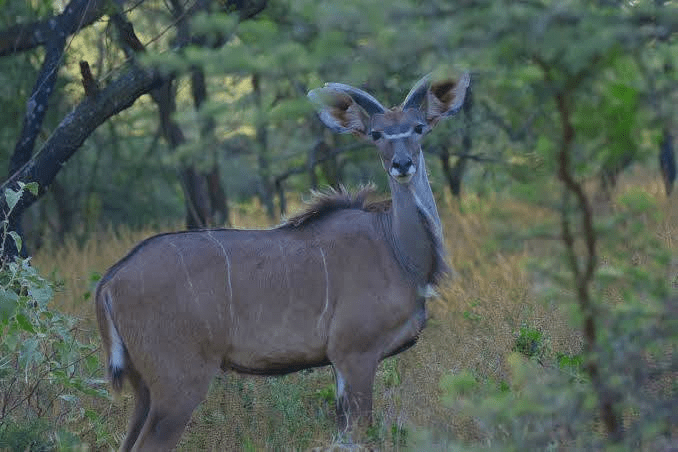
A Haven for Wildlife and Nature Lovers in East Hararghe
By Malbaa Olaanaa
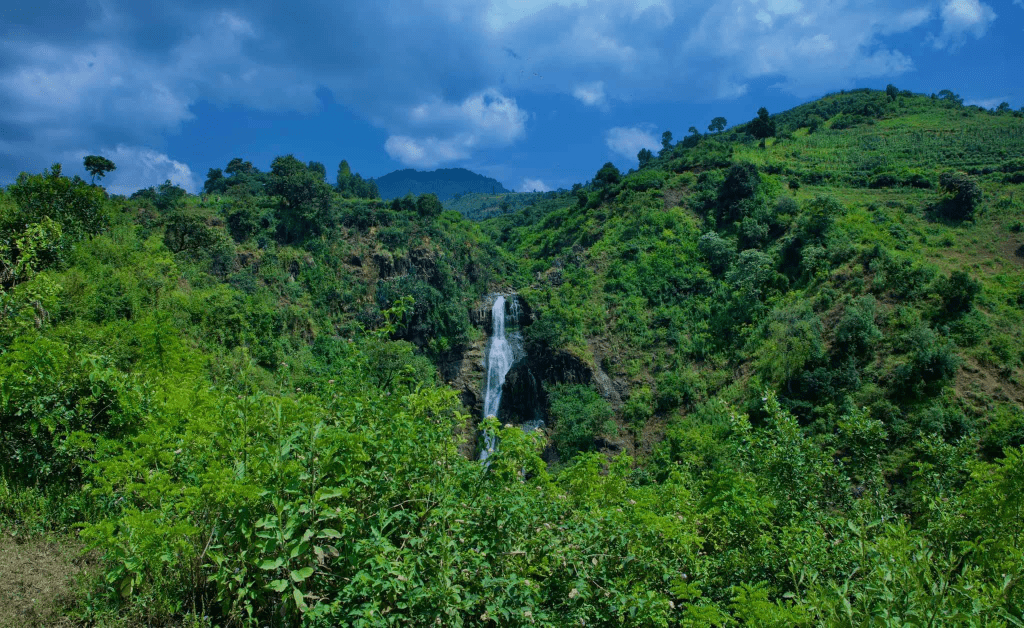
(ONA, Chiro, 13 August 2026)-Nestled in the breathtaking highlands of East Hararghe, near the town of Chiro, lies one of Oromia’s most remarkable natural treasures—the Kuni-Muktar Mountain Nyala Sanctuary. This protected area, established in 1989 to rescue the endangered mountain nyala from the brink of extinction, is a sanctuary not only for wildlife but also for the spirit of conservation.
A Sanctuary Born of Urgency
The Kuni-Muktar Sanctuary was created with a singular purpose: to protect the mountain nyala (Tragelaphus buxtoni), one of Ethiopia’s most iconic and endangered antelope species. The mountain nyala is endemic to Ethiopia, found only in the highlands of the country, and its population has been severely threatened by habitat loss and poaching.
In 1989, recognizing the urgent need to safeguard this majestic animal, the Ethiopian government established the sanctuary to provide a safe haven for the species. Today, the sanctuary covers an area of approximately 230 square kilometers, with altitudes ranging from 2,300 to 3,075 meters above sea level. The landscape is dominated by Afromontane forests, open grasslands, and dense thickets—a perfect habitat for the mountain nyala and other wildlife.
A Landscape of Beauty and Biodiversity
The Kuni-Muktar Sanctuary is a stunning example of Ethiopia’s natural beauty. The area is characterized by rolling hills, deep valleys, and lush vegetation that changes with the seasons. The Afromontane forests are home to a rich diversity of plant species, many of which are endemic to the region.
The sanctuary is also a haven for a wide variety of wildlife. In addition to the mountain nyala, visitors may encounter:
- Bushbuck
- Warthogs
- Olive baboons
- Colobus monkeys
- Spotted hyenas
- Leopards (rarely seen)
- A rich diversity of bird species
The sanctuary is a paradise for birdwatchers, with numerous endemic and migratory species calling the area home. The combination of stunning landscapes and abundant wildlife makes the sanctuary a must-visit destination for nature enthusiasts.
The Mountain Nyala: A Conservation Success Story
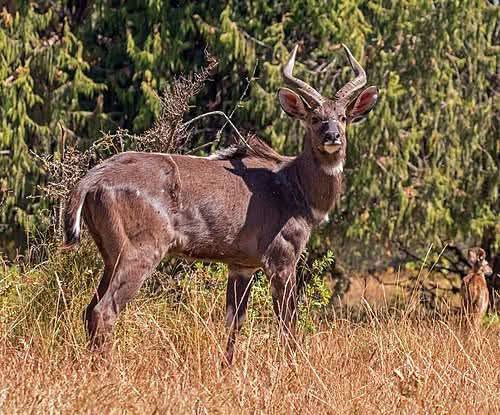
The mountain nyala is a symbol of Ethiopia’s unique biodiversity. This majestic antelope, with its spiral horns and striking markings, is one of the most sought-after species for wildlife enthusiasts. The establishment of the Kuni-Muktar Sanctuary has played a crucial role in the conservation of this species, providing a protected environment where the population can recover.
Efforts to protect the mountain nyala have been bolstered by community involvement and international conservation partnerships. Local communities have been engaged in conservation efforts, recognizing the importance of protecting the sanctuary for future generations.
A Destination for Nature Lovers
The Kuni-Muktar Mountain Nyala Sanctuary is not only a critical conservation area—it is also a stunning destination for those who appreciate nature. Visitors can explore the sanctuary’s diverse landscapes, enjoy the breathtaking views, and observe wildlife in their natural habitat.
The sanctuary offers opportunities for:
- Wildlife viewing
- Birdwatching
- Hiking and nature walks
- Photography
- Cultural tours in nearby communities
Challenges and the Path Forward
Despite its importance, the Kuni-Muktar Sanctuary faces ongoing challenges. Habitat encroachment, poaching, and climate change continue to threaten the delicate balance of the ecosystem. Additionally, limited resources and infrastructure pose challenges for effective management and conservation efforts.
However, the sanctuary represents a beacon of hope for conservation in Oromia and Ethiopia as a whole. By raising awareness, supporting conservation initiatives, and promoting sustainable tourism, we can help protect this incredible natural treasure for generations to come.
How to Visit
The sanctuary is located near the town of Chiro in East Hararghe Zone. Visitors can reach the sanctuary by road from major cities such as Finfinne (Addis Ababa) and Dire Dawa. The best time to visit is during the dry seasons (October to March), when the weather is pleasant and wildlife viewing is optimal.
Conclusion: A Treasure Worth Protecting
The Kuni-Muktar Mountain Nyala Sanctuary is a testament to the beauty and biodiversity of Oromia. It is a place where nature thrives, where endangered species find refuge, and where visitors can connect with the natural world in a profound way.
As we look to the future, it is our collective responsibility to protect this sanctuary and ensure that it remains a haven for wildlife and a source of inspiration for generations to come.
Qunnii-Muktar haa jabaattu!
This feature news is dedicated to all those working to protect Oromia’s natural heritage and preserve the beauty of the Kuni-Muktar Mountain Nyala Sanctuary.

The Silence Over Wollega: A Cry for the Voiceless in Ethiopia’s Forgotten War
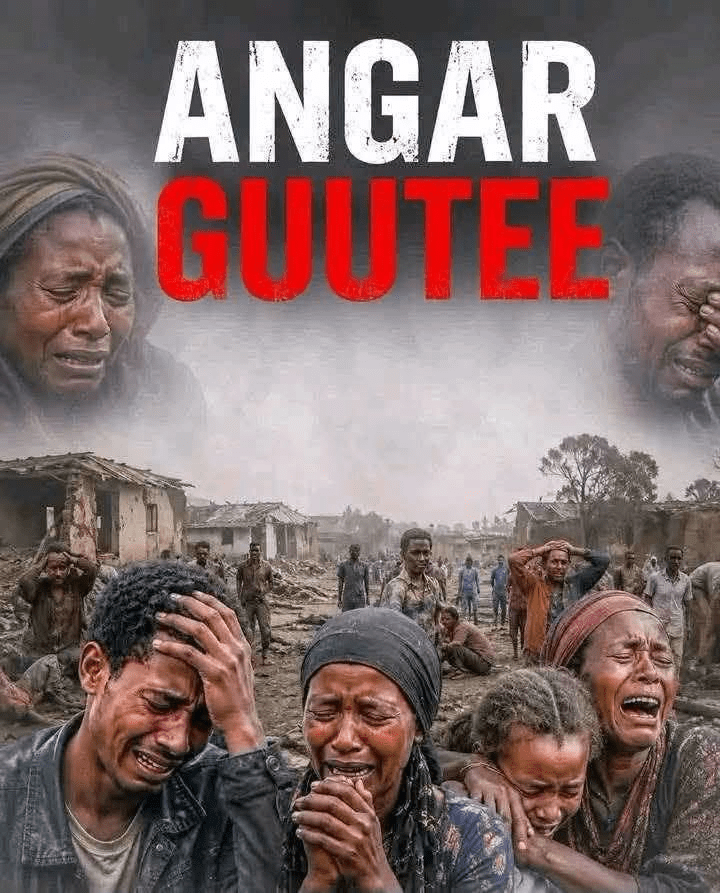
In the sprawling highlands of western Ethiopia, a humanitarian catastrophe is unfolding with alarming speed. The East Wollega Zone of the Oromia region has become a crucible of ethnic violence, where armed groups clash, and the conflict’s brutal arithmetic is calculated not in strategic gains, but in civilian bodies . As fighting intensifies, a dangerous fog of war has descended, making it nearly impossible to separate fact from propaganda. Yet, amid the chaos, one truth is devastatingly clear: it is the innocent civilians who are suffering the most.
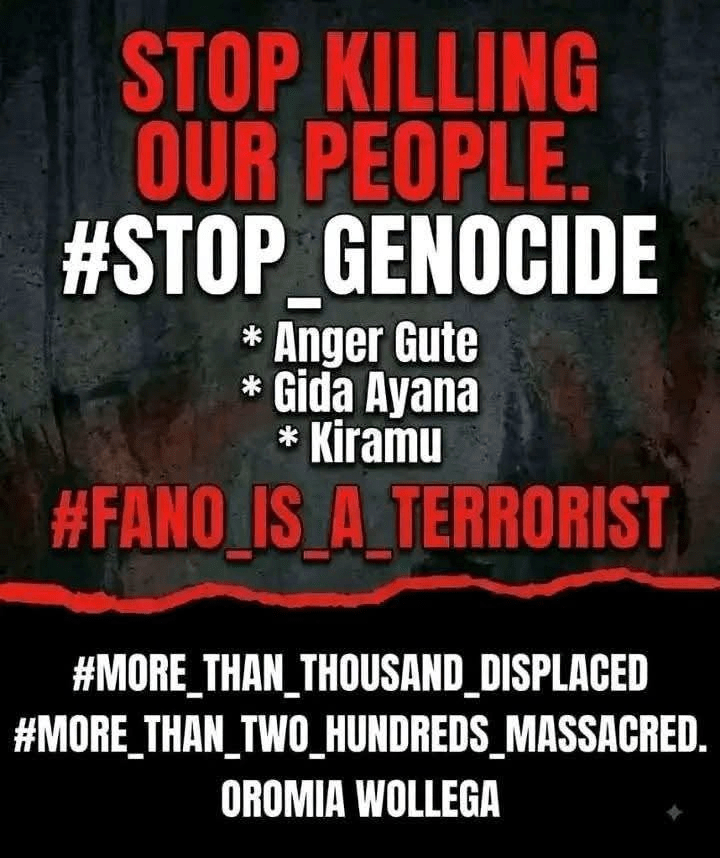
The atrocities have been staggering, with conflicting reports creating a confusing narrative. The Oromo Media Network (OMN) and Oromia News Agency (ONA)report, citing eyewitnesses, that 30 Oromo civilians were killed in recent attacks. Meanwhile, sources aligned with Fano counter that the Oromia Special Forces (OSF) are responsible for the deaths of 30 Amhara civilians. This deadly blame game, where both sides accuse the other of systematic slaughter, obscures a grim reality: entire communities are being erased, with homes torched and livestock stolen.
A Storm of Violence
The situation in East Wollega is defined by a complex and deadly ecosystem of armed actors. The Ethiopian National Defense Force (ENDF) is engaged in operations against the Oromo Liberation Army (OLA), which the government labels a terrorist group. However, the violence is compounded by the presence of the Fano militia, an Amhara nationalist force that has expanded its operations from the Amhara region into Oromia. The ENDF has even claimed that Fano and the OLA have coordinated attacks against government forces in the zone, a claim that, if true, suggests a shifting of alliances in an increasingly chaotic conflict.
Residents on the ground paint a picture of indiscriminate brutality. They describe attacks by Fano militants, who they accuse of going “from house to house” to shoot civilians, killing even a district court judge in his own home . Other accounts detail horrific acts of violence against Amhara civilians. A report by the BBC Amharic service documented a massacre in Gida Ayana Woreda, where residents blamed the Oromia Special Forces for killing 19 people and burning hundreds of homes . One survivor, a pregnant woman whose husband was killed in front of her, described the attackers saying, “Your children are the ones fighting the federal government. You support Fano”. This statement reveals a terrifying logic: civilians are being targeted not as individuals, but as members of an ethnic group deemed to be supportive of the enemy.
The Weaponization of Identity and History
This conflict is deeply rooted in historical grievances and land disputes. Over the decades, waves of Amhara settlers moved into Western Oromia, leading to long-standing tensions over land and political power . This has created an environment where armed groups can exploit ethnic identity for support, framing the violence as a struggle for liberation or territorial expansion. Fano’s actions are reportedly driven by an ideology that seeks to reclaim parts of Wollega as historically Amhara land, an expansionist goal that, critics argue, echoes dangerous nationalist myths seen in other global conflicts .
A Humanitarian Catastrophe Ignored
The numbers of displaced are staggering. The Dorcas aid organization reported that conflict in the East Wollega border areas has displaced over 22,000 people in a single wave of violence . These displaced families are fleeing to relative safety in towns like Debre Birhan in the Amhara region, often finding themselves living in crowded, unsanitary conditions with little access to food, water, or healthcare . In 2021 alone, more than 88,000 civilians were forcibly displaced from Western Oromia, a figure that has certainly grown in the years since .
The international response has been conspicuously muted. As the cry for help echoes from the highlands—”Where is the UN? Where is Human Rights Watch?”—the calls for justice and protection from civilians are met with silence . The victims, caught between warring factions, are pleading for the bravest journalists and human rights advocates to become their voices.
As one desperate resident lamented, “Are we not citizens? Why do we suffer from hunger and thirst? We’ve reached a point where we regret being alive” . It is a tragic testament to the failure of the international community to protect the most vulnerable.
—
The call for help from East Wollega is urgent. The world must not look away.

Prime Minister Abiy Ahmed Ali Celebrates the Energy and Potential of Young Ethiopians

By Abdi Milkessa
(Finfinne, 12 August 2026) -Ethiopia’s youth are not just the leaders of tomorrow—they are the architects of today. With the country’s demographic composition showing that young people make up the largest segment of the population, this is not merely a statistic—it is a tremendous opportunity to secure prosperity and lasting development for the nation.
Prime Minister Abiy Ahmed Ali has called on the youth to be the engine of change, the driving force behind transformation, and the solid pillars of Ethiopia’s sovereignty.
The Youth: A Force for Positive Change
In a recent message, the Prime Minister emphasized that Ethiopian youth are guided by noble goals and a clear vision for the future. They are the primary motor of transformation in our society—the unshakable pillars upon which the nation’s sovereignty rests.
Today’s youth are writing a new chapter in the history of Ethiopia. They have turned away from harmful legacies of the past—unproductive traditions, unnecessary rivalries, and destructive conflicts. Instead, they are focusing on development, progress, and the fight against poverty.
A Government Committed to Youth Empowerment
The “Prosperity Party” government is working with dedication and commitment to strengthen the comprehensive participation of youth in all spheres of life. The role of youth in leadership and decision-making is being reinforced, recognizing that the future of Ethiopia depends on the active engagement of its young people.
Key priorities include ensuring equal opportunities for all young people, strengthening youth leadership roles in governance and society, promoting comprehensive participation in economic, social, and political life, and building a nation where young people can thrive and contribute fully.
A Call to Action: Building Our National Vision Together
The Prime Minister has called upon all youth to engage actively in the development of our nation, to work with love and dedication for the prosperity of Ethiopia, to reject division and conflict while embracing unity and progress, and to embrace innovation and creativity to build a brighter future.
Conclusion: The Youth Are Our Hope
Ethiopia’s youth are the heartbeat of the nation, the hope of the future, and the strength of the present. Their energy, creativity, and commitment will shape the destiny of our people for generations to come.
Ethiopia Prevails!
Youth is Power!
Change is Now!
This feature article is dedicated to all the youth of Ethiopia—the architects of a brighter future!

Oromia Cannot Be Imagined Without Its Youth!

The Driving Force of Our Nation’s Future
By Daandii Ragabaa
Oromia’s youth are not just the leaders of tomorrow—they are the builders of today. The demographic reality of our people reveals a powerful truth: the youth constitute the largest segment of our population. This is not merely a statistic—it is a tremendous opportunity to secure freedom, prosperity, and lasting sovereignty for our nation.
The Oromo youth are the engine of change, the architects of a new dawn, and the unshakable pillars of our sovereignty!
The Youth: A Force for Positive Change
The young people of Oromia are writing a new chapter in the history of our nation. They are:
- Purpose-driven — Guided by noble goals and a clear vision for the future.
- Change-makers — The primary motor of transformation in our society.
- Sovereignty defenders — The solid pillars upon which our nation’s independence rests.
Today’s youth have turned away from the harmful legacies of the past—unproductive traditions, unnecessary rivalries, and destructive conflicts. Instead, they are focusing on development, progress, and the fight against poverty.

A Government Committed to Youth Empowerment
The government is working with dedication and commitment to strengthen the comprehensive participation of youth in all spheres of life. The role of youth in leadership and decision-making is being reinforced, recognizing that the future of Oromia depends on the active engagement of its young people.
Key priorities include:
- Ensuring equal opportunities for all young people.
- Strengthening youth leadership roles in governance and society.
- Promoting comprehensive participation in economic, social, and political life.
- Building a nation where young people can thrive and contribute fully.
A Call to Action: Building Our National Vision Together
Our national vision cannot be realized without the active participation of every young person. We call upon all youth to:
- Engage actively in the development of our nation.
- Work with love and dedication for the prosperity of Oromia.
- Reject division and conflict — embrace unity and progress.
- Embrace innovation and creativity — build a brighter future.
Conclusion: The Youth Are Our Hope
Oromia’s youth are the heartbeat of the nation, the hope of the future, and the strength of the present. Their energy, creativity, and commitment will shape the destiny of our people for generations to come.

Injifannoon Ummata Oromoo!
Dargaggootni Oromoo haa jabaatan!
Oromia haa jabaattu!
This feature article is dedicated to the youth of Oromia—the architects of a brighter future!

The Separation of Finfinne from Oromia: A Validation of Historical Injustice

Recognizing the Truth, Rejecting the Erasure of History
By Maatii Sabaa
Finfinne was not created as a city disconnected from the Oromo people. It was built on Oromo land, rooted in Oromo history, and shaped by Oromo identity. To deny this truth is not just a distortion of history—it is a continuation of the very injustice that has defined the relationship between the Oromo people and the Ethiopian state for over a century.
The Historical Reality That Cannot Be Erased
Finfinne is not a city that was separated from the Oromo people by accident or through natural progression. It was systematically taken through conquest, dispossession, and the deliberate erasure of Oromo identity.
For generations, the Oromo people have been subjected to:
- Land dispossession — The systematic removal of Oromo communities from their ancestral lands.
- Identity suppression — The denial of Oromo language, culture, and heritage.
- Political marginalization — The exclusion of Oromo voices from decisions that affect their lives.
- Systematic oppression — The use of state power to displace and silence the Oromo people.
These historical processes cannot be ignored. To present Finfinne as a city with no historical connection to Oromia is to erase the painful reality of what the Oromo people have endured.
Covering Historical Injustice with Political Decisions
The attempt to separate Finfinne from Oromia through political maneuvering is not a solution—it is an attempt to legitimize a historical wrong. Time does not make injustice just. Oppression does not become acceptable simply because it has been sustained over generations.
To separate Finfinne from Oromia today is to:
- Validate the displacement of Oromo communities from their ancestral land.
- Legitimize the erasure of Oromo identity and history.
- Deny the sacrifices of those who fought for justice.
- Perpetuate the cycle of marginalization and exclusion.
This is not justice. This is the continuation of a historical crime dressed in new political language.
The Cost of Injustice: Sacrifice and Struggle
The Oromo people have paid an immeasurable price for their connection to Finfinne. Countless lives have been lost. Generations have been imprisoned, exiled, and displaced. The struggle for justice has been marked by:
- Martyrs who gave their lives for the land.
- Political prisoners who endured torture and imprisonment.
- Refugees who were forced to flee their homeland.
- Communities that were systematically broken and scattered.
The central goal of this struggle has always been the restoration of rights, dignity, and justice. To ignore this sacrifice is to dishonor the memory of those who fought and died for what is rightfully Oromo.
A Call to Reject Historical Revisionism
The separation of Finfinne from Oromia is not a neutral administrative decision. It is an act of historical revisionism—an attempt to rewrite the past to serve political interests in the present.
Finfinne cannot be understood without Oromia. The city’s history, culture, and identity are inseparable from the Oromo people. To deny this is to deny the truth of history itself.
The Oromo people will not accept the erasure of their history. They will not accept the legitimization of their dispossession. They will not accept the rewriting of the past to serve the interests of the powerful.
The Truth Will Endure
History cannot be erased by political decisions. Sacrifice cannot be silenced by administrative decrees. Justice cannot be measured by bureaucratic convenience.
Finfinne is Oromo.
The truth of its history will endure.
The struggle for justice will continue.
Injifannoon Ummata Oromoo!
Finfinne haa jabaattu!
Seenaan Oromoo hin dagatamu!
This feature article is dedicated to all those who have sacrificed for the truth and justice of the Oromo people.





 Advocacy for Oromia