Daily Archives: August 15, 2026

The Legend of Waacoo Dabaloo: A Hero Who Defied an Empire
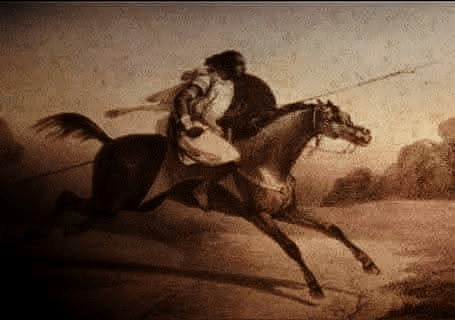
Remembering the Oromo Warrior Who Chose Resistance Over Submission
By Malkaamuu Taarikuu Amoosaa
(Asosa, August 11/2026)-In the oral traditions of western Oromia, few names command the reverence of Waacoo Dabaloo—a warrior whose defiance against the expansion of the Ethiopian Empire has become the stuff of legend. While his story remains largely unrecorded in formal histories, it lives on in the songs, proverbs, and collective memory of the Oromo people, particularly in the Jaarsoo district of East Wallagga.
A Lineage Rooted in Resistance
Waacoo Dabaloo was born in what is now the Jaarsoo district of East Wallagga Zone, a region known historically as “Citaa Akkumaa.” Today, the area lies approximately 525 kilometres west of Finfinne (Addis Ababa) and 103 kilometres west of Gimbi, the zonal capital. The district is bordered by Najjoo to the east, Baabboo Gaambel to the west, Gullisoo to the south, and Lataa Sibu to the north, covering an area of 491.6 square kilometres.
Waacoo Dabaloo belonged to the Sibuu clan of the Oromo people—a lineage that traces its origins to the Maccaa branch of the Oromo nation. The Sibuu are one of the seven sons of Daallee (or Daadhii), who was himself a descendant of the Oboo clan. This deep-rooted lineage gave Waacoo a profound connection to the land and people he would later defend.
The Context of Conflict
Waacoo Dabaloo came of age during the latter half of the 19th century, a period when Emperor Menelik II’s expansionist campaigns were sweeping through southern and western Oromia. This era was marked by brutal subjugation, land dispossession, and the systematic erasure of Oromo identity. While some local leaders chose to submit to the advancing forces, Waacoo Dabaloo stood firm.
The historical record suggests that Waacoo formed alliances with other prominent Oromo resistance figures, most notably Abiishee Garbaa of the Horro Guduru region. Together, they coordinated efforts to resist the encroaching empire, exchanging messengers and supporting each other during times of attack.
The Art of Guerrilla Warfare
What makes Waacoo Dabaloo’s resistance remarkable is that he fought without modern weaponry. Armed only with the traditional spear and shield, he employed guerrilla tactics—using his intimate knowledge of the forests and terrain of Jaarsoo and surrounding areas to launch ambushes and disappear before the enemy could retaliate.
Songs composed in his honour still echo in the region:
“Waacoon daggala galee,
Daggallikoo hin qabiniin.
Inni farda koomfatee,
Mootichi hin dhabamiin!”“Waacoo entered the forest,
He does not lack forest.
He led his horse forward,
The emperor will not find him!”
Another song praises his mount, a horse named Biichee:
“Mee fardaan dhufe jedhaa,
Biicheen Waacoo Dabaloo.
Gootni eeboo luqqisee,
Diinaaf laatu gadoo!”“They say he came on horseback,
Biichee, the horse of Waacoo Dabaloo.
The hero brandished his spear,
Brought death to the enemy!”
A Difference in Strategy
While some Oromo leaders, including a figure named Kuumsaa, chose to negotiate with Menelik’s forces—accepting titles and positions in exchange for submission—Waacoo Dabaloo refused. He saw such compromises as a form of enslavement.
“Paying tribute to the northern empire is servitude,” he is said to have declared. “We must not give away our ancestors’ land to anyone.”
His refusal to submit ultimately led to his capture through betrayal rather than defeat on the battlefield. Like many Oromo heroes, Waacoo Dabaloo was not conquered by force but brought down through deception—a pattern that echoes throughout Oromo history.
A Legacy Etched in the Land
Today, the memory of Waacoo Dabaloo is kept alive not only in song but also in the landscape. A hotel in Jaarsoo town, built by his descendants, bears his name as a testament to his enduring legacy. For the Oromo people, Waacoo Dabaloo represents the spirit of defiance—the refusal to submit to oppression, even at the cost of one’s life.
His story is part of a broader tapestry of Oromo resistance that includes figures like Waaqoo Guutuu, Aliyii Cirrii, and Bakar Waaree. Like them, Waacoo Dabaloo’s sacrifice reminds the current generation that freedom and dignity are worth fighting for.
Injifannoon Ummata Oromoo!
Gootummaa Waacoo Dabaloo haa jabaattu!
This feature article is based on oral histories and the reflections of Malkaamuu Taarikuu Amoosaa, dedicated to preserving the legacy of Oromo heroes.

More Than an Ancient Civilization: The Kingdom of Kush—A Powerful Empire of Land and Sea
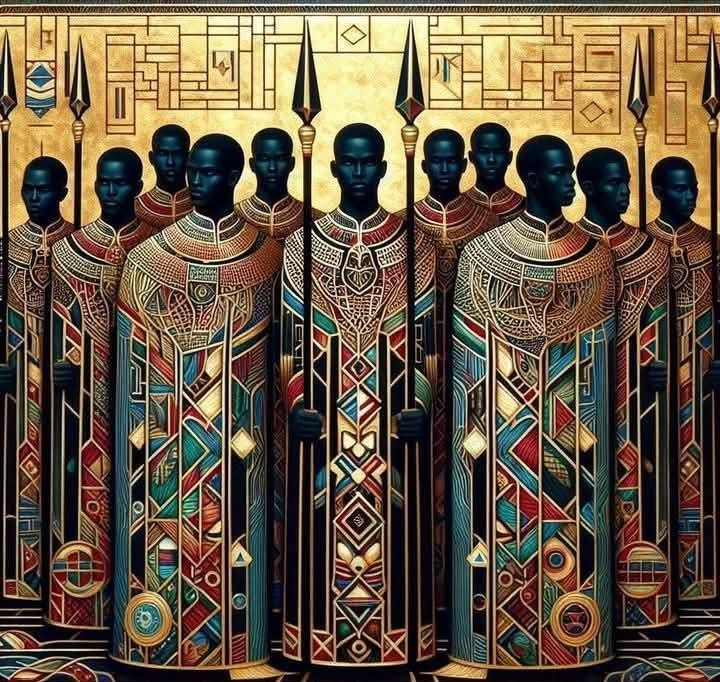
A people whose legacy challenges the very foundations of African history
When we speak of the great civilisations of antiquity, our minds often turn to Egypt, Greece, or Rome. But long before the Persian Empire rose to dominance, there existed in the heart of Africa a kingdom of extraordinary power, wealth, and sophistication—the Kingdom of Kush.
The Kingdom of Kush, with its three major cities of Meroe, Kerma, and Napata, emerged in the Nubian Desert south of Egypt along the Upper Nile River Valley from the 2nd millennium B.C. to the fourth century A.D. . For over a thousand years, Kush was a major power in the Nile valley, controlling an empire that at its height stretched from Central Sudan to the Mediterranean .
The achievements of this ancient civilisation challenge long-held beliefs that Egypt was the sole centre of advancement in the region. As renowned archaeologist Charles Bonnet’s excavations have revealed, Kush was not a mere vassal state of Egypt but a powerful and independent kingdom with its own distinctively indigenous culture . This sophisticated political state organised trade to the Mediterranean basin and built up a military strong enough to resist Egyptian forces .
The Black Pharaohs: A Legacy of Power
The Kushite rulers of Egypt’s 25th Dynasty, often referred to as the “Black Pharaohs,” represent a pivotal moment in the history of the Nile Valley. Emerging from the Kingdom of Kush at Napata in Nubia, these rulers not only unified Egypt after centuries of fragmentation but also reinvigorated pharaonic traditions .
The first major figure of this dynasty, King Piye, launched a campaign into Egypt during a period of political fragmentation known as the Third Intermediate Period. His Victory Stela records the subjugation of Delta rulers and proclaims his role as restorer of order . By 730 BCE, Piye had conquered Lower Egypt, establishing Kushite authority over both Upper and Lower Egypt .
The dynasty reached its zenith under Taharqa (690–664 BCE), whose reign is remembered for monumental building projects and ambitious foreign policy. Taharqa sponsored extensive temple construction at Karnak, Kawa, and Jebel Barkal, reinforcing his devotion to Amun and his claim to pharaonic legitimacy . He intervened in the Levant, supporting coalitions against Assyrian expansion, and is mentioned in both Biblical and Assyrian sources .
One of the most remarkable features of Meroitic civilisation was its powerful queens. The title “Candace,” meaning “sister,” was given to Kushite queens . Queens such as Amanirenas—who signed a peace treaty with the emperor Augustus—and Amanishakheto, whose treasure was looted in 1834, demonstrate the prominent role of women in Kushite society .
Kush: More Than a Footnote
The Kingdom of Kush was more than a civilisation; it was a power that commanded both land and sea. Kushite armies were formidable, and their military prowess allowed them to conquer and control Egypt itself . Kush also boasted a powerful navy, controlling trade routes along the Nile and beyond .
The economy of the ancient Kushites relied on trade in exotic African goods with Egypt and beyond. As middlemen, Kushite traders passed along ivory, ebony, incense, and other exotic goods from the South to the Egyptians, who then traded with other Mediterranean peoples . The city of Kerma, with its strategic location on the Nile River, controlled this crucial trade route .
Kush produced more gold than anywhere in the world at that time . Archaeologists have uncovered massive gold-processing operations at sites like Hosh el-Guruf, revealing the scale of Kush’s wealth . Minerals and high-quality stone were also mined for trade, and the Kushites introduced and developed iron metallurgy to the region .
A Sophisticated Society
The art and architecture of the Kushites reveal a sophisticated society of innovative craftsmen who constantly assimilated new artistic techniques from other lands . Notable architecture includes stone temple complexes such as the Lion Temple at Naqa and the steep-sided, solid pyramids found at Meroe and Jebel Barkal .
In fact, Sudan has more pyramids than all of Egypt—a testament to the grandeur of the Kushite civilisation . These tall, slender, graceful monuments bear witness to the lasting splendour of Kush .
Kushite art includes narrative tomb wall paintings and unique, eggshell-thin pottery with geometric patterns traded all over the Mediterranean . Stoic granite and bronze statues of gods and kings convey the religious beliefs of this ancient people .
The Question of Cush
The name “Kush” has been connected since at least the time of Josephus with the biblical character Cush, son of Ham (Genesis 10:6). Ham had four sons: Cush, Put, Canaan, and Mizraim (Egypt) . According to the Bible, Nimrod, a son of Cush, was the founder and king of Babylon, Erech, Akkad, and Calneh .
The Cushitic-speaking peoples, who are the ethnolinguistic groups speaking Cushitic languages natively, are today found primarily in the Horn of Africa, with minorities in Egypt, Sudan, Kenya, and Tanzania . Proto-Cushitic was spoken on the Ethiopian Highlands by 5000–4000 BC .
A Civilisation Worthy of Recognition
The Kingdom of Kush is not merely a footnote in the history of Africa—it is a testament to the power, ingenuity, and resilience of the peoples of the Nile Valley. As the American Journal of Archaeology notes in its review of The Nubian Pharaohs of Egypt, the term “Black Pharaohs” has sometimes been used to market exhibits, but the historical significance of Kush extends far beyond its interaction with Egypt . Sudanese colleagues and community members rightly resent the idea that the kings of ancient Sudan are only important because they ruled over Egypt . The Kingdom of Kush deserves to be remembered on its own terms.







