Category Archives: SBO

From Supplication to Power: The Unfinished Revolution of Empowerment
By Dhabessa Wakjira
There is a moment in every struggle, a tipping point that shifts the narrative from one of passive suffering to one of active agency. For many across the globe—from the rural villages of Oromia to the urban sprawls of the diaspora—that moment is captured in a powerful, defiant axiom:
“Waan nu godhan otuu hin taane, waan barbaadnu himachuu fi dhaadhessuu qabna. Kun empowerment theory dha.”
Translated from the Afaan Oromo, it means: “We are not what they make us; we have the power to ask for and get what we want. This is empowerment theory.”
This is not merely a statement; it is a declaration of intellectual and political sovereignty. It is the sound of a people moving from the margins to the center of their own destiny, guided by the principles of a theory that has reshaped social work, psychology, and community development worldwide.
The Core of the Theory: Rejecting the Script
At its heart, the statement dismantles the foundational myth of the “victim.” Empowerment theory, as pioneered by scholars like Julian Rappaport and Barbara Solomon, posits that problems are not located within individuals, but within the power structures that surround them.
The phrase “waan nu godhan”—”what they make us”—is a stark acknowledgment of systemic oppression. It names the elephant in the room: the historical, economic, and social forces that attempt to define a person’s limits based on ethnicity, gender, or class. To reject that label is the first act of liberation.
The theory argues that true change cannot be granted from the top down; it must be built from the bottom up. It shifts the focus from “fixing” people to providing them with the tools, resources, and confidence to navigate and challenge the systems that marginalize them.
The Art of Asking and Achieving: Himachuu fi Dhaadhessuu
The second part of the statement—“waan barbaadnu himachuu fi dhaadhessuu qabna” (we can ask for and get what we want)—is the action phase. In the context of empowerment, “asking” is not a sign of weakness. It is the strategic articulation of need. It is the demand for a seat at the table, the request for equity, and the negotiation for justice.
However, the theory recognizes that “asking” is not enough. The subsequent element—dhaadhessuu (achieving)—requires capacity building. It involves:
· Access to Information: Knowing your rights, understanding the bureaucracy, and demystifying the systems of power.
· Critical Awareness: The “conscientization” process described by Paulo Freire, where people analyze their social reality to understand the root causes of their oppression.
· Collective Action: Recognizing that individual empowerment is fragile, but community empowerment is resilient.
A Global Context, A Local Identity
While empowerment theory is a global framework, its application is deeply personal. For the Oromo people, a nation with a rich heritage but a history of political marginalization, this statement is a codified resilience.
It is the local farmer using modern agricultural techniques to break the cycle of dependency. It is the youth in the diaspora reclaiming their language and history. It is the mother organizing a cooperative to provide for her children, not through charity, but through enterprise.
Dr. Kene Gemechu, a sociologist specializing in Horn of Africa studies, notes, “This isn’t just about economic upliftment. It’s psychological decolonization. When you say, ‘I am not what you made me,’ you are reclaiming the narrative. Empowerment theory gives the vocabulary to that experience, validating that the struggle for agency is as important as the struggle for food.”
The Path Forward: From Theory to Praxis
The beauty of empowerment theory is that it is inherently a practice. It manifests in various forms:
· In Education: Curricula that reflect the culture and history of the students, rather than a foreign narrative.
· In Economics: Microfinance initiatives and cooperative models that give communities control over their capital.
· In Governance: Participatory budgeting and community policing that treat citizens as partners, not subjects.
The challenge, however, is systemic backlash. Empowerment is disruptive. It challenges those who benefit from the status quo. The struggle of dhaadhessuu (achievement) is often met with resistance, requiring an even greater resolve from the community.
Conclusion: The Loudest Voice
In the end, the theory has a simple, yet profound, conclusion: power is not a finite resource to be hoarded; it is an infinite resource to be generated.
The statement “waan nu godhan otuu hin taane” is a shield against despair. It is the refusal to internalize the lie of inferiority. And the call to “waan barbaadnu himachuu fi dhaadhessuu” is the sword of agency.
This is the essence of empowerment. It is not about asking for permission; it is about declaring your existence. It is the understanding that the voice of the people is louder than the silence of oppression.
As the Oromo proverb goes, “Namni of hin beekne, nama hin beeku”—”He who does not know himself, cannot know others.”
And those who know themselves, know their power. They know that they are not what they are made to be, but what they dare to become.

“DUGDA HIN DHUGATAN, HUNDA HIN DUBBATAN”: A Reflection on Truth, Struggle and Sacrifice in the Oromo Liberation Movement

By Adugna Kesso AduBoru/430
Introduction: The Weight of Untold Truths
There is an Oromo proverb that carries profound wisdom: “Dugda hin dhugatan hunda hin dubbatan” — “Do not drink from the back; do not speak from the back.” This saying warns against acting or speaking without full knowledge, without facing things directly. It calls for integrity, courage and a willingness to engage with truth head-on, rather than from behind or from a place of concealment.
In reflecting on the journey of the Oromo liberation struggle, this proverb takes on a deeper meaning. It reminds us that we cannot claim to understand the struggle, its sacrifices and its meaning, if we only observe it from a distance or speak about it without having lived it. True understanding comes from direct experience, from being in the midst of the fire, not from standing on the sidelines.
The Struggle Is the Teacher
Much has been written and spoken about the Oromo liberation movement. Some speak of it as outsiders looking in, analysing and categorising, as if it were a subject to be dissected in a laboratory. But those who have lived the struggle know that it cannot be reduced to theories or abstract discussions. As the reflection states: “Waan taanee fi goone hunduu waan itti amannee itti seenneedha” — everything we have endured and done, we entered into it with full belief and commitment.
The struggle is not a matter of taking sides superficially or speaking in ways that please different audiences. It is not about saying one thing here and another there. The “DIDDA MASTER PLAN” — the overarching strategy of resistance — is better understood when we speak about it directly rather than avoiding it. There is a gap between remembering and doing, between speaking about struggle and actually living it.
What We Have Seen and Endured
The reflection speaks powerfully of the experiences of those who have been at the heart of the liberation movement:
“Waan qabsoo keessatti nurra gahee fi argine garuu mataan isaa qabsoodha” — But what has befallen us and what we have seen in the struggle is the struggle itself. The struggle is not separate from the experiences; it is the very fabric of those experiences.
The question is asked with raw honesty: “Mana fincaaniirra taa’aa maaf nutti ajaa’e hin jedhamu” — Why should we be told to sit on the edge of a latrine? This is a reference to how Oromo people have been marginalised, pushed to the periphery of their own lands and treated as if they do not belong at the centre of their own history.
The reflection then poses a challenging question: “Gabrummaa morma nu gahe keessa osoo jirruu shiraan hidhamne, shiraan ajjeefamne yoo jenne eessa gabroomneree?” — If we say we were tied with ropes and killed with ropes while we were in the slavery that reached our necks, where were we free?
This is a profound acknowledgment of the reality of Oromo subjugation under Ethiopian imperial rule. It does not deny the suffering but places it in context: slavery and oppression did not happen only to others; they happened to us. And yet, even within that slavery, there were those who chose to sell themselves for personal gain and those who maintained their integrity.
Betrayal, Survival and Commitment
One of the most painful aspects of any liberation struggle is the reality of betrayal. The reflection does not shy away from this:
“Gabrummaa keessatti namoota gaggaarii osoo hin taane namoota nama gurguruu bira darbanii of mataa isaaniiyyuu faayidaa fi fedhiitti of gurguranii jiraataan danuu beekna” — In slavery, we know that there are not only good people, but also those who pass by selling others and even sell themselves for their own benefit and desires.
This is a honest reckoning with human weakness and the reality that not everyone who starts the journey finishes it. Some are bought with personal interests, with selfish desires, with the false promises of the enemy. They become informants, betrayers, those who dig holes for their own people.
But the reflection also honours those who remained steadfast:
“Gabrummaa fi gidiraa saba keenyarra gahu jibbanii warri qabsoo eegalan aarsaa fi wareegama gaafataman hunda hanga lubbuu isaanii itti kitimanitti kan qabsa’aan gufuun qabsoo keessatti osoo isaan muudatin hafee miti” — Those who hated slavery and oppression and began the struggle, offering all sacrifices and responsibilities until they gave their very lives, they are the ones who are the foundation of the struggle.
The Reality of Disunity
The reflection is also a warning about the dangers of division and betrayal within the movement:
“Qabsoo geggeessitu keessa akkuma firri qabsoo jiru diinoonni, gantootnii fi galtuun danuudha” — In the movement, there are enemies, traitors and those who sell out, just as there are true fighters.
This is not a cynical statement but a realistic one. The struggle is not a romantic venture. It is a battlefield where loyalties are tested and where some who begin with you will not finish with you. The reflection continues:
“Jaalli kee waliin qabsootti seente hundi hanga dhumaa na waliin deema jettee hin eegiin” — Do not expect that all your comrades who entered the struggle with you will go with you to the end.
Some will become weak and turn back. Some will reveal secrets out of exhaustion or fear. Some will be bought by personal interests and sell you out. And the hardest part: “Kan boolla si buusee, ragaa sitti ta’us irra caalaa namuma waliin qabsoo eegaltee fi waan hunda waliin taate” — The one who digs a hole for you, who becomes a witness against you, is most often someone you began the struggle with and shared everything with.
This is a painful truth that many liberation movements have faced. The greatest betrayals often come from those closest to us.
The Cost of Silence
The reflection then turns to a difficult but necessary observation:
“Amma nan gabaabsa gidiraa fi dararaa mooraa diinaa keessatti agarree fi shira adda addaa agarree fi warra kaan irra gahe hunda gabrummaatu fide” — I will summarise: the poverty, the hardship, the suffering, the various deaths, and everything that has befallen our people — all of it came from slavery.
This is the central thesis. The condition of the Oromo people under Ethiopian rule, with all its manifestations of dispossession, marginalisation, violence and economic exploitation, is rooted in a system that treated Oromia as a colony and the Oromo people as subjects to be dominated.
And yet, the reflection acknowledges that a choice has been made:
“Sana immoo Bilisummaa Saba keenyaatti uwwisuu fi Abbaa Biyyummaa Oromoo deebisuuf qabsoo eegalame xumura itti gochuuf ta’uu beeknee waan dubbachuu qabnu kumaatama dubbachuurra callisuu filanne” — But we have chosen silence, knowing that we must complete the struggle that began to liberate our people and restore the sovereignty of Oromia, rather than saying thousands of things that need to be said.
This is not a silence born of fear. It is a strategic silence, born of the understanding that the time for words has given way to the time for action. When the struggle is not yet won, words alone cannot achieve liberation.
The Courage to Speak Honestly
The reflection concludes with a powerful statement about the right to speak with authority:
“Hanga Leencoonni seenaa isaanii barreeffatanitti warruma leenca ajjeesetu leenca ofiin jedha” — Until the lions have their own historians, the story of the hunt will always glorify the hunter.
This is a call for Oromo people to write their own history, to tell their own stories, to ensure that the narrative of the struggle is not left to those who would distort or erase it. Those who actually kill the lion — those who do the work of liberation — are the ones who have the right to speak.
“QABSOON HANGA BILISUMMAAATTI!” — The struggle continues until freedom!
Conclusion: Truth-Telling as Resistance
The reflection of Adugna Kesso AduBoru/430 is a powerful contribution to the broader project of Oromo truth-telling. It does not offer an easy narrative. It does not romanticise the struggle or ignore its internal challenges. Instead, it offers a truthful account — one that acknowledges sacrifice, betrayal, suffering and hope.
The proverb “Dugda hin dhugatan hunda hin dubbatan” reminds us that truth-telling requires direct engagement. We cannot speak of the struggle without having drunk from its cup. We cannot understand liberation without having walked its path. We cannot honour the martyrs without being willing to continue what they began.
Oromo truth-telling is not about erasing or rewriting history. It is about finally telling more of it — from the voices of those who lived it, suffered for it and continue to fight for it. It is about ensuring that when the story of the Oromo struggle is told, it is told by those who were there, who saw, who endured and who chose to speak — not from the back, but from the front, with courage and honesty.
As Oromia moves towards a future of genuine freedom and reconciliation, it must do so grounded in truth — the kind of truth that does not turn away from difficult realities, that honours the sacrifices of the past and that commits to the completion of the struggle.
Bilisummaan Oromoo hin dhabamuu!
#OromooKuushGuddichaAfrikaa — The Oromo are the great backbone of Africa.

African Migrants Across South Africa Sound Alarm Over Escalating Violence, Economic Sabotage, and Systematic Intimidation

The Oromo and broader African diaspora face mounting threats from anti-migrant movements as ‘March 1 March’ and ‘Operation Dudula’ intensify nationwide
SOUTH AFRICA — Beneath the bustling streets of Johannesburg’s inner city, where the rhythms of pan-African commerce once thrived, a palpable fear now settles like an unwelcome fog. Across the nation, from the Cape Flats to the townships of Durban, African migrants who sought refuge and opportunity in the Rainbow Nation are now sounding an urgent alarm—their lives, their livelihoods, and their basic human dignity hang in the balance.
The crisis, while not new, has reached a critical precipice. African migrants, including thousands of Oromo refugees who fled political persecution in Ethiopia and other regions of the Horn of Africa, report being systematically targeted by organized anti-migrant movements. The groups operating under the banners of “March 1 March” and “Operation Dudula” have orchestrated campaigns that victims describe as coordinated efforts to economically cripple and physically intimidate foreign nationals.
‘We Came Seeking Safety’
For many Oromo migrants, the journey to South Africa began as a desperate flight from violence in their homeland. “I left Oromiya with nothing but the clothes on my back,” says Bontu, a mother of three who now runs a small tailoring business in Cape Town. “I came here believing in Ubuntu, the spirit of African unity. Now I lock my door and pray my children return from school alive.”
Bontu’s story is echoed across the country. Migrants who fled political instability, ethnic conflict, and economic collapse have found themselves facing a new nightmare—xenophobic violence that South African authorities have been slow to address.
Documentation of Widespread Violence
Representatives from affected communities have compiled extensive video evidence and firsthand testimonies documenting the severity of the crisis. The footage reveals disturbing scenes of organized brutality:
Economic Warfare and Property Destruction: In coordinated operations that appear strategically planned, businesses owned by African migrants have been systematically looted and destroyed. In Tembisa, Soweto, and other townships, foreign-owned shops have been reduced to smoldering shells. Vehicles have been set ablaze in broad daylight as onlookers record the destruction on their phones.
Organized Mob Violence: Victims describe targeted mass beatings and physical harassment. “They came in groups, armed with pangas and iron bars,” recounts Tadesse, an Oromo shopkeeper in Pretoria. “They didn’t ask for money. They wanted to destroy everything. They told us to ‘go back home.'”
Administrative Blockades and Intimidation: Even routine bureaucratic processes have become battlegrounds. Migrants report being subjected to threats and deliberate delays when attempting to renew residency permits or legal documentation—an essential process for maintaining lawful status in the country.
The Psychological Toll
Perhaps most devastating is the invisible wound—the psychological trauma inflicted upon entire communities. Parents across the nation have stopped sending their children to schools, fearing they may not return. Families remain confined to their homes, living in what victims describe as “continuous high anxiety.”
“My daughter asks why we can’t go to the park anymore,” says Bontu. “How do I explain to a seven-year-old that her skin, her language, her origins make her a target in a country that was supposed to welcome us all?”
Children who once dreamed of becoming doctors and teachers now live with nightmares of masked men breaking down their doors.
Operation Dudula: A Movement Under Scrutiny
Operation Dudula, which translates to “force” or “push back” in isiZulu, has positioned itself as a grassroots movement addressing legitimate concerns about unemployment and housing shortages in South African communities. However, critics argue the movement has crossed into dangerous territory by targeting vulnerable migrant populations rather than advocating for systemic solutions to the country’s deep-seated socioeconomic challenges.
March 1 March, another anti-migrant initiative, has similarly been linked to escalating tensions and violence against foreign nationals.
Both groups have denied accusations of xenophobia, maintaining they are addressing the strain that undocumented migration places on local resources. Yet the victims’ testimonies paint a different picture—one of organized intimidation targeting law-abiding residents who have contributed to their communities for years or even decades.
A Call to Action
Spokespersons from affected communities are distributing their documented evidence to international media outlets, civil society organizations, and human rights watchdogs. Their plea is clear: the South African government, law enforcement agencies, and the international community must act immediately to:
- Protect Vulnerable Populations: Deploy law enforcement to prevent further attacks and ensure perpetrators face consequences
- Uphold the Rule of Law: Ensure all residents, regardless of nationality, have equal access to legal protections and administrative services
- Address the Root Causes: Develop comprehensive strategies to address unemployment and service delivery challenges without scapegoating foreign nationals
- Promote Social Cohesion: Invest in community dialogue and education programs that counter xenophobic narratives
The Broader Context
South Africa has a complex history with migration. As the continent’s most industrialized economy, it has long attracted workers and entrepreneurs from across Africa. Yet recurring waves of xenophobic violence—in 2008, 2015, 2019, and now ongoing—have tarnished the nation’s reputation and contradicted its constitutional commitment to human dignity.
The Oromo diaspora, numbering in the thousands, represents a particularly vulnerable population. Having fled political persecution and ethnic conflict, many lack the robust social networks that might offer protection. They arrived with skills, determination, and hope—qualities that have enriched South African communities when given the opportunity.
An African Tragedy
As the sun sets over the continent, the irony is not lost on those caught in this crisis. African refugees who fled conflict zones, seeking safety within their own continent, now face violence from the very communities they sought to join.
“The dream of a united Africa feels very far away,” reflects Tadesse. “But I still believe. We must not let the actions of some destroy the vision of all. Our children deserve to inherit a continent of solidarity, not suspicion.”
The international community and African Union have mechanisms to address such crises—protocols on the protection of refugees, conventions on human rights, frameworks for continental solidarity. What remains to be seen is whether these instruments will translate into meaningful action before more lives are destroyed.
The Way Forward
South African civil society organizations have called for urgent dialogue between migrant communities, government representatives, and local leaders. Some municipalities have begun establishing community forums to address tensions constructively.
Human rights lawyers are preparing legal challenges against the most egregious violations, while grassroots peacebuilding initiatives work to rebuild trust between South African residents and their migrant neighbors.
Yet time is of the essence. The violence continues, the fear deepens, and the economic damage mounts. For every day that passes without meaningful intervention, more families are displaced, more livelihoods destroyed, and more children grow up in a world where “foreigner” has become synonymous with “target.”
A Shared Humanity
As one Oromo elder noted during a community meeting in Johannesburg, “We have forgotten that we are all African. The borders that divide us were drawn by colonial powers who wished to keep us fighting each other. Our strength lies in remembering our shared humanity.”
The crisis facing African migrants in South Africa is not merely a matter of domestic policy—it is a test of the continent’s commitment to the principles of pan-African unity and solidarity. How South Africa responds to this moment will send a message far beyond its borders.
In the meantime, families continue to lock their doors, children remain home from school, and communities pray for a dawn that brings not fear, but hope.

The Unwritten Code: Why Word Order Holds the Key to Oromo Identity

By Dhabessa Wakjira
In a world increasingly dominated by linguistic homogenization, the quiet persistence of grammatical structure might seem like an esoteric concern for academics and purists. But in Ethiopia, a battle for cultural identity is being waged not on battlefields, but in the subtle ordering of nouns and adjectives. For the Oromo people, the rule “maqaa dursee, ibsituu gala”—placing the noun before the adjective—is not merely a stylistic quirk. It is a declaration of intellectual sovereignty.
A Language’s Silent Logic
Consider the geography of the Oromo homeland. We speak of Oromiyaa Lixaa (Western Oromia), Oromiyaa Bahaa (Eastern Oromia), Oromiyaa Kibba Bahaa (Southeastern Oromia), and Oromiyaa Giddugalaa (Central Oromia). The pattern is unmistakable: the subject—the nation itself—comes first. Its attributes, its regions, its descriptions follow. This is the bedrock of Afaan Oromo syntax.
Yet, this natural rhythm is under siege. The dominant linguistic forces in the region—Amharic and English—operate on an inverse logic. In English, one says “Western Oromia” (adjective + noun). In Amharic, the structure is Mirab Oromiyaa (Adjective + Noun). When speakers of these languages apply their grammatical framework to Oromo, the result is a linguistic Frankenstein: Lixaa Oromiyaa instead of Oromiyaa Lixaa.
Beyond Grammar: A Question of Respect
For Habtamu Boru, a linguist at Addis Ababa University, this is more than a grammatical faux pas. “Language is the blueprint of thought,” he argues. “When you alter the word order of a language, you are not just making a grammatical error; you are attempting to rewrite its cognitive DNA. The Oromo mind identifies the entity first—the nation, the person, the object—and then considers its qualities. To reverse that is to impose a foreign way of seeing the world.”
This becomes glaringly evident when we look at proper naming conventions. The historically and linguistically correct forms are:
· Arsii Bahaa (Eastern Arsi)
· Gujii Lixaa (Western Guji)
· Harargee Bahaa (Eastern Hararghe)
· Shawaa Lixaa (Western Shewa)
· Wallaggaa Bahaa (Eastern Wallagga)
When these are inverted—Bahaa Arsi or Lixaa Gujii—they cease to be authentic Oromo expressions. They become colonial imitations, betraying the speaker’s unfamiliarity with the soul of the language.
Why It Matters in 2026
As of 2026, Afaan Oromo is one of the most spoken languages in the Horn of Africa, with tens of millions of speakers. It is the working language of the Oromia Regional State and is increasingly used in education and media. Yet, the infiltration of foreign syntactic structures poses a silent threat.
The danger is insidious. Children learning Afaan Oromo in urban centers often adopt the adjective-first structure, mistaking it for modernization or fluency. The media, swayed by translation conventions from English and Amharic news sources, increasingly broadcast geographic and descriptive phrases that violate the core rule.
A Call to Linguistic Arms
The call to “Hordofuun Barbaachisaa Dha” (It is necessary to follow) is not about rigid prescriptivism. It is about preservation. It is a plea to remember that language is not a mechanical tool for communication; it is a vessel for history, for worldview, for dignity.
When we say Biyya Keenya (Our Country) and not Keenya Biyya, we affirm that the country belongs to us, not the description to the country. When we say Namuma Gaarii (A Good Person) and not Gaarii Namuma, we affirm that the person precedes their qualities.
As the Oromo proverb goes, “Afaan namatti haasa’uu akka ofii isaati”—speak to people in their own language. And to speak to the Oromo truly is to place their noun before the adjective.
The Path Forward
The solution lies in vigilance. Parents must correct their children. Educators must emphasize this rule alongside vocabulary. Media houses must hire competent editors who understand the structural integrity of Afaan Oromo. Most importantly, non-native speakers must recognize that adopting this rule is a gesture of respect, an acknowledgment that they are engaging with a culture that has its own logic, its own beauty, and its own way of ordering the world.
The rule is simple: Maqaa dursee, ibsituu gala. The noun first, the adjective follows. It is the key to a grammar, but it is also the key to a culture.
It is time to unlock it.

The Personal Cost: What Participation Really Means in the Oromo Struggle
By Daandii Ragabaa
Participation in the Oromo struggle is not a badge of honor to be worn lightly. It carries real costs: the risk of imprisonment, the loss of employment, the strain on family relationships, the psychological toll of witnessing injustice and state violence. To enter this path without understanding these burdens is not bravery—it is recklessness.
For many young Oromos, the call to action feels almost magnetic. It pulses through social media feeds, echoes in university lecture halls, and reverberates in the whispers of elders who remember previous struggles. The desire for bilisummaa—freedom—burns bright, and rightfully so. But brightness can blind, and passion untempered by preparation can lead to devastation.
The Weight of Knowledge
The informed participant calculates these costs soberly. They do not romanticize martyrdom but prepare for the possibility of sacrifice. This is a critical distinction: one can be willing to sacrifice without seeking suffering. The romanticized image of the revolutionary—defiant, fearless, untouchable—is a dangerous fiction that has shattered too many young lives.
Consider the family left behind when a participant is detained. The mother who cannot sleep. The children who grow up without a parent’s presence. The spouse who must navigate a sudden single-income household. These are not abstractions; they are the daily realities of thousands of Oromo families across Ethiopia and the diaspora.
Building the Foundation
The wise participant builds support networks before they are needed. They identify trusted friends who can act as emergency contacts. They establish communication protocols. They ensure their family understands—to the extent possible—the risks involved. They plan for the psychological and material consequences of their involvement.
This planning is not cowardice. It is the opposite. It is the recognition that the struggle is a marathon, not a sprint. That sustainability matters. That burning out in the first mile serves no one.
Mental health preparation is particularly crucial. Witnessing state violence—whether in person or through graphic videos shared online—leaves scars. The constant hypervigilance, the grief for fallen comrades, the anger that simmers just beneath the surface—these accumulate. Participants who ignore their psychological well-being often find themselves unable to continue when their community needs them most.
The Material Realities
Loss of employment is not a theoretical risk. In Ethiopia, known activists have been dismissed from government positions, blacklisted from private sector jobs, and denied educational opportunities. In the diaspora, there are subtler forms of economic retaliation: lost contracts, strained business relationships, sudden “restructuring” at workplaces.
Financial planning, therefore, becomes an act of resistance. Saving emergency funds. Maintaining skills that remain marketable regardless of political climate. Diversifying income sources. These are not signs of divided loyalty but of strategic thinking.
A Call to Maturity
This is not a counsel of fear but of maturity. The struggle is too important to be undertaken by those who have not counted the cost. Freedom is not won through impulse but through sustained, strategic, and sober effort.
The Oromo people have endured too much to have their liberation squandered by recklessness. Every arrest, every career lost, every family torn apart—these are not abstract statistics. They are the flesh and blood of the movement. To treat them carelessly is to dishonor their sacrifice.
So before you post that video, before you attend that protest, before you speak those words that cannot be unsaid—pause. Count the cost. Build your support. Prepare your mind. Strengthen your body. And then, with clear eyes and a full heart, decide.
Because the most powerful participants in any struggle are not the ones who act without thinking—they are the ones who think deeply, prepare thoroughly, and then act with unwavering commitment.
That is what participation really means.
If you or someone you know is struggling with the psychological toll of involvement in political activism, please reach out to trusted community supports or mental health professionals. Your wellbeing matters—to your family, your community, and the struggle itself.


The Many Faces of Freedom: Understanding the Oromo Struggle for Self-Determination

By Our Special Correspondent
The question echoes across generations, continents, and political divides: How does one become an Oromo freedom fighter?
The answer, like the struggle itself, is complex. It defies the simplistic caricatures often peddled by those who would reduce the Oromo quest to a single narrative of violence. The reality is far richer—and far more demanding.
To become an Oromo freedom fighter is to commit oneself to a cause that transcends any single organization, any single leader, or any single moment in history. It is to join a continuum of resistance that stretches from the 19th-century resistance to Abyssinian expansion to the Oromo popular uprisings of 2014-2017, and into the present-day struggle for recognition, justice, and self-determination.
This commitment can take many forms. Some choose the path of political advocacy and grassroots organizing. Others dedicate themselves to academic and cultural scholarship, reclaiming a history long suppressed. Still others—driven by circumstances and conviction—take up arms in the forests and mountains of Oromia.
Each path carries its own risks, its own rewards, and its own profound responsibilities.
—
The Path of Political Advocacy: Building Power Through Participation
For many, the struggle begins not with a weapon but with a ballot, a placard, or a community meeting. Political advocacy and grassroots organizing represent the most accessible—and often the most sustainable—forms of participation.
Joining Political Parties
Ethiopia’s constitutional framework, for all its imperfections, provides space for political organization. The Oromo Liberation Front (OLF) , once a rebel movement, is now a legally registered political party operating within the country’s electoral process. Alongside it, the Oromo Federalist Congress (OFC) —formed in 2012 through the merger of the Oromo Federalist Democratic Movement and the Oromo People’s Congress—advocates for Oromo rights within the federal system.
These parties, along with others, have issued joint statements calling for the unconditional opening of political space and the cessation of conflict ahead of national elections. For those who believe in change through established channels, joining and supporting such parties offers a legitimate, if often frustrating, avenue for political expression.
Civic Engagement and Community Organizing
Beyond party politics lies a vast landscape of civic organizations. In the diaspora, Oromo community organizations have emerged as powerful platforms for advocacy, education, and cultural preservation. Groups like Advocacy for Oromia (A4O) , founded in 2014, work to improve the settlement process and advance the wellbeing of the Australian-Oromo community. The Oromo Legacy Leadership and Advocacy Association (OLLAA) connects and organizes Oromos around a common cause—creating positive change in Ethiopia and the world through advocacy, education, and community organizing.
These organizations organize peaceful protests, fundraising campaigns, and global awareness initiatives. They amplify voices that might otherwise go unheard, documenting human rights violations and advocating for international attention. In the words of one such organization, they work to “promote universal human values by supporting, advocating, and amplifying the voices of the human rights violation victims”.
The path of political advocacy is not without its perils. The OLF has accused the government of deliberately closing the political arena and obstructing the lawful activities of opposition parties. Political activists face arrest, harassment, and worse. Yet for many, the risk is worth taking. As one activist put it, “Silence is not an option when your people are suffering.”
—
The Path of Scholarship: The Weapon of Knowledge
There is an Oromo proverb: “Namni waan hin beekne hin dhaabatu” —One who does not know does not stand firm. This principle lies at the heart of the academic and cultural path to freedom.
Oromo Studies: Reclaiming a Suppressed History
For generations, Oromo history was written by others—often by those who sought to justify conquest and marginalization. The Oromo were treated as “historical objects,” their agency erased, their contributions ignored. The Ethiopian knowledge elites, as scholars have noted, “treated the Oromo as historical objects or have ignored them because of their subordination and powerlessness”.
The emergence of Oromo Studies as an academic discipline represents a profound act of liberation. It is, as one scholar has written, an attempt to “replace colonial history by a history of liberation”. The Oromo Studies Association (OSA) , founded in the last quarter of the 20th century, publishes the Journal of Oromo Studies (JOS) , a premier peer-reviewed publication for interdisciplinary scholarship on the Oromo. Now fully open-access, the journal publishes articles, research notes, and scholarly book reviews in both English and Afaan Oromoo.
The OSA plays a vital role in “making the world community aware of Oromo aspirations and grievances”. For intellectuals and students, contributing to this body of knowledge is a form of resistance—a refusal to accept the erasure of Oromo history and identity.
Combating Historical Marginalization
Academic scholarship is not confined to university libraries. It extends to the broader project of combating historical marginalization through education, cultural preservation, and public awareness. Organizations like the Mecha and Tulaama Association —founded in 1963 not as a militant front but as “a critical socio-cultural and intellectual awakening”—provided an organized platform at a time when “the very fabric of Oromo identity was under systemic pressure”.
Today, this tradition continues through cultural festivals like Irreecha, language preservation efforts, and the promotion of the Gadaa system—an indigenous democratic governance framework recognized by UNESCO as an Intangible Cultural Heritage of Humanity.
To become a freedom fighter through scholarship is to understand that liberation begins in the mind. It is to recognize that a people who know their history cannot be easily conquered, and that knowledge, once planted, grows into something no army can destroy.
—
The Path of Armed Resistance: The Oromo Liberation Army
For some, the path to freedom leads not to a lecture hall or a political party office, but to the forests and mountains of Oromia. This is the path of the Oromo Liberation Army (OLA) —the armed wing of the struggle that has been engaged in a prolonged conflict with the Ethiopian government.
Who Joins and Why
The OLA’s ranks have historically included farmers, students, and intellectuals who joined the movement to achieve self-determination. They come from diverse backgrounds but share a common conviction: that peaceful avenues for change have been exhausted, and that armed resistance is the only remaining option.
The OLA operates out of remote forest outposts across Oromia, a region with a population of roughly 40 million people. Its commander, Jaal Marroo (also known as Kumsa Diriba), is a wanted man who moves constantly to stay ahead of government drones hunting him from the skies. The group has taken several towns in western, central, and southern Oromia, at times facing little resistance from government forces.
A Complex Legal and Political Status
The OLA’s relationship with the OLF is complex. The OLA split from the OLF after a 2018 peace agreement between the OLF and the Ethiopian government. While the OLF is a legally registered political party operating within Ethiopia’s political system, the OLA is proscribed by the government as a “terrorist organization”.
The OLA says it is fighting for the self-determination of Ethiopia’s largest ethnic group, the Oromo. It has welcomed international human rights reports and called for impartial, internationally mandated investigations into alleged atrocities. Yet the conflict has taken a devastating toll on civilians. The International Committee of the Red Cross has highlighted the “devastating” impact of the Oromia conflict on civilian populations, and both government forces and the OLA have been accused of human rights violations.
The Risks and Realities
The path of armed resistance carries extraordinary risks. Fighters face death, injury, and imprisonment. They live in constant danger, moving through remote territories, evading government forces and surveillance. Their families face harassment and persecution.
Yet for those who choose this path, the risks are outweighed by conviction. As one fighter reportedly said, “We did not choose this life. It was chosen for us by a government that left us no other option.”
—
The Common Thread: A Shared Commitment
Despite the differences between these paths—political advocacy, academic scholarship, and armed resistance—they share a common thread: a commitment to the fundamental principles of the Oromo struggle.
These principles are not merely separatist or nationalist. They are transformative, aiming to reshape, support, and sustain a more just and inclusive Ethiopia. They include:
· Oromia as the territorial homeland and foundation of Oromo identity.
· Afaan Oromo as the linguistic unifier and symbol of dignity.
· Gadaa as the indigenous democratic blueprint for governance.
· Oromummaa as the cultural conscience of the people.
· Finfinnee as the symbolic capital and national crucible.
· Diree Dawa as the multicultural frontier demanding inclusive governance.
—
Conclusion: Choosing Your Path
Becoming an Oromo freedom fighter is not a single act but a lifelong commitment. It requires historical literacy, strategic clarity, ethical grounding, and profound personal readiness. It demands that one count the cost—whether that cost is imprisonment, exile, or death—and choose nonetheless.
The path one takes depends on circumstance, conviction, and opportunity. Some will march in peaceful protests. Others will write scholarly articles or teach Oromo history. Still others will take up arms in the forests of Oromia.
Each path is valid. Each path is necessary. And each path, in its own way, contributes to the larger struggle for justice, recognition, and self-determination.
As an Oromo elder once said: “The struggle is not about what we take from others; it is about what we build for ourselves and our children. It is about reclaiming our dignity and offering it as a gift to the nation we share.”
The question is not whether to become a freedom fighter. The question is: Which path will you choose?
—
“Namni waan hin beekne hin dhaabatu” — One who does not know does not stand firm.

The Unbreakable Spirit: The Role of Oromo Women in the Liberation Struggle
By Our Special Correspondent
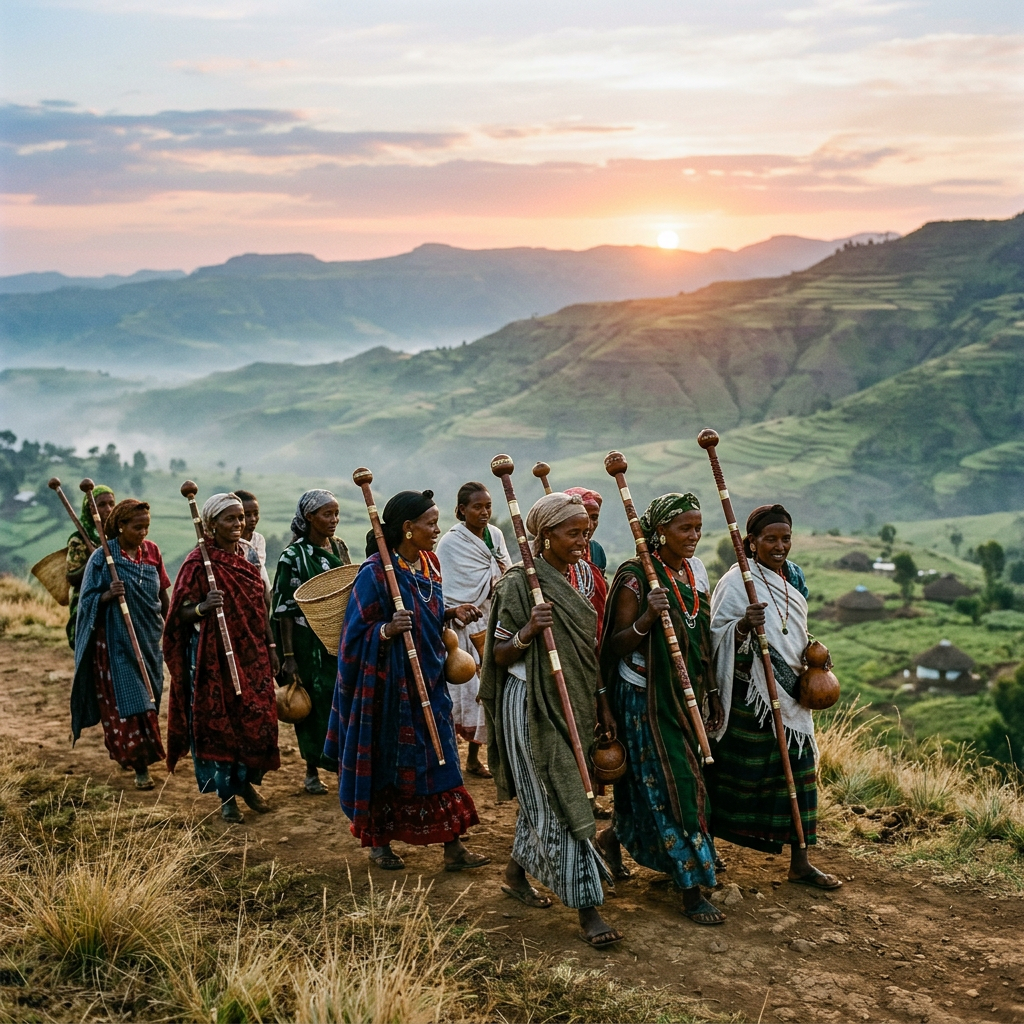
History often remembers the faces of revolutionaries as male—the generals, the politicians, the spokesmen. Yet, in the Oromo liberation struggle, this narrative is not merely incomplete; it is a profound erasure. For decades, Oromo women have been the backbone of the movement, serving not only as its supporters but as its leaders, its strategists, its fighters, and its soul.
Their contributions span the political, the military, the cultural, and the social. They have organized protests, taken up arms, preserved a threatened culture, and sustained communities through the darkest hours of conflict. And they have done so while facing a double oppression—as members of a marginalized ethnic group and as women in a patriarchal society.
This is their story—a story of courage, resilience, and an unyielding commitment to freedom.
—
The Historical Foundation: Resistance Rooted in Tradition
The role of Oromo women in resistance is not a modern phenomenon. It is deeply rooted in the traditional structures of Oromo society. Within the Gadaa system—the indigenous democratic governance framework that has guided the Oromo for centuries—women exercised influence through institutions like the Siiqqee, a women’s assembly that ensured gender balance and protected women’s rights.
During the 19th-century colonization of Oromia by Abyssinian forces, Oromo women actively resisted displacement, land confiscation, and cultural erasure. Their resistance was both direct and indirect, often taking the form of cultural preservation—passing down language, traditions, and memory to subsequent generations. This cultural defiance laid the groundwork for the political and armed struggles that would follow.
The Siinqee Tradition: A Philosophy of Resistance
Central to understanding the role of Oromo women is the Siinqee—a traditional Oromo women’s institution that symbolizes unity, resistance, and empowerment. It is more than a cultural artifact; it is a lived practice of mutual protection among Oromo women, a covenant of resistance against all forms of oppression.
Scholar Martha Kuwee Kumsa has developed this into a formal framework known as Siinqee Feminism—an Oromo philosophy of womanhood and solidarity that predates Western feminist thought. It offers a unique lens through which to understand how Oromo women mobilize to foster solidarity and challenge oppressive systems. The Siinqee is not merely an academic concept; it is a living tradition that continues to empower women in the struggle for liberation.
Political Leadership: Organizing and Advocating
Oromo women have been active in political movements for decades, serving as leaders, organizers, and advocates within organizations such as the Oromo Liberation Front (OLF) and other nationalist groups. They have organized protests, participated in negotiations, and represented the Oromo cause on national and international platforms.
The Qeerroo movement—the youth-led protests that shook Ethiopia from 2014 onward—saw women at the forefront. One female leader from Sebeta, known as “Chali,” recalled: “People who did not understand how the 2015 Oromo protest was organized tend to give credit to the diaspora. We were the ones”. These protests, which began in response to the Addis Ababa Master Plan, evolved into a broader movement against systemic marginalization. Women were not merely participants; they were architects of the resistance.
The Armed Struggle: Taking Up Arms
Perhaps the most striking testament to the commitment of Oromo women is their participation in the armed struggle. Many have joined the Oromo Liberation Army (OLA) , the armed wing of the OLF, taking up arms to defend their people and land.
For some, joining the armed group was described as “a refuge from a state that persecuted Oromo womanhood and identity”. A former OLA fighter reflected on her decision to move from political organizing to the bush: “I felt most welcomed in my Oromoness when I took the erbuu [oath] with bullets and our flag in the bush… At least in that moment, I was safe in my belonging”. Another former mobilizer explained: “I knew I was born into a social justice struggle; I’ve never had an identity or childhood separate from this oppression. My development, at a basic level, was formed around Oromoness”.
Beyond combat, women have provided critical logistical support to the armed struggle—supplying food, shelter, and medical care to fighters, and acting as messengers and intelligence gatherers, often at great personal risk.
The Diaspora: A Global Struggle
The Oromo women’s struggle is not confined to the borders of Ethiopia. In September 2020, Oromo women marched through the streets of Berlin, Germany, demanding recognition for their struggle. This protest march, called a Hiriira in the Oromo language, was a powerful statement of solidarity and resistance, linking the struggles of Oromia to global movements against oppression.
Cities across Germany have been sites of prolific organizing and resistance against the Ethiopian state, as seen in archival documents from the 1970s declaring “Freiheit für Oromiya”. Many of these activists are now elders in the Oromo community, still fighting for liberation today.
Guardians of Culture: Preserving Identity
In times of displacement and cultural erasure, Oromo women have been the guardians of their people’s identity. They have preserved and promoted Oromo language, traditions, and cultural practices. Through ceremonies like Irreechaa (Oromo Thanksgiving) and the passing down of oral traditions, they have kept Oromo identity alive across generations.
This cultural preservation is not a passive act; it is a form of resistance. By maintaining their language and traditions in the face of assimilationist policies, Oromo women have ensured that the struggle for freedom has a cultural foundation to build upon.
The Weight They Carry: Challenges and Sacrifice
The contributions of Oromo women have come at an immense cost. They face what scholars describe as “double oppression”—marginalization as Oromo people and as women. They have endured violence, displacement, and loss, yet they remain steadfast in their commitment to the struggle.
In the armed conflict, women have been particularly vulnerable to sexual violence and exploitation. Within their own communities, their voices are sometimes marginalized in political and social spaces. Despite these challenges, they continue to push for gender equality within the liberation movement itself, challenging patriarchal norms and advocating for women’s representation in leadership roles.
The Unfinished Struggle: A Vision for the Future
The struggle for Oromo liberation is far from over, and the role of women within it continues to evolve. As one analysis notes, “Oromo women have fought not only for national liberation but also for gender equality”. The movement’s true liberation will not be complete until the voices of women are fully included in leadership and decision-making.
As Martha Kuwee Kumsa’s work reminds us, we must “draw inspirations from the lived experiences of Oromo women and how they mobilise Siinqee feminist practices to foster solidarity”. Their resilience, courage, and vision offer a blueprint not only for the Oromo struggle but for movements for justice everywhere.
—
The story of the Oromo liberation struggle cannot be told without honoring the women who have sustained it, led it, and sacrificed for it. They are the fighters, the organizers, the mothers, the scholars, and the guardians of a people’s soul.
They have shouldered the weight of history and refused to break. Their unbreakable spirit is the heartbeat of the Oromo struggle—and a reminder that true freedom is never won without the full participation of women.
“Namni waan hin beekne hin dhaabatu” — One who does not know does not stand firm. And the women of Oromia know—they know their history, their worth, and their power.

Echoes of a Martyr: Nairobi’s Oromo Community Commemorates Haacaaluu Hundeessaa’s Legacy
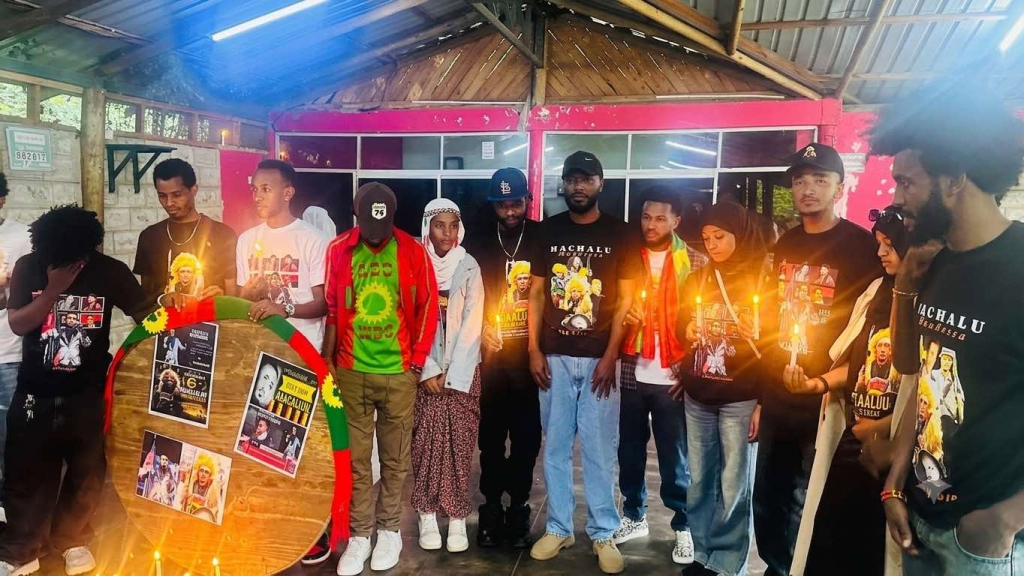
Six years after his assassination, the spirit of the iconic artist and activist burns as brightly as ever in the hearts of the Oromo diaspora.
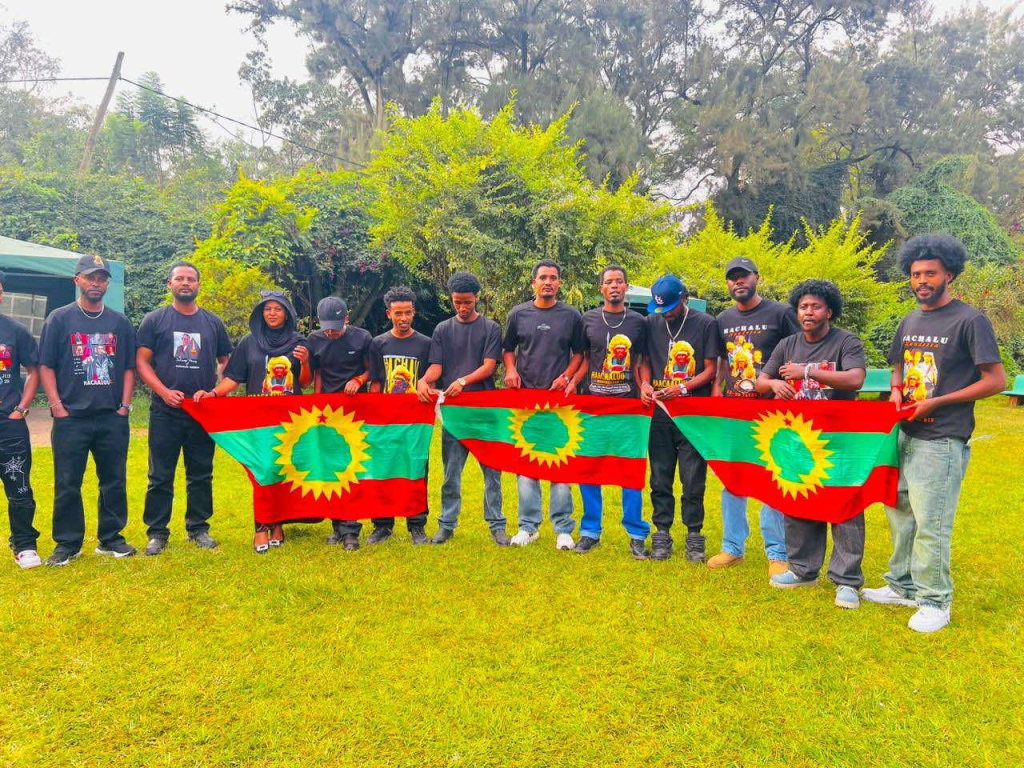
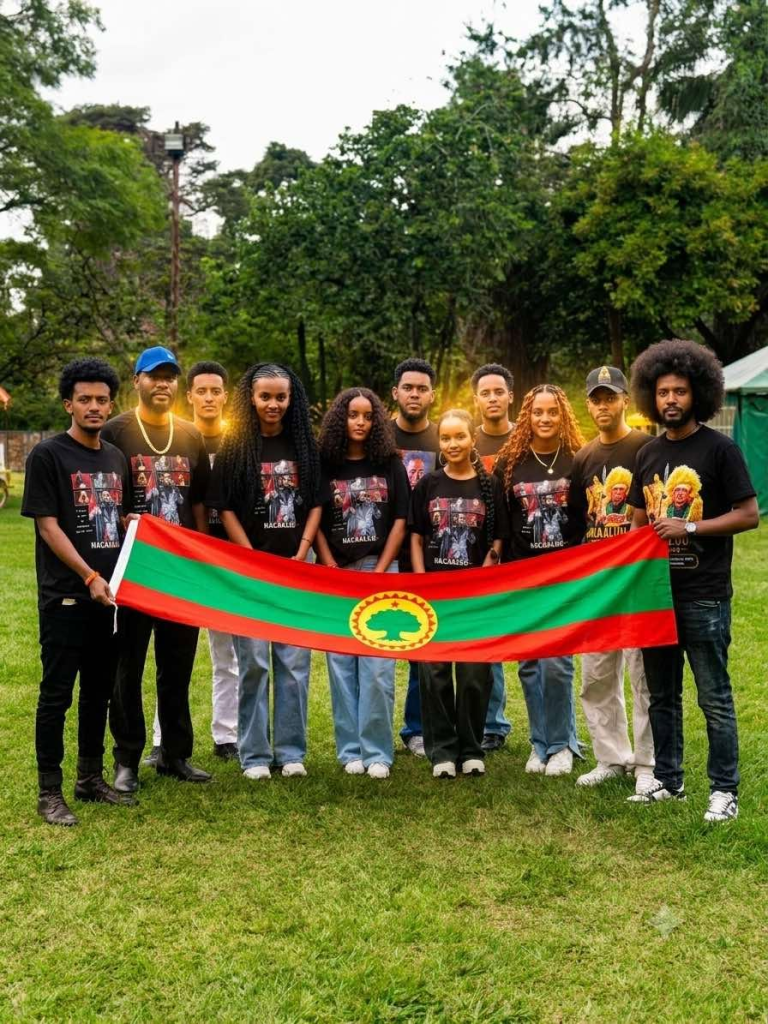
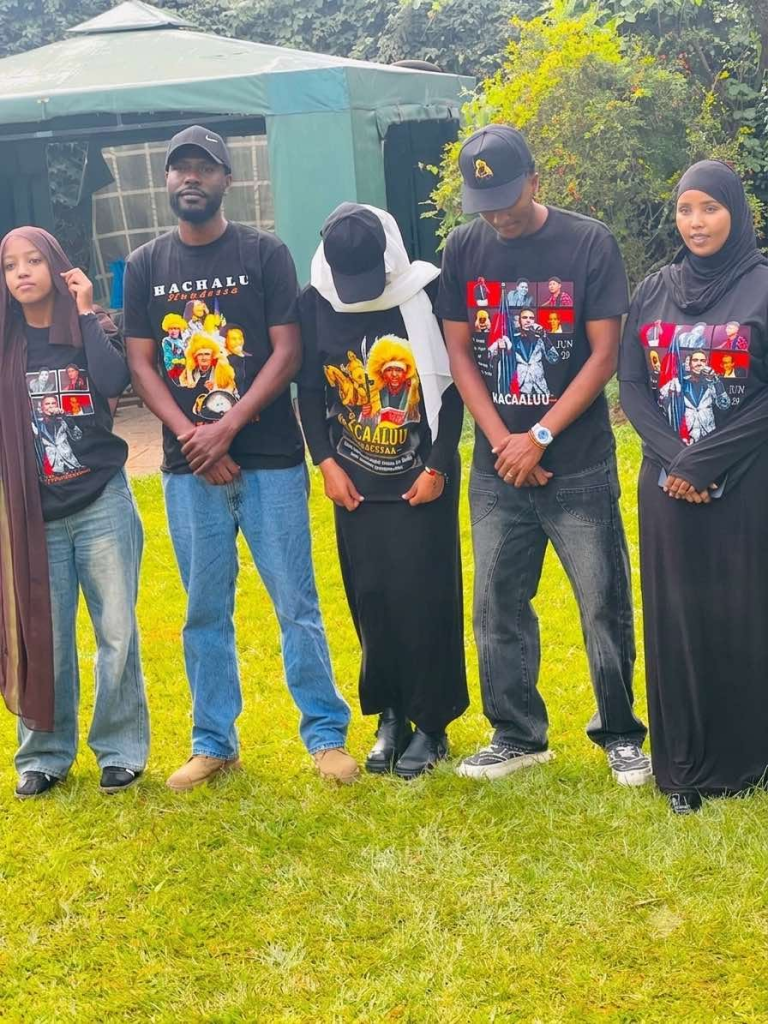
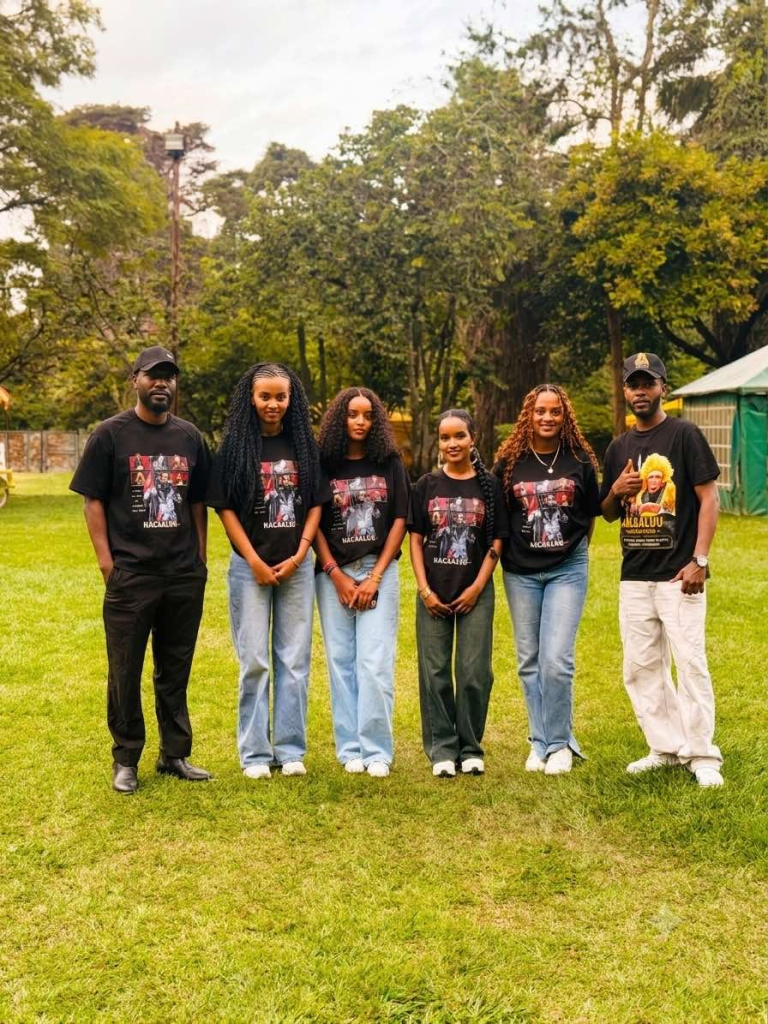
In the vibrant city of Nairobi, the Oromo community came together with a profound sense of purpose to mark the 6th anniversary of the passing of their beloved icon, Artist Haacaaluu Hundeessaa. The commemoration was not merely a somber remembrance of a life tragically cut short, but a vibrant reaffirmation of the enduring legacy he left behind.
The event, attended by community members from all walks of life, was a powerful tapestry of poetry, music, and impassioned speeches, all woven together to honor the man who became the indisputable voice of the Oromo struggle for justice and recognition. As a prominent international analysis described him, Haacaaluu was “the soundtrack of the Oromo revolution, a lyrical genius and an activist who embodied the hopes and aspirations of the Oromo public”.
A Legacy Forged in Struggle
Haacaaluu Hundeessaa was more than a musician; he was a symbol of resistance and a catalyst for change. His music, particularly the iconic songs “Maalan Jira” and “Jirra,” served as rallying anthems during the historic 2015-2018 Oromo protests, which fundamentally altered Ethiopia’s political landscape. His intensely political lyrics, sung in the Oromo language, articulated a profound sense of marginalisation and a yearning for freedom that resonated with millions.
Born in 1986 in the storied city of Ambo, Haacaaluu’s path to becoming a cultural icon was forged in hardship . At just 17 years old, he was arrested for his political activities and imprisoned for five years without charge. It was in that incarceration that he shaped his identity and composed most of the songs that would define his career .
His assassination on June 29, 2020, in Addis Ababa sent shockwaves through the Oromo nation and Ethiopia as a whole, described as “a spear through the heart of the Oromo nation”. The grief was so intense it triggered major protests that led to the loss of hundreds of lives.
The Call to Action: Responding to Sacrifice
At the Nairobi commemoration, participants emphasized that the anniversary was a time not just for mourning, but for reflection and renewed commitment. They spoke of the immense service Haacaaluu rendered to his people, sacrificing his personal safety for the collective hope of the Oromo nation. Community leaders declared that his blood and his art demand a response from the Oromo people, calling on the community to continue the struggle for justice and to secure a future where the Oromo have their rightful place .
The message was clear: Haacaaluu’s legacy is an obligation. The participants reminded the community that Haacaaluu left behind a mandate to continue the fight for justice, and that the struggle he represents is not just about remembering the past but about securing a future where the Oromo people have their rights and dignity fully recognized. As his widow powerfully stated at his funeral, “Haacaaluu is not dead. He will remain in my heart and the hearts of millions of Oromo people forever”.
An Enduring Spirit
As the poignant strains of Haacaaluu’s most famous anthems echoed through the venue, the atmosphere was charged with a mix of profound grief and a renewed sense of purpose. The commemoration in Nairobi is part of a global movement, with the Oromo diaspora from New Zealand to the United States holding similar events to ensure his spirit is never forgotten .
Haacaaluu Hundeessaa’s legacy is a testament to the power of art as a weapon of resistance and a tool for unity. He inspired a generation to be proud of their Oromo identity and to stand up against oppression. His music, which captured the displacement, loss, and subjugation of his people, offered roadmaps of resistance and continues to be a beacon of light for his community.
In the heart of Nairobi, far from the hills of his homeland, Haacaaluu’s spirit finds a permanent home. The community’s message was unequivocal: his sacrifice was not in vain, and his dream of dignity and justice for the Oromo nation will be pursued with relentless vigor until it is fully realized.

Beneath the Odaa: A Gathering of Peace and Unity at Bulluq
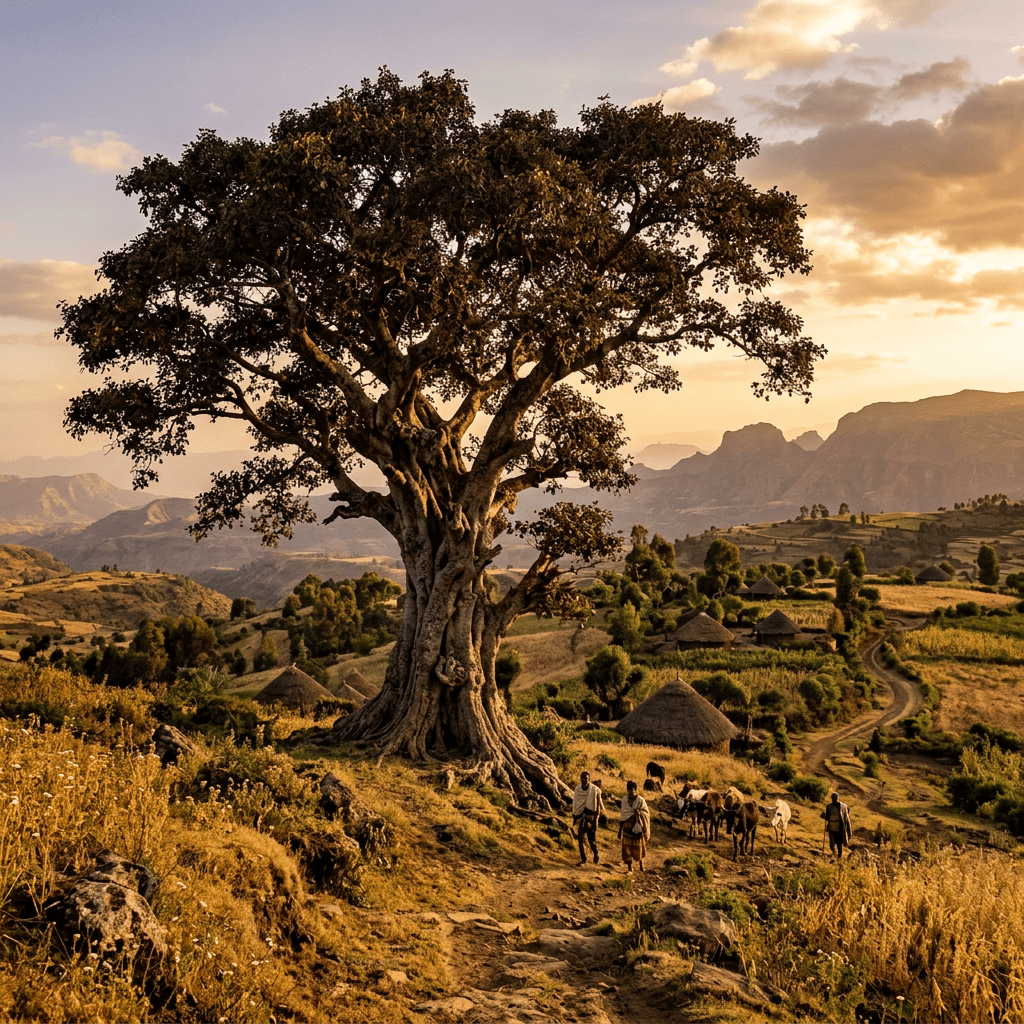
Eight years ago, under the sacred shade of the Odaa Bulluq tree, Oromo youth gathered to seek peace. Today, that moment remains a powerful symbol of what dialogue, respect, and unity can achieve.
There is a tree that stands as a witness to history—a silent guardian of the Oromo people’s most sacred traditions. It is the Odaa, the sycamore fig tree, a symbol of justice, reconciliation, and the enduring spirit of the Gadaa system.
Beneath its sprawling branches, the most important decisions are made. Disputes are resolved. Peace is sought. Unity is forged.
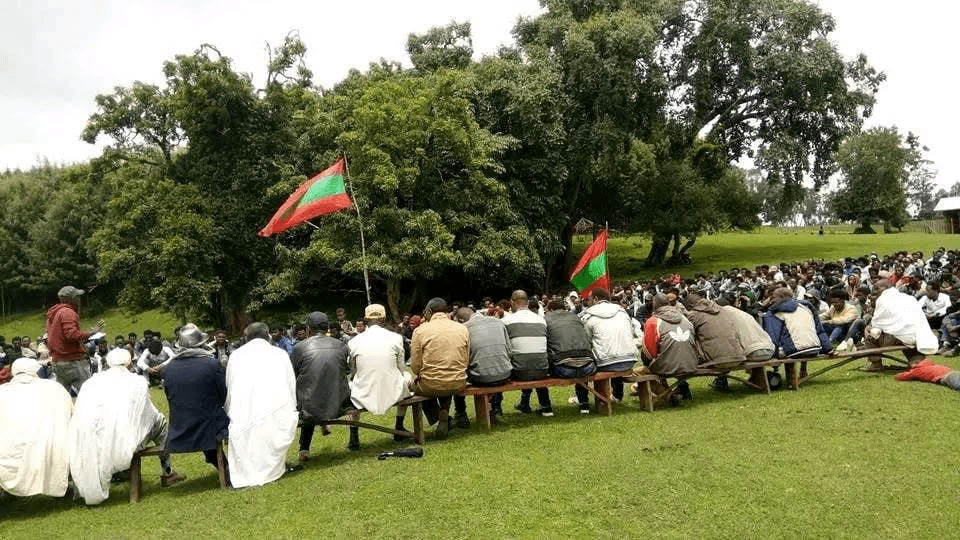
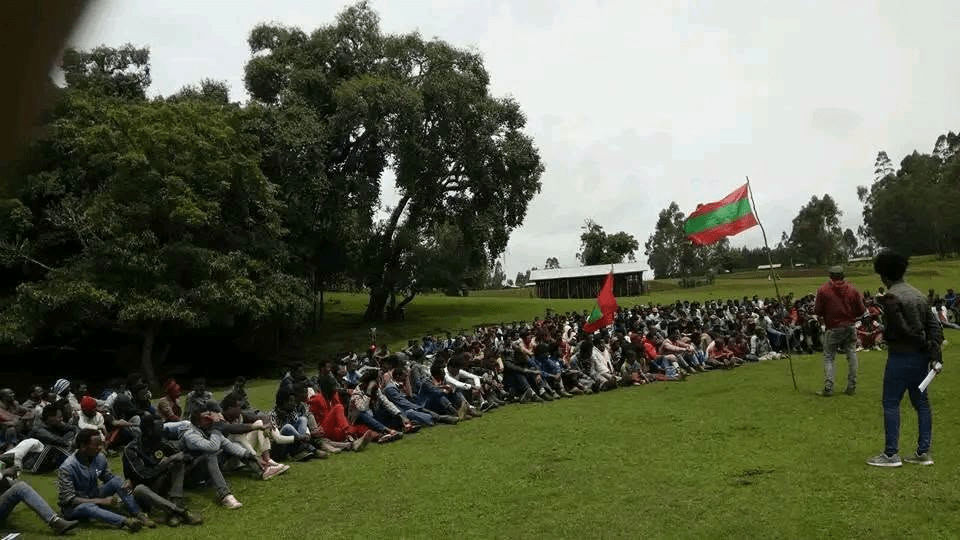
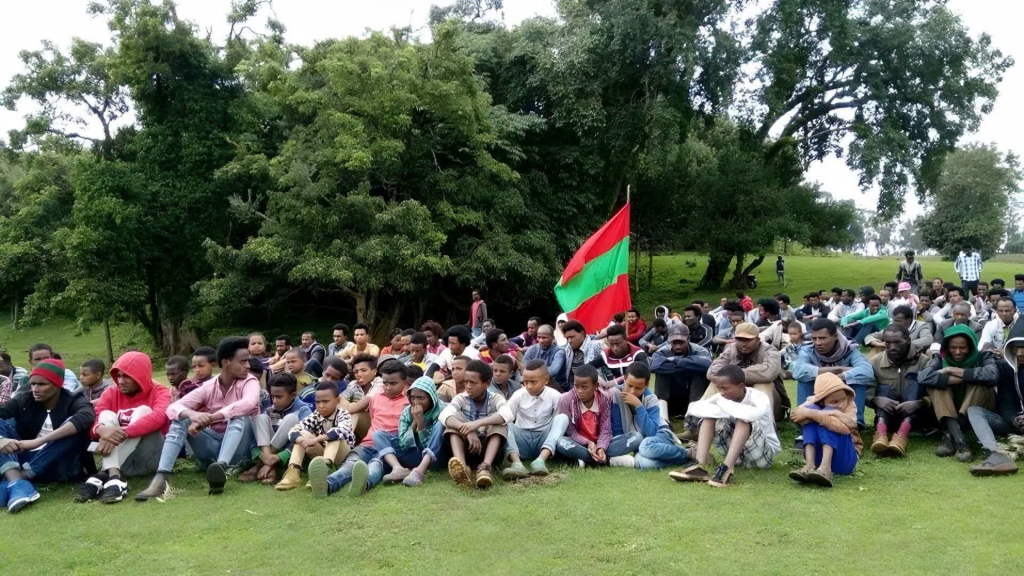
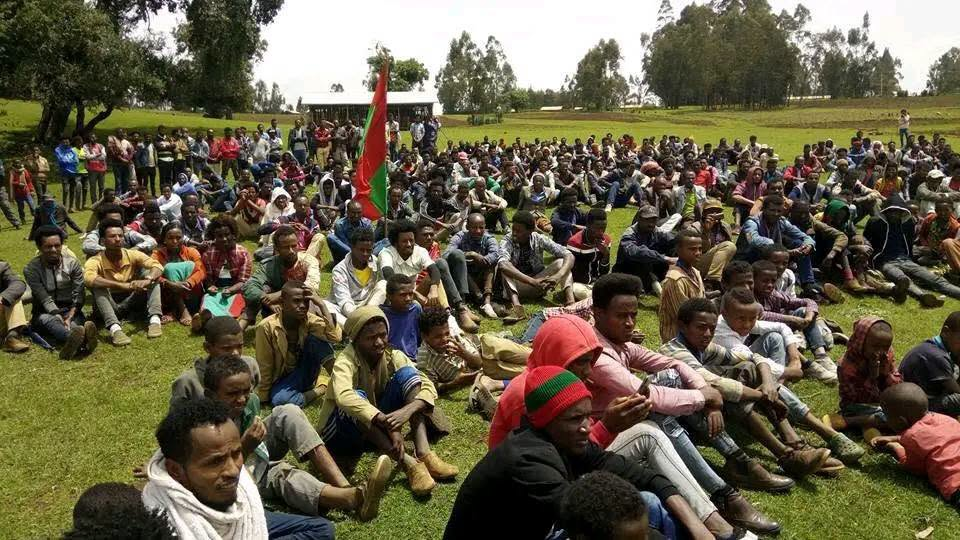
At Odaa Bulluq, one of the five sacred Odaa trees of the Oromo people, a powerful gathering took place eight years ago. On Adoolessa 1, 2018 (according to the Oromo calendar)—August 10, 2018—a group of young Oromo freedom fighters (Qeerroo) came together beneath its shade to seek peace for their land and people.
Today, as tensions once again threaten the region, the memory of that gathering offers a lesson—and a call to action.
The Odaa: A Sacred Symbol
For the Oromo people, the Odaa tree is far more than a tree. It represents:
- Justice: The Gadaa system, UNESCO’s Intangible Cultural Heritage of Humanity, is centred on the Odaa. It is where elders, leaders, and community members gather to make decisions that shape the future .
- Reconciliation: When conflicts arise, the Odaa is the place where peace is negotiated, disputes are settled, and harmony is restored .
- Unity: The Odaa’s branches reach out in all directions, symbolising the interconnectedness of the community and the shared destiny of all Oromo people .
- Continuity: The Odaa is the link between ancestors and future generations—a living testament to the enduring wisdom of the past .
The Odaa Bulluq is one of the five most significant Odaa trees in Oromia, each with its own history and purpose. Together, they form a network of sacred sites that anchor the cultural and spiritual life of the Oromo people.
The Gathering of 2018: A Moment of Unity
Eight years ago, on Adoolessa 1, 2018, a remarkable gathering took place at Odaa Bulluq. Young Oromo activists—known as Qeerroo, meaning “young bulls”—assembled beneath the sacred tree to seek peace.
They had travelled from far and wide. Some had journeyed over 320 kilometres to be there. They came despite the challenges—despite threats, despite surveillance, despite the divisions that had been sown by years of conflict and tension.
Their purpose was simple but profound: to seek reconciliation, to embrace one another, and to call for peace in their region.
As one participant, Dechasa Wirtu, recalled in a recent reflection:
“The Odaa is a place where great decisions are made, where reconciliation is enacted. To gather in such a place signifies respect for law, culture, and the pursuit of peace and security. The reconciliation that happens at Odaa Bulluq is a significant and respected pledge.”
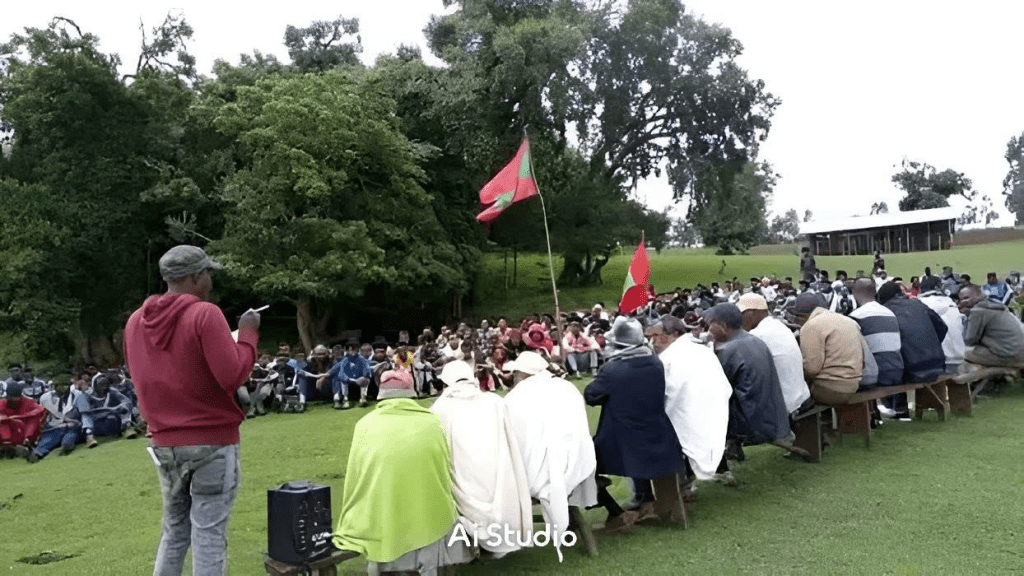
“Eight years ago today, on Adoolessa 1, 2018, when the Qeerroo of Oromia gathered at Odaa Bulluq to negotiate peace for our region, listening to the elders of the land—it was a renewal of unity.”
The atmosphere was one of hope. Elders spoke. Young people listened. Differing perspectives were shared. And out of that dialogue came a commitment: to reject hatred, to embrace reconciliation, and to build a future of peace.
A Call for Today: Remembering the Lesson
Today, eight years later, Dechasa Wirtu has issued a renewed call, reflecting on the gathering’s significance:
“Today, if our young people stop harming each other and embrace unity, they have enough strength to protect themselves from the Amhara extremists who are currently crossing borders and encroaching upon them.”
“My message today is the same as eight years ago at Odaa Bulluq: if we come together and resolve our problems through peace, dialogue, and our cultural traditions—beneath the shade of the Odaa—it will bring a lasting solution.”
He also shared a personal commitment to the cause:
“I believe in what I said then. I traveled over 320 kilometres to be there, to participate in that dialogue. I organised and prepared for it alongside many other young people.”
This message comes at a time of heightened tension, as conflict once again threatens the region. Dechasa’s reflection is not just nostalgia—it is a warning and a hope.
The Power of Dialogue
What made the gathering at Odaa Bulluq so powerful was not just the location—it was the commitment to dialogue.
In Oromo culture, dialogue is not optional; it is essential. It is how communities survive and thrive. It is how disagreements are resolved without violence. It is how wisdom from the past is applied to the challenges of the present.
The Gadaa system is built on this principle. Power is not seized—it is transferred through consensus and ceremony. Conflicts are not escalated—they are mediated and resolved. The voice of every member of the community matters .
When young people choose dialogue over confrontation, they honour that tradition. They demonstrate maturity and wisdom beyond their years. And they build the foundation for a society that can endure even the most difficult challenges.
Odaa Bulluq: A Living Legacy
The Odaa Bulluq is not just a symbol of the past—it is a living legacy that continues to inspire today.
As Ethiopia and Oromia face ongoing political and social challenges, the example of the 2018 gathering offers a model for how to move forward. It demonstrates that:
- Unity is possible, even in the face of deep divisions.
- Dialogue works, even when it seems difficult.
- Youth have a crucial role to play, as agents of peace and change.
- Cultural traditions, like the Gadaa system and the sacred Odaa, remain relevant in the modern world.
The gathering at Odaa Bulluq was a powerful reminder that beneath the shade of the Odaa, enemies can become friends, and the future can be reshaped.
A Lesson for All
Dechasa Wirtu’s reflection is a reminder that the values of the Odaa—peace, unity, justice, and reconciliation—are not just Oromo values. They are universal human values.
In a world that often seems divided, where conflict and misunderstanding appear to dominate the headlines, the Odaa tree offers a quiet but powerful alternative.
Under its shade, we are reminded that we are all connected. That dialogue is stronger than division. That peace is not a luxury—it is a necessity.
The Call Remains the Same
Eight years ago, the youth of Oromia gathered at Odaa Bulluq and said: “We choose peace. We choose dialogue. We choose unity.”
Today, that call remains as urgent as ever.
“Peace and unity for everyone!”
This was the message that echoed beneath the Odaa eight years ago. And it is the message that must echo today—across Oromia, across Ethiopia, and across the world.
“Odaan seenaa fi sirna Gadaa keessatti bakka itti murteen gurguddoon murteeffamu, araarri itti bu’udha.”
The Odaa tree in history and the Gadaa system is where great decisions are made, where reconciliation takes place.
May its shade continue to shelter those who seek peace.
Key Insights
| Aspect | Significance |
|---|---|
| Odaa Bulluq | One of five sacred Odaa trees of the Oromo people; a symbol of justice, peace, and reconciliation |
| The Gathering (2018) | Young Oromo activists (Qeerroo) assembled under the Odaa to seek peace and unity |
| Gadaa System | UNESCO-recognised indigenous governance system based on consensus and dialogue |
| Dialogue | Essential to Oromo culture; conflicts are resolved through discussion, not violence |
| Relevance Today | The same principles—peace, unity, dialogue—are urgently needed in the face of current tensions |
Under the Odaa, we are all equal. Under the Odaa, we are all one. Under the Odaa, peace is possible.

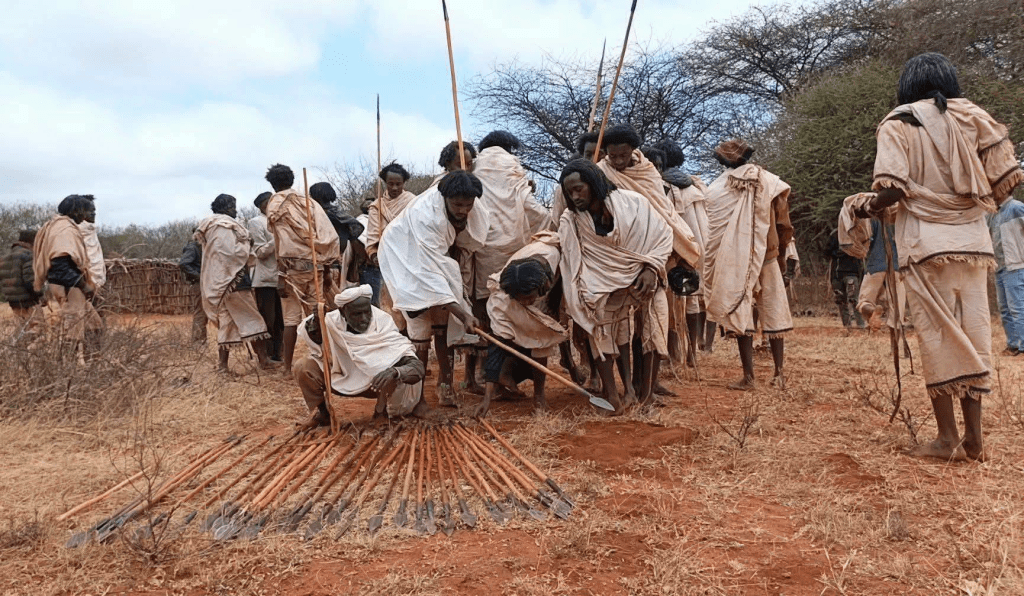
The Ceremony of Nyaachisaa: A Sacred Rite of Humanity and Renewal at Ardaa Jilaa Daawwitii Borbor
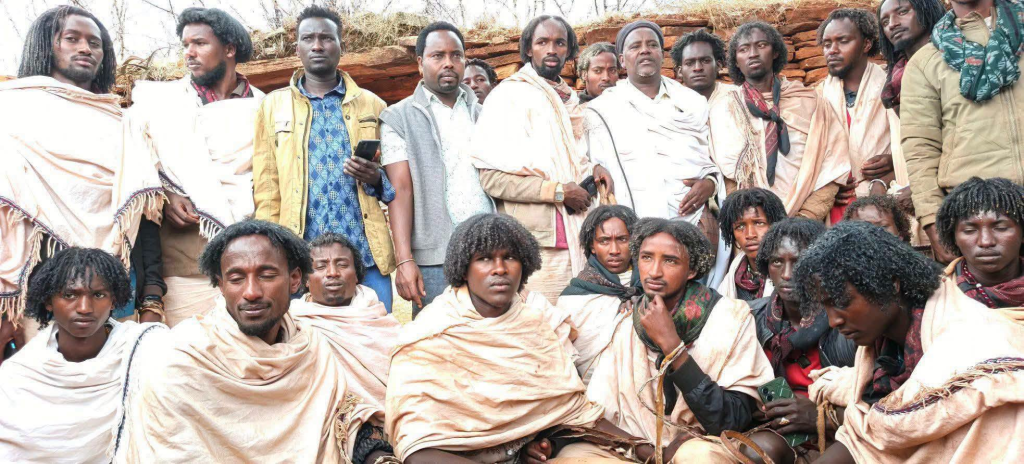
In the heart of Borana, the ancient Gadaa tradition comes alive as the community gathers to celebrate the Nyaachisaa ceremony—a profound rite of passage that honours brotherhood, culture, and the sacred bonds that unite the Borana people.
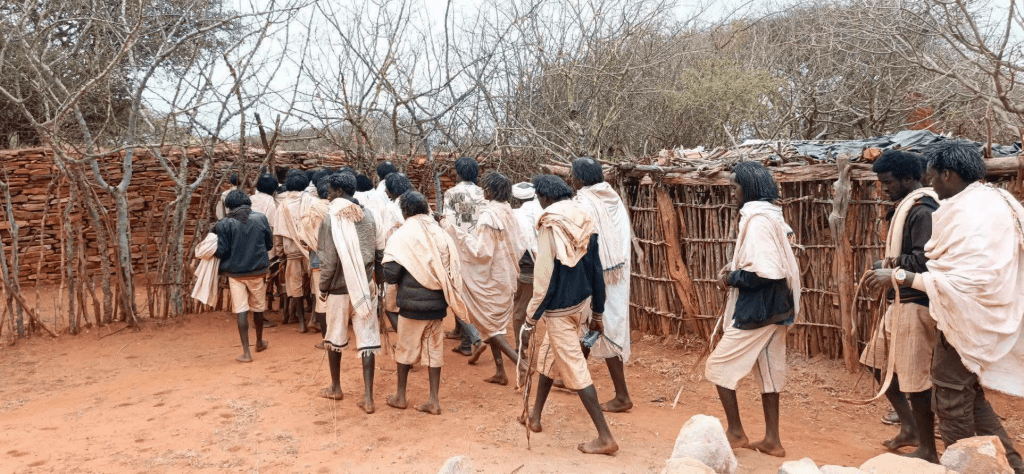
At Ardaa Jilaa Daawwitii Borboritti in East Borana Zone, Dhaasii district, a powerful cultural ceremony is unfolding. The sons of Guyyoo Gobbaa Bulee—the revered elder and former Abbaa Gadaa—are conducting the Nyaachisaa ritual, a sacred feast that embodies the values of brotherhood (waloomaa), mutual respect, and cultural preservation .
“Nagaan Gooroo marmaaraa ga’aa, gammee buufadha!”
This invocation—”Peace to the Gooroo Marmaaraa, enter the assembly!”—echoes across the gathering, summoning participants to a celebration that is both ancient and vibrantly alive.
Understanding Nyaachisaa: More Than a Feast
The Nyaachisaa ceremony is far more than a simple communal meal. It is a sacred rite within the Borana Gadaa system, marking important transitions and reaffirming the social fabric of the community. The ritual is closely tied to the Gadaa cycle, the indigenous democratic system that has governed the Borana people for centuries .
The Gadaa system, recognised by UNESCO as an Intangible Cultural Heritage of Humanity, is a sophisticated form of governance that operates in eight-year cycles . Every eight years, power is transferred from one Abbaa Gadaa (customary ruler) to his successor, a process that involves elaborate ceremonies and rituals . The recent installation of the 72nd Abbaa Gadaa, Guyo Boru Guyo, demonstrates that this tradition remains vibrantly alive .
The Nyaachisaa ceremony is one of the rituals associated with this system. The term nyaachisaa refers to the ritual of “feeding” or “causing to eat”—a symbolic act that carries deep meaning.
The Meaning Behind the Ritual
When the sons of Guyyoo Gobbaa Bulee conduct the Nyaachisaa ceremony, they are participating in a tradition that has been passed down through countless generations. The ritual involves:
- Communal Slaughter: The slaughter of a bull (sangaa) is central to the ceremony. The bull is not just a source of food—it is a sacrificial offering that carries profound spiritual and symbolic meaning . The Borana believe that before slaughtering, they must first bless the animal through a ritual called ariracha, asking for blessings to prosper both people and livestock .
- Food as Social Bond: The meat from the slaughtered bull is shared according to customary rules. The act of sharing meat—called jiffu—reinforces kinship ties and social obligations, strengthening the bonds between families, clans, and the broader community .
- Cultural Preservation: Through the Nyaachisaa ceremony, the Borana preserve not just their culinary heritage but also the values of solidarity, mutual support, and respect for elders .
The Sacred Setting: Ardaa Jilaa and the Odaa Tree
The ceremony takes place at Ardaa Jilaa Daawwitii Borboritti—a sacred site of immense cultural significance to the Borana people. In Borana tradition, ardaa jilaa refers to a sacred gathering place, often associated with the odaa tree (sycamore fig tree) .
The odaa tree holds profound symbolic meaning in Oromo culture. Most Gadaa rituals are performed in the shade of this tree, and both the tree and the surrounding area are fully protected as sacred spaces . The tree represents life, wisdom, and the continuity of tradition across generations.
At these sacred sites, cultural ceremonies like Nyaachisaa reaffirm the community’s connection to their ancestors and the land.
The Role of Abbaa Gadaa and Elders
The involvement of Guyyoo Gobbaa Bulee and his sons in the Nyaachisaa ceremony is particularly significant. Guyyoo Gobbaa Bulee was a retired Abbaa Gadaa who, along with Guyyo Boru, served as a main speaker during the Gumi Ganyo Assembly—a traditional gathering where community issues are discussed and resolved according to custom (aada) and law (seera) .
The elders play a crucial role in Borana society:
- Preserving Knowledge: Elders are the keepers of oral history, laws, and rituals .
- Teaching the Next Generation: They train young initiates about history, laws, and the function of the Gadaa system .
- Resolving Conflicts: The Abbaa Gadaa is responsible for solving feuds and disputes, often related to cattle-raiding and access to resources .
The Nyaachisaa ceremony is therefore not just a celebration—it is an educational moment where younger generations learn the values and traditions that define their identity.
Food as Identity: The Significance of Koche
One of the central elements of the Nyaachisaa ceremony is the preparation and sharing of koche, a traditional meat dish that has deep cultural significance .
What is Koche?
Koche is a nutritious and rich food made from meat, fat, and other ingredients. It is highly regarded in Borana culture and is:
- A Symbol of Hospitality: Koche is prepared for important guests and during ceremonies. It is a sign of respect and generosity .
- An Expression of Love: Beyond its nutritional value, koche is also a food of passion. Women would prepare it for their lovers—even secret ones—as an expression of love. If discovered, the lover would be fined a cow to appease the husband .
- A Measure of Status: Among Borana women, it was considered embarrassing for their traditional storage container (dhibe) for meat to be empty. Women of substance were expected to have koche in their dhibe at all times .
Communal Preparation
The preparation of koche is a communal affair involving elders, women, herders, and villagers. The process takes days of careful planning :
- Women fetch water and firewood and prepare a mat-like structure called sage for holding the meat.
- Men are involved in the slaughter and butchering of the bull.
- The community comes together to share in the meal, strengthening social ties and reaffirming collective identity.
This communal effort reflects the Borana belief that food is not just fuel for the body but nourishment for social relationships.
The Values of Waloomaa and Obbolummaa
The Nyaachisaa ceremony embodies the Borana values of waloomaa (cohesion) and obbolummaa (siblinghood). The sharing of meat is a physical expression of these values. As one analysis of Borana culture explains, eating together (commensality) is more than just sharing and consuming food—it strengthens kinship ties and friendship.
When the sons of Guyyoo Gobbaa Bulee conduct the Nyaachisaa ceremony at Ardaa Jilaa Daawwitii Borboritti, they are not just feeding the community. They are:
- Honouring their father: Guyyoo Gobbaa Bulee’s legacy as an elder and former Abbaa Gadaa is celebrated and passed on.
- Reinforcing brotherhood: The act of sharing meat reminds everyone of their obligations to one another.
- Preserving culture: The ceremony ensures that ancient traditions continue to have meaning in the present.
The Bigger Picture: Gadaa and Cultural Preservation
The Nyaachisaa ceremony at Ardaa Jilaa Daawwitii Borboritti is part of a broader cultural renaissance among the Borana and Oromo peoples. Despite centuries of pressure and challenges, the Gadaa system has survived:
- UNESCO Recognition: In 2016, the Gadaa system was added to UNESCO’s list of Intangible Cultural Heritage of Humanity, acknowledging its significance as one of Africa’s oldest democratic governance systems .
- Cross-Border Significance: The Gadaa system unites Borana communities across national borders—in both Ethiopia and Kenya .
- A Living Tradition: The Gadaa system is not a museum piece but a living, dynamic tradition that continues to evolve while maintaining its core values .
As one Borana elder explained, the age-set system (hariya) may end when members die, but the generation-set system (luba) continues forever—a cycle of renewal that keeps the community alive .
Conclusion: The Feast That Feeds the Soul
The Nyaachisaa ceremony at Ardaa Jilaa Daawwitii Borboritti is a powerful reminder of what makes the Borana people unique—their commitment to brotherhood, their respect for elders, their connection to the land, and their ability to preserve their culture across generations.
“Nagaan Gooroo marmaaraa ga’aa, gammee buufadha!”
Peace has come to the Gooroo Marmaaraa—the ritual journey from one sacred site to another . The assembly is called. The bull is slaughtered. The koche is shared. And through this ancient rite, the Borana people reaffirm who they are and what they stand for.
In a changing world, the Nyaachisaa ceremony remains a source of identity, solidarity, and hope. It is a feast that feeds not just the body but the soul—a testament to a people who refuse to forget their past even as they face the future.
The Nyaachisaa ceremony honours the wisdom of elders, the strength of community, and the enduring values of humanity, respect, and cultural pride.




 Advocacy for Oromia