The Three Pillars of Tuulamaa: Unraveling the Genealogy of an Oromo Nation
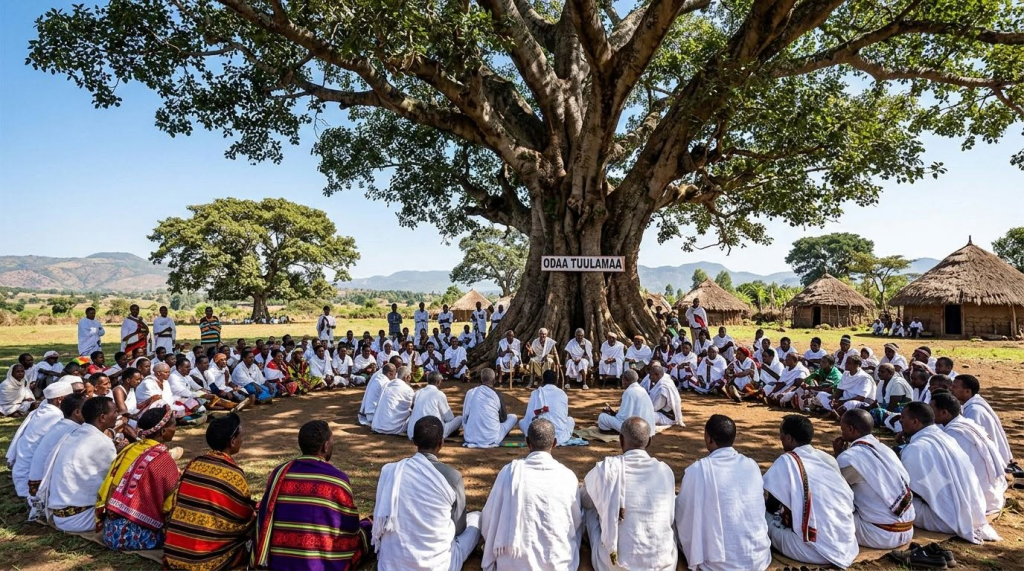
In the vast tapestry of Oromo history, few lineages carry the weight and significance of the Tuulamaa. As one of the major branches descending from the legendary Booranaa, the Tuulamaa Oromo represent a people whose ancestral roots run deep into the soil of eastern Africa, their branches spreading across generations, their leaves whispering the stories of a civilization that has thrived for centuries.
The Tuulamaa are not merely a name in the annals of history; they are a living, breathing community whose identity is encoded in the very structure of their genealogy. At the heart of this identity lies a simple yet profound framework: “Sadeen Tuulamaa” — the Three Tuulamaa.
The Sacred Three: Daaccii, Bachoo, and Jiillee
Just as the ancient world recognized the power of three—past, present, future; birth, life, death—the Tuulamaa trace their origins through three primary branches that form the foundation of their entire social and political structure:
BOORANAA │ ▼TUULAMAA │ ┌─────────────┼─────────────┐ │ │ │ DAACCII BACHOO JIILLEE
These three names are not simply labels; they are the pillars upon which the identity of the Tuulamaa people rests. Each branch carries its own distinct history, its own sub-clans, and its own contributions to the collective story of the Oromo nation.
Daaccii: The House of Many Branches
The Daaccii stands as the first and most expansive pillar of the Tuulamaa. Within its embrace, three major lineages emerge, each with its own constellation of sub-clans:
Galaan — The Six
The “Jahan Galaan,” or the Six Galaan, represents the intricate web of relationships that bind the Tuulamaa people. These six houses are:
- Jiddaa
- Liiban
- Abbuu
- Adaa
- Warra Jaarsoo
- Gadullaa
Each of these names carries the weight of history, representing families that have contributed to the economic, political, and cultural life of the Tuulamaa for generations.
Oboo — The Seven
The “Torban Oboo,” or the Seven Oboo, represents another crucial dimension of the Daaccii lineage:
- Gumbichuu
- Gullallee
- Oborrii
- Yaayyaa
- Eekkaa
- Diigaluu
- Gamuu
Historical studies have particularly highlighted Gullallee, Yaayyaa, and Gumbichuu as prominent Oboo descendants, their names echoing through the corridors of Oromo oral tradition.
Sooddoo — The Three
The “Sadeen Sooddoo,” or the Three Sooddoo, completes the Daaccii trilogy:
- Odituu
- Liiban
- Tum’ee
This tripartite structure reflects the Oromo love for order and categorization, a system that has enabled these communities to maintain their identity across centuries.
Bachoo: The Six Houses
The second pillar, Bachoo, embodies the concept of “Jahan Bachoo” — the Six Bachoo. This branch of the Tuulamaa lineage comprises:
- Iluu
- Mettaa
- Uruu
- Garasuu
- Waajituu
- Keekuu
These six houses represent a significant portion of the Tuulamaa population, their members scattered across the Oromo territories yet united by the common thread of shared ancestry. The consistency with which these names appear across various studies—from Haramaya University to contemporary Gadaa structures—testifies to the enduring nature of this genealogical framework.
Jiillee: The Third Pillar
The Jiillee branch, as the third pillar of the Sadeen Tuulamaa, presents a fascinating complexity. Unlike the clearly defined structures of Daaccii and Bachoo, Jiillee exhibits a more intricate pattern that has been documented by Haramaya University research.
The Jiillee-6 structure comprises:
- Goona (with 12 sub-clans)
- Guusa (with 5 sub-clans)
- Looyyaa (with 3 sub-clans)
- Siibaa (with 5 sub-clans)
- Gindoo (with 7 sub-clans)
- Warree (with 3 sub-clans)
The numbers accompanying each name represent the documented sub-divisions, highlighting the remarkable complexity of this genealogical system. This intricate structure demonstrates that for the Oromo, identity is not a simple matter of one name but a layered reality that encompasses multiple levels of belonging.
The Architecture of Society: Gosa → Mana → Balbala
Beyond the broad branches of genealogy, the Tuulamaa social structure follows a remarkably organized pattern. The hierarchy moves from:
- Gosa (the clan) at the broadest level
- Mana (the house or family) at the intermediate level
- Balbala (the door or household branch) at the most specific level
This tripartite structure reflects a society that values both collective identity and individual family ties. It is a system that has enabled the Tuulamaa to maintain social cohesion while allowing for the organic growth and diversification that comes with generations of expansion.
A Living Tradition
The genealogy of the Tuulamaa is not a relic of the past confined to dusty academic texts. As recent as 2026, reports and studies continue to reference Daaccii, Bachoo, and Jiillee as the “Ilmaan Tuulamaa Sadeen” — the Three Children of Tuulamaa. This ongoing recognition within the Gadaa structure demonstrates that these ancient lineages continue to shape contemporary Oromo identity.
In the modern context, the Tuulamaa genealogy serves as:
- A source of identity — connecting individuals to their ancestral heritage
- A framework for social organization — providing structure for community relations
- A foundation for governance — informing the Gadaa system that continues to play a role in Oromo society
- A bridge to the past — maintaining the continuity of Oromo culture across generations
The Deeper Meaning
The Tuulamaa genealogical structure is more than a list of names. It is a testament to the Oromo people’s sophisticated understanding of social organization, their commitment to preserving their heritage, and their ability to maintain cultural continuity across centuries of change.
Each name—from Daaccii to Jiillee, from Jiddaa to Tum’ee—represents not just a line of descent but a community of people with shared values, shared history, and shared destiny. The genealogy tells the story of migrations, of settlements, of alliances and divisions. It speaks of families that grew into clans, of clans that became nations.
In the shade of the Odaa tree, where Oromo elders have gathered for generations, these names are spoken with reverence. They are the vocabulary of identity, the grammar of belonging, the poetry of a people who have known that knowing who you are is the first step toward knowing where you are going.
A Call to Remember
As the Tuulamaa Oromo navigate the complexities of the modern world, their ancient genealogy remains a compass—a reminder of the roots that sustain them, the branches that connect them, and the tree of life that continues to grow.
For the Daaccii, the Bachoo, and the Jiillee, the story is still being written. New generations will add their names to the great genealogical tree, but they will never forget that they are branches of a mighty trunk: Tuulamaa, child of Booranaa, heir to a civilization that has weathered the storms of history and emerged still standing, still proud, still Oromo.
Sources and Further Reading:
- Haramaya University Studies on Tuulamaa Genealogy
- Gadaa Tuulamaa Structures (2026 AMN Reports)
- Oromo Oral Tradition
- Historical Research on Booranaa Lineages
“The tree that knows its roots can withstand any storm.” — Oromo Proverb
#Tuulamaa #Daaccii #Bachoo #Jiillee #Oromoo #Booranaa #Gadaa #OromoHistory #OromoGenealogy

Posted on September 1, 2026, in Aadaa, Afaan, Events, gadaa, health, Information, Kindness, Language, Media, News, Oromia, Press Release, Promotion. Bookmark the permalink. Leave a comment.





 Advocacy for Oromia
Leave a comment
Comments 0