Author Archives: advocacy4oromia

Dhagaa Baabbilee: Nature’s Marvel Beckons Tourists to Eastern Hararghe
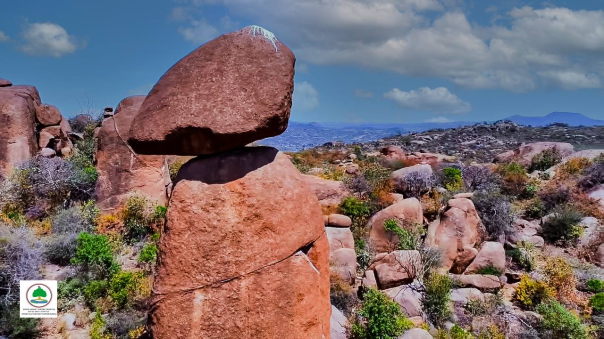
Oromia, Babille— Rising majestically from the rugged landscape of Eastern Hararghe Zone, the extraordinary rock formation known as Dhagaa Baabbilee stands as one of Ethiopia’s most remarkable natural wonders, offering visitors an unforgettable encounter with geological history.
Located just five kilometers from the town of Babile and approximately 40 kilometers from the ancient walled city of Harar, this fascinating volcanic rock structure is easily accessible to both domestic and international tourists seeking authentic natural experiences. The site, situated in an area locally called Dakkata, presents visitors with a stunning visual spectacle that has captivated travelers, photographers, and nature enthusiasts alike.
A Testament to Volcanic Origins
Dhagaa Baabbilee’s distinctive shape tells a story millions of years in the making. Geological experts attribute its unusual formation to ancient volcanic activity that shaped the region’s topography. Unlike typical rock formations found elsewhere in the country, these particular monoliths stand in remarkably preserved forms, their peculiar contours defying conventional expectations of natural rock structures.
Standing prominently along the roadside, the formation offers convenient viewing opportunities without requiring strenuous hiking or specialized equipment. Visitors can simply park and witness this geological masterpiece up close, making it an ideal stop for travelers journeying between Harar and Babile.
Photographer’s Paradise
For photography enthusiasts and social media content creators, Dhagaa Baabbilee presents an unparalleled backdrop. The interplay of light and shadow across the volcanic rock faces during golden hours creates dramatic compositions that have made the site increasingly popular among Ethiopia’s growing community of nature photographers.
“The way these rocks catch the morning light is simply magical,” observed Tadesse Alemu, a frequent visitor from Harar. “Every visit offers a different perspective, a new angle to appreciate.”
Gateway to Greater Exploration
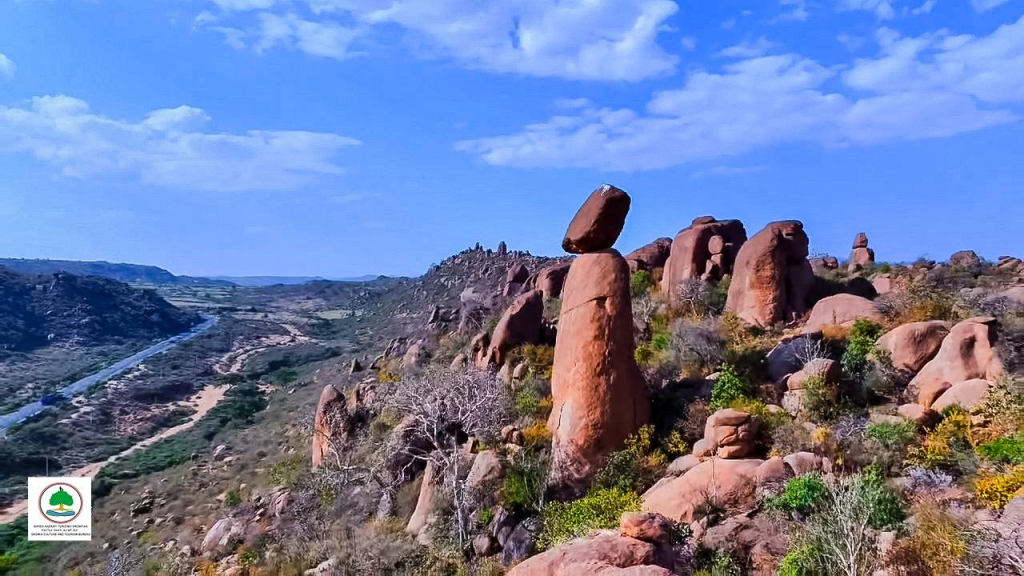
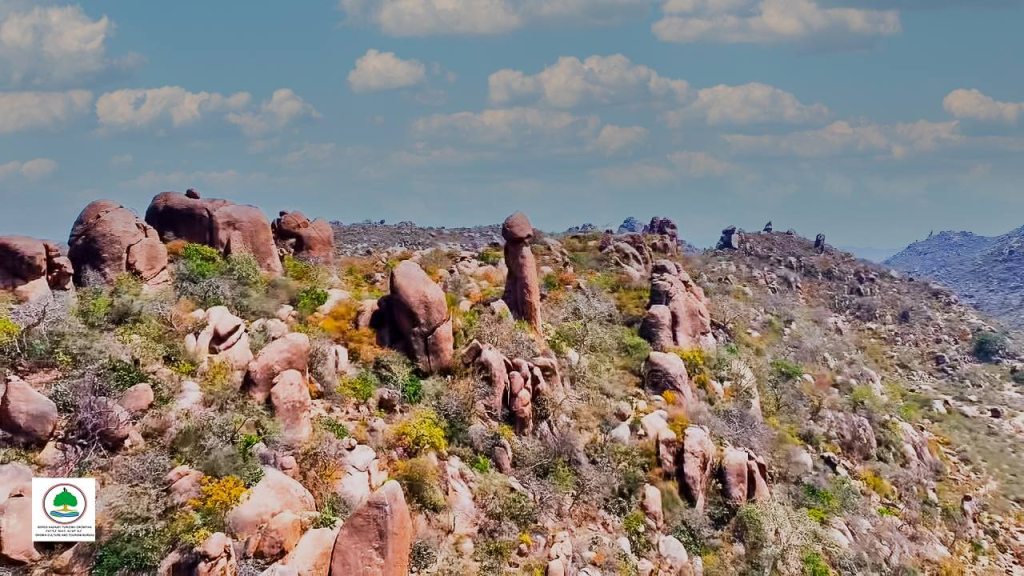
The Dakkata Valley, stretching from Harar to Funyaan Bira, features an entire landscape dotted with similar volcanic formations, creating what tourism experts describe as an underutilized geological corridor with tremendous potential for adventure tourism, educational field trips, and scientific research.
Unlike many tourist destinations that offer only recreational value, Dhagaa Baabbilee serves multiple purposes. Its accessibility makes it suitable for school excursions focusing on geography and natural sciences, while history researchers find value in understanding how such formations have influenced human settlement patterns in the region.
Untapped Tourism Potential
Despite its proximity to Harar—a UNESCO-recognized heritage site that attracts thousands of international visitors annually—Dhagaa Baabbilee remains relatively unknown outside the immediate region. Local tourism stakeholders are now advocating for greater promotional efforts to integrate this natural attraction into existing tourist circuits.
“We have this magnificent resource practically at our doorstep, yet many visitors to Harar leave without knowing it exists,” said Mulugeta Tesfaye, a tourism operator based in Babile. “The potential here is enormous—for local job creation, for community development, and for diversifying Ethiopia’s tourism offerings beyond the northern circuit.”
An Invitation to Discover
As Ethiopia’s tourism sector continues recovering and expanding, destinations like Dhagaa Baabbilee represent opportunities to showcase the country’s lesser-known natural heritage. The site embodies the geological diversity that makes the Horn of Africa region scientifically significant while offering accessible adventure for casual travelers.
“We invite everyone—whether you’re a researcher seeking to understand our geological history, a photographer chasing that perfect shot, or simply someone who appreciates the extraordinary beauty of nature,” said community representative Amina Ibrahim. “Come, visit Dhagaa Baabbilee, witness this wonder of Oromia’s natural heritage, and take pride with us in this magnificent gift of nature.”
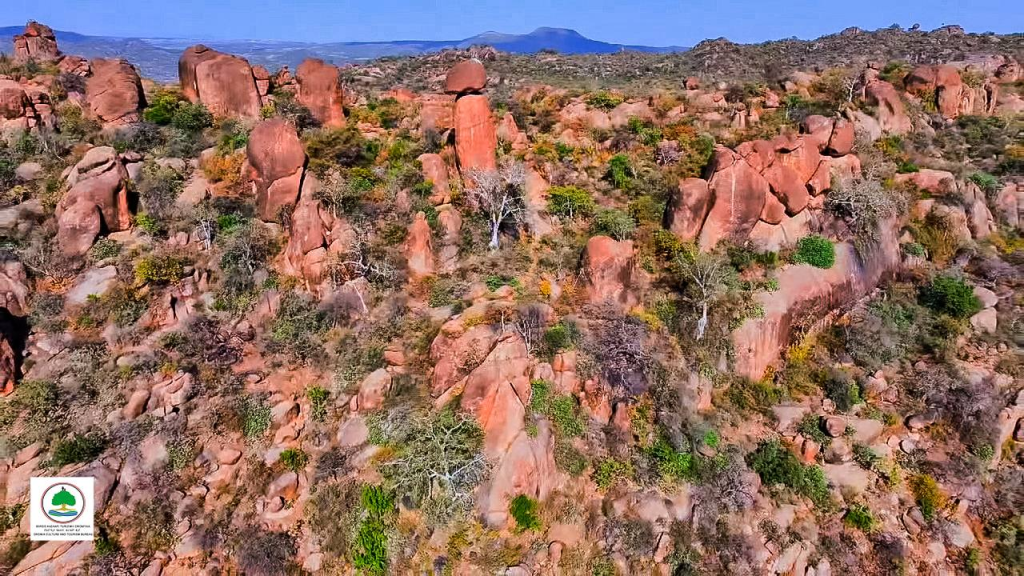
As sunset paints the volcanic rocks in shades of amber and crimson, visitors to Dhagaa Baabbilee experience what local guides describe as “the moment when stone and sky become one”—a fitting metaphor for a place where Ethiopia’s ancient geological past meets its promising tourism future.

A Call for Security, A Pledge for Protection: Oromia’s Leadership Outlines Commitment After Period of Unrest
A Call for Security, A Pledge for Protection: Oromia’s Leadership Outlines Commitment After Period of Unrest
In a direct address to mounting public concerns, a statement from Oromia’s leadership has acknowledged a sustained period of violence and insecurity, vowing to restore safety as the region’s fundamental priority. The message strikes a resonant chord with communities who have felt vulnerable, explicitly referencing the unresolved trauma of the 2016 Irreechaa tragedy as a pivotal moment of institutional failure.
“A safe nation is the foundation for everything else,” the statement declares, framing security not as a privilege but as the essential bedrock upon which economic prosperity, social development, and personal freedom are built. “Oromians cannot build their lives with confidence if they do not feel secure in their own communities.”
The frank acknowledgment of public anxiety comes after years of reported unrest involving various armed groups, inter-communal clashes, and allegations of state violence. This instability has disrupted livelihoods, deepened social fractures, and fueled a widespread demand for decisive action.
A Four-Pillar Pledge for Action
Moving beyond acknowledgment, the leadership has outlined a four-point action plan, presenting it as an unwavering commitment to its citizens:
- 🔵 Crack down on anti-Oromummaa: A pledge to confront ideologies and actions deemed hostile to Oromo identity, culture, and self-determination.
- 🔵 Tackle violent extremism: A commitment to address radicalization and violence from all sources that threaten civil order.
- 🔵 Take strong action to fight terrorism: A vow to combat groups officially designated as terrorist organizations operating within and across Oromia’s borders.
- 🔵 Secure our borders to protect Oromians: A promise to enhance control over regional boundaries to prevent cross-border incursions and the flow of weapons.
“Protecting Oromians and defending our way of life is a government’s first responsibility,” the statement concludes. “That is the standard we will uphold.”
The Shadow of Irreechaa and the Test of Trust
The explicit mention of the 2016 Irreechaa tragedy is particularly significant. During the annual Oromo thanksgiving festival that year, a deadly stampede and alleged security force actions led to hundreds of deaths, a profound national trauma that has become symbolic of a broken trust between the people and the state. By invoking it, the current statement directly ties its new security pledge to the healing of that historic wound.
The success of this pledge now rests on its translation from rhetoric into tangible, even-handed, and effective action on the ground. Observers and citizens alike will be watching closely to see if these commitments lead to a measurable decrease in violence, the protection of all communities, and the restoration of the confidence needed for Oromians to build their futures without fear. The ultimate test will be whether safety, promised as a foundation, can truly be rebuilt.
“Protecting Oromians and defending our way of life is a government’s first responsibility,” the statement concludes. “That is the standard we will uphold.”

Australia’s Untold Stories: Celebrating Refugee Contributions
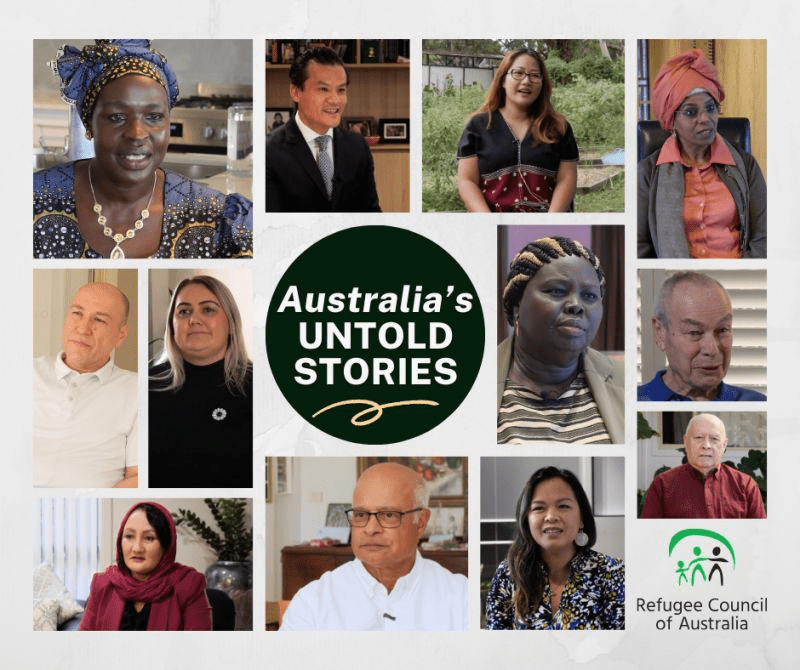
Australia’s Untold Stories: New Project Celebrates the Lives and Legacies of Former Refugees
[Advocacy for Oromia] Today launched Australia’s Untold Stories, a powerful digital archive of oral histories from 12 former refugees who have rebuilt their lives and enriched the nation. The project spotlights individuals from diverse backgrounds—including Afghanistan, Bosnia and Herzegovina, Chile, Eritrea, Laos, South Sudan, and Vietnam—as a testament to the resilience and contributions of over a million refugees who have settled in Australia since World War II.
Body Content Structure:
You can structure the main body of your article to include the following sections:
- The Heart of the Project: Briefly explain the “why” behind the project. Emphasize its goal to move beyond statistics and present personal, human narratives of courage, loss, hope, and new beginnings. Mention the format (e.g., video interviews, written narratives) and the goal of preserving these stories for a national audience.
- Introducing the Storytellers: This is the core of your feature. Once you access the project site, select two or three compelling individuals to highlight. For each, provide:
- Name and Origin: (e.g., “Amina, who fled Afghanistan…”).
- A Glimpse of Their Journey: A brief, poignant detail from their story (e.g., the profession they left behind, a moment of danger or hope).
- Their Contribution in Australia: How they rebuilt their life (e.g., founded a community organization, became a nurse, opened a restaurant sharing their culture, raised a family).
- A Powerful Direct Quote: Pull a short, impactful line from their interview that summarizes their experience or perspective. This adds authenticity and emotional depth.
- The Broader Tapestry: Connect these individual stories to the larger historical narrative mentioned in your prompt. Discuss how these 12 stories represent the wider contributions refugees have made to Australian society over eight decades in fields like medicine, cuisine, arts, business, and community life. Acknowledge the role of welcoming communities and settlement support.
- Call to Action and Access: Direct readers clearly to where they can experience the stories. You can use the text you already have: “Through their stories, we reflect on the contributions refugees have made… Watch Australia’s Untold Stories: https://bit.ly/AustraliasUntoldStories“. Consider adding a final reflective sentence on the importance of listening and understanding.
Quotes to Incorporate (add from the videos once you watch them):
- Look for a quote from a project organizer on the vision for the archive.
- Look for 2-3 moving quotes from the featured individuals about their past, their journey, or their life in Australia.
- You could also consider including a brief quote from a historian or community leader on the national significance of such projects (if available on the site or from your own research).
Practical Next Steps:
- Visit the Direct Link: Go to
https://bit.ly/AustraliasUntoldStoriesin your web browser to watch the videos and read the full profiles. - Take Detailed Notes: As you watch, note down the names, key life events, professions, and the most powerful statements from the interviewees.
- Fill in the Template: Use the notes to populate the article structure above with specific, vivid details.
- Add a Relevant Image: If the project page provides promotional images or video stills you have permission to use, include one with your article to make it more engaging.

The Poet Who Spoke for a Continent: Remembering Tsegaye Gabre-Medhin (1936-2006)
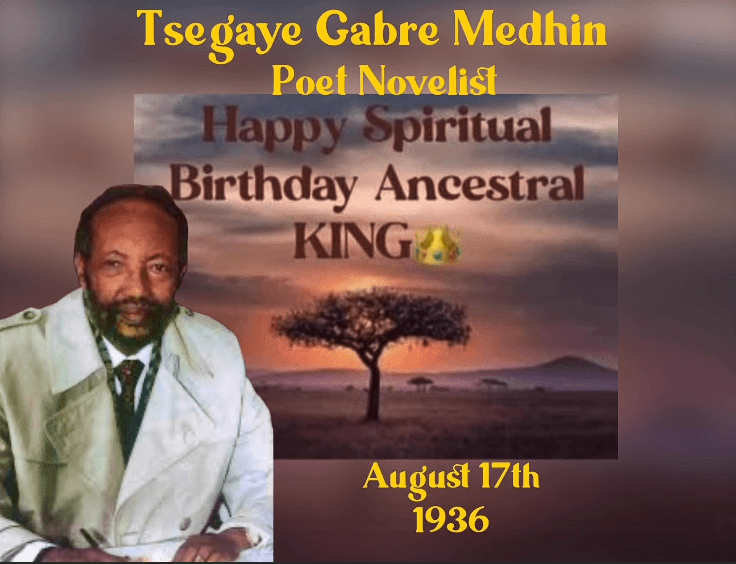
Subtitle: Ethiopia’s towering playwright, poet laureate, and pan-African visionary left a legacy that bridged tradition, revolution, and human dignity.
On a February day in 2006, in a Manhattan hospital room far from the highlands of Boda where he was born, the heart of Ethiopian letters ceased to beat. Tsegaye Gabre-Medhin – playwright, poet, pan-Africanist, and keeper of his nation’s conscience – passed away at 69, physically separated from the land he immortalized but spiritually never departed from it.
Tsegaye’s life was a testament to the power of art to shape national identity and awaken continental consciousness. Educated in the wake of Ethiopia’s liberation from Italian occupation, his genius was recognized early. While still a schoolboy, he wrote a play performed before Emperor Haile Selassie—a prophetic beginning for a writer who would spend a lifetime wrestling with the myths, heroes, and soul of his nation.
The Playwright as Patriot and Teacher
Rejecting careers in law and commerce, which he saw as “soul-destroying,” Tsegaye devoted himself to the stage. As a director of Ethiopia’s National Theatre, he became a deliberate pedagogue. He believed his country needed heroes, and through historical dramas like Tewodros and Petros at the Hour, he taught Ethiopians to respect the martyrdom, reform, and resistance that defined their past. Yet his vision was never parochial. His celebrated play The Oda Oak Oracle, a comedy of Ethiopian country life, was performed across eight nations, proving the universal appeal of locally-rooted storytelling.
The Poet as Pan-African Visionary
Tsegaye’s patriotism was expansive, firmly rooted in an Africanist worldview. A friend of Senegal’s President Léopold Sédar Senghor, he engaged deeply with the Négritude movement. His scholarship led him to trace the linguistic and cultural threads linking the Nile Valley civilizations, asserting Ethiopia’s place within a broader African continuum. This vision culminated in 2002 when his poem, calling to “make Africa the tree of life,” was adopted as the anthem of the newly-formed African Union.
The Advocate as Unyielding Conscience
Beyond the stage and page, Tsegaye was a formidable advocate for justice. He campaigned tirelessly for the return of Ethiopia’s looted heritage—the Aksum Obelisk taken by Mussolini and the priceless manuscripts pillaged from Emperor Tewodros’s fortress at Magdala. For him, these were not mere artifacts but fragments of the national soul.
In his later years, his focus broadened to the universal themes of peace and human dignity, earning him international recognition and a place in the United Poets Laureate International.
A Legacy of Unbroken Spirit
Confined to exile by the medical necessity of dialysis, Tsegaye became a spiritual anchor for the diaspora, affectionately known as Blattengetta—the great scholar. His seminal poem, “Prologue to African Conscience,” remains a piercing critique of post-colonial malaise, warning of “luxury and golden chains that free the body and enslave the mind.”
Tsegaye Gabre-Medhin taught us that to look forward, a people must first learn to look deeply into their own past and see themselves within the grand tapestry of their continent. He was not just Ethiopia’s poet laureate; he was Africa’s scribe, a visionary who understood that true freedom lives in the stories we tell, the history we reclaim, and the conscience we dare to awaken.
Galatoomaa, Blattengetta. Your footprints in time are indelible.

Urgent Action: Halt Ethiopia TPS Termination Now

FOR IMMEDIATE RELEASE
URGENT PETITION: HUMANITARIAN GROUPS PLEA FOR LAST-MINUTE HALT TO ETHIOPIA TPS TERMINATION
With just 48 hours remaining before a critical deportation protection expires, the Oromia Support Group (OSG) is issuing a global call to action. A petition on Change.org, directed at Secretary of Homeland Security Kristi Noem, demands the immediate rescission of the decision to terminate Temporary Protected Status (TPS) for nationals of Ethiopia, including the Oromo people.
The termination, set for February 13, will revoke the legal right of approximately 2,200 Ethiopians to live and work in the United States. The Department of Homeland Security (DHS) decision, announced last year, concludes that conditions in Ethiopia—a country grappling with recent conflict, severe drought, and ongoing human rights concerns—no longer warrant temporary humanitarian protection.
“This decision implies Ethiopia is now a safe place to deport people to, which contradicts the reality on the ground,” said Dr. Trevor Trueman, Chair of the Oromia Support Group. “We are in a race against time to prevent the return of individuals to a situation of extreme peril.”
The petition explicitly holds Secretary Noem, who oversees U.S. Immigration and Customs Enforcement (ICE), accountable. It references controversial ICE actions, alleging the agency has “detained thousands of immigrants, including children, in hostile detention centres many hundreds of miles from their homes, families, and legal representatives.” The petition frames the appeal as a chance for the public to “register disapproval of the actions of the DHS, including ICE.”
Dr. Trueman specifically addressed potential concerns about the petition’s organizer, the Ethiopian American Association. He emphasized it is a young, non-partisan organization with no nationalistic bias within Ethiopia. “Unlike other similarly-named organisations, it does not exhibit an anti-Oromo bias,” he stated, noting that its President, Aga Ambissa Ayana, is a former Oromo refugee himself, whom Trueman met in Nairobi in 2010 prior to his resettlement in the U.S.
Advocates warn that without TPS, beneficiaries will face imminent deportation to a country still recovering from a devastating civil war and facing severe humanitarian crises in several regions, including Oromia. The termination affects those who have built lives, families, and careers in the U.S., often for several years.
The Petition can be found here: https://www.change.org/…/protect-tps-holders-of…
About the Oromia Support Group:
The OSG is a UK-based advocacy organization focused on human rights and political issues concerning the Oromo people of Ethiopia.
Contact: Dr. Trevor Trueman, Chair, Oromia Support Group.
###
Note to Editors: The DHS has stated the termination is based on a thorough assessment of country conditions. Requests for comment from the Department of Homeland Security on this specific petition were not immediately returned.

Love and Understanding: Join Our Online Peace Academy

Subtitle: Join the Australian Religious Peace Academy (ARPA) for an Evening of Dialogue, Trivia, and Shared Insight
In a world that often highlights our differences, we believe peace begins with a simple, courageous act: choosing to understand one another.
We warmly invite you to the February Australian Religious Peace Academy (ARPA) Interfaith & Intercultural Dialogue—an interactive gathering designed to inspire connection, curiosity, and shared insight across cultures and faiths.
Event Details:
- 📅 Date: Tuesday, 24 February
- 🕐 Time: 7:30 PM – 9:00 PM
- 📍 Location: Online via Zoom
- 🔗 Registration: https://forms.gle/oCCwzo6p3LqKoq3L6
This Month’s Theme: “Love Starts with Understanding”
We will explore how empathy, open dialogue, and a willingness to learn from one another can transform relationships and strengthen our communities. When we take time to truly understand, love grows naturally—and peace becomes possible.
What to Expect:
This will be a lively and interactive evening! We’ll engage through a game of cultural and religious trivia, where you’ll have the opportunity to discover new perspectives, put your knowledge to the test, and build genuine understanding in a welcoming and enjoyable space.
We’ll also introduce our upcoming major event, the International Religious Peace Academy (IRPA), beginning on Saturday, 28 February. Learn how this global gathering invites us to build religious harmony through deepening our understanding of one another’s faiths and lived experiences.
Whether you are new to ARPA or a returning participant, your voice and presence matter. We would be honoured to have you join us for this meaningful and uplifting session.
Let’s come together to learn, connect, and rediscover how understanding can be the true starting point of love and lasting peace.
Please register via the link above to secure your spot and receive the Zoom details.
#ARPA #InterfaithDialogue #Intercultural #LoveStartsWithUnderstanding #Peacebuilding #Community #OnlineEvent #ReligiousHarmony #AustralianDialogue

A Titan’s Farewell: Seattle Bids Final Goodbye to Obbo Maammaa Argoo, Pillar of the Oromo Struggle
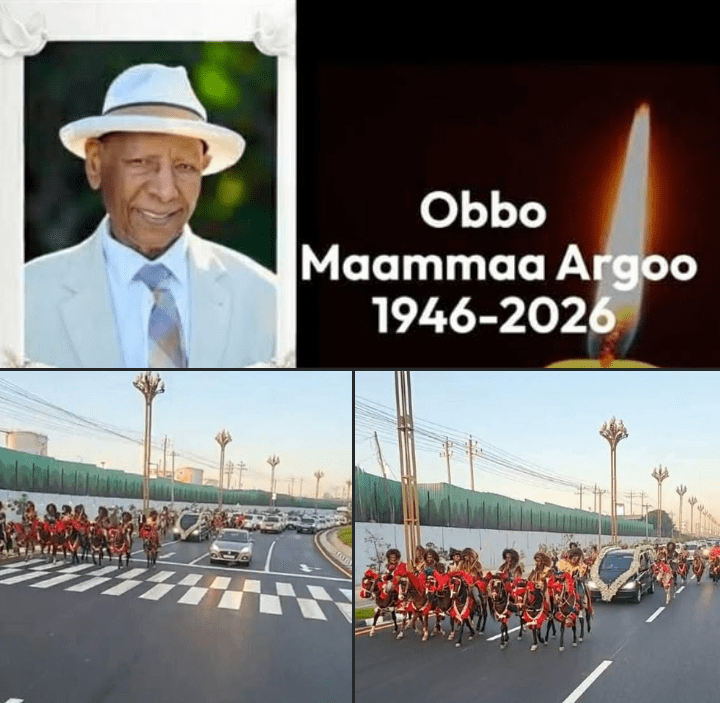
Subtitle: A Hero’s Funeral at Bole International Airport Honors a Life of Service, From Shashamanne to Seattle.
SEATTLE, USA – Under solemn skies, the global Oromo community gathered at Bole International Airport to perform the final rites of honor (Sirna Simannaa) for a true giant of the Oromo struggle and a foundational pillar of the diaspora: Obbo Maammaa Argoo.
His passing marks not just a personal loss, but the closing of a chapter in modern Oromo history. Obbo Maammaa Argoo was a man who never left the side of his people, fighting for Oromumma until his final breath, as his life story powerfully attests.
The dignified funeral service was attended by elders, prominent figures, political leaders, and countless community members, a testament to the vast and profound impact of his decades of unwavering service.
A Life of Action, From the Heart of Oromia to the Heart of the Diaspora:
Born in 1946 in Shashamanne, West Arsi, Obbo Maammaa Argoo’s commitment to his people ignited early. In the 1960s, he and his peers launched literacy campaigns in their local area, establishing schools and teaching in remote villages—a foundational act of empowerment.
After immigrating to the United States in 1989, settling first in Washington D.C. and then moving to Seattle in 1992, he immediately began serving the Oromo community with visionary leadership. He helped build the Seattle Oromo community from the ground up, serving in various leadership capacities.
His legacy is etched in the preservation of identity. For over 27 years, he tirelessly organized weekly programs to teach Oromo children their language, culture, history, and sense of self—ensuring the flame of Oromumma burned bright in a new land.
He was also a key architect of unity and institution-building. His instrumental role in founding the Oromo Soccer Federation and Sports Association in North America (OSFNA) stands as a monumental achievement, creating a lasting platform for community cohesion, pride, and networking across the continent.
A Man of Family and Principle:
Beyond his public life, Obbo Maammaa Argoo was a devoted family man, a loving husband, and a father to five children. He was widely known as a steadfast advocate for human rights and actively participated in numerous charitable and social service initiatives in Seattle.
Today, as we lay him to rest at Bole International Airport, we do not say goodbye to his spirit. We commit to carrying forward the institutions he built, the language he taught, and the unwavering love for Oromia he embodied. His name will forever be synonymous with dedication, resilience, and the boundless potential of community service.
Rest in perfect peace, Obbo Maammaa Argoo. Your work is done, but your light will forever guide our path.
#MaammaaArgoo #OromoHero #SeattleOromo #OSFNA #OromoDiaspora #RestInPower #Simannaa

In His Light, We Remember: A Candlelight Vigil for Professor Asmarom Legesse
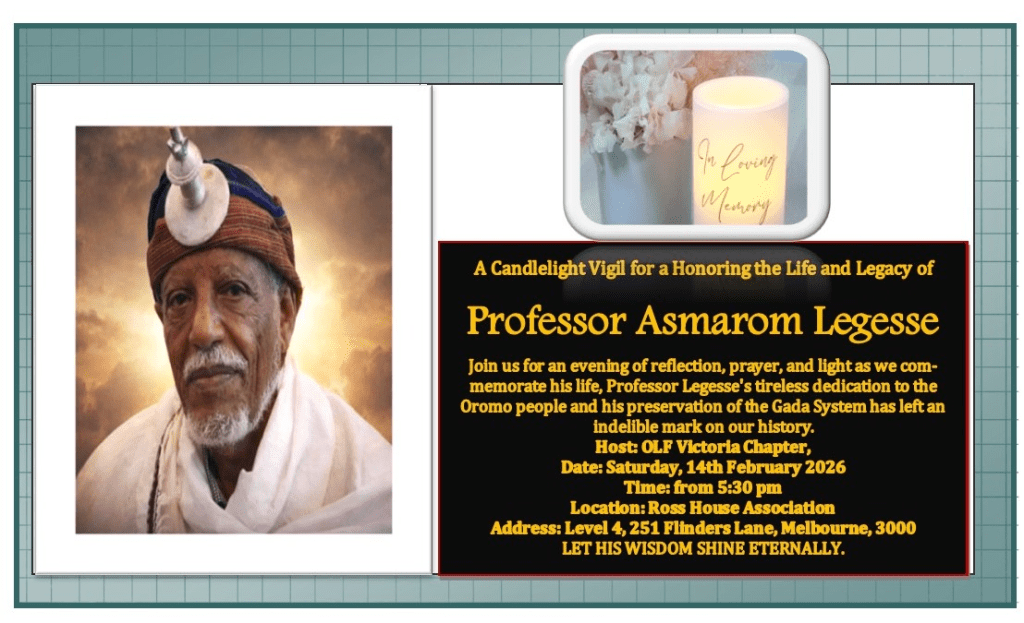
Subtitle: An Evening to Honor the Scholar Who Illuminated the Soul of the Oromo Nation
The flame of a candle does more than push back the darkness; it creates a space for memory, for gathering, and for honoring a light that once burned brilliantly among us. Join us as we come together in quiet solidarity to celebrate the life, legacy, and eternal wisdom of Professor Asmarom Legesse.
Professor Legesse was more than an anthropologist; he was a guardian of civilization. His seminal, tireless work was the bedrock upon which the world came to understand the sophistication, depth, and democratic brilliance of the Gadaa System. Through his meticulous scholarship, he did not merely study Oromo history—he preserved its constitutional soul for future generations, affirming its place in the global canon of indigenous political thought.
His dedication was an act of profound love for the Oromo people, ensuring our identity is documented with the academic rigor and dignity it deserves. His legacy is an indelible mark on our history, a torch that continues to guide scholars, leaders, and all who seek justice rooted in ancient wisdom.
You are warmly invited to an evening of reflection, prayer, and shared light.
- Host: OLF Victoria Chapter
- Date: Saturday, 14th February 2026
- Time: 5:30 PM onwards
- Location: Ross House Association, Level 4, 251 Flinders Lane, Melbourne, 3000
Let us gather, candles in hand, to share stories, offer prayers, and reaffirm our commitment to the principles he so eloquently championed. In the soft glow of our collective light, we will ensure that his wisdom is never extinguished.
Let his wisdom shine eternally.
#ProfessorAsmaromLegesse #GadaaSystem #OromoHistory #CandlelightVigil #MelbourneEvent #OLFVictoria #LegacyOfLight

The Seed of Culture: Oromo Heritage Training Takes Root at Grassroots in Yaaballo
Subtitle: Local and Village Leaders Empowered as Standard-Bearers of Cultural Revitalization
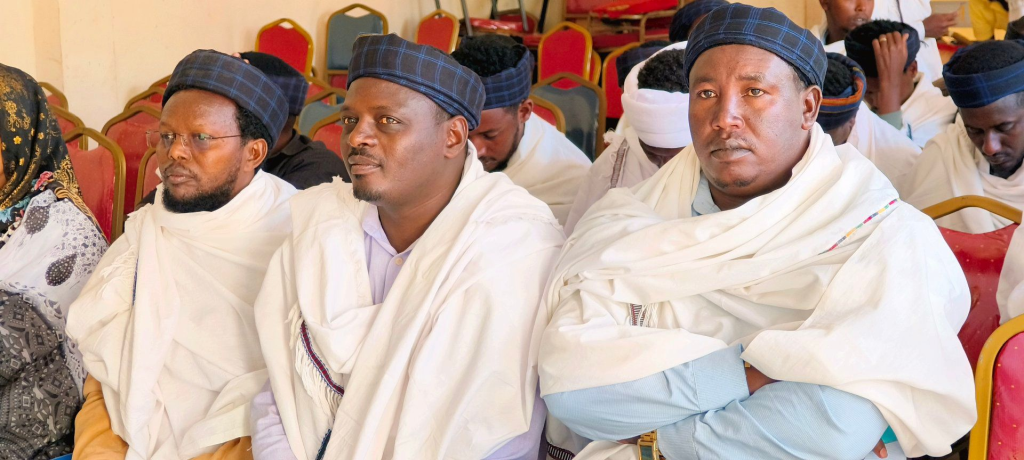
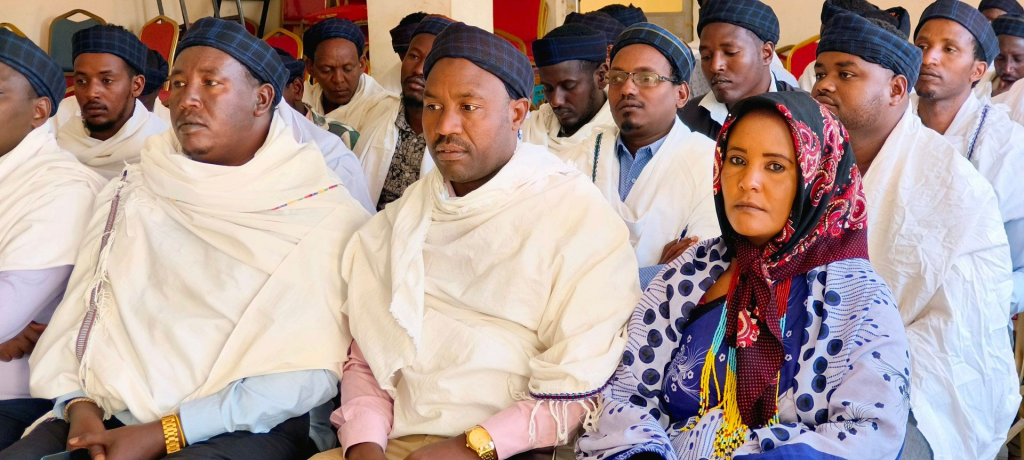
YAABALLO, BORANA ZONE, OROMIA – In a significant move to ground cultural preservation in community leadership, a comprehensive Oromo Cultural Heritage Training (Leenjii Haaromsa Aadaa Oromo) has been successfully delivered to administrators at the woreda (district) and village levels in Yaaballo.
The training, held on Gurrandhala 2, 2018, is part of a sustained, multi-year strategy. It falls under the broader Oromo Cultural Heritage Revitalization Strategic Plan (2017-2027) and the specific annual plan for 2018, signaling a long-term, institutional commitment to preserving Oromo identity.
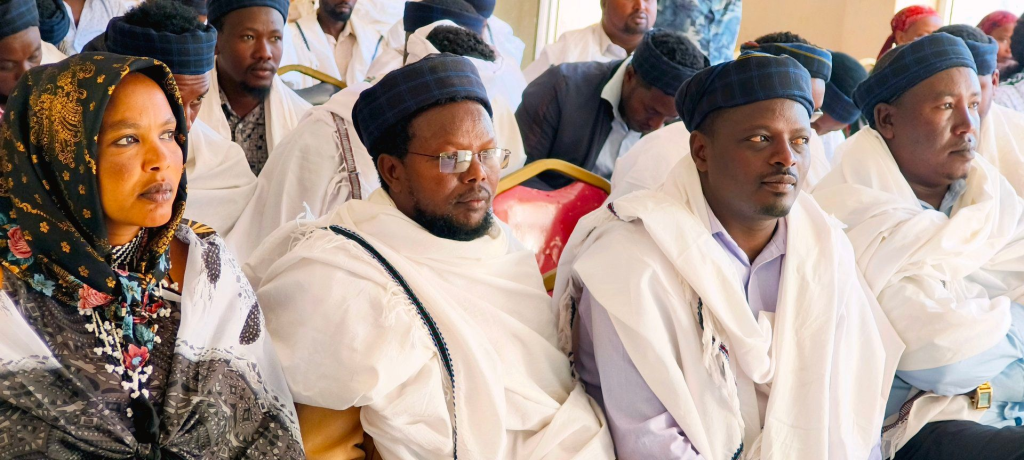
In his opening remarks, Yaaballo Woreda Administrator, Obbo Boruu Diida, framed the initiative as foundational to nation-building. “Cultural heritage is not merely about expressing our identity,” he stated. “It is the very pillar of peace, social cohesion, and prosperity. Therefore, cultural revitalization must be adopted as a core agenda and implemented vigorously at all levels.”
Echoing this sentiment, Obbo Soraa Halakee, Head of the Woreda Prosperity Party Office, highlighted the multidimensional importance of culture. “Cultural heritage plays a critical role in social, economic, and political life,” he said. He called on all community structures to work in an integrated manner and urged the youth to actively engage in revitalization work, which will help “preserve valuable traditions and transform detrimental practices.”
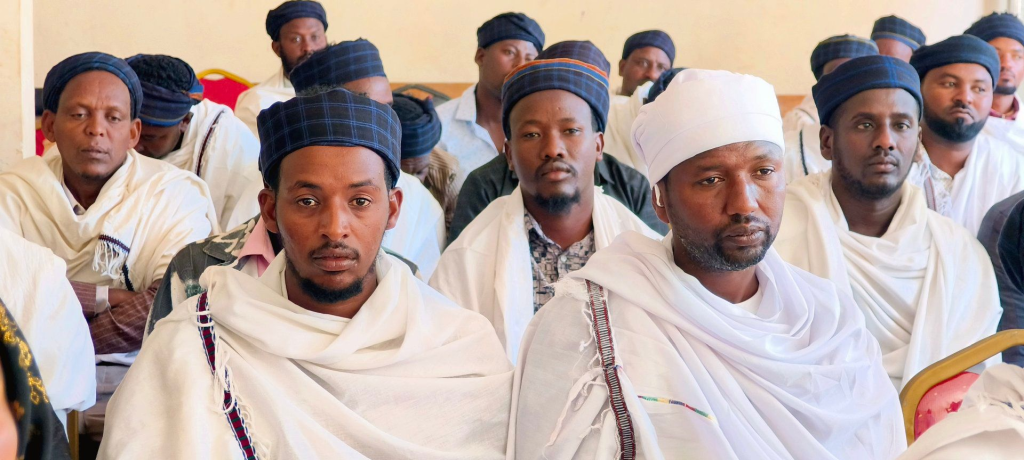
The message from Addee Simenyi Aschaloo, Head of the Woreda Public Mobilization Office, positioned the training as a key implementation of the Oromia regional government’s flagship cultural policy. “This cultural revitalization is a strategy to reinstate our forefathers’ morning rituals in every household, to change work habits, and to strengthen the stage, knowledge, and economy of the Oromo people,” she explained. “It goes beyond restoring lost culture; it plays a paramount role in shaping the ongoing social, economic, and political transformations.”
Participants in the training engaged actively, sharing perspectives and unanimously emphasizing that every individual must play their part in making this cultural revitalization a reality and in returning lost heritage to its rightful place.
Why This Matters:
This training represents a top-down support for bottom-up change. By equipping local leaders—the figures closest to the people—with knowledge and a clear mandate, the initiative ensures that cultural preservation is not a distant policy but a living, community-driven practice. It recognizes that sustainable cultural vitality begins with empowered local stewardship.
#OromoCulture #AadaaOromo #CulturalHeritage #HaaromsaAadaa #Yaaballo #Borana #CommunityLeadership #Oromia

The Power of the Table: Why Choosing to Sit Down is Africa’s Greatest Political Strength
A Look at the Psychological, Democratic, and Social Benefits of Dialogue
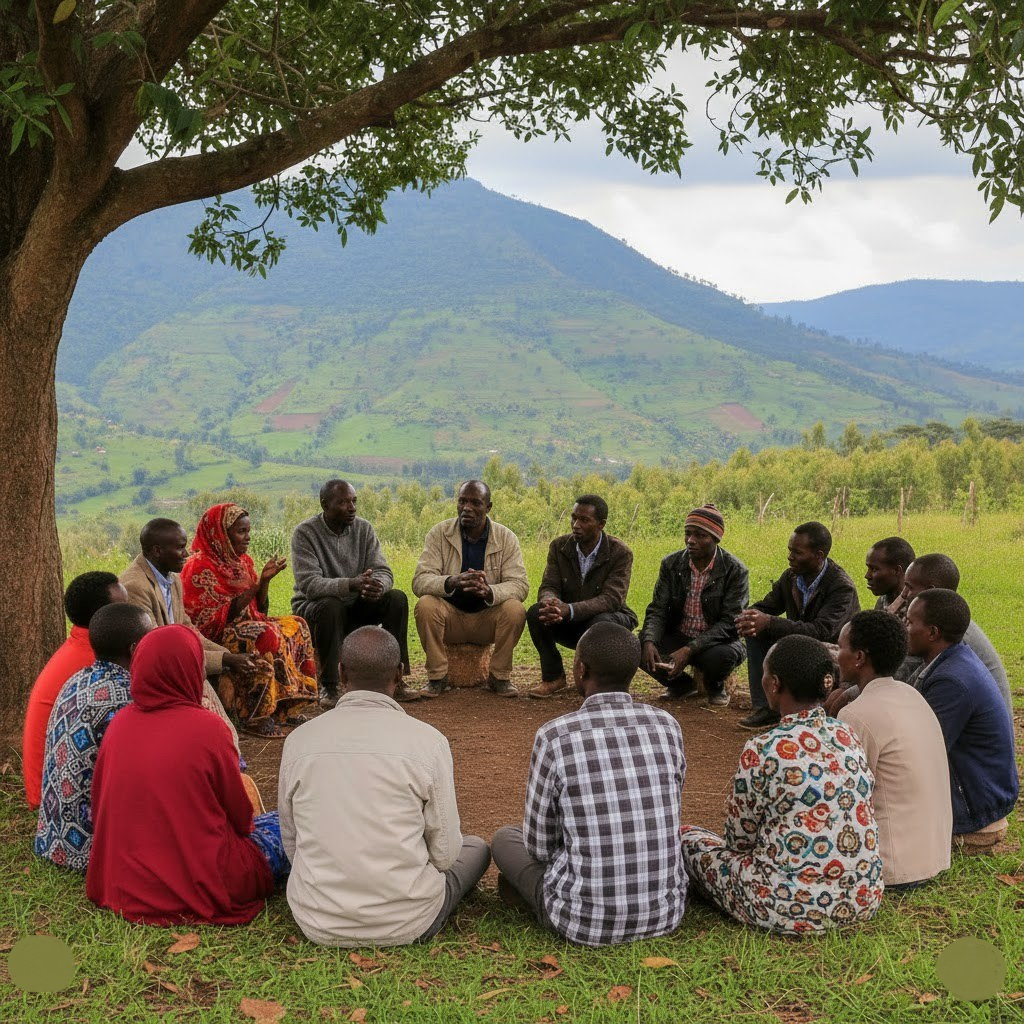
Across our world, diverse societies are navigating complex conflicts and seeking their own solutions, evolving with the times. While African communities have long-held methods for resolving disputes, there is one universal, key action that binds them all: choosing to sit down and talk.
The act of sitting down to negotiate is a cornerstone of national dialogue, conflict resolution, and peacebuilding processes. What positive contributions does it make? The following points explain:
👉 Psychological Benefits:
Studies in this field show that when conflicting parties willingly sit down to talk, numerous psychological advantages emerge. When people sit down to dialogue, they enter a state of mental calm. By exercising self-control and utilizing their capacity for reason, their stable personality is actualized. This creates a favorable condition for discussion and debate, moving away from raw emotion and toward reasoned exchange.
👉 Democratic Benefits:
The act of sitting down to negotiate is, in itself, a demonstration of achieved equality. When all parties sit for discussion, it is a visible sign that none are inherently superior to the others. Furthermore, in forums like national dialogues, people gathering in a circular formation helps balance power dynamics, symbolizing that all voices hold space and that no single position dominates.
👉 Benefits Based on Social Trust:
In a national dialogue process, the preparation and willingness of all stakeholder groups to sit together and talk in unity builds mutual trust. It moves parties away from thinking, “The other side wants to destroy us,” and instead permits them to express their opposition, concerns, and desires, and to listen to the other’s. This fosters and deepens trust, which is the essential foundation for any lasting agreement.
The Ethiopian National Dialogue Commission embodies this critical philosophy. By creating the literal and figurative table around which Ethiopians can sit, it seeks to harness these very benefits—psychological calm, democratic equality, and social trust—to navigate the nation’s complex challenges. The simple, profound act of taking a seat is the first step in moving from confrontation to conversation, and from conflict to shared understanding.
#Dialogue #Peacebuilding #NationalDialogue #ConflictResolution #Africa #Ethiopia #SocialCohesion




 Advocacy for Oromia