Category Archives: Information

InTouch Unveils Evolved Brand Identity: A Future Beyond Violence
For forty years, the organization has walked alongside women, children, and communities with courage, care, and deep cultural understanding
MELBOURNE, Australia — After four decades of dedicated service supporting migrant and refugee women experiencing family violence, intouch has unveiled a refreshed brand identity that signals both continuity and evolution. The organization, which has grown exponentially in both reach and complexity since its founding, announced the transformation as a clearer expression of who they have always been—and who they are becoming .
“Today, we are proud to share our evolved brand identity,” the organization announced. “This evolution is not a departure from who we are, but a clearer expression of it. It reflects our growth, our leadership, and our commitment to ensuring the way we communicate truly aligns with the strength, dignity and purpose that define our work” .
Four Decades of Culturally Safe Support
For forty years, intouch has walked alongside women, children and communities with courage, care and deep cultural understanding. What began as a grassroots response to the specific needs of migrant and refugee women experiencing family violence has grown into a nationally recognized leader in culturally safe family violence support .
The organization’s longevity speaks to both the enduring need for its services and the effectiveness of its approach. By centering cultural understanding as essential to effective support, intouch has developed expertise that generic family violence services cannot replicate. Their work acknowledges that safety cannot be separated from cultural identity—that true support must honor who women are, where they come from, and what they need.
Growth and Responsibility
As the organization’s work has grown in reach and complexity, so too has its responsibility—to the people they support, the partners who trust them, and the future they are helping to shape. This evolution reflects a mature organization stepping fully into its leadership role within the family violence sector .
The refreshed identity positions intouch to meet contemporary challenges with renewed clarity and purpose. Family violence does not stand still, and neither can the organizations dedicated to ending it. By evolving how they communicate and present themselves, intouch ensures they remain relevant and accessible to those who need them most.
A Clearer Expression of Purpose
The evolution represents not a departure from the organization’s core identity but a more precise articulation of it. Every element of the refreshed brand has been designed to communicate the strength, dignity and purpose that have always characterized intouch’s work .
This clarity extends to the organization’s fundamental purpose, now stated with renewed conviction:
“To champion culturally safe family violence support for anyone who needs it, anywhere they need it.”
This purpose statement encompasses both the “what” and the “how” of intouch’s work—the commitment to supporting all who need help, regardless of location or circumstance, and the distinctive approach of ensuring that support is culturally safe. For migrant and refugee women, cultural safety is not a luxury or an add-on; it is essential to effective intervention and genuine healing.
Strengthening Advocacy and Connection
The refreshed identity strengthens how intouch shows up, advocates, and connects with the communities they serve. In a crowded field of service providers, clear communication about what makes intouch distinctive helps ensure that those who need their specific expertise can find them .
For partners and funders, the evolved identity signals an organization confident in its leadership role and clear about its contribution to the broader effort to end family violence. For the women and children intouch supports, it promises continuity of the culturally safe care they have always received, delivered with renewed clarity and purpose.
Honoring Those Who Shaped the Organization
The evolution honours the community, staff, partners and supporters who have shaped intouch over four decades. No organization reaches forty years without the dedication of countless individuals whose contributions, large and small, built the foundation upon which today’s work stands .
By evolving thoughtfully—building on what has always been true while adapting to meet present and future needs—intouch ensures that the legacy of those who came before continues to inform and inspire the work going forward. The refreshed identity carries forward the values and commitments that have always defined the organization, expressed for a new era.
Equipped for the Future
The evolution ensures intouch is equipped to continue this vital work with clarity, courage and care into the future. The challenges ahead—changing demographics, evolving forms of family violence, shifting policy landscapes—require an organization that is both grounded in experience and adaptable to change .
With refreshed tools for communication and advocacy, intouch stands ready to meet these challenges. The clarity of purpose that emerges from this process will guide decision-making and priority-setting for years to come, ensuring that resources are directed where they can have the greatest impact.
The Work Continues
“This evolution honours the community, staff, partners and supporters who have shaped intouch over four decades,” the organization stated. “It ensures we are equipped to continue this vital work with clarity, courage and care into the future” .
The announcement carries a message of both continuity and recommitment:
“The work continues. The commitment deepens. The future is beyond violence.”
This framing positions the brand evolution not as an endpoint but as a milestone on an ongoing journey. The work of ending family violence is generational; forty years represents a significant chapter, but the story continues. With deepened commitment and renewed clarity, intouch presses forward toward the future they are helping to create.
A Vision of What’s Possible
The tagline “A future beyond violence” encapsulates both hope and determination. It acknowledges that such a future is possible—that family violence is not inevitable but can be prevented and ultimately ended. At the same time, it recognizes that achieving this future requires sustained effort, cultural competence, and unwavering commitment .
For the migrant and refugee women intouch supports, a future beyond violence is not abstract—it is the concrete goal of every intervention, every safety plan, every supportive conversation. The organization’s evolved identity keeps this vision front and center, reminding all who encounter it of what they are working toward.
Looking Forward
As intouch enters its fifth decade with refreshed identity and renewed purpose, the organization looks forward to continuing its essential work. The challenges remain significant: family violence affects migrant and refugee women at disproportionate rates, and barriers to support—language, culture, immigration status, isolation—can seem insurmountable.
But intouch has forty years of evidence that these barriers can be overcome with the right approach. Culturally safe support works. Women and children can and do find safety and healing. And with each life transformed, the vision of a future beyond violence comes closer to reality.
The evolved brand identity announced today serves as both celebration of what has been achieved and commitment to what remains to be done. For intouch, for the communities they serve, and for all who share their vision, the work continues—toward a future beyond violence.

The TPLF: A Brutal Force That Should Never Have Been Given a Single Day’s Opportunity as an Organization
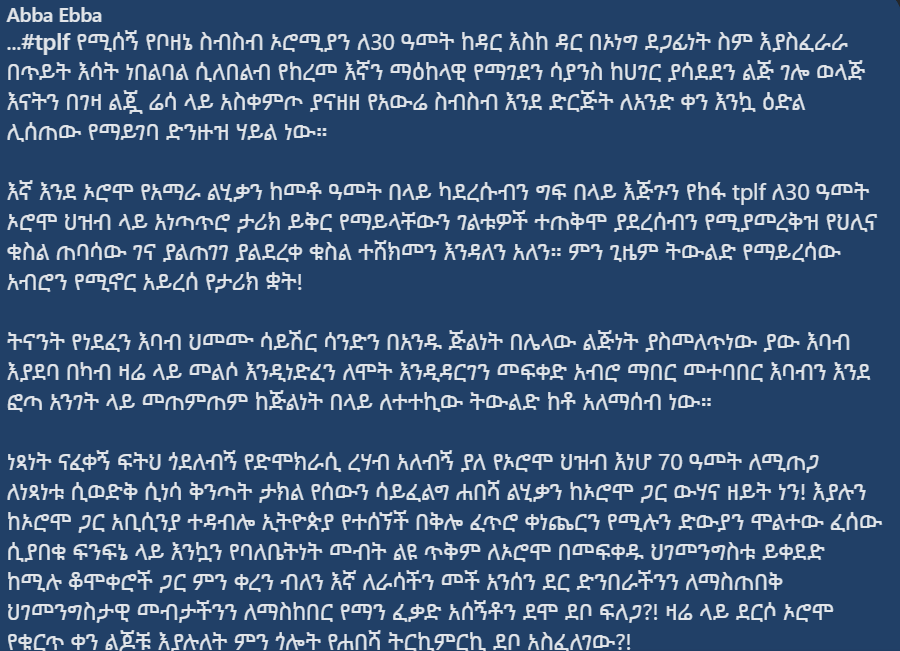
Oromo voices reflect on three decades of suffering under Tigrayan-led rule
FINFINNE — In a powerful and searing social media commentary that has resonated across Oromo networks, a voice identified as Abba Ebba has articulated the deep historical wounds and enduring grievances of the Oromo people against the Tigray People’s Liberation Front (TPLF), describing the organization as a “brutal force” that should never have been legitimized .
The statement, shared under the hashtag #Abba_Ebba, offers a raw and unflinching examination of the TPLF’s three-decade rule over Ethiopia and its specific impact on the Oromo people—a period the author describes as inflicting wounds “far worse than a hundred years of Abyssinian elite oppression” .
Thirty Years of Suffering
According to the commentary, the TPLF, operating under the banner of the Ethiopian People’s Revolutionary Democratic Front (EPRDF), controlled Oromia for thirty years, threatening the region from end to end in the name of supporting the Oromo Liberation Front (OLF) while actually enveloping the land in flames of gunfire .
The author describes how the TPLF blocked Oromos from the center, drove them from their country, killed children, and placed mothers upon the corpses of their own offspring in acts of unspeakable cruelty . This “collection of beasts,” as the author characterizes the TPLF, is portrayed as having committed atrocities that have left permanent scars on the Oromo collective consciousness .
“More than a hundred years of oppression by Abyssinian elites, the TPLF targeted the Oromo people for thirty years with historically unforgivable atrocities, using every means available,” the statement reads. “The wound of conscience they inflicted upon us is still unhealed, a scar not yet dried—we carry this unhealed wound with us” .
A Legacy That Lives With Generations
The commentary emphasizes that these historical wounds are not merely past events but living realities carried by the Oromo people. “Generations will not forget—it lives with us, an unerasable historical scar” .
The author draws a powerful analogy: “Yesterday, a snake bit us. Before the pain subsided, because of the foolishness of one and the childishness of another, we let it escape. That same snake, growing fat and multiplying, has returned today to bite us again, to bring us to death” .
Allowing this to happen, the author argues, is worse than foolishness—it is a failure to think of the coming generation. Collaborating with such forces, treating the snake as if it were a towel to be wrapped around one’s neck, represents a profound betrayal of the future .
The Quest for Freedom and Justice
The commentary gives voice to the Oromo people’s longstanding aspirations: “The Oromo people who say ‘I long for freedom, justice has been denied me, I hunger for democracy’—here they are, for nearly 70 years falling and rising in their struggle for freedom” .
Unlike others, the author asserts, Oromos have never sought scraps from anyone’s table. Yet Abyssinian elites have consistently declared, “We are like water and oil with Oromos!” while simultaneously claiming to have created a hybrid “mule” called Ethiopia through fusion with Oromos .
The author questions how, when the constitution grants special rights to Oromos even in Finfinne, there are those who would tear up the document, asking what remains for Oromos. “When will we stand up for ourselves, to protect our borders, to secure our constitutional rights—whose permission do we need to seek?” .
Today, the author notes, people say of Oromos, “They are children of the moment.” But what need has the Oromo of Abyssinian political maneuvering and crumbs?
The Folly of Sacrificing Justice for Peace
The commentary critiques those who urged compromise: “Yesterday, for the sake of peace, we abandoned justice! We forgave what you did publicly! There is no peace without justice” .
Those who stole wealth, whether collectively or individually, who used power to destroy lives, burn forests, displace people, commit inhuman acts in any form—the author insists they must not escape accountability .
Questions are raised about political transitions: “What and who is bringing the transition? From where to where?” The author suggests that those who mocked others for not understanding politics are now seeing the consequences .
What once appeared to some as downhill before them now seems as distant as the sky, transformed into an uphill struggle. “Are you truly not angered as you watch?” the author asks, suggesting that deep regret, not indifference, is the appropriate response .
Historical Memory: The Western Oromo Confederation of 1936
The commentary invokes a crucial but often overlooked chapter of Oromo history: the Western Oromo Confederation of 1936. Before the TPLF was even created, Oromos sent a delegation to the United Nations seeking to govern themselves through confederation .
This historical episode, disrupted by Italy’s five-year colonization of Abyssinia, demonstrates the long-standing Oromo pursuit of self-determination, predating the TPLF’s emergence by decades .
The author cites scholarly work by Ezekiel Gebissa on “The Italian Invasion, the Ethiopian Empire, and Oromo Nationalism: The Significance of the Western Oromo Confederation of 1936,” pointing to a tradition of Oromo political organizing that Abyssinian and Tigrayan narratives have systematically obscured .
Cultural Appropriation: The Heritage of “Weyane”
The commentary also raises questions of cultural appropriation, asking whether the TPLF has forgotten that “Weyane”—the traditional struggle strategy from which the organization derives its name—is actually Oromo heritage from Raya and Rayuma .
This observation, the author explains, is offered to counter any suggestion that Tigrayan or Amhara elites taught Oromos about freedom struggle. The historical record, including scholarship on “Peasant Resistance in Ethiopia: the Case of Weyane” published in the Journal of African History, demonstrates that Oromo traditions of resistance long preceded TPLF organizing .
The Complexity of Recognition
The author acknowledges that the situation is complex—like makeup applied and removed, artificial people appearing before cameras, living under disguise. But the weight of the matter, they emphasize, concerns the supremacy of the people, the formation of the nation, the debt owed to fathers, mothers, and faith .
“Knowledge means grasping the trunk of the tree, not hanging on its branches—hold the branches and you will fall” .
A Warning Unheeded?
The commentary concludes with a stark image: “O TPLF! The one who never says ‘enough’ will spit and continue. ‘Emboor! Emboor!’ (Get away! Get away!) they say to those who hold back and separate—now the flood has reached the neck, asking ‘What has brought my situation?'”
This metaphorical warning suggests that those who ignored calls for restraint and justice now find themselves overwhelmed by consequences of their own making .
Historical Context
The TPLF led the armed struggle that overthrew the Derg regime in 1991 and subsequently dominated Ethiopian politics for nearly three decades until Prime Minister Abiy Ahmed came to power in 2018. During their rule, the TPLF was the dominant force within the EPRDF coalition, controlling the levers of state power and directing security forces that, according to numerous human rights reports, committed widespread abuses against civilians in Oromia and other regions .
The period from 1991 to 2018 saw repeated military campaigns in Oromia, mass arrests of Oromo activists and politicians, and systematic suppression of Oromo political expression. The International Criminal Court’s Office of the Prosecutor noted in 2019 that it had received information regarding alleged crimes against humanity in Ethiopia dating back to 2015, including in Oromia .
Contemporary Relevance
The commentary appears against the backdrop of ongoing tensions in Ethiopia’s post-2018 political transition. While the TPLF was removed from federal power, it retained control over Tigray regional state until the recent Tigray War (2020-2022) dramatically altered the political landscape .
For Oromos, the question of accountability for past abuses remains unresolved. Many Oromo activists and politicians have called for justice for victims of TPLF-era atrocities, even as they navigate complex relationships with other political forces in contemporary Ethiopia .
A Voice for the Unhealed Wound
Abba Ebba’s commentary gives voice to what it describes as an “unhealed wound” in Oromo collective memory—the accumulated trauma of three decades of TPLF rule that compounded more than a century of Abyssinian domination .
The response to the post, shared widely across Oromo social media networks, suggests that these sentiments resonate deeply within the Oromo community. The demand for justice, the insistence on historical memory, and the refusal to accept narratives that minimize Oromo suffering emerge as consistent themes .
As Ethiopia navigates an uncertain political future, with ongoing conflicts in multiple regions and unresolved questions about the country’s constitutional order, voices like Abba Ebba’s serve as reminders that for many Oromos, the past is not past—it is a living wound that demands acknowledgment and, ultimately, healing through justice .
Whether such justice will be achieved, and what form it might take, remains one of the most pressing and unresolved questions in Ethiopian politics. For the Oromo people, as the commentary makes clear, the struggle continues—not only for freedom and democracy in the future but for acknowledgment and accountability for the crimes of the past.

Celebrating 49 Years of Bariisaa: A Voice for Oromo Equality
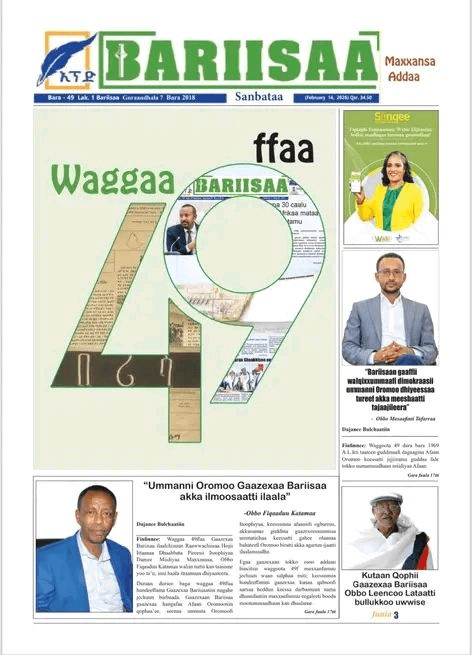
“Bariisaa Served as a Tool for the Oromo People’s Quest for Equality and Democracy”
– Mr. Masafinti Tafarraa
Oromo-language newspaper marks 49 years of serving as a beacon of information, identity, and struggle
FINFINNE — Forty-nine years ago, in 1969 E.C. (1976/77 G.C.), a transformative development in the growth and flourishing of the Afaan Oromo language occurred that would fundamentally reshape the landscape of Oromo media and lay the foundation for where Oromo-language outlets stand today: the establishment of Bariisaa Newspaper .
In an era before the proliferation of science and technology, when broadcast media could be counted on one’s fingers and the internet had not yet become the domain of a generation, the Oromo people’s love, effort, and desire for information and knowledge could only be satisfied through written word. It was in this context that the demand for and acceptance of newspapers was immense .
Bariisaa Newspaper, carried forward by scholars and heroes who toiled from afar and succeeded, passing from generation to generation through the接力 of struggle against tyranny, has now marked 49 years of existence .
Today marks the anniversary of Bariisaa Newspaper’s founding—for the Oromo people, a day when the dawn of information and knowledge shone brightly, just as the name “Bariisaa” (Dawn) suggests the morning star appears .
A Tool for the People’s Struggle
In an interview commemorating the anniversary, Mr. Masafinti Tafarraa, Executive Officer of the Ethiopian Press Agency, shared reflections on the newspaper’s historic role .
According to Mr. Masafinti, from its inception through half a century of service, Bariisaa Newspaper has undertaken and achieved great work for the freedom, equality, and democracy of the Oromo people .
Crucially, he noted that Bariisaa was established precisely at a time when the Oromo people’s demand for equality and democracy was being raised. In this context, the newspaper served as a vital medium of communication for the people’s aspirations .
Following that period and continuing after the people’s demands were reiterated, Bariisaa never halted its mission but persevered and has arrived at today’s milestone .
The founders of the newspaper were themselves participants in the struggle for the people’s equality movement at that time and played significant roles. Through their involvement, the newspaper became intertwined with the contemporaneous struggle being waged .
A Legacy of Forty-Nine Years
For nearly five decades, Bariisaa has chronicled the Oromo experience, documenting both the ordinary and extraordinary moments of Oromo life while serving as a platform for intellectual and political discourse. The publication has weathered changing political climates, technological revolutions, and shifts in the media landscape while maintaining its commitment to providing information in Afaan Oromo.
The newspaper’s endurance through nearly half a century reflects both the dedication of those who have sustained it and the persistent hunger for Oromo-language media among its readership. From its early days when written word was the primary means of mass communication to the contemporary era of digital media, Bariisaa has adapted while maintaining its core mission.
The Founders’ Vision
The founders of Bariisaa were not merely journalists but activists who understood the power of the written word in advancing the cause of equality. By establishing a newspaper in Afaan Oromo at a time when the language itself was marginalized, they made a profound statement about Oromo identity and the right to information in one’s mother tongue.
Their vision extended beyond simple news reporting to encompass the broader struggle for recognition and rights. The newspaper became both a record of that struggle and a participant in it, documenting abuses while articulating aspirations.
From Print to Digital: Evolution of a Legacy
As Bariisaa celebrates 49 years, it does so in a media environment dramatically transformed from its founding era. The broadcast media that were once scarce are now abundant, and the internet that was unknown to the generation of the 1970s has become ubiquitous.
Yet the fundamental need that Bariisaa addresses—the desire of Oromo people to receive information and analysis in their own language, reflecting their own perspective—remains unchanged. The newspaper has evolved alongside technology, with many readers now accessing content digitally while others continue to value the tangible experience of print.
Cultural and Linguistic Significance
Beyond its journalistic function, Bariisaa has played an important role in the development and standardization of written Afaan Oromo. At a time when the language was primarily oral in many contexts, the newspaper provided a model for written expression and helped establish conventions that would influence subsequent Oromo-language publishing.
For generations of Oromo readers, Bariisaa has been a window onto their world and beyond—a source of news, analysis, and cultural content that affirmed the value and vitality of their language. The newspaper has helped maintain and strengthen Oromo identity, particularly among diaspora communities separated from their homeland.
Forty-Nine Years of Service
The 49th anniversary represents a significant milestone, approaching the half-century mark that will be celebrated next year. For an independent publication to endure for nearly five decades in challenging political environments is a testament to the commitment of its staff, the loyalty of its readers, and the enduring need it fulfills.
Mr. Masafinti Tafarraa’s acknowledgment of Bariisaa’s role as a “tool” for the Oromo people’s quest for equality and democracy captures the publication’s essential character. It has never been merely a commercial enterprise or a neutral conveyor of information, but rather an institution deeply engaged with the aspirations of the people it serves.
Looking to the Future
As Bariisaa approaches its golden jubilee, questions of sustainability, adaptation, and continued relevance arise. The media landscape continues to evolve rapidly, with social media and digital platforms reshaping how people consume information. Younger generations, in particular, may engage with news differently than their parents and grandparents.
Yet the need that Bariisaa addresses—for information in Afaan Oromo that speaks to Oromo concerns from an Oromo perspective—remains as pressing as ever. The newspaper that has survived and thrived for 49 years has demonstrated remarkable adaptability, and there is every reason to believe it will continue to find ways to serve its readership.
A Dawn That Continues to Shine
The name Bariisaa—Dawn—carries with it the promise of new beginnings and the light that follows darkness. For forty-nine years, the newspaper has lived up to its name, bringing the light of information and knowledge to successive generations of Oromo readers.
As Mr. Masafinti Tafarraa’s reflections make clear, Bariisaa’s significance extends beyond its role as a news outlet. It stands as a testament to the power of the written word in struggles for justice, a record of a people’s journey through nearly five decades of change, and a continuing voice for equality, democracy, and the rights of the Oromo people.
The 49th anniversary of Bariisaa Newspaper is not merely a celebration of longevity but a recognition of enduring purpose—a purpose rooted in the struggles of the past and reaching toward the dawn of a future where the aspirations that gave birth to the publication may finally be realized.

Ramadan 2026 Begins: A Month of Fasting, Reflection, and Community for Muslims Worldwide
Victorian Multicultural Commission extends warm wishes as holy month commences
MELBOURNE, Australia — This week marks the beginning of Ramadan, the holiest month in the Islamic calendar, observed by Muslims around the world as a sacred period of fasting, prayer, and spiritual reflection. The crescent moon sighting ushers in approximately 30 days of devotion during which the faithful will abstain from food, drink, and other physical needs from dawn until sunset .
Ramadan commemorates the month in which the Quran was first revealed to the Prophet Muhammad, making it a time of heightened religious significance for the global Muslim community. For the world’s approximately 1.8 billion Muslims, the month represents an opportunity for profound spiritual renewal and connection with the divine .
Spiritual Significance and Practice
From first light until sunset, fasting—known as sawm—is practiced to strengthen faith, cultivate self-discipline, and foster empathy, generosity, and care for others . The daily fast serves multiple purposes: it reminds believers of those less fortunate who experience hunger not by choice, teaches patience and humility, and creates space for increased devotion through prayer and Quranic recitation.
Each day’s fast begins with a pre-dawn meal called suhoor and ends with iftar, the evening meal with which Muslims break their fast. Iftar is often a communal affair, bringing families and communities together and extending to neighbors, friends, and those in need. The practice of sharing meals with the less fortunate exemplifies Ramadan’s emphasis on generosity and social responsibility .
Beyond abstaining from physical sustenance, Ramadan calls Muslims to refrain from negative behaviors such as gossip, arguing, and ill feelings, directing focus instead toward spiritual growth, charitable acts, and strengthening community bonds. The month is also a time for personal growth and spiritual renewal, as believers seek to draw closer to God through increased prayer and reflection .
Community and Connection
Ramadan is traditionally a time when community bonds deepen significantly. Mosques fill for nightly Taraweeh prayers, extended congregational prayers offered only during this month. Families and friends gather for iftar meals, and communities organize shared meals for those who may be alone or in need .
The emphasis on generosity finds expression in increased charitable giving, or zakat—one of the five pillars of Islam. Many Muslims choose to pay their annual charity during Ramadan, believing the rewards for good deeds are multiplied during the holy month. Food drives, community iftars, and fundraising for humanitarian causes all see significant increases during Ramadan .
Victorian Multicultural Commission Extends Wishes
In Victoria, Australia, the Victorian Multicultural Commission has recognized the significance of Ramadan and the values it represents, including compassion, devotion, and connection. In a statement marking the beginning of the month, the Commission extended warm wishes to all observing this sacred time .
“We extend our warm wishes to all who are observing this sacred month and hope it brings peace, wellbeing and a strong sense of belonging across Victoria,” the Commission stated .
Victoria is home to a diverse Muslim population representing numerous cultural backgrounds, including significant communities with Turkish, Lebanese, Pakistani, Afghan, Bangladeshi, Somali, and Indonesian heritage, among others. For these communities, Ramadan provides an opportunity to maintain cultural and religious traditions while contributing to Victoria’s multicultural fabric.
Observance Across Australia
Across Australia, approximately 800,000 Muslims will observe Ramadan this year, with significant communities in Melbourne, Sydney, Brisbane, and Perth. Islamic councils and local mosques have announced prayer schedules and iftar programs, many of which welcome non-Muslim neighbors and friends to share in the evening meal as an opportunity for interfaith understanding and community connection .
Major mosques, including Melbourne’s Islamic Council of Victoria and Sydney’s Lakemba Mosque precinct, anticipate thousands of worshippers for nightly prayers and community iftars. Local councils in areas with significant Muslim populations have adjusted services and schedules to accommodate observers.
The Rhythm of Ramadan Days
For those observing, Ramadan transforms daily rhythms. Mornings begin early with suhoor before dawn, followed by morning prayers. The workday continues with fasting, requiring focus and energy management. Afternoon hours can be particularly challenging as energy levels dip, but the approaching sunset brings anticipation of breaking the fast.
At sunset, the adhan—call to prayer—signals time for iftar. Traditionally, dates and water or juice are consumed first, following the example of the Prophet Muhammad, before the main meal. After evening prayers, many Muslims head to mosques for Taraweeh, which can include recitation of significant portions of the Quran.
The final ten days of Ramadan hold special significance, marking the period when the first revelations of the Quran were sent down. During these nights, Muslims increase their devotion, with some engaging in itikaf—spiritual retreat in the mosque—to focus entirely on worship. One of these nights is Laylat al-Qadr, or the Night of Power, described in the Quran as “better than a thousand months.”
Eid al-Fitr: The Celebration Ahead
The conclusion of Ramadan will be marked by Eid al-Fitr, the festival of breaking the fast, expected to fall in late March depending on the lunar sighting. The day begins with a special prayer service followed by celebrations that include feasting, gift-giving, and gatherings with family and friends. Eid is a time of joy and gratitude, marking the successful completion of the month’s spiritual journey .
For businesses, schools, and community organizations across Victoria, awareness of Ramadan and its practices supports inclusion and understanding. Many workplaces accommodate observing employees with flexible hours or designated prayer spaces, recognizing the significance of the month.
A Message of Shared Values
The Victorian Multicultural Commission’s message emphasizing compassion, devotion, and connection highlights how Ramadan’s core values resonate beyond the Muslim community. In an increasingly diverse society, recognition and respect for religious observances strengthen social cohesion and mutual understanding .
As Muslims across Victoria and around the world begin this month of fasting and prayer, the wishes for peace, wellbeing, and belonging extend across communities, reflecting the universal aspirations that Ramadan represents.
Ramadan Mubarak to all observing this holy month.

General Damisse Bulto: The Forgotten Eagle of Ethiopia’s Skies
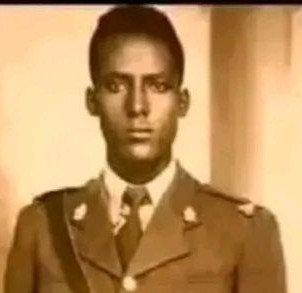
Personal Profile
Who was General Damisse Bulto? 💔
The question lingers, suspended in grief and memory. For those who knew him, he was a son of Ada’a Berga, a herdsman turned warrior, an aviator who painted his nation’s future across African skies. For those who have forgotten—or were never taught—he is a ghost in the military archives, a name erased from official histories, a body moved in secret.
This is his story.
From the Pastoral Plains
General Damisse Bulto Ejersa was born in 1926 in Ada’a Berga District, West Shewa, to his mother Adde Ayyee Jiraannee and his father Mr. Bultoo Ejersa. From childhood, he knew the weight of responsibility. While other boys played, young Damisse tended his family’s cattle, moving through grasslands that would later seem impossibly distant from the jet streams he would one day command.
But the open fields that raised him also gave him his first taste of horizons. A boy who watches the sky from the earth learns to dream of flight.
When he reached the appropriate age, Damissae traveled to Finfinne to study at the Medhanealem School. It was there, in the capital’s classrooms, that a military recruitment announcement changed everything. The Makonnen School was calling for cadets. Without informing his family, the young man enlisted—and stepped onto a path that would define the rest of his life.
The Making of a Makonnen
Three years of intensive training transformed the cattle herder’s son into a disciplined officer. By 1946, as Lieutenant Colonel, he received orders that would carry him far from Ethiopian soil.
The Korean Peninsula was aflame. The Cold War’s first hot conflict had drawn nations from across the globe into its crucible. Ethiopia, under Emperor Haile Selassie, committed troops to the United Nations forces. Among them was Damissae Bultoo—a young commander representing his ancient empire on a distant battlefield.
He served with distinction. He returned alive. He completed his consecration ceremony. And then his nation called again.
Ethiopia had no air force to speak of. The Emperor, modernizing his military, sought to build one from the cockpit up. Damissae was selected for training in Israel, where he learned the arts of aerial warfare from one of the world’s most capable air arms. He returned home a pilot—and soon, commander of the famed “Flying Leopard” squadron.
Wars and Recognitions
The 1950s and 1960s were decades of fire. When Somalia challenged Ethiopia’s territorial integrity, General Damisse took to the skies. In 1955 and again in 1957, he flew combat missions against Somali forces, his Leopards drawing blood across the Ogaden skies.
Emperor Haile Selassie took notice. The young man from Ada’a Berga, who had once watched clouds from cattle pastures, now received medals and commendations from the Lion of Judah himself. He rose through the ranks: Colonel in 1969, Brigadier General in 1972, Major General in 1977.
Each promotion marked not merely personal advancement but the trajectory of a man who had dedicated his entire existence to the defense and dignity of his nation.
The Dream of Oromia
Yet General Damisse’s patriotism was not uncritical. He loved Ethiopia—but he also saw its failures. He served the empire—but he also dreamed of liberation for his own people.
When the Derg seized power, when Mengistu Hailemariam’s Red Terror washed Ethiopian cities in blood, General Damisse made his choice. He would not merely serve. He would resist.
The plan was audacious, befitting an airman accustomed to thinking in three dimensions. On the morning of December 8, 1981, Mengistu was scheduled to depart for East Germany. General Damisse and his co-conspirators intended to shoot down the dictator’s aircraft—or, alternatively, divert it to Eritrea and capture the leader himself. A single blow to decapitate the Derg and open the path for Oromia’s liberation.
But conspiracies breathe thin air in authoritarian states. Fellow air force officers, when approached, hesitated. Some refused outright. The plot faltered, then collapsed. No missile was fired. No aircraft was diverted. No dictator fell.
The dream of an Oromo political order, forged in that moment of daring, remained unrealized.
The Exile and the Grave
What follows is contested, obscured, deliberately forgotten.
What is known: General Damisse was killed. The commander of the Flying Leopards, the veteran of Korea and Ogaden, the man who had received medals from an emperor’s hand, died at the hands of fellow officers—or of the regime they served.
His body was initially interred in Asmara, within the compound of the Catholic Church of St. Isteqs. Eritrea, then still part of Ethiopia, received the fallen general in silence. His grave marked nothing more than a name, a date, a vanished life.
But even the dead are not beyond the reach of politics.
Years later, after Eritrea had separated, after Asmara had become foreign soil, General Damisse’s remains were exhumed. They traveled south, across the border his squadron had once defended, back to the capital city where a cattle herder’s son had first dreamed of flight.
Today, they say, he rests in Finfinne. Within the compound of St. Joseph’s Church. A man displaced even in death, his final resting place known to few, visited by fewer still.
What Remains
General Damisse Bulto left no political testament. No memoirs. No public confessions or private apologies. He left only the record of his service—the medals, the missions, the promotions—and the whispered memory of a plot that failed.
To Ethiopian military history, he is an embarrassment: a decorated commander who turned against the state. To Oromo nationalists, he is a martyr: a patriot who understood that love of nation and love of people could not be separated. To his family, he is simply gone—a father, a grandfather, a name spoken in prayers.
And to the young men and women of Ada’a Berga, who still tend cattle beneath the same skies he once watched, he is a question without answer.
Who was General Damisse Bulto?
The cattle know. The grass knows. The wind that moves across the West Shewa highlands remembers the boy who became an eagle.
But the archives are silent. The grave is quiet. And the dream he died for remains, like his body, displaced—waiting for a nation that has not yet decided whether to claim him.
💔
The author acknowledges the family of General Damisse Bulto and surviving members of the Ethiopian Air Force who provided information for this profile, many of whom spoke on condition of anonymity.

Honoring Oromo Scholars: Asmarom Legesse and Hamdesa Tuso
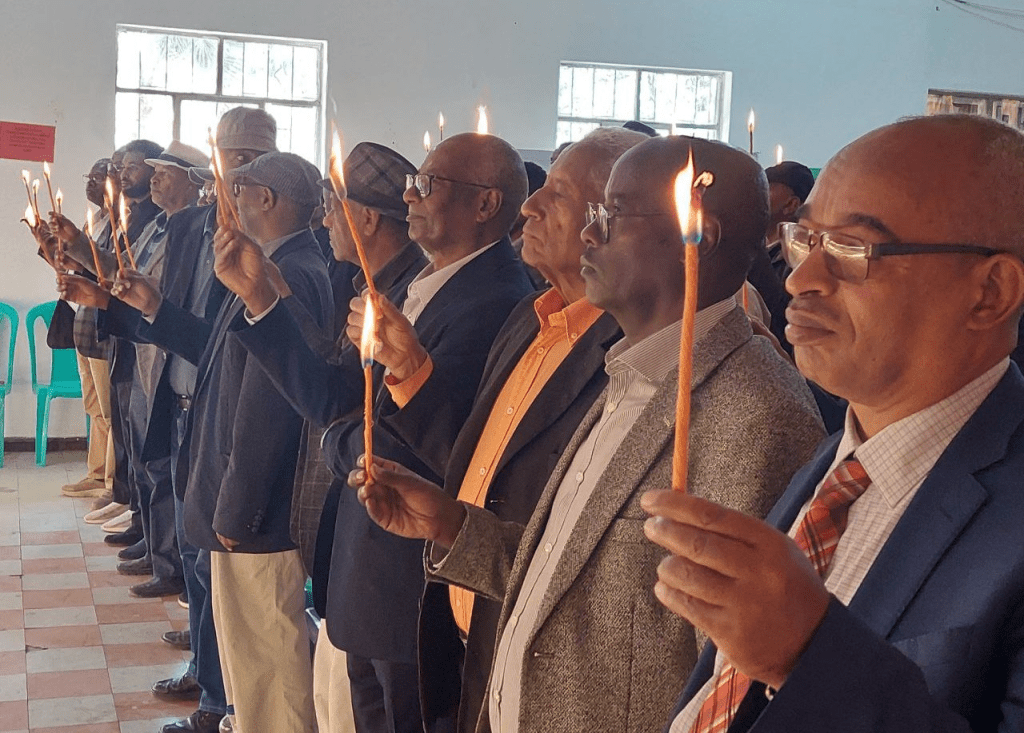
A Legacy Forged in Scholarship and Struggle: ABO Honors Professors Asmarom and Hamdesa
(WAJJJIRA, MUUMMEE GLLALLETTI, FEBRUARY 07, 2026) – Under the solemn banner of memory and celebration, the Oromo Liberation Front (OLF) today convened a ceremony of profound significance at its headquarters. The gathering paid tribute to two intellectual giants who dedicated their lives to the Oromo cause: the late Professor Asmarom Legesse and Professor Hamdesa Tuso.
The event, more than a memorial, served as a powerful reaffirmation of the inseparable bond between academic rigor and the national struggle. It drew a distinguished assembly of Oromo elders (Hayyoota), scholars, OLF leadership—including Chairman Jaal Dawud Ibsa—and numerous members of the community, all united in gratitude and reflection.
In a poignant address, Chairman Jaal Dawud Ibsa spearheaded the tribute by dismantling what he termed “the great lies of Professor Asmarom Tulu.” This direct refutation underscored the ceremony’s deeper purpose: to reclaim historical truth and honor those whose scholarship authentically served the Oromo people. The chairman and other speakers extended particular gratitude to Eritrean nationals who have steadfastly supported the Oromo liberation struggle through the OLF, singling out Gaaxaseessaa Tesfaayee G/Ab for his exemplary role.
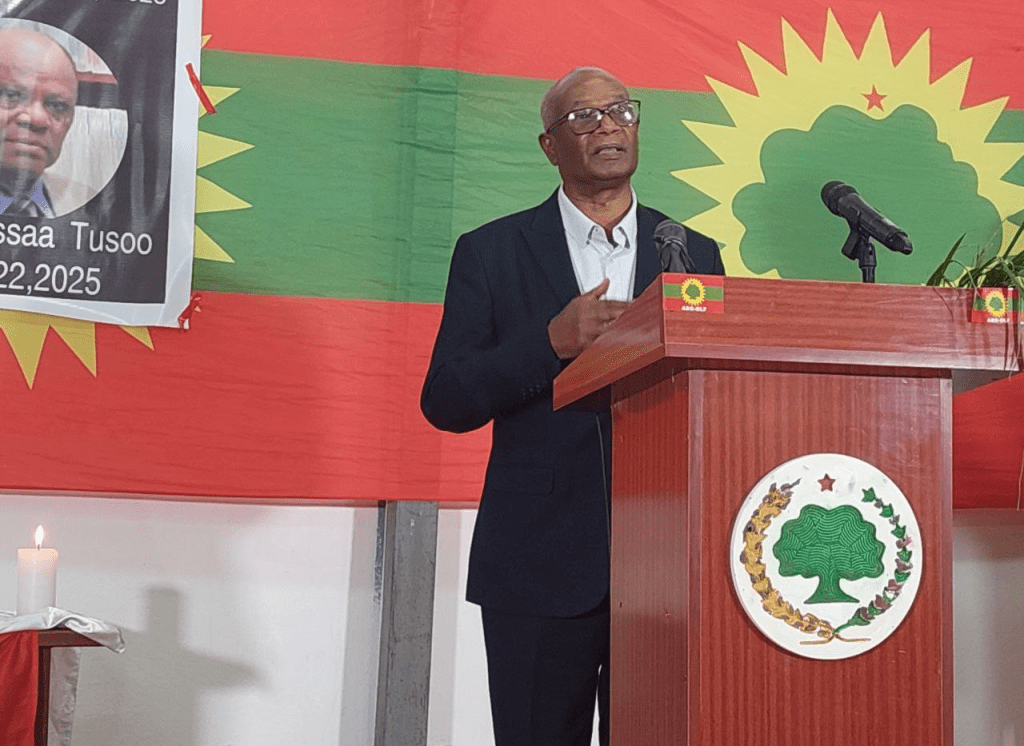
The ceremony highlighted the enduring impact of the two professors. Professor Asmarom Legesse was celebrated for his groundbreaking anthropological research, most notably his seminal work Gada: Three Approaches to the Study of African Society. His scholarship did not merely document Oromo culture; it presented the Gada system to the world as a profound and democratic form of governance, pulling Oromo history from the shadows of a repressive past (bar dukkanaa) into the global light.
“Oromummaa (Oromo national identity) is not just about blood,” one speaker affirmed, echoing the professors’ legacy. “It is a great symbol. During that dark era, rather than simply placating Habasha hegemony, it was Asmarom who made the world accept that the Gada system is a great and democratic governance tradition.”
Professor Hamdesa Tuso, a revered philosopher and peace scholar, was honored for his relentless dedication to framing Oromo liberation within universal principles of justice, human rights, and ethical philosophy. His work provided the intellectual and moral framework that elevated the struggle beyond mere political contestation.
A poignant moment arose with the participation of Obbo Dirribi Damise, former head of the Oromo Broadcasting Service (WMT). His presence symbolized the bridge between scholarly work and public dissemination. Speakers expressed deep gratitude for his role in carrying the professors’ profound knowledge of Oromo affairs to the world, ensuring their insights reached a broad audience.
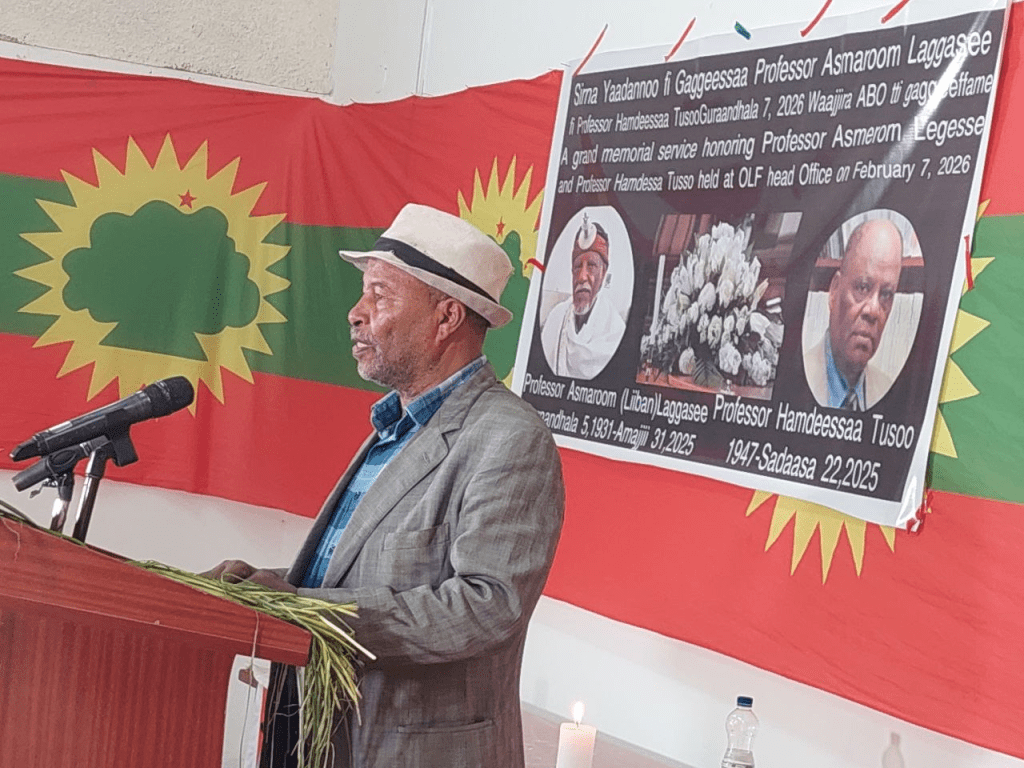
The gathering was not only a look backward but a call to the future. The elders and leaders issued a clear directive to the younger generation (dhaloota): the monumental work begun by Asmarom and Hamdesa remains unfinished. They must take up the mantle and continue it.
In a powerful closing sentiment, the elders emphasized the collective responsibility to this legacy. “Professor Asmarom has left an unforgettable mark that other Oromos can emulate,” they stated. “We must internalize the mission he started and left for us, and pledge to carry it forward.”
Today’s ceremony in Wajjira solidified a central truth for the Oromo movement: that the pen and the resolve for freedom are allies in the same fight. The legacy of Professors Asmarom Legesse and Hamdesa Tuso stands as a challenging and illuminating torch, guiding the path toward both intellectual sovereignty and national liberation.
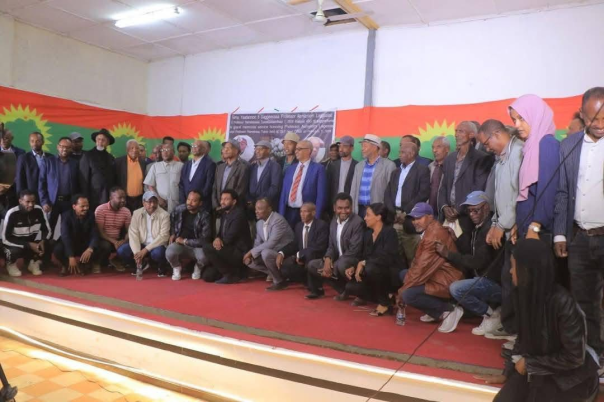

Celebrating Shanan: Merging Tradition with Modern Health
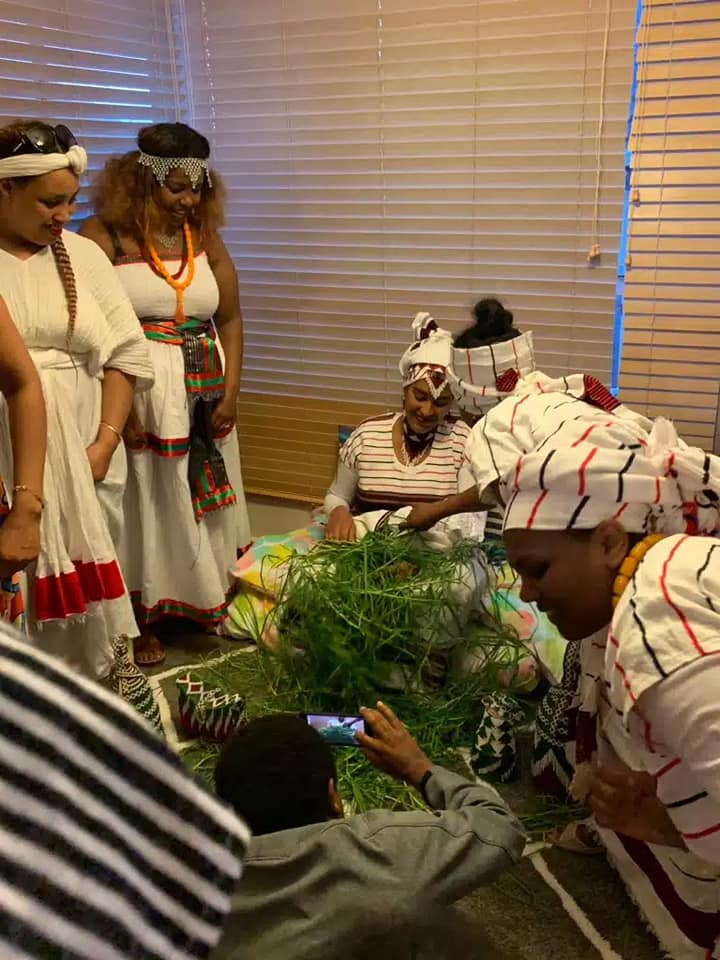
Shanan Nagaa: Protecting the Sacred First Five Days for Oromo Mothers and Newborns
Connect tradition with modern wellness
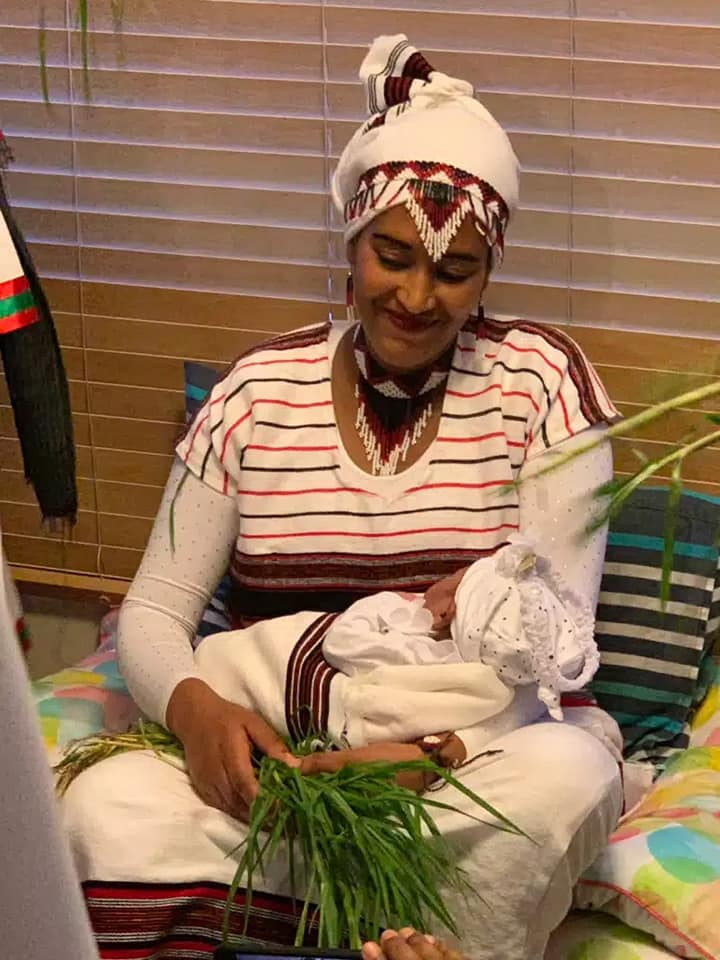
In Oromo culture, the Shanan—the sacred five-day period following childbirth—is a time of profound communal celebration, rest, and ritual welcoming of a new soul into the world. As families prepare for this beautiful tradition, health experts and cultural elders are now collaborating to weave essential health safeguards into these ancient practices, ensuring that the joy of Shanan is protected by modern knowledge of postpartum and newborn care. This is how communities can honor tradition while actively preventing health risks for mothers and infants.”
CULTURAL SIGNIFICANCE: Frame protection as an act of respect
Shanan is not just a celebration; it is a ‘Seera Lubbuu’—a law of life—designed to protect the mother’s ayyaana (spirit) as she transitions and to gently introduce the newborn to the world,” says elder midwife Arfaattuu Worknesh Dejene. “Our ancestors created this container of rest for a reason. Protecting Shanan today means updating the ‘how’ without losing the ‘why’: the wellness of mother and child.
Blending tradition and safety
The elder’s role is to guard the mother’s peace,” explains Arfaattuu Almaz Bekele. “We now add a new duty: to be a health sentinel. If the mother has a fever, or bleeding increases, we don’t just pray—we know the number for the ambulance and have a car ready. Protecting tradition means protecting her life first.
The Peaceful Newborn
We bless the child with gentle touches and soft songs, not with many passing hands,” says grandmother Ayyantu Kadiro Elemo. “We tell visitors: ‘Your blessing is in your prayer from the doorway. The mother’s arms are the child’s first shrine.’ This protects the baby from germs and overstimulation.
PROTECTION AS THE HIGHEST BLESSING
The greatest blessing we can give a new mother and her child during Shanan is not just our presence, but our protection. By wrapping our ancient traditions in a mindful embrace of modern health wisdom, we do not dilute our culture—we fortify it. We ensure that the sacred first five days become a foundation of health, not a memory of risk. In doing so, we honor the deepest Oromo principle of all: that the safety and nagaa of the most vulnerable among us is the true measure of our community’s strength. Baga Shanan Nagaa!—May it be a peaceful, protected Shanan.

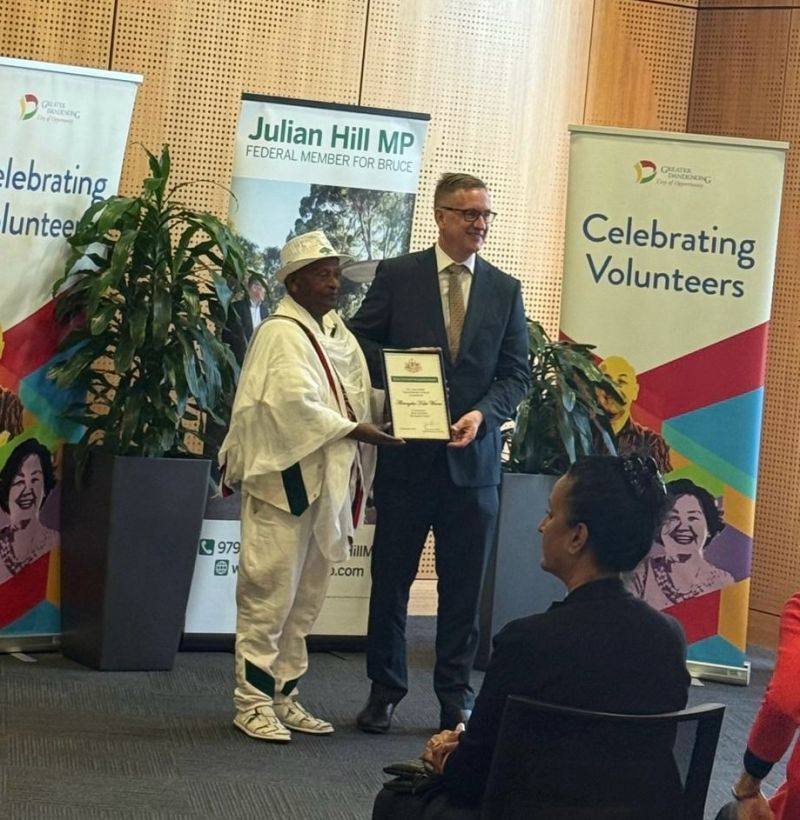
Oromo Community Shines at 2025 Bruce Volunteer Awards

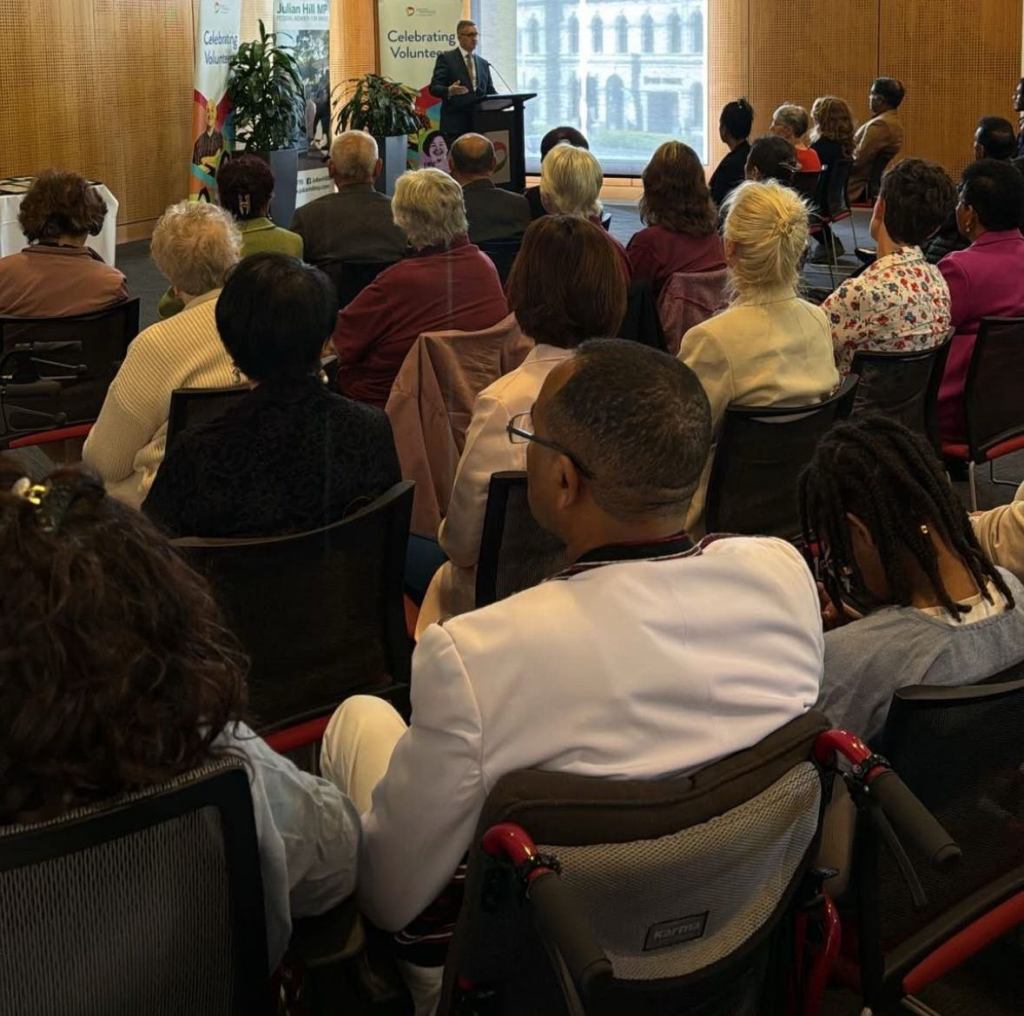
(Saturday, November 30, 2025) Oromo Community Advocates Honored with 2025 Bruce Volunteer Awards
In a celebration of community service, six members of the Oromo community have been recognized with the prestigious 2025 Bruce Volunteer Awards for their dedicated contributions.
At the ceremony, Julian Hills MP highlighted the deep-rooted tradition of volunteering within Australia’s social fabric. He praised the recipients as individuals who perfectly embody this spirit, generously giving their time and talents to enrich their communities. This year’s cohort of six volunteers was celebrated for their exemplary work and for reflecting a strong commitment to gender equality.
The 2025 Award Recipients are:
1. Alemayehu Kube Warat: A prominent and articulate advocate, Alemayehu works tirelessly to advance the rights, self-determination, and cultural preservation of the Oromo people. Through public speaking and oral campaigns, he raises national and international awareness of historical and ongoing injustices, diligently documenting human rights situations to promote global accountability.
2. Bontu Mulissa: A dedicated and influential figure, Bontu focuses on cultural revitalization and grassroots empowerment. She is instrumental in educating Oromo youth about their heritage—including the Gadaa system, language, and Irreecha festival—and organizes community events that foster dialogue and preserve indigenous knowledge.
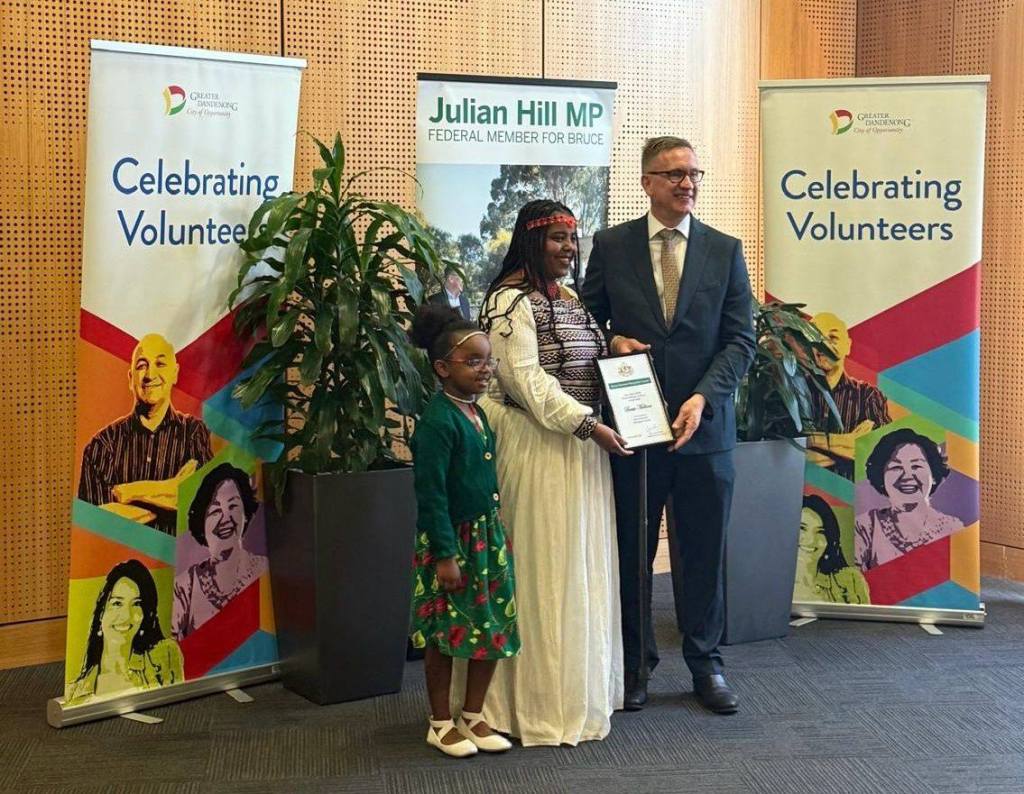
3. Darartu Fayissa: Serving as a vital cultural diplomat and educator, Darartu centers her work on preserving Oromo heritage as a form of peaceful resistance and identity affirmation. She organizes community events focused on the Oromo language and traditional practices, ensuring these foundational elements are passed on to the next generation.
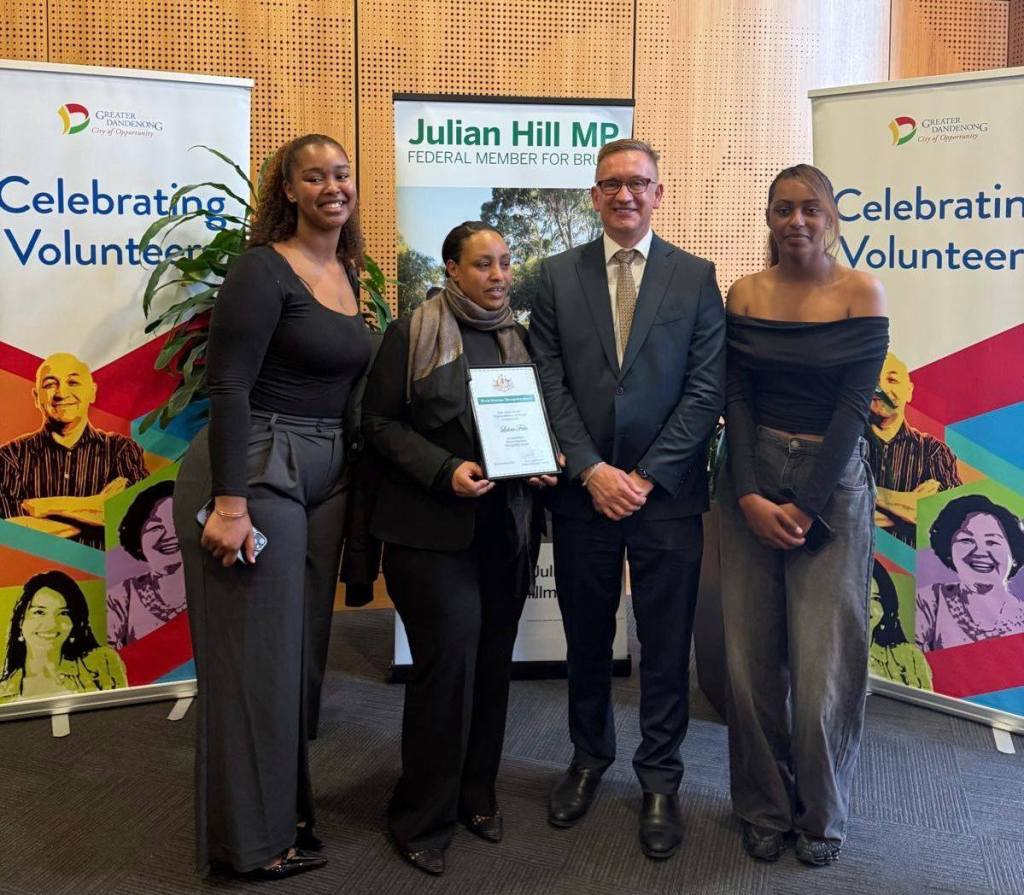
4. Gammechu Bedada: A foundational figure in cultural advocacy, Gammechu plays a crucial role on the Irreecha Committee. He dedicates himself to the practical preservation and celebration of Oromo identity, volunteering tirelessly to organize this pivotal cultural ceremony and ensure its authentic transmission to youth.
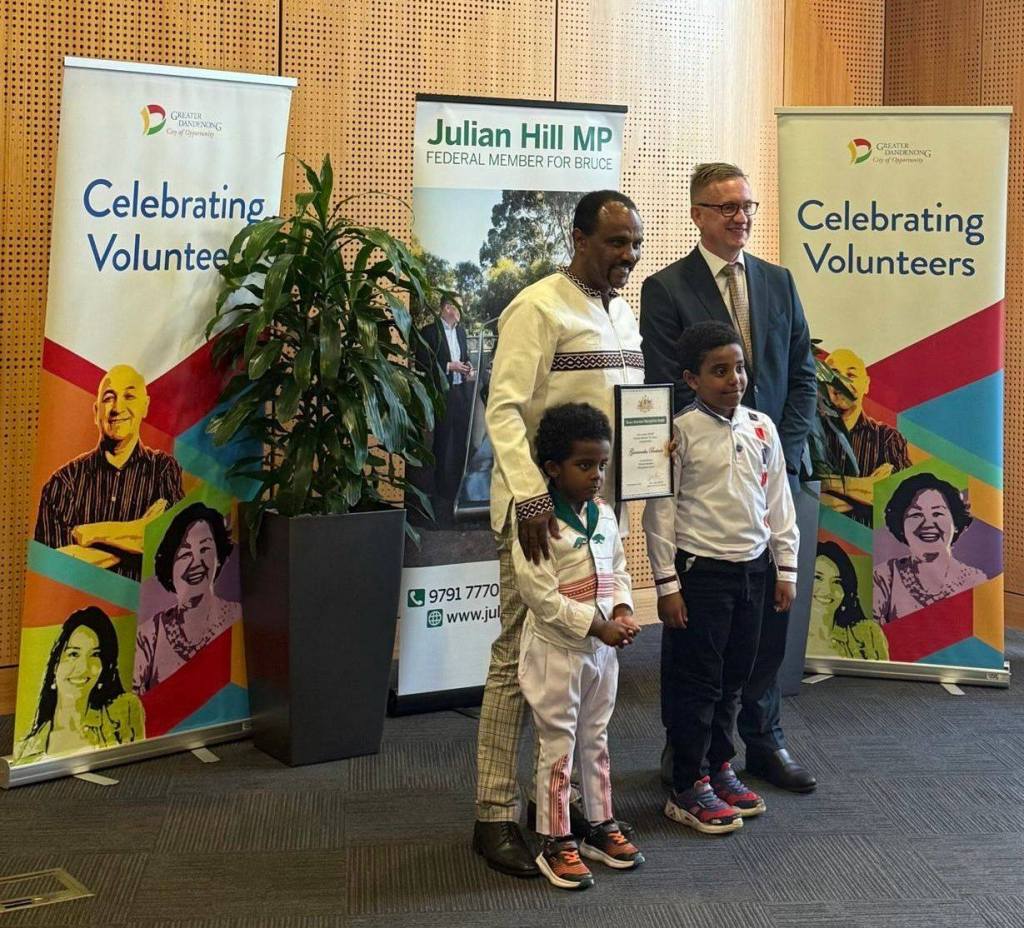
5. Lelisse Fida: A prominent and strategic advocate, Lelisse focuses on international awareness and human rights documentation. She leverages digital platforms to amplify Oromo voices globally, systematically documents human rights issues, and builds transnational solidarity networks to bring the Oromo struggle to international forums.
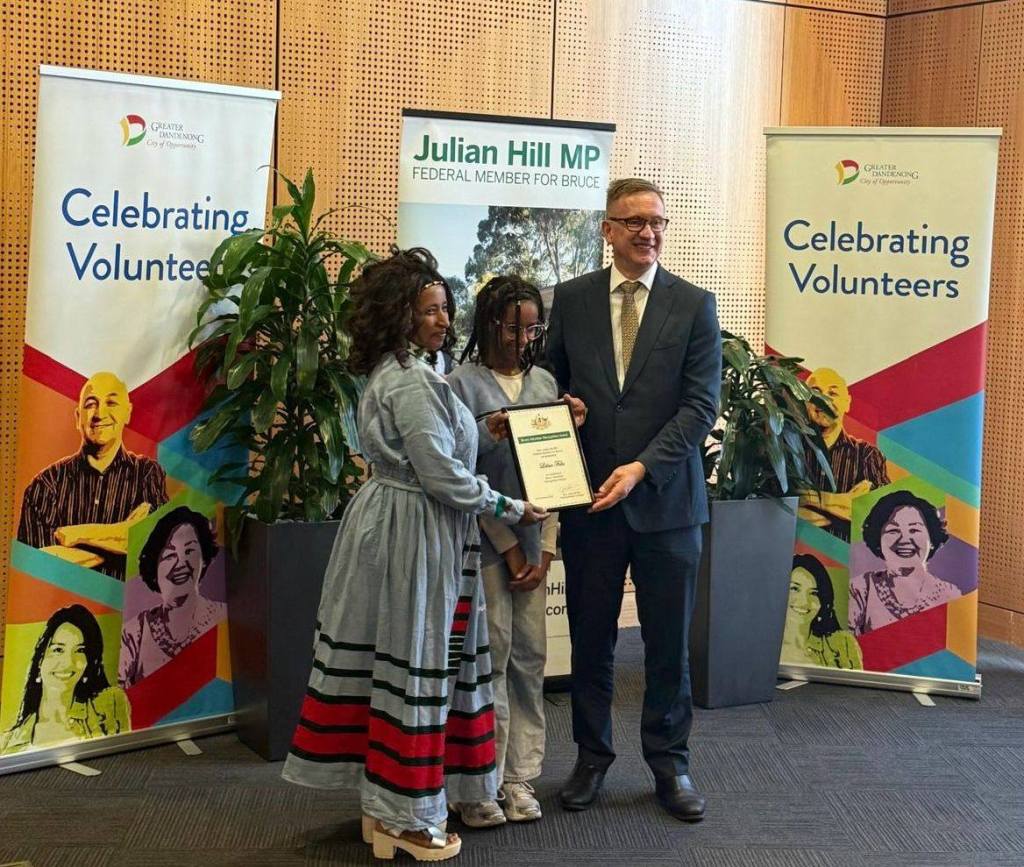
6. Hana Muleta: A formidable and articulate voice, Hana advocates for human rights, political freedom, and cultural preservation. Through strategic digital campaigns, and engagement with international bodies, she amplifies the plight and aspirations of the Oromo people, playing a pivotal role in mobilizing diaspora support.
The Bruce Volunteer Award celebrates individuals who have generously shared their time and expertise over the long term. The unwavering commitment of volunteers like these has been a cornerstone of the Oromo community, fostering its strength, visibility, and enduring pursuit of cultural preservation and liberation.

A Tribute to Professor Mohammed Hassen Ali
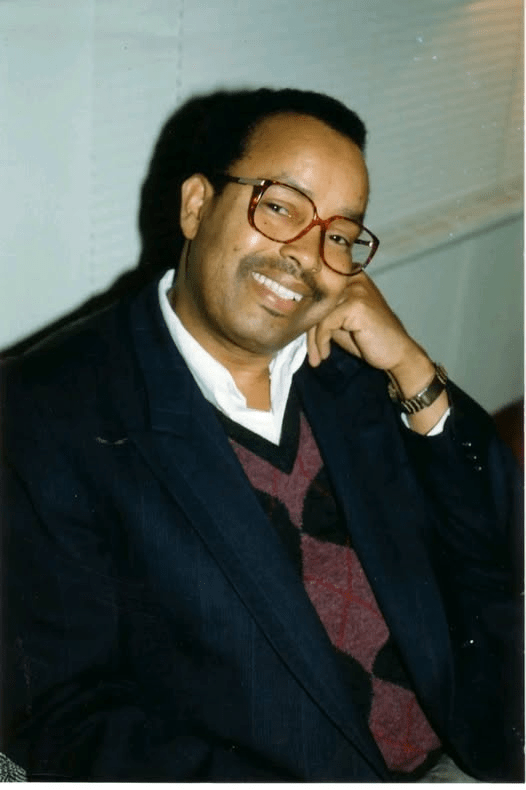
On the eve of Atlanta’s celebration honoring Professor Mohammed Hassen Ali, we are moved to share a few reflections on a man whose contributions to the Oromo nation are nothing short of extraordinary—enduring in their impact and deeply inspiring in their character.
As many of you know, Professor Mohammed stands among a rare few scholars who undertook the courageous and meticulous work of correcting distorted narratives crafted by Abyssinian court historians and state-sponsored academics. At a time when the Oromo story was silenced or twisted, he restored its truth with unwavering discipline and moral clarity. In doing so, he helped reclaim for our people a dignified history—one rigorously documented and grounded in evidence, not propaganda.
For years, we admired his work from afar, learning from his books, relying on his analysis, and drawing inspiration from the courage embedded in his scholarship. Over the past five years, we have been fortunate to know him more personally, and that closeness has only deepened our respect.
Despite his towering intellect and monumental achievements, Professor Mohammed is a man of profound humility—almost embarrassed by praise. He consistently deflects credit, insisting that any accomplishment belongs to the Oromo people and the broader struggle for justice.
At the same time, he is remarkably generous in lifting others up. He offers encouragement and recognition with a sincerity that uplifts everyone around him. His warmth, gentleness, and quiet generosity have endeared him to all who are fortunate enough to cross his path.
His influence extends far beyond the written word. As a founder and early leader of the Oromo Studies Association, he helped create an enduring academic home where Oromo history, culture, and identity could be studied with rigor and dignity. His pivotal role in establishing the Journal of Oromo Studies helped lay the intellectual foundation for the modern Oromo struggle.
In the diaspora, Professor Mohammed has been a steady anchor—providing clarity amid confusion, evidence in the face of disagreement, and truth in moments of denial. His seminal work on Oromo history, from the Gadaa system to conquest-era state formation, has fundamentally shaped how an entire generation understands itself and its place in the Horn of Africa.
Tomorrow, as we gather to honor him, we do more than celebrate a scholar. We pay tribute to a true son of the Oromo nation—a guardian of our historical truth and a model of humility, kindness, and principled devotion.
Professor Mohammed, thank you for restoring to the Oromo people a history rooted in fact, dignity, and justice. Thank you for showing us that liberation is waged not only on battlefields or in political arenas, but also in libraries, archives, and classrooms—through the patient, steadfast work of scholarship.
May your legacy continue to guide Oromo scholars, activists, and generations to come. May your life remind us all that truth, humility, and kindness are, in themselves, revolutionary forces.
Congratulations.

Remembering Obbo Doti Tura: A Hero of the Oromo People

Oboo Doti Tura was a hero of the Oromo people—his story is one of resilience, often untold, unexpressed, and unwritten. He fought alongside General Wako Gutu, Baro Tumsa, and other prominent heroes.
I met him for the first time in Atlanta with his daughter, Berdu, and his grandchildren during the Oromo convention and leadership meeting. I went to him and told him my name and my father’s name. Immediately, everything changed—he began to cry, and I cried with him. He told me about my father, how close they were, and the things they did together during the Arsi Basic School movement. My mood shifted completely. His daughter, Berdu, calmed him down. I wished I could sit by his side and talk with him longer, but unfortunately, I could not.
Obbo Doti was one of the first Oromo businessmen who owned a pharmacy in Finfinne during the Haile Selassie regime. I was told that his pharmacy advertised on the radio between 1960 and 1970. During that time, Oromos were marginalized in many ways, but he stood strong. He was one of our heroes, a man with history, and an advocate for human rights. We have lost a remarkable and permanent figure in our community.
My condolences to the Oromo community in Portland, his friends, and his family.
RIP Obbo Doti Tura.





 Advocacy for Oromia