The Death That Refuses to Fade: Why Ilfinash Qannoo’s Legacy Demands Celebration, Not Mourning
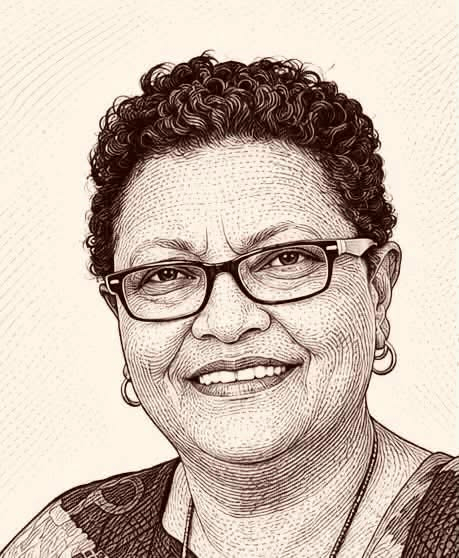
By Dhabessa Wakjira
—
In the Oromo cultural cosmos, death is rarely a stranger. It is the great equalizer, the silent harvester that spares neither the peasant nor the prince. The proverb, “Duuti nama kamiifuu hin hafu” — “Death does not leave anyone behind” — is a sobering reminder of our shared mortal fate. Yet, every so often, a soul departs this earth in such a blaze of fire and principle that the grave cannot contain their echo. Ilfinash Qannoo is one such soul.
And here is our radical proposition: We should not weep. We should celebrate.
Not because her death is devoid of sorrow—far from it. The loss of a warrior, a mother, a symbol of unyielding resistance, carves a wound into the flesh of history. But to reduce Ilfinash to a tragedy is to misunderstand her life. To mourn her is to pity her; to pity her is to diminish her. Instead, we choose to honor her as the Oromo people have always honored their heroes: with poetry, with pride, and with the unshakable belief that her story is not an ending, but a beginning.
The Gootummaa (Heroism) That Defies Time
Ilfinash Qannoo was not merely a figure of her era. She was a force of nature sculpted into human form. In a world that demanded women be silent, she roared. In a system that demanded submission, she stood with her spine straight and her gaze fixed on the horizon of justice.
Her gootummaa—her heroism—was not carved from reckless anger, but from a profound love for her people. It was the kind of love that does not bow to colonialism, does not kneel to oppression, and does not whisper in the face of tyranny. It was the kind of love that marched, that fought, and that—when necessary—fell, so that others could stand taller on her shoulders.
This is why the proverb holds a second, hidden meaning. Yes, death takes everyone. But not everyone lives with the intensity of Ilfinash. For most, death is an erasure. For her, death was a megaphone. The louder the silence around her grave, the louder her deeds speak across generations.
Celebration as Resistance
Why celebrate? Because grief is passive; celebration is active. Mourning looks backward; celebration propels forward.
In many cultures, we are taught to dress in black, to lower our voices, to count the days of absence. But for a figure like Ilfinash Qannoo, such rituals are insufficient. They are, in fact, a betrayal of the fire she carried.
Imagine Ilfinash herself. Would she want a river of tears? Or would she demand a drumbeat of defiance? Would she desire bowed heads or raised fists? The answer is written in every chapter of her struggle. She lived for the flourishing of her people. Therefore, the greatest tribute we can pay is to flourish audaciously in her name.
To celebrate Ilfinash is to:
- Sing her praises in public gatherings, not whisper them in private corners.
- Teach her story in schools, not confine it to oral whispers.
- Emulate her courage in our daily battles, not relegate it to museum glass.
- Laugh with the joy she fought for, not weep with the sorrow she overcame.
Her death is a chapter. Her life is the entire book. And books are meant to be read aloud.
The Eternal Present of Her Legacy
Here is the miracle of Ilfinash Qannoo: she exists in the present tense. Yes, her heartbeat has ceased, but her rhythm continues in the pulse of every Oromo child taught to speak their language without shame. She lives in the defiant ink of every activist’s pen. She breathes in the lungs of every woman who refuses to be a footnote in someone else’s story.
The historians may write her dates—born, fought, fell. But the bards will sing her essence: She who bent the wind. She who taught the stones to speak.
Thus, we say: Do not mourn Ilfinash. Summon her.
Call her spirit into every courtroom where justice is demanded. Invoke her name in every village meeting where the future is debated. Let her be the ancestor who dances at our weddings, not the ghost who haunts our funerals.
A Final Call to the Living
Brothers and sisters, let us be clear. This is not callousness. This is not forgetting. This is the highest form of remembrance. We celebrate because we understand that Ilfinash Qannoo did not lose her life—she invested it. And the dividends of that investment compound with every generation that dares to dream freely.
So tonight, when the elders speak of her, do not lower your gaze. Lift a cup of water—the symbol of life—and toast to her name. Clap your hands. Stamp your feet. Let the earth feel the vibration of her memory.
For indeed, death does not leave anyone behind. But heroes like Ilfinash Qannoo leave something behind that death cannot touch: a legacy so fierce that it turns sorrow into a war cry.
Celebrate her. Live like her. And in living, you prove that she never truly died.
“Ilfinash duutus seenaan gootummaa ishii bara baraan dhaloota qaraa, leellifamaa jiraata.”
(Even in death, the legend of her heroism is praised across generations for ages to come.)
Let that praise be loud. Let it be joyful. Let it be eternal.
#IlfinashLives #CelebrateTheHero #OromoPride #LegacyOverMourning

Posted on September 7, 2026, in Aadaa, Afaan, Events, Finfinne, freedom, gender, Grief Support, Language, Media, News, Obituary, Oromia. Bookmark the permalink. Leave a comment.






Leave a comment
Comments 0