The General Who Defied Two Regimes: The Remarkable Story of Brigadier General Taddasa Birru
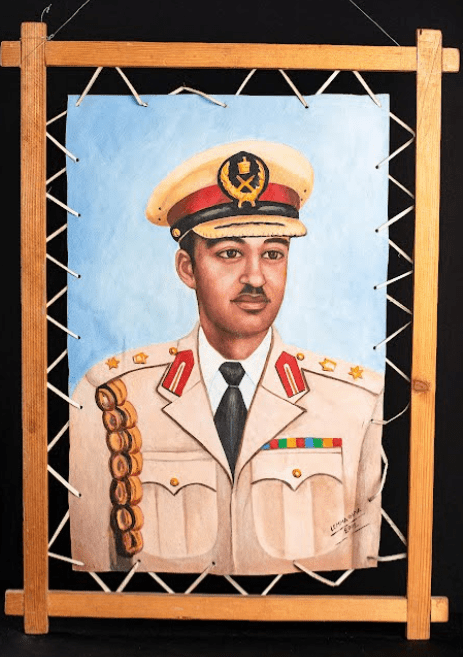
From Imperial loyalist to Oromo resistance icon—the military-political odyssey of Ethiopia’s most controversial soldier
—
In the annals of Ethiopian history, few figures inspire such polarizing debate as Brigadier General Taddasa Birru. To some, he was a treacherous dissident who threatened the unity of the Ethiopian state. To the Oromo people, he remains the “Father of Modern Oromo Nationalism”—a charismatic leader who sacrificed his comfortable military career, endured imprisonment, and ultimately gave his life for the cause of Oromo equality.
Born in 1922 in the Salaalee region of northern Shawa, Taddasa’s journey from orphaned guerrilla fighter to high-ranking imperial officer, and finally to executed rebel, represents one of the most dramatic political transformations in 20th-century Ethiopian history.
The Making of a Warrior
Taddasa’s early life was forged in tragedy. At age fourteen, he lost both his parents—his father killed by Italian poison gas during the 1935 invasion, his mother dying from grief forty days later. Left destitute, the young Taddasa had no choice but to survive. He briefly attempted farming, but soon found his calling as a guerrilla fighter against the Italian occupation.
His capture by Italian forces led to a harrowing journey to the Danane prison camp in Somalia, where he endured brutal labor as a cart driver. “I spoke a word only after I ate and rested for a while to show that I am a human being who could speak,” he later wrote in his diary. Liberated by British forces, Taddasa seized the opportunity for military training in Kenya and returned to Ethiopia as a sergeant in 1941.
The Loyal Officer
For nearly two decades, Taddasa served the Imperial regime with distinction. He rose through the military ranks, graduated from the Holata Military Academy as an instructor, and in 1955 founded the Police Emergency Force (Fetno Derash)—a rapid response unit that would become instrumental in aborting the 1960 coup attempt against Emperor Haile Selassie.
His loyalty during the coup seemed to cement his position. He even trained the young Nelson Mandela in 1962 when the future South African president came to Ethiopia seeking military instruction. Mandela later recalled: “Colonel Tadesse discussed matters like how to create a guerrilla force, how to command an army and how to enforce discipline.”
Yet despite these contributions, Taddasa remained a colonel while lesser-qualified Amhara officers received promotions. He was never appointed Police Commissioner. When he requested the Emperor to pardon captured coup soldiers, he was sharply rebuked. The seeds of disillusionment were sown.
The Turning Point
The fateful moment came during a private dinner with Prime Minister Aklilu Habte-Wold. Taddasa had been elected chairman of the National Literacy Campaign Association and was working to spread education—including among the Oromo.
“Aklilu was never aware that I am an Oromo,” Taddasa later recounted. “He told me, ‘Be careful! The Oromo is like a sea. If given education it swallows us.'”
This revelation transformed Taddasa. He realized the “urban-rural dichotomy” he had observed was actually an Amhara-Oromo divide. The Prime Minister’s words—that the government intended to keep the Oromo backward—pushed him over the edge.
“He refused to eat dinner that night,” his daughter Tsehay recalls. “When his wife asked what happened, he said: ‘Today I went to the house of a devil. When I heard this, the food tasted bitter and the whisky tasted like blood.'”
The Rebel
In June 1964, Taddasa joined the Macca-Tulama Self-Help Association (MTSHA), a fledgling Oromo organization that had struggled for legal recognition. His membership transformed it overnight from a modest self-help group into a pan-Oromo political movement.
His speeches electrified crowds. At Itayyaa in Arsi, he broke religious taboos by having Christian and Muslim Oromo eat together from meat slaughtered by Muslims. At Dheeraa in October 1966, he addressed up to 100,000 people, reminding them they were “children of one father and mother” and that “it is the enemy who pitched us against each other.”
“The Amhara always tyrannically rule the Oromo,” he thundered. “How long will you be ruled like slaves?”
The regime took notice. When Taddasa and other Oromo leaders petitioned the Emperor for justice, they received no response. Fearing imminent arrest, Taddasa plotted a coup to assassinate the Emperor during his November 2, 1966 coronation ceremony.
It failed. Government agents had infiltrated his inner circle. Key operatives were arrested before they could act.
Imprisonment and Banishment
Taddasa was captured, tried, and sentenced to death—later commuted to life imprisonment. His colleague, Lieutenant Mamo Mazamir, was hanged. International pressure from Amnesty International and the International Commission of Jurists may have saved Taddasa’s life.
He was sent to banishment in Galamsoo in Hararge, but even there, he continued his work. Disguised in local clothing, he sat on roadsides teaching peasant women who carried firewood to market. He advised farmers to consume some of what they produced rather than selling everything to feed their oppressors.
“If I were here all the years I spent in Addis Ababa as a free General, I could have accomplished a lot,” he regretted. “I failed to awaken the Shawans while free, but here I have mobilized the Ittu Oromo while a prisoner.”
The Final Rebellion
When the Derg overthrew the Emperor in 1974, Taddasa was initially hopeful. But as the military junta showed no interest in addressing Oromo grievances, his optimism faded. When asked to help mobilize the Oromo behind the Derg, he reportedly responded: “First, return the land to the peasants. If not, I will mobilize them against you from corner to corner.”
In March 1975, he moved to the countryside with Colonel Hailu Regassa to launch armed resistance. The Derg was terrified—a popular Oromo leader near the capital could ignite a massive uprising. The land proclamation was rushed through within days.
Taddasa was captured by disguised commandos who had infiltrated his group. On March 18, 1975, he was executed by firing squad.
Legacy
“Even if I wash it down, my Oromo identity would not leave me,” Taddasa had declared. “Hereafter, as long as I am alive, I would not retreat from the Oromo struggle.”
His daughter recalls his final words to the family: “Do not worry, when I die let my corpse be thrown anywhere.”
Today, General Taddasa Birru is revered among Oromo nationalists. Schools bear his name in Addis Ababa and his birthplace. The university campus in Salaalee is named after him. His speeches from fifty years ago—about Oromo unity, equality, and fair treatment—remain potent political touchstones.
“He changed an entire generation of Oromo,” says one activist. “He transformed the MTSHA into a political movement. Before him, it was shameful to be an Oromo nationalist. When General Taddasa came out and began speaking Oromo, he changed the way we think and see.”
Whether viewed as a unifier or a divider, Taddasa Birru’s life reveals the deep fractures within the Ethiopian project—fractures that remain unhealed nearly fifty years after his death.
—
Biratu Kenei Aga’s doctoral dissertation, “Brigadier General Taddasa Birru: A Military-Political Biography (1922-1975),” was completed at Addis Ababa University in 2019. This article draws extensively on that research.





 Advocacy for Oromia