The Mission of Finfinne: A Historical Testament to Oromo Presence
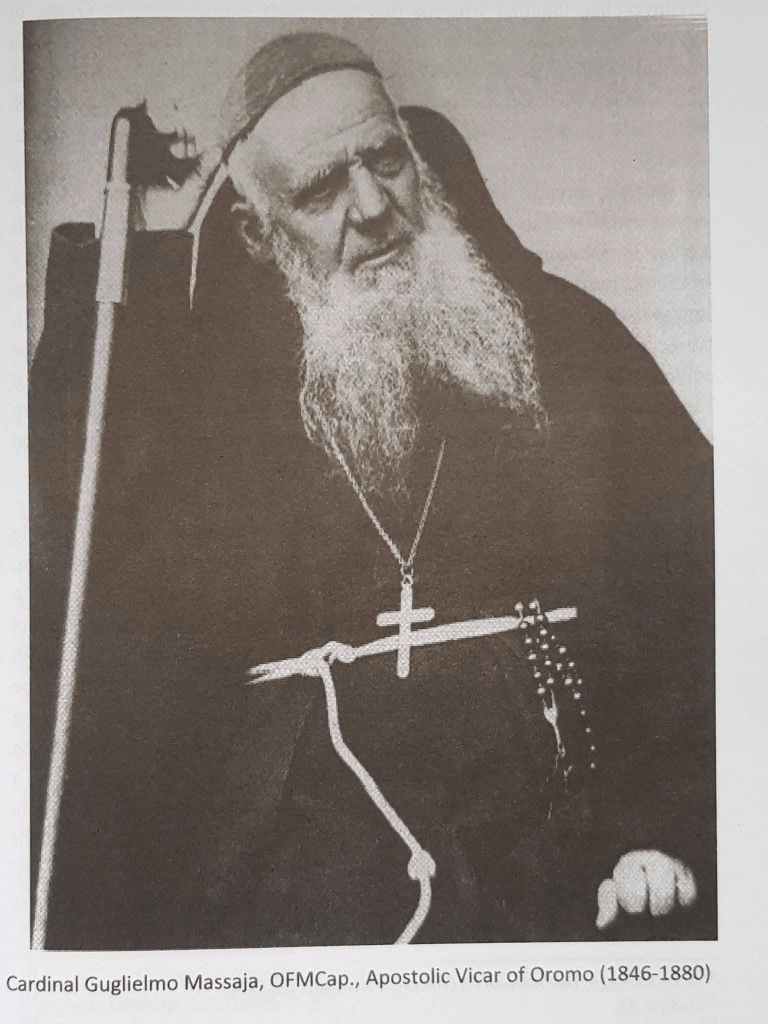
Catholic Missionary Records from 1868 Confirm the Oromo Identity of Finfinne and Birbirsa
By Negash Qemant
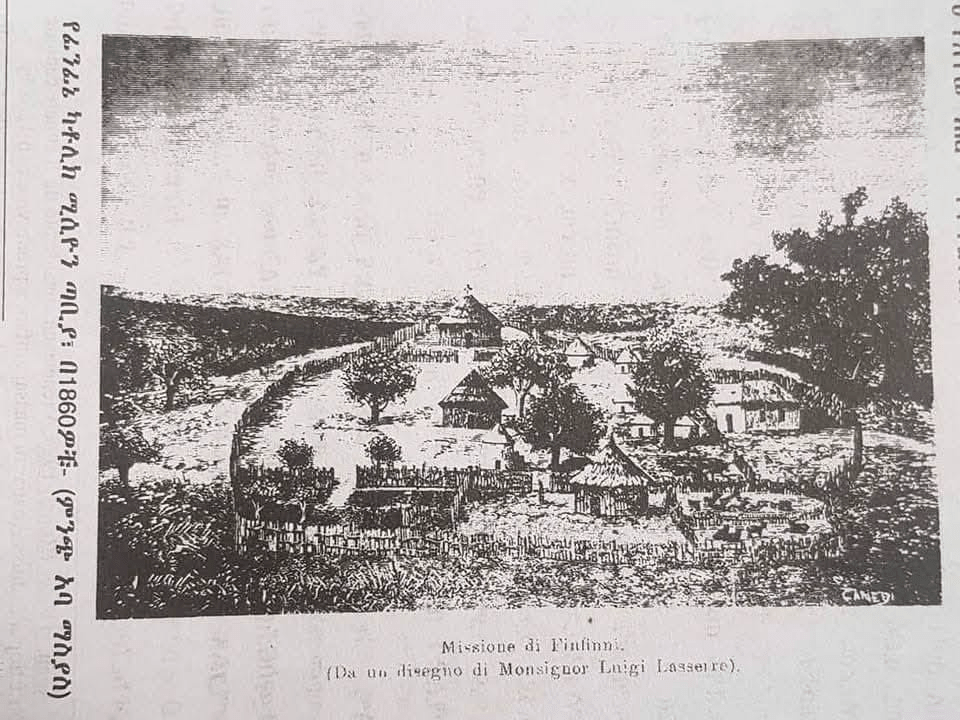
In the archives of Catholic missionary history lies a remarkable document that provides irrefutable evidence of Oromo presence in what is now Addis Ababa. The “Missione di Finfinni” —a drawing and written account by Monsignor Luigi Lasserre from 1868—offers a vivid snapshot of the area known as Finfinne and Birbirsa (the present-day Piassa and St. George’s area) long before the establishment of the imperial capital.
This historical record, preserved by Dr. Abba Antonios Alberto, OFM Cap, in his writings (pages 110-111), confirms that the area was not an empty wilderness awaiting colonisation, but a vibrant Oromo landscape with established communities, trade routes, and cultural significance.
The Foundation of Finfinni and Birbirsa (1868)
According to the missionary records, the Catholic mission at Finfinne was established in September 1868. The account states:
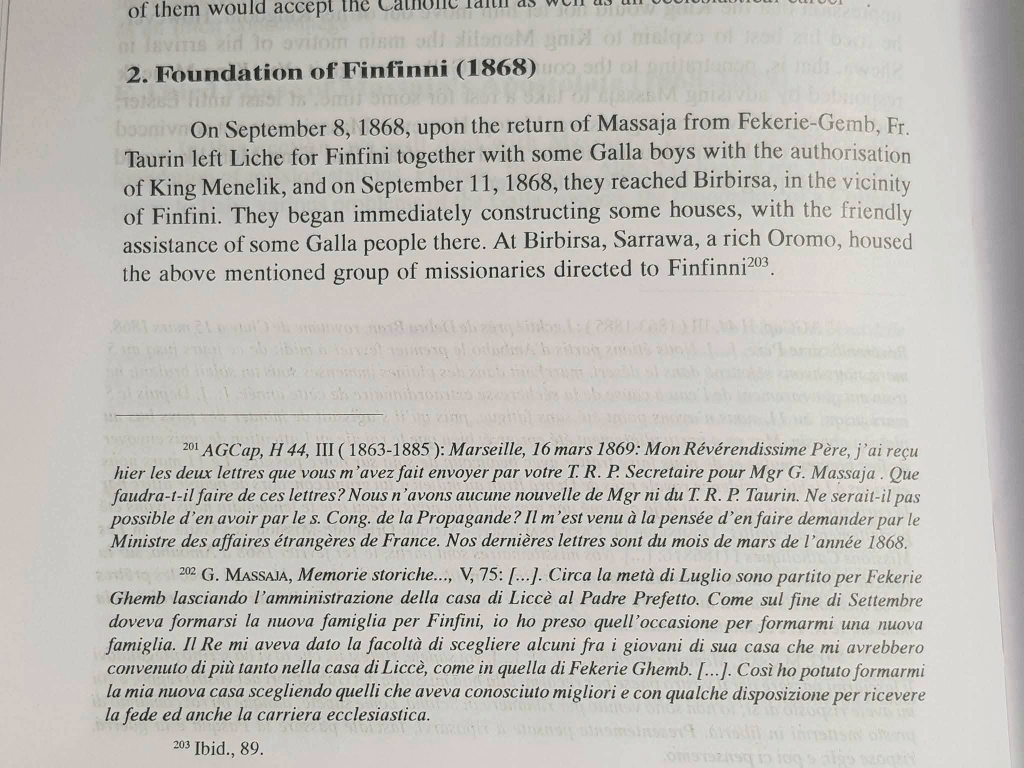
“On September 8, 1868, upon the return of Massaja from Fekerie Gemb, Francisco Taurin left Liche for Finfinne together with some Oromo boys with the authorisation of King Menelik. On September 11, 1868, they reached Birbirsa, in the vicinity of Finfini. They began immediately constructing some houses with the friendly assistance of some Oromo people there.”
This passage is significant for several reasons:
- The Name “Finfinni”: The missionaries used the name “Finfinni” (Finfinne) to refer to the area. This confirms that the Oromo name was in common use and was recognised by outsiders.
- The Name “Birbirsa”: The area now known as Piassa and St. George’s was specifically identified as “Birbirsa.” This Oromo name predates the establishment of Addis Ababa.
- Oromo Presence: The missionaries were assisted by “some Oromo people” who helped them construct their buildings. This demonstrates that the area was inhabited by Oromo communities who were active participants in the life of the region.
- King Menelik’s Authorisation: The missionaries received authorisation from King Menelik to establish their mission. This indicates that Menelik, at this time, was not yet the undisputed ruler of the area but was engaging with the existing landscape.
The Sarrawa Family: Oromo Hospitality
The missionary records also document the role of an Oromo family in hosting the missionaries:
“At Birbirsa, Sarrawa, a rich Oromo, housed the above-mentioned group of missionaries directed to Finfinni.”
This is a remarkable detail. A wealthy Oromo individual named Sarrawa provided shelter and support to the Catholic missionaries. This act of hospitality is a testament to the generosity and openness of the Oromo people, even towards strangers from distant lands.
The presence of a “rich Oromo” in the area also challenges the narrative that the Oromo people were impoverished nomads. Sarrawa was a person of means who could offer accommodation and support to a group of foreign missionaries. This indicates a level of economic activity and social organisation that contradicts the stereotypes used to justify dispossession.
Finfinne: “At the Center of the Country of Oromo”
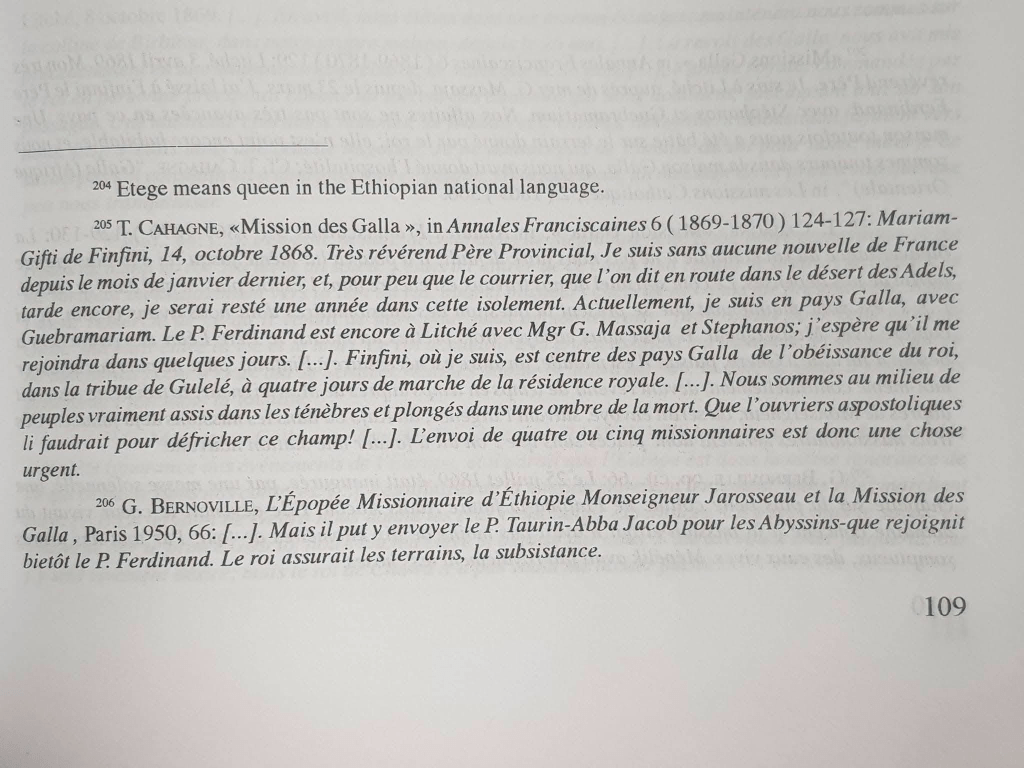
Perhaps the most significant passage in the missionary records is a letter dated October 14, 1868, written by Fr. Taurin from Finfinne. In this letter, addressed to the provisional minister, Fr. Taurin states:
“He was with a certain Gebremariam at Finfinni situated at the center of the country of Oromo with the tribe of Gulele.”
This is a powerful statement. The missionary explicitly identifies Finfinne as being located at the “center of the country of Oromo.” This is not a vague reference—it is a precise geographical and ethnographic observation.
The phrase “center of the country of Oromo” confirms that Finfinne was understood by outsiders as being in the heart of Oromo territory. The mention of the “tribe of Gulele” (the Gulele Oromo) further locates the area within a specific Oromo community.
This evidence is consistent with Oromo oral tradition, which has always maintained that Finfinne is the heart of Oromia—a place of cultural, spiritual, and historical significance to the Oromo people.
The Missionaries and the Oromo Landscape
The missionary accounts also provide insights into the Oromo landscape of the time. The records describe:
- Oromo settlements: The area was not empty but inhabited by Oromo communities.
- Oromo agriculture: The presence of “rich” Oromo individuals indicates economic activity.
- Oromo hospitality: The missionaries received assistance and accommodation from the local Oromo population.
- Oromo social organisation: The mention of specific tribes (like Gulele) indicates a structured society.
The missionaries were not arriving in an empty wilderness—they were entering a well-established Oromo landscape with its own social, economic, and political systems.
Implications for the History of Finfinne
The missionary records from 1868 provide crucial historical evidence that challenges the dominant narrative of Finfinne’s origins. They demonstrate that:
- The Oromo People Were the Inhabitants: The area was inhabited by Oromo communities, including the Gulele tribe, before the establishment of the imperial capital.
- The Land Was Oromo: The missionaries identified Finfinne as being at the “center of the country of Oromo.”
- The Oromo Names Were Original: The names “Finfinne” and “Birbirsa” were in use before the area was renamed Addis Ababa.
- The Oromo People Were Active Participants: The Oromo people assisted the missionaries, hosted them, and engaged with them as equals.
- Oromo Society Was Structured: The presence of “rich” Oromo individuals like Sarrawa indicates economic stratification and social organisation.
Conclusion: A Historical Record That Cannot Be Erased
The Catholic missionary records from 1868 are a powerful testament to the Oromo presence in Finfinne. They provide irrefutable evidence that the area was not an empty wilderness but a vibrant Oromo landscape with established communities, economic activity, and social organisation.
These records confirm what Oromo oral tradition has always maintained: that Finfinne is Oromo land, and that the Oromo people were the original inhabitants of the area now known as Addis Ababa.
As the Oromo people continue to demand recognition and justice, these historical records serve as a powerful reminder that the truth cannot be erased. The documents exist. The names remain in the landscape. The history is there for those who seek it.
The land remembers. The history endures. Finfinne is Oromo.
This feature article is based on the missionary records of Dr. Abba Antonios Alberto, OFM Cap (pages 110-111) and the original documents from the Missione di Finfinni (1868). It is dedicated to all those who seek the truth about Oromo history and the origins of Finfinne.

Posted on August 16, 2026, in Aadaa, Afaan, Events, Finfinne, freedom, Information, Language, Media, News, Press Release, Promotion. Bookmark the permalink. Leave a comment.






Leave a comment
Comments 0