Daily Archives: July 31, 2026

“A Warning from the Grave”: Dr. Negasso Gidada’s 2014 Prophecy on the Addis Ababa Master Plan – and Why It Was Ignored

As Ethiopia reels from the aftermath of the 2014 Oromo protests, a newly surfaced document reveals that one of the Constitution’s architects had foreseen the catastrophe – and offered a roadmap to avoid it. His advice went unheeded.
By Our Staff Reporter
In May 2014, just weeks after violent protests erupted across Oromia over the “10th Addis Ababa Integrated Development Master Plan,” Dr. Negasso Gidada – a key intellectual and co-architect of Ethiopia’s 1995 Constitution – sat down to write a sobering analysis. He titled it: “A Tragic Consequence of the ‘10th Addis Ababa Integrated Development Master Plan’: A Warning for the Future.”
The document, now circulating widely, reads like a dispatch from a man who saw the storm coming. In it, Dr. Negasso dissects the historical grievances, constitutional failures, and political miscalculations that ignited the unrest – and warns that if the root causes were not addressed, the federal system itself could unravel.
Nearly a decade later, his words carry a haunting resonance. The protests that began in Adaamaa University on April 29, 2014, spread to dozens of towns, leaving dozens dead, property destroyed, and ethnic tensions inflamed. The government’s response – a mix of repression and belated appeasement – did little to quell the anger. And, as Dr. Negasso predicted, the underlying issues remain unresolved.
A City Built on Conquest, a Constitution Unfulfilled
Dr. Negasso begins by grounding the crisis in history. Addis Ababa, founded in 1887 by Emperor Menelik and Empress Taitu around the hot spring of Finfinnee, was established on land that belonged to the Oromo of Shawa. He cites British envoy Harris, who in 1844 witnessed King Sahle Sellasie’s forces – armed with European guns – “destroy the Oromo life and resources,” burning homes, capturing women, and slaughtering men. The Oromo of Gulalle, he notes, still remember leaders like Tufa Mona and Birraatuu Goolee who died in those wars.
This historical memory, he argues, is not ancient grievance – it is living pain. And it has been compounded by three modern failures:
1. The Constitution of 1995, which promised Oromia a “special interest” in Addis Ababa (Article 49/5) but never defined it in law.
2. The 2003/2004 decision to move Oromia’s capital to Adaamaa, which sparked student protests and led to mass expulsions and imprisonments.
3. The broken promises of 2005, when OPDO, after losing the election, re-declared Finfinnee as the capital and vowed to build Oromo cultural centres and language schools in the city’s ten districts – none of which materialised.
“Nine years have passed,” Dr. Negasso wrote, “and nothing from the decisions and promises were implemented.”
The Master Plan: A Spark on Dry Tinder
When the “Integrated Master Plan” – which proposed integrating surrounding Oromo towns into Addis Ababa – was publicly announced in March 2014, it struck at this accumulated trauma. The plan was presented as a development initiative, but for Oromo farmers on the city’s fringes, it meant eviction. For Oromo intellectuals, it meant the erasure of their territorial rights. For the youth, it was the final straw.
“Here lies the root cause of the current incident and the tragic consequence,” Dr. Negasso wrote.
The protests were swift and fierce. They began at Adaamaa University, then spread to Haroo Maayaa, Dire Dawa, Bale, Guji, and beyond. By the time Dr. Negasso penned his note, the death toll was mounting – two students killed in a TV room explosion at Haroo Maayaa, others thrown into rivers, and reports of mutilation and ethnic violence. Security forces responded with live fire, and the government issued statements defending the plan while blaming “outside forces.”
A Constitutional Crisis in Plain Sight
Dr. Negasso’s most incisive contribution is his legal analysis. He walks through the Constitution article by article, showing how both the ruling party and nationalist forces were undermining it.
He quotes Article 49/5: “The special interest of the State of Oromia in Addis Ababa… shall be respected. Particulars shall be determined by law.” That law, he notes, has never been enacted.
He cites Article 40/4, which guarantees peasants the right to land and protection from eviction – a right routinely violated in the suburbs of Addis.
And he warns that if the Constitution is not respected, the federal system could collapse into ethnic conflict. “The end result could also mean the disintegration of Ethiopia which no one of us wants to see.”
What He Prescribed – and What Was Ignored
Dr. Negasso did not merely diagnose; he offered a cure. His recommendations were clear:
· Apologise for the failures: the unfulfilled constitutional provision, the broken promises, the violence by security forces.
· Investigate human rights violations by both state and individual actors, and bring perpetrators to justice.
· Immediately implement Article 49/5 – define Oromia’s special interest, demarcate the boundary, and affirm the jurisdiction of surrounding towns.
· Stop hate propaganda from both “Ethiopianist” and “Oromummaa” camps.
· Launch a national dialogue on the Constitution, the national question, land policy, federalism, and the role of the media.
“We can only try to mend the damage by taking corrective measures based on what we have learnt from the mistakes done,” he wrote.
The Unheeded Warning
Dr. Negasso concluded his note with a plea: “If we want to live together and save our people and country, we should either respect the Constitution as it is or create a situation in which it could be amended and ratified by the people through a referendum.”
The TPLF-led government did neither. The master plan was shelved – but the underlying issues were never resolved. The protests of 2014 would echo in the 2015 elections, and again in the 2016–2018 Oromo uprisings that ultimately reshaped the country’s political landscape.
Dr. Negasso Gidada passed away in 2019. But his note from May 2014 remains a haunting artifact – a warning written in ink, delivered from the grave, and largely ignored by those who had the power to act.
Today, as Ethiopia navigates yet another national dialogue, his words serve as a stark reminder: tragedy is not inevitable, but it is the price of constitutional neglect.
—
This feature is based on Dr. Negasso Gidada’s unpublished note dated May 2014, titled “A Tragic Consequence of the ‘10th Addis Ababa Integrated Development Master Plan’: A Warning for the Future.”

Constitutional Legitimacy and Federalism in Ethiopia: A Trap in the Making?
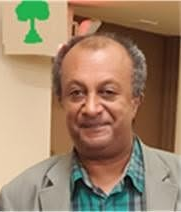
With constitutional amendments on the table and a national dialogue that critics call structurally rigged, Ethiopia stands at a crossroads that could determine the fate of its multinational federation
By Prof Asfaw Beyene
There is absolute consensus among Ethiopians on one fundamental truth: the country is bleeding, and a genuinely inclusive, transparent, and democratic dialogue is the only viable exit from the abyss . However, when the very architecture of a peace-building process is engineered to marginalise the country’s largest demographic constituency and dismantle its constitutional foundations, the process ceases to be a dialogue. It becomes a structural trap .
As the Ethiopian National Dialogue Conference commenced on July 15, 2026, the stakes could not be higher. The federal government is preparing a sweeping constitutional reform package that could redefine Ethiopia’s federal structure, with proposals that include amending Article 39—the constitutional provision that enshrines the right of nations, nationalities, and peoples to self-determination, including secession—and replacing ethnicity-based regional boundaries with geography-based ones .
These are not mere policy adjustments; they are existential threats to the constitutional order that has governed Ethiopia since 1995. As Asfaw Beyene’s analysis argues, the national dialogue may be heading toward a “barred trap” from which there is no easy escape .
The Mathematics of Disenfranchisement
At the heart of the controversy lies the decision-making framework of the National Dialogue Commission. According to the Commission’s documented multi-tier decision-making system, the ultimate power to pass or reject national agendas is vested in a Regional Representatives Assembly composed of 211 members .
Every region and city administration is granted exactly 14 representatives, alongside 15 representatives handpicked by the federal government. The result? Oromia, a region home to an estimated 40 million people—roughly 35% to 40% of the Ethiopian population—is granted the exact same voting power (14 seats) as city administrations like Dire Dawa or Harari, which have populations of approximately 500,000 .
Mathematically, Oromia is granted a mere 6.6% of the voting power in the assembly that will decide the fate of the country. This is not equality; it is the systematic erasure of the Oromo voice .
The Danger of Dismantling Federalism
“The outcome of dismantling federalism can be separation, not unity.”
Many constitutional democracies require broad consensus before fundamental constitutional changes take effect. Some do not allow even supermajority voices for constitutional amendment; they require unanimous vote .
In Germany’s Basic Law, the law that establishes Germany’s federalism cannot be amended at all, even by a unanimous vote. In Canada, unanimous provincial consent is required for certain constitutional amendments under the unanimity formula. These systems protect federalism at such high cost because they are aware the alternative would be separation and independence .
They recognize that constitutions should not be altered solely based on the political preferences of a temporary governing majority because they provoke a counter remedy: secession . Ethiopia’s elections did not provide even a majority vote to the ruling party; elections were not organized in many parts of the country for security reasons .
Article 39: A Constitutional Prerequisite, Not a Mere Provision
Article 39 of the Ethiopian constitution must be understood not merely as a constitutional provision, but as a prerequisite upon which the constitutional order itself rests. Recognition of the right to self-determination, including the possibility of secession under Article 39, establishes the foundational boundaries within which the state exists .
Because this principle defines the relationship between the state, its territory, and the peoples composing it, any amendment that would fundamentally alter or remove this guarantee must logically require unanimous consent of a duly established representative body—not a majority vote .
Article 39 is not, by itself, a sufficient condition to unite a country. But it is a prerequisite that establishes the boundaries and consent-based framework through which the country’s territorial and constitutional existence is maintained. An attempt to remove or fundamentally alter this prerequisite would forfeit the very foundation that gives the constitutional system some legitimacy .
The Eritrean precedent is instructive. When Haile Selassie dismantled Eritrea’s legally mandated autonomy and unilaterally dissolved the Eritrea-Ethiopian Federation, followed by full annexation of Eritrea in 1962, this action prompted an armed national movement, triggering the 30-year Eritrean War of Independence .
The Referendum Question
Where a legally recognized political actor has formally advanced a referendum proposal pursuant to the existing constitutional framework, and where the governing law provides a mechanism for a referendum under applicable circumstances, the constitutional process cannot be circumvented through a preemptive amendment designed to render that referendum unnecessary or ineffective .
Article 39 of the Constitution provides a clear procedure for secession: when a demand for secession has been approved by a two-thirds majority of the members of the Legislative Council of the Nation, Nationality or People concerned; and when the Federal Government has organized a referendum which must take place within three years from the time it received the concerned council’s decision for secession .
The referendum proposal submitted by the OLF for independent Oromia constitutes a pending constitutional process that must be addressed according to the law in force at the time it was initiated. Allowing a subsequent amendment to override, extinguish, or bypass a properly raised referendum petition would undermine constitutional certainty, procedural fairness, and the principle that constitutional change must follow established legal procedures .
The View from the Regions
Regional reactions to the proposed constitutional reforms are mixed. Oromia and Somali regions favor preserving the current model, while Amhara and parts of the Southern Nations, Nationalities, and Peoples’ Region (SNNPR) show growing support for change .
Mulatu Gemechu, vice chairman of the Oromo Federalist Congress (OFC), has argued that the amendment process lacks legitimacy: “One cannot just pop out of a commission and decide to amend [the Constitution]. I was there when it was created. Every element of the Constitution was put in intentionally” .
Dejen Mezgebe, chairman of the Tigray Independence Party, has warned that “this amendment proposal is dangerous, especially for Tigray, which currently has no official or legal representation in federal institutions. Any amendment before Tigray returns to the constitutional order would create a generational crisis” .
Conclusion: A Trap or a Solution?
The constitution amendment is widely seen as a trap to get rid of the Oromo regional state, which is a prerequisite for the secessionist referendum. The Constitution was created through a long, inclusive process of deliberation among all nations and nationalities—a process that reflected the free will of the peoples of Ethiopia . It is impossible to remove the right of secession from the Constitution without violating the foundations of the constitutional order and federalism .
How can the people whose constitutional rights the dialogue is supposed to address be structurally cheated out of their representation? You cannot legally bind a nation to a contract in which its signature was forged .
Instead of ending the tragic wars currently ravaging the country, including the ongoing conflict in Oromia, this manufactured consensus will inevitably exacerbate ethnic polarisation and institutionalise conflict for generations .
“A constitutional amendment cannot be used as a procedural shortcut to defeat a lawful petition or to prevent the electorate from exercising a right that has already been invoked under the existing constitutional order.”

Bonnie Holcomb: The Mother of Oromo Studies
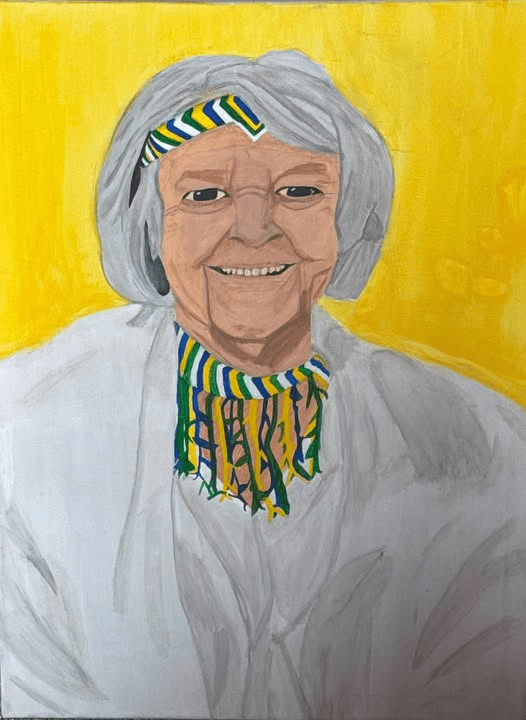
A lifetime of scholarship, sacrifice, and service in the pursuit of Oromo dignity and truth
MINNEAPOLIS, MINNESOTA — For forty years, one name has stood at the centre of Oromo scholarship, guiding the field from its exiled beginnings to global academic recognition. Bonnie Holcomb, co-founder of the Oromo Studies Association (OSA) and Editor-in-Chief of its Journal, has dedicated her life to ensuring that Oromo history, culture, and identity are studied on their own terms.
This year, as the OSA marks its 40th anniversary , the community celebrates not just an organisation, but the extraordinary vision and persistence of one woman—affectionately known as “The Mother of OSA” . In recognition of her lifetime service, a portrait of Holcomb was commissioned from a 15-year-old artist, Qabbanne, reflecting the intergenerational impact of her work .
The Founding of a Movement
The year was 1986 . In exile, scattered across meeting rooms in the diaspora, a small group of Oromo and non-Oromo scholars gathered with a radical idea: to build an independent academic home for the study of a people whose history, culture, and very existence had been systematically erased from mainstream scholarship . They would create a space where knowledge about the Oromo could be produced not by outsiders, but on its own terms .
Bonnie Holcomb was among them.
The OSA was born in direct response to a brutal crackdown—a void in which Oromo heritage was not merely absent from academia and state narratives, but actively suppressed . Those campaigning for greater recognition of the Oromo people were being murdered, tortured, jailed, or driven into exile . The founding of the OSA was an act of intellectual resistance: a refusal to accept erasure and a determination to tell stories that had been silenced .
The Invention of Ethiopia and Other Landmarks
In 1990, Holcomb, alongside fellow founder Sisai Ibssa, co-authored The Invention of Ethiopia: The Making of a Dependent Colonial State in North Africa . The book was a landmark work, offering a radical critique of how Ethiopian history had been represented and exposing a broader set of readers to Oromo history and ethnicity in the Horn of Africa . At its heart was a concern with inequality and a fundamental challenge to dominant state narratives .
The 1990s marked a productive period for Oromo studies, with diaspora intellectuals becoming key actors in the field . The Journal of Oromo Studies (JOS), launched in 1993, grew into the premier peer-reviewed publication for interdisciplinary scholarship on the Oromo people .
A Long and Difficult Road
Holcomb has described the journey as “a long and sometimes a difficult road to reveal evidence and build knowledge which shift the narrative in the region and globally” . This is not hyperbole. For decades, Oromo scholarship faced suppression, neglect, and active hostility. The OSA and its Journal have been more than academic endeavours; they have been an act of intellectual resistance—a refusal to accept the erasure of a people’s history and a determination to tell stories that had been silenced .
Despite these obstacles, the OSA has grown into a global scholarly community spanning continents and disciplines . In a landmark achievement, the Journal of Oromo Studies was recently indexed in Scopus, the gold standard of academic databases—placing it alongside publications from Springer, Elsevier, and Cambridge University Press . Holcomb’s message to contributors and advisors on this achievement reflected both pride and humility: “This publication, and the indexing in Scopus, are notable achievements, all. We have come a long way together” .
The Mother of OSA
The affectionate title “The Mother of OSA” is a testament to Holcomb’s foundational role and her ongoing commitment to the community . She has served as a Board Director and co-chair of the organising team for the 2026 annual conference, continuing to guide the organisation she helped build . Her work has been recognised with an OSA lifetime achievement award .
The theme for the 2026 conference, “Oromo on the Global Landscape: Honoring Asmarom Legesse as OSA Turns 40” , honours another visionary scholar whose work shaped Oromo studies . Asmarom Legesse, author of the landmark Gada: Three Approaches to the Study of African Society (1973), passed away in early 2026 . The conference will take place from July 31 to August 2, 2026, in Minneapolis .
Passing the Torch
In a touching tribute to Holcomb’s legacy, a portrait of her was commissioned from a 15-year-old artist, Qabbanne . This act is itself symbolic: it reflects the intergenerational impact of Holcomb’s work and the future she has invested in. As the OSA enters its fifth decade, the question is whether the next generation will carry the torch forward . Holcomb’s message to the community is also a call to action:
“Please remember that it is the Oromo Studies Association that has conceived, designed, hosted, nurtured, upheld and published the research and scholarship represented in JOS. I urge you all to continue to support OSA, and by extension, its Journal, with donations, membership in OSA and engagement as well as submissions” .
Conclusion
Four decades ago, a small group of exiled scholars dared to imagine a world in which Oromo knowledge was recognised as a contribution to the full breadth of human civilization . Today, that vision is reality . Bonnie Holcomb has been central to that journey. Her legacy is not just the Journal, the conferences, or the Scopus indexing—it is the community of scholars, activists, and artists who continue the work.
As Holcomb wrote, with a warmth that reflects decades of dedication: “Congratulations, one and all” .
The celebration is earned. The legacy is enduring. And the future—if the community continues to support it—is bright.
“Bonnie Holcomb is more than a scholar; she is the architect of a field and the mother of a movement.”






