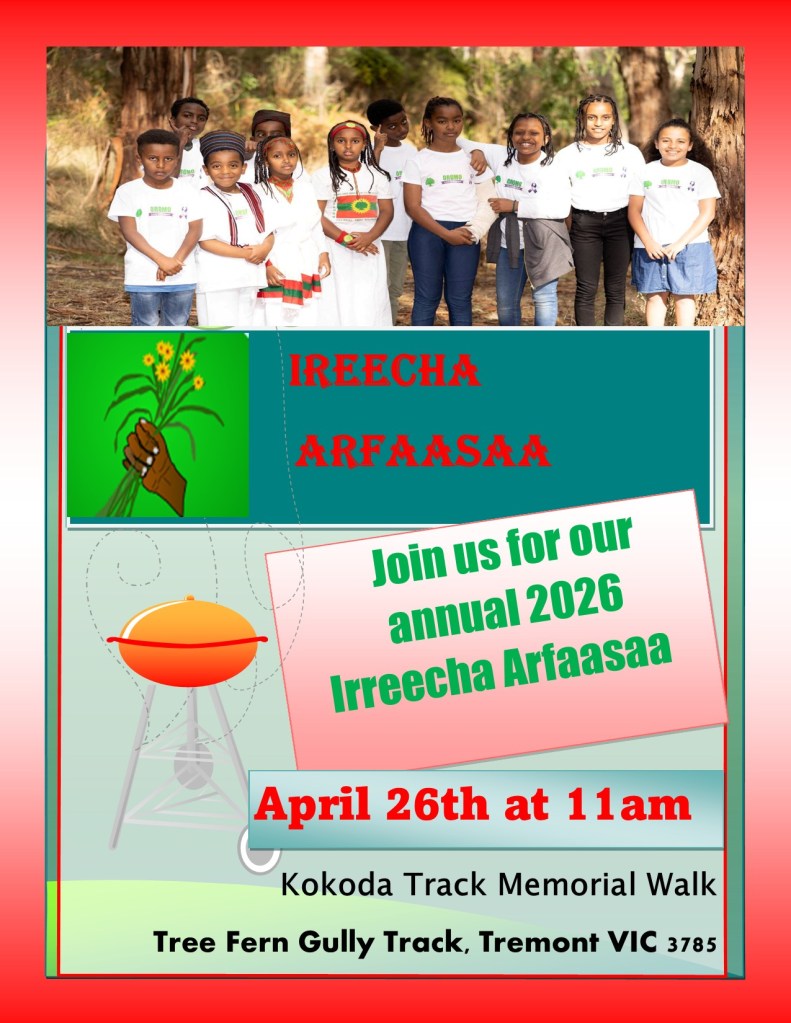
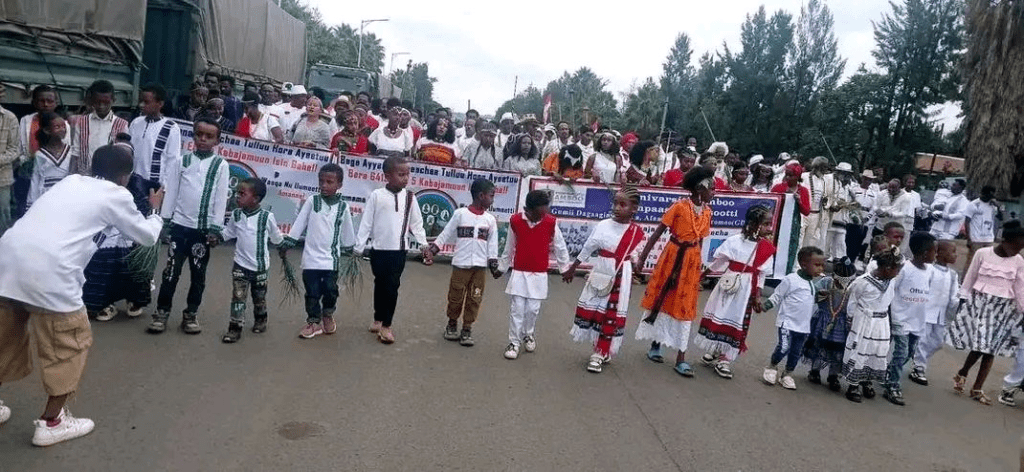
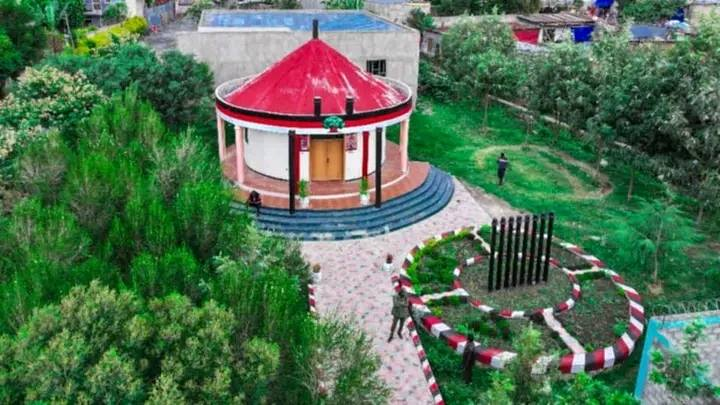
Irreecha Arfaasaa (the spring thanksgiving festival) being celebrated on April 26, 2026, at Tulluu Dandenong (likely a reference to the Dandenong Ranges in Victoria, Australia). This appears to be a diaspora celebration organized by the Oromo community in Melbourne, and Oromo Irrecha Association.
A Celebration of Heritage: Melbourne’s Oromo Community Marks Third Annual Oromtittii Day with Joy and Warmth
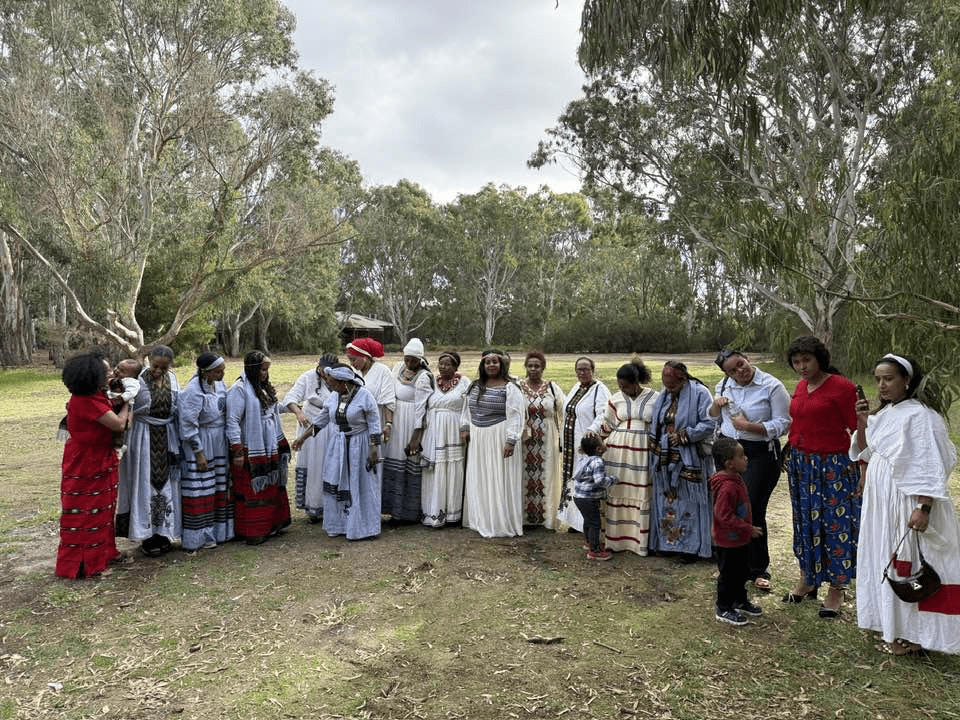
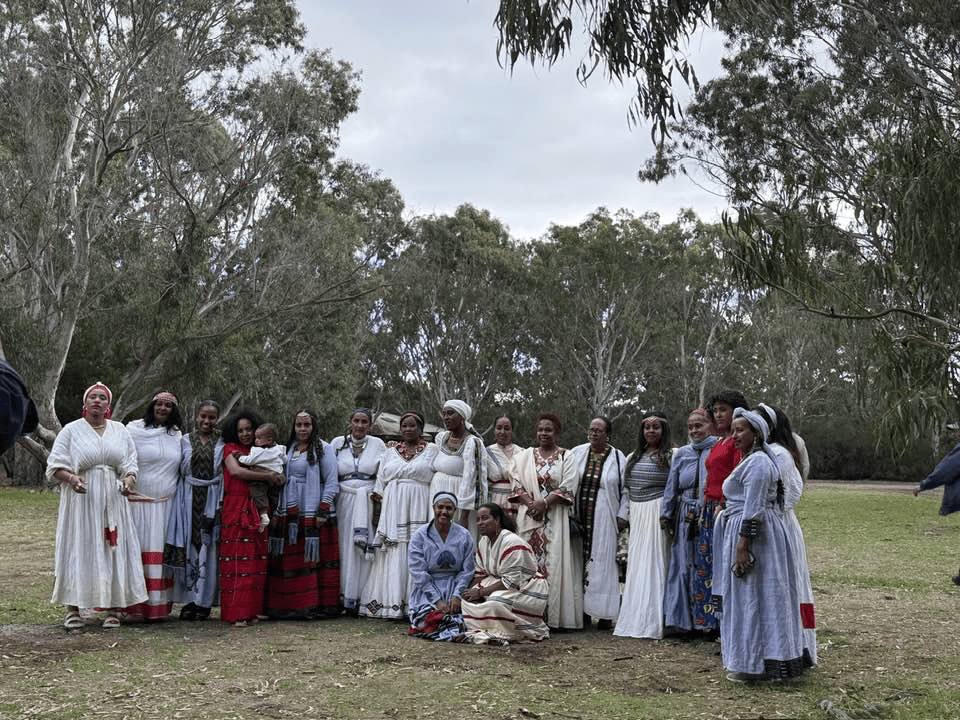
Melbourne, Australia – The Oromo community in Melbourne has once again demonstrated its rich cultural pride, celebrating Oromtittii Day (Oromo Mothers’ Day) for the third time in a vibrant ceremony held today. The event, which took place in a setting filled with warmth and beauty, was distinguished by a strong sense of family, with elders and children gathering together to honor the occasion.
This year’s celebration was dedicated to elevating the respect and recognition deserving of mothers. Attendees described the event as a heartwarming success, noting that the third annual commemoration brought immense joy to all who participated.
Organizers have already set their sights on the future, with plans to expand the event further. “We are already planning to make next year’s celebration even warmer and more inclusive than this one,” a member of the organizing committee shared.
“Our goal is to deepen community involvement and elevate this tradition.”
Community leaders extended their gratitude to all who participated, stating, “We thank our community members who came together to be part of this.”
The inaugural Oromtittii Day in Melbourne was first celebrated in 2024, and today’s event marks a continued commitment to honoring Oromo heritage and the pivotal role of mothers within the community.
As the sacred season approaches, anticipation is building across Oromia and beyond. The annual Irreechaa Arfaasaa—the Thanksgiving festival of the Oromo people—is set to be celebrated with unparalleled splendor at the historic site of Tulluu Hora Ayeetuu.
According to an announcement from the Galmi Duudhaa Ganamaa Walisoo Liiban, preparations for the occasion have entered their final phase. The festival, which marks the transition from the rainy season to the bright days of peace and harvest, is scheduled to take place in a manner befitting its profound cultural and spiritual significance.
A Sacred Gathering
Irreechaa is more than a festival; it is the spiritual heartbeat of the Oromo nation. Celebrated twice a year, Irreechaa Arfaasaa (the spring thanksgiving) is a moment when millions gather at sacred lakes and hills to offer gratitude to Waaqaa (God) for life, health, and the blessings of renewal.
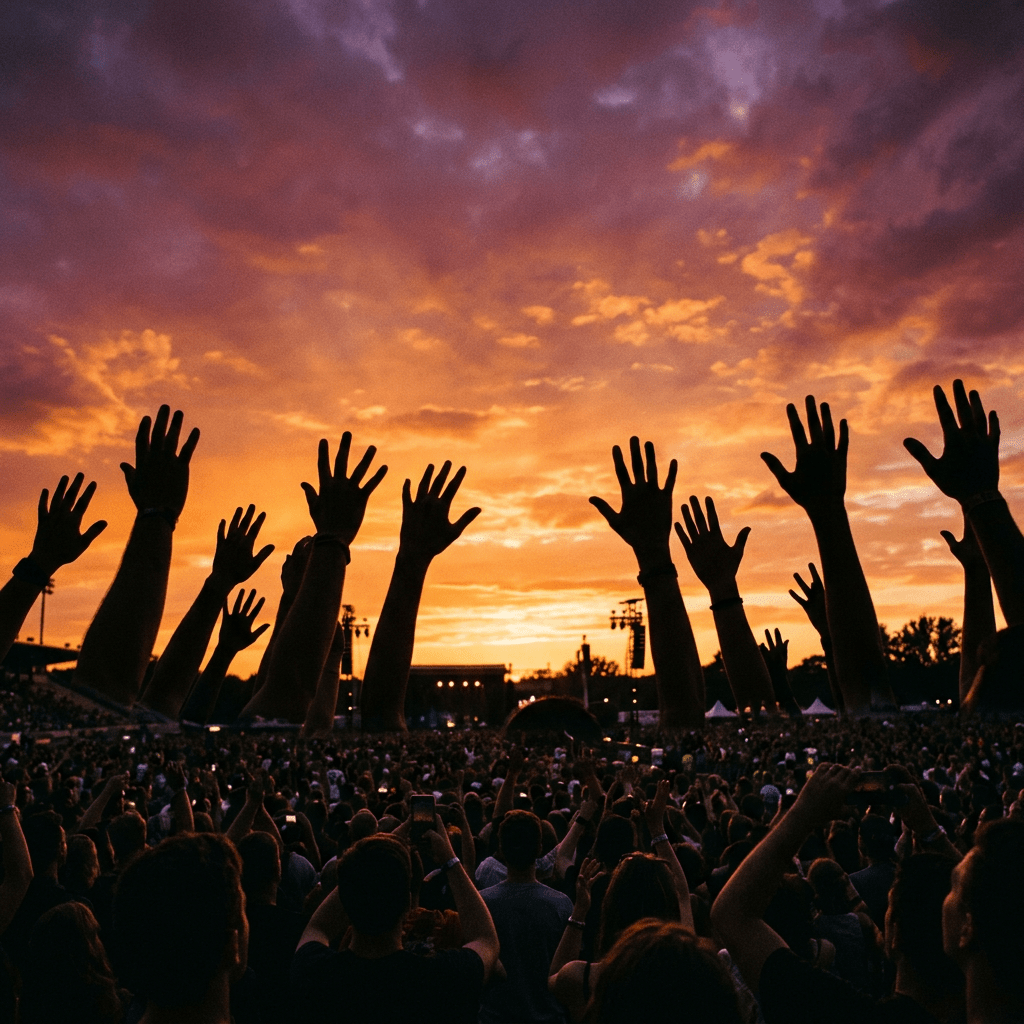
This year, all eyes are on Tulluu Hora Ayeetuu, a site revered for its deep historical and spiritual roots. The location holds special significance as a center of Oromo cultural identity, where generations have gathered to raise their hands in prayer and solidarity.
Final Preparations Underway
In a statement released to the public, organizers from Galmi Duudhaa Ganamaa Walisoo Liiban confirmed that all necessary arrangements are nearing completion. The celebration is being planned as a “warm and beautiful ceremony” —a phrase that reflects the commitment to ensuring both dignity and joy for the multitudes expected to attend.
Logistical preparations include:
Site organization and safety measures at Tulluu Hora Ayeetuu
Coordination of traditional protocols led by cultural elders
Arrangements for attendees traveling from across Oromia and the diaspora
A Call to the Oromo People
The message from the organizing body carries a tone of both invitation and affirmation. Speaking on behalf of the community, the leadership emphasized that the celebration is not merely an event but a reaffirmation of identity. As stated in their communication:
“Ayyaanni Abdii fi Hawwiin eegamu, kan Lafaa fi Nafa Oromoof gabbinaa.” (A festival where hope and aspiration are upheld—a thanksgiving for the land and soul of Oromoo.)
Significance of the Date
Irreechaa Arfaasaa will be observed according to the traditional Oromo calendar. While the exact date aligns with Bitootessa 27 / 7 / 2018 E.C. (which corresponds to approximately late March / early April in the Gregorian calendar), the spiritual resonance transcends the calendar itself. It is a time of unity, reflection, and collective renewal.
Looking Ahead
As the final preparations are completed, the message from Galmi Duudhaa Ganamaa Walisoo Liiban serves as both a confirmation of readiness and a call to the Oromo people worldwide to embrace the season with pride and reverence.
In a time when cultural preservation carries profound political and social weight, the gathering at Tulluu Hora Ayeetuu stands as a powerful testament to the resilience of Oromo traditions. The anticipation of warmth, beauty, and spiritual elevation suggests that this year’s Irreechaa will be remembered as a moment of unity and hope.
For further updates on logistics and participation, the public is advised to follow official communications from the organizing committee.
For generations, the Oromo people have relied on an institution that predates modern legal systems—the traditional courts (Manneen Murtii Aadaa)—to resolve disputes, maintain harmony, and preserve the social fabric of their communities.
These customary courts, rooted in the rich cultural heritage and values of the Oromo people, play an indispensable role in maintaining community peace by resolving disputes through frameworks grounded in tradition and cultural wisdom. Whether addressing family conflicts, neighborly disagreements, or broader community tensions, these institutions offer reconciliation and dialogue-based solutions that heal rather than divide.
Justice Rooted in Culture
The Manneen Murtii Aadaa operate on principles fundamentally different from formal court systems. Rather than adversarial proceedings that produce winners and losers, traditional courts emphasize reconciliation, restoration of relationships, and community harmony. The goal is not punishment but healing—not victory but peace.
This approach reflects deep Oromo values embedded in the culture for centuries. The famous Oromo saying “Nageenyi badhaadhummaadha” (Peace is wealth) captures the understanding that without harmony, material prosperity means nothing. Traditional courts exist to protect this most precious wealth.
Efficiency and Accessibility
One of the most significant advantages of traditional courts is their accessibility. Community members can bring disputes before elders without the burden of excessive time and cost that often characterizes formal legal proceedings. A matter that might take months or years in the formal court system can often be resolved in days through traditional mechanisms.
This efficiency preserves community relationships that might otherwise be destroyed by prolonged conflict. When neighbors or family members can resolve their differences quickly and return to normal life, the entire community benefits.
The Wisdom of Elders
Central to the functioning of traditional courts is the involvement of Jaarsolii Biyyaa—community elders whose wisdom, accumulated over lifetimes, guides the resolution process. These elders carry within them the knowledge of generations, understanding not only the specific dispute before them but the broader context of community relationships and history.
By involving elders, traditional courts ensure that the cultural knowledge and values passed down through generations are preserved and applied. Young people who participate in these processes learn not only about the specific dispute but about the deeper values that hold their community together.
A Bridge Between Past and Future
The continued operation of Manneen Murtii Aadaa represents more than a practical mechanism for dispute resolution—it is a living connection to Oromo heritage. In a world of rapid change and external pressures, these institutions maintain continuity with the wisdom of ancestors while adapting to contemporary needs.
They demonstrate that tradition is not static but dynamic—capable of addressing modern challenges while remaining grounded in enduring values. The elders who preside over these courts carry forward a torch lit by those who came before, ensuring that future generations will inherit not only problems but the tools to solve them.
Strengthening Peace and Unity
Perhaps most importantly, traditional courts actively strengthen peace, consensus, and unity within communities. By resolving disputes through dialogue rather than confrontation, they model the very harmony they seek to create. The process itself—requiring disputing parties to sit together, listen to elders, and work toward mutual understanding—builds the skills and relationships necessary for long-term community cohesion.
When a dispute is resolved through Manneen Murtii Aadaa, the resolution carries moral weight that formal court judgments often lack. Because the community has participated in the process and the elders have spoken, the outcome is accepted not because it is enforced but because it is recognized as just.
A Living Tradition
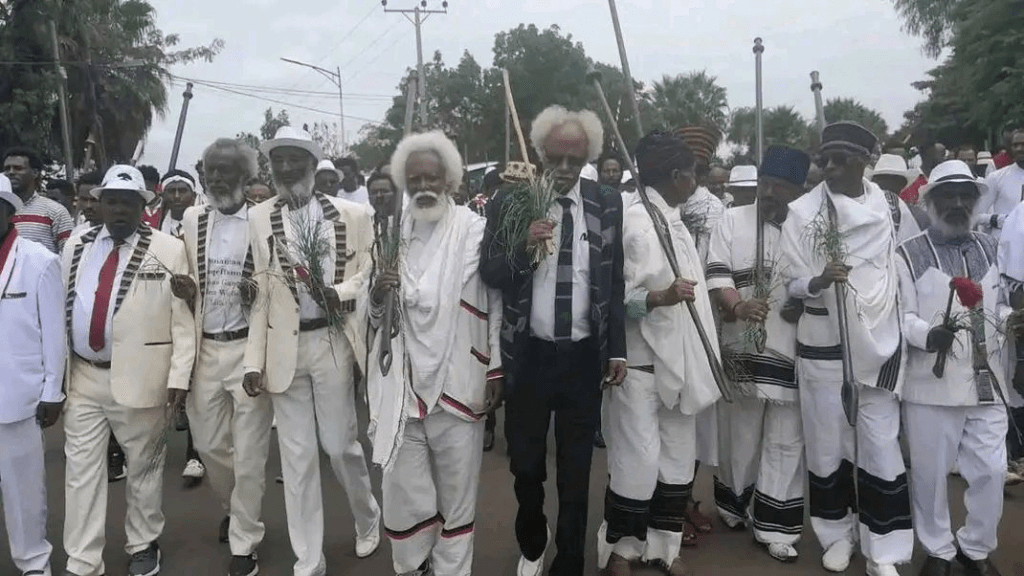
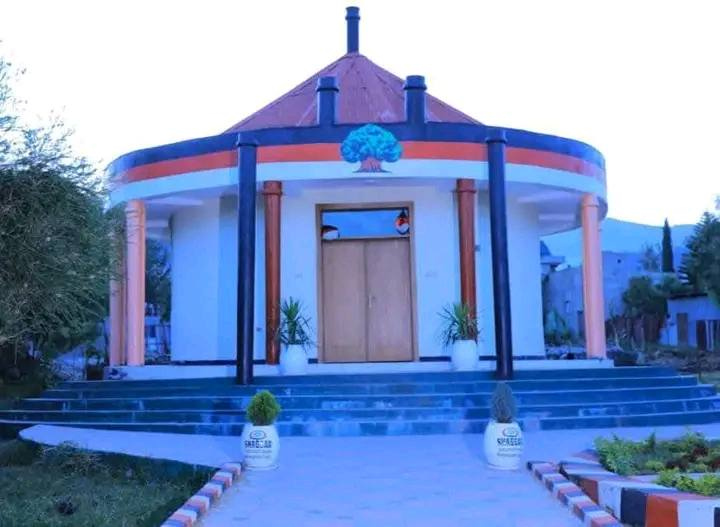
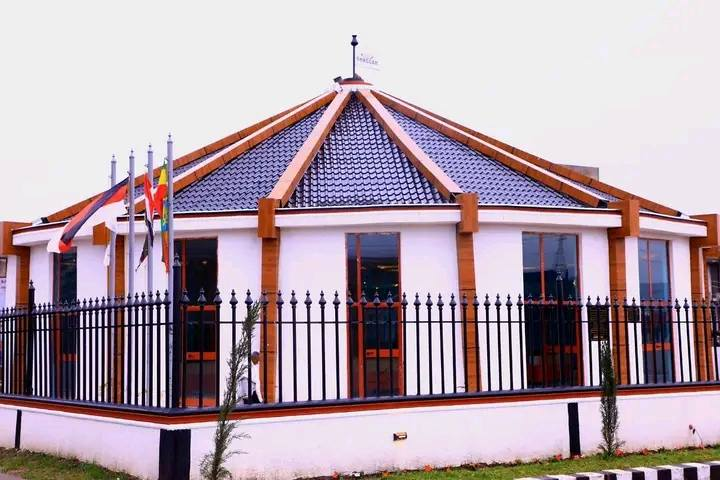
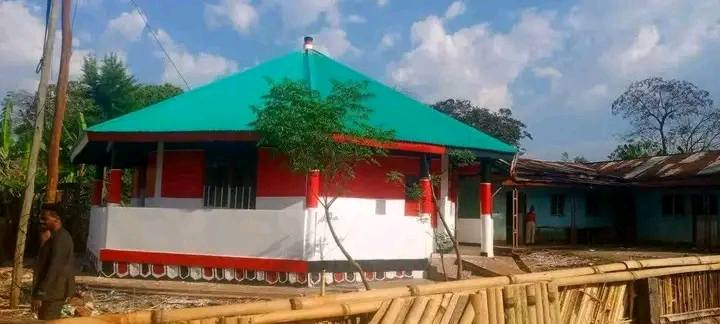
The photographs accompanying this feature offer glimpses into actual traditional court proceedings across Oromia. They show elders gathered under trees, community members seated in circles, the informal but deeply structured processes that have resolved disputes for centuries. These are not museum pieces but living institutions, actively shaping community life today.
Each image captures a moment in the ongoing work of peace—elders listening, disputants speaking, community members observing, and together weaving the fabric of social harmony that makes community life possible.
Conclusion
Manneen Murtii Aadaa represent one of the Oromo people’s most valuable institutions—a culturally grounded system of justice that preserves peace, strengthens unity, and maintains connection to ancestral wisdom. In a world often dominated by impersonal formal systems, these traditional courts offer a model of justice that is close to the people, rooted in community, and focused on healing rather than punishment.
As Oromia continues to navigate the challenges of the present and build toward the future, these institutions remain essential. They remind us that justice is not only about laws and procedures but about relationships and reconciliation—not only about rights but about harmony.
By strengthening Manneen Murtii Aadaa, communities strengthen themselves. By honoring the wisdom of elders, they ensure that future generations will inherit not only problems but the tools to solve them. By resolving disputes through dialogue and consensus, they build the peace that is, as the ancestors knew, the truest wealth.
The images above show a selection of traditional court proceedings from various parts of Oromia, capturing the living tradition of community-based justice. 🤝
Through the voices of elders and the vitality of community, the Oromian Story program ensures that Oromo culture remains a living, breathing force for generations to come
FINFINNE, OROMIA — In the heart of every culture lies a story—a narrative passed down through generations, carried in the voices of elders, and woven into the fabric of daily life. For the Oromo people, this story is not merely a record of the past; it is a dynamic, living force that shapes identity, builds community, and points toward the future.
The Oromian Story program stands as a testament to this truth. By centering the voices of Oromo elders and engaging communities at the grassroots level, the program ensures that Oromo culture remains vibrant, resilient, and relevant in a rapidly changing world.
“The Oromian elders’ voices is a dynamic part of Oromian culture and identity.”
This recognition lies at the heart of the Oromian Story program. Elders are not simply repositories of ancient wisdom—they are active participants in the ongoing creation of culture. Their voices, their memories, and their insights are essential to understanding who the Oromo people are and who they are becoming.
The Power of Elders’ Voices
In Oromo society, elders occupy a position of profound respect and responsibility. They are the keepers of history, the guardians of tradition, and the guides for the younger generation. The Gadaa system, which has governed Oromo society for centuries, is built on a foundation of elder wisdom and intergenerational transmission.
The Oromian Story program recognizes that the preservation of culture depends on the active engagement of elders. When elders share their stories, they are not merely recounting the past—they are shaping the future. They are teaching younger generations about their identity, their values, and their responsibilities.
Maintaining Culture Through Community Involvement
“The Oromian story program presents the maintenance and continued development of Oromo culture at the community level.”
Culture is not something that can be preserved in museums or archives alone. It lives in the daily practices, rituals, and relationships of communities. The Oromian Story program understands this, focusing on community-level activities that keep culture alive and dynamic.
Through community gatherings, storytelling sessions, and cultural events, the program ensures that Oromo culture is not a relic of the past but a living presence in the present. It engages people of all ages in the ongoing work of cultural preservation and innovation.
Supporting New Forms of Cultural Expression
The program supports activities that support new forms of Oromo cultural expression.
Culture is not static—it evolves, adapts, and grows. The Oromian Story program recognizes this, supporting new forms of cultural expression that reflect the creativity and dynamism of the Oromo people.
This might include:
– Contemporary art and music that draws on traditional themes – Digital storytelling that reaches new audiences – Literary works that explore Oromo identity in new ways – Cultural festivals that bring together diverse communities – Intergenerational projects that bridge the gap between elders and youth
By supporting new forms of cultural expression, the program ensures that Oromo culture remains relevant and vibrant in the modern world.
Increasing Public Awareness of Oromo Culture
The program supports activities that increase public awareness of Oromo culture, including through the presentation and exchange of culture.
One of the greatest challenges facing Oromo culture is the lack of public awareness—both within Ethiopia and internationally. The Oromian Story program addresses this challenge by promoting the presentation and exchange of culture.
Through public events, cultural exchanges, and educational initiatives, the program helps to:
– Educate the broader public about Oromo culture and history – Foster cross-cultural understanding and dialogue – Challenge stereotypes and misconceptions – Celebrate the richness and diversity of Oromo traditions – Build bridges between Oromo communities and others
Sustainable Development of Community Organisations
The program supports the sustainable development of community organisations involved in cultural activities.
Cultural preservation cannot be achieved without strong, sustainable community organisations. The Oromian Story program invests in the capacity of these organisations, helping them to:
– Develop effective governance and management structures – Build financial sustainability – Train staff and volunteers – Expand their reach and impact – Collaborate with other organisations and institutions
The Broader Impact
“The program promotes activities that encourage culturally vibrant communities and contribute to the cultural wellbeing of Oromia.”
The impact of the Oromian Story program extends far beyond the preservation of culture. By strengthening cultural identity and community cohesion, the program contributes to:
Social Cohesion: When communities share a strong cultural identity, they are more resilient, more united, and better able to address common challenges.
Youth Engagement: By involving young people in cultural activities, the program helps to build their sense of identity and purpose.
Community Pride: Cultural activities foster a sense of pride and belonging, strengthening communities from within.
Economic Development: Cultural tourism, arts, and crafts can contribute to local economic development.
Peacebuilding: Cultural exchange and dialogue can help to build trust and understanding between communities.
A Vision for the Future
“The Oromian Story program presents the maintenance and continued development of Oromo culture at the community level.”
The vision of the Oromian Story program is a future in which Oromo culture is not merely preserved but is a vibrant, dynamic force in the lives of Oromo people. It is a future in which elders are honored and their wisdom is valued; in which young people are engaged and empowered; in which communities are united and resilient; and in which Oromo culture is celebrated and shared with the world.
Conclusion
The Oromian Story program is a vital initiative for the preservation and development of Oromo culture. By centering the voices of elders, engaging communities, supporting new forms of cultural expression, and investing in community organisations, the program ensures that Oromo culture remains a living, breathing force for generations to come.
“The Oromian elders’ voices is a dynamic part of Oromian culture and identity.”
As the Oromo people continue their journey of cultural revival and self-determination, programs like the Oromian Story will play an essential role in ensuring that the voices of elders are heard, the stories of the past are remembered, and the culture of the Oromo people continues to thrive.
—
In the voices of Oromo elders lies the story of a people—a story of resilience, resistance, and hope. Through the Oromian Story program, that story will continue to be told.
Advocacy for Oromia was established in 2010 with the purpose of enabling and empowering Oromo people by providing accurate and timely information that will help to make better choices to create the kind of future in which they wish to live.
It also provides information focus on the major issues facing us in the 21st century and it is going to try and bring a balanced approach with factual information that is positive and solution based.
The website has been in operation for the last nine years with the mission of promoting and advancing causes of Oromo people through advocacy, community education, information service, capacity building, awareness raising and promotion.
The website is also the official site of Advocacy for Oromia Association in Victoria Australia Inc., a non-profit organisation, registered under the Associations Incorporation Reform Act 2012 in Victoria as April 2014.
Our team already had considerable community development experience and expertise. Our various projects helped to develop our confidence and the capacity of our agency. Our team used every gained knowledge, skills and experiences as an opportunity to design and develop new approaches, to documenting progress, supporting positive employment outcomes, liaising with community stakeholders, and conduct evaluation.
Advocacy for Oromia is devoted to establishing Advocacy for Oromia organisation to close the gaps where we can stand for people who are disadvantaged and speaking out on their behalf in a way that represents the best interests of them. We are committed to supporting positive settlement and employment outcomes for Victoria’s Oromo community.
Advocacy for Oromia Office
Addresses:
39 Clow St,
Dandenong VIC 3175
=====================
247-251 Flinders Lane
Melbourne VIC 3000
Activities Address
Springvale Neighbourhood House Inc
Address: 46-50 Queens Ave, Springvale VIC 3171
Postal Address:
P. O. Box 150
Noble Park, Vic 3174
With your support, we can continue to help community build a better future.
Advocacy for Oromia Mental Health Program
The aim of the program is to improving the mental health and well-being of Oromo community in Victoria. It aims to assist those experiencing, mental ill-health, their families and carers of all ages within this community to address the social determinants of mental health for Oromo community. It helps:
Identify and build protective factors,
Reduce stigma and discrimination
Build capacity for self-determination
Better understand mental wellbeing, mental ill-health and the impacts of trauma
The goal of the project is to increase mental health literacy of Oromo community that aims:
To assist people with mental health issues
To increase the capacity of mental health worker
To better understand mental wellbeing
To provide mental health education and information
To address the social and cultural causes of mental health issues
Advocacy for Oromia will organise information session, women performance, radio programs, culturally adopted conversations on Oromo Coffee Drinking ceremony, providing training for mental health guides and forum and producing educational materials on the selected groups and geographical area.
Human Rights Education Program
The Human Rights Education Program is a community based human rights program designed to develop an understanding of everyone’s common responsibility to make human rights a reality in each community.
Human rights can only be achieved through an informed and continued demand by people for their protection. Human rights education promotes values, beliefs and attitudes that encourage all individuals to uphold their own rights and those of others.
The aim of the program is to build an understanding and appreciation for human rights through learning about rights and learning through rights. We aimed at building a universal culture of human rights. Thus, we aimed:
To build an understanding and appreciation for human rights through learning about rights and learning through rights.
To build capacities and sharing good practice in the area of human rights education and training
To develop human rights education and training materials and resources
The goal of the project is to increase human rights literacy of Oromo community that aims:
To better understand human rights
To increase the capacity of human rights worker
To analyse situations in human rights terms
To provide human rights education and information
To develop solidarity
To strategize and implement appropriate responses to injustice.
The ultimate goal of education for human rights is empowerment, giving people the knowledge and skills to take control of their own lives and the decisions that affect them.
Human rights education constitutes an essential contribution to the long-term prevention of human rights abuses and represents an important investment in the endeavour to achieve a just society in which all human rights of all persons are valued and respected.
Advocacy for Oromia will organise information session, performance, radio programs, culturally adopted conversations on Oromo Coffee Drinking ceremony, providing training for Human Rights guides and forum and producing educational materials on the selected groups and geographical area.
Community Safety Program
The program aims to strengthen existing collaborations and identify opportunities for the development of partnerships aimed at community safety and crime prevention activities. This approach seeks to improve the individual and collective quality of life by addressing concerns regarding the wider physical and social environment. Importantly, community safety means addressing fear of crime and perceptions of safety as without this any actions to address the occurrence of crime and anti-social behaviour are of less value.










 Advocacy for Oromia