Irreecha: The Fountain of Oromo Unity
A Celebration of Identity, Brotherhood, and Renewal at the Dawn of a New Era
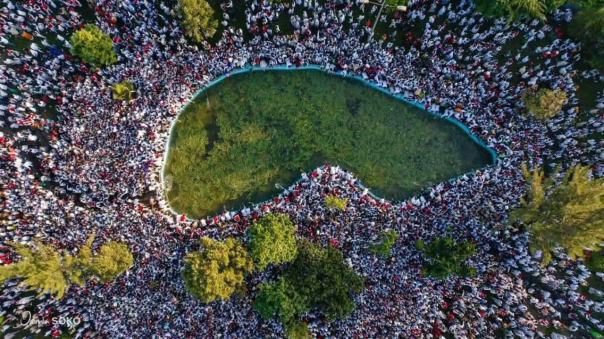
Finfinne, Ethiopia — As the first rays of sunlight pierce through the morning mist over the waters of Hora Finfinne, thousands upon thousands of Oromo people gather along the shores, their voices rising in unison to chant prayers of gratitude and hope. This is Irreecha — the Thanksgiving festival that has, for centuries, served as the beating heart of Oromo cultural and spiritual life. But this year, under the banner “Irreechi Waliigaltee Biyyooleessaa” (Irreecha: The Covenant of Reconciliation), the celebration carries a weight and meaning unlike any that has come before.
A Festival Rooted in Tradition
Irreecha, celebrated annually at the end of the rainy season when the Oromo people transition from the dark, wet months of Bona to the bright, abundant season of Birraa, is far more than a harvest festival. It is a profound expression of Oromo spirituality, a moment when the community gathers at the water’s edge to offer thanks to Waaqa (God) for protection, fertility, and the blessings of life.
The festival is a living testament to the resilience of Oromo culture. For generations, Irreecha has been a symbol of unity, brotherhood, love, and reconciliation — values that have sustained the Oromo people through centuries of challenge and change. At its core, Irreecha is a celebration of tokkummaa — unity — the fundamental principle that binds the Oromo nation together as one people with one destiny.
Reclaiming Sacred Ground
This year’s celebration holds particular significance as attention turns to the historic restoration of Hora Finfinne (Finfinnee Lake) and Hora Harsadee in Bishoftu, two of the most sacred sites for Irreecha observances. These water bodies, which have witnessed countless generations of Oromo prayer and celebration, have long been central to the spiritual geography of the Oromo people.
The government has been working with focused determination to ensure that Irreecha celebrations at these sacred sites are conducted with the dignity, grandeur, and respect that befit the Oromo nation’s rich heritage. The restoration of Hora Finfinne is particularly symbolic — a lake that had suffered from decades of political manipulation and environmental degradation under successive regimes that sought to erase Oromo presence from the capital’s landscape.
Now, with the lake’s rehabilitation, Finfinne is reclaiming its rightful place as a gathering point for Oromo from all corners of the region. The city, which sits at the heart of Oromia, is once again adorned with the beauty of Irreecha celebrations, welcoming Oromo pilgrims from every district and every walk of life. The sight of tens of thousands of Oromo gathered at the water’s edge, dressed in traditional wandaboo and calanchi, singing faaruu (songs of praise) and ululating in joy, is a testament to the enduring power of Oromo identity.
A New Chapter Under Dr. Abiy Ahmed
The transformation of Irreecha’s public observance cannot be separated from the broader political changes that have swept Ethiopia since 2018. Under the leadership of Prime Minister Dr. Abiy Ahmed, himself an Oromo, the government has undertaken sweeping reforms aimed at correcting historical injustices and creating space for the full expression of Ethiopia’s diverse cultural identities.
For the Oromo people, these reforms have meant the freedom to celebrate Irreecha openly and proudly, without fear of repression. The festival, once a site of state violence and tragedy, has become a beacon of hope and a symbol of what is possible when a nation embraces its diversity rather than suppressing it.
The Prime Minister’s vision of medemer — togetherness — resonates deeply with the spirit of Irreecha. The festival’s message of reconciliation and unity aligns with the broader national project of building a more inclusive Ethiopia, one where all nations and nationalities can thrive while celebrating their unique heritage.
A Cultural Renaissance
The revival of Irreecha has sparked a broader cultural renaissance among the Oromo people. The festival has become a catalyst for the revitalization of Oromo language, music, dance, and traditional arts. Young Oromo, many of whom grew up in urban environments disconnected from their cultural roots, are rediscovering the beauty and depth of their heritage through Irreecha.
The festival has also become a major tourist attraction, drawing visitors from across Ethiopia and around the world. The colorful processions, the haunting melodies of Oromo hymns, the intricate beauty of traditional attire, and the profound spirituality of the ceremonies — all contribute to making Irreecha one of the most captivating cultural experiences in the Horn of Africa.
The Road Ahead
As the sun sets on this year’s Irreecha celebrations and the waters of Hora Finfinne and Hora Harsadee reflect the golden light of evening, the Oromo people look to the future with hope and determination. The festival’s message of unity, brotherhood, love, and reconciliation is not merely a celebration of the past — it is a roadmap for the future.
In a world that often seeks to divide and fragment, Irreecha stands as a powerful reminder that a people united by common purpose, shared history, and collective aspiration can overcome any obstacle. The Oromo nation, with its ancient traditions and vibrant culture, is rising — not in opposition to others, but in celebration of all that makes it unique.
Irreechi Irree Keenya — Irreecha is our collective response — Hundee Tokkummaa Ummata Oromooti — the foundation of Oromo unity.
As the festival concludes for another year, the words of the elders echo across the waters: “Let us come together, let us remember who we are, let us celebrate our oneness. For in our unity lies our strength, and in our culture lies our future.”
The fountain of Oromo unity flows on — ever renewing, ever strengthening, ever reminding the world of the beauty and resilience of a people who have never forgotten their roots.
Irreecha is an annual Oromo thanksgiving festival celebrated at the end of the rainy season. It is the largest gathering of Oromo people, drawing millions of participants to sacred sites across Oromia and beyond.

Posted on October 1, 2026, in Aadaa, Afaan, Finfinne, Information, Irreechaa, Language, Media, News, Oromia. Bookmark the permalink. Leave a comment.






Leave a comment
Comments 0