Irreecha: A Heritage That Endures, Evolves, and Lives.
Worku Burayu (PhD)
Introduction:
UNESCO describes Irreecha as an Oromo thanksgiving celebration closely associated with the Gadaa system, the indigenous democratic sociopolitical system of the Oromo. Scholarly research has also recognized Irreecha as an important expression of Oromo cultural identity. Rooted in gratitude to Waaqaa (God) and deeply connected to nature, community, seasonal renewal, peace, identity, and collective well-being, Irreecha has endured across generations despite profound historical and social change.
If soil, water, air, plants, animals, and energy are understood as gifts of Waaqaa, then gratitude for those gifts also carries a responsibility to protect, conserve, and renew them for present and future generations. Cultural continuity therefore requires more than preserving the outward forms of a ceremony. It requires understanding, practicing, and renewing the values that give those forms meaning.
I was invited by the Irreecha Event Ad Hoc Committee of the Atlanta Metropolitan Area to contribute knowledge-based messages that could encourage people to learn, reflect, and deepen their understanding of Irreecha. I welcomed the invitation as an opportunity to consider not only what Irreecha means, but also what we have inherited from previous generations and what we are responsible for passing on to those who come after us.
Irreecha should not be reduced to an annual article, a speech, a public gathering, or a cultural display. It is a living heritage whose meaning continues to guide, teach, and connect generations. If these reflections encourage even a few people to ask deeper questions about their heritage, their relationship with Waaqaa and nature, and their responsibility to future generations, they will have served their purpose.
Irreecha has endured because generations before us preserved it through difficult circumstances. It has evolved because each generation has renewed its meaning and adapted its expression to changing conditions. And it lives because it is not merely a memory of what our ancestors practiced; its values continue to shape how we understand ourselves, our relationship with Waaqaa, one another, and the natural world.
The central argument of this reflection is simple: the continued life of Irreecha depends not merely on preserving its outward forms, but on understanding and practicing the values that give those forms meaning. If Irreecha is an expression of gratitude for the gifts of Waaqaa, then environmental stewardship should be recognized as an essential part of that gratitude.
Irreecha as Living Heritage:
Irreecha is commonly understood as an Oromo thanksgiving celebration associated with gratitude to Waaqaa, seasonal transition, agricultural abundance, peace, health, prosperity, and communal well-being. Scholarly studies have examined Irreecha as a ritual through which Oromo communities express gratitude and prayers for rain, harvest, health, wealth, peace, and protection. At the same time, it has become an important expression of Oromo identity and unity, bringing people together across geographic, social, and religious differences.
Its significance, however, cannot be fully understood by viewing it only as a ritual performed at a particular time of year. Irreecha is part of a broader Oromo worldview in which human beings exist within relationships involving Waaqaa, nature, community, ancestors, and future generations. The natural environment is not simply a backdrop for cultural practice. Soil, water, air, forests, grass, flowers, animals, and agricultural landscapes are part of the living world through which life is sustained and gratitude is expressed.
This helps explain why Irreecha has remained meaningful despite changes in political circumstances, geography, and social life. A living heritage does not depend on preserving one historical form unchanged. Its continuity depends on preserving its underlying principles while allowing each generation to interpret and practice those principles within its own circumstances.
Irreecha is therefore not a cultural artifact belonging exclusively to the past. It is a living relationship between memory and responsibility. The past gives the present something to inherit, but the present determines what will be transmitted to the future.
Before Rejecting What Is Yours, Understand It:
Cultural inheritance is particularly important for communities whose histories and identities have often been shaped and interpreted through external perspectives. This is especially true of Oromo society, whose history, culture, and identity have been interpreted through various political, religious, colonial, and other external frameworks. Before rejecting what, ours is, we have a responsibility to understand it. Before repeating judgments made about our culture, we have a responsibility to study the culture itself. And before accepting claims that our heritage is backward, primitive, or without value, we should ask who made those judgments, under what historical circumstances, and on what evidence.
This is not an argument for romanticizing the past. Cultural confidence does not require believing that everything inherited from previous generations is perfect. A living culture must be capable of self-examination. It must distinguish between values that deserve preservation and practices that require reconsideration. It must have the confidence to acknowledge historical limitations while refusing to accept inherited contempt as an adequate description of itself.
There is an important difference between critical reflection and cultural self-denigration. Critical reflection seeks to understand, improve, and strengthen. Self-denigration simply reproduces the judgment of others.
Irreecha provides an opportunity for a different approach. We can study its history, understand its meanings, examine its practices, and evaluate its contemporary relevance without either blindly idealizing or casually dismissing it. Such an approach allows heritage to become a source of knowledge rather than a source of shame.
The principle is simple: before rejecting what is yours, understand it; before criticizing it, study it; and before changing it, know what you are changing and why.
Gratitude Must Become Responsibility
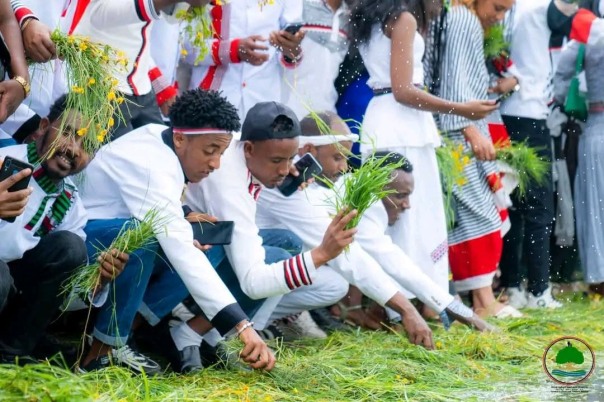
At the heart of Irreecha is gratitude. The Oromo give thanks to Waaqaa for life, health, peace, rain, fertility, harvest, family, community, livestock, and the natural conditions that make life possible. Green grass, flowers, water, trees, fertile soil, and agricultural abundance give visible expression to the blessings for which gratitude is offered.
Yet gratitude raises an important ethical question: If these are gifts of Waaqaa, how should we treat them? The answer cannot be limited to words of thanksgiving. Genuine gratitude creates responsibility.
If water is a gift, it must be protected. Lakes, rivers, springs, and wetlands associated with Irreecha are not merely ceremonial locations; they are living ecosystems. Respect for water means preventing pollution, protecting riverbanks and lakeshores, safeguarding springs, managing waste responsibly, and reducing the environmental damage associated with large gatherings. Celebrations can include adequate sanitation and waste-collection systems, plastic reduction, vegetation protection, and cleanup or watershed-restoration activities.
If forests are a gift, they must be conserved and renewed. Forests protect soil, regulate water, provide habitat, support biodiversity, and sustain communities and wildlife. Natural materials used during ceremonies should therefore be gathered responsibly, without unnecessary destruction of living trees and plants. Irreecha can also become an opportunity for tree planting and forest restoration, particularly through appropriate indigenous species.
If soil is a gift, its fertility must be maintained. The land is the foundation of agriculture, food production, and human life. Soil health depends on maintaining vegetation cover, reducing erosion, conserving moisture, managing grazing responsibly, and restoring degraded land. We cannot celebrate the fruits of the land while destroying the soil that must produce those fruits in the future.
If grass and flowers are used in celebration, they should be gathered in ways that allow natural regeneration. Green grass, leaves, and flowers are more than decorations; they symbolize renewal, fertility, beauty, and abundance. They should therefore be collected carefully and in quantities that allow plant populations to recover. Plants should not be unnecessarily uprooted when only their flowers or leaves are needed. Where appropriate, communities could cultivate or protect ceremonial grasses and flowers throughout the year.
If animals depend upon particular ecosystems, those ecosystems must also be protected. Rivers, wetlands, forests, and grasslands sustain birds, fish, insects, livestock, wildlife, and countless other forms of life. Protecting an Irreecha site should therefore include protecting the broader ecosystem surrounding it.
The gift of nature does not belong to human beings alone. It sustains an entire community of life. To celebrate nature while allowing the ecosystems that sustain that life to disappear would contradict the very values Irreecha represents.
Gratitude must lead to responsibility; responsibility must lead to stewardship; and stewardship must contribute to the well-being of the community and future generations.
This is where From Nature to Nation connects naturally with Let Irreecha Live and Strive. Irreecha begins with gratitude for nature, but its meaning should not end with gratitude. It can become a living cultural institution through which people learn that protecting water, forests, soil, grasslands, flowers, animals, and ecosystems is part of protecting their own future.
Waaqaa, the Creator, made all things. Nature gives. We receive. We give thanks. But true thanksgiving calls us to protect what we have received, care for it, and renew it so that it may continue to sustain those who come after us.
That is how Irreecha can live, strive, and remain relevant in the modern world.






