Irreechaa: The Origins and Significance of Water, Fresh Grass, Flowers, Procession, Blessing, and Song in Oromo Tradition
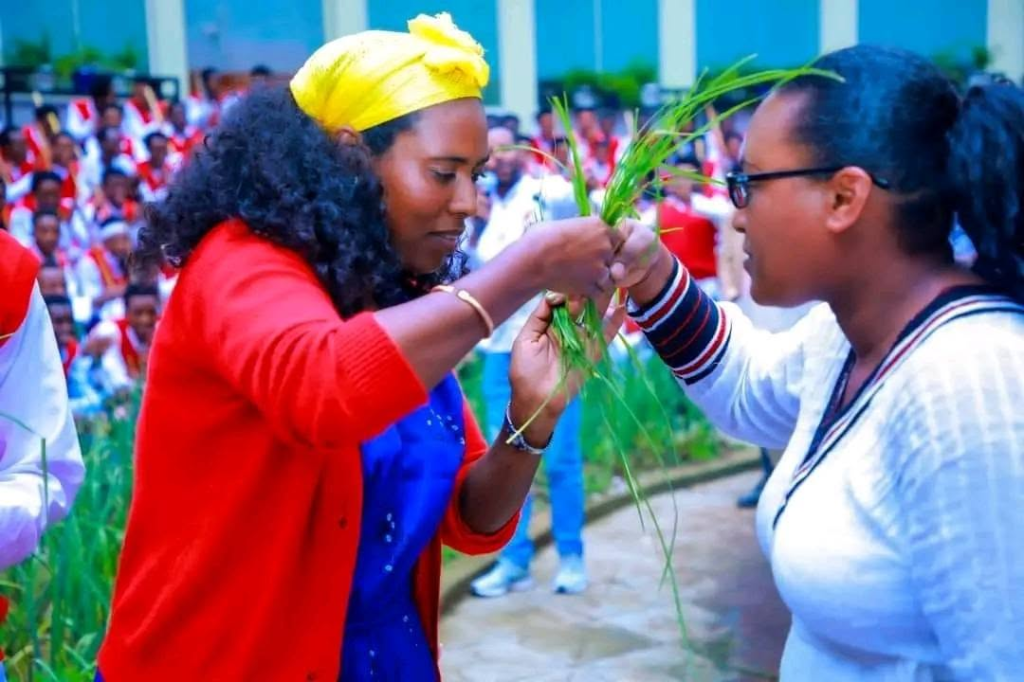
Oromia, Ethiopia — Irreechaa, the annual Oromo thanksgiving festival, is celebrated at the banks of rivers and lakes across Oromia. Its rituals — the dipping of fresh green grass into water, the carrying of yellow daisies, the communal procession, the offering of blessings, and the singing of praise — are not merely symbolic acts of cultural identity. They are elements of a sophisticated spiritual and ecological system that has been passed down through generations. But when did these practices begin, and what do they truly mean?
The Origins: From Gadaa Melbaa to the Present
According to Oromo tradition, Irreechaa was established by Oromo forefathers during the time of Gadaa Melbaa in Oromia, marking the end of the rainy season known as Ganna . The festival has been celebrated for thousands of years, predating the institutionalized religions of Christianity and Islam . It is rooted in Waaqeffannaa, the traditional Oromo belief in one supernatural power called Waaqa (God) .
Irreechaa was systematically outlawed for more than a century following the fall of the Oromo nation under the rule of Menelik II and subsequent regimes . Despite these challenges, the tradition survived in the hearts of the people and has undergone a powerful revival in recent decades. As one Oromo historian noted, “Irreechaa has revived putting the Oromo identity foremost before anything else” .
The Meaning of Water
Water holds profound significance in Irreechaa. The festival is celebrated at Malkaa (riverside) and Hora (lakeside), where communities gather to dip fresh green grass and flowers into the water . This act symbolizes purification, renewal, and the washing away of the past year’s hardships.
The two major forms of Irreechaa reflect this water connection: Irreechaa Malkaa (at the side of a river) and Irreechaa Tulluu (on a mountain) . Irreechaa Malkaa is celebrated at the end of the rainy season, in mid-September, while Irreechaa Tulluu takes place during the dry season, at the beginning of spring . The water of Irreechaa is considered holy, and after soaking the grass and flowers, participants sprinkle the water on themselves and others as a blessing .
The Meaning of Fresh Grass and Flowers
The fresh green grass and yellow daisies carried by participants are symbols of hope (abdi) and renewal . In the Oromo worldview, these plants represent the life and fertility that Waaqa has granted. By carrying them to the water’s edge and offering them, participants express gratitude for the past and pray for future abundance .
The flowers used are specifically daraaraa keelloo (yellow daisies), which bloom during the Birraa season. As one Oromo scholar explains, “Irreecha means carrying grass or yellow flowers as a gift of thanks to the place of Irreechaa” . The grass and flowers are not merely decorations — they are offerings, symbols of the community’s relationship with the Creator and the earth.
The Meaning of Procession
The procession to the water is a central element of Irreechaa. Led by the Abbaa Malkaa (lineal chiefs) and Abbaa Gadaa (Gadaa leaders), participants march to the riverside or lake carrying fresh grass and flowers, accompanied by traditional songs, dances, and ululations .
Women play a particularly prominent role in this procession. They walk in front of the Abbaa Gadaa and Abbaa Malkaa. If they stop on the road, the entire procession stops — nobody passes before them, because Oromo culture symbolizes women as sacred and as peace . This is rooted in the Siinqee institution, the customary women’s institution that serves as a peace mission and mediator .
The Meaning of Blessing
After reaching the water, the Abbaa Malkaa, Abbaa Gadaa, and Qaalluu (spiritual leaders) bless the participants and make speeches on rules and regulations . This blessing is not merely ceremonial — it carries the authority of the Gadaa system, which regulates political, economic, social, and religious life.
The blessing also serves a reconciliation function. Irreechaa is an occasion when those in conflict bury the hatchet. As Abba Gada Jenbere Tessema explains, “Celebrants who have been in conflict reconcile in this festival” . The festival’s requirement for reconciliation before participation creates a powerful, community-enforced deadline for resolving disputes.
The Meaning of Song (Faaruu)
Song is the thread that binds all elements of Irreechaa together. The Marewoo songs sung during the procession express gratitude and hope for the new year . Women sing “Maariyoo… Maareyoo…” meaning “your mercy on us,” while men chant the Irreechaa song with them .
The prayers sung at Irreechaa reveal their deep meaning. One traditional prayer begins:
“Dukkana gannaa nubaaftee / Booqa Birraa nugarsiiftee / Akkanumatti fuuldura keenyaafis / Waan horre walin nagaa nu godhi”
This translates to: “You have ended the darkness of winter / You have brought us the hope of spring / Likewise, for our future / Make us peaceful with what we have gathered” . The song is both thanksgiving for the past and prayer for the future — a complete expression of the Oromo relationship with Waaqa.
A Living System of Meaning
For the Oromo people, every element of Irreechaa — water, grass, flowers, procession, blessing, and song — carries layered meanings that connect the spiritual, the ecological, and the social. Together, they form a holistic system of thanksgiving, renewal, and community cohesion that has survived centuries of suppression and continues to thrive today.
As the festival continues to grow in participation and recognition, these ancient symbols remain as relevant as ever — reminding the Oromo people of their connection to Waaqa, to the earth, and to one another.
Baga Irreechaa!






