Irreechaa: The Oromo Thanksgiving Festival as a Living Heritage of Identity, Unity, and Spiritual Renewal
Introduction
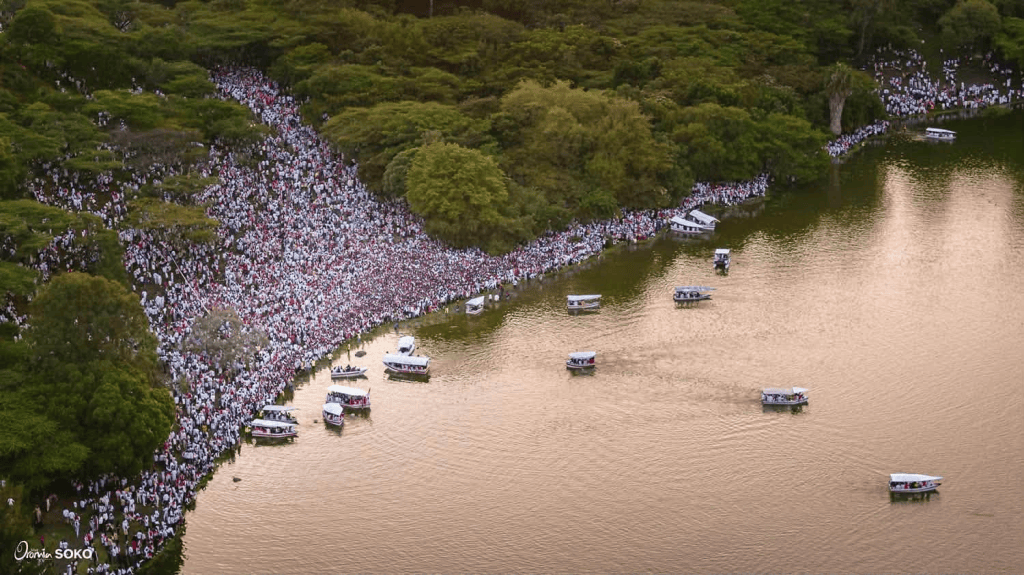
Irreechaa stands as one of the most significant and vibrant cultural celebrations not only for the Oromo people but for the entire Horn of Africa region. As an annual thanksgiving festival that marks the end of the rainy season and the beginning of the harvest, Irreechaa embodies a deep spiritual connection between the Oromo people, their Creator, and the natural world that sustains them. This ancient tradition, rooted in the indigenous Oromo belief system known as Waaqeffannaa, has survived centuries of political upheaval, social transformation, and religious change to emerge today as a powerful symbol of cultural identity, social cohesion, and spiritual resilience. With millions of participants gathering at sacred sites across Ethiopia and the global diaspora, Irreechaa represents one of the largest annual human gatherings on the African continent and serves as a living testament to the enduring vitality of Oromo civilization.
This comprehensive essay explores the multifaceted dimensions of Irreechaa, examining its historical origins, spiritual significance, cultural expressions, social functions, and contemporary relevance. By analyzing the festival through multiple lenses—historical, theological, sociological, and political—this essay seeks to illuminate the profound meaning that Irreechaa holds for the Oromo people and its broader significance for understanding indigenous African religious traditions, cultural preservation, and national identity in contemporary Ethiopia.
Historical Origins and Evolution
The historical roots of Irreechaa extend deep into antiquity, with scholars tracing the festival’s origins back thousands of years to the Cushitic civilizations that inhabited the Horn of Africa . According to historical estimates, the Oromo people have celebrated Irreechaa for approximately 12,000 years, making it potentially one of the oldest continuously observed traditions on the African continent . This remarkable continuity speaks to the fundamental importance of the festival in Oromo spiritual and cultural life, as well as the resilience of indigenous religious practices in the face of external pressures and historical transformations.
The festival is intrinsically linked to the Gadaa system, the traditional Oromo socio-political and governance structure that UNESCO recognized as an Intangible Cultural Heritage of Humanity . The Gadaa system, with its age-based hierarchical organization and democratic principles of power rotation, provided the structural framework within which Irreechaa emerged and flourished. As a celebration embedded within this comprehensive system of social organization, Irreechaa served not merely as a religious observance but as a mechanism for reinforcing social cohesion, transmitting cultural values across generations, and maintaining the cosmic order that the Gadaa system sought to uphold .
Throughout its long history, Irreechaa has undergone periods of both flourishing and suppression. During the twentieth century, particularly under previous Ethiopian governments that sought to promote national unity through cultural homogenization, traditional Oromo religious practices including Irreechaa faced significant challenges . Attempts were made to confine the celebration to village levels and to discourage public observance of what was sometimes dismissively characterized as backward superstition. However, these efforts to suppress Irreechaa ultimately failed, as the tradition’s deep roots in Oromo consciousness and its fundamental role in cultural identity proved resistant to external pressures. Instead of disappearing, Irreechaa emerged from periods of suppression strengthened and more widely embraced, particularly by younger generations who increasingly view participation in the festival as an assertion of cultural pride and identity .
The contemporary history of Irreechaa has been marked by both triumph and tragedy. A pivotal moment occurred in 2016 when the festival became the site of political protests that resulted in a deadly stampede, causing the deaths of more than fifty participants . This tragic event became a catalyst for significant political change in Ethiopia, contributing to the emergence of new leadership that included the country’s first Oromo prime minister. Since then, Irreechaa has experienced a remarkable revival, with the festival being celebrated in Addis Ababa for the first time in 150 years and drawing unprecedented numbers of participants . This resurgence reflects broader changes in Ethiopia’s political landscape and the growing recognition of cultural diversity as a source of national strength rather than a threat to unity.
Spiritual and Religious Significance
At its core, Irreechaa is a profoundly spiritual event that expresses the Oromo people’s relationship with the divine through the natural world. The festival is rooted in Waaqeffannaa, the traditional Oromo religion that worships a single supreme Creator known as Waaqa . This monotheistic belief system, which some scholars describe as one of the oldest forms of monotheism, holds that Waaqa is the source of all life, blessing, and abundance . The Oromo people understand themselves as intimately connected to their Creator through a complex system of spiritual intermediaries called ayyaana, who convey human prayers and needs to the divine .
The timing of Irreechaa reflects its deep connection to agricultural cycles and the natural world. The festival is celebrated twice annually: Irreechaa Malkaa (or Irreechaa Hiyyessa) occurs in the spring at the edges of rivers and lakes, while Irreechaa Tulluu (or Irreechaa Guddaa) takes place in autumn on hilltops . The spring celebration marks the end of the dark, rainy season (Ganna) and the beginning of the bright, fertile season (Birraa), while the autumn observance occurs as the harvest season concludes. This dual celebration reflects the Oromo people’s dependence on agriculture and their deep reverence for the natural forces that sustain their way of life.
The spiritual significance of Irreechaa extends beyond simple thanksgiving to encompass themes of purification, renewal, and reconciliation. Water plays a central role in the rituals, with participants dipping green grass and yellow daisies into sacred lakes and rivers, then sprinkling the water upon themselves as a symbol of spiritual cleansing . Green grass represents life and fertility, while the yellow daisies symbolize the joy of survival after the hardship of the rainy season. These symbolic acts express the Oromo people’s understanding of their relationship with nature as one of mutual care and respect, rather than domination or exploitation.
A critical spiritual dimension of Irreechaa is its emphasis on reconciliation and the resolution of conflicts. Traditional Oromo beliefs hold that it is forbidden to participate in the festival while harboring resentment, anger, or unresolved grievances . Before approaching the sacred sites, participants are expected to make peace with those with whom they have disputes, seeking forgiveness and offering compensation where necessary. This requirement reflects the Oromo philosophical principle of safuu, which establishes boundaries and responsibilities governing relations between humans, the natural world, and the divine . The insistence on reconciliation before thanksgiving underscores the Oromo understanding that gratitude and grievance cannot coexist—that one cannot approach the sacred with a heavy heart.
The prayers offered during Irreechaa encompass both gratitude for past blessings and supplication for future needs. Elders and spiritual leaders known as Abbaa Gadaas lead the community in prayer, giving thanks to Waaqa for protection during the difficult rainy season and asking for continued blessings in the coming year . The prayers typically request peace, health, fertility for both people and livestock, abundant harvests, and prosperity for the entire community . These prayers are not merely ritualistic formulas but represent the genuine spiritual aspirations of a people who understand their well-being as dependent on divine favor and the maintenance of cosmic balance.
Cultural Expressions and Ritual Practices
Irreechaa is a vibrant celebration that engages all the senses and encompasses a rich array of cultural expressions. The festival brings together people of all ages, genders, and social statuses in a collective expression of identity and gratitude . The visual splendor of the celebration is striking, with participants adorned in traditional white attire known as wandaboo or uffannaa aadaa, often decorated with colorful embroidery and accessories . Women wear intricately woven dresses and carry baskets of fresh grass and flowers, while men dress in traditional garments that reflect their regional identities.
The ritual practices of Irreechaa are replete with symbolic meaning. The central act involves the sprinkling of water from sacred lakes and rivers, accompanied by prayers and blessings. Participants carry green grass called cuquliisa, which represents the renewal of life and the fertility of the land . The grass is dipped into the water and then sprinkled upon participants as a blessing. This ritual connects the community to the life-giving properties of water and the fertility of the earth, expressing gratitude for the abundance that sustains them.
Music, song, and dance are integral to the Irreechaa celebration, with traditional songs of praise and thanksgiving filling the air. Women sing special melodies such as the Mareehoo, which express themes of gratitude, forgiveness, and hope for the future . The lyrics of these songs often reference the agricultural cycle, the blessings of the Creator, and the shared identity of the Oromo people. Traditional dances performed during the festival serve both as expressions of joy and as markers of cultural identity, with specific dances associated with different regions and communities.
The ceremonial processions of Irreechaa are carefully structured according to traditional social hierarchies and Gadaa principles. Elders and spiritual leaders lead the procession, followed by women, then youth and children . This ordering reflects the Oromo understanding of social organization, in which age and spiritual wisdom confer authority and responsibility. The Abbaa Gadaas, as custodians of tradition, play a particularly important role, leading prayers, offering blessings, and ensuring that the rituals are performed according to ancestral custom .
The festival also features the exchange of greetings and blessings among participants, with the traditional greeting “Happy Irreechaa” exchanged widely . Families and friends who may not have seen each other during the rainy season reunite, sharing meals and stories. The communal aspect of the celebration reinforces social bonds and strengthens the sense of belonging to a larger community. For the Oromo diaspora, Irreechaa celebrations in cities such as Melbourne, Minneapolis, London, and Amsterdam serve as vital connections to their cultural roots, allowing them to maintain their identity and transmit traditions to younger generations born far from the ancestral homeland .
Social Functions and Community Impact
Beyond its spiritual and cultural dimensions, Irreechaa serves crucial social functions that contribute to the cohesion and well-being of Oromo communities. The festival provides an annual opportunity for the Oromo people to come together, transcending regional, religious, and social divisions to celebrate their shared identity . Participants include Oromos from all religious backgrounds—Christians, Muslims, and followers of traditional Waaqeffannaa—demonstrating the festival’s capacity to unite people across religious boundaries . This inclusivity reflects the Oromo cultural value of tolerance and the understanding that Irreechaa belongs to all Oromos, regardless of their individual religious affiliations.
The reconciliation function of Irreechaa is particularly significant in a region that has experienced recurrent conflicts and social tensions. The requirement that participants resolve their disputes before joining the celebration provides a powerful mechanism for conflict resolution and social healing . The presence of arbitration systems within the Gadaa framework, including the Gumi or Coffee assemblies, ensures that disputes can be addressed through dialogue and mutual agreement rather than through violence or permanent estrangement . By mandating reconciliation as a precondition for participation, Irreechaa creates an annual opportunity for communities to heal divisions, forgive grievances, and renew social bonds.
Irreechaa also plays a vital role in preserving and transmitting cultural heritage. The festival serves as a living museum of Oromo culture, where traditional songs, dances, attire, and rituals are performed and passed down to younger generations . In a world of rapid globalization and cultural change, Irreechaa provides a space where ancestral traditions remain vibrant and meaningful. The participation of large numbers of young people in contemporary celebrations is particularly encouraging, suggesting that the festival continues to resonate with new generations and will remain a vital part of Oromo identity for years to come .
The economic dimensions of Irreechaa have become increasingly significant, particularly in recent years. The festival generates substantial economic activity, from the production and sale of traditional clothing and accessories to the provision of food, transportation, and accommodation for millions of participants . For many small businesses and artisans, Irreechaa represents a major economic opportunity, with demand for traditional garments and festival-related goods spiking in the weeks leading up to the celebration. The Ethiopian government has recognized the tourism potential of Irreechaa, promoting it as a major cultural attraction that can draw international visitors and contribute to local economic development .
Political Dimensions and Contemporary Controversies
As Irreechaa has grown in scale and visibility, it has also become entangled in political dynamics that reflect broader tensions in Ethiopian society. The festival has historically been viewed with suspicion by some political actors who see in its celebration a potential vehicle for Oromo nationalism or opposition to central authority . Conversely, Oromo political movements have sometimes sought to harness the symbolism of Irreechaa for their own purposes, using the festival as a platform for articulating grievances and demands . This politicization of Irreechaa has created tensions between those who view it primarily as a religious and cultural observance and those who see it as a vehicle for political mobilization.
The 2016 Irreechaa tragedy, when protests at the festival led to a deadly stampede, marked a watershed moment in Ethiopian politics . The event galvanized opposition to the government and contributed to political changes that ultimately brought Abiy Ahmed, Ethiopia’s first Oromo prime minister, to power. Since then, Irreechaa has been celebrated with greater official recognition and support, including the first celebration in Addis Ababa in 150 years . However, tensions remain, with some Oromo activists arguing that the government’s embrace of Irreechaa is superficial and does not address deeper grievances regarding political representation and economic opportunity.
Contemporary debates about Irreechaa also touch on questions of religious identity and interfaith relations. Some Christian and Muslim leaders have expressed concern about the festival’s association with Waaqeffannaa, the traditional Oromo religion, viewing it as incompatible with their own faith traditions . However, many religious leaders have adopted a more inclusive stance, recognizing Irreechaa as a cultural celebration that can be embraced by Oromos of all faiths . This ongoing dialogue about the relationship between traditional religious practices and revealed religions reflects broader questions about religious pluralism and cultural identity in contemporary Ethiopia.
Global Diaspora and Transnational Dimensions
The Oromo diaspora, numbering in the millions across North America, Europe, the Middle East, and Australia, has played an increasingly important role in the celebration and perpetuation of Irreechaa. In cities around the world, Oromo communities organize annual Irreechaa celebrations that replicate the rituals and traditions of the homeland while adapting to local contexts . These diaspora celebrations serve multiple functions: they maintain cultural identity among dispersed communities, transmit traditions to younger generations born abroad, and raise awareness of Oromo culture and concerns among host populations.
In Melbourne, Australia, for example, the Oromo community gathers annually at local parks to celebrate Irreechaa with traditional songs, prayers, and rituals . Similar celebrations occur in Washington, D.C., Toronto, Berlin, Amsterdam, and Dubai, among other cities . These events often attract participation from non-Oromo Ethiopians and curious locals, providing opportunities for cross-cultural exchange and dialogue. For many diaspora Oromos, Irreechaa represents a vital connection to their ancestral homeland and a reaffirmation of their cultural identity in contexts where they may feel marginalized or invisible.
The globalization of Irreechaa has also contributed to the festival’s growing international recognition. International media coverage of Irreechaa celebrations has increased, and the festival has been featured in tourism promotions and cultural exchange programs . This international visibility has both positive and negative implications. On one hand, it brings attention to Oromo culture and can foster greater understanding and appreciation. On the other hand, there are concerns about the commercialization and decontextualization of the festival, as well as the potential for political exploitation of its symbolism.
Irreechaa and the Politics of Recognition
The recognition of Irreechaa as a significant cultural heritage has been a long-standing goal of Oromo cultural advocates and scholars. The inscription of the Gadaa system on UNESCO’s Representative List of Intangible Cultural Heritage of Humanity in 2016 represented a major milestone in this effort, providing international recognition for the Oromo socio-political system within which Irreechaa is embedded . Scholars and historians have called for Irreechaa itself to receive UNESCO recognition, arguing that the festival merits acknowledgment as a unique and valuable expression of human cultural heritage .
The politics of recognition surrounding Irreechaa reflect broader questions about the place of Oromo culture and history within Ethiopian national identity. For much of the twentieth century, Ethiopian national narratives marginalized or suppressed Oromo contributions, presenting the country’s history through the lens of Solomonic dynasty and Amhara-centric perspectives. The revival of Irreechaa and other Oromo cultural practices represents a challenge to these narratives, asserting the centrality of Oromo civilization to Ethiopian history and identity. This assertion has been met with both support and resistance, reflecting ongoing contests over historical memory and national belonging.
The contemporary Ethiopian government has adopted a more positive stance toward Irreechaa, with officials participating in celebrations and promoting the festival as a symbol of national unity . The theme of recent Irreechaa celebrations, “Irreechaa for National Renaissance,” reflects this official framing of the festival as a contributor to broader national development and unity . However, some Oromo activists view such official embrace with skepticism, seeing it as an attempt to co-opt Oromo cultural expression for political purposes while failing to address fundamental issues of political representation and economic justice.
Conclusion
Irreechaa stands as a remarkable testament to the resilience, vitality, and spiritual depth of Oromo civilization. From its ancient origins in the Cushitic past to its contemporary celebration by millions across Ethiopia and the global diaspora, the festival has maintained its essential character as a thanksgiving to Waaqa while adapting to changing historical circumstances. It embodies the Oromo people’s profound connection to the natural world, their commitment to reconciliation and social harmony, and their determination to preserve and transmit their cultural heritage across generations.
The significance of Irreechaa extends far beyond the Oromo community, offering valuable insights into the nature of indigenous African religious traditions, the dynamics of cultural preservation in the face of globalization, and the role of cultural festivals in building social cohesion and national identity. In a world marked by division, conflict, and the erosion of traditional cultures, Irreechaa provides a powerful example of how ancient traditions can remain vibrant and meaningful, connecting communities to their ancestors while addressing the challenges of contemporary life.
As Irreechaa continues to grow in scale and visibility, it faces both opportunities and challenges. The festival’s increasing international recognition brings potential for greater understanding and appreciation of Oromo culture but also risks of commercialization and political exploitation. The ongoing debates about the relationship between Irreechaa and religious identity, its political dimensions, and its place in Ethiopian national life reflect the complexity of navigating cultural diversity in contemporary societies. Yet through all these challenges, the essential spirit of Irreechaa—gratitude, renewal, and unity—remains intact, offering hope and inspiration to all who participate in its celebration.
Ultimately, Irreechaa is more than a festival; it is a living philosophy, a way of understanding and relating to the world that has sustained the Oromo people for millennia. It teaches that gratitude and generosity are fundamental to human flourishing, that reconciliation and forgiveness are necessary for social harmony, and that respect for the natural world is essential for survival. As the Oromo people continue their journey through history, Irreechaa will remain a guiding light, illuminating the path forward while connecting them to the wisdom of their ancestors. In its celebration, we witness not merely the preservation of tradition but the ongoing creation of culture—a dynamic process through which the Oromo people affirm their identity, express their values, and envision their future.

Posted on October 1, 2026, in Aadaa, Afaan, AMES, Election, Events, Finfinne, gadaa, health, Information, Irreechaa, Language, Media, News, Oromia, Oromo diaspora, Press Release, Promotion. Bookmark the permalink. Leave a comment.






Leave a comment
Comments 0