Category Archives: Election

Understanding the Gadaa System: Peaceful Power Transfer in Oromo Culture
By Daandii Ragabaa
WAXABAJJII 07, 2018 E.C. (June 2026 G.C.) – The cycle has turned. The baton has passed. A new chapter in the centuries-old democracy of the Oromo people has begun.
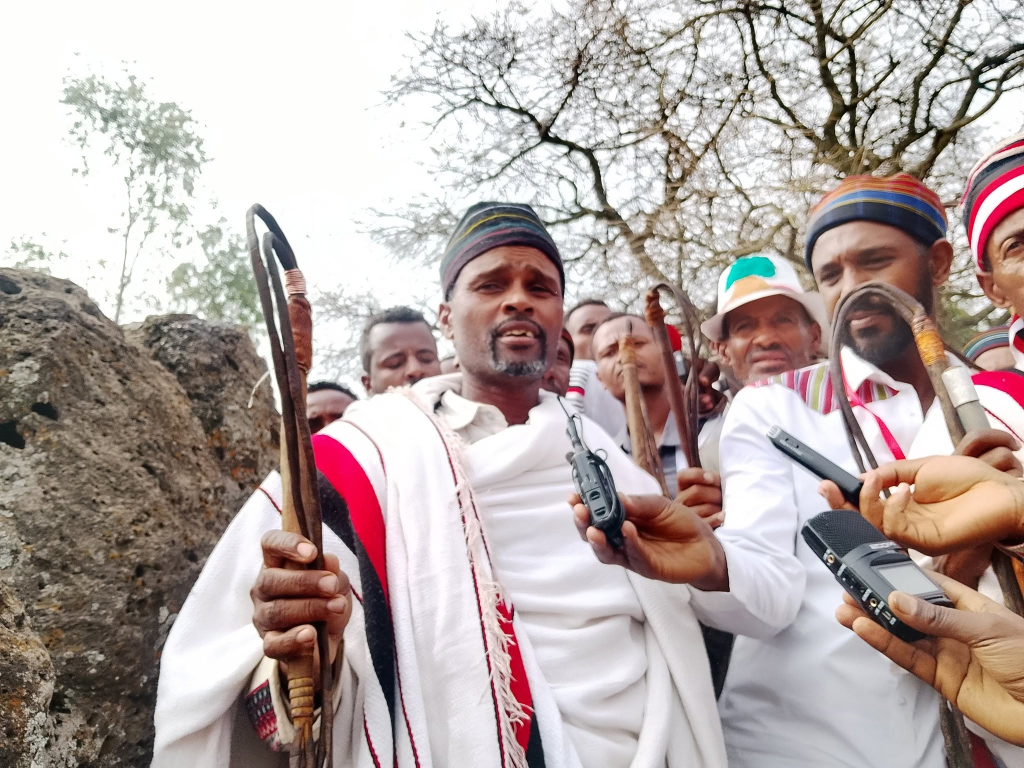
Today, at the sacred site of Ardaa Jilaa Dhaka Koraatti, the Walharkaa Fuudhinsa Alangee – the formal transfer of the Baallii (ceremonial baton of office) – was conducted for the 71st cycle of the Tuulama Gadaa. Power moved peacefully from the Gadaa Meelbaa grade to the Gadaa Muudanaa grade.
And at the heart of this ceremony stood one man: Abbaa Gadaa Geetuu Taliilaa Tufaa, who received the Alangee and was inaugurated as the new Abbaa Gadaa of the Tuulama Oromo.
The Sacred Transfer
The Gadaa system, recognized by UNESCO as an Intangible Cultural Heritage of Humanity, operates on an eight-year cycle. Each cycle has a name, a purpose, and a set of leaders who carry the responsibilities of governance, conflict resolution, ritual observance, and community welfare.
The 70th cycle, Gadaa Meelbaa, has now completed its term. The 71st cycle, Gadaa Muudanaa, has begun. And with this transition, the Alangee – the symbol of legitimate authority – has been placed into the hands of a new leader.
The ceremony at Ardaa Jilaa Dhaka Koraatti was not a political rally. There were no speeches attacking opponents, no promises that would be broken tomorrow, no expensive campaigns or negative advertisements. There was only ritual, tradition, blessing, and the quiet, solemn transfer of a baton that represents the collective will of the Tuulama Oromo.
Elders presided. The community witnessed. The Caffee assembly gave its consent. And Abbaa Gadaa Geetuu Taliilaa Tufaa stepped into his role – not as a conqueror, but as a servant. Not as a king, but as a caretaker.
Who Is Abbaa Gadaa Geetuu Taliilaa Tufaa?
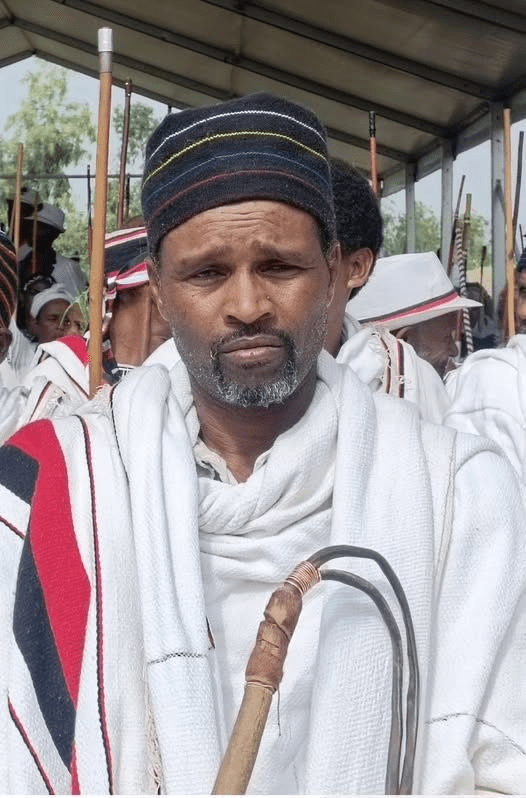
Little is known by the wider public about the new Abbaa Gadaa. This is not unusual. The Gadaa system does not produce celebrities. It produces leaders who are chosen not for their charisma or their wealth but for their wisdom, their integrity, and their commitment to the community.
Abbaa Gadaa Geetuu Taliilaa Tufaa emerges from within the Gadaa Muudanaa grade – a cohort of men who have been preparing for leadership for years, even decades. The Gadaa system does not allow anyone to simply declare themselves a leader. One must be born into a Gadaa grade, grow through its ranks, learn its laws, participate in its rituals, and be recognized by elders and community members as ready to lead.
The new Abbaa Gadaa has now received the Alangee. He has been blessed. He has been installed. And for the next eight years, he will carry the weight of the Tuulama Oromo on his shoulders.
The Significance of the 71st Cycle
Why does the 71st cycle matter? Why should anyone outside the Gadaa system care about the transfer of the Alangee?
The answer is simple: because the Gadaa system represents an alternative – a different way of organizing political life that does not depend on elections, parties, or constitutions. It depends on tradition, consensus, and the moral authority of elders.
In a world where democracy is in crisis – where trust in elections is collapsing, where leaders refuse to leave office, where political violence is normalized – the Gadaa system offers lessons. It shows that it is possible to transfer power peacefully. It shows that term limits can be respected without constitutional debates. It shows that leadership can be a burden to be carried, not a prize to be seized.
The 71st cycle of the Tuulama Gadaa begins at a moment of great challenge for the Oromo people. Displacement continues. Political repression persists. Economic hardships weigh heavily on ordinary families. The youth, the Qeerroo and Qarree, are restless. The diaspora watches from afar, hoping for change.
Abbaa Gadaa Geetuu Taliilaa Tufaa inherits all of this. His Alangee is not just a symbol of authority. It is a symbol of responsibility. He will be expected to mediate disputes, to speak for his people, to preserve the Safuu (moral code), and to ensure that the Gadaa cycle continues when his eight years are complete.
Ardaa Jilaa Dhaka Koraatti: The Sacred Ground
The ceremony took place at Ardaa Jilaa Dhaka Koraatti, a site of profound spiritual and political importance for the Tuulama Oromo. It is here that the Gadaa grades gather, that the Baallii is transferred, and that the community reaffirms its commitment to the Gadaa way of life.
To stand at Dhaka Koraatti is to stand on ground that has witnessed centuries of Oromo democracy. The same rituals performed today were performed by the 1st Abbaa Gadaa, and the 20th, and the 50th. The continuity is not broken. The cycle has never stopped – not during the expansion of the Ethiopian empire, not during the Derg years, not during the periods of greatest repression.
The Gadaa system survived because it is not a building that can be destroyed or a law that can be repealed. It is a living tradition, passed from father to son, from elder to youth, from grade to grade. And today, at Dhaka Koraatti, it survived again.
The Role of the New Abbaa Gadaa
What will Abbaa Gadaa Geetuu Taliilaa Tufaa do with his eight years?
He will preside over the Caffee assembly, where community decisions are made by consensus. He will mediate disputes – between families, between clans, between individuals – using Seera (customary law) and Safuu (moral principle). He will lead rituals, including the annual Irreecha thanksgiving ceremonies. He will represent the Tuulama Oromo in relations with other Gadaa groups – the Borana, the Gujii, the Karrayyuu, the Arsi, and others. He will ensure that the next grade, Gadaa [the following cycle], is properly trained and prepared to receive the Alangee when his term ends.
He will not have a palace. He will not have a salary. He will not have a security detail. He will walk among his people, listen to their concerns, and carry their burdens.
This is what the Gadaa system demands. This is what the Alangee represents.
The Meaning of “Alangee”
The word Alangee refers to the ceremonial baton or sceptre that symbolizes legitimate authority within the Gadaa system. It is not a weapon. It is not a scepter of domination. It is a symbol of responsibility – a reminder that authority is granted by the community and must be exercised for the community’s benefit.
When Abbaa Gadaa Geetuu Taliilaa Tufaa received the Alangee today, he did not receive a license to command. He received a charge to serve. The Alangee will accompany him to Caffee assemblies, to ritual ceremonies, and to community gatherings. And when his eight years are complete, he will pass it – peacefully, ceremonially, joyfully – to the next Abbaa Gadaa.
That is the Gadaa way. That is the Oromo way. That is the way of a people who understood democracy long before the word was invented.
Tagany Bafiqaadu: The Reporter
This report was brought to us by Tagany Bafiqaadu of AMN PLUS. Journalists who cover Gadaa ceremonies occupy a unique position – they are not merely observers but also participants in the preservation of Oromo heritage. Tagany’s presence at Ardaa Jilaa Dhaka Koraatti ensured that this moment was documented, that the names were recorded, and that the story will be told to future generations.
In an era of digital media and instant news, the Gadaa system might seem anachronistic. But as Tagany’s reporting reminds us, there is nothing outdated about peaceful transitions of power, community-based governance, and leaders who serve rather than rule.
Looking Ahead: Eight Years of Gadaa Muudanaa
The Gadaa Muudanaa cycle now begins. For the next eight years, Abbaa Gadaa Geetuu Taliilaa Tufaa will lead the Tuulama Oromo. He will face challenges – some predictable, some unimaginable. He will make decisions that will be debated and discussed. He will be praised by some and criticized by others.
But he will not be overthrown. He will not be assassinated. He will not cling to power when his term ends. When the eight years are complete, he will hand the Alangee to the next Abbaa Gadaa and step back into the community as an elder, watching as the cycle turns without him.
That is the promise of the Gadaa system. That is the guarantee written not in a constitution but in the hearts and minds of the Oromo people.
A Final Reflection
Today, at Ardaa Jilaa Dhaka Koraatti, the Walharkaa Fuudhinsa Alangee was conducted. The 70th cycle, Gadaa Meelbaa, stepped aside. The 71st cycle, Gadaa Muudanaa, stepped forward. And Abbaa Gadaa Geetuu Taliilaa Tufaa received the Alangee and became the new Abbaa Gadaa of the Tuulama Oromo.
It was a quiet ceremony, witnessed by those who understand its meaning. There were no television cameras broadcasting live to the world. There were no world leaders sending congratulations. There was only the community, the elders, the sacred ground, and the Alangee passing from one hand to another.
But sometimes the quietest ceremonies are the most profound. Sometimes the traditions that receive the least attention are the ones that matter most.
The Gadaa cycle has turned. The 71st Abbaa Gadaa has been installed. And the Oromo people, as they have for centuries, continue to govern themselves in their own way, on their own terms, under their own sacred trees.
Gadaatu Fala. The cycle continues. The Alangee is in good hands.
Daandii Ragabaa
Finfinne
Report Source: AMN PLUS, Waxabajjii 07, 2018 E.C.
Reporter: Tagany Bafiqaadu
Location: Ardaa Jilaa Dhaka Koraatti
Event: Walharkaa Fuudhinsa Alangee Gadaa Tuulamaa (71st Gadaa Cycle Transfer from Gadaa Meelbaa to Gadaa Muudanaa)
New Abbaa Gadaa: Abbaa Gadaa Geetuu Taliilaa Tufaa

Meeting the Abbaa Gadaa: A Portrait of Continuity and Change
By Daandii Ragabaa
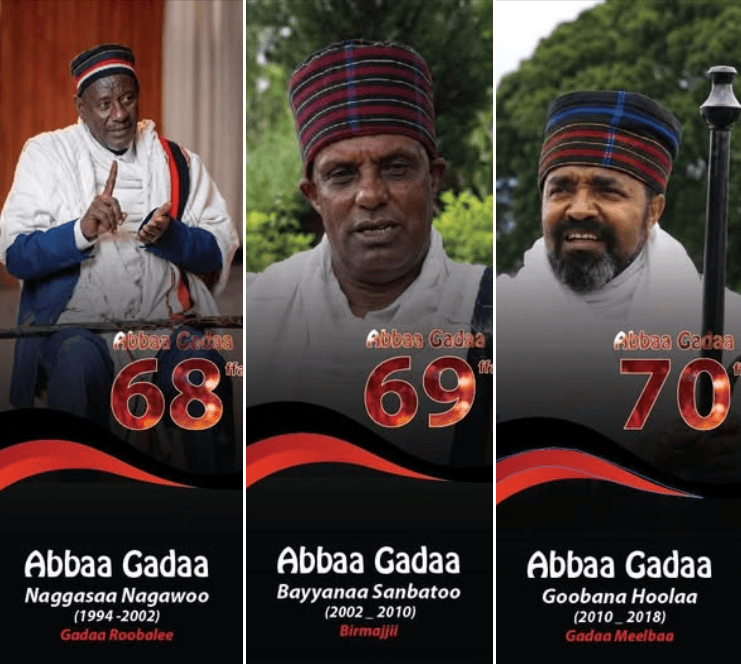
FINFINNE – They stand together in a single frame — three men, three generations of leadership, three keepers of a cycle that has turned for centuries. The photograph captures them shoulder to shoulder, not as rivals or predecessors, but as custodians of the same sacred trust.
On the left, Abbaa Gadaa Naggasaa Nagawoo of the Gadaa Roobalee. In the center, Abbaa Gadaa Bayyanaa Sanbatoo of the Gadaa Birmajii. On the right, Abbaa Gadaa Goobana Hoolaa of the Gadaa Meelbaa.
They are the 68th, 69th, and 70th Abbaa Gadaa of the Tuulama Oromo. Their photograph is not merely a portrait. It is a visual document of continuity, of peaceful transition, and of a democratic tradition that has endured for longer than most nations on earth.
The Gadaa Cycle: A Living Democracy
To understand the significance of this photograph, one must first understand the Gadaa system itself. Recognized by UNESCO as an Intangible Cultural Heritage of Humanity, the Gadaa system is an indigenous governance framework that has regulated the political, social, economic, and ritual life of the Oromo people for generations.
Every eight years, power cycles peacefully from one Gadaa grade to the next. The Abbaa Gadaa — the father or leader of the Gadaa — serves as the highest authority during his term, presiding over the Caffee assembly, mediating disputes, leading rituals, and ensuring that the laws of Seera and the moral code of Safuu are upheld.
At the end of eight years, he does not cling to power. He does not manipulate the constitution to extend his term. He does not imprison his opponents. He steps down. He hands the Baallii — the ceremonial baton symbolizing authority — to the next grade. And he becomes an elder advisor, watching as the cycle turns without him.
This photograph captures three such leaders at a rare moment of convergence: the 68th, the 69th, and the 70th Abbaa Gadaa of the Tuulama Oromo, standing together in a single frame.
Abbaa Gadaa Naggasaa Nagawoo – Gadaa Roobalee (68th)
Abbaa Gadaa Naggasaa Nagawoo led during the Gadaa Roobalee cycle. His tenure, like all Gadaa terms, lasted eight years — a period that coincided with significant challenges and transformations for the Tuulama Oromo.
Those who knew him speak of an Abbaa Gadaa who prioritized unity. The Tuulama, whose traditional territories encircle Finfinne (Addis Ababa), have long been at the crossroads of Ethiopian political life. Their proximity to the seat of imperial and state power brought both opportunities and vulnerabilities. Abbaa Gadaa Naggasaa worked to keep his people united in the face of pressures that sought to divide them.
His name, Nagawoo, carries echoes of Nagaa — peace, tranquility, well-being. It was not merely a name but a mission. During his term, he mediated disputes between clans, presided over Caffee assemblies that drew hundreds of participants, and ensured that the Gadaa calendar was observed with full ritual precision.
When his eight years concluded, he did what every Abbaa Gadaa before him had done: he stepped aside. He placed the Baallii into the hands of the next grade and became an advisor, watching as the cycle continued without him.
Abbaa Gadaa Bayyanaa Sanbatoo – Gadaa Birmajii (69th)
The baton passed to Abbaa Gadaa Bayyanaa Sanbatoo of the Gadaa Birmajii cycle. His term came at a moment when the Gadaa system itself was facing new pressures — modernization, urbanization, displacement, and the ongoing struggle for Oromo cultural and political rights.
Abbaa Gadaa Bayyanaa proved to be a steady hand. He understood that the Gadaa system could not survive if it remained frozen in the past. It had to adapt while preserving its core principles. Under his leadership, the Caffee assemblies began to incorporate new voices — including a greater role for women and youth, who had sometimes been marginalized in traditional structures.
He also worked to strengthen the connections between the Tuulama Gadaa and other Oromo communities — the Borana, the Gujii, the Karrayyuu, the Arsi, and others. The Gadaa system, he argued, was not the property of one clan or region. It was the heritage of all Oromo people, and it would survive only if it remained a living, breathing institution, not a museum piece.
When his term ended, he handed the Baallii to the next grade with the same grace with which he had received it. The cycle turned.
Abbaa Gadaa Goobana Hoolaa – Gadaa Meelbaa (70th)
Today, the Baallii rests in the hands of Abbaa Gadaa Goobana Hoolaa of the Gadaa Meelbaa cycle, the 70th Abbaa Gadaa of the Tuulama Oromo. He stands in the photograph as the current bearer of a tradition that stretches back centuries.
Abbaa Gadaa Goobana inherited a system that, despite its resilience, faces real challenges. Young people, educated in modern schools and absorbed by digital media, sometimes know less about Gadaa than their grandparents did. Migration to cities has scattered communities that once gathered regularly under Odaa trees. And the Ethiopian state, despite constitutional recognition of customary law, has not always made space for Gadaa institutions to operate freely.
Yet Abbaa Gadaa Goobana is not discouraged. He travels extensively, visiting Gadaa centers across Tuulama and beyond. He speaks to youth in language they understand, connecting the principles of Gadaa — consensus, term limits, accountability, community — to the democratic aspirations of the present generation. He works with scholars to document Gadaa laws and rituals. And he presides over Caffee assemblies where disputes are resolved not through courts and lawyers but through dialogue and consensus.
His photograph with his two predecessors is not just a formality. It is a statement. It says: The Gadaa lives. The cycle continues. The 68th handed to the 69th, who handed to the 70th. And when my time is done, I will hand to the 71st.
What the Photograph Captures
Look closely at the three men in the photograph. They are dressed differently — some in traditional Oromo attire, others in modern clothing. They stand at different angles. Their expressions vary — one smiling, one solemn, one in between.
But what unites them is visible to those who know what to look for. It is the quiet confidence of men who understand that they are not the center of the story. The Gadaa system is the center. They are merely its temporary servants.
The photograph captures:
- Continuity – Three leaders, one cycle. The 68th, 69th, and 70th Abbaa Gadaa standing together as living proof that the Gadaa system did not die with the past. It is alive, and it is here.
- Peaceful Transition – Unlike many political systems in Africa and beyond, where leaders cling to power until they are overthrown or die in office, the Gadaa system institutionalizes the transfer of authority. These three men did not fight each other. They did not imprison each other. They handed the baton and remained friends.
- Shared Purpose – Despite their different personalities and the different challenges they faced, all three share a common commitment: to preserve, protect, and promote the Gadaa system for future generations.
- Humanity – They are not icons on a pedestal. They are men — fathers, grandfathers, farmers, elders. They have known joy and sorrow, success and failure. And yet they carry a weight that few others can understand: the weight of a tradition that depends on them.
The Significance of the 68th, 69th, and 70th
Why does it matter that we can name the 68th, 69th, and 70th Abbaa Gadaa of the Tuulama Oromo? Why does it matter that we can see their faces, know their names, and trace the cycle through their terms?
It matters because indigenous systems are too often treated as timeless and unchanging — as if they exist outside of history. But the Gadaa system has a history. It has specific leaders who faced specific challenges at specific moments. The 68th Abbaa Gadaa was not the same as the 60th. The challenges of the Gadaa Birmajii cycle were not identical to those of the Gadaa Meelbaa cycle.
By naming these leaders and documenting their terms, we resist the temptation to treat Gadaa as folklore. We insist that it is real governance, with real leaders, real achievements, and real accountability.
The photograph of Abbaa Gadaa Naggasaa Nagawoo, Abbaa Gadaa Bayyanaa Sanbatoo, and Abbaa Gadaa Goobana Hoolaa — the 68th, 69th, and 70th — is a challenge to those who would dismiss indigenous systems as primitive. It says: Look. Here is democracy without elections. Here is accountability without constitutions. Here is term limits without term-limit debates. This is not primitive. This is sophisticated. This is Oromo.
The Future: The 71st and Beyond
As Abbaa Gadaa Goobana Hoolaa continues his term, preparations are already underway for the next transition. The Gadaa grade that will produce the 71st Abbaa Gadaa is already being trained. The young men who will one day lead are already learning the laws, the rituals, and the responsibilities.
The cycle does not stop. It cannot stop. Because the Gadaa system is not a building that can be destroyed. It is a river that flows. It can be diverted, blocked, or polluted — but it always finds a way back to its course.
When the 71st Abbaa Gadaa takes the Baallii, he will stand where Abbaa Gadaa Goobana now stands. And one day, perhaps, a photograph will be taken of the 70th, 71st, and 72nd standing together — a new generation of custodians, continuing the cycle.
A Final Reflection
The photograph of the 68th, 69th, and 70th Abbaa Gadaa of the Tuulama Oromo is a small image. It occupies a fraction of a page or a corner of a screen. But it contains a universe.
It contains the memory of centuries of Oromo self-governance. It contains the proof that democracy did not arrive in Ethiopia with the first multiparty election. It has been here all along, under Odaa trees, in Caffee assemblies, in the peaceful transfer of the Baallii from one hand to the next.
It contains a challenge to the present: Will we honor this legacy? Will we learn from it? Will we ensure that the 71st, 72nd, and 100th Abbaa Gadaa will have a system to lead?
And it contains a promise: As long as the Gadaa cycle turns, the Oromo people will remember who they are. They will remember that they had governance before colonization, democracy before occupation, and leaders who knew when to lead and when to step aside.
The 68th handed to the 69th. The 69th handed to the 70th. And when the time comes, the 70th will hand to the 71st. The cycle turns. The Gadaa lives. And the photograph remains.
*Daandii Ragabaa is a journalist based in Finfinne covering family stories, displacement, and the human dimensions of political history across Oromia and Ethiopia.
Captions for Reference:
| Position | Name | Gadaa Cycle | Order |
|---|---|---|---|
| Left | Abbaa Gadaa Naggasaa Nagawoo | Gadaa Roobalee | 68th |
| Center | Abbaa Gadaa Bayyanaa Sanbatoo | Gadaa Birmajii | 69th |
| Right | Abbaa Gadaa Goobana Hoolaa | Gadaa Meelbaa | 70th |

Ethiopia’s Election: 143 Polling Stations Closed Amid Security Crisis
By Daandii Ragabaa
Finfinne
FINFINNE – The hopeful hum of a nation casting its ballots was silenced in 143 corners of Ethiopia today, their shuttered polling stations standing as stark monuments to the country’s persistent security fractures.
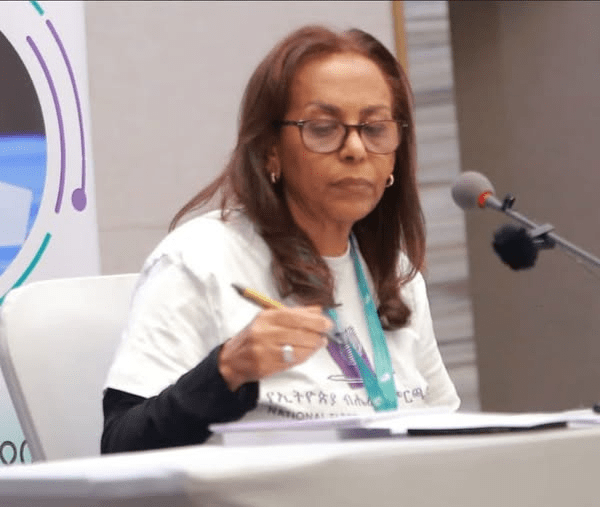
As voters lined up under a heavy sky in the capital, the chairperson of the National Election Board of Ethiopia (NEBE) delivered a sobering update from behind a lectern at the Skylight Hotel. “Security concerns,” Chairperson Melatwork Hailu explained, have forced the complete closure of 143 polling stations across the Amhara and Oromia regions. Their doors never opened.
But the tally of disenfranchisement does not end there. In a separate, more chaotic category, an undisclosed number of additional stations managed to open only to be violently silenced, forced to shut their doors early as the security situation on the ground deteriorated.
The electoral map is now pocked with dark spots. In the districts of Kersa, Kutaber, Gilolopa, and Gosache, voting began with the morning bell only to be interrupted by unseen threats. For the citizens there, the act of democracy was reduced to a waiting game—one that, by late afternoon, appeared lost. It remains unclear exactly how many voters will be unable to cast their ballots, their civic voices swallowed by regional instability.
Melatwork tried to offer a counterpoint of resilience amid the disorder. Of the more than 52,000 polling stations erected across the sprawling federal landscape, she noted, over 50,000 did open on time. Yet nearly 700 others suffered delays—not all from bullets or intimidation, but from the tangled knots of technology.
Across the country, long queues snaked around schoolyards and community halls, not just from enthusiasm but from frustration. Election officials pinned the sluggish pace on complications with the online voter registration data. In a nation still bridging the digital divide, the glitches led to hours of waiting, with fingers stained not by ink, but by restless anxiety.
The day, already heavy with political weight, took a tragic turn long before the polls closed. Melatwork disclosed that an election facilitator—one of the thousands of citizens who had volunteered to shepherd this democratic process—lost his life earlier today. He died not in a clash with security forces, nor at the hands of militia, but in a mundane yet devastating motorcycle accident in Enamorena Enayer, deep in the Gurage Zone.
He was, the chairperson noted quietly, simply trying to help.
As the sun sets on this seventh national election, the image that lingers is not of the ballots cast, but of the 143 doors that never opened—each one a silent referendum on whether, in parts of this country, peace can arrive before the next election day.
Daandii Ragabaa is a journalist based in Finfinne covering political and social affairs across Ethiopia.

The Calculus of Participation: Why Ethiopia’s ABO Party Joined the 7th Round Election – and Its Three Options Ahead

FINFINNE – At first glance, the decision seemed paradoxical. After boycotting multiple national elections over the past decade, the opposition ABO (a pseudonym for a major Oromo opposition party in this feature) suddenly threw its weight into Ethiopia’s 7th round national polls. Skeptics called it a climbdown. Loyalists called it strategy.
The party itself offered a blunt two-part explanation – one legal, one political – that has since become the subject of intense debate across opposition circles and government offices alike.
“We participated for two reasons,” a senior ABO strategist told this reporter on condition of anonymity because he is not authorized to speak to foreign media. “First, the Electoral Board’s own rules say that missing two consecutive national elections would de‑legalize us as a political entity. Second, we saw a gap: we need to mobilize the people, teach our policies and programs. Sitting out does not fill that gap.”
But the same strategist was quick to douse any expectation of an electoral upset. “Do not misunderstand us,” he added. “We do not think we will form the next government.”
—
The Two Reasons: Legal Survival and Public Education
The legal argument is straightforward. Ethiopia’s electoral law, as interpreted by the National Election Board of Ethiopia (NEBE), stipulates that political parties that fail to field candidates in two consecutive national elections may lose their legal registration. ABO had already sat out the 6th round. Another boycott would have meant administrative dissolution.
“You cannot change the system if you don’t exist,” says Dr. Mulugeta Abera, a political scientist at Addis Ababa University who follows opposition dynamics closely. “For ABO, participation was an existential choice – not a win‑now calculation.”
The second reason is more ambitious. By entering the 7th round – even without a full slate of candidates – ABO leaders believe they can use the campaign period as a mobile classroom. Public rallies, door‑to‑door canvassing, and media appearances become platforms to explain ABO’s alternative vision on land rights, federalism, and economic reform.
“They are playing a long game,” Mulugeta explains. “The ballot box is not the only measure of success. The real prize is political education. If thousands of voters hear ABO’s message now, that seed may grow by the 8th round.”
—
Why Not a Serious Bid for Power?
If the goal is eventual governance, why not contest every seat? ABO’s own analysis, shared in internal strategy documents and confirmed by multiple sources, points to two stark realities.
First, the absence of a level playing field. “There is no free, fair, and just election in Ethiopia today,” the strategist said flatly. “Without a democratic transfer of power – where the ruling party accepts defeat – no opposition can truly win. And the ruling party, from what we see, is not prepared for that.”
Second, a mathematical problem. ABO did not field candidates for all 537 Caffee (regional council) seats or all 547 parliamentary seats. “To defeat an incumbent, you need a full slate. You need thousands of candidates, not hundreds,” the strategist acknowledged. “Under a truly democratic election, we could do that. Under the current constraints, we cannot.”
Thus, the 7th round is framed internally as a testing and learning election – a chance to gauge organizational capacity, test messaging, and build a database of sympathetic voters, all without the crushing expectation of immediate victory.
—
Three Roads, One Destination?
Where does ABO go from here? Party insiders have outlined three possible paths forward. None is easy. Each carries distinct risks and opportunities.
Option One: The Incrementalist Path
“Take what is available – just like Abiy and Izzema did,” the strategist said, referring to how Prime Minister Abiy Ahmed’s Prosperity Party and other Oromo political figures consolidated power by first entering parliament and regional councils. Under this scenario, ABO would accept any seats or appointments it wins (however few), enter the Caffee and federal parliament, negotiate for ministerial or regional positions, and use state resources – including the gabaa (market) of political access – to build internal strength.
The goal? Prepare in full for the 8th round election. “This is the pragmatic path,” says political analyst Obse Lemma. “You play the inside game, grow your infrastructure, and strike when the conditions mature. The danger is co‑optation. Many opposition parties have disappeared that way.”
Option Two: The Boycott‑Plus Path
This scenario would see ABO first ensure that the Electoral Board completes its full legal composition. Then, the party would publicly challenge the fairness of the 7th round process – releasing detailed reports of irregularities, mobilizing civil society, and declaring the election not credible.
The emphasis would shift to building pressure for a genuinely free and fair 8th round, while simultaneously preparing the party and the public for that future contest. “This preserves the party’s moral high ground,” Obse notes. “But it also cedes the 7th round entirely. And if the public is exhausted by endless boycotts, the party risks irrelevance.”
Option Three: The National Dialogue Path
The most ambitious option would treat the flawed 7th round as a case study – a vivid example of what not to do. ABO would then channel its energy into demanding a genuine national dialogue (Mariin Biyyoolessaa) and a national consensus (Araarri Biyyoolessaa) that establishes agreed rules for a truly competitive election.
“This is the ‘seek a solution and follow due process’ path,” explains Mulugeta. “It requires the ruling party’s cooperation, which is not guaranteed. But if successful, it could reset the entire electoral playing field – not just for ABO, but for all opposition.”
—
What the 7th Round Really Means
For now, ABO has entered the 7th round – but without abandoning any of the three options. Party leaders describe the election as a bridge, not a destination. Whether they cross toward incremental power, principled opposition, or national reform will depend on how the coming months unfold: How many votes do they actually get? How does the ruling party treat their elected officials? Does the Electoral Board reform itself?
Late one evening in Finfinne, the ABO strategist summed up the dilemma with a farmer’s metaphor: “You cannot harvest what you have not planted. But you also cannot plant if the land is poisoned. This election, we are planting test seeds – and testing the soil. Next time, God willing, we will plant the whole field.”
Outside his office, the city hummed with campaign trucks and blaring loudspeakers. The 7th round had begun. And for ABO, the long walk toward an uncertain future had finally taken its first, deliberate step.
—
— A feature story based on party strategy documents, insider interviews, and political analyst commentary. The name ABO is used as a composite representation of a major Oromo opposition party called Oromo Liberation Front (OLF) for narrative clarity.





 Advocacy for Oromia