Daily Archives: August 17, 2026

Building the Architecture of Cohesion: VMC Chairperson Louise Perry’s Vision for a United Australia
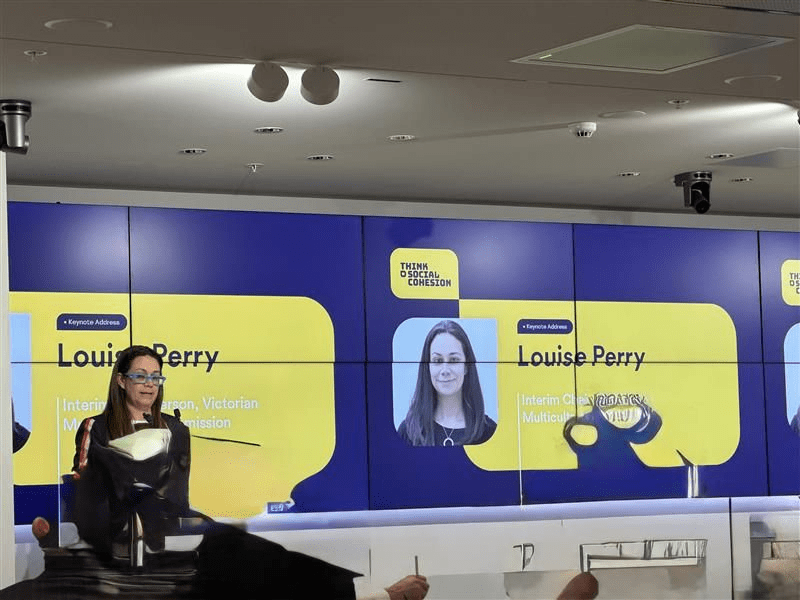
At the Think Social Cohesion National Summit, Perry Outlines a Roadmap for Government Action Through Listening, Thinking, and Acting
By Dhabessa Wakjira
In a powerful keynote address at the Think Social Cohesion National Summit in Parramatta, Victorian Multicultural Commission (VMC) Chairperson Louise Perry laid out a clear and compelling vision for how governments can build the institutional architecture necessary for lasting social cohesion.
Speaking to 160 leaders from government, community organisations, settlement agencies, and academia, Perry distilled her message into three essential steps: Listen, Think, Act . This framework, she argued, offers a practical pathway for governments to engage meaningfully with diverse communities and translate dialogue into tangible outcomes.
“The VMC was pleased and proud to partner with Mortgage Stress Victoria to deliver a community information session in Melbourne, last night,” the Commission noted in a recent social media post, highlighting one such instance of this framework in action.
The Summit: Converting Discussion into Commitment
Convened by SydWest Multicultural Services, Settlement Services International (SSI), and the Settlement Council of Australia (SCOA), the summit was designed not as a traditional conference, but as a “working room, built to act rather than to talk” . The event was structured to ensure that participants did not simply listen to speakers but actively shaped the conversation through real-time contributions, with more than 300 live inputs synthesised and fed back into the discussion .
The summit culminated in an emerging Social Cohesion Roadmap, identifying five interconnected priorities: clear rights and responsibilities, broader community reach, economic participation, accountability for commitments, and a renewed national narrative recognising multiculturalism as a defining strength.
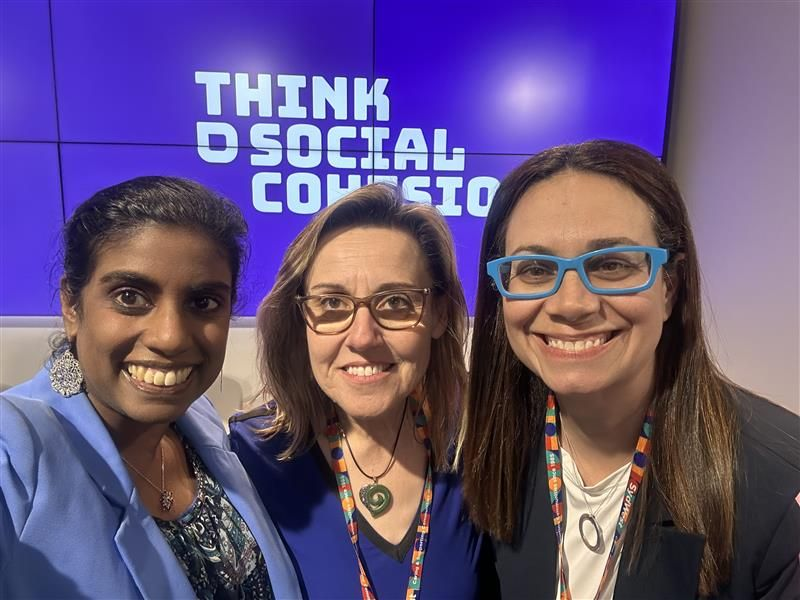
The “Listen, Think, Act” Framework
1. Listen: Active and Deep Engagement
Perry urged governments to “listen actively and deeply to communities,” moving beyond token consultation to genuine engagement that builds trust and understanding . The summit itself embodied this principle, with organisers committing to provide every delegate with a report within 28 days outlining what had changed because of their participation .
2. Think: Connecting Ideas for Cohesion
The second step, “Think,” involves reflecting on what governments have heard and “how different ideas fit together” to address complex challenges . This requires moving beyond siloed thinking and recognising that issues of cohesion, belonging, and participation are interconnected.
3. Act: Building and Uplifting Others
The final step is to “act by building and uplifting others across sectors and borders to achieve outcomes” . This demands collaboration across government, community organisations, and private sectors, as well as a commitment to accountability.
A Landmark Moment for Victorian Multiculturalism
Perry’s address carried particular weight as she announced that the Multicultural Victoria Bill had entered the Victorian Parliament that very afternoon, establishing a new statutory body to lead the state’s multicultural and multifaith portfolio . This legislative milestone will provide a permanent institutional framework for the work of building social cohesion.
A National Call to Action
The summit concluded with a specific national proposal from former Tasmanian Premier and Australian Multicultural Council Chair Peter Gutwein, who called on the federal parliament to “debate and pass a motion” formally declaring Australia a multicultural country .
The summit participants demonstrated that Australia does not lack ideas on social cohesion—it lacks a shared framework for acting on them. Perry’s “Listen, Think, Act” framework offers one such framework, providing governments with a clear roadmap for building the institutional architecture necessary to create a more cohesive, inclusive, and united Australia.

Building Bridges in Times of Hardship: A Community Unites Against Mortgage Stress

By Daandii Ragabaa
For many migrants and refugees, owning a home represents far more than a financial asset. It is security, stability, and tangible proof that a new life can be built from the ground up. It is the Great Australian Dream .
Yet for many, that dream has become a source of deep anxiety. The burden of mortgage repayments, rising interest rates, and the escalating cost of living have turned homeownership into a heavy burden of stress.
Last night, in a show of community solidarity, the Victorian Multicultural Commission (VMC) partnered with Mortgage Stress Victoria (MSV) to deliver a vital community information session in Melbourne. The event was a lifeline for migrant communities who often bear the brunt of financial hardship in silence.
A Collaborative Effort for a Pressing Crisis
Financial stress rarely exists in isolation . It is a relentless intruder that seeps into every aspect of life, affecting health, relationships, employment, and a family’s sense of security . For migrant and refugee communities, the challenges are compounded. Language barriers, unfamiliarity with financial systems, cultural expectations, or simply not knowing where to turn can make that first step towards seeking help nearly impossible.
The event—attended by Parliamentary Secretary for Multicultural Affairs Iwan Walters MP, representatives from both the VMC and MSV, and almost 150 community leaders—affirmed a crucial message: help is available, and issues can be tackled before problems become crises .
What Mortgage Stress Victoria Offers
Mortgage Stress Victoria stands as a beacon of hope. As the only specialist service in Australia providing free, integrated legal, financial counselling, and social work support for homeowners at risk of losing their homes, MSV is uniquely placed to intervene at critical moments .
Their work is a testament to the power of a holistic approach. As MSV articulates, “Our structure recognises that mortgage stress is complex, with many different causes and consequences” . By tackling the root causes—which often include family violence, job loss, and systemic barriers—MSV helps clients navigate the pressures contributing to their mortgage and achieve lasting financial and housing security .
The Power of Community Engagement
The success of the partnership between the VMC and MSV lies in its culturally accessible approach. Bringing trusted information directly into communities, through community leaders and familiar faces, is more than just good engagement—it is prevention.
When community leaders understand the signs of mortgage stress and where to direct families for help, they can intervene before a financial problem becomes a full-blown crisis. As one attendee noted, “The best time for support is before financial stress becomes financial crisis” .
A Shared Commitment to Prevention
The Victorian Multicultural Commission’s commitment to this issue is resolute. Recognising that financial stability is central to successful settlement and community cohesion, the VMC is ensuring that vital information reaches those who need it most. The event was a clear demonstration that by working together—across government, community organisations, and multicultural leaders—we can build a safety net that prevents the loss of homes and the fracturing of families.
Congratulations to everyone involved in creating that bridge between communities and the help available to them. Initiatives like this matter, because they ensure that for many Victorians, the dream of a secure home remains a reality.






