Daily Archives: August 22, 2026

Advocacy for Oromia (A4O) Condemns Escalating Violence Against Civilians in Western Oromia, Calls for Urgent International Action

FOR IMMEDIATE RELEASE
Melbourne – 22 August 2026 – The Advocacy for Oromia (A4O) today issued a strong condemnation of the ongoing and escalating violence against civilians in Western Oromia (Wallagga), warning that the situation has reached an alarming level and demanding immediate action to protect vulnerable communities.
Recent attacks have reportedly intensified, with civilians in the Giddaa Ayyaanaa and Angar Guutee areas bearing the brunt of the violence. According to local accounts, families are being forcibly displaced from their homes, while others have lost their lives while traveling or in their own residences, creating a pervasive climate of fear and instability across the region.
While many attacks have been attributed to the Fano armed group, A4O also expressed grave concern over allegations implicating state actors. The organization highlighted the Ethiopian government’s apparent failure to adequately protect affected communities, stating that these serious allegations necessitate independent and transparent investigations to establish facts, ensure accountability, and bring perpetrators of abuses to justice.
“Western Oromia is a region of profound political and social significance, and this continued violence threatens not only the immediate security of residents but also the broader stability of the region,” a spokesperson for A4O stated. “The resulting displacement and destruction have severe humanitarian consequences that require an urgent global response.”
In response to the crisis, A4O is issuing a Call to Action, urging community members, advocates, civil society organizations, faith leaders, youth, women, and the diaspora to break their silence. The organization insists that “silence is not an option” in the face of such suffering and calls for:
- Strengthened advocacy and documentation of human rights violations.
- Immediate humanitarian assistance for displaced families.
- Local, national, and international awareness campaigns.
- Unity and collective action to amplify victims’ voices and advance justice.
Furthermore, A4O is calling on international institutions, humanitarian organizations, and global human rights bodies to closely monitor the situation in Western Oromia and take concrete steps to prevent further atrocities.
“We must not remain silent,” the statement concludes. “The lives, dignity, and security of innocent civilians depend on immediate attention and action. We stand in solidarity with all victims of violence and their families and demand lasting peace, justice, and respect for human rights in the region.”
About Advocacy for Oromia (A4O):
The Advocacy for Oromia is a civil society organization dedicated to promoting human rights, justice, and democratic governance for the people of Oromia. A4O works to amplify the voices of the Oromo people and advocate for peaceful solutions to conflicts affecting the region.
#UNHumanRightsCouncil #Oromia #Wallagga #Justice #HumanRights

Irreechaa 2026: Africa’s Largest Gathering of Gratitude and Resilience
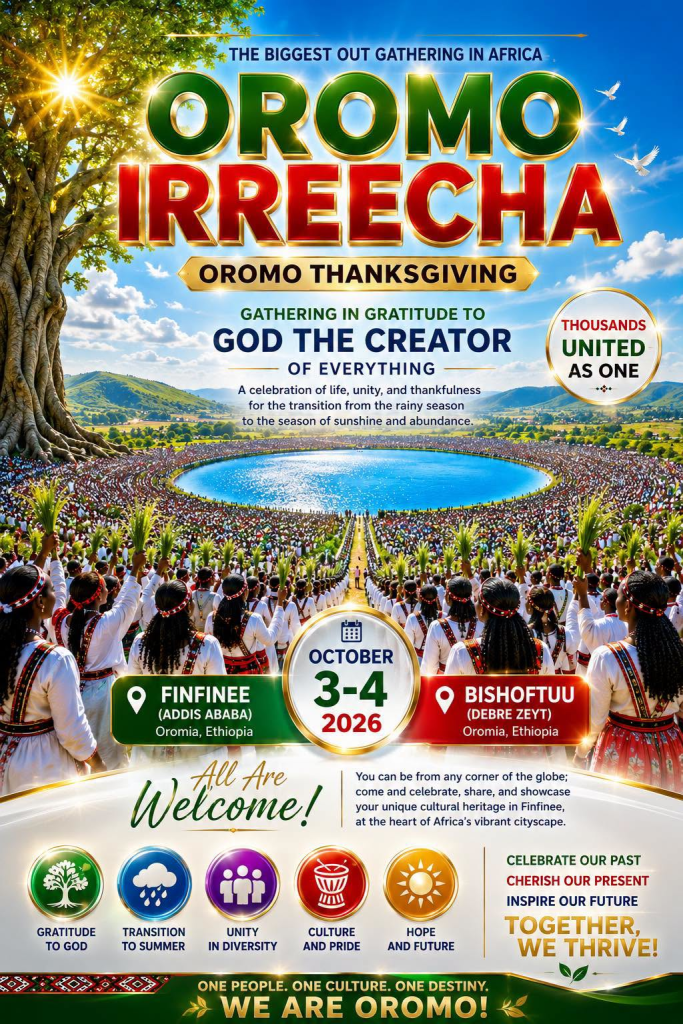
Millions Prepare to Celebrate Oromo Thanksgiving in Finfinne and Bishoftu
By Maatii Sabaa
As the golden light of spring breaks over the Oromo landscape, a profound spiritual awakening stirs across Oromia and the global diaspora. Irreechaa—the Oromo Thanksgiving—is set to transform Finfinne and Bishoftu into a vibrant sea of white, green, and cultural pride from October 3 to October 4, 2026 . This is not merely a festival. It is Africa’s largest outdoor gathering, where millions will come together to express gratitude to Waaqa (God) and celebrate a cultural heritage that has endured for millennia .
The Heartbeat of a People: What Is Irreechaa?
Irreechaa, known in some traditions as Irreessa or Dhibaayyuu, is an annual thanksgiving holiday that marks the end of the rainy winter season and the joyous arrival of Birraa (spring) . It is a time when the Oromo people gather at sacred lakes, rivers, and springs to thank Waaqa for the blessings, mercies, and bountiful harvests received over the previous twelve months .
The festival’s roots run deep—over 6,000 years into the ancient Oromo and Cushitic civilization, long before the rise of modern empires or religions . It is intimately connected to the Gadaa system, the traditional Oromo governance structure recognised by UNESCO as an Intangible Cultural Heritage of Humanity . As the elders teach, Irreechaa is simply “giving thanks to the one God”—the pinnacle of Oromo religious and cultural expression .
Two Sacred Sites, One Unifying Spirit
This year’s celebration will unfold over two days across two of the Oromo people’s most sacred sites, following a time-honoured itinerary announced by the Council of Oromo Gadaa Elders .
Hora Finfinne: Reclaiming the Heart of the Capital
On October 3, the celebration will commence at Hora Finfinne, in the heart of the capital city . This location carries profound historical weight. For decades, under oppressive regimes, public celebrations of Irreechaa were banned, and the Oromo people were denied the right to give thanks at their own sacred sites . The site now known as Finfinne was originally named after the very same Hora Finfinne—a sacred geography that the construction of a colonial capital attempted to overwrite . Celebrating Irreechaa here is not just a cultural act; it is a powerful reclamation of space, identity, and dignity.
Hora Arsadi: The World’s Stage
On October 4, the festival moves to its grandest location: Hora Arsadi in the city of Bishoftu, approximately 45 kilometres south of Finfinne . This is the site of the main event—a gathering so vast that it is recognised as one of the largest annual human gatherings on the African continent . Here, in a landscape of breathtaking natural beauty and sacred waters, the celebration reaches its crescendo.
In recent years, the scale of the gathering has been so immense that international media, including the BBC, Al Jazeera, and CNN, have broadcast images of the spectacle: hundreds of thousands, sometimes millions, of people dressed in a vibrant sea of traditional colours, moving with purpose and joy towards the water .
The Rituals of Renewal
The Irreechaa ceremony is a tapestry of ritual and symbolism. At the lake, participants carry freshly cut green grass and flowers—symbols of fertility, life, and renewal . They immerse these offerings in the water, sprinkle themselves, and raise their hands in prayer. The grass, dipped and sprinkled, is a symbolic gesture of cleansing, purification, and the washing away of hardship. Traditional songs, known as sirba, echo across the valley, their melodies passed down from elders to the youth, ensuring the continuity of a living heritage .
Women are decorated in their finest traditional attire, while youth, particularly young men known as Kormoomsaa, move through the crowd, sprinkling people with fresh water as a gesture of cleansing and blessing . The event is a total immersion in culture and community. After the prayers, families and friends share meals of traditional dishes and freshly brewed coffee, reinforcing the profound social bonds that the festival strengthens .
More Than a Festival: A Symbol of Unity and Resilience
Irreechaa is often described as the “most celebrated cultural festival in Africa” . However, its significance extends far beyond its sheer scale. The festival’s core principles are peace, unity, love, and reconciliation. As the history of the festival teaches, holding onto resentment or grievance is not permitted at Irreechaa. A person cannot attend unless they have resolved their disputes with others . This requirement is a profound social intervention, reinforcing the idea that one cannot give thanks while holding a grudge.
The revival and growth of Irreechaa, particularly the celebrations in Finfinne, represent a powerful statement of cultural resilience. It is a declaration to the world that the Oromo culture, with its deep-rooted values of democracy, community, and spirituality, is not a relic of the past but a vibrant force for the present and future .
A Call to the World
The message from the Oromo community is clear: “You can be from any corner of the globe, individuals can come and showcase their unique cultural heritage in Finfinne during our celebration, at the heart of Africa’s vibrant cityscape.” As the Oromo people gather to give thanks, they extend an invitation to the world to witness the unity and resilience of a nation that has overcome immense challenges and continues to celebrate life, faith, and hope with unparalleled passion.

Goobee and Shinooyyee: A Dual Model of Prevention and Intervention for Social Problems

How Ancient Oromo Festivals Build Peace, Unity, and Social Cohesion
By Dhabessa Gemelal
In an era of deepening social divisions, political polarisation, and youth disengagement, the Oromo people possess a powerful and ancient resource: their own cultural traditions. The festivals of Goobee and Shinooyyee—celebrations marking the transition from the rainy season to spring—are not merely expressions of cultural identity. They are sophisticated mechanisms for social cohesion, conflict prevention, and youth engagement that offer a model for addressing some of the most pressing social challenges of our time.
Understanding Goobee and Shinooyyee
Goobee: A Festival of Light and Freedom for Young Men
Goobee is a festival where young men welcome the light of Spring with joy, hope, and good wishes. It represents “the bliss of spring, the joy of the dawn of the earth”—a light that sprouts for youth with green hope and courage . It is a time when young men declare their freedom and independence, marking their transition toward adulthood.
Shinooyyee: A Festival of Freedom and Identity for Young Women
Shinooyyee is a unique festival celebrated by young unmarried girls . During this festival, girls “plait their hair in fantastic styles and dress up and decorate with ornaments of their choice. They chant, sing, and dance with friends and peers for up to 3 weeks” . They collect fragrant grass and give it to neighbours as a symbol of abundance and blessing, receiving food and butter in return. It provides “young girls with absolute freedom to enjoy outside of their family’s home” .
Both festivals are celebrated in the weeks leading up to Irreechaa, the grand Oromo thanksgiving festival, and are part of the wider Gadaa system recognised by UNESCO as an Intangible Cultural Heritage of Humanity .
Prevention: Addressing Root Causes of Social Problems
1. Preventing Conflict Through Reconciliation
The Gadaa system, of which Goobee and Shinooyyee are a part, is built on a fundamental principle: “as much as possible, conflict should be prevented from occurring” . Should conflict occur, “everything should be done to prevent it from escalating and all institutions should work together to manage the conflict” .
This preventive philosophy is embedded in the festivals. Irreechaa, the culminating festival, requires participants to resolve conflicts before attending. As one Abba Gadaa explained, “if anyone who attends the festival has a conflict even with a close person, he should first reconcile with himself or with the other persons” . This principle of pre-festival reconciliation prevents conflicts from festering and escalating.
2. Preventing Youth Disengagement Through Meaningful Participation
Shinooyyee and Goobee provide structured, meaningful activities that engage youth during a critical transition period. The festivals offer young people “absolute freedom” to express themselves, build social bonds, and develop confidence . This engagement prevents the alienation and disconnection that often lead to social problems.
Social Anthropologist Daniel Deressa noted that the festivals “promote love and unity to uphold peaceful coexistence in the society” . By providing positive outlets for youth energy and creativity, Goobee and Shinooyyee prevent the frustration and disengagement that can fuel social unrest.
3. Preventing Cultural Erosion Through Intergenerational Transmission
Goobee and Shinooyyee serve as mechanisms for transmitting cultural knowledge, values, and ethics from elders to youth. The festivals ensure that young people learn “the culture and morals of the people and teaching them the truth” . This intergenerational transmission prevents the loss of cultural identity that can leave communities vulnerable to social breakdown.
Intervention: Addressing Existing Social Problems
1. Healing Divisions Through Reconciliation
For those already in conflict, Goobee and Shinooyyee provide a structured pathway to reconciliation. The festivals are described as “a time for reconciliation,” where “hatred and revenge are removed and solidarity is strengthened” . The requirement of pre-festival reconciliation serves as a direct intervention for existing conflicts.
The festivals create an environment where “peace is preached and love is praised; disagreement, grievance and discontent are condemned” . This public affirmation of peace values directly counters the narratives that fuel conflict.
2. Building Social Bonds Across Communities
Goobee and Shinooyyee bring together young people from different communities, strengthening “their love and unity” . The festivals are not exclusive—they are inclusive gatherings that promote understanding and solidarity across diverse groups.
Irreechaa, the culminating festival, has become “an important ritual festival that attracts visitors” and “has been becoming a cultural nationalism not only for the people of Oromo but also the nations and nationalities of the country” . This inclusivity makes the festivals a direct intervention against ethnic division.
3. Strengthening Community Resilience
The festivals contribute to community resilience by reinforcing social bonds and shared values. As scholars have noted, “Irreechaa brings people closer to each other and strengthen social bonds” . This strengthening of social cohesion makes communities more resilient to the stresses that can lead to social problems.
The Dual Model in Action
Goobee and Shinooyyee operate through a dual model of prevention and intervention:
Prevention:
- Engaging youth through meaningful participation
- Transmitting cultural values and ethics
- Resolving conflicts before they escalate
- Building social cohesion through inclusive participation
Intervention:
- Healing existing conflicts through reconciliation rituals
- Strengthening social bonds across communities
- Reinforcing shared values of peace and unity
Conclusion: A Model for Our Times
In a world facing deepening social divisions, youth alienation, and conflict, Goobee and Shinooyyee offer a powerful model. They demonstrate that cultural traditions are not merely nostalgic artifacts—they are living resources for building peace, strengthening communities, and engaging youth.
By preserving and promoting these festivals, the Oromo people are not only celebrating their heritage—they are investing in a more peaceful, cohesive, and resilient society. As one young participant noted, Goobee and Shinooyyee are “a festival of success, history, restoration of lost culture and expression of the Oromo people” .
In a fractured world, this ancient tradition offers a blueprint for healing.
This feature article is dedicated to the youth of Oromia who carry these traditions forward, and to all communities seeking models of peace and unity.


Goobee and Shinooyyee: Expressions of Celebration, Identity, and Cultural Beauty of the Oromo People

A Vibrant Revival of Ancient Traditions
By Daandii Ragabaa
Culture is the mirror of a community’s identity, the bridge connecting generations, and the living witness to history. The Oromo people possess a wealth of indigenous values and traditional systems passed down through generations. Among these, the Goobee and Shinooyyee traditional games hold a unique place and message within the Gada system, celebrating the end of the rainy season and the arrival of spring.
As the Oromo calendar transitions from the rainy season—a time of reflection—to the spring season, a symbol of hope and renewal, various thanksgiving ceremonies and traditional games are performed. One such celebration is the Goobee and Shinooyyee festival, a vibrant cultural practice observed by young men (Qero) and women (Qaree) as they dress in traditional attire and joyfully play together.
Goobee: A Festival of Light and Freedom for Young Men
Goobee is a festival for young men welcoming the light of spring with joy and hope. It is a time for them to declare their freedom and independence. The festival marks a significant milestone in the lives of young Oromo men, allowing them to express their identity and embrace their role in the community.
The rituals of Goobee are deeply symbolic. Young men gather in groups, dressed in their finest traditional attire, and participate in games and dances that celebrate the arrival of the new season. The festival is a declaration of readiness—a statement that they are prepared to take on the responsibilities of adulthood and contribute to the well-being of their community.
Shinooyyee: A Festival of Freedom and Identity for Young Women
Shinooyyee is a festival of freedom and identity for young Oromo girls. It marks the transition of young women from childhood to a stage of greater social recognition, providing a unique opportunity for them to express themselves freely.
During Shinooyyee, girls gather with friends to style their hair and dress in their finest ornaments, chanting and dancing with unparalleled freedom. They collect fragrant grass and give it to their neighbours as a symbol of abundance and blessing, receiving food and butter in return. The festival serves as a critical space for social bonding, strengthening relationships among girls and providing them with a sense of community and mutual support.
The significance of Shinooyyee extends beyond individual celebration. It is a collective affirmation of the value and dignity of young women, reinforcing their place within the broader Oromo society. The festival instils pride, confidence, and a deep sense of belonging.
The Prelude to Irreechaa
These festivals are the prelude to Irreechaa, the grand Oromo thanksgiving celebration. The celebration begins in late August and continues for weeks as youth in villages and towns unite in joy and unity. Goobee and Shinooyyee are not merely games—they are profound cultural events that reflect the beauty of nature, the honour of youth, and the resilience of a people.
The Gadaa system, of which these festivals are a core component, has selected eight high-level mountains where offering thanks to God is performed. The festivals embody the principles of peace, unity, and harmonious coexistence that are central to the Gadaa system.
A Symbol of Cultural Revival
Goobee and Shinooyyee are powerful symbols of Oromo identity and cultural revival. In recent years, the festivals have been revived and celebrated with remarkable enthusiasm in Finfinnee and throughout Oromia. They are organised with the support of cultural institutions and government bodies, underscoring the commitment to preserving and promoting the culture of the Oromo people.
As part of the Gadaa system, a UNESCO-recognised intangible cultural heritage, these festivals are significant in maintaining social cohesion and transmitting cultural values. They ensure that the wisdom of the ancestors continues to guide future generations.
Tourism and Economic Potential
Beyond cultural preservation, Goobee and Shinooyyee hold significant potential for the tourism sector. By promoting these vibrant traditions, Oromia can attract visitors seeking authentic cultural experiences. The festivals showcase the region’s beauty and the rich heritage of the Oromo people, contributing to sustainable development and economic growth.
The traditional clothing, music, dances, and rituals associated with Goobee and Shinooyyee offer a compelling attraction for tourists interested in cultural tourism. The economic benefits of such tourism can support local communities and incentivise further cultural preservation efforts.
A Symbol of Freedom and Self-Determination
The revival of these festivals represents the restoration of a lost cultural heritage. For years, these practices were suppressed under past regimes, but now they serve as a symbol of freedom and self-determination for the Oromo people. They are celebrated alongside other Oromo festivals, such as Irreechaa, which have become powerful symbols of peace, unity, and national cohesion.
Celebrating Goobee and Shinooyyee is itself an act of resistance—a declaration that the Oromo people will not be erased, that their culture will not be forgotten, and that their traditions will continue to thrive.
Conclusion: An Act of Future-Building
Preserving these cultural treasures is not just a matter of nostalgia; it is an act of future-building. By safeguarding and promoting Goobee and Shinooyyee, the community ensures that its children inherit a rich cultural legacy that strengthens the fabric of society and fosters a spirit of unity.
It is a collective responsibility to cherish, pass on, and promote these living resources as expressions of Oromo identity, values, and cultural beauty.
Injifannoon Ummata Oromoo!
Goobee fi Shinooyyee haa jabaattu!
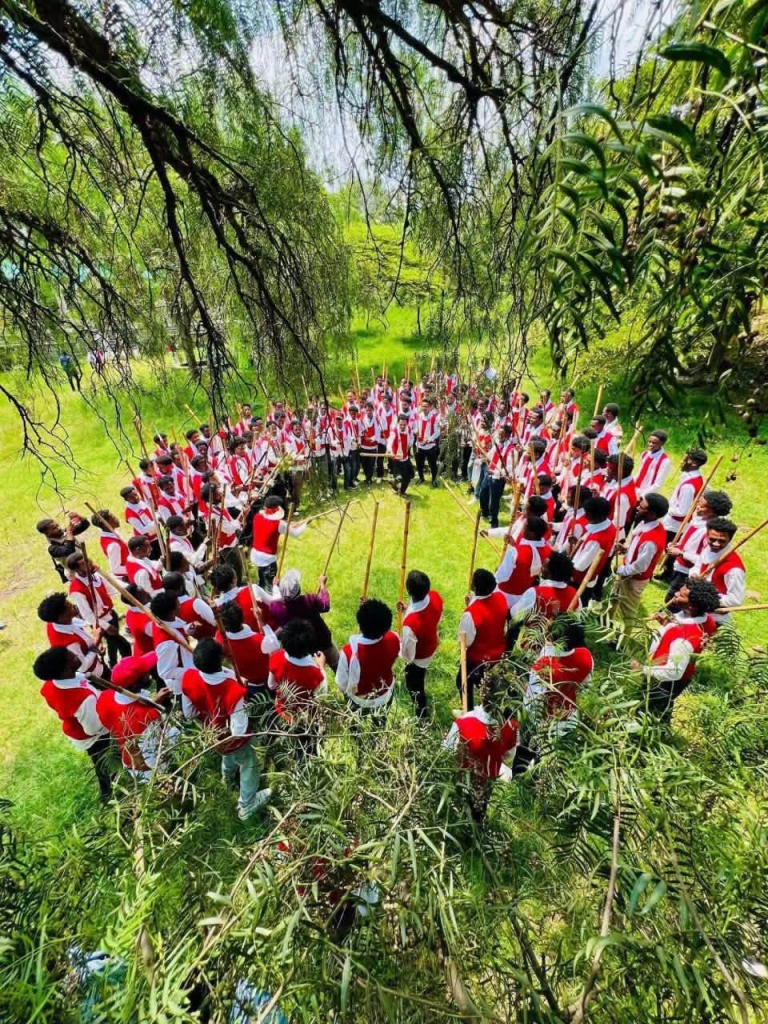
Goobee and Shinooyyee: Expressions of Celebration, Identity, and Cultural Beauty of the Oromo People

By Haymanot Kebede
Culture is the mirror of a community’s identity, the bridge connecting generations, and the living witness to history. The Oromo people possess a wealth of indigenous values and traditional systems passed down through generations. Among these, the Goobee and Shinooyyee traditional games hold a unique place and message within the Gada system, celebrating the end of the rainy season and the arrival of spring.
As the Oromo calendar transitions from the rainy season—a time of reflection—to the spring season, a symbol of hope and renewal, various thanksgiving ceremonies and traditional games are performed. One such celebration is the Goobee and Shinooyyee festival, a vibrant cultural practice observed by young men (Qero) and women (Qaree) as they dress in traditional attire and joyfully play together.
Goobee is a festival for young men welcoming the light of spring with joy and hope . It is a time for them to declare their freedom and independence. Shinooyyee is a festival of freedom and identity for young Oromo girls. It marks the transition of young women from childhood to a stage of greater social recognition, providing a unique opportunity for them to express themselves freely .
During Shinooyyee, girls gather with friends to style their hair and dress in their finest ornaments, chanting and dancing with unparalleled freedom . They collect fragrant grass and give it to their neighbors as a symbol of abundance and blessing, receiving food and butter in return . The festival serves as a critical space for social bonding, strengthening relationships among girls and providing them with a sense of community and mutual support.
These festivals are the prelude to Irreecha, the grand Oromo thanksgiving celebration . The celebration begins in late August and continues for weeks as youth in villages and towns unite in joy and unity. Goobee and Shinooyyee are not merely games—they are profound cultural events that reflect the beauty of nature, the honor of youth, and the resilience of a people.
Goobee and Shinooyyee are powerful symbols of Oromo identity and cultural revival. In recent years, the festivals have been revived and celebrated with remarkable enthusiasm in Finfinnee and throughout Oromia. They are organized with the support of cultural institutions and government bodies, underscoring the government’s commitment to preserving and promoting the culture of the Oromo people. As part of the Gada system, a UNESCO-recognized intangible cultural heritage, these festivals are significant in maintaining social cohesion and transmitting cultural values.
Beyond cultural preservation, Goobee and Shinooyyee hold significant potential for the tourism sector. By promoting these vibrant traditions, Oromia can attract visitors seeking authentic cultural experiences. The festivals showcase the region’s beauty and the rich heritage of the Oromo people, contributing to sustainable development and economic growth.
The revival of these festivals represents the restoration of a lost cultural heritage. For years, these practices were suppressed under past regimes, but now they serve as a symbol of freedom and self-determination for the Oromo people . They are celebrated alongside other Oromo festivals, such as Irreecha, which have become powerful symbols of peace, unity, and national cohesion .
Preserving these cultural treasures is not just a matter of nostalgia; it is an act of future-building. By safeguarding and promoting Goobee and Shinooyyee, the community ensures that its children inherit a rich cultural legacy that strengthens the fabric of society and fosters a spirit of unity. It is a collective responsibility to cherish, pass on, and promote these living resources as expressions of Oromo identity, values, and cultural beauty.
The Case for Shinooyee and Goobee: A Preventive Force for Peace and Unity
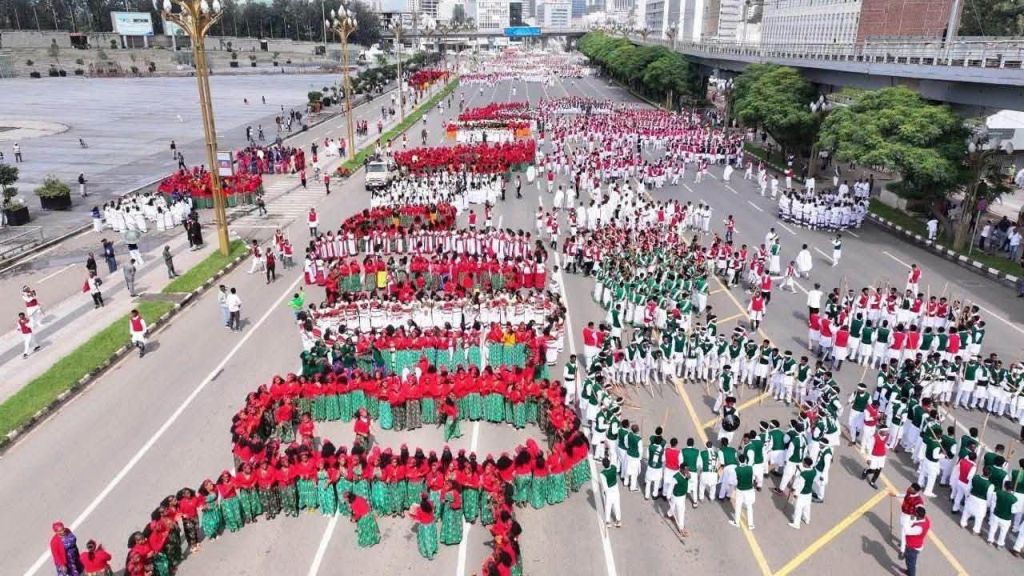
How Oromo Cultural Festivals Can Mitigate Conflict and Build Social Cohesion
By Dhabessa Wakjira
In a world where youth are increasingly drawn to divisive ideologies, political extremism, and social unrest, the Oromo people possess a powerful alternative: their own rich cultural traditions. The festivals of Shinooyee and Goobee—celebrations of the Oromo new year and the transition from winter to spring—are not merely cultural events. They are mechanisms for peacebuilding, social cohesion, and the redirection of youth energy toward constructive ends.
This article argues that Shinooyee and Goobee have significant preventive benefits. When young people invest their time, knowledge, skills, and resources in promoting Oromo culture, they not only ensure the growth of their traditions but also contribute to a reduction in conflict and violence. By focusing on cultural development, youth can build peace rather than division.
Argument 1: Cultural Engagement as a Preventative Measure
Proposition: Youth participation in Shinooyee and Goobee celebrations reduces the likelihood of conflict and violence.
Supporting Points:
1. Redirecting Youth Energy Toward Constructive Ends
Young people possess immense energy, creativity, and passion. When these qualities are channelled into political extremism or ethnic rivalry, the result is often violence and instability. However, when youth are engaged in cultural activities—learning traditional songs, preparing for festivals, and preserving Oromo heritage—that same energy is redirected toward positive community building.
Shinooyee and Goobeyyee provide structured, meaningful activities that require collaboration, discipline, and commitment. Young people who are actively preparing for these festivals have less time and inclination for destructive behaviour. The festivals create “prosocial bonds that reduce isolation and renew civic agency” .
2. Fostering Intergenerational Connection
Shinooyee and Goobee bring together elders and youth, creating opportunities for the transmission of cultural knowledge, values, and wisdom. This intergenerational connection is essential for building understanding and respect across age groups.
When youth learn from elders—about history, culture, and the principles of the Gadaa system—they gain perspective on the struggles and triumphs of their people. This perspective reduces the likelihood of impulsive or radical behaviour, as youth see themselves as part of a larger historical narrative.
3. Promoting Peace and Reconciliation Values
Both Shinooyee and Goobee are rooted in the values of peace, reconciliation, and unity. The Gadaa system, of which these festivals are a part, “symbolises peace, unity, and harmonious coexistence among people”.
Before participating in these celebrations, individuals are expected to resolve conflicts and seek forgiveness. This practice teaches youth that peace is not abstract—it requires active effort and accountability. By internalising these values, young people become peacebuilders rather than conflict participants.
Argument 2: Economic and Social Benefits of Cultural Investment
Proposition: Investing youth resources in Shinooyee and Goobee generates positive economic and social returns.
Supporting Points:
1. Building Local Economies
Shinooyee and Goobee are economic drivers. The demand for traditional clothing, food, and crafts creates employment opportunities for artisans, tailors, and small businesses. By investing in these festivals, youth contribute to the economic vitality of their communities.
The Irreechaa Expo, for example, has become a platform for over 250 trade associations, providing economic opportunities and promoting cultural tourism. Similar economic benefits can be realised through the investment of youth resources in Shinooyee and Goobee.
2. Strengthening Social Networks
The festivals foster social networks that serve as safety nets in times of crisis. When youth participate in Shinooyee and Goobee, they build relationships with peers and elders across communities. These relationships can be drawn upon during times of hardship, reducing reliance on divisive or violent alternatives.
As one scholar observed, Irreechaa “brings people closer to each other and strengthens social bonds”. The same applies to Shinooyee and Goobee.
3. Preserving Cultural Heritage
By investing their resources in cultural promotion, youth ensure that Oromo traditions are not lost to modernity. This preservation is not merely nostalgic—it is a form of resistance against cultural erasure and a foundation for collective identity.
When youth understand their culture, they are less likely to adopt extremist ideologies that reject or denigrate their heritage. Instead, they become ambassadors of their culture, promoting understanding and respect across communities.
Argument 3: The Preventive Impact on Conflict
Proposition: Widespread investment in Shinooyee and Goobee can prevent the escalation of conflict.
Supporting Points:
1. Building Bridges Across Communities
Shinooyee and Goobee are not exclusive festivals. Members of various ethnic groups—Kembata, Kebena, Burji, Dawro, and Sidama—have described these celebrations as platforms for cultural exchange and multinational unity. When youth from diverse backgrounds participate together, they build relationships that transcend ethnic divisions.
2. Creating Alternative Narratives
Conflict often arises from narratives of grievance, victimhood, and enmity. Cultural festivals offer alternative narratives of resilience, gratitude, and common humanity. By promoting these narratives, youth challenge the divisive rhetoric that fuels conflict.
3. Demonstrating the Benefits of Peace
Shinooyee and Goobee are celebrations of hope and renewal. They demonstrate that peace is not only possible but desirable—that communities can thrive when they come together in celebration rather than conflict. By participating in these festivals, youth experience the tangible benefits of peace.
Rebuttal: Addressing Potential Counterarguments
Counterargument: “Culture is not a substitute for political change. Focusing on festivals distracts from the real issues facing the Oromo people.”
Rebuttal: Cultural engagement is not a substitute for political action—it is a complement to it. When youth are disconnected from their culture, they are more vulnerable to radicalisation and division. Cultural festivals like Shinooyee and Goobee provide the foundation of identity and community that makes political action more effective and principled.
Counterargument: “Investment in culture is a luxury we cannot afford when we face urgent political and economic challenges.”
Rebuttal: Culture is not a luxury—it is a necessity. The loss of culture is itself a form of oppression, and its preservation is a form of resistance. Moreover, cultural festivals generate economic benefits that address urgent needs. The Irreechaa Expo, for example, has become a platform for economic growth and community development .
Counterargument: “Celebrating culture does nothing to stop violence.”
Rebuttal: Cultural celebration does not stop violence on its own—but it creates the conditions in which violence is less likely. Communities that are culturally connected, socially cohesive, and economically vibrant are more resilient to conflict. Shinooyee and Goobee contribute to these conditions.
Conclusion: A Path to Peace Through Culture
Shinooyee and Goobee are not merely festivals—they are investments in peace. When young people invest their time, knowledge, skills, and resources in promoting Oromo culture, they are not only preserving their heritage—they are building a future of peace and stability.
By engaging in these traditions, youth become peacebuilders, cultural ambassadors, and community leaders. They create alternatives to violence and division, demonstrating that the path to a better future lies not in conflict but in cooperation, not in extremism but in cultural pride.
As the Oromo proverb says: “A person without culture is like a tree without roots.” By investing in Shinooyee and Goobee, youth are planting the roots of peace for generations to come.
This feature article is dedicated to Oromo youth everywhere who are working to preserve and promote their culture as a foundation for peace and unity.






