Category Archives: News

FEATURE NEWS: Funeral of Artist Ilfinash Qannoo to Be Held Tomorrow in Ambo
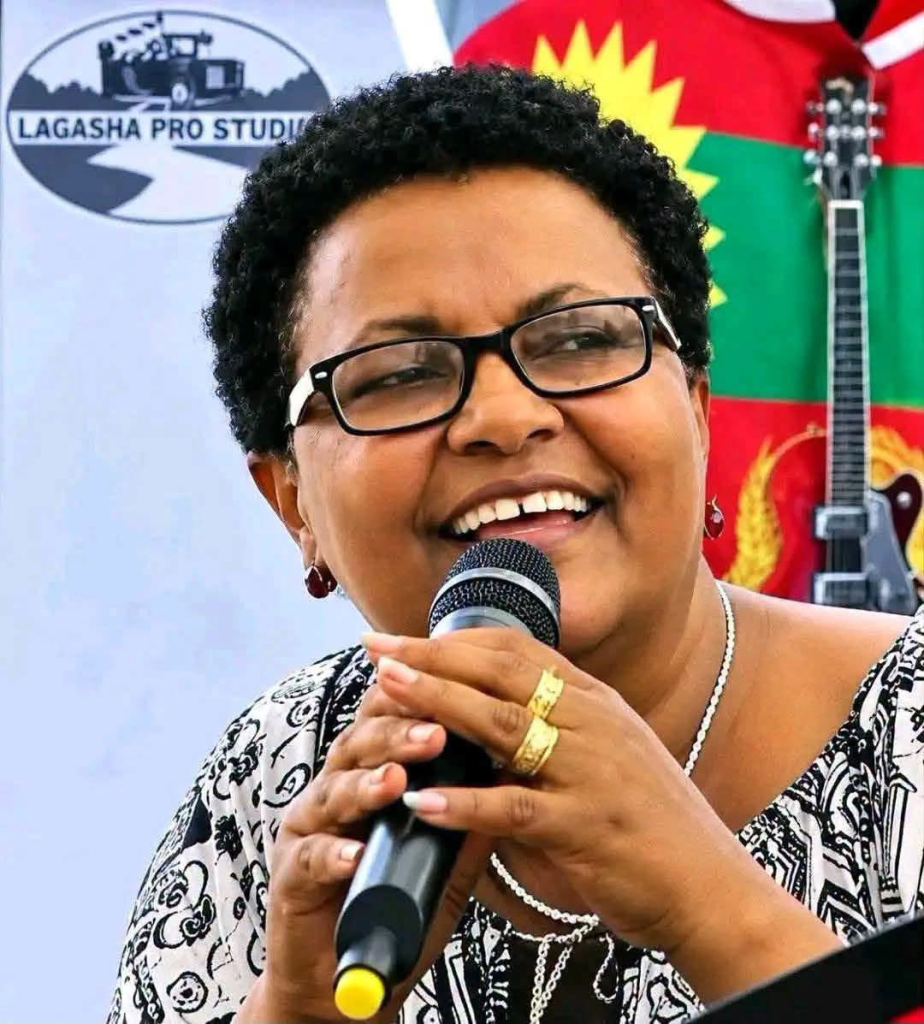
Organizing Committee Confirms Final Farewell for Oromo Cultural Icon
Finfinnee, Fulbaana 07, 2026 – The funeral service and burial ceremony for beloved Oromo artist and freedom fighter Ilfinash Qannoo will take place tomorrow, the organizing committee has confirmed. The final rites are scheduled to be held in the town of Ambo, following a series of commemorative events in Finfinnee.
A Day of Farewell: The Funeral Itinerary
According to Obbo Lammii Beenyaa, a member of the funeral organizing committee, the day’s proceedings will unfold as follows:
| Time in local time | Event |
|---|---|
| 11:00 – 12:00 | Departure of the body from Koriyaa Hospital in Finfinnee |
| 12:00 – 1:00 | Transfer to Finfinnee Stadium for public tribute |
| 1:00 – 3:00 | Formal commemoration and honoring ceremony at Finfinnee Stadium |
| 3:00 onwards | Procession carrying the body to Ambo |
| Upon arrival in Ambo | Funeral and burial ceremony to be conducted |
A Heroine Returns Home
The decision to hold the funeral in Ambo reflects the wishes of the family and the broader Oromo community to honor Ilfinash Qannoo in a location of deep cultural and historical significance. The journey from Finfinnee to Ambo will allow thousands of mourners to pay their final respects to the artist who dedicated her life to the Oromo struggle.
The public tribute at Finfinnee Stadium is expected to draw large crowds, as Ilfinash Qannoo was not only a celebrated musician but also a symbol of resilience and resistance for generations of Oromos. Her songs of unity, justice, and freedom resonated across the Oromo nation and the global diaspora.
Committee Calls for Orderly Participation
The organizing committee has urged all attendees to participate in the funeral proceedings with dignity and respect, maintaining the spirit of unity that Ilfinash Qannoo championed throughout her life. Security and logistical arrangements are being put in place to ensure a smooth and solemn farewell for the departed heroine.
As the Oromo nation prepares to lay its beloved artist to rest, the words of her final songs echo once more: a call for unity, a plea for justice, and a dream of freedom that will not die with her.
“Ilfinash duutus seenaan gootummaa ishii bara baraan dhaloota qaraa, leellifamaa jiraata.”
“Even in death, the legend of her heroism is praised across generations for ages to come.”
#IlfinashQannoo #Funeral #OromoUnity #Ambo #RestInPower #Oromia

The Death That Refuses to Fade: Why Ilfinash Qannoo’s Legacy Demands Celebration, Not Mourning
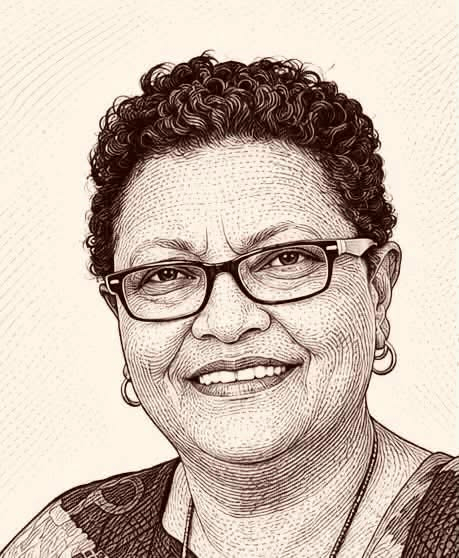
By Dhabessa Wakjira
—
In the Oromo cultural cosmos, death is rarely a stranger. It is the great equalizer, the silent harvester that spares neither the peasant nor the prince. The proverb, “Duuti nama kamiifuu hin hafu” — “Death does not leave anyone behind” — is a sobering reminder of our shared mortal fate. Yet, every so often, a soul departs this earth in such a blaze of fire and principle that the grave cannot contain their echo. Ilfinash Qannoo is one such soul.
And here is our radical proposition: We should not weep. We should celebrate.
Not because her death is devoid of sorrow—far from it. The loss of a warrior, a mother, a symbol of unyielding resistance, carves a wound into the flesh of history. But to reduce Ilfinash to a tragedy is to misunderstand her life. To mourn her is to pity her; to pity her is to diminish her. Instead, we choose to honor her as the Oromo people have always honored their heroes: with poetry, with pride, and with the unshakable belief that her story is not an ending, but a beginning.
The Gootummaa (Heroism) That Defies Time
Ilfinash Qannoo was not merely a figure of her era. She was a force of nature sculpted into human form. In a world that demanded women be silent, she roared. In a system that demanded submission, she stood with her spine straight and her gaze fixed on the horizon of justice.
Her gootummaa—her heroism—was not carved from reckless anger, but from a profound love for her people. It was the kind of love that does not bow to colonialism, does not kneel to oppression, and does not whisper in the face of tyranny. It was the kind of love that marched, that fought, and that—when necessary—fell, so that others could stand taller on her shoulders.
This is why the proverb holds a second, hidden meaning. Yes, death takes everyone. But not everyone lives with the intensity of Ilfinash. For most, death is an erasure. For her, death was a megaphone. The louder the silence around her grave, the louder her deeds speak across generations.
Celebration as Resistance
Why celebrate? Because grief is passive; celebration is active. Mourning looks backward; celebration propels forward.
In many cultures, we are taught to dress in black, to lower our voices, to count the days of absence. But for a figure like Ilfinash Qannoo, such rituals are insufficient. They are, in fact, a betrayal of the fire she carried.
Imagine Ilfinash herself. Would she want a river of tears? Or would she demand a drumbeat of defiance? Would she desire bowed heads or raised fists? The answer is written in every chapter of her struggle. She lived for the flourishing of her people. Therefore, the greatest tribute we can pay is to flourish audaciously in her name.
To celebrate Ilfinash is to:
- Sing her praises in public gatherings, not whisper them in private corners.
- Teach her story in schools, not confine it to oral whispers.
- Emulate her courage in our daily battles, not relegate it to museum glass.
- Laugh with the joy she fought for, not weep with the sorrow she overcame.
Her death is a chapter. Her life is the entire book. And books are meant to be read aloud.
The Eternal Present of Her Legacy
Here is the miracle of Ilfinash Qannoo: she exists in the present tense. Yes, her heartbeat has ceased, but her rhythm continues in the pulse of every Oromo child taught to speak their language without shame. She lives in the defiant ink of every activist’s pen. She breathes in the lungs of every woman who refuses to be a footnote in someone else’s story.
The historians may write her dates—born, fought, fell. But the bards will sing her essence: She who bent the wind. She who taught the stones to speak.
Thus, we say: Do not mourn Ilfinash. Summon her.
Call her spirit into every courtroom where justice is demanded. Invoke her name in every village meeting where the future is debated. Let her be the ancestor who dances at our weddings, not the ghost who haunts our funerals.
A Final Call to the Living
Brothers and sisters, let us be clear. This is not callousness. This is not forgetting. This is the highest form of remembrance. We celebrate because we understand that Ilfinash Qannoo did not lose her life—she invested it. And the dividends of that investment compound with every generation that dares to dream freely.
So tonight, when the elders speak of her, do not lower your gaze. Lift a cup of water—the symbol of life—and toast to her name. Clap your hands. Stamp your feet. Let the earth feel the vibration of her memory.
For indeed, death does not leave anyone behind. But heroes like Ilfinash Qannoo leave something behind that death cannot touch: a legacy so fierce that it turns sorrow into a war cry.
Celebrate her. Live like her. And in living, you prove that she never truly died.
“Ilfinash duutus seenaan gootummaa ishii bara baraan dhaloota qaraa, leellifamaa jiraata.”
(Even in death, the legend of her heroism is praised across generations for ages to come.)
Let that praise be loud. Let it be joyful. Let it be eternal.
#IlfinashLives #CelebrateTheHero #OromoPride #LegacyOverMourning

Oromo Federalist Congress (OFC) Mourns the Passing of Iconic Artist and Cultural Symbol Ilfinash Qannoo
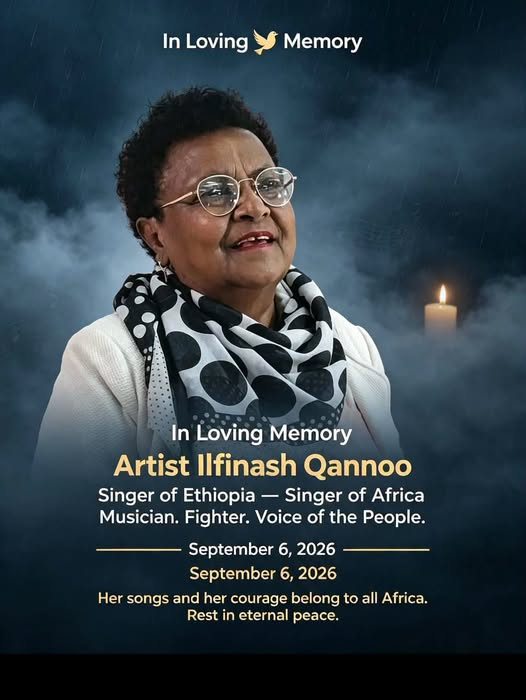
FEATURE CONDOLENCE NEWS
Oromo Federalist Congress (OFC) Mourns the Passing of Iconic Artist and Cultural Symbol Ilfinash Qannoo
A Nation in Mourning: The Voice of a Generation Falls Silent
Finfinnee, Oromia – Qaammee 2, 2018 (E.C.)
The Oromo Federalist Congress (OFC/KFO) has announced with profound sorrow, heartbreak, and overwhelming grief the passing of beloved Oromo artist, cultural icon, and lifelong justice advocate – Artist Ilfinash Qannoo.
Her departure marks the end of an era in Oromo music, culture, and political consciousness. She was not merely an entertainer; she was the musical embodiment of a people’s struggle – a woman whose voice became the anthem of the oppressed and whose lyrics carried the weight of a nation’s dreams.
From Naqamtee to National Icon: The Journey of a Heroine
Born and raised in the historic city of Naqamtee, Western Oromia, Ilfinash Qannoo emerged from humble beginnings to become one of the most recognizable and beloved figures in Oromo cultural history. Her early life in the heart of Oromia shaped her deep connection to her people, their traditions, and their aspirations.
But Ilfinash was never content to be merely a performer. She understood from a young age that art could be a weapon – a tool for awakening consciousness, exposing injustice, and mobilizing the masses. Her songs transcended entertainment; they became historical documents that chronicled decades of political repression, marginalization, and the enduring hope for democracy in Oromia.
The Power of Her Voice: Lyrics That Shook Empires
Throughout her illustrious career, Ilfinash Qannoo’s powerful voice challenged regimes, dictators, and prolonged systems of oppression. Her protest songs became the foundation of Oromo political awakening – each melody carrying the pain of a people, each lyric demanding accountability from those in power.
Her music captured:
- The suffering of generations under oppressive rule
- The resilience of the Oromo people in the face of adversity
- The dream of a democratic and just society
- The call for unity, equality, and fundamental human rights
Though she faced imprisonment, torture, and exile for her convictions, her voice never wavered. Even today, her songs echo across Oromia and the global Oromo diaspora – a testament to a legacy that death cannot silence.
The Final Chapter: Returning Home
In her final days, Ilfinash Qannoo had returned to her beloved homeland – a poignant homecoming that filled her with joy despite her failing health. She was receiving medical treatment at a hospital when, on Qaammee 1, 2018 (E.C.), she succumbed to illness and departed from this world.
Her passing has left an unfillable void in the hearts of millions. The Oromo nation has lost not only a cultural treasure but a moral compass – a woman who dedicated her entire life to the pursuit of justice, unity, and freedom for her people.
A Message of Unity That Endures
Yet, even in death, Ilfinash Qannoo continues to inspire. The message of national unity that she carried throughout her life remains etched in the hearts of the Oromo people. Her final gift to the nation was not sadness but strength – the knowledge that while her physical form may depart, the seeds of unity, resilience, and love for freedom she planted in the hearts of millions will continue to grow and flourish.
As the Oromo Federalist Congress (OFC) observed in its official statement:
“Qaamaan nu biraa haa godaantu malee, sanyiin tokkummaa, cichoomina fi jaalala bilisummaa isheen onnee Oromoota miiliyoonaan lakkaa’aman keessatti facaafte dagaaguu isaa itti fufa.”
(“Though her physical body may depart, the seeds of unity, resilience, and love for freedom that she scattered in the hearts of millions of Oromos will continue to grow.”)
OFC’s Official Condolence and Call to Action
The Oromo Federalist Congress (OFC) extends its deepest and most heartfelt condolences to:
- The family and relatives of Ilfinash Qannoo
- Her friends and close associates
- Her fellow artists and collaborators
- The entire Oromo community across Ethiopia and the global diaspora
In its statement, the OFC has issued a powerful call to the Oromo people: to honor Ilfinash Qannoo’s memory by upholding the very principles she championed throughout her lifetime – principles that include:
| Principle | Meaning in Action |
|---|---|
| Unity | Standing together as one nation, transcending divisions |
| Equality | Demanding justice and equal rights for all |
| Democracy | Continuing the struggle for fundamental freedoms |
| Cultural Pride | Preserving and celebrating Oromo identity and heritage |
The OFC emphasized that the greatest tribute the Oromo people can pay to this fallen heroine is to continue the struggle she so passionately sang about – ensuring that her sacrifice and the sacrifices of countless others are not in vain.
A Final Prayer
The Oromo Federalist Congress concludes its statement with a solemn prayer and tribute:
“Waaqayyo maatiifi firoottan isheef jajjabina haa kennu, lubbuu ishees nagaa bara baraan haa qananiisu.”
(“May the Almighty grant her family and loved ones strength, and may her soul rest in eternal peace.”)
Legacy That Transcends Death
Ilfinash Qannoo’s legacy is secure. She will be remembered not only as a gifted artist but as a courageous freedom fighter, a proud symbol of Oromo identity, and a voice that refused to be silenced. Her songs will continue to inspire future generations of Oromo youth to:
- Preserve their culture
- Stand firm in their identity
- Fight courageously for their rights
- Dream boldly of a free and just Oromia
About the Oromo Federalist Congress (OFC/KFO)
The Oromo Federalist Congress (Koongirasiin Federaalawaa Oromoo – KFO) is a political organization committed to advancing the rights, unity, and self-determination of the Oromo people within a federal democratic framework. The OFC mourns the loss of Ilfinash Qannoo as a profound tragedy for the entire Oromo nation and all who cherish justice and freedom.
Issued by:
Oromo Federalist Congress (OFC/KFO)
Qaammee 2, 2018 (E.C.)
Finfinnee, Oromia, Ethiopia
In Memoriam
| Name: | Artist Ilfinash Qannoo |
| Birthplace: | Naqamtee, Western Oromia |
| Legacy: | Cultural Icon, Freedom Fighter, Voice of the Oppressed |
| Contribution: | Over 10 albums, decades of resistance music |
| Cause: | Justice, Unity, Democracy, Oromo Liberation |
| Resting: | In the hearts of millions |
“Sirboonni ishee hin duune. Sagaleen ishee hin dadhabne. Hafuura ishee waliin Oromoo hunda wajjin deema.”
“Her songs shall not die. Her voice shall not fade. Her spirit walks with every Oromo.”
#IlfinashQannoo #OFC #KFO #OromoUnity #CulturalHero #JusticeForOromia #LegacyLives #RestInPower

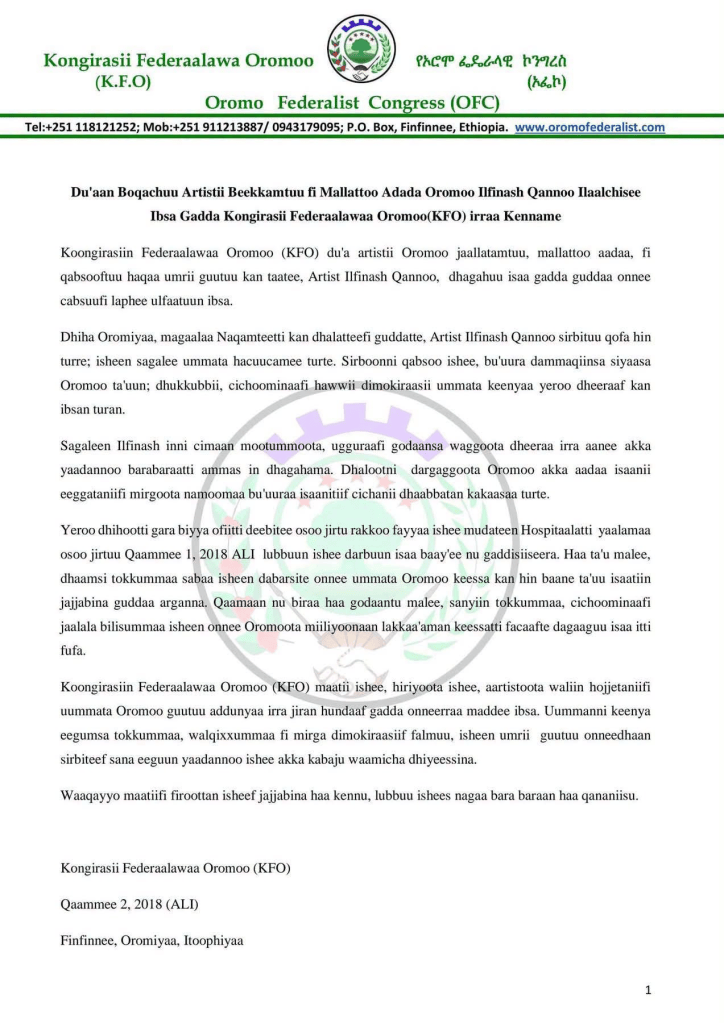
On the Passing of Artist Ilfinash Qannoo – Beloved Cultural Icon and Symbol of Oromo Resistance

The official press release from the Oromo Federalist Congress (OFC/KFO) regarding the passing of Artist Ilfinash Qannoo:
OFFICIAL FEATURE STATEMENT
On the Passing of Artist Ilfinash Qannoo – Beloved Cultural Icon and Symbol of Oromo Resistance
Issued by the Oromo Federalist Congress (OFC/KFO)
Qaammee 2, 2018 (E.C.) | Finfinnee, Oromia, Ethiopia
A Profound Loss to the Oromo Nation
The Oromo Federalist Congress (OFC/KFO) received with deep sorrow, profound heartbreak, and heavy grief the news of the passing of the beloved Oromo artist, cultural emblem, and lifelong advocate for justice – Artist Ilfinash Qannoo.
Born and raised in Naqamtee, Western Oromia, Ilfinash Qannoo was never merely a performer. She was the voice of a silenced people. Her protest songs became the very foundation of Oromo political awakening – lyrics that for decades spoke unflinchingly of oppression, marginalization, and the long-cherished dream of democracy for our people.
A Voice That Would Not Be Silenced
The powerful voice of Ilfinash – which for years had challenged regimes, dictators, and prolonged systems of subjugation – still echoes as an eternal memory. She inspired generations of Oromo youth to preserve their culture, stand firm in their identity, and fight courageously for their fundamental human rights.
Her music was not entertainment; it was resistance set to melody. Her stage was not a platform; it was a pulpit for truth. Her audience was not merely fans; they were a movement in the making.
Her Final Days and Peaceful Departure
In her final days, she had recently returned to her homeland. While undergoing medical treatment at a hospital, she was overtaken by illness, and on Qaammee 1, 2018 (E.C.), she passed from this life – a departure that has left an unfillable void in the heart of the Oromo nation.
Yet, even in this loss, we draw immense strength from the message of unity she left behind – a message that will never fade from the hearts of the Oromo people. Though her physical form may depart, the seeds of unity, resilience, and love for freedom that she planted in the hearts of millions of Oromos will continue to grow and flourish across generations.
A Call to Honor Her Legacy
The Oromo Federalist Congress (OFC/KFO) extends its deepest condolences to her family, her friends, her fellow artists, and the entire Oromo community across the globe.
We call upon our people to honor her memory by upholding the very principles she sang for throughout her lifetime:
- Unity – standing together as one nation.
- Equality – demanding justice for all.
- Democracy – continuing the struggle for fundamental rights.
Let her music remain our anthem. Let her courage be our compass. Let her sacrifice fuel our determination.
Final Prayer and Tribute
We pray to the Almighty to grant her family and loved ones strength and patience during this time of immense loss, and to bestow upon her soul eternal peace and rest.
Her name shall not be forgotten. Her songs shall not fade. Her spirit shall walk with every Oromo who dares to dream of a free and just tomorrow.
Rest in Power, Ilfinash Qannoo.
Your voice was our weapon. Your legacy is our foundation.
Issued by:
Oromo Federalist Congress (OFC/KFO)
Finfinnee, Oromia, Ethiopia
Qaammee 2, 2018 (E.C.)
#IlfinashQannoo #OromoUnity #CulturalHero #JusticeForOromia #LegacyLives

On the Departure of Beloved Artist and Freedom Fighter Ilfinash Qannoo

The official press release from the Oromo Liberation Front (OLF/ABO) regarding the passing of beloved artist and freedom fighter Ilfinash Qannoo:
OFFICIAL FEATURE STATEMENT
On the Departure of Beloved Artist and Freedom Fighter Ilfinash Qannoo
Issued by the Oromo Liberation Front (OLF/ABO)
Fulbaana 07, 2026 | Finfinnee, Oromia
A Great Heroine Has Fallen
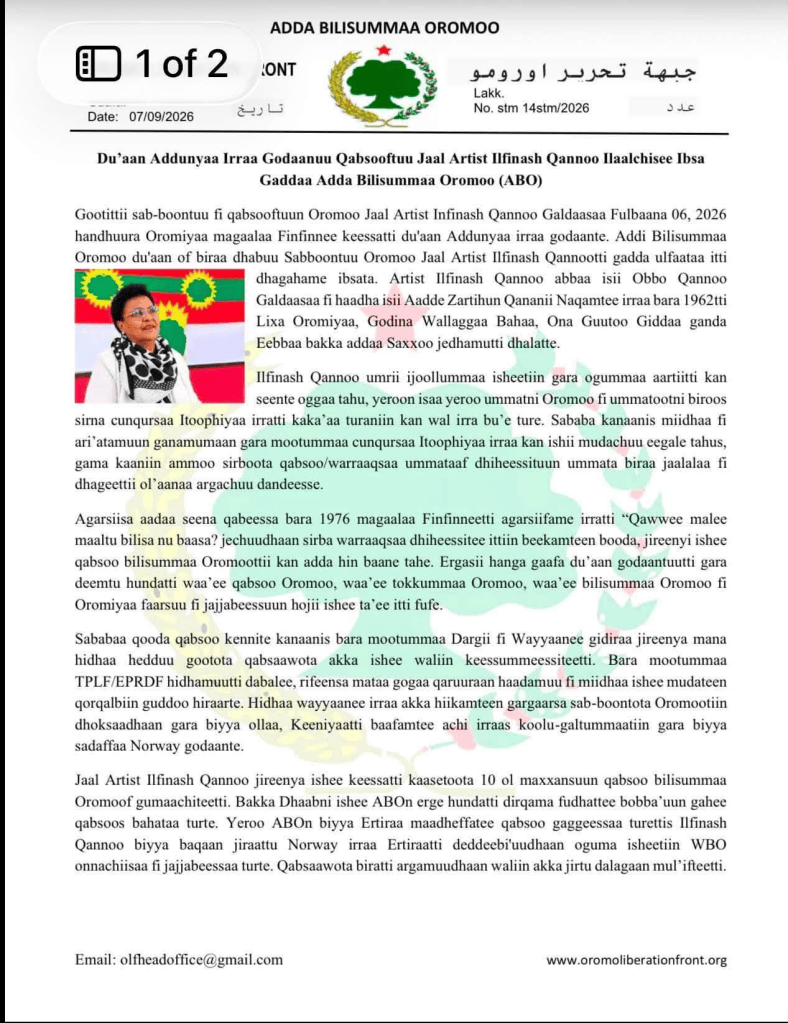
The Oromo Liberation Front (OLF/ABO) announces with profound grief and a heavy heart the passing of the great Oromo heroine, patriot, and freedom fighter – Beloved Artist Ilfinash Qannoo – who departed from this world on Fulbaana 06, 2026, in the heart of Oromia, at Finfinnee.
Her loss is not merely the loss of an artist. It is the silencing of a voice that sang freedom for over six decades. It is the emptying of a heart that burned with love for Oromia. It is the falling of a flag that inspired millions to rise against oppression.
Roots of a Revolutionary
Artist Ilfinash Qannoo was born in 1962 to her father, Obbo Qannoo Galdaasaa, and her mother, Aadde Zartihun Qananii, in the town of Saxxoo, located in Eebbaa district, East Wallagga Zone, Western Oromia – a region that would later become the cradle of many liberation struggles.
From her childhood, she was drawn to the arts. But her coming of age coincided with a period of intense political awakening across Ethiopia – a time when the Oromo people and other nations rose against the oppressive system. It was this environment that shaped her destiny and transformed her from a simple performer into a voice of the voiceless.
The Song That Shook the Throne
Her path to fame – and to persecution – began in 1976 at a historic cultural performance in Finfinnee. There, she posed the revolutionary question that would become an anthem of resistance:
“Qawwee malee maaltu bilisa nu baasa?”
(“Without the gun, what will set us free?”)
From that moment onward, her life became inseparable from the struggle for Oromo liberation. She dedicated every song, every performance, and every breath to:
- Glorifying the Oromo struggle
- Preaching Oromo unity
- Dreaming of Oromo freedom
- Empowering the Oromo people
Her stage became a battlefield. Her microphone became a weapon. Her lyrics became a declaration of war against injustice.
The Price of Resistance
For her unwavering commitment to the Oromo cause, she paid a heavy price. Under both the Derg regime and the later Woyanne (TPLF/EPRDF) government, she endured long years of imprisonment alongside countless other freedom fighters.
Her suffering did not end there. During her incarceration under the Woyanne regime, she was subjected to brutal torture – including having her scalp forcibly shaved with broken glass – resulting in deep and lasting physical and psychological wounds.
Upon her release, with the help of Oromo patriots, she was secretly taken to neighboring Kenya, and later granted asylum in Norway, where she continued her work from exile.
A Lifetime of Contribution
Throughout her life, Artist Ilfinash Qannoo produced over 10 albums, each one a powerful contribution to the Oromo liberation movement. Wherever the OLF/ABO had a presence, she was there – answering the call, lending her voice, and rallying the people.
Even during the period when the OLF was hosted in Eritrea and waging its armed struggle, Ilfinash – though living in exile in Norway – traveled repeatedly to Eritrea to inspire and strengthen the fighters. Her presence among the combatants was proof of her unwavering dedication; she did not simply sing about the struggle – she lived it.
Her Final Days – Fire That Would Not Die
Her love for Oromia and her commitment to the cause never wavered. Her heart and spirit remained as strong as steel, untouched by compromise or despair. But the years of imprisonment, torture, and exile had taken a toll on her health. The physical and emotional wounds inflicted upon her in Ethiopian dungeons finally caught up with her.
In her final moments, even as her body weakened, her spirit burned bright. Her last words were not of regret, but of love:
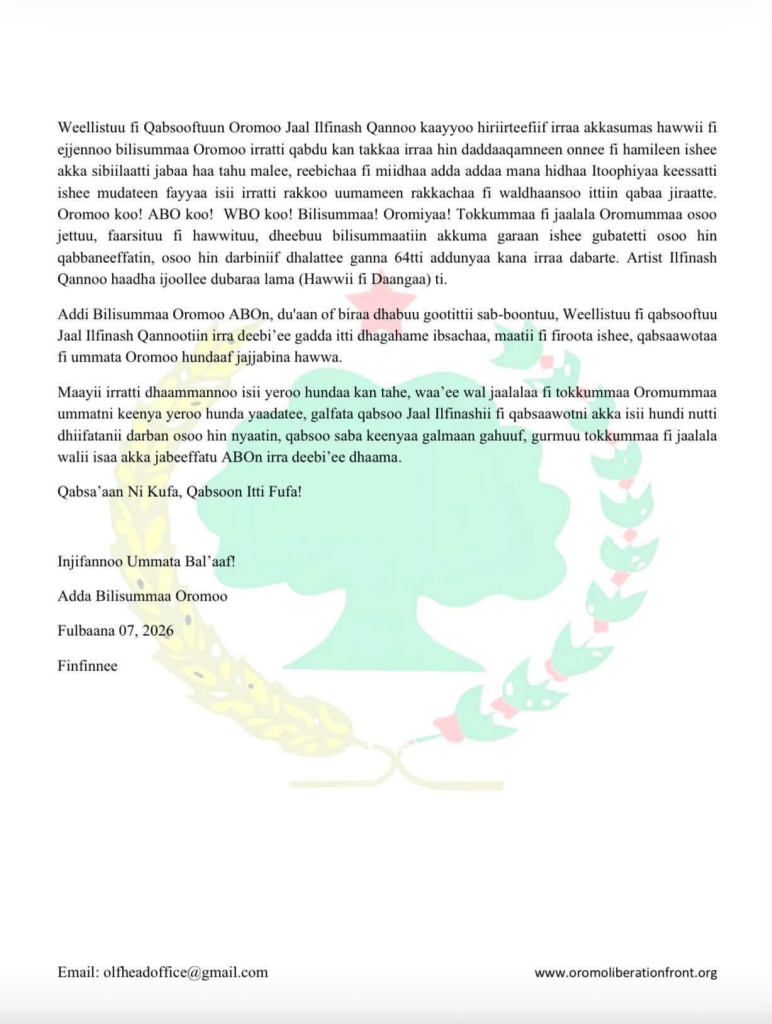
“Oromoo koo! ABO koo! WBO koo! Bilisummaa! Oromiyaa! Tokkummaa fi jaalala Oromummaa…”
(“My Oromo! My OLF! My Oromo Liberation Army! Freedom! Oromia! Unity and love of Oromummaa…”)
She passed at the age of 64, still singing, still hoping, still burning for freedom – until her very last breath.
Artist Ilfinash Qannoo leaves behind her two beloved daughters, Hawwii and Daangaa.
A Call to Honor Her Sacrifice
The Oromo Liberation Front (OLF/ABO) extends its deepest condolences to her family, her relatives, her fellow freedom fighters, and the entire Oromo nation.
We call upon our people to remember her message of unity and love – which was her eternal legacy. We urge all Oromos to carry forward the torch she lit, and to not let the sacrifice of Ilfinash and countless other heroes be in vain.
Let us strengthen our unity. Let us reinforce our love for one another. Let us complete the struggle they began – so that Oromia may be free.
Final Salute
Her memory will forever be etched in our hearts. Her songs will forever echo in our struggles. Her spirit will forever march beside us.
Rest in power, Beloved Ilfinash Qannoo.
You did not die – you were promoted to immortality.
“Qabsa’aan ni kufa, qabsoon itti fufa!”
(“The fighter may fall, but the struggle continues!”)
Glory to the Broad Victory of the People!
Issued by:
Oromo Liberation Front (OLF/ABO)
Fulbaana 07, 2026
Finfinnee, Oromia
#IlfinashQannoo #OLF #ABO #Oromia #Bilisummaa #HeroineNeverDies #StruggleContinues

Beloved Artist and Freedom Fighter Ilfinash Qannoo Passes Away at 64
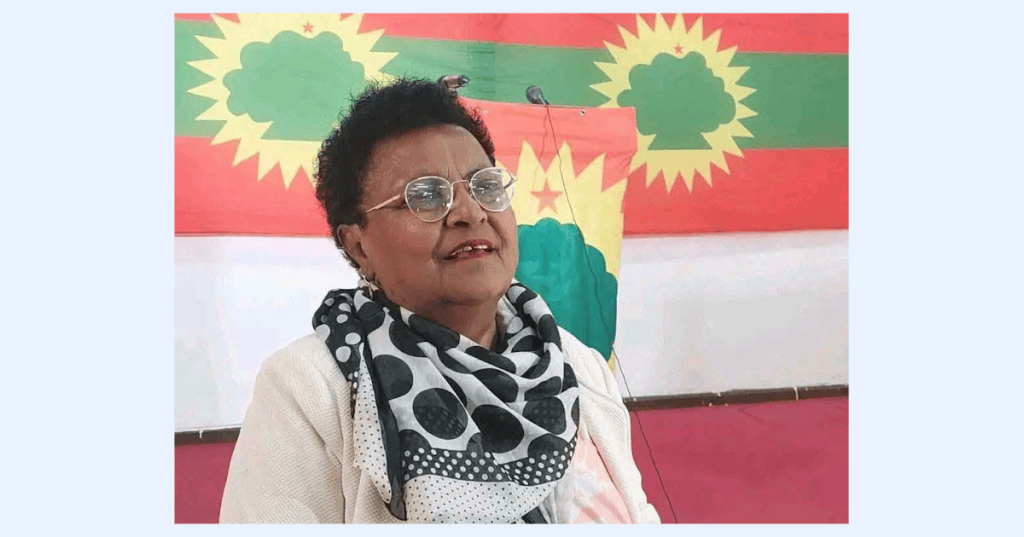
The Oromo Liberation Front announces the death of a legendary voice of the Oromo struggle, who inspired generations through music and resistance.
FINFINNEE, Oromia – The Oromo Liberation Front (OLF/ABO) has announced with profound grief the passing of iconic artist and freedom fighter Ilfinash Qannoo, who died on September 06, 2026, in Finfinnee at the age of 64.
Her loss, the organization stated, “is not merely the loss of an artist. It is the silencing of a voice that sang freedom for over six decades. It is the emptying of a heart that burned with love for Oromia. It is the falling of a flag that inspired millions to rise against oppression.”
From Saxxoo to the Stage
Born in 1962 in Saxxoo, East Wallagga Zone, Western Oromia, Ilfinash was drawn to the arts from childhood. Her coming of age coincided with a period of intense political awakening across Ethiopia, transforming her from a performer into a voice for the voiceless.
Her path to fame—and persecution—began in 1976 at a historic cultural performance in Finfinnee, where she posed the revolutionary question that became an anthem of resistance:
“Qawwee malee maaltu bilisa nu baasa?”
(“Without the gun, what will set us free?”)
From that moment, her life became inseparable from the struggle for Oromo liberation. Her stage became a battlefield, her microphone a weapon, her lyrics a declaration of war against injustice .
The Price of Resistance
For her unwavering commitment to the Oromo cause, she paid a heavy price. Under both the Derg regime and the later Woyanne government, she endured long years of imprisonment alongside countless other freedom fighters .
Her suffering included brutal torture—having her scalp forcibly shaved with broken glass—leaving deep and lasting physical and psychological wounds. Upon her release, with the help of Oromo patriots, she was secretly taken to Kenya and later granted asylum in Norway, where she continued her work from exile .
Despite these hardships, she produced over 10 albums throughout her life, each a powerful contribution to the Oromo liberation movement. Even while living in exile, she traveled repeatedly to Eritrea to inspire fighters when the OLF was waging its armed struggle .
A Voice That Nurtured Generations
Ilfinash was more than a singer—she became a living archive of Oromo memory. Her music carried the soil of rural Oromia and the fire of a people’s longing for dignity. In her final years, too frail to stand, she was carried to gatherings—not as a relic, but as a living flame .
Perhaps one of her most significant legacies was her role as a trailblazer for Oromo women. At a time when restrictive expectations limited women’s participation in public life, she challenged both political repression and social conventions .
The Oromo Community of Minnesota honored her as a “pioneering role as an Oromo woman artist who challenged political repression and restrictive expectations of women in public life”—courage that helped create space for generations of Oromo artists and women who followed .
Final Words
In her final moments, even as her body weakened, her spirit burned bright. Her last words were not of regret, but of love:
“Oromoo koo! ABO koo! WBO koo! Bilisummaa! Oromiyaa! Tokkummaa fi jaalala Oromummaa…”
(“My Oromo! My OLF! My Oromo Liberation Army! Freedom! Oromia! Unity and love of Oromummaa…”)
She passed at age 64, still singing, still hoping, still burning for freedom until her very last breath.
A Call to Carry the Torch
The Oromo Liberation Front extends its deepest condolences to her family, her two beloved daughters Hawwii and Daangaa, her relatives, fellow freedom fighters, and the entire Oromo nation.
They call upon the people to remember her message of unity and love, urging all Oromos to carry forward the torch she lit:
“Let us strengthen our unity. Let us reinforce our love for one another. Let us complete the struggle they began—so that Oromia may be free.”
Her memory will forever be etched in hearts, her songs forever echo in struggles, her spirit forever march alongside.
“Qabsa’aan ni kufa, qabsoon itti fufa!”
(“The fighter may fall, but the struggle continues!”)
Rest in power, Beloved Ilfinash Qannoo.
You did not die—you were promoted to immortality.

The Voice That Refused to Be Silenced: Minnesota Oromo Community Mourns Iconic Artist Ilfinash Qannoo

A tribute to a pioneering artist whose music and courage shaped Oromo identity across generations and continents
MINNEAPOLIS, Minnesota – September 6, 2026
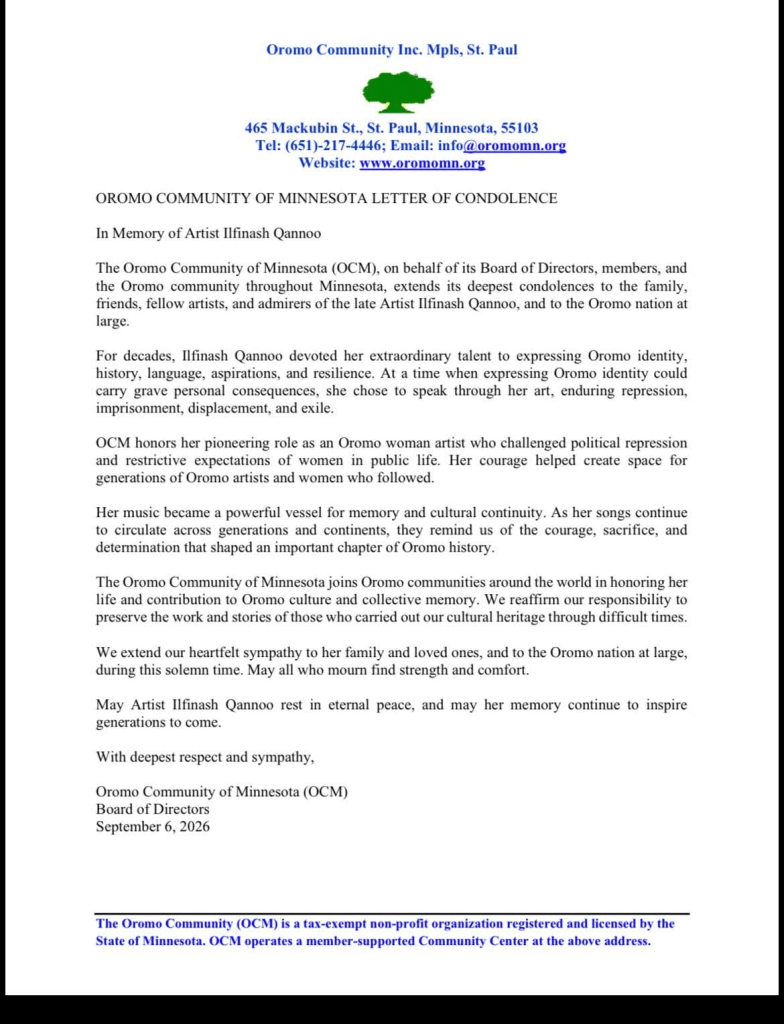
The Oromo Community of Minnesota (OCM), one of the largest Oromo diaspora organizations in the United States, has issued a formal letter of condolence honoring the life and legacy of Artist Ilfinash Qannoo, whose passing marks the end of an era for Oromo arts and cultural expression.
In a statement released today, the organization paid tribute to an artist who, for decades, transformed personal sacrifice into an enduring cultural treasure, becoming a symbol of resistance, resilience, and identity for Oromo people worldwide.
A Life Dedicated to Cultural Preservation
Ilfinash Qannoo was more than a musician or performer. She was a cultural archivist, a linguistic guardian, and a fearless voice who understood that art could carry the weight of an entire people’s history. Through her extraordinary talent, she devoted her life to expressing Oromo identity, history, language, aspirations, and resilience—often at great personal cost.
The OCM statement emphasized that during decades when openly expressing Oromo identity could carry grave personal consequences, Ilfinash chose to speak through her art. She endured repression, imprisonment, displacement, and exile, yet her creative spirit remained unbroken. Her music and performances became acts of quiet defiance in the face of political oppression, preserving the Oromo language and traditions at a time when they were systematically marginalized.
A Pioneer for Oromo Women in Public Life
Perhaps one of her most significant legacies was her role as a trailblazer for Oromo women. At a time when restrictive expectations limited women’s participation in public life, Ilfinash challenged both political repression and social conventions.
The OCM honored her as a “pioneering role as an Oromo woman artist who challenged political repression and restrictive expectations of women in public life.” Her courage helped create space for generations of Oromo artists and women who followed, proving that creative expression and political consciousness could go hand in hand.
“Her courage helped create space for generations of Oromo artists and women who followed,” the OCM board wrote, acknowledging that her influence extended far beyond music into the very fabric of Oromo social and political life.
Music as Memory and Resistance
Ilfinash’s music became a powerful vessel for memory and cultural continuity. Her songs, which continue to circulate across generations and continents, have served as an informal archive of Oromo history, preserving stories, struggles, and triumphs that might otherwise have been lost.
The OCM statement noted that her music “reminds us of the courage, sacrifice, and determination that shaped an important chapter of Oromo history.” For Oromo communities scattered across the globe—from the Horn of Africa to the diaspora centers of North America, Europe, and Australia—her voice became a thread connecting them to their homeland and heritage.
A Global Mourning
The Minnesota Oromo community, which numbers in the thousands, joins Oromo communities around the world in mourning this profound loss. The OCM pledged to continue preserving her work and the stories of those “who carried our cultural heritage through difficult times.”
“We reaffirm our responsibility to preserve the work and stories of those who carried our cultural heritage through difficult times,” the statement reads, acknowledging that the preservation of Oromo culture rests on the shoulders of those who, like Ilfinash, sacrificed their safety and comfort for the sake of collective memory.
Calls for Celebration Amid Grief
The OCM’s formal letter follows a growing chorus within the Oromo diaspora and homeland alike, urging that Ilfinash’s life be celebrated as much as her death is mourned. Many have echoed sentiments expressed in recent weeks that her legacy is one of joy, defiance, and triumph—not merely sorrow.
“May Artist Ilfinash Qannoo rest in eternal peace, and may her memory continue to inspire generations to come,” the OCM concluded in their letter, striking a tone of solemn respect mixed with hope for the future.
A Legacy That Endures
Ilfinash Qannoo’s death represents a significant loss for the Oromo cultural landscape. Yet her life’s work ensures that her voice will continue to resonate through the generations she inspired and the communities she helped to empower.
As the Oromo diaspora reflects on her contributions, her songs will undoubtedly continue to play in homes, community gatherings, and cultural events—each note carrying the defiance, resilience, and pride of a people whose identity she devoted her life to preserving.
The Oromo Community of Minnesota’s full letter of condolence can be accessed through the organization’s official channels. The Oromo community across Minnesota and beyond extends its deepest sympathy to her family, friends, fellow artists, admirers, and the Oromo nation at large.
With deepest respect and sympathy,
Oromo Community of Minnesota (OCM)
Board of Directors
September 6, 2026
#IlfinashQannoo #OromoArt #CulturalResilience #OromoDiaspora #MinnesotaOromo #LegacyOfResistance
Eulogy: Ilfinesh Qannoo (1962-2026): A Voice That Has Nurtured Generations
By Dhabessa Wakjira
We gather today with heavy hearts to mourn the passing of Ilfinash Qannoo, and yet, even in our grief, we find ourselves compelled to celebrate a life so extraordinary that mourning alone cannot contain it. Ilfinash Qannoo was not simply a singer. She was one of the most iconic, courageous, and influential Oromo women of her generation—a woman whose life was woven inseparably into the story of her people’s long struggle for dignity, identity, justice, and self-determination.
To speak of Ilfinash is to speak of commitment that never wavered, sacrifice that was never counted as loss, courage that never asked permission, and a devotion to the Oromo cause that outlasted every hardship placed before it. Hers was a life of artistic achievement, yes, but far more than that, it was a life offered, again and again, in service of something larger than herself.
The First Note of a Lifelong Song
From the moment she first stepped forward as a member of Wollega Kinet Guad, Ilfinash set out on a path from which she would never truly depart. That early beginning was not a stepping stone toward personal fame; it was the first note of a lifelong song dedicated to her people. From those early days until her final ones, her commitment to the Oromo cause never dimmed, never bent, and never went silent. Through her music, her voice, her courage, and the example of her own life, she awakened, inspired, and nurtured generation after generation of Oromo youth.
We must remember the times in which she sang. There were years when simply expressing Oromo identity, Oromo aspiration, Oromo pride required extraordinary courage—when a melody could be an act of defiance, and a lyric could carry the weight of a people’s unspoken longing. In those years, Ilfinash did not shrink from the risk. She took the gift she had been given—her voice—and turned it into an instrument of inspiration and resistance. She sang not because it was safe, but because it was necessary.
More Than an Artist
It would be a disservice to Ilfinash Qannoo’s memory to say only that she sang songs. She did something far greater: she gave voice to the hopes, the pain, the aspirations, the courage, and the unbending determination of an entire people. When her voice rose, it did not simply fill a room or a stage; it entered the hearts of Oromo youth across generations, and in doing so, it steadied them. It reminded them who they were. It gave them the strength to stand for their identity, their dignity, and their future, even when standing was costly.
In this way, she became something more than an artist. She became a symbol, a living demonstration that a single life, fully given, could serve a cause greater than itself. She poured out her talent, her energy, her courage, her voice, and ultimately her life for the Oromo people, one of the great nations of the Horn of Africa. In doing so, she showed us all that an artist can be far more than an entertainer. An artist can be a teacher. An artist can be an inspiration. An artist can become the guardian of a people’s collective struggle, and the voice through which a people’s aspirations are carried forward.
The Song That Echoes Through Generations
Among the many songs she gave to her people, one holds a place apart in the hearts of generations of Oromo people: “WBO Koo Maaloo Ree.” Its melody has traveled from parent to child, from one generation to the next, carrying memories of struggle, sacrifice, hope, and unshaken determination. It is no longer simply a song. It has become part of the emotional and historical memory of a people, woven into their story so deeply that it will continue to echo in the hearts of Oromo people yet to be born.
Unwavering Conviction
Perhaps the greatest lesson of Ilfinash Qannoo’s life was her firm and unwavering stand on the Oromo cause. She did not abandon her convictions when times grew difficult. She did not retreat when retreat would have been easier, safer, more comfortable. Her courage and her steadfastness stand today as an example for generations still to come, and they teach us something essential: that genuine commitment is not proven in moments of comfort, but in moments of difficulty and uncertainty. It is easy to declare loyalty when nothing is being asked of you. Ilfinash showed us what it means to hold to your convictions when everything is being asked of you.
A Bond Forged in Ambo
Ilfinash’s connection to Oromo youth was profound, and it was personal. She did not stand apart from them, observing from a distance; she stood among them, encouraged them, and shared directly in their hopes and in their struggles. Her time alongside Oromo youth in the forests and surrounding areas of Ambo forged a bond of deep mutual respect and affection, one that shaped the rest of her life. The love and the respect that the people of Ambo gave her in return were immense, and that relationship became one of the most meaningful of her entire life.
So deep was her attachment to Ambo and its people that she is remembered for a wish that reveals the depth of her heart: that if she should die, she wished to be laid to rest in Ambo, or, if that could not be, then even beneath the ice of Norway. These are not the words of someone who loved a place casually. They are the words of a woman whose experiences, whose memories, and whose sense of belonging were bound up entirely with the people who had walked beside her.
A Legacy That Will Never Die
Today, as we mourn Ilfinash Qannoo, we are also called to celebrate an extraordinary life fully lived. We mourn the loss of a great artist. But we remember, and will go on remembering, a woman whose legacy reaches far beyond music alone. We remember a courageous Oromo woman who used her voice when silence would have been easier. We remember a woman who remained committed when retreat was possible. We remember a woman who inspired generations, not only through the songs she sang, but through the example of the life she lived.
Her physical voice has now gone silent. But the voice she gave to her people—the voice of hope, of resistance, of identity, of belonging—will never disappear. Her songs will continue to be sung, in homes, at gatherings, in the quiet moments when a people needs reminding of who they are. Her courage will continue to inspire those who face their own difficult and uncertain times. Her commitment will continue to be remembered as a standard against which devotion to a cause is measured. And her name will remain written into the history and the collective memory of the Oromo people, for as long as that memory is kept.
—
Ilfinash Qannoo has departed from us. But her legacy remains.
She sang for her people. She stood with her people. She gave her voice to her people.
And her voice will live on with her people, from generation to generation.
Her voice will never die. Her legacy will never be forgotten.
Rest in peace, Ilfinash Qannoo.
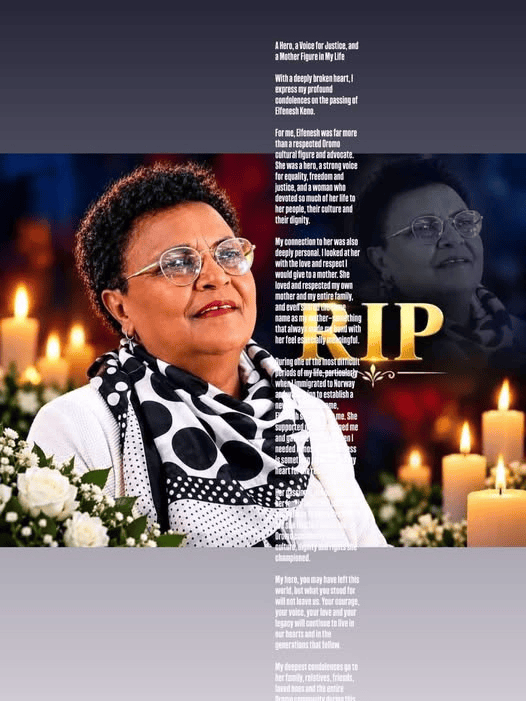

A Nation Mourns: The Passing of a Giant—Adde Ilfinesh Qannoo (1962-2026)
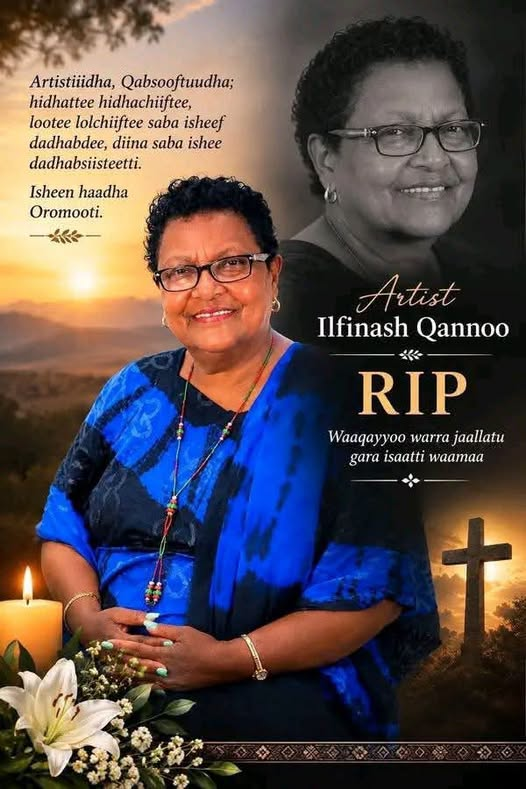
A Voice of Freedom Falls Silent, But Her Legacy Echoes Eternally
Finfinne, Oromia — Our nation lost a giant today. Adde Ilfinesh Qannoo, the renowned artist whose voice became the heartbeat of a people’s struggle, has passed from this world, leaving behind a legacy etched in the soul of the Oromo nation. Her departure marks the end of an era, but her spirit, her music, and her unyielding commitment to the Qabsoo Bilisummaa Oromoo (Oromo Liberation Struggle) will resonate for generations to come.
An Indelible Mark on History
Ilfinesh Qannoo was more than an artist; she was a monument to resilience, a symbol of identity, and a mother to a movement. Through her music, she gave voice to the joys, sorrows, and aspirations of her people, becoming a living archive of their history. Her songs, imbued with the deep cultural motifs of the Oromo, served as both a comfort and a call to action, reminding her listeners of their dignity, their heritage, and their unalienable right to freedom.
Her contributions to the Qabsoo Bilisummaa Oromoo were not merely artistic but deeply personal and sacrificial. She understood that the struggle for liberation was fought not only in the forests and on the battlefields but also in the hearts and minds of the people. Through her music, she fortified the spirit of the movement, offering hope in moments of despair and courage in the face of oppression.
A Faithful and Loyal Contributor
Throughout her life, Ilfinesh Qannoo remained steadfast in her dedication to the Oromo cause. She was a loyal contributor to the liberation struggle, using her platform to amplify the voices of the marginalized and to challenge the systems of injustice that sought to silence her people. Her courage in the face of censorship, persecution, and hardship stands as a testament to her character and her unwavering commitment to justice.
Even when her body grew frail and her steps grew slow, her spirit remained an unyielding force. Her presence at gatherings of the Oromo Liberation Front (OLF) and other movement events was a source of inspiration and moral clarity. She was the living embodiment of the Oromo proverb “Ilkaan socho’e buqqa’uun isaa hin oolamu”—a seed that moves does not rot. She was that moving seed, ensuring that the dream of liberation never decayed.
A Legacy That Lives Forever
Though her physical journey has ended, the essence of Ilfinesh Qannoo—her music, her symbolism, her love—is a permanent inheritance for the Oromo people. Her life continues to resonate, to inspire, and to fortify those who hold her memory dear. She may have left this world, but her voice remains, echoing in the songs that will be sung, the stories that will be told, and the hearts that will never forget.
Her legacy exists at a powerful intersection: the intimate space of a family mourning a beloved matriarch, and the public sphere honoring an artist who channeled a people’s soul. As flowers are laid and her songs are played anew, the Oromo nation is not just saying goodbye. They are affirming that the struggle she gave voice to continues, the identity she symbolized remains unbroken, and the love she embodied is eternal.
A Message of Condolence from Advocacy for Oromia (A4O)
The Advocacy for Oromia (A4O) joins the global Oromo community in mourning this profound loss. In a statement released today, the organization extended its heartfelt condolences to Ilfinesh Qannoo’s family and the entire Oromo nation:
“Our nation lost a giant today. Adde Ilfineesh Qannoo, a renowned artist and loyal contributor to the Qabsoo Bilisummaa Oromoo, has left an indelible mark on our people and our history. Her legacy will live on forever. The Advocacy for Oromia (A4O) extends its sincere condolences to her family and the entire Oromo nation. May she rest in peace, and may her memory continue to inspire us all.”
An Eternal Prayer
And so, we offer our unending prayer: that Adde Ilfinesh Qannoo’s soul finds the eternal comfort and peace it so deeply deserves. May her spirit rest gently, knowing that her life was a masterpiece of love, labor, and liberation. For her family, her friends, and her people, we wish the warmth of her memory, the strength of her example, and the profound solace that comes from knowing her legacy is in the most capable hands: the hands of a people who will never forget.
Rest in peace, Adde Ilfinesh Qannoo. Your struggle is over, but your victory is assured in the hearts of those you loved and who loved you in return.
—
“A name is above the grave, and your name, Ilfinesh Qannoo, is etched in gold in the annals of Oromo history.”
—
This tribute is offered by Advocacy for Oromia (A4O) and the global Oromo community in loving memory of Adde Ilfinesh Qannoo.

Oromo Literacy Day: Celebrating the Power of Stories Held in Oromia
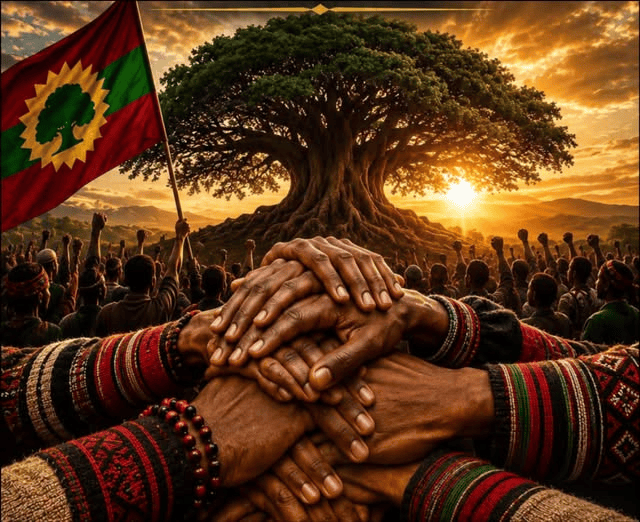
By Maatii Sabaa
—
Every year, Oromo Literacy Day is more than a date on a calendar—it’s a living tribute to the resilience of a people and their language. It celebrates Afaan Oromoo, a language that carries the weight of history, the songs of ancestors, and the dreams of a nation. But how did the Oromo people arrive at this moment, where their stories can finally be written, read, and shared with the world? The answer lies in a long and courageous journey toward literacy.
A Written History of Resistance and Revival
The story of Oromo literacy is one of relentless struggle. The Oromo people have long possessed a rich oral tradition, but for much of Ethiopia’s modern history, their language was marginalized. It was a household language—spoken, sung, and whispered—but rarely seen on paper . The first major push to change this came in the late 19th and early 20th centuries.
A pivotal figure was Onesimos Nasib, an Oromo freed from slavery who trained as a teacher in Sweden. Upon his return, he and his colleague Aster Ganno worked with an almost missionary zeal to promote literacy in Afaan Oromoo. Onesimos created the Oromo Reader, a book filled with stories that were “short and funny” and designed to be both accessible and engaging. His aim was not just religious instruction but to cultivate a love for reading itself . He would famously ask young people he met, “Can you read and write?” and persuade them of its immense value .
However, their work met fierce opposition from the imperial government. In the mid-1940s, the Haile Selassie regime placed a total ban on Oromo literature . The language was effectively erased from public life, becoming a symbol of defiance.
The Quest for the Perfect Script
The suppression only intensified the desire for a written Oromo. The question of how to write the language became a central point of debate. Early works, like those of Onesimos, used the Ge’ez alphabet. But many activists and intellectuals believed this script was inadequate for Oromo sounds, failing to represent vowel length and consonant gemination—features that change a word’s meaning .
In the 1960s, the movement for a new script gained momentum. At Addis Ababa University, Oromo students began printing the first newspaper in Afaan Oromoo, Kana Beektaa? (“Do you know this?”), in 1968. The paper was a bold act of cultural preservation, collecting “Oromo songs, proverbs, war and grievance chants, Oromo prophecies, nuptials, baby lullabies, and others” . This was more than journalism—it was a declaration of identity. The paper was short-lived, forced to cease publication in 1971 .
Simultaneously, Oromo students in Europe were rigorously debating the script question. In 1968, a study group led by figures like Haile Fidaa concluded that a modified Latin alphabet was the most practical and linguistically sound choice for Oromo . This decision was not just technical; it was a political act of resistance, rejecting a script associated with the establishment.
A New Dawn: The Adoption of Qubee
After years of struggle, the fall of the military Derg regime in 1991 brought a turning point. The new Ethiopian constitution granted greater autonomy to regional states. Oromo was finally made the official language of the Oromia Regional State .
The Latin-based alphabet, known as Qubee, was officially adopted for writing Oromo . This was a victory decades in the making. The script’s simplicity and adaptability to modern technology made it a practical choice for a language finally stepping into the digital age. As one study noted, Qubee “enabled the language to grow faster as the script can be learned easily” .
However, the adoption was not without controversy. For some, the Ethiopic script held deep cultural significance, and the switch to a Latin alphabet was seen as an emotional and political break . Yet for the majority, Qubee represented liberation.
The Stories That Endure
The adoption of Qubee unlocked a literary explosion. Oromo youth and intellectuals began producing “newspapers, magazines, novels, translations and plays that describe their nation and their state in Afaan Oromoo” . Stories once confined to memory were now printed, preserved, and shared.
The journey has also involved recovering alternative scripts. A fascinating chapter is the story of Sheek Bakrii Saphaloo, a scholar who created a unique indigenous Oromo script. He developed an abugida, a writing system where each base glyph has multiple vocalic components, making it distinct from both the Ge’ez and Latin alphabets . This script has been used for over 70 years and is now being considered for digital preservation and inclusion in Unicode, highlighting the deep connection between literacy and cultural identity .
Why Oromo Literacy Day Matters
Oromo Literacy Day is a celebration of this entire journey. It honors the tenacity of Onesimos Nasib, the courage of student activists, and the vision of scholars who fought to give their language a written form. It is a day to recognize that literacy is not just about reading and writing; it is about power, identity, and survival.
The stories held in Oromia are now written down for the world to see. This day celebrates their liberation and their enduring power.
—
“The stories, with the exception of a couple of martyr stories, are short and funny, and the subjects vary in order to attract.” — Onesimos Nasib on the Oromo Reader
—
 Maatii Sabaa is a writer and advocate of the Oromo stories.





 Advocacy for Oromia