Category Archives: Promotion

From Guerrilla Fighters to Election Contenders: Inside the OLF’s Historic Political Transition
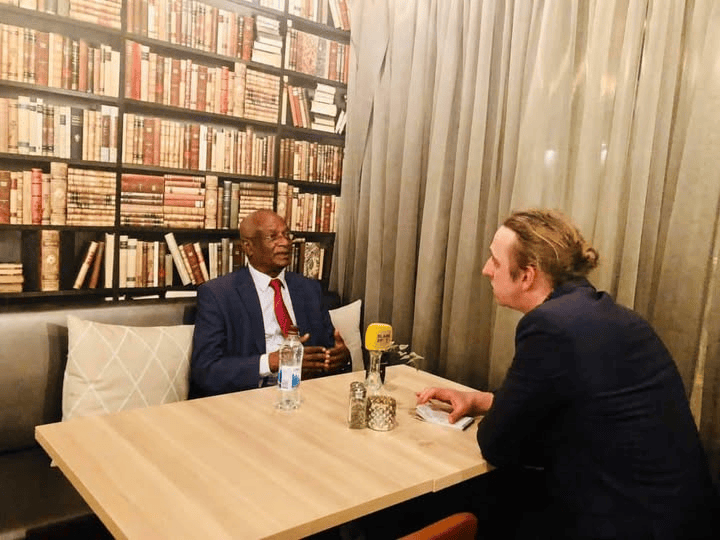
For over four decades, the Oromo Liberation Front (OLF) waged an armed struggle from the forests of southern Ethiopia. Today, its chairman Dawud Ibsa Ayana is preparing for a different kind of battle — one fought at polling stations rather than on frontlines. In a rare interview with Swedish journalist Martin Schibbye of The Blankspot, the OLF leader opens up about the challenges, compromises, and cautious hopes shaping his movement’s unprecedented entry into electoral politics.
A Movement Transformed
The guerrilla group was allowed to return to Ethiopia in 2018 as part of newly-appointed Prime Minister Abiy Ahmed’s sweeping reforms. After decades of operating as an underground liberation army, the OLF now finds itself navigating the complex terrain of formal politics — registering as a political party, forming alliances, and preparing to contest elections it believes it can win.
The interview takes place at Scandic Hotel in Skärholmen, Sweden, where a wedding party’s music competes with the conversation. Dawud Ibsa Ayana, settling into a room with bookish wallpaper, appears eager to speak. For years, journalists had to venture into guerrilla-controlled territories to understand OLF’s positions — a reality that meant the movement’s struggle was either misunderstood or entirely unknown to the outside world.
A Personal History Forged in Struggle
Dawud Ibsa Ayana’s story is inseparable from the organization he leads. He studied at Haile Selassie I University in the 1970s, where he became involved in the student movement and eventually rose to its leadership. In the late 1970s, he was elected to the OLF Central Committee and imprisoned shortly afterward by the Ethiopian regime.
After his release, he fled to Sudan, combining statistics studies with military training. Back in Ethiopia, he led the OLF platoon that initiated armed struggle in Welega province. Arrested again, he was poisoned, tortured, and imprisoned without trial until 1986, when he rejoined the rebel army and resumed his work on the Central Committee.
Throughout interviews from that era, he remained firmly convinced that once free elections were permitted, the OLF would win and form the backbone of Ethiopia’s next government.
From Armed Struggle to Political Arena
The path to electoral politics has not been straightforward. “A few years ago I had not thought that we would prepare for such a situation,” Dawud admits. “What a choice!”
The Berlin Wall fell. The Soviet Union collapsed. But in the wooded parts of southern Ethiopia, Dawud and his comrades fought a war that, for many rebels, was older than themselves.
The historical context is profound. The Ethiopian emperor of the 20th century, from the Amhara people group, had colonized the Oromo people’s wealthy home territories during the same era European powers colonized the rest of Africa. While other countries eventually gained independence, the Oromo people — one of the largest ethnic groups in Africa — did not.
The popular revolution that swept away the Mengistu dictatorship in 1991 also failed to resolve the region’s fundamental conflict with central power.
The Decision to “Play the Game”
When Ethiopian Prime Minister Abiy Ahmed received the Nobel Peace Prize in 2019, he was rewarded primarily for peace with Eritrea. More forgotten, but perhaps more important for Ethiopia’s future, was peace with local rebel groups — including the OLF.
Dawud believes the TPLF survived because the regime understood that growing protests were directed at their own party and that they had to “reform” the country to continue governing.
“I put ‘reforms’ in quotes because they were forced to release prisoners. It was nothing they wanted to do. There was no amnesty,” he says. “We are not completely happy about the situation, but we decided to ‘play the game.'”
Was it a difficult decision? “It was a tough decision absolutely, but we had no choice. The TPLF created confusion and the outside world thought this was a genuine change, so we were then forced to ‘play the game’ because the government said they would invite exile organizations and remove the stamp of terror. If we had not taken the chance, we would have been branded as those who ‘destroyed the peace’ or ‘nihilists.'”
The Unresolved Question of the Disappeared
When the OLF and Ethiopian government settled down after decades of armed conflict, one major stumbling block was the OLF members who had disappeared over the years.
“We presented a list of 300-400 names and wanted answers: are these people living or are they dead?”
They did not receive a straight answer, but they agreed that criminals responsible for human rights violations on both sides should be tried. The OLF suggested a commission be appointed. The idea was not rejected but was postponed until after the election.
“If the choice goes well, this will be a priority for us,” Dawud says. “Whether we agree on a South African reconciliation model or a personal arrangement remains to be seen.”
Obstacles and Harassment
The movement’s problematic relationship with state powers did not end when they laid down their weapons. Even registering their party was delayed — it took over a year after the peace agreement to formalize.
“Since we brought home our soldiers from Eritrea in September 2018, we have had a tough time. The government has obstructed and hampered our work, they have closed down our local offices which we have opened and over 20,000 of our members have been imprisoned for short or longer periods.”
The areas where the movement has encountered most difficulties are in Ambo and the southwestern parts of the Oromo region.
“Here are the large garrisons of the Ethiopian army and in these, several members have been detained for months without a trial, often under torture-like conditions. Not only former soldiers, but also farmers, young people and teachers have been taken from the entire Oromo region to these places.”
He believes the purpose is to weaken the party ahead of the August 2020 elections.
In mid-February 2020, Amnesty International issued a report showing that 75 members of OLF had been arrested at the beginning of the new year. The human rights organization noted it was “inadvertent that opposition politicians were so close to the impending election.” Amnesty warned that what was happening was a trend break that risked undermining both the newly won organization and freedom of expression in the country.
Amnesty also noted that several local offices opened by OLF were stormed by police, and several OLF members had been killed. Journalists working for the satellite TV channel Oromia News Network (OMN) had also had their vehicles and equipment broken.
The government itself believes it is fighting the Oromo Liberation Army (OLA), an splinter group from the OLF that did not accept the peace agreement but continued the armed struggle.
Electoral Hopes and Fears
Despite the difficulties, Dawud remains confident. The OLF has formed electoral alliances with other organizations such as the Oromo Federalist Congress and the Oromo National Party.
“We are confident that we will win a majority regionally and significantly with the seats in the national parliament,” he predicts.
But the party’s concern is now about the time leading up to the election, and it is not only the OLF that is worried about developments in the region.
Dawud is concerned about how local militias and “soldiers taking orders from political parties” will act during the upcoming election movement.
“Will they continue to harass and arrest our members or will the government discipline them?” he asks.
Another test is the upcoming staffing of polling stations and the question of voters’ sympathies. During the TPLF era, many organizations that called themselves “civil society” were in fact fronts for the ruling party.
“We will closely monitor the election authority’s staffing at village level so that they recruit independent administrators and volunteers.”
If the situation continues to escalate, the question arises as to whether it is possible to hold elections at all.
“No, today it is not possible to hold free elections in the areas that are under emergency conditions and are controlled by the military’s command post,” Dawud says.
The Question of Minority Rights
When asked about activist and journalist Eskinder Nega’s claims of ethnic cleansing in the Oromo region aimed at expelling non-Oromos, Dawud is dismissive.
“It is not surprising that Eskinder exploits this and travels around the world, warning the UN that Oromo’s youth, querroos, are terrorists, but it must stand for him. But if you are going to talk about the matter: the situation of Amharas in the Oromo region he is wrong, that they would be forced to flee is nonsense.”
According to him, recent reports of attacks on civilian students are not something for which his organization has responsibility.
“OLF operated in the region for 40 years while tens of thousands of civilians from the Amharic region lived in the area, but they were not attacked by OLF. We fought against the Ethiopian army, never against the Amharas people, their houses or homes.”
He points out that in several of the region’s largest cities there have always been 100,000 Amharas and that there are also officers and generals from the Amharan region within OLF’s ranks.
“Why would any of us attack innocent young students? To say that is an attack on us.”
So in a future Oromo region, where they own a majority of the seats, will the rights of minorities be guaranteed?
“Undoubtedly! It has been black and white in our political program since 1976: OLF respects the rights of minorities. They have the right to choose and to candidate and run their own affairs in Parliament. Why after 27 years would we have changed now? We are crystal clear in this regard.”
The Path Forward
Although OLF now faces a roadmap, its struggle has always been about two things: creating political consciousness among the population and pursuing independence.
When the OLF was formed, the aim was to fight against oppression in all its forms and to give the inhabitants of the region the political confidence to stand up for themselves. The main issues were also that the region and its inhabitants had the right to self-determination and to their own country.
When the Ethiopian Constitution was written after Mengistu was overthrown in 1991, a section on the right to self-determination was enrolled. The movement chose to participate in the transitional government with the goal of creating a democratic Ethiopia and not pushing the issue of independence.
But shortly thereafter, the transitional government collapsed and OLF chose — or was forced, depending on how one looks at it — into the forest again.
So how does OLF today view the demand for an independent state?
“It was OLF’s position previously to work for it. But at present we understand that it is not something we can demand from the Ethiopian state because it is not capable of giving it to us,” Dawud replies.
Just as in 1991-1992, people have been chosen to participate in the democratization process with the goal of seeing a democratic Ethiopia.
“We have chosen to play down our own historic demand for independence and prioritized the democratization of Ethiopia as a federation, a country with several states, several nations, living in peace. We wanted to and then we want to give this a chance again.”
According to him, it is a “pragmatic move” based on the analysis that today’s Ethiopian state formation would not respect a fully independent Oromo.
“What happens in the future, it lies in the future, there are of course several Eritrea-like opportunities to jump off, if they were so rigid that they do not accept self-determination, under this Ethiopian umbrella.”
Land Reform and Economic Vision
If everything goes the way of the election, a priority issue will be land reform in the region.
“Land ownership is the central political issue for us. Land that was formerly owned by feudal lords in the region is now owned by the government and because the people do not own the land they use, they also have no control over their lives.”
The goal is a land reform where users take over ownership. But Dawud emphasizes that previous owners should be compensated.
“Such a process is complex and in order for no one to be deceived by banks or investors, we also want to set up a control authority to monitor how land is sold and bought in the region.”
Areas that are now agricultural areas may also be considered for future industrial areas.
“Industrialization will be a ‘game changer’ for the area and mean that we are moving from an agrarian economy to a more mixed one. In this upcoming development, we welcome private companies and investors, but we have a social democratic view of society and want central functions such as communications, education, infrastructure, healthcare to be taken care of by the general public.”
A Question of Acceptance
Political self-confidence is high, and despite harassment and imprisoned party members, Dawud believes they will soon be the victors of the election.
But the question he ponders a lot is whether the ruling party will hand over power.
“Will the election be peaceful? Will the result be accepted? We don’t know that yet – but we want to show the outside world that we are for peace and for free elections. Then it becomes clear who is breaking this. We have our fears that the result will not be accepted.”
The Role of International Observers
In his work on the formal elections, Dawud believes countries such as Sweden have a big role to play — both with independent election observers and knowledge. He also points out that foreign states that have supported Abiy Ahmed’s reforms have a responsibility for the process and for pushing the government so that the military stays away during the electoral movement.
“We expect that Sweden does not accept that anyone abuses power, but ensures that it becomes a free, genuine choice in which the people can choose their representatives.”
Conclusion
The OLF’s journey from armed insurgency to electoral politics represents one of the most significant political transformations in contemporary Ethiopia. Whether that transformation succeeds — and whether the movement’s hopes for democratic change are realized — remains to be seen. What is clear is that the coming months will be decisive, not only for the OLF but for the future of Ethiopia’s fragile democratic experiment.
For a movement that fought for over 40 years, the ballot box may prove to be the most challenging battlefield of all.
This article is based on an interview by Martin Schibbye, originally published by The Blankspot on February 20, 2020.

Multicultural and Multifaith Victoria: A New Independent Voice for Diverse Communities
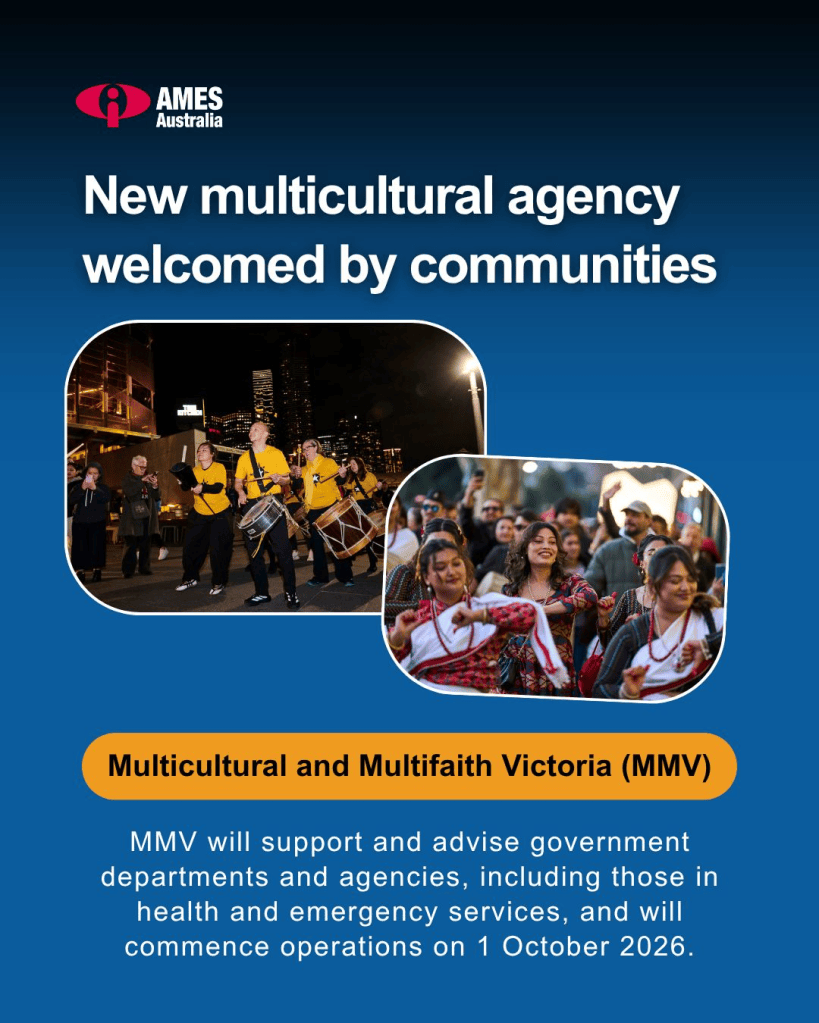
Victoria’s multicultural groups and communities have welcomed the creation of Multicultural and Multifaith Victoria, a new agency aimed at giving diverse communities a stronger voice in government, according to AMES Australia.
The government says the new agency will ensure diverse communities have an independent voice in government to influence policies and programs. Multicultural and Multifaith Victoria will support and advise government departments and agencies, including health and emergency services, and it will commence operations on 1 October 2026.
A Significant Step for Multicultural Victoria
The establishment of Multicultural and Multifaith Victoria marks a major development in how the Victorian Government engages with its diverse communities. For decades, multicultural communities have sought greater representation and a more direct channel to influence the decisions that affect their lives. This new agency is designed to be that channel.
The agency will serve as an independent body, providing advice and support to government departments and agencies across a range of portfolios. Its mandate includes ensuring that the needs and perspectives of multicultural and multifaith communities are considered in the development and delivery of policies and programs — particularly in critical areas such as health and emergency services.
What the Agency Will Do
Multicultural and Multifaith Victoria is expected to play a central role in:
- Advising government on policies and programs affecting diverse communities
- Ensuring independent representation for multicultural and multifaith voices within government
- Supporting government departments and agencies, including health and emergency services, to better serve diverse communities
- Strengthening community engagement and participation in civic life
By embedding these functions within a dedicated agency, the government aims to move beyond consultation toward genuine partnership with the communities it serves.
Commencing 1 October 2026
The agency will officially commence operations on 1 October 2026, a date that marks the beginning of a new chapter in Victoria’s approach to multicultural affairs. Communities and stakeholders are encouraged to stay informed as the agency takes shape and begins its work.
A Welcome Development
The creation of Multicultural and Multifaith Victoria has been welcomed by Victoria’s multicultural groups and communities, who see it as a positive step toward greater inclusion and representation. AMES Australia, a longstanding advocate for multicultural communities, has highlighted the significance of this development.
For communities that have long called for a stronger voice in government, the new agency represents both recognition and opportunity — a chance to shape the policies and programs that impact their daily lives.
Looking Ahead
As Victoria continues to grow as one of the world’s most diverse societies, the establishment of Multicultural and Multifaith Victoria signals a commitment to ensuring that diversity is not only celebrated but actively represented in the corridors of power.
The agency’s success will ultimately be measured by how well it amplifies community voices, influences meaningful change, and helps build a Victoria where every community feels seen, heard, and valued.
To read more about Multicultural and Multifaith Victoria, visit the link shared by AMES Australia.
#AMES #AMESAustralia #Victoria #MMV #VictorianGovernment

Irrecha Australia: Celebrating Culture, Community and Gratitude Across a Continent
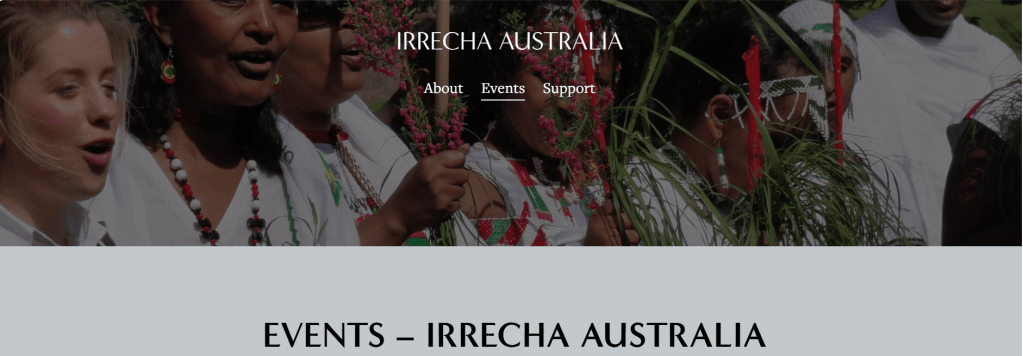
What began as small community gatherings among Oromo families in Australia has blossomed into vibrant national festivals that now draw together elders, youth, and friends from across multicultural Australia — all in the spirit of thanksgiving.
At the heart of this growing movement is Irrecha Australia, a registered non-profit organization dedicated to honoring the Oromo people’s cherished thanksgiving tradition. Rooted in a deep reverence for nature, gratitude, and unity, the celebration has traveled thousands of kilometers from East Africa to find new life on Australian soil.
A Tradition of Thanksgiving Carried Across Continents
Irrecha is one of the most significant cultural and spiritual traditions of the Oromo people, celebrated as an expression of gratitude for nature’s bounty, peace, and community well-being. For Oromo Australians, the festival serves as both a connection to their ancestral homeland and a living, breathing practice passed down through generations.
What was once observed in modest gatherings has expanded into large-scale national festivals, reflecting the growth and vitality of the Oromo diaspora in Australia. These events have become cherished occasions where culture, faith, and community intersect.
Building an Inclusive Home for Culture
As a registered non-profit, Irrecha Australia has committed itself to preserving and promoting Oromo cultural heritage while creating inclusive spaces for learning and celebration. The organization places particular emphasis on empowering young people, equipping the next generation to carry traditions forward with pride and confidence.
Through its work, Irrecha Australia ensures that Oromo culture is not merely remembered but actively practiced, shared, and celebrated — in classrooms, community halls, and festival grounds alike.
A Vision for Multicultural Australia
The organization’s vision extends beyond the Oromo community itself. Irrecha Australia envisions a nation where Oromo culture thrives as an integral part of Australia’s diverse identity — a culture that enriches the broader society and contributes to the country’s multicultural fabric.
“Through festivals, education, and community initiatives, we strengthen connections, honour our heritage, and celebrate a way of life rooted in gratitude, resilience, and unity,” the organization states.
Gratitude, Resilience, and Unity
At a time when cultural preservation and community cohesion are increasingly valued, Irrecha Australia’s mission resonates with a wider Australian audience. Its festivals serve as a bridge — connecting generations, welcoming neighbors of all backgrounds, and demonstrating how heritage can flourish in a new home while remaining faithful to its roots.
For Oromo Australians and their friends across the country, Irrecha is more than a festival. It is a statement of identity, a celebration of survival and resilience, and an invitation to share in a tradition built on gratitude.
To learn more about Irrecha Australia’s festivals, educational initiatives, and community programs, follow the organization’s official channels or contact its team directly. Irrecha Australia

Addis Standard Wins NED Democracy Award 2026

WASHINGTON — The National Endowment for Democracy (NED) honored the Addis Standard, Ethiopia’s leading independent news outlet, with its 2026 Democracy Award for Freedom of the Press at a ceremony held Wednesday evening at George Washington’s Mount Vernon estate.
The award, presented as part of NED’s commemoration of America’s 250th anniversary, recognized the publication’s founder and editor-in-chief, Tsedale Lemma, for a career defined by telling the stories of overlooked communities, reporting on abuses others would prefer hidden, and preserving evidence of crimes that could one day lead to accountability.
“When conflict and repression made independent reporting both dangerous and difficult, Addis Standard continued to pursue the truth—bringing vital coverage from Ethiopia to readers at home and around the world,” NED said in its citation .
National Democratic Institute Board Member Alice Albright presented the award to Lemma on behalf of the newsroom, honoring journalists who, in NED’s words, “give citizens the trusted information they need to understand their country and help shape its future” .
The recognition comes after a year of intensifying pressure on the outlet. In April 2025, Ethiopian police raided its office and the home of a senior staff member, briefly detaining three managers and confiscating electronic equipment. In February 2026, the Ethiopian Media Authority revoked the publication’s online media registration certificate, citing “repeated violations” of media laws. The publisher, JAKENN Publishing PLC, has contested the decision as unlawful, and the case remains before the Federal High Court.

Lemma founded Addis Standard in February 2011 as a monthly magazine, building it into one of the most influential independent voices in Ethiopian media history . She began her journalism career in 2000, working as a senior reporter at the now-defunct Addis Tribune before leaving the field in 2005 amid post-election turmoil to serve as a communications and political advisor at the Israeli Embassy in Addis Ababa. She returned to journalism in 2011 with the launch of Addis Standard .
In 2014, The Africa Report named her one of the continent’s 50 Rising Stars .
NED’s Democracy Award is presented annually to individuals and organizations advancing democratic freedoms in the face of repression. Other 2026 recipients included the Syrian Center for Media and Freedom of Expression, Russian anti-war clergy initiative Friede Allen, Burma’s Spring Revolution organizers, and imprisoned Cuban dissidents Félix Navarro, Luis Manuel Otero Alcántara, and Maykel Castillo Pérez .
“The yearning for freedom that launched our nation 250 years ago remains one of the most powerful forces in the world today,” said NED Board Chairman Peter Roskam. “This year’s honorees embody the courage and persistence required to defend those rights in their own communities” .

Birraa: The Oromo Season of Hope, Renewal, and Prosperity

In Oromo culture, Birraa is more than a season—it is a symbol of hope, renewal, and prosperity. It is a time when the land awakens, communities gather, and hearts are filled with optimism for what lies ahead.
As the rains ease and the fields turn green, Oromos across the homeland and the diaspora are welcoming Birraa — the season of renewal and abundance. It is a time deeply rooted in Oromo tradition, culture, and spirituality, marking the transition from the rainy season to a period of growth, flowering, and new beginnings.
A Season Rooted in Tradition
For generations, Birraa has held a special place in Oromo life. It is the season when the land is at its most fertile, when crops begin to flourish, and when communities come together in celebration of nature’s bounty. It is a time of hope—a reminder that after every rainy season, the sun returns, and with it, new life.
In Oromo culture, Birraa represents:
Hope – The promise of a brighter tomorrow and renewed possibilities.
Renewal – The awakening of nature and the human spirit alike.
Prosperity – The abundance that follows patience, hard work, and faith.
“Baga Birraan Isiniif Barihe!”
This beautiful Oromo greeting captures the essence of the season:
“Baga Birraan isiniif barihe!”
It is a wish that the Birraa season may dawn brightly upon you—bringing hope, blessings, and prosperity. It is a phrase exchanged among family, friends, and neighbours, carrying with it the warmth and generosity that define Oromo culture.
A Time of Community and Connection
Birraa is not only a celebration of nature—it is a celebration of community. Families gather, stories are shared, and traditions are passed down from generation to generation. It is a time to strengthen bonds, express gratitude, and look forward together.
For Oromos in the diaspora, Birraa is also a moment of connection to the homeland—a reminder of the land, the people, and the culture that shaped them, no matter how far they may be from home.
Celebrating Birraa Around the World
From the highlands of Oromia to cities across Australia and beyond, Oromos are marking the season with joy and pride. Whether through gatherings, cultural performances, or simple acts of sharing, the spirit of Birraa transcends borders and unites Oromos wherever they are.
A Message of Hope for All
In a world often marked by challenges and uncertainty, Birraa offers a powerful message: that hope endures, that renewal is always possible, and that prosperity follows those who persevere.
May this Birraa season bring blessings to all Oromos and to all who celebrate the beauty of nature’s cycles.
Happy Birraa season!
Baga Birraan isiniif barihe!

A Rare Calendar Alignment: Victoria’s Jewish and Ethiopian Communities Welcome the New Year Together

In a remarkable moment of cultural convergence, two of Victoria’s vibrant communities are celebrating their respective new years on the same day—a rare calendar alignment that speaks to the rich tapestry of faith and culture that defines the state.
The Ethnic Communities’ Council of Victoria (ECCV) has marked the occasion with a message of unity and celebration, extending warm wishes to Jewish communities observing Rosh Hashanah and Ethiopian communities celebrating Enkutatash.
The alignment of these two significant cultural and religious milestones is a rare occurrence—one that offers a powerful reminder of the diversity that makes Victoria one of the most multicultural places in the world.
Rosh Hashanah: A Time of Reflection and Renewal
For Jewish communities, Rosh Hashanah—the Jewish New Year—began at sunset and is a sacred time of reflection, repentance, and hope. Families gather to hear the sounding of the shofar, share festive meals, and dip apples in honey to symbolize the wish for a sweet year ahead.
“Shana Tova U’Metuka” — Have a good and sweet year — is the traditional greeting exchanged among Jewish families and friends during this holy period.
Enkutatash: A Celebration of Renewal and Hope
For Ethiopian communities, today marks Enkutatash, the Ethiopian New Year. Falling at the end of the rainy season, Enkutatash—which means “gift of jewels”—is a time of joy, family gatherings, and the vibrant blooming of the yellow daisy, adey abeba, which carpets the Ethiopian highlands.
“Melkam Addis Amet” — Happy New Year — is the greeting shared among Ethiopian families as they welcome a new year with hope, unity, and celebration.
A Victoria of Many Cultures and Faiths
The ECCV’s statement captures the spirit of the moment:
“We are proud to live in a Victoria that is home to so many diverse cultures and faiths, and wish everyone celebrating a happy, healthy and peaceful new year.”
This rare calendar alignment is a testament to the strength of Victoria’s multicultural society—a place where diverse communities not only coexist but celebrate together, enriching one another’s lives and the life of the state as a whole.
Celebrating Together
As Jewish and Ethiopian families across Victoria gather with loved ones tonight, they do so not only as separate communities but as part of a shared Victorian story—one of migration, resilience, faith, and the enduring power of culture.
The ECCV’s message serves as a reminder that in celebrating our differences, we strengthen our common bonds. In honouring each other’s traditions, we build a more inclusive and harmonious society.
Warm Wishes to All
To all those celebrating today:
Shana Tova U’Metuka — May your year be good and sweet.
Melkam Addis Amet — May your new year be filled with joy and peace.
May this rare moment of alignment bring blessings to all Victorians, regardless of faith or background. And may the year ahead be one of health, happiness, and harmony for everyone.

Rosh Hashanah: Victorian Jewish Families Gather to Welcome a Sweet New Year

As the sun sets this evening, Jewish families across Victoria will gather around their tables to celebrate Rosh Hashanah, the Jewish New Year—a sacred time of reflection, renewal, and hope for the year ahead.
The sounding of the shofar, the dipping of apples in honey, and the sharing of festive meals will mark the beginning of the Jewish year 5787, a period of deep spiritual significance for Jewish communities in Victoria and around the world.
Rosh Hashanah, which literally means “head of the year,” is a time when Jewish families come together to reflect on the past year, seek forgiveness, and commit to renewal in the year to come. It is a celebration that blends joy with introspection—a moment to consider one’s actions, strengthen bonds with community and faith, and look forward with hope.
A Time of Reflection and Renewal
The traditions of Rosh Hashanah are rich with symbolism. The shofar—a ram’s horn—is blown in synagogues, its haunting sound calling worshippers to awaken their souls and return to what matters most. Sweet foods, particularly apples dipped in honey and round challah bread, symbolize the wish for a sweet and complete year ahead. The pomegranate, with its many seeds, represents the hope for a year filled with good deeds and blessings.
For Jewish families in Victoria, this is also a time of community—a moment to gather with loved ones, welcome guests, and reaffirm the values that have sustained the Jewish people for millennia.
Celebrating the Jewish Community’s Enduring Contribution
Victoria has long been enriched by the presence and contributions of its Jewish community. From business and the arts to education, medicine, philanthropy, and public service, Jewish Victorians have helped shape the state’s cultural, economic, and social fabric for generations.
Their enduring contributions—built on a foundation of faith, resilience, and a deep commitment to community—deserve recognition and celebration, not only during Rosh Hashanah but throughout the year.
Wishing the Community a Sweet New Year
As Jewish families across Victoria prepare to usher in the new year, we extend our warmest wishes to the entire Jewish community.
May this Rosh Hashanah be a time of peace, health, and joy. May the year ahead bring blessings, success, and sweet moments shared with family and friends.
Shana Tova U’Metuka! — Have a good and sweet year!

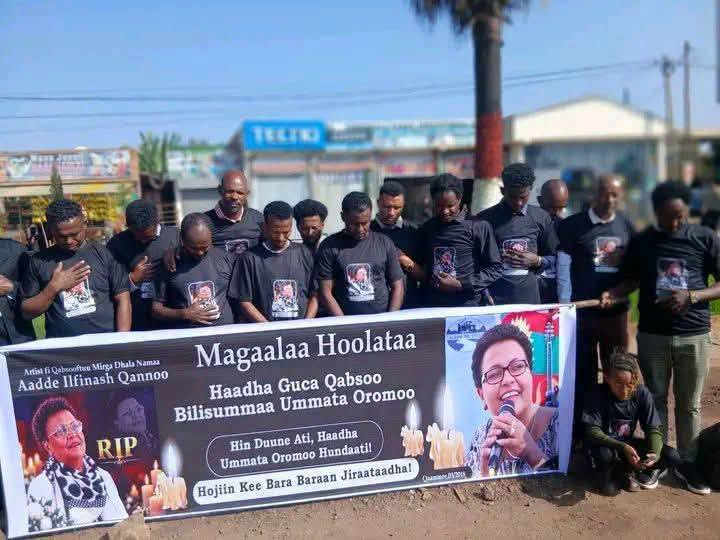
Veteran Oromo Artist and Freedom Fighter Ilfinesh Qannoo Honored with Grand Memorial Concert in Finfinne
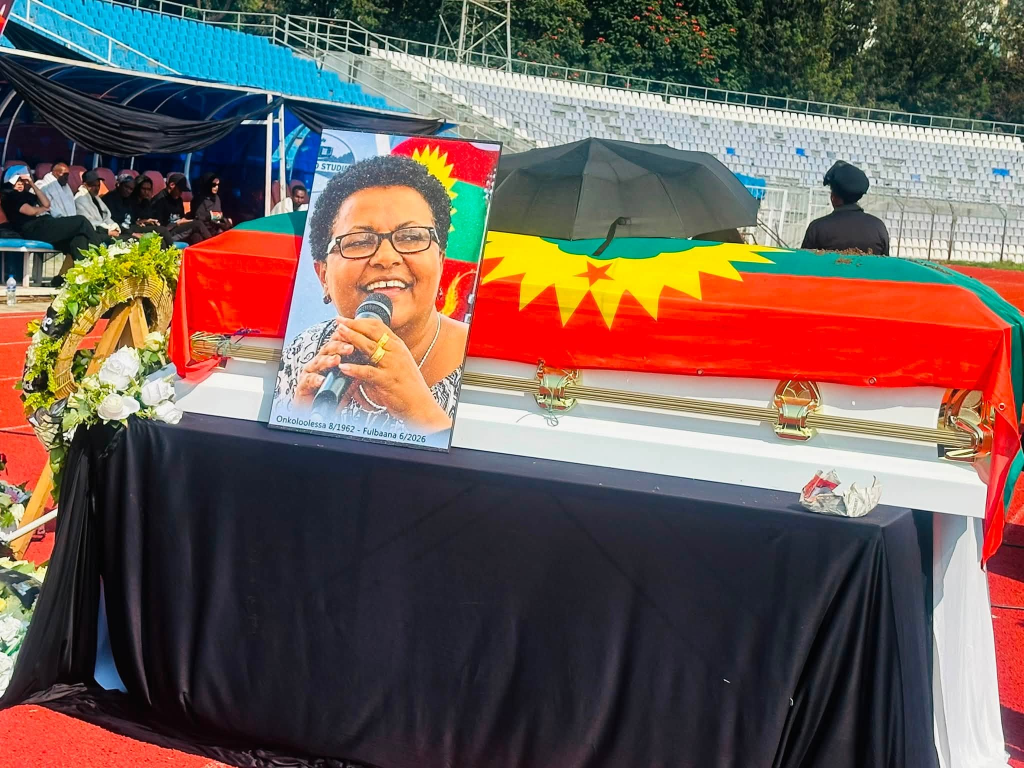
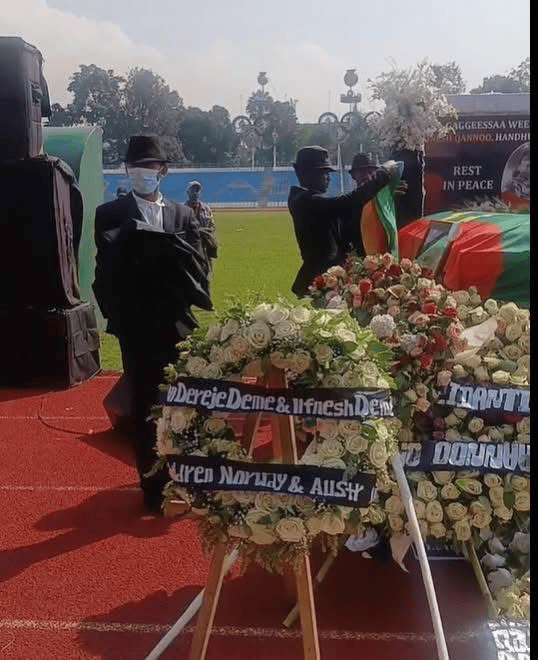
(FINFINNEE, Oromia, 8 September 2026) – In a powerful display of cultural pride and historical remembrance, a grand memorial concert was held today at Addis Ababa Stadium to honor the life and legacy of the legendary artist and freedom fighter, Ilfinesh Qannoo.
Born in 1962 in the Gutoo Giddaa district of East Wallagga, Ilfinesh Qannoo was a figure of immense courage from her earliest days. Her journey into the arts began in her childhood, but it was her unwavering commitment to the unity and identity of the Oromo people that would define her life’s work.
A Star Rises in Wallagga
Ilfinesh Qannoo first showcased her extraordinary talent by joining the Great Wallagga Cultural Troupe, where she quickly rose to prominence as a star. Her performances radiated bravery, talent, and a deep connection to her roots.
After relocating to the capital, Addis Ababa, she became a voice of resistance during a dark period in Ethiopian history. Her music, carried by Oromo Radio, became an anthem of unity and resilience for the Oromo people, a beacon of hope amid political repression. She used her art as a weapon of consciousness, never shying away from the struggle, even as she endured immense hardship, including imprisonment and torture.
A Legacy in Music and Struggle
Throughout her career, Ilfinesh Qannoo produced over ten albums, which continue to resonate widely. Her songs remain timeless anthems that advocate for Oromo unity and envision a progressive future for the Oromo people. Her voice was not just an instrument of entertainment, but a clarion call for political and social change.
Beyond the stage, she was a mother to four daughters—having given birth to two and raising two others—and was a matriarch whose life embodied the spirit of the Oromo woman. Her personal and professional journey reflected the broader narrative of her people’s struggle and perseverance.
Her Final Wish
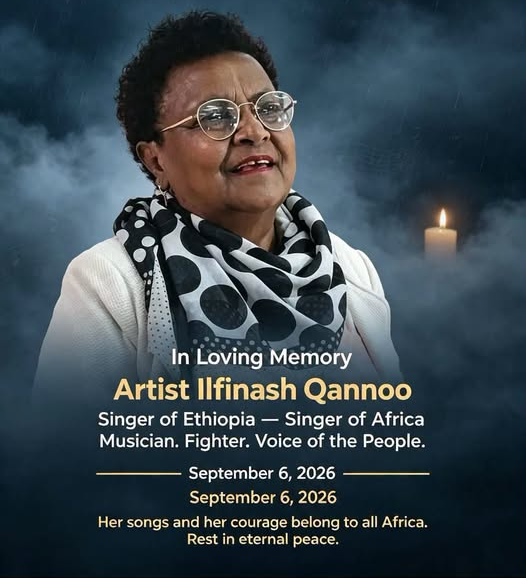
Ilfinesh Qannoo passed away on September 6, 2026, at the age of 64. In a poignant farewell message, she left a powerful wish that continues to echo in the hearts of her followers:
“If my body can serve to unite the Oromo people, bury me in Ambo. If not, let my remains rest in the cold of Norway.”
Today, her funeral service is also being held in Ambo, fulfilling a portion of her solemn request.
Today’s Ceremony
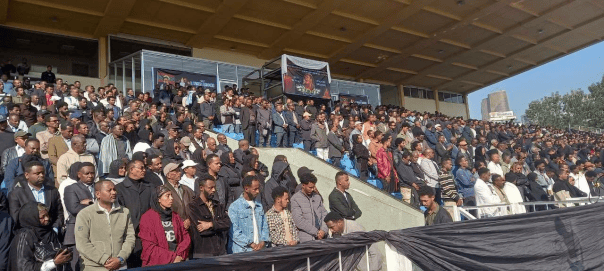
Today’s memorial event at Finfinne Stadium brought together a massive crowd, including federal and Oromia regional state officials, family members, relatives, admirers, and Oromo people from various parts of the region. The concert served as a final tribute to an icon whose art and activism left an indelible mark on the cultural and political fabric of the Oromo nation.
As the nation honors her legacy, Ilfinesh Qannoo remains a symbol of resilience—a voice that continues to inspire future generations through the power of her timeless art and defiant spirit.

A Life Worth Celebrating—A4O Calls for Honor, Not Grief, for Artist Ilfinash Qannoo
By Our Correspondent
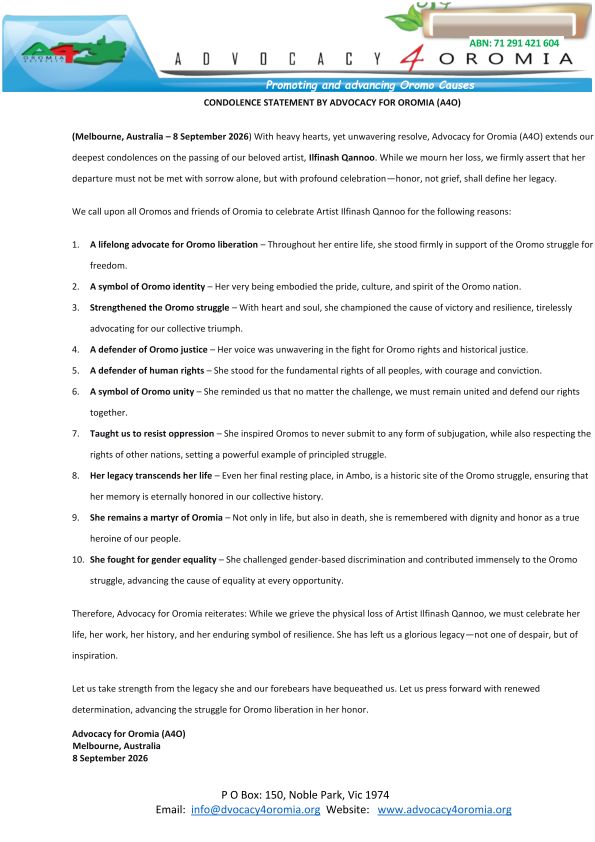
(Melbourne, Australia – 8 September 2026)-In a poignant and powerful statement released today, Advocacy for Oromia (A4O) has called on Oromos and friends of the struggle worldwide to transform mourning into celebration for the late artist and freedom fighter, Ilfinash Qannoo.
The Melbourne-based advocacy group, speaking from their Australian headquarters, emphasized that while the loss of the beloved artist is deeply felt, her life, legacy, and unwavering commitment to the Oromo cause demand a response of honor rather than sorrow.
A Life Dedicated to Liberation
Ilfinash Qannoo was no ordinary artist. According to A4O, she was a steadfast pillar of the Oromo liberation movement, dedicating her entire life to the struggle for Oromo self-determination. Her artistry was not merely entertainment—it was resistance. Her voice was not just melody—it was a clarion call for justice.
“Artist Ilfinash Qannoo spent her whole life supporting and advancing the Oromo struggle for freedom,” the statement reads, positioning her among the most committed cultural warriors of her generation.
More Than an Artist—A Symbol
A4O’s statement highlights ten compelling reasons why Ilfinash Qannoo’s legacy must be celebrated:
A Symbol of Oromo Identity: She embodied the pride, dignity, and cultural richness of the Oromo nation. Her very presence was a testament to Oromo resilience and identity.
Champion of Justice: She was a fearless defender of Oromo rights, human rights, and gender equality. She challenged oppression in all its forms and stood against discrimination, including gender-based injustice.
Unifier of the Oromo People: At a time when division threatens the struggle, Ilfinash Qannoo stood as a powerful symbol of Oromo unity, reminding her people that solidarity is the foundation of victory.
Teacher and Inspiration: Through her life and work, she taught Oromos to resist subjugation with dignity, while also respecting the rights of other nations—a rare and powerful example of principled advocacy.
Martyr for the Cause: Her final resting place in Ambo is now etched into the historical landscape of the Oromo struggle. Her grave, like her life, has become a site of memory and honor.
A Legacy That Transcends Death
Perhaps the most striking aspect of A4O’s tribute is the assertion that Ilfinash Qannoo’s impact extends far beyond her lifetime. She did not simply live for Oromia; she ensured that even in death, she would remain a rallying figure for the movement.
“She left us not with despair, but with a glorious legacy,” the statement declared. “We are called to take strength from what she and our forebears have left us, and to rededicate ourselves to the struggle with renewed vigor.”
A Call to Action, Not Lamentation
In what can be described as a clarion call to the Oromo diaspora and the wider movement, A4O urged supporters to channel their grief into action. The organization stressed that the most fitting tribute to Ilfinash Qannoo is not tears, but a renewed commitment to the goals she championed.
“We must celebrate her life, her work, her history, and her enduring symbol of resilience,” the statement emphasized. “Let us march forward in her honor, advancing the struggle for Oromo liberation with determination and unity.”
Global Reach of the Statement
Issued from Melbourne, Australia, on 8 September 2026, the statement reflects the global nature of the Oromo struggle and the far-reaching influence of cultural icons like Ilfinash Qannoo. A4O’s message transcends geographic boundaries, speaking directly to Oromos in the homeland and across the diaspora.
The advocacy group concluded with an unwavering declaration: “Victory to Oromia!” —a fitting epitaph for a woman whose life was dedicated to that very cause.
Historical Context
Ilfinash Qannoo’s passing marks the end of an era in Oromo cultural and political history. She was among a generation of artists who used their craft as a weapon of resistance, challenging the status quo and inspiring millions. Her death is not just a loss of talent, but the departure of a moral compass for a movement in constant pursuit of justice.
As Oromos around the world reflect on her legacy, A4O’s message is clear: Grieve, yes—but more importantly, celebrate. Honor her by carrying the torch she has passed on.
About Advocacy for Oromia (A4O): Based in Melbourne, Australia, A4O is a diaspora advocacy organization committed to advancing the rights, justice, and self-determination of the Oromo people through awareness, advocacy, and solidarity initiatives.
“We mourn her loss, but we celebrate her life—for in her, Oromia found a voice that will never be silenced.”

The Vanished Voice: Remembering Ob Dabbasaa Guyyoo and the Unfinished Work of Cultural Custodians
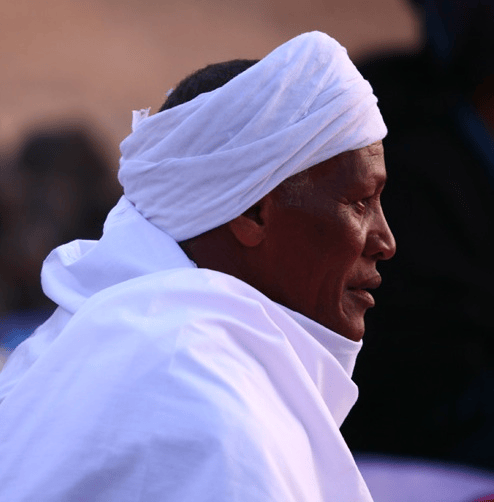
On the 27th of September in the year 2015, a quiet tragedy unfolded in the bustling streets of Nairobi. Ob Dabbasaa Guyyoo, an elder in his late seventies, disappeared. He was not a politician, nor a celebrity. He was something rarer and perhaps more precious: a living archive, a walking library of Oromo knowledge, a custodian of Gadaa—the indigenous democratic system that has governed Oromo society for centuries.
The United Nations (UN) has declared the 30th of Hagayya (August) as the International Day of the Victims of Enforced Disappearances. It is a day to remember those who have been forcibly taken, their fates unknown, their families left in a purgatory of uncertainty. For the family and students of Ob Dabbasaa Guyyoo, the 27th of Fulbaana is their personal day of reckoning.
The Life Before the Silence
To understand the weight of this loss, one must understand the life that was lived. Ob Dabbasaa Guyyoo’s world was not shaped by textbooks or university lectures. It was shaped by the Gadaa system, an ancient Oromo institution that governs everything from politics to social conduct, from justice to spirituality. He grew up in its embrace, was nurtured by its principles, and graduated into its senior councils.
But Ob Dabbasaa did not keep this knowledge for himself. He was a teacher, an arsaa-dhageettii—one who uses his eyes and ears to interpret the world and pass it on to others. His mission was profound and urgent: to teach the Oromo people that they possess a civilization of their own. He traveled through villages, and across borders into neighboring countries, preaching a message of cultural pride and historical awareness.
His teaching was a quiet resistance against the forces of erasure. He did not teach with a rod or a weapon; he taught with stories, with proverbs, and with the weight of lived experience. He reminded his people, whether they were Muslim, Christian, or followers of the indigenous Waaqeffannaa faith, that their identity was a gift, not a curse.
A Philosophy of Transmission
There is a profound Oromo philosophy that underpinned his work: a person who does not know their own history is like someone who cannot cross a river without clinging to another. They are dependent, lost, and vulnerable.
Ob Dabbasaa dedicated his life to ensuring that the Oromo would cross that river on their own strength. He took the abstract knowledge of the elders—the norms, the laws, the spiritual ties—and translated it into a curriculum for the youth. He educated and blessed countless students, sowing seeds of self-awareness across the land.
He understood that identity is not inherited automatically; it must be taught, discussed, and practiced. A person must learn who they are, and having learned, they must teach others. It is a duty, an unbroken chain. For as long as he was free, Ob Dabbasaa held that chain steady.
The Day the Chain Broke
On that fateful day in Fulbaana, the chain broke.
While traveling in Nairobi, Ob Dabbasaa Guyyoo vanished. The circumstances remain shrouded in the same ambiguity that haunts so many disappearances across the region. His family suspects the hand of the state, alleging that the authorities know his whereabouts. They live in the cruel limbo of enforced disappearance, clinging to hope while bracing for grief.
He was a man who had already known displacement. In the 1970s, as a refugee fleeing political turmoil in Ethiopia, he had crossed into Kenya, settling in the Machakos and Mlolongo areas with his family. He built a life there, far from his ancestral lands, yet he carried his homeland in his mind and heart. He was already a survivor of one kind of exile; now he has become a victim of another.
Why His Story Matters Now
In an age of information overload, where attention is fleeting, the story of Ob Dabbasaa Guyyoo might seem like a relic of a specific ethnic struggle. But it is not.
His story is a universal lesson about the power of cultural custodians. Every community, from the highlands of Oromia to the islands of the Pacific, relies on individuals who bridge the gap between the ancestors and the youth. When those individuals are silenced, a vital frequency is lost.
The UN’s call for the protection of human rights must include the protection of indigenous knowledge. It is not just a matter of political justice; it is a matter of cultural survival. The Oromo people have a saying: “Jiraachuun seenaa qabaachuudha”—To exist is to have a history.
Today, the whereabouts of Ob Dabbasaa Guyyoo remain unknown. His voice is silent. But the wisdom he imparted lingers in the minds of his students, in the stories told at the Gadaa centers, and in the prayers of his family.
The hope is that his fate will not remain hidden forever. The hope is that the UN’s resolutions against forced disappearances will transform from ink on paper into living justice. And the hope is that the work he started—the work of cultural reclamation—will continue, louder and more determined than before.
Because as long as one Oromo remembers the lessons of the elders, the chain of knowledge is not entirely broken. It is merely waiting for the next voice to pick it up.





 Advocacy for Oromia