Daily Archives: September 21, 2026

Oromo Advocacy Group Rejects Pan-Ethiopian Alliance, Citing Historical Erasure and Political Opportunism

By Staff Reporter
A prominent Oromo advocacy organization has formally rejected the newly formed “Ethiopian Peoples’ Forces Alliance for Survival,” accusing the coalition of failing to acknowledge the historical suffering of the Oromo people and of engaging in political opportunism rather than genuine problem-solving.
In a detailed statement released on 21 September 2026, Advocacy for Oromia outlined its objections to the alliance, which was established on 10/2019 E.C. (Ethiopian Calendar) and claims to represent a broad coalition of Ethiopian peoples against the current government.
The Alliance’s Platform
The Ethiopian Peoples’ Forces Alliance for Survival presents itself as a unified front against what it describes as a regime that has institutionalized national and religious divisions. Its stated objectives include removing the current government through “any means necessary,” establishing a transitional government, ensuring security for all citizens, and rebuilding the economy. The alliance explicitly calls for the right to self-determination for seven major national groups: Oromo, Amhara, Tigray, Afar, Somali, Benishangul-Gumuz, and Gambella.
The alliance’s rhetoric is sweeping: “We have reached a point where we must unite to save ourselves and our country,” reads its preamble, which accuses the current regime of fueling conflicts, engaging in widespread human rights violations, and pushing the country to the brink of disaster.
The Oromo Rejection
Advocacy for Oromia, however, sees the alliance as fundamentally flawed. In its statement, the organization argues that the coalition’s generic language about “immense suffering” and “widespread displacement” deliberately avoids naming the Oromo people as specific victims of systemic oppression.
“The harm includes, but is not limited to, land dispossession, political marginalization, cultural suppression, and economic exploitation under successive Ethiopian regimes—the imperial era, the Derg regime, the EPRDF administration, and continuing under the current government,” the statement reads. “This omission is not accidental; it reflects a deliberate refusal to centre Oromo historical trauma within the alliance’s political framework.”
The advocacy group further accuses the alliance of refusing to accept the reality of systemic oppression inflicted upon the Oromo people by past regimes. Rather than demanding accountability for historical wrongs, the alliance frames the current crisis as a departure from an otherwise acceptable trajectory—a framing that Advocacy for Oromia rejects outright.
A Question of Strategy
At the heart of the dispute lies a fundamental strategic disagreement within Ethiopian opposition politics: whether to prioritize unity against a common enemy or to insist upon historical justice as a precondition for any alliance.
The alliance positions itself as a broad-based coalition, calling for unity among Ethiopia’s diverse national groups to confront a shared adversary. Its document lists self-determination for multiple peoples and declares that “the unity of the Ethiopian peoples is paramount.”
Advocacy for Oromia, however, argues that without acknowledging past wrongs, any coalition risks reproducing the same structural injustices that have historically subjugated the Oromo people. “Formal recognition of Oromo rights within a reformed Ethiopian state is insufficient,” the statement asserts. “What is required is transformative justice that addresses the structural legacy of Oromo dispossession and abuses.”
The “Survival” Critique
The advocacy group also takes issue with the alliance’s very name. In the original Oromo statement, Advocacy for Oromia notes that the alliance is called “Survival”—a designation the group argues reveals its limited and inadequate scope.
“The alliance is named ‘Survival,’ which reveals its limited and inadequate scope,” the statement reads. “It is not founded to genuinely resolve the country’s problems, but rather to engage in political maneuvering and gamesmanship.”
This critique suggests that the alliance’s focus on mere survival—bare existence—falls far short of the Oromo struggle for liberation, justice, and systemic transformation.
Political Opportunism Alleged
The most serious charge leveled by Advocacy for Oromia is that the alliance is a vehicle for political opportunism. The group points to the alliance’s inclusion of multiple ethnic groups and its call for armed struggle as evidence of a framework that “superficially accommodates Oromo demands while failing to address the fundamental historical injustice against the Oromo people.”
“This framework offers only formal recognition, not substantive transformation,” the statement argues.
Advocacy for Oromia explicitly rejects any pan-Ethiopian initiative that does not subordinate itself to Oromo nationalist priorities, describing the alliance’s refusal to do so as exposing it “as a vehicle for political opportunism rather than a genuine instrument for liberating the Oromo people.”
An Unresolved Contradiction
The advocacy group also highlights what it sees as a contradiction within the alliance’s logic. The alliance’s stated objective is to remove the current regime—which Advocacy for Oromia notes is itself a product of past systems of Oromo oppression.
“If the alliance succeeds in dismantling the current order, does that not constitute a form of accountability?” the statement asks rhetorically. “Removal without acknowledgment and redress is insufficient. True liberation requires not merely a change of personnel but a reckoning with the structural foundations of Oromo subjugation.”
The Broader Context
The rejection of the alliance reflects long-standing tensions within Ethiopian opposition politics. The Oromo people, Ethiopia’s largest national group, have historically experienced marginalization and dispossession under successive regimes. The emergence of Oromo nationalist movements—both peaceful and armed—has challenged the centralized Ethiopian state, demanding greater autonomy, self-determination, and historical justice.
The Ethiopian Peoples’ Forces Alliance for Survival appears to be an attempt to bridge these divides, bringing together diverse national groups under a common banner. But Advocacy for Oromia’s rejection suggests that such efforts will face significant obstacles, particularly when they require subordinating specific historical grievances to a broader, more generic narrative of national suffering.
The Unanswered Question
The statement from Advocacy for Oromia leaves an important question unresolved: can Oromo liberation be achieved through alliance with other Ethiopian peoples, or does it require a separate, Oromo-centred path?
The group clearly leans toward the latter, but does not fully grapple with the strategic costs of that position—including potential isolation, the difficulty of achieving liberation without allies, and the risk of perpetuating the very divisions that have historically weakened Ethiopian opposition movements.
For now, Advocacy for Oromia’s rejection of the alliance stands as a clear statement of its position: any coalition that does not explicitly centre Oromo historical suffering and commit to its redress cannot be trusted.
Advocacy for Oromia formally rejects the “Ethiopian Peoples’ Forces Alliance for Survival” as an unsuitable vehicle for the liberation and advancement of the Oromo people.
Rejection of the “Ethiopian Peoples’ Forces Alliance for Survival” from an Oromo Nationalist View
Advocacy for Oromia hereby issues this formal statement to articulate its categorical rejection of the so-called “Ethiopian Peoples’ Forces Alliance for Survival.” This rejection is grounded in a thorough analysis of the alliance’s foundational assumptions, its treatment of Oromo historical grievances, and its strategic objectives. Advocacy for Oromia concludes that the aforementioned alliance is not beneficial for the Oromo people, and this statement sets forth the reasons for that conclusion.
I. Failure to Acknowledge the Historical Suffering of the Oromo People
The alliance does not genuinely believe in or acknowledge the harm that has persisted for years against the Oromo people. This harm includes, but is not limited to, land dispossession, political marginalization, cultural suppression, and economic exploitation under successive Ethiopian regimes—the imperial era, the Derg regime, the EPRDF administration, and continuing under the current government.
While the alliance document employs generic language regarding “immense suffering,” “widespread displacement,” and “destruction and death,” it conspicuously avoids naming the Oromo people as a specific victim of systemic oppression. This omission is not accidental; it reflects a deliberate refusal to centre Oromo historical trauma within the alliance’s political framework.
Advocacy for Oromia maintains that any political coalition that does not explicitly acknowledge and centre the specific historical grievances of the Oromo people is inherently suspect and cannot be trusted to advance Oromo national interests.
II. Refusal to Accept the Wounds of Past Systems of Oppression
The alliance refuses to accept the reality of systemic oppression inflicted upon the Oromo people by and current regimes. This refusal manifests in the alliance’s framing of the current crisis as a departure from an otherwise acceptable historical trajectory, rather than as the culmination of centuries of Oromo subjugation.
The alliance positions itself as a broad-based coalition against the current regime, while declining to demand accountability for past systems. This approach reflects a fundamental strategic disagreement within Ethiopian opposition politics: whether to prioritize unity against a common enemy or to insist upon historical justice as a precondition for any alliance.
Advocacy for Oromia unequivocally adopts the latter position. Without acknowledging past wrongs, any coalition risks reproducing the same structural injustices that have historically subjugated the Oromo people. Formal recognition of Oromo rights within a reformed Ethiopian state is insufficient; what is required is transformative justice that addresses the structural legacy of Oromo dispossession and abuses.
III. Political Opportunism Rather Than Genuine Problem-Solving
The alliance is not founded to solve the empire’s problems but rather to play political games. This is the most serious charge against the alliance, and Advocacy for Oromia asserts it without equivocation.
The alliance’s inclusion of multiple national groups, its call for armed struggle, and its specific demands for self-determination for various peoples—Amhara, Oromo, Tigray, Afar, Somali, Benishangul-Gumuz, and Gambella—collectively constitute an ethnic-federal framework that superficially accommodates Oromo demands while failing to address the fundamental historical injustice against the Oromo people. This framework offers only formal recognition, not substantive transformation.
Advocacy for Oromia rejects any pan-Ethiopian initiative that does not recognize Oromo nationalist priorities. The alliance’s refusal to do so exposes it as a vehicle for political opportunism rather than a genuine instrument for liberating the Oromo people.
IV. The Contradiction Within the Alliance’s Logic
The alliance’s stated objective is to remove the current regime—which is itself a product of past systems of Oromo oppression. If the alliance succeeds in dismantling the current order, does that not constitute a form of accountability?
Advocacy for Oromia answers unequivocally: removal without acknowledgment and redress is insufficient. True liberation requires not merely a change of personnel but a reckoning with the structural foundations of Oromo subjugation. The alliance’s failure to commit to such a reckoning renders its objectives inadequate for the Oromo struggle.
V. Conclusion
Advocacy for Oromia articulates a coherent Oromo nationalist position: any political alliance that does not explicitly centre Oromo historical suffering and commit to its redress cannot be trusted.
The critique is strongest in its insistence on historical specificity—generic calls for “survival” and “democracy” can obscure rather than address ethnic-specific oppression. However, the statement is weakest in its lack of concrete evidence for the “political games” charge and in its implicit rejection of broad-based coalition politics.
The underlying question remains unresolved: can Oromo liberation be achieved through alliance with other Ethiopian peoples, or does it require a separate, Oromo-cantered path? Advocacy for Oromia clearly leans toward the latter, but does not fully grapple with the strategic costs of that position.
Therefore, Advocacy for Oromia formally rejects the “Ethiopian Peoples’ Forces Alliance for Survival” as an unsuitable vehicle for the liberation and advancement of the Oromo people.
Advocacy for Oromia
21 September: 2026

Victoria’s Superpower? Diversity!
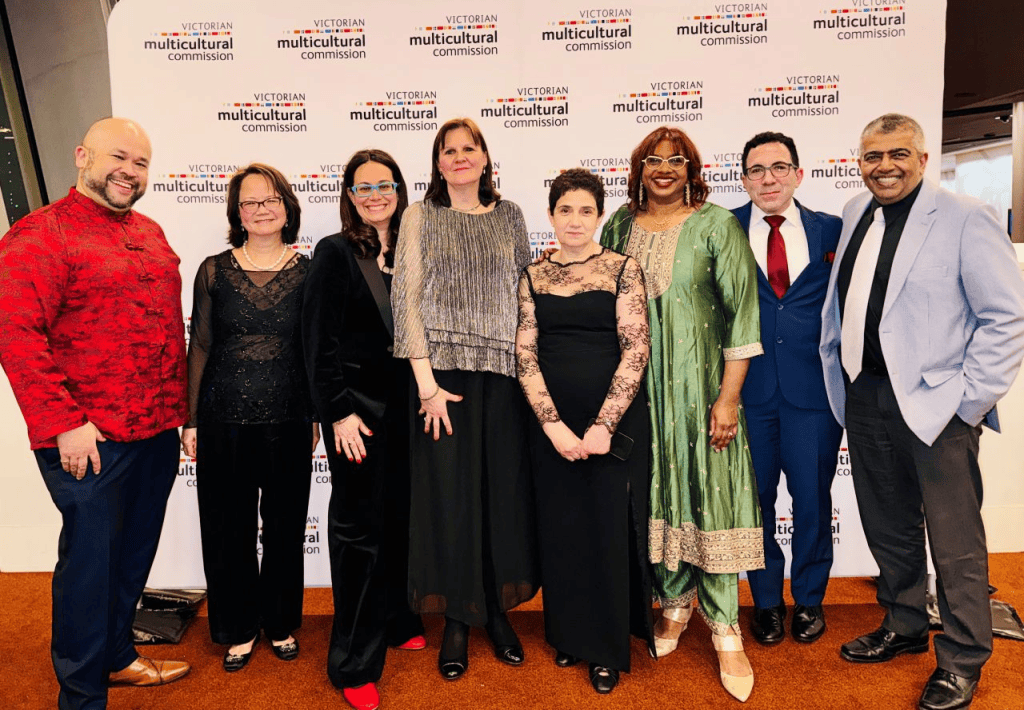
AMES Australia staff and board members joined hundreds of community leaders, advocates, changemakers and government representatives at the Premier’s Multicultural Gala Dinner over the weekend, coming together to celebrate this year’s theme: Stories of Us.
The theme honours the unique journeys, ancestry and migration stories that shape Victoria’s vibrant multicultural community — the threads of lived experience that weave together to form the fabric of one of the world’s most diverse societies.
Beyond the Glitter
Beyond the suits, saris, speeches and selfies, the night was really about one thing: the people helping make Victoria one of the most multicultural and connected places in the world.
It was a celebration not of ceremony, but of contribution — of the countless individuals and communities whose stories, struggles and successes have built the Victoria of today.
The Power of the Shared Table
For AMES Australia, the evening carried a deeper message about how a truly multicultural society thrives.
“The best ideas don’t happen in isolation,” the organisation reflected. “They happen when different cultures, experiences and perspectives come together around the same table.”
That spirit of connection — of diverse voices sharing space, stories and vision — was at the heart of the night’s proceedings, a living demonstration of what social cohesion looks like in practice.
“That’s the kind of future we’re here for,” AMES Australia said.
A Conversation Brought to Life
The organisation extended its gratitude to the Victorian Multicultural Commission for bringing the conversation to life, praising the Commission’s achievements and expressing optimism for what lies ahead.
“We cherish what you have achieved and look forward to what Multicultural Victoria will bring,” AMES Australia said.
A Continuing Story
The Premier’s Multicultural Gala Dinner is more than an annual event — it is a recognition that Victoria’s greatest strength lies in its diversity, and that the stories of its people, in all their richness and variety, are the stories that will carry the state forward.
As the evening’s theme reminded all who gathered: these are Stories of Us — shared, celebrated, and still being written.
#AMES #AMESAustralia #VMC #Premier #GalaDinner #Victoria #Diversity #SocialCohesion






