The Vanished Voice: Remembering Ob Dabbasaa Guyyoo and the Unfinished Work of Cultural Custodians
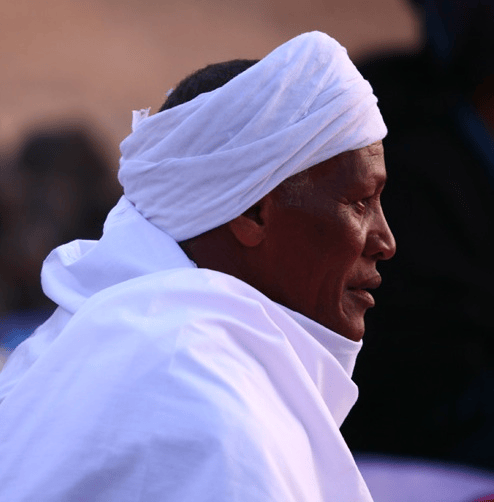
On the 27th of September in the year 2015, a quiet tragedy unfolded in the bustling streets of Nairobi. Ob Dabbasaa Guyyoo, an elder in his late seventies, disappeared. He was not a politician, nor a celebrity. He was something rarer and perhaps more precious: a living archive, a walking library of Oromo knowledge, a custodian of Gadaa—the indigenous democratic system that has governed Oromo society for centuries.
The United Nations (UN) has declared the 30th of Hagayya (August) as the International Day of the Victims of Enforced Disappearances. It is a day to remember those who have been forcibly taken, their fates unknown, their families left in a purgatory of uncertainty. For the family and students of Ob Dabbasaa Guyyoo, the 27th of Fulbaana is their personal day of reckoning.
The Life Before the Silence
To understand the weight of this loss, one must understand the life that was lived. Ob Dabbasaa Guyyoo’s world was not shaped by textbooks or university lectures. It was shaped by the Gadaa system, an ancient Oromo institution that governs everything from politics to social conduct, from justice to spirituality. He grew up in its embrace, was nurtured by its principles, and graduated into its senior councils.
But Ob Dabbasaa did not keep this knowledge for himself. He was a teacher, an arsaa-dhageettii—one who uses his eyes and ears to interpret the world and pass it on to others. His mission was profound and urgent: to teach the Oromo people that they possess a civilization of their own. He traveled through villages, and across borders into neighboring countries, preaching a message of cultural pride and historical awareness.
His teaching was a quiet resistance against the forces of erasure. He did not teach with a rod or a weapon; he taught with stories, with proverbs, and with the weight of lived experience. He reminded his people, whether they were Muslim, Christian, or followers of the indigenous Waaqeffannaa faith, that their identity was a gift, not a curse.
A Philosophy of Transmission
There is a profound Oromo philosophy that underpinned his work: a person who does not know their own history is like someone who cannot cross a river without clinging to another. They are dependent, lost, and vulnerable.
Ob Dabbasaa dedicated his life to ensuring that the Oromo would cross that river on their own strength. He took the abstract knowledge of the elders—the norms, the laws, the spiritual ties—and translated it into a curriculum for the youth. He educated and blessed countless students, sowing seeds of self-awareness across the land.
He understood that identity is not inherited automatically; it must be taught, discussed, and practiced. A person must learn who they are, and having learned, they must teach others. It is a duty, an unbroken chain. For as long as he was free, Ob Dabbasaa held that chain steady.
The Day the Chain Broke
On that fateful day in Fulbaana, the chain broke.
While traveling in Nairobi, Ob Dabbasaa Guyyoo vanished. The circumstances remain shrouded in the same ambiguity that haunts so many disappearances across the region. His family suspects the hand of the state, alleging that the authorities know his whereabouts. They live in the cruel limbo of enforced disappearance, clinging to hope while bracing for grief.
He was a man who had already known displacement. In the 1970s, as a refugee fleeing political turmoil in Ethiopia, he had crossed into Kenya, settling in the Machakos and Mlolongo areas with his family. He built a life there, far from his ancestral lands, yet he carried his homeland in his mind and heart. He was already a survivor of one kind of exile; now he has become a victim of another.
Why His Story Matters Now
In an age of information overload, where attention is fleeting, the story of Ob Dabbasaa Guyyoo might seem like a relic of a specific ethnic struggle. But it is not.
His story is a universal lesson about the power of cultural custodians. Every community, from the highlands of Oromia to the islands of the Pacific, relies on individuals who bridge the gap between the ancestors and the youth. When those individuals are silenced, a vital frequency is lost.
The UN’s call for the protection of human rights must include the protection of indigenous knowledge. It is not just a matter of political justice; it is a matter of cultural survival. The Oromo people have a saying: “Jiraachuun seenaa qabaachuudha”—To exist is to have a history.
Today, the whereabouts of Ob Dabbasaa Guyyoo remain unknown. His voice is silent. But the wisdom he imparted lingers in the minds of his students, in the stories told at the Gadaa centers, and in the prayers of his family.
The hope is that his fate will not remain hidden forever. The hope is that the UN’s resolutions against forced disappearances will transform from ink on paper into living justice. And the hope is that the work he started—the work of cultural reclamation—will continue, louder and more determined than before.
Because as long as one Oromo remembers the lessons of the elders, the chain of knowledge is not entirely broken. It is merely waiting for the next voice to pick it up.

Posted on September 4, 2026, in Aadaa, Afaan, Election, Events, Finfinne, freedom, gadaa, Gumaa, health, Information, Kindness, Language, Media, News, Oromia, Press Release, Promotion. Bookmark the permalink. Leave a comment.






Leave a comment
Comments 0