Celebrating Qaammee: A Sacred Oromo Tradition of Womanhood, Unity, and Cultural Pride
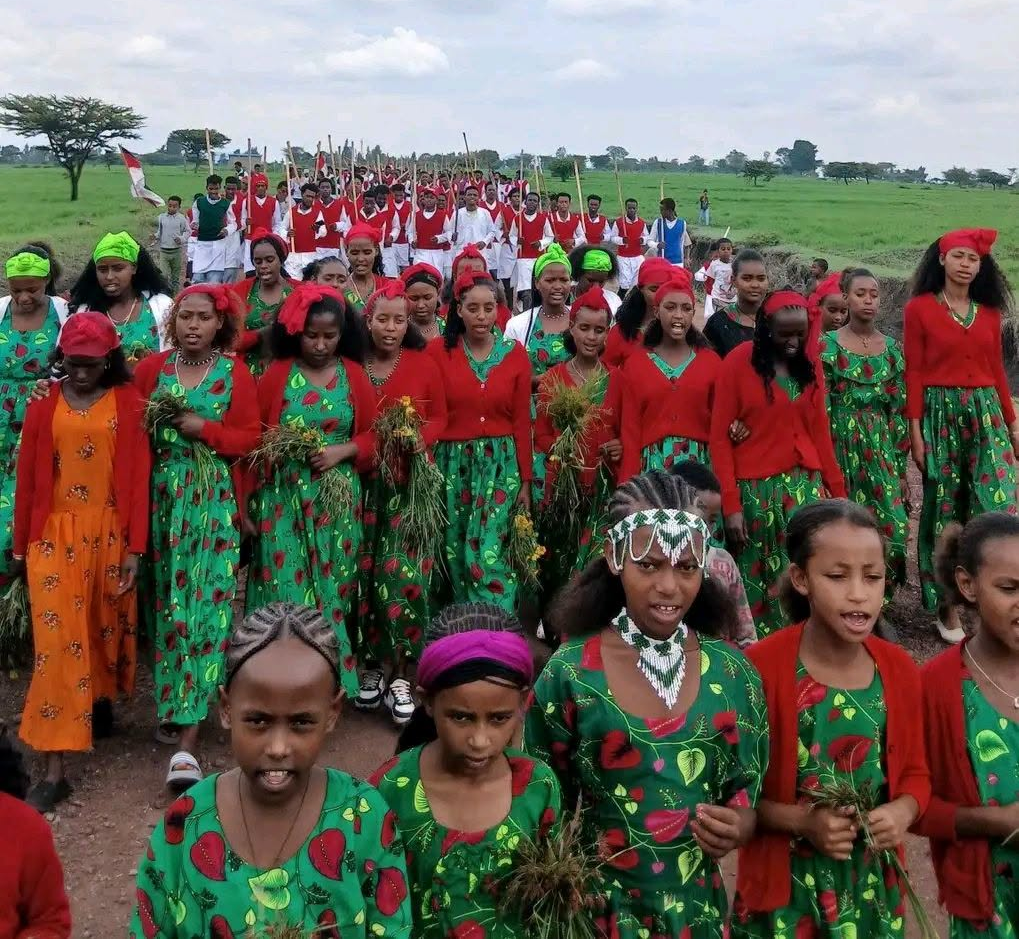
The Rituals of Buqqisaa and Daddarbaa — A Timeless Celebration of Young Women
By Daandii Ragabaa
The Oromo people are blessed with a rich tapestry of cultural traditions that have been passed down through generations. Among these, the Ayyaana Qaammee stands as one of the most beautiful and significant celebrations—a sacred festival honouring young unmarried women, their transition into adulthood, and their vital role in the continuity of Oromo society.
The word Qaammee refers to a young unmarried woman who participates in this sacred festival. The celebration embodies the essence of youthful femininity, purity, and the promise of a bright future. It is a rite of passage, a communal blessing, and a moment of profound cultural significance.
This year, as the community gathers to celebrate Qaammee, we extend our warmest greetings: “Baga Nagaan Ayyaana Qaammee geessan!” —Happy Qaammee Festival!
Understanding Qaammee: More Than a Celebration
The Qaammee festival is more than just a cultural event—it is a sacred tradition that connects the Oromo people to their ancestors, their community, and the natural world around them. It is a celebration of womanhood, a blessing for the future, and a reaffirmation of Oromo identity.
The festival takes place annually, beginning in the month of Hagayya (roughly July-August) and continuing through the month of Fulbaana (September-October). The timing coincides with the end of the rainy season—a time of renewal, abundance, and new beginnings. This year’s celebration is a continuation of this sacred tradition, bringing communities together in joy, song, and blessing.
Central to the Qaammee celebration are two key rituals:
- Buqqisaa — The “Breaking” or preparation ceremony
- Daddarbaa — The “Passing” or blessing ceremony
The Buqqisaa Ceremony: Preparation and Unity
The Qaammee celebration begins with the Buqqisaa ceremony, a vibrant evening of preparation and community bonding.
Gathering by the Water
On the evening of Buqqisaa, young unmarried women (Qaammeen) gather in groups and make their way to a nearby river or stream (laga or caffee). This is a time of sisterhood, joy, and anticipation. The women come together in large numbers, united by their shared identity and purpose.
The Breaking of Qunnii
At the water’s edge, the women perform the ritual of Buqqisaa—the breaking or preparation of Qunnii, a special plant similar to grass that has a fragrant fruit (gumaa/firii) at its base. When the Qunnii blooms, it becomes Dhallaadduu, ready for use.
The Qunnii plant is significant for several reasons:
- It produces a natural fragrance that is pleasing to the senses
- It has medicinal properties that are beneficial for women’s health
- It is used as a natural perfume (Qayya) by the young women
Songs, Dance, and Celebration
The Buqqisaa ceremony is accompanied by traditional songs, dances, and celebrations that continue well into the night. The women sing Faaruu Qaammee (Abaabilee)—special songs composed for the occasion—as they prepare the Qunnii together.
The women break and prepare the Qunnii, sharing in the work and the joy of the occasion. The atmosphere is filled with laughter, song, and the spirit of unity.
Returning Home with Blessings
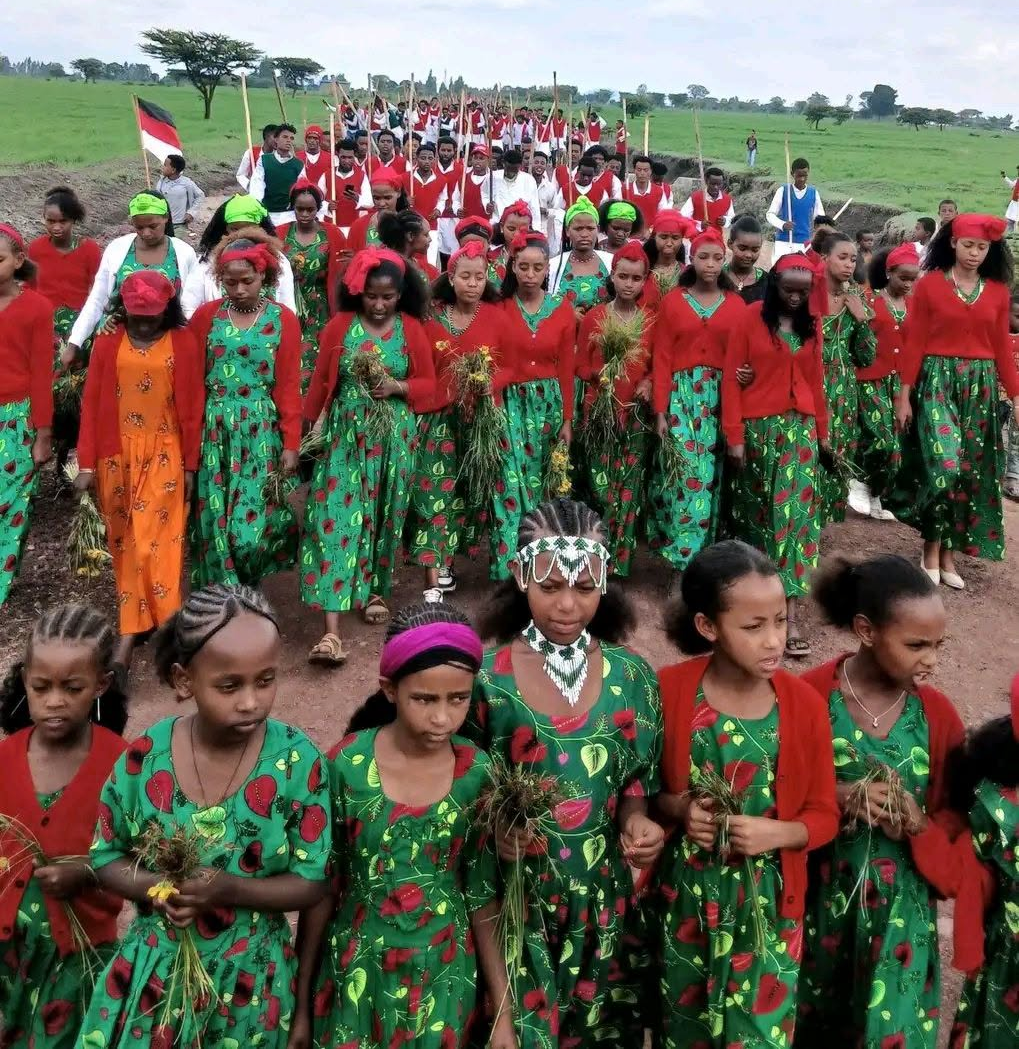
After the preparation is complete, each woman returns to her home with the Qunnii she has prepared. She places it on the doorstep (balbala irra kaawwatanii) as she enters, symbolizing the blessings she brings into her home.
The Ashaashullaa Tradition
On this same evening, young girls (ijoolleen dubaraa) participate in a special tradition involving Ashaashullaa—a plant similar to moss or creeping vine. The Ashaashullaa is tied to their hands and feet (harkaa fi quba miilatti hidhatanii bulu), and they sleep with it overnight.
In the morning, the plant has turned their hands and feet red—a beautiful decoration that adds to their adornment. The plant is considered a traditional ornament for girls, enhancing their beauty and connection to nature.
The Daddarbaa Ceremony: Blessings and Passing Forward
The following day is the Daddarbaa ceremony—the Passing or Blessing ceremony. This is the main day of the Qaammee celebration, when the young women receive the community’s blessings and are honoured for their transition.
Gathering at the Meeting Place
In the morning, the young women take the Qunnii they prepared the previous evening and gather at a designated meeting place, known as the Mootii Durbaa (the place of the chosen leader). The Mootii Durbaa is the eldest or most respected among the young women, chosen by the group.
The Journey Through the Community
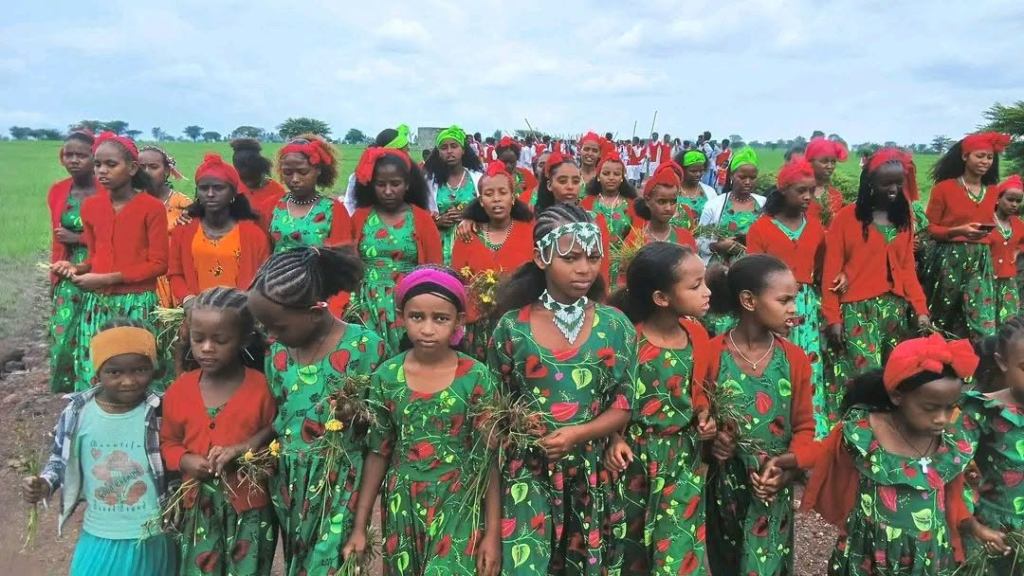
From the Mootii Durbaa, the women begin their journey through the community. Walking in groups, they sing the Abaabilee songs as they go from house to house. They start with the Warra Angafaa (the elders/leaders of the clan) and then visit every household in their community.
The Ritual of Daddarbaa
At each household, the women perform the Daddarbaa ritual. They pass the Qunnii from the previous day to the household, receiving blessings in return. They eat and drink a little at each home, and the elders offer prayers and blessings for their future.
The women continue this journey until they have visited all the households in their community, spreading joy, receiving blessings, and reinforcing the bonds of community.
The Role of Young Men in Qaammee
While Qaammee is primarily a celebration of young women, young men also play an important role—though it is very different from that of the women.
Young unmarried men (who are not yet married) do not participate in the Buqqisaa or Daddarbaa ceremonies in the same way as the women. However, they accompany the women during the celebrations, walking alongside the groups and participating in the songs and dances.
The Wadaajii Tradition
The most notable tradition involving young men is the Wadaajii Dhungachuu—a ritual that is eagerly awaited, especially by the men. This tradition is unique to the Oromo culture and reflects the playful and respectful nature of the Qaammee celebration.
During the procession, when the women leave one household to go to the next, the young men position themselves along the route. As the women pass, the men suddenly fall to the ground in front of them and attempt to “drink” (dhungachuu) from them. The women, in turn, push the men away using their hands and the Dhallaadduu they are carrying.
This is a playful ritual, not a violation. The men approach with respect, and the women respond with good-natured resistance. The location for this ritual is often a boqoo/maddii—a designated area along the route.
After the ritual, the women continue on their way, laughing and continuing their songs. The men, having participated in the tradition, rejoin the procession. This tradition is an important part of Oromo youth culture, reinforcing bonds between young men and women while maintaining cultural protocols.
Important note: Men who participate in the Wadaajii ritual are not allowed to marry the women they “drink” from—it is a matter of cultural respect and propriety.
The Spiritual Significance of Qaammee
At its heart, the Qaammee celebration is a spiritual experience. The rituals are conducted with reverence and respect, invoking the blessings of Waaqa (God) and the ancestors.
The young women receive the prayers of the elders, the admiration of the community, and the hope of their families. The celebration is an act of thanksgiving—giving thanks for the rain, the harvest, and the continuity of Oromo culture.
The songs of Qaammee, known as Abaabilee, carry deep meaning and are an essential part of the celebration:
“Aababilee haa doolee” — Let the Abaabilee songs be sung
“Haayee yaa shoroorootoo” — Oh, the beautiful songs
“Shoororoo haati deechee” — The mother has sung the Shoororoo
“Yaa qal’oo qaammen geechee” — The Qaammee women have come
A Celebration of Promise and Renewal
As the Qaammee festival concludes, the participants and their families are filled with a sense of pride, joy, and hope. The young women who have been blessed and celebrated carry with them the strength and support of their community as they embark on their journeys into adulthood.
The festival is also a reminder of the beauty and resilience of Oromo culture—a culture that has survived centuries of oppression and continues to thrive in the hearts of its people.
The Challenge of Cultural Erosion
It is important to note that the Qaammee festival is in danger of being forgotten in many areas. In some places, it is no longer celebrated at all. In others, a modified version called “Qaammee Sidaamaa” is celebrated on October 1st (Fulbaana 1, ALH), but even this is not the same as the traditional celebration.
This erosion of cultural traditions is a loss for the Oromo people. These traditions are not just customs—they are expressions of Oromo identity, resilience, and continuity. They connect the present generation to their ancestors and provide a foundation for the future.
The responsibility of reviving and preserving these traditions falls on the current generation. As the saying goes, “Duudhaaleen Oromoo hedduun isaanii bakka hin jiran. Bakkatti deebisuun dirqama dhaloota ammaa ti” —Many Oromo traditions are no longer practiced. It is the duty of the current generation to bring them back.
Conclusion: The Eternal Light of Qaammee
Qaammee is more than a celebration—it is a sacred tradition that connects the Oromo people to their past, their present, and their future. It is a moment to honour young women, to bless their journey, and to affirm the enduring strength of Oromo culture.
As the community gathers to celebrate, let us remember the beauty, grace, and resilience of the Oromo people. Let us honour the young women who carry the hopes of their community. And let us commit ourselves to preserving and reviving these sacred traditions for future generations.
“Kan Baranaa kan egeree nuun haa jedhu!” —May this year’s celebration be one of abundance and joy!
Baga Nagaan Ayyaana Qaammee geessan!
This feature article is dedicated to all the young Oromo women—past, present, and future—who carry the spirit of Qaammee in their hearts, and to the communities who are working to preserve this beautiful tradition.

Posted on August 9, 2026, in Aadaa, Afaan, Asylum Seekers, Biography, Bokkkuu, Diaspora, Election, Events, Face of Injustice, family violence, Finfinne, freedom, gadaa, gender, Gumaa, health, Information, Kindness, Language, Media, mental health, News, Oromia, Oromo diaspora, Oromo truth telling, OSFANA, Press Release, Promotion, SBO, Siinqee, Sirna Oromo, VMC, Waaqeffannaa. Bookmark the permalink. Leave a comment.






Leave a comment
Comments 0