Category Archives: health
Gadaa: The Living System That Raises Generations Through Word and Deed
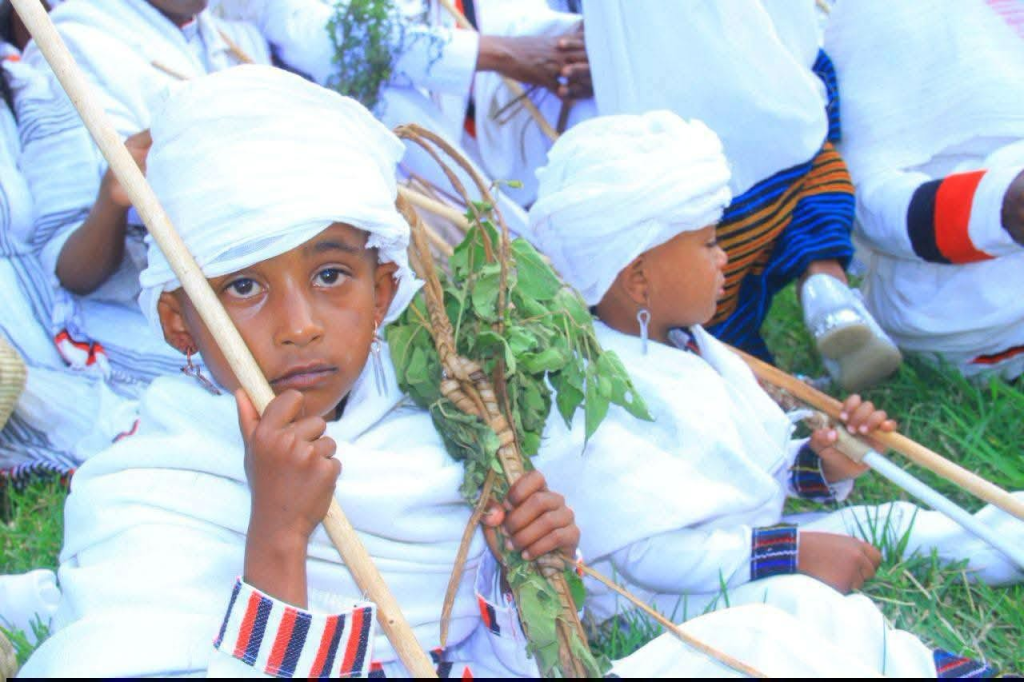
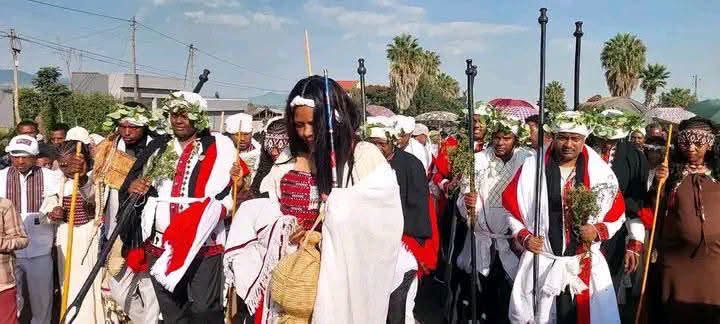
West Shawa, Oromia — In a world where ancient traditions often fade beneath the weight of modernity, the Gadaa system of the Oromo people stands as a testament to endurance, democracy, and cultural resilience. As the Oromo saying goes: “Gadaan sirna ittiin jechaa fi gochaan dhaloota guddisanii dha” — Gadaa is the system through which generations are raised by word and by deed. And today, that system has emerged from the threat of extinction and reached the present generation, unbroken and vibrant.
Sons of Liiban Maccaa Carry the Torch
The sons of Liiban Maccaa — Walisoo, Amayyaa, and Kuttaayee — are actively fulfilling their duties within Gadaa Birmajii, ensuring that the ancient Oromo Gadaa system is passed down from generation to generation, unbroken and undiminished. Their commitment is not merely ceremonial; it is a living covenant with their ancestors and their descendants.
These communities, located across Central Oromia, West Shawa, and Southwest Shawa, have preserved the Gadaa system without interruption. From father to son, from elder to youth, the sacred knowledge and responsibilities of Gadaa are transmitted with reverence and precision.
A Model of Democracy Without Conflict
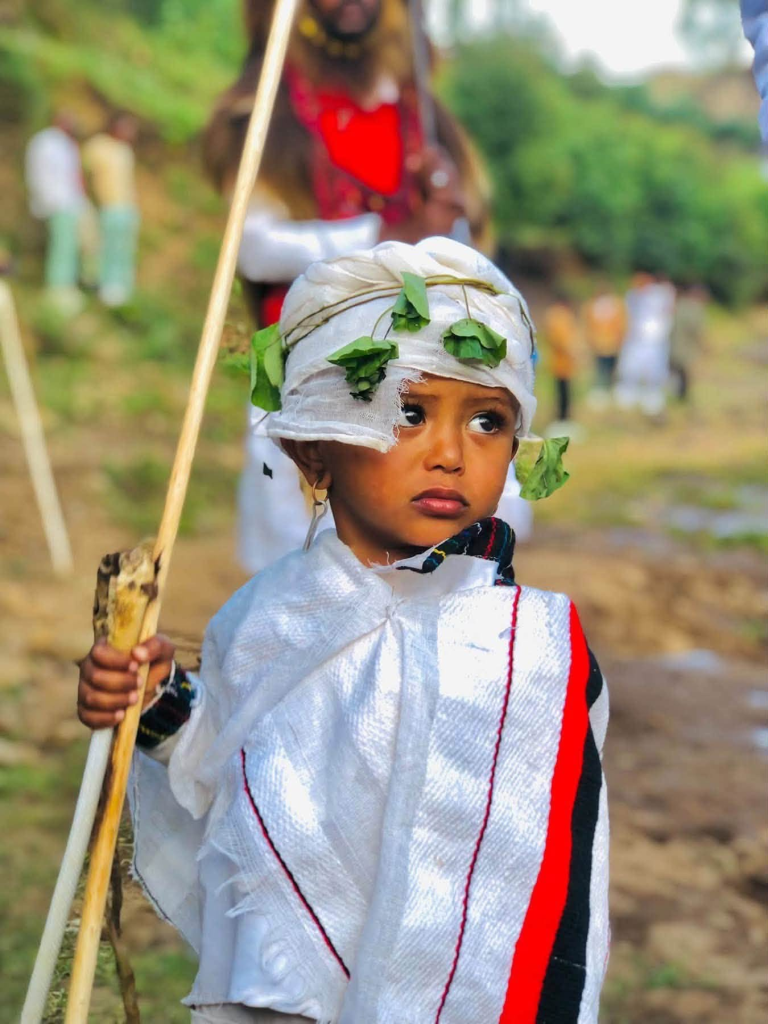
“Gadaan Mallattoo Dimokiraasii Morkii tokko malee Aangoo Waliif dabarsanii kennanidha” — Gadaa is the symbol of democracy, a system in which power is transferred peacefully, without conflict or bloodshed.
This principle lies at the heart of the Gadaa system. Every eight years, leadership transitions from one Gadaa grade to the next — a process rooted in consensus, ritual, and mutual respect. There are no coups, no violence, no contested successions. There is only the orderly, sacred transfer of responsibility from one generation to the next.
It is a democratic tradition that predates many modern political systems, and it continues to function today, guided by the wisdom of elders and the participation of the community.
Preparation for the Transfer of Power
The Sirna Oofkaltii Tumaa Gadaa Birmajii is currently in full preparation across various locations in the West Shawa Zone. Over the coming eight years, those in the Birmajii grade will prepare to receive authority from the Gadaa Roobalee — the outgoing grade — and assume the responsibilities of leadership.
The purpose of this program is clear: “Kaayyoon Sirna Sagantaa Kanaas Gadaan Birmajii Gadaa Roobalee irraa Aangoo fudhachuun Waggoottan 8 itti Aanu Bulchuuf ofkaltii keessa darbaa jiraachuu ibsameera.” The Birmajii Gadaa is preparing to take power from the Roobalee Gadaa and to govern for the next eight years. This preparation is not merely administrative — it is spiritual, cultural, and communal.
The Journey to the River
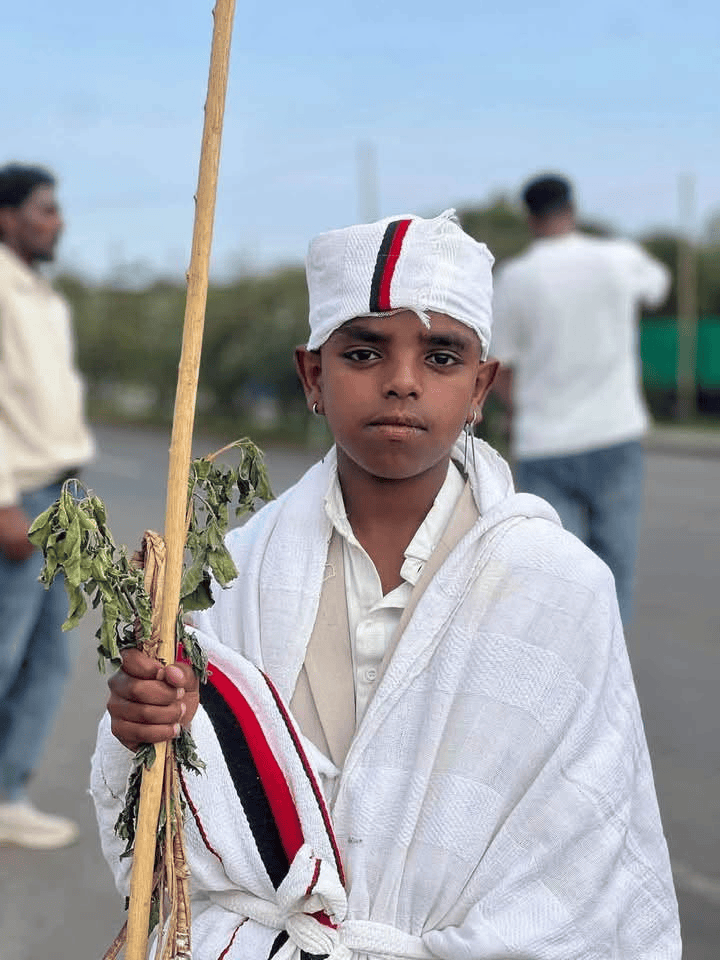
The process has now reached a significant milestone. “Imalli gara malkaa deemuun tumaa ittiin bulmaata waggoota 8 dhufanii adeemsifameera.” The delegation has journeyed to the river, where the laws and rituals that will govern the next eight years have been formally enacted.
The journey to the water — the malkaa — is rich with symbolism. Water represents purification, renewal, and the continuity of life. By enacting the laws at the river’s edge, the community affirms that the Gadaa system is rooted in nature itself, in the eternal rhythms of the earth and the heavens.
A Blessing of Abundance
The message concludes with a powerful blessing: “Gadaan Quufaa Gabbina Oofkalchi Waaq.” May Gadaa bring fullness, abundance, and prosperity. May Waaqa bless the work of those who uphold this sacred tradition.
It is a prayer not only for material prosperity but for spiritual completeness — for a community that is whole, united, and at peace with itself and its Creator.
A Heritage That Endures
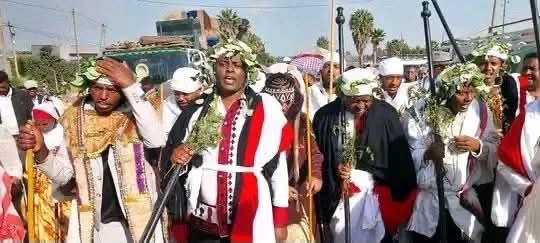
The Gadaa system is more than a cultural relic. It is a living, breathing institution that continues to shape the lives of millions of Oromo people. It teaches democracy, accountability, environmental stewardship, and respect for elders. It binds generations together in a chain of duty and blessing.
The sons of Liiban Maccaa — Walisoo, Amayyaa, and Kuttaayee — are not merely preserving the past. They are building the future, one ritual at a time, one generation at a time.
Baga oofkaltan!
Source: Community Report

Gadaa Elders Announce Dates for Irreechaa 2019: A Call for Unity, Gratitude, and Peace
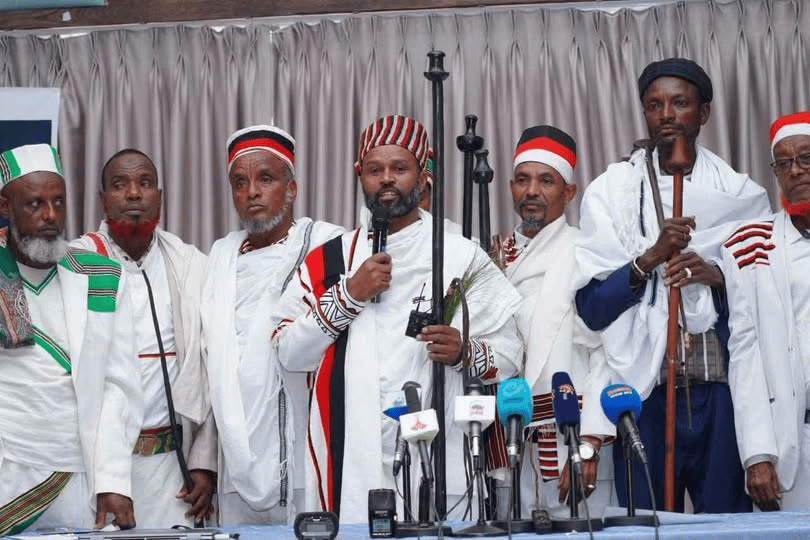
Finfinnee, Oromia — The Assembly of Gadaa Elders of Oromia has officially announced the dates for the celebration of Irreechaa, one of the most sacred and widely observed festivals of the Oromo people. In a statement released to the public, the elders confirmed that Irreechaa at Hora Finfinnee will be celebrated on September 23, while Irreechaa at Hora Harsadee will take place on September 24, 2019.
Irreechaa is a centuries-old thanksgiving festival celebrated at the banks of rivers and lakes, most notably at Hora Finfinnee (Lake Finfinnee) and Hora Harsadee (Lake Harsadee). It marks the end of the rainy season and the beginning of a new year in the Oromo calendar — a time of renewal, reflection, and communal gratitude to Waaqa (God) for blessings received.
A Festival of Thanksgiving and Hope
In their statement, the Gadaa elders emphasized the profound meaning of Irreechaa, describing it as a celebration of thanksgiving, hope, unity, love, reconciliation, and renewal. “Irreechaa is a festival of gratitude, hope, unity, love, reconciliation, and rebirth,” the elders declared. “Therefore, all Oromo people, as well as all nations, nationalities, and peoples of our country and the entire world, are invited to honor Irreechaa together with the Oromo people.”
The invitation extends beyond the Oromo nation itself, reflecting the festival’s universal message of peace and togetherness. Irreechaa has long served as a gathering point for people of all backgrounds — a day when differences are set aside and communities join hands in celebration and prayer.
A Call to Preserve Tradition
The elders also stressed the importance of observing Irreechaa according to its longstanding customs, traditions, and sacred norms (safuu). “Irreechaa at Hora Finfinnee and Hora Harsadee will be celebrated on September 23 and 24, 2019, respectively,” the statement read. “Like other Irreechaa celebrations, it will be observed in accordance with the culture, tradition, and sacred order of Irreechaa.”
The Gadaa system, a traditional democratic governance structure of the Oromo people recognized by UNESCO as intangible cultural heritage, plays a central role in organizing and preserving the festival’s rituals. The elders’ announcement underscores their continued role as custodians of Oromo culture and tradition.
A Warm Invitation to All
In closing, the Assembly of Gadaa Elders extended a heartfelt invitation to all Oromo people to welcome visitors with the warmth and hospitality for which the Oromo are known. “Therefore, we call upon all Oromo people to receive every guest who comes to them with the culture, tradition, and hospitality of our people,” the elders urged.
The message is clear: Irreechaa is not merely a festival — it is a living expression of Oromo identity, faith, and community. As the dates approach, anticipation is building across Oromia and beyond, with preparations underway at Hora Finfinnee and Hora Harsadee.
For the Oromo people, Irreechaa 2019 promises to be a time of collective renewal — a moment to give thanks, seek reconciliation, and reaffirm the bonds that unite them as one people.
Source: Assembly of Gadaa Elders of Oromia

Edmonton Oromo Community Celebrates Irreecha Malkaa in Vibrant Cultural Splendor
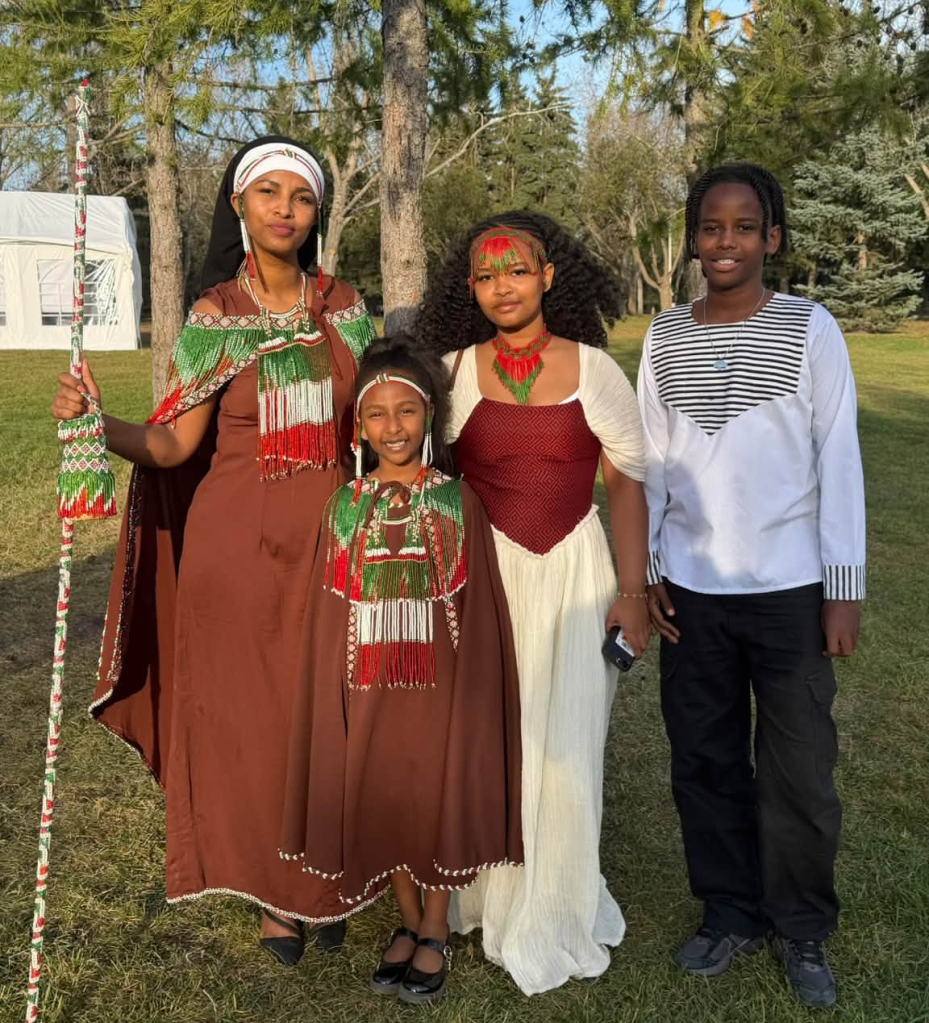
(ONA, Edmonton, 19 September 2026) The Oromo community in Edmonton, Canada, came together in joyous celebration of Irreecha Malkaa – Edmonton, honoring their cherished cultural festival with traditional attire, symbolic greenery, and messages of renewal, peace, and hope.
The celebration, held with great warmth and enthusiasm, saw community members adorned in beautifully decorated traditional Oromo clothing, proudly displaying the cultural heritage that binds them together across generations and continents. Participants carried fresh green grass and blooming flowers — the treasured symbols of Irreecha — bringing the essence of the ancestral festival to life in the heart of Canada.
A Message of Renewal and Growth
At the heart of the gathering was the exchange of heartfelt blessings marking the transition from the rainy season to spring. Community members greeted one another with the beloved Irreecha salutation:
“Baga bacaqii gannaa keessaa baatanii booqaa birraa geessan!” — congratulations on emerging from the rains and reaching the blossoming of spring — a message that carries profound meaning of renewal, resilience, and hope for growth and prosperity in the year ahead.
Prayers for Peace, Unity, and New Hope
Beyond the colorful attire and ceremonial symbols, participants shared prayers and good wishes for the community and the wider world:
“Irreechi nagaa, tokkummaa, galata, jaalalaafi abdii haaraa nuuf haa fidu,” they declared — may Irreecha bring us peace, unity, gratitude, love, and new hope.
The message resonated deeply among those gathered, reinforcing the festival’s enduring role as a source of spiritual strength and communal solidarity.
A Celebration of Oromo Identity in the Diaspora
The Edmonton celebration stands as part of a broader global observance of Irreecha by Oromo communities worldwide. Far from their homeland, diaspora communities continue to preserve and nurture their traditions, passing them to new generations and sharing the beauty of Oromo culture with the wider Canadian society.
The vibrant colors of the Oromo flag — green, red, and white — adorned the celebration, and the sounds of traditional songs and blessings echoed through the gathering, creating a space of belonging and pride for all who attended.
A Blessing for All Oromo People
As the celebration concluded, one message rang out clearly for Oromo people everywhere:
“Baga Ayyaana Irreechaa geessan! Happy Irreecha! May this season bring blessings and joy to all Oromo people.”
The Edmonton Irreecha Malkaa celebration was more than a festival — it was a reaffirmation of identity, a bridge between generations, and a testament to the enduring spirit of the Oromo people, united across borders by culture, faith, and hope.
Oromo Community in London Celebrates Irreecha with Joy, Reflection, and Hope
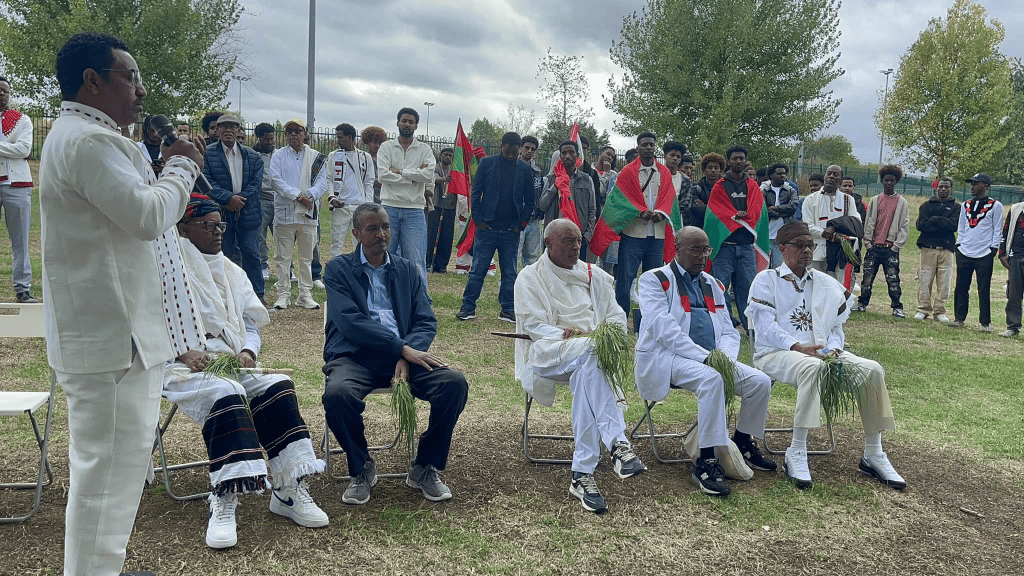
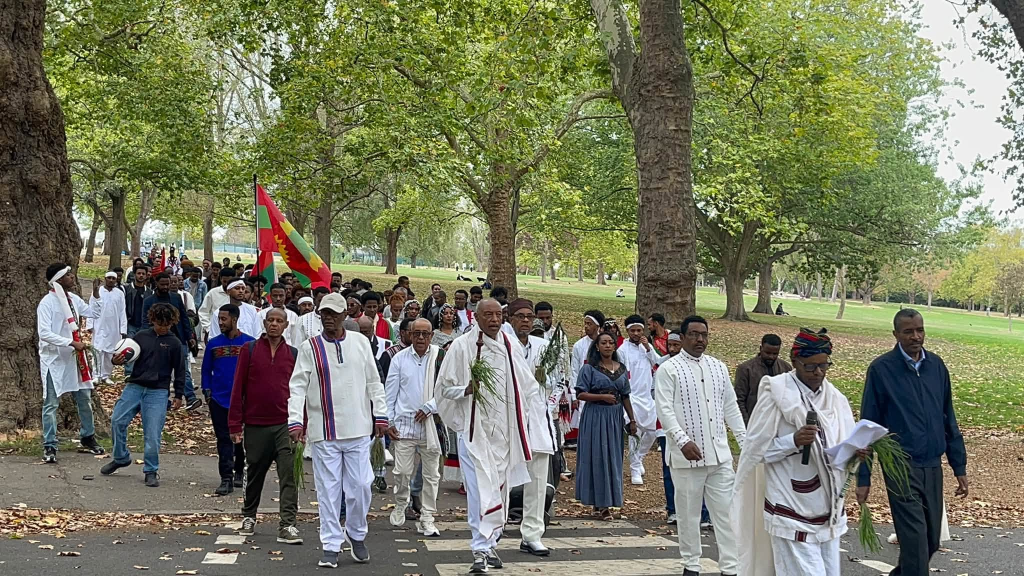
London, UK — The Oromo community in the United Kingdom gathered in London on 19 September 2026 to celebrate Irreecha, the sacred Oromo Thanksgiving festival, in a vibrant display of culture, faith, and unity.
The celebration, organised by Hawaasa Oromoo biyya UK – London, brought together Oromo families and friends from across the United Kingdom for a day of gratitude, reflection, and cultural pride.
A Celebration Rooted in Gratitude
Irreecha is one of the most beautiful and meaningful parts of Oromo culture. It is a time when the Oromo people come together to give thanks to Waaqa for life, peace, rain, harvest, family, and the blessings of the past season.
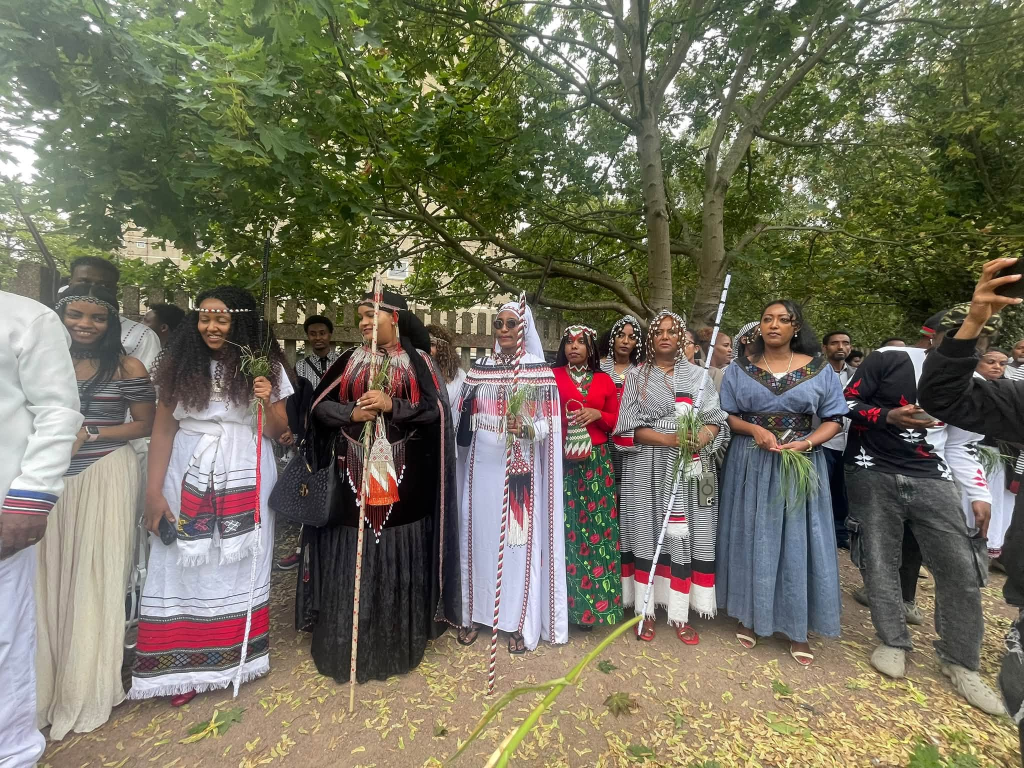
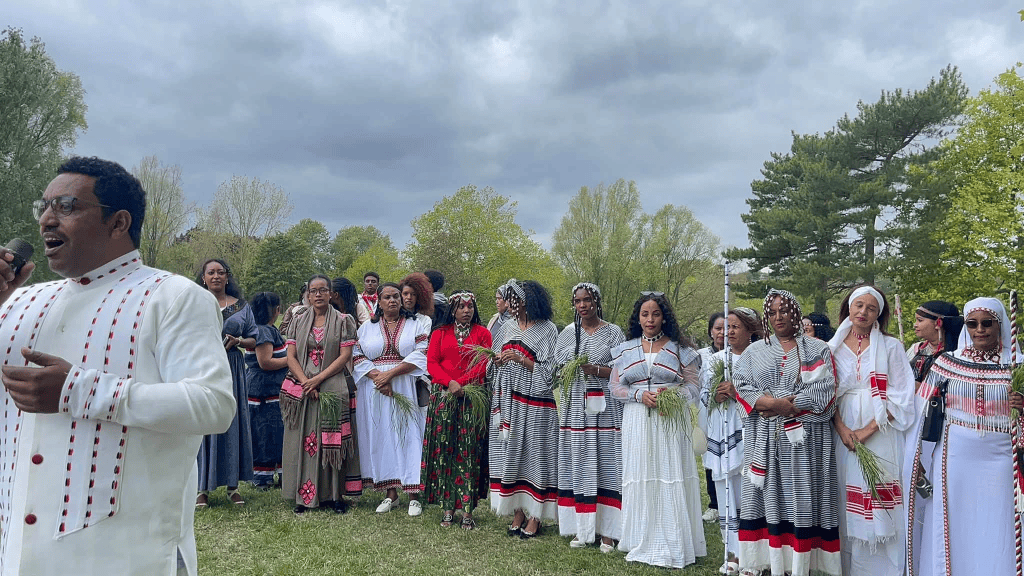
More than just a celebration, Irreecha is an expression of gratitude, unity, reconciliation, hope, and renewal. People gather in nature, often near rivers and lakes, carrying fresh green branches and flowers as symbols of life, abundance, and renewal.
Through prayers, songs, traditional clothing, and cultural expressions, communities celebrate together and give thanks for the blessings of creation.
A Time for Reflection and Remembrance
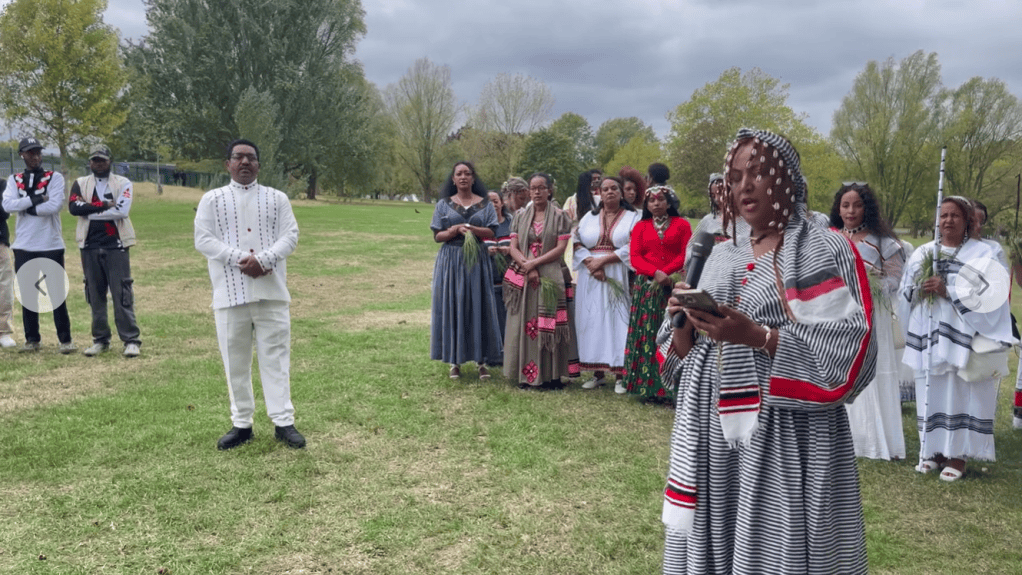
During the London celebration, speakers reflected on the journey of Irreecha and the sacrifices made to elevate the festival to its current standing. It was noted that great effort and dedication were required to bring Irreecha to the level of recognition it enjoys today.
The community also paused to remember the tragic events of 2016 at Arsadi, where lives were lost during Irreecha celebrations. Those who gathered were reminded that the sacrifices made that day will never be forgotten — a solemn moment that underscored the resilience and determination of the Oromo people.
Strengthening Bonds and Building Unity
Irreecha is also a time to strengthen relationships, forgive one another, resolve differences, and look toward the future with hope. The celebration reflects the deep Oromo understanding that human beings are connected to one another, to the land, and to the natural world.
In London, this spirit of unity was on full display as community members came together in traditional attire, sharing prayers, songs, and fellowship. Elders, youth, and children alike participated in the festivities, ensuring that the traditions of their ancestors continue to thrive in the diaspora.
A Message of Peace and Hope
As the celebration drew to a close, heartfelt wishes were extended to Oromo communities around the world:
“May this Irreecha bring peace to our hearts, unity to our communities, prosperity to our families, and hope for the generations to come.”
The gathering concluded with the traditional blessings that echo across Oromo celebrations everywhere:
“Happy Irreecha! 🌿 🙏🏾 🌳”
“Irreecha nagaan! 🌳”
“Horaa bulaa, deebanaa! ❤️💚❤️”
Irreecha: A Tradition That Transcends Borders
Irreecha remains a powerful symbol of Oromo identity, connecting millions of people across Ethiopia and the global diaspora. From the shores of Lake Hora Arsadi in Bishoftu to community halls and parks in London, Melbourne, Minneapolis, and beyond, the festival continues to unite Oromo people in gratitude, hope, and shared heritage.
As the Oromo community in London demonstrated, Irreecha is not merely a tradition of the past — it is a living, breathing celebration of faith, resilience, and the enduring bonds of community.
Irreecha nagaan! 🌿

Oromo Community in Melbourne to Hold Memorial for Artist Ilfinash Qannoo in Dandenong

The Oromo Community in Melbourne has announced it will host a special memorial event to honour the life and legacy of the beloved artist and freedom fighter, Ilfinash Qannoo, on September 12, 2026.
The Oromo Community in Melbourne (OCM) has organised a commemorative gathering to celebrate the life and enduring legacy of Artist Ilfinash Qannoo, who passed away recently in Oromia.
The memorial program will take place on September 12, 2026, at Dandenong Harmony Square, beginning at 5:00 PM.
A Celebration of Life and Legacy
Artist Ilfinash Qannoo was more than a performer—she was a symbol of Oromo resilience, unity, and the enduring struggle for freedom. Throughout her life, she dedicated herself to advocating for Oromo liberation, justice, human rights, and gender equality, using her art as a powerful tool for change.
Her passing has been deeply felt by Oromos in Victoria, across Australia, and around the world. The memorial event organised by the OCM offers the community an opportunity to come together, share their grief, and—most importantly—celebrate her remarkable contributions.
A Call to the Community
The Oromo Community in Melbourne has extended a warm invitation to all members of the community and friends of Oromia to attend the memorial gathering:
“Come to Dandenong Harmony Square at 5:00 PM and let us express the love and respect we hold for our artist!”
The event will feature a program of tribute, reflection, and cultural celebration, honouring the life of a woman who gave everything to the Oromo cause.
Event Details
📍 Location: Dandenong Harmony Square, Victoria, Australia
📅 Date: September 12, 2026
⏰ Time: 5:00 PM
Honouring a Heroine
Ilfinash Qannoo’s legacy is one of courage, dedication, and unwavering commitment to her people. Her music and advocacy inspired millions, and her memory continues to unite Oromos across the globe.
The OCM’s memorial event is not only a tribute to her life but a reaffirmation of the values she stood for—unity, justice, and the unyielding pursuit of freedom for Oromia.
A Community United in Remembrance
As Oromos in Victoria gather at Dandenong Harmony Square, they will do so with heavy hearts but also with pride—pride in a woman who represented the very best of Oromo culture, resilience, and hope.
The event promises to be a powerful moment of community solidarity, cultural expression, and collective remembrance.
Join Us
All members of the Oromo community, friends of Oromia, and supporters of justice and human rights are warmly invited to attend.
Let us come together to honour a true heroine of Oromia. Let us celebrate her life, her art, and her enduring legacy. Let us show the world that Ilfinash Qannoo will never be forgotten.
Galatoomaa! — Thank you!
Event Summary:
| Detail | Information |
|---|---|
| Event | Memorial for Artist Ilfinash Qannoo |
| Organiser | Oromo Community in Melbourne |
| Location | Dandenong Harmony Square, Victoria |
| Date | September 12, 2026 |
| Time | 5:00 PM |
Bilisummaan Oromoof!

A Life Worth Celebrating—A4O Calls for Honor, Not Grief, for Artist Ilfinash Qannoo
By Our Correspondent
(Melbourne, Australia – 8 September 2026)-In a poignant and powerful statement released today, Advocacy for Oromia (A4O) has called on Oromos and friends of the struggle worldwide to transform mourning into celebration for the late artist and freedom fighter, Ilfinash Qannoo.
The Melbourne-based advocacy group, speaking from their Australian headquarters, emphasized that while the loss of the beloved artist is deeply felt, her life, legacy, and unwavering commitment to the Oromo cause demand a response of honor rather than sorrow.
A Life Dedicated to Liberation
Ilfinash Qannoo was no ordinary artist. According to A4O, she was a steadfast pillar of the Oromo liberation movement, dedicating her entire life to the struggle for Oromo self-determination. Her artistry was not merely entertainment—it was resistance. Her voice was not just melody—it was a clarion call for justice.
“Artist Ilfinash Qannoo spent her whole life supporting and advancing the Oromo struggle for freedom,” the statement reads, positioning her among the most committed cultural warriors of her generation.
More Than an Artist—A Symbol
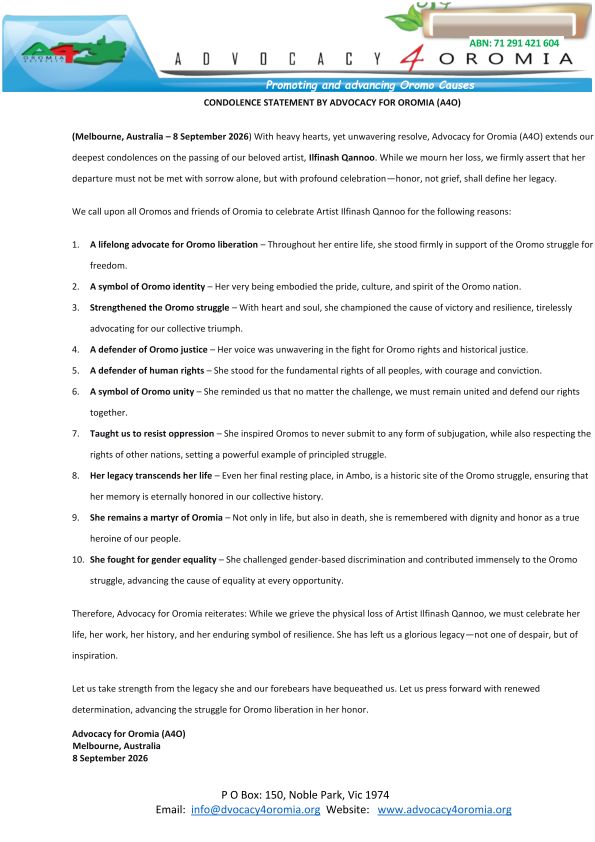
A4O’s statement highlights ten compelling reasons why Ilfinash Qannoo’s legacy must be celebrated:
A Symbol of Oromo Identity: She embodied the pride, dignity, and cultural richness of the Oromo nation. Her very presence was a testament to Oromo resilience and identity.
Champion of Justice: She was a fearless defender of Oromo rights, human rights, and gender equality. She challenged oppression in all its forms and stood against discrimination, including gender-based injustice.
Unifier of the Oromo People: At a time when division threatens the struggle, Ilfinash Qannoo stood as a powerful symbol of Oromo unity, reminding her people that solidarity is the foundation of victory.
Teacher and Inspiration: Through her life and work, she taught Oromos to resist subjugation with dignity, while also respecting the rights of other nations—a rare and powerful example of principled advocacy.
Martyr for the Cause: Her final resting place in Ambo is now etched into the historical landscape of the Oromo struggle. Her grave, like her life, has become a site of memory and honor.
A Legacy That Transcends Death
Perhaps the most striking aspect of A4O’s tribute is the assertion that Ilfinash Qannoo’s impact extends far beyond her lifetime. She did not simply live for Oromia; she ensured that even in death, she would remain a rallying figure for the movement.
“She left us not with despair, but with a glorious legacy,” the statement declared. “We are called to take strength from what she and our forebears have left us, and to rededicate ourselves to the struggle with renewed vigor.”
A Call to Action, Not Lamentation
In what can be described as a clarion call to the Oromo diaspora and the wider movement, A4O urged supporters to channel their grief into action. The organization stressed that the most fitting tribute to Ilfinash Qannoo is not tears, but a renewed commitment to the goals she championed.
“We must celebrate her life, her work, her history, and her enduring symbol of resilience,” the statement emphasized. “Let us march forward in her honor, advancing the struggle for Oromo liberation with determination and unity.”
Global Reach of the Statement
Issued from Melbourne, Australia, on 8 September 2026, the statement reflects the global nature of the Oromo struggle and the far-reaching influence of cultural icons like Ilfinash Qannoo. A4O’s message transcends geographic boundaries, speaking directly to Oromos in the homeland and across the diaspora.
The advocacy group concluded with an unwavering declaration: “Victory to Oromia!” —a fitting epitaph for a woman whose life was dedicated to that very cause.
Historical Context
Ilfinash Qannoo’s passing marks the end of an era in Oromo cultural and political history. She was among a generation of artists who used their craft as a weapon of resistance, challenging the status quo and inspiring millions. Her death is not just a loss of talent, but the departure of a moral compass for a movement in constant pursuit of justice.
As Oromos around the world reflect on her legacy, A4O’s message is clear: Grieve, yes—but more importantly, celebrate. Honor her by carrying the torch she has passed on.
About Advocacy for Oromia (A4O): Based in Melbourne, Australia, A4O is a diaspora advocacy organization committed to advancing the rights, justice, and self-determination of the Oromo people through awareness, advocacy, and solidarity initiatives.
“We mourn her loss, but we celebrate her life—for in her, Oromia found a voice that will never be silenced.”

Beloved Artist and Freedom Fighter Ilfinash Qannoo Passes Away at 64
The Oromo Liberation Front announces the death of a legendary voice of the Oromo struggle, who inspired generations through music and resistance.
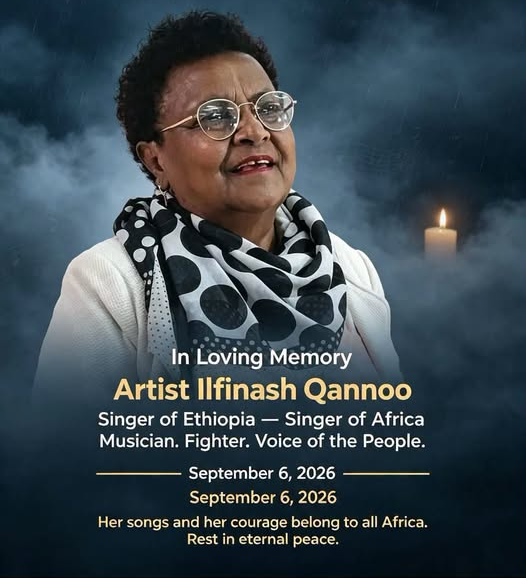
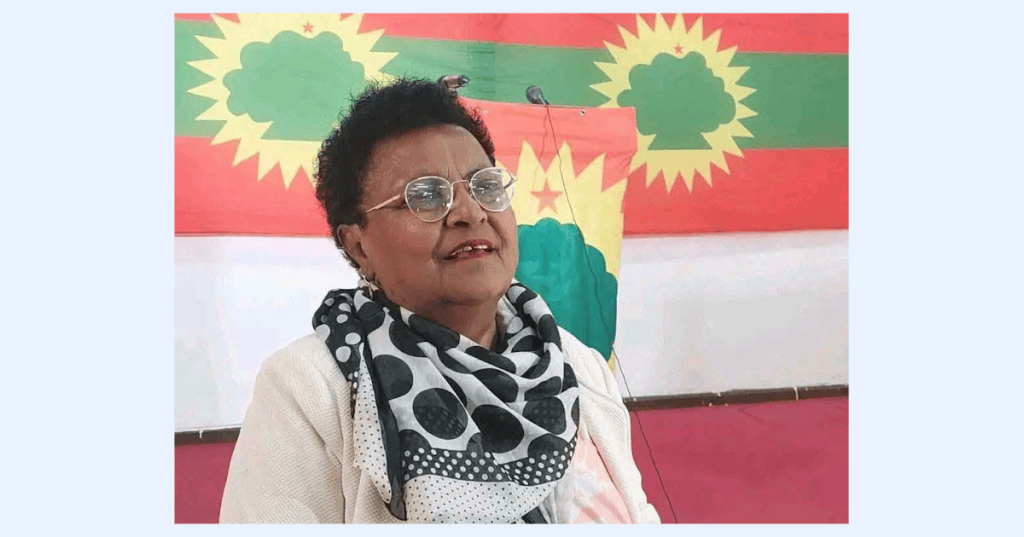
FINFINNEE, Oromia – The Oromo Liberation Front (OLF/ABO) has announced with profound grief the passing of iconic artist and freedom fighter Ilfinash Qannoo, who died on September 06, 2026, in Finfinnee at the age of 64.
Her loss, the organization stated, “is not merely the loss of an artist. It is the silencing of a voice that sang freedom for over six decades. It is the emptying of a heart that burned with love for Oromia. It is the falling of a flag that inspired millions to rise against oppression.”
From Saxxoo to the Stage
Born in 1962 in Saxxoo, East Wallagga Zone, Western Oromia, Ilfinash was drawn to the arts from childhood. Her coming of age coincided with a period of intense political awakening across Ethiopia, transforming her from a performer into a voice for the voiceless.
Her path to fame—and persecution—began in 1976 at a historic cultural performance in Finfinnee, where she posed the revolutionary question that became an anthem of resistance:
“Qawwee malee maaltu bilisa nu baasa?”
(“Without the gun, what will set us free?”)
From that moment, her life became inseparable from the struggle for Oromo liberation. Her stage became a battlefield, her microphone a weapon, her lyrics a declaration of war against injustice .
The Price of Resistance
For her unwavering commitment to the Oromo cause, she paid a heavy price. Under both the Derg regime and the later Woyanne government, she endured long years of imprisonment alongside countless other freedom fighters .
Her suffering included brutal torture—having her scalp forcibly shaved with broken glass—leaving deep and lasting physical and psychological wounds. Upon her release, with the help of Oromo patriots, she was secretly taken to Kenya and later granted asylum in Norway, where she continued her work from exile .
Despite these hardships, she produced over 10 albums throughout her life, each a powerful contribution to the Oromo liberation movement. Even while living in exile, she traveled repeatedly to Eritrea to inspire fighters when the OLF was waging its armed struggle .
A Voice That Nurtured Generations
Ilfinash was more than a singer—she became a living archive of Oromo memory. Her music carried the soil of rural Oromia and the fire of a people’s longing for dignity. In her final years, too frail to stand, she was carried to gatherings—not as a relic, but as a living flame .
Perhaps one of her most significant legacies was her role as a trailblazer for Oromo women. At a time when restrictive expectations limited women’s participation in public life, she challenged both political repression and social conventions .
The Oromo Community of Minnesota honored her as a “pioneering role as an Oromo woman artist who challenged political repression and restrictive expectations of women in public life”—courage that helped create space for generations of Oromo artists and women who followed .
Final Words
In her final moments, even as her body weakened, her spirit burned bright. Her last words were not of regret, but of love:
“Oromoo koo! ABO koo! WBO koo! Bilisummaa! Oromiyaa! Tokkummaa fi jaalala Oromummaa…”
(“My Oromo! My OLF! My Oromo Liberation Army! Freedom! Oromia! Unity and love of Oromummaa…”)
She passed at age 64, still singing, still hoping, still burning for freedom until her very last breath.
A Call to Carry the Torch
The Oromo Liberation Front extends its deepest condolences to her family, her two beloved daughters Hawwii and Daangaa, her relatives, fellow freedom fighters, and the entire Oromo nation.
They call upon the people to remember her message of unity and love, urging all Oromos to carry forward the torch she lit:
“Let us strengthen our unity. Let us reinforce our love for one another. Let us complete the struggle they began—so that Oromia may be free.”
Her memory will forever be etched in hearts, her songs forever echo in struggles, her spirit forever march alongside.
“Qabsa’aan ni kufa, qabsoon itti fufa!”
(“The fighter may fall, but the struggle continues!”)
Rest in power, Beloved Ilfinash Qannoo.
You did not die—you were promoted to immortality.

The Voice That Refused to Be Silenced: Minnesota Oromo Community Mourns Iconic Artist Ilfinash Qannoo

A tribute to a pioneering artist whose music and courage shaped Oromo identity across generations and continents
MINNEAPOLIS, Minnesota – September 6, 2026
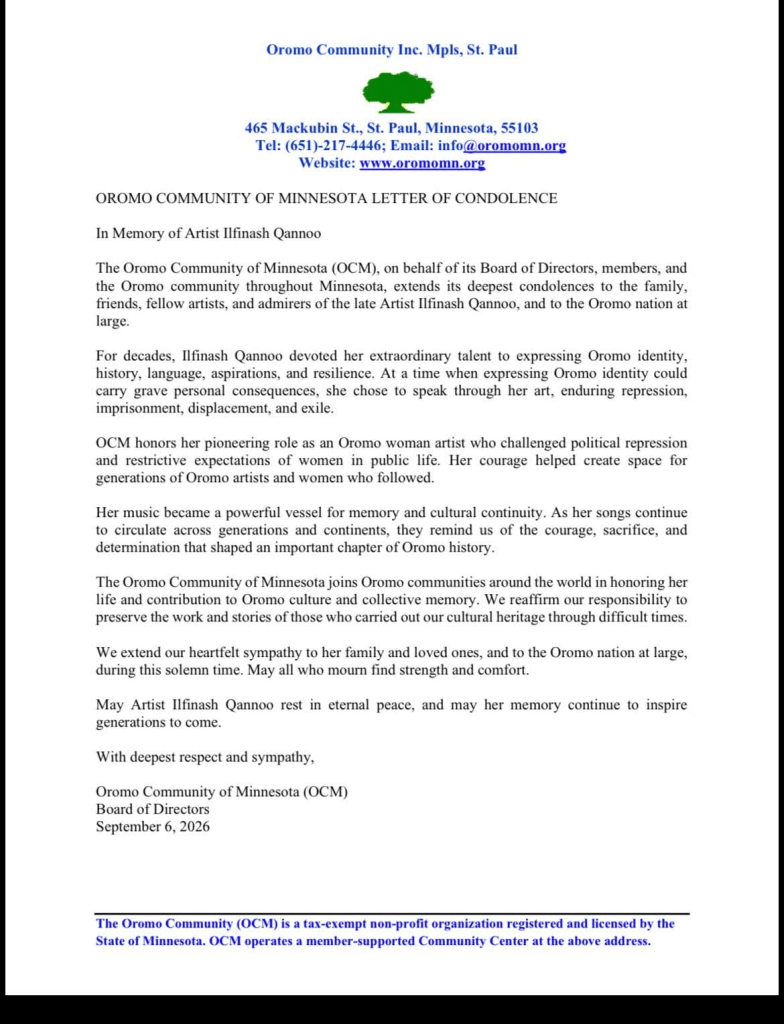
The Oromo Community of Minnesota (OCM), one of the largest Oromo diaspora organizations in the United States, has issued a formal letter of condolence honoring the life and legacy of Artist Ilfinash Qannoo, whose passing marks the end of an era for Oromo arts and cultural expression.
In a statement released today, the organization paid tribute to an artist who, for decades, transformed personal sacrifice into an enduring cultural treasure, becoming a symbol of resistance, resilience, and identity for Oromo people worldwide.
A Life Dedicated to Cultural Preservation
Ilfinash Qannoo was more than a musician or performer. She was a cultural archivist, a linguistic guardian, and a fearless voice who understood that art could carry the weight of an entire people’s history. Through her extraordinary talent, she devoted her life to expressing Oromo identity, history, language, aspirations, and resilience—often at great personal cost.
The OCM statement emphasized that during decades when openly expressing Oromo identity could carry grave personal consequences, Ilfinash chose to speak through her art. She endured repression, imprisonment, displacement, and exile, yet her creative spirit remained unbroken. Her music and performances became acts of quiet defiance in the face of political oppression, preserving the Oromo language and traditions at a time when they were systematically marginalized.
A Pioneer for Oromo Women in Public Life
Perhaps one of her most significant legacies was her role as a trailblazer for Oromo women. At a time when restrictive expectations limited women’s participation in public life, Ilfinash challenged both political repression and social conventions.
The OCM honored her as a “pioneering role as an Oromo woman artist who challenged political repression and restrictive expectations of women in public life.” Her courage helped create space for generations of Oromo artists and women who followed, proving that creative expression and political consciousness could go hand in hand.
“Her courage helped create space for generations of Oromo artists and women who followed,” the OCM board wrote, acknowledging that her influence extended far beyond music into the very fabric of Oromo social and political life.
Music as Memory and Resistance
Ilfinash’s music became a powerful vessel for memory and cultural continuity. Her songs, which continue to circulate across generations and continents, have served as an informal archive of Oromo history, preserving stories, struggles, and triumphs that might otherwise have been lost.
The OCM statement noted that her music “reminds us of the courage, sacrifice, and determination that shaped an important chapter of Oromo history.” For Oromo communities scattered across the globe—from the Horn of Africa to the diaspora centers of North America, Europe, and Australia—her voice became a thread connecting them to their homeland and heritage.
A Global Mourning
The Minnesota Oromo community, which numbers in the thousands, joins Oromo communities around the world in mourning this profound loss. The OCM pledged to continue preserving her work and the stories of those “who carried our cultural heritage through difficult times.”
“We reaffirm our responsibility to preserve the work and stories of those who carried our cultural heritage through difficult times,” the statement reads, acknowledging that the preservation of Oromo culture rests on the shoulders of those who, like Ilfinash, sacrificed their safety and comfort for the sake of collective memory.
Calls for Celebration Amid Grief
The OCM’s formal letter follows a growing chorus within the Oromo diaspora and homeland alike, urging that Ilfinash’s life be celebrated as much as her death is mourned. Many have echoed sentiments expressed in recent weeks that her legacy is one of joy, defiance, and triumph—not merely sorrow.
“May Artist Ilfinash Qannoo rest in eternal peace, and may her memory continue to inspire generations to come,” the OCM concluded in their letter, striking a tone of solemn respect mixed with hope for the future.
A Legacy That Endures
Ilfinash Qannoo’s death represents a significant loss for the Oromo cultural landscape. Yet her life’s work ensures that her voice will continue to resonate through the generations she inspired and the communities she helped to empower.
As the Oromo diaspora reflects on her contributions, her songs will undoubtedly continue to play in homes, community gatherings, and cultural events—each note carrying the defiance, resilience, and pride of a people whose identity she devoted her life to preserving.
The Oromo Community of Minnesota’s full letter of condolence can be accessed through the organization’s official channels. The Oromo community across Minnesota and beyond extends its deepest sympathy to her family, friends, fellow artists, admirers, and the Oromo nation at large.
With deepest respect and sympathy,
Oromo Community of Minnesota (OCM)
Board of Directors
September 6, 2026
#IlfinashQannoo #OromoArt #CulturalResilience #OromoDiaspora #MinnesotaOromo #LegacyOfResistance

Eulogy: Ilfinesh Qannoo (1962-2026): A Voice That Has Nurtured Generations
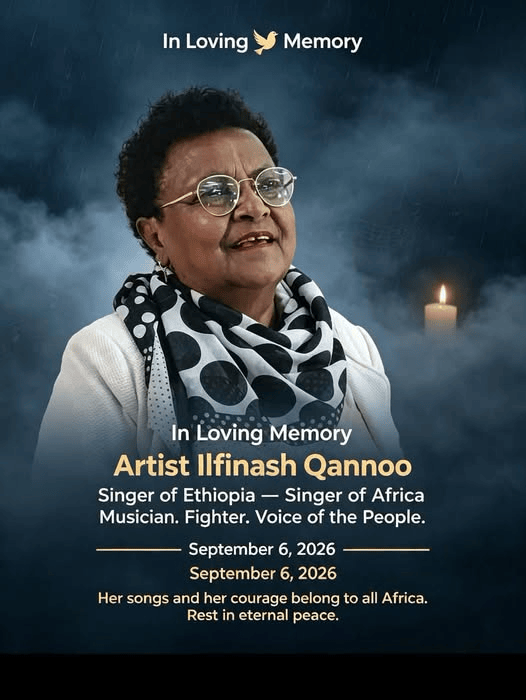
By Dhabessa Wakjira
We gather today with heavy hearts to mourn the passing of Ilfinash Qannoo, and yet, even in our grief, we find ourselves compelled to celebrate a life so extraordinary that mourning alone cannot contain it. Ilfinash Qannoo was not simply a singer. She was one of the most iconic, courageous, and influential Oromo women of her generation—a woman whose life was woven inseparably into the story of her people’s long struggle for dignity, identity, justice, and self-determination.
To speak of Ilfinash is to speak of commitment that never wavered, sacrifice that was never counted as loss, courage that never asked permission, and a devotion to the Oromo cause that outlasted every hardship placed before it. Hers was a life of artistic achievement, yes, but far more than that, it was a life offered, again and again, in service of something larger than herself.
The First Note of a Lifelong Song
From the moment she first stepped forward as a member of Wollega Kinet Guad, Ilfinash set out on a path from which she would never truly depart. That early beginning was not a stepping stone toward personal fame; it was the first note of a lifelong song dedicated to her people. From those early days until her final ones, her commitment to the Oromo cause never dimmed, never bent, and never went silent. Through her music, her voice, her courage, and the example of her own life, she awakened, inspired, and nurtured generation after generation of Oromo youth.
We must remember the times in which she sang. There were years when simply expressing Oromo identity, Oromo aspiration, Oromo pride required extraordinary courage—when a melody could be an act of defiance, and a lyric could carry the weight of a people’s unspoken longing. In those years, Ilfinash did not shrink from the risk. She took the gift she had been given—her voice—and turned it into an instrument of inspiration and resistance. She sang not because it was safe, but because it was necessary.
More Than an Artist
It would be a disservice to Ilfinash Qannoo’s memory to say only that she sang songs. She did something far greater: she gave voice to the hopes, the pain, the aspirations, the courage, and the unbending determination of an entire people. When her voice rose, it did not simply fill a room or a stage; it entered the hearts of Oromo youth across generations, and in doing so, it steadied them. It reminded them who they were. It gave them the strength to stand for their identity, their dignity, and their future, even when standing was costly.
In this way, she became something more than an artist. She became a symbol, a living demonstration that a single life, fully given, could serve a cause greater than itself. She poured out her talent, her energy, her courage, her voice, and ultimately her life for the Oromo people, one of the great nations of the Horn of Africa. In doing so, she showed us all that an artist can be far more than an entertainer. An artist can be a teacher. An artist can be an inspiration. An artist can become the guardian of a people’s collective struggle, and the voice through which a people’s aspirations are carried forward.
The Song That Echoes Through Generations
Among the many songs she gave to her people, one holds a place apart in the hearts of generations of Oromo people: “WBO Koo Maaloo Ree.” Its melody has traveled from parent to child, from one generation to the next, carrying memories of struggle, sacrifice, hope, and unshaken determination. It is no longer simply a song. It has become part of the emotional and historical memory of a people, woven into their story so deeply that it will continue to echo in the hearts of Oromo people yet to be born.
Unwavering Conviction
Perhaps the greatest lesson of Ilfinash Qannoo’s life was her firm and unwavering stand on the Oromo cause. She did not abandon her convictions when times grew difficult. She did not retreat when retreat would have been easier, safer, more comfortable. Her courage and her steadfastness stand today as an example for generations still to come, and they teach us something essential: that genuine commitment is not proven in moments of comfort, but in moments of difficulty and uncertainty. It is easy to declare loyalty when nothing is being asked of you. Ilfinash showed us what it means to hold to your convictions when everything is being asked of you.
A Bond Forged in Ambo
Ilfinash’s connection to Oromo youth was profound, and it was personal. She did not stand apart from them, observing from a distance; she stood among them, encouraged them, and shared directly in their hopes and in their struggles. Her time alongside Oromo youth in the forests and surrounding areas of Ambo forged a bond of deep mutual respect and affection, one that shaped the rest of her life. The love and the respect that the people of Ambo gave her in return were immense, and that relationship became one of the most meaningful of her entire life.
So deep was her attachment to Ambo and its people that she is remembered for a wish that reveals the depth of her heart: that if she should die, she wished to be laid to rest in Ambo, or, if that could not be, then even beneath the ice of Norway. These are not the words of someone who loved a place casually. They are the words of a woman whose experiences, whose memories, and whose sense of belonging were bound up entirely with the people who had walked beside her.
A Legacy That Will Never Die
Today, as we mourn Ilfinash Qannoo, we are also called to celebrate an extraordinary life fully lived. We mourn the loss of a great artist. But we remember, and will go on remembering, a woman whose legacy reaches far beyond music alone. We remember a courageous Oromo woman who used her voice when silence would have been easier. We remember a woman who remained committed when retreat was possible. We remember a woman who inspired generations, not only through the songs she sang, but through the example of the life she lived.
Her physical voice has now gone silent. But the voice she gave to her people—the voice of hope, of resistance, of identity, of belonging—will never disappear. Her songs will continue to be sung, in homes, at gatherings, in the quiet moments when a people needs reminding of who they are. Her courage will continue to inspire those who face their own difficult and uncertain times. Her commitment will continue to be remembered as a standard against which devotion to a cause is measured. And her name will remain written into the history and the collective memory of the Oromo people, for as long as that memory is kept.
—
Ilfinash Qannoo has departed from us. But her legacy remains.
She sang for her people. She stood with her people. She gave her voice to her people.
And her voice will live on with her people, from generation to generation.
Her voice will never die. Her legacy will never be forgotten.
Rest in peace, Ilfinash Qannoo.
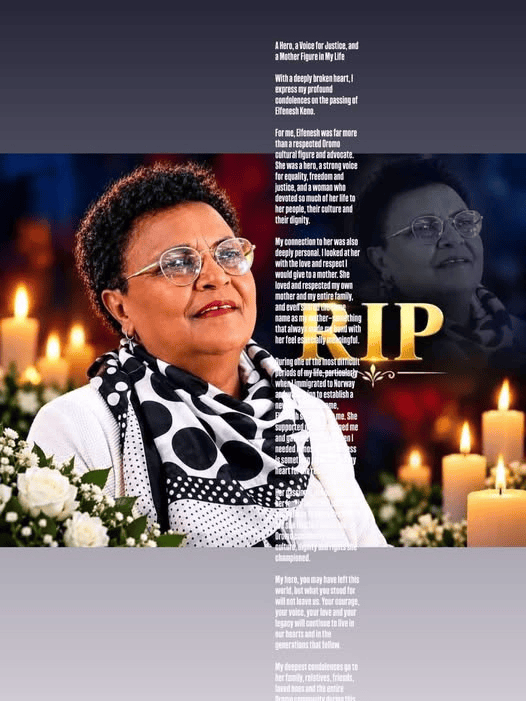

A Nation Mourns: The Passing of a Giant—Adde Ilfinesh Qannoo (1962-2026)
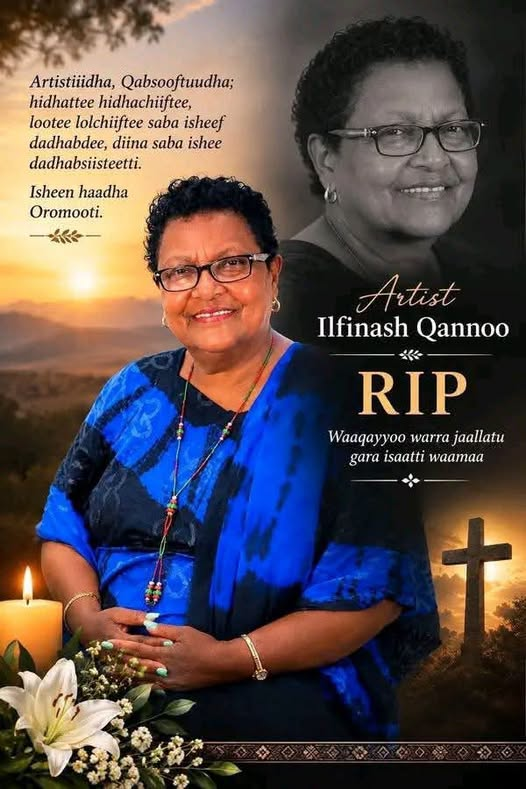
A Voice of Freedom Falls Silent, But Her Legacy Echoes Eternally
Finfinne, Oromia — Our nation lost a giant today. Adde Ilfinesh Qannoo, the renowned artist whose voice became the heartbeat of a people’s struggle, has passed from this world, leaving behind a legacy etched in the soul of the Oromo nation. Her departure marks the end of an era, but her spirit, her music, and her unyielding commitment to the Qabsoo Bilisummaa Oromoo (Oromo Liberation Struggle) will resonate for generations to come.
An Indelible Mark on History
Ilfinesh Qannoo was more than an artist; she was a monument to resilience, a symbol of identity, and a mother to a movement. Through her music, she gave voice to the joys, sorrows, and aspirations of her people, becoming a living archive of their history. Her songs, imbued with the deep cultural motifs of the Oromo, served as both a comfort and a call to action, reminding her listeners of their dignity, their heritage, and their unalienable right to freedom.
Her contributions to the Qabsoo Bilisummaa Oromoo were not merely artistic but deeply personal and sacrificial. She understood that the struggle for liberation was fought not only in the forests and on the battlefields but also in the hearts and minds of the people. Through her music, she fortified the spirit of the movement, offering hope in moments of despair and courage in the face of oppression.
A Faithful and Loyal Contributor
Throughout her life, Ilfinesh Qannoo remained steadfast in her dedication to the Oromo cause. She was a loyal contributor to the liberation struggle, using her platform to amplify the voices of the marginalized and to challenge the systems of injustice that sought to silence her people. Her courage in the face of censorship, persecution, and hardship stands as a testament to her character and her unwavering commitment to justice.
Even when her body grew frail and her steps grew slow, her spirit remained an unyielding force. Her presence at gatherings of the Oromo Liberation Front (OLF) and other movement events was a source of inspiration and moral clarity. She was the living embodiment of the Oromo proverb “Ilkaan socho’e buqqa’uun isaa hin oolamu”—a seed that moves does not rot. She was that moving seed, ensuring that the dream of liberation never decayed.
A Legacy That Lives Forever
Though her physical journey has ended, the essence of Ilfinesh Qannoo—her music, her symbolism, her love—is a permanent inheritance for the Oromo people. Her life continues to resonate, to inspire, and to fortify those who hold her memory dear. She may have left this world, but her voice remains, echoing in the songs that will be sung, the stories that will be told, and the hearts that will never forget.
Her legacy exists at a powerful intersection: the intimate space of a family mourning a beloved matriarch, and the public sphere honoring an artist who channeled a people’s soul. As flowers are laid and her songs are played anew, the Oromo nation is not just saying goodbye. They are affirming that the struggle she gave voice to continues, the identity she symbolized remains unbroken, and the love she embodied is eternal.
A Message of Condolence from Advocacy for Oromia (A4O)
The Advocacy for Oromia (A4O) joins the global Oromo community in mourning this profound loss. In a statement released today, the organization extended its heartfelt condolences to Ilfinesh Qannoo’s family and the entire Oromo nation:
“Our nation lost a giant today. Adde Ilfineesh Qannoo, a renowned artist and loyal contributor to the Qabsoo Bilisummaa Oromoo, has left an indelible mark on our people and our history. Her legacy will live on forever. The Advocacy for Oromia (A4O) extends its sincere condolences to her family and the entire Oromo nation. May she rest in peace, and may her memory continue to inspire us all.”
An Eternal Prayer
And so, we offer our unending prayer: that Adde Ilfinesh Qannoo’s soul finds the eternal comfort and peace it so deeply deserves. May her spirit rest gently, knowing that her life was a masterpiece of love, labor, and liberation. For her family, her friends, and her people, we wish the warmth of her memory, the strength of her example, and the profound solace that comes from knowing her legacy is in the most capable hands: the hands of a people who will never forget.
Rest in peace, Adde Ilfinesh Qannoo. Your struggle is over, but your victory is assured in the hearts of those you loved and who loved you in return.
—
“A name is above the grave, and your name, Ilfinesh Qannoo, is etched in gold in the annals of Oromo history.”
—
This tribute is offered by Advocacy for Oromia (A4O) and the global Oromo community in loving memory of Adde Ilfinesh Qannoo.






