Category Archives: Media

Oromia: our history, our struggle and our future
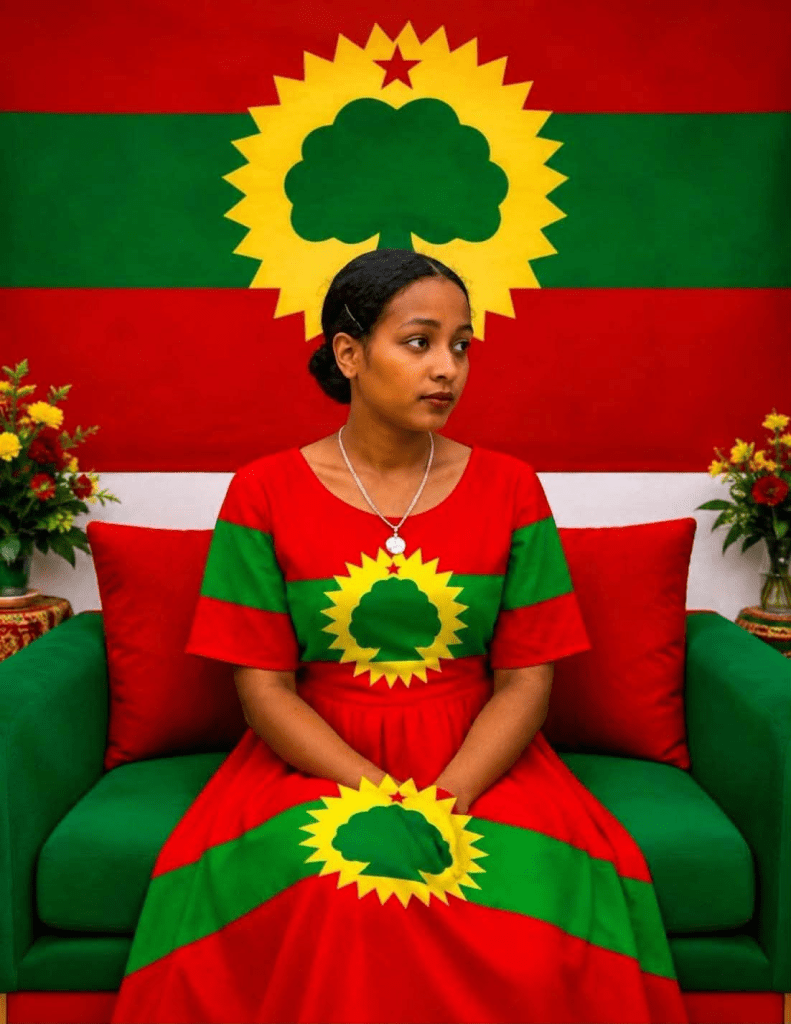
The history of the Oromo people is a profound narrative of resistance, resilience, and a continuing struggle for self-determination. This journey is marked by a distinct cultural identity, a long history of political marginalization, and an ongoing effort to shape a prosperous future.
 Our History: Identity, Conquest, and Resistance
The Oromo have a distinct cultural and political identity, traditionally organized under the Gadaa system, an indigenous egalitarian and democratic governance model . However, this autonomy faced a major turning point in the late 19th century during the “Ethiopian imperial conquest,” when Oromo territories were incorporated into the Ethiopian Empire through a process that many Oromo scholars characterize as colonization and subjugation .
This political domination continued through subsequent regimes, creating a deep-seated grievance centered on marginalization and exploitation by successive central governments .
 Our Struggle: Liberation, Protest, and Political Action
The struggle for liberation is multifaceted, taking political and social forms:
· Political Movements: The Oromo Liberation Front (OLF) has been the primary political vehicle, fighting for nearly half a century to liberate Oromo society from what it describes as “Abyssinian/Ethiopian settler colonialism” .
· Mass Protests: In 2014, a wave of protests erupted, driven by a generational “distributive crisis” and articulated through demands for ethnic self-determination against perceived domination by the Tigray People’s Liberation Front (TPLF). These protests were significantly coordinated by the diaspora via social media and satellite TV .
· Fragile State Relations: The current federal system, while recognizing ethnic regions, has often seen the Oromo regional government as lacking legitimacy, making the state’s control more contested here than in other areas . A tangible symbol of this tension is the ongoing dispute over land and expansion around Addis Ababa, which is geographically an enclave within Oromia .
 Our Future: Development, Autonomy, and Uncertainty
The future is a delicate mix of economic potential and political uncertainty:
· Economic Aspiration: The development of the Gada Special Economic Zone near Addis Ababa, inspired by Chinese economic models, signals an economic future based on industry, trade, and job creation .
· Persistent Conflict: The reality of current instability is stark. The Chinese Embassy warns its citizens against traveling to many parts of Oromia, particularly the western zones and areas north of the A4 and A3 highways, due to “extremely high” or “high” risk .
· Uncertain Path: The struggle for autonomy continues through both political and armed movements like the Oromo Liberation Army (OLA) . While significant economic development is planned, the path forward remains deeply insecure for many within the region.
The Oromo journey is one of leveraging a proud heritage to build a future of self-determination and prosperity, yet it navigates the deeply complex and often violent currents of Ethiopian state politics.
I hope this overview provides a balanced perspective. If you are interested in a specific aspect—such as the Gadaa system, the role of the diaspora, or the details of the current conflict—please let me know, and I can explore it further.

OBITUARY: Liiban Jaldeessaa Liiban, Respected 69th Abbaa Gadaa of the Borana, Passes Away in Finfinne
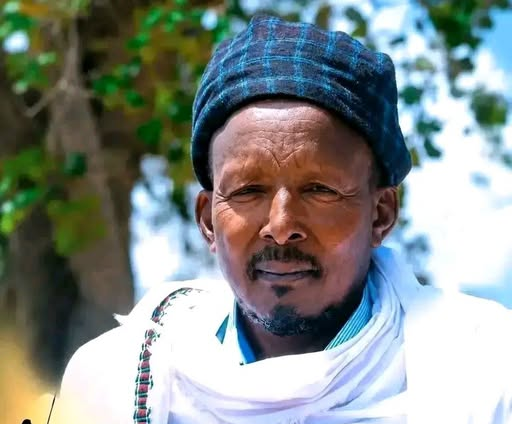
A Pillar of Oromo Heritage and Custodian of the Gadaa Tradition Has Left Us
By Dhabessa Wakjira
(ONA, Finfinne, Oromia) – The Oromo nation is mourning the loss of a distinguished elder and leader. Liiban Jaldeessaa Liiban, the 69th Abbaa Gadaa of the Borana, has passed away in Finfinne while receiving medical treatment. He was a revered figure who led his community from 2000 to 2008.
His leadership was defined by the principles of the Gadaa system, an indigenous institution recognized by UNESCO as a masterpiece of intangible cultural heritage . As Abbaa Gadaa, he was a central figure in a system that regulates not only the political and social life of the Oromo but also its religious and judicial matters. The role is one of immense responsibility, characterized by democratic principles, checks and balances, and a commitment to restorative justice.
A Legacy Rooted in Tradition and Resilience
The Abbaa Gadaa is the elected traditional leader within the Borana Oromo Gadaa system, a governance structure where authority is transferred through established eight-year cycles . The Gadaa system is more than a political institution; it is a way of life. It organizes the community into age grades, manages natural resources, resolves conflicts, and ensures the preservation of cultural values.
The role of an Abbaa Gadaa is complex. They are expected to be competent orators, skilled in the comprehension of laws and customs, and must demonstrate exceptional leadership qualities throughout their lives before assuming the role . As an ethical leader, an Abbaa Gadaa is tasked with ensuring peace, mobilizing the community for development projects like digging wells, and showing sympathy for the poor .
During his tenure, Liiban Jaldeessaa Liiban navigated a period in which a significant majority of respondents perceived substantial challenges, including changes in average rainfall and an increase in soil erosion . His leadership was a steady hand during difficult times, guiding his community with wisdom and resilience.
The Gadaa System: A Democratic Tradition
The Gadaa system, which Liiban Jaldeessaa Liiban so ably represented, is one of the most sophisticated indigenous governance systems in the world . It operates on principles of democracy, accountability, and the peaceful transfer of power. The system is structured around five classes (Gadaa grades) that succeed each other every eight years, ensuring that leadership is never concentrated in one individual or group for too long .
As the 69th Abbaa Gadaa, Liiban Jaldeessaa Liiban was a living embodiment of this ancient tradition. His leadership was not merely a position but a sacred duty—a responsibility to uphold the laws, customs, and values of his people.
A Nation Mourns
His passing is a significant loss for the Borana community and the wider Oromo nation. The Oromian News Agency extends its deepest condolences to his family and all who were touched by his leadership. His legacy as a keeper of the Gadaa tradition and a leader of his people will be remembered.
As is the custom during times of passing, the Oromo community reflects on the words of solace: “Waaqi lubbuu isaa nagaan haa boqochiisu” (May God rest his soul in peace).
The Oromo nation has lost a pillar of its heritage, but the principles of the Gadaa system—democracy, community, and resilience—that he represented, continue to guide the struggle and shape the future of the Oromo people.
Injifannoon Ummata Oromoo!
Waaqi lubbuu isaa nagaan haa boqochiisu!
This obituary is dedicated to the memory of Liiban Jaldeessaa Liiban, a leader, elder, and custodian of Oromo tradition.

Preserving the Sacred: Gadaa Elders Call for Authentic Celebration of Goobee and Shinooyyee
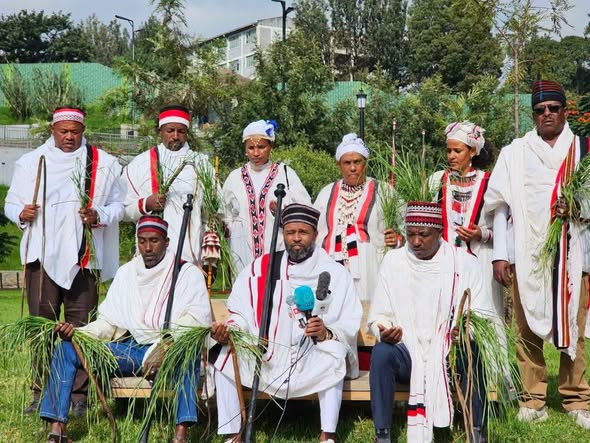
A Timeless Tradition at Risk of Losing Its Cultural Soul
By Dhabessa Wakjira
In the lush landscapes of Oromia, as the dark, rainy season gives way to the bright days of spring, a sacred celebration stirs. Goobee and Shinooyyee—the traditional games of young men and women—are more than a cultural event. They are a profound expression of Oromo identity, a living connection to the Gadaa system, and a thanksgiving to Waaqa (God) for the renewal of life.
But as these festivals have grown in popularity, the elders of the Gadaa system are raising a critical concern: the celebrations must remain rooted in their ancient customs and traditions.
The Voice of the Elders
The Abbootii Gadaa Tuulamaa—the Gadaa leaders of the Tulama Oromo—have issued a clear and urgent message. The Goobee and Shinooyyee festivities must be conducted “without abandoning the original culture and traditions.” This is not a mere suggestion; it is a call to protect the very soul of the tradition.
According to the elders, the primary purpose of these celebrations is to welcome the season of Birraa (spring). The games are not simply for entertainment; they are a heartfelt expression of love, a plea for blessings, and a prayer for hope, peace, and unity among the Oromo people. The specific rituals and protocols of Goobee and Shinooyyee are designed to channel the community’s collective spirit toward these goals.
The Rituals and Their Purpose
The Gadaa leaders described the Goobee and Shinooyyee celebrations as a structured, age-specific rite. The games are considered an act of love and blessing, involving prayers to God and expressions of good hope.
Goobee is the festival for young men, while Shinooyyee is for young women. Both are celebrations of spring’s arrival and the feelings of hope and love it brings, but they follow distinct traditional paths:
- Shinooyyee: The night before the main celebration, unmarried girls traditionally prepare the qunnii (grass) in their homes and sleep with it overnight. On the festival day, they carry it to the home of a respected elder, where they receive blessings. They then go from house to house, passing on the qunnii and spreading blessings throughout the community.
- Goobee: Similarly, the young men’s games are governed by specific cultural protocols designed to honor the community’s elders and the traditional order.
A Tradition Under Pressure
The concern voiced by the Abootii Gadaa is that the festival’s deep meaning is being diluted. They observe that “from time to time, individuals are performing un-cultural acts,” a practice that threatens to corrupt the sacred nature of the celebration. By emphasizing the traditional roles—requiring that participants be unmarried and adhere to the age-old customs—the elders are seeking to preserve the festival’s core purpose.
They have also clarified that the games are open to everyone, including married couples and older community members, but the central ritual is the purview of the youth, who are at the specific life stage for this rite of passage.
A Celebration of Unity and Identity
Despite these concerns, the Abootii Gadaa affirmed that Goobee and Shinooyyee are central pillars of Oromo cultural identity. The elders explained that while the festivities may have different names in different parts of Oromia, they are “a common culture for all Oromo people.” This shared heritage serves as a powerful unifier, strengthening social bonds and ensuring the continuity of Oromo history for future generations.
Conclusion: A Call to Protect the Heritage
The message from the Abbootii Gadaa Tuulamaa is a resounding call to action. As the Oromo people continue to revive and celebrate their cultural heritage, the essence of these traditions must not be lost. The authenticity of Goobee and Shinooyyee must be protected, ensuring that they remain a “game of love, blessing, prayer to God, and good hope.”
The elders are not simply guarding a memory; they are nurturing a living tradition that defines the identity of a people.

The Unrelenting Struggle: Oromo Resistance and the Brutal Reality of Fano Atrocities
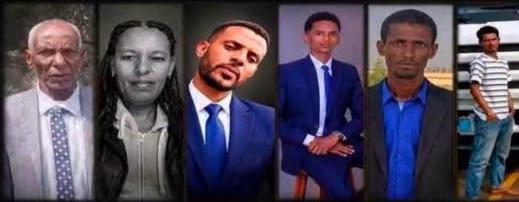
A Reflection on the Ongoing Crisis in East Wallagga and Horro Guduru
By Maatii Sabaa
To this day, the Oromo people have been subjected to the brutal force of the Fano militia. According to a report compiled by the United Oromo Evangelical Church and the Oromia Support Group, the atrocities are widespread—executions, torture, arbitrary detentions, destruction of property, and other acts of violence allegedly committed against Oromo civilians by both Ethiopian government forces and the Fano Amhara militia .
The deaths of fathers, mothers, and children—Oromo lives lost—are met with a chilling refrain: “It is nothing, be patient.” Behind every statistic is a family destroyed, a child orphaned, or a community traumatized. Silence in the face of such suffering only deepens the crisis .
But patience has its limits. When Oromo people are killed and their oppressors dance, those who call themselves “Fano heroes” celebrate. Yet when the Oromo rise to defend themselves, the same voices cry out: “The civilians are finished!” But the truth is simple: self-defense is a natural right. It is not a crime; it is an instinct for survival.
The Conspiracy Against Oromo Self-Defense
There is a deliberate campaign to deny the Oromo people their fundamental right to self-defense. The situation in the East Wallagga and Horro Guduru zones is particularly alarming.
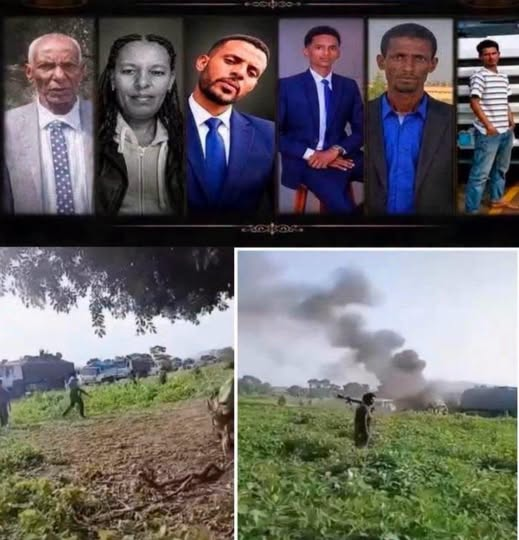
In the Gida Ayana district of East Wallagga, a brutal attack on August 19, 2026, targeted innocent civilians. A bank manager traveling with cash from Gida Ayana to Nekemte was killed in an ambush at Tulu Lencha . Kaffaloo Nagasaa Dayyaas, a farmer beloved in his community, was also among the victims . According to residents, Fano forces attacked ambulances, killing patients and a midwife, in addition to the bank managers and passengers . More than 60 people were killed in the attack, over 70 were wounded, homes were looted, and the violence displaced 20,000 people .
This is not a spontaneous development; it is a calculated plan that has been in motion since at least 2019. A UN document recorded that since 2018, Fano militia has been responsible for a substantial number of killings in East Wollega and Horo Guduru zones . The campaign includes the burning of 200 homes in Homa Galesa village, the killing of 21 villagers in Tullu Moti village, and the brutal beheading of a teenager in Darra district .
As the Oromo people face relentless attacks, their attempts to organize and defend themselves are sabotaged from within. The message is clear: while Oromo fighters are disarmed and disbanded, their enemies are being armed and empowered.
The Cost of Betrayal
The Oromo people have been subjected to a decades-long campaign of marginalization, dispossession, and violence. The current wave of attacks in East Wallagga and Horro Guduru is not an isolated tragedy—it is the latest chapter in a long history of brutality.
But what makes this moment particularly devastating is the silence—and complicity—of those who should be protecting the Oromo people. When Oromo civilians are killed, the world is told to look away. When Oromo resistance is met with disproportionate force, the narrative is twisted to blame the victims.
This is not just a failure of governance; it is a betrayal of the most basic principles of justice and humanity. The Oromo Global Forum has called upon the United Nations Human Rights Council to initiate an independent international investigation into the documented allegations .
A Call to Action
The Oromo people have waited too long for justice. They have been told to be patient while their children are killed, their villages burned, and their land stolen. But patience is not a virtue when it is used as a tool of oppression.
Self-defense is not aggression. It is the right of every people to protect their lives, their families, and their communities. To deny the Oromo this right is to condemn them to perpetual victimhood.
The international community must look beyond the carefully constructed narratives and see the truth: the Oromo people are under attack, and they are fighting for their survival.
Conclusion: The Truth Will Prevail
The conspiracy to silence the Oromo people will ultimately fail. The truth of what is happening in East Wallagga and Horro Guduru—and across Oromia—will not be hidden forever. The blood of the innocent cries out for justice, and it will be heard.
As the Oromo people continue to resist, they do so not out of hatred, but out of love for their children, their land, and their future. They fight for the right to live in peace, free from fear and oppression.
Oromoon of-ittisuu qaba. Of-ittisuun seera uumamaa ti. (The Oromo people have the right to self-defense. Self-defense is a natural law.)

The Unrelenting Struggle: Oromo Resistance and the Brutal Reality of Fano Atrocities
A Reflection on the Ongoing Crisis in East Wallagga and Horro Guduru
By Daandii Ragabaa
To this day, the Oromo people have been subjected to the brutal force of the Fano militia. The deaths of fathers, mothers, and children—Oromo lives lost—are met with a chilling refrain: “It is nothing, be patient.”
But patience has its limits. When Oromo people are killed and their oppressors dance, those who call themselves “Fano heroes” celebrate. Yet when the Oromo rise to defend themselves, the same voices cry out: “The civilians are finished!” But the truth is simple: self-defense is a natural right. It is not a crime; it is an instinct for survival.
The Conspiracy Against Oromo Self-Defense
There is a deliberate campaign to deny the Oromo people their fundamental right to self-defense. Behind the scenes, a web of actors—some in government, others in the media, and still more in diplomatic circles—works tirelessly to conceal the truth.
The situation in the East Wallagga and Horro Guduru zones is particularly alarming. Here, a strategic ploy is unfolding. Armed groups are being systematically dismantled within the regional state of Oromia (RSO) and reconstituted under the banner of Fano. This is not a spontaneous development; it is a calculated plan that has been in motion since at least 2019.
As the Oromo people face relentless attacks, their attempts to organize and defend themselves are sabotaged from within. The message is clear: while Oromo fighters are disarmed and disbanded, their enemies are being armed and empowered.
The Cost of Betrayal
The Oromo people have been subjected to a decades-long campaign of marginalization, dispossession, and violence. The current wave of attacks in East Wallagga and Horro Guduru is not an isolated tragedy—it is the latest chapter in a long history of brutality.
But what makes this moment particularly devastating is the silence—and complicity—of those who should be protecting the Oromo people. When Oromo civilians are killed, the world is told to look away. When Oromo resistance is met with disproportionate force, the narrative is twisted to blame the victims.
This is not just a failure of governance; it is a betrayal of the most basic principles of justice and humanity.
A Call to Action
The Oromo people have waited too long for justice. They have been told to be patient while their children are killed, their villages burned, and their land stolen. But patience is not a virtue when it is used as a tool of oppression.
Self-defense is not aggression. It is the right of every people to protect their lives, their families, and their communities. To deny the Oromo this right is to condemn them to perpetual victimhood.
The international community must look beyond the carefully constructed narratives and see the truth: the Oromo people are under attack, and they are fighting for their survival.
Conclusion: The Truth Will Prevail
The conspiracy to silence the Oromo people will ultimately fail. The truth of what is happening in East Wallagga and Horro Guduru—and across Oromia—will not be hidden forever. The blood of the innocent cries out for justice, and it will be heard.
As the Oromo people continue to resist, they do so not out of hatred, but out of love for their children, their land, and their future. They fight for the right to live in peace, free from fear and oppression.
Oromoon of-ittisuu qaba. Of-ittisuun seera uumamaa ti.
The Oromo people have the right to self-defense. Self-defense is a natural law.

PM Albanese Reaffirms Australia’s Humanitarian Commitment Amid Global Crises
By Dhabessa Wakjira
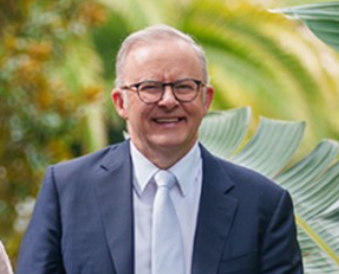
In a decisive move underscoring Australia’s enduring compassion, Prime Minister Anthony Albanese has confirmed the nation will maintain its annual humanitarian intake of 20,000 refugees – a decision widely hailed by settlement leaders as a beacon of hope in a world grappling with unprecedented displacement.
Addressing media this afternoon, the Prime Minister reaffirmed Australia’s pledge to offer safe haven to those fleeing conflict and persecution, pushing back against any notion that generosity must yield to insecurity.
“In maintaining Australia’s humanitarian intake, Prime Minister Albanese has responded with both compassion and confidence in the Australian people,” said Violet Roumeliotis, CEO of national refugee resettlement provider SSI. “He has recognised that Australia can remain both secure and generous, and that our response to the world’s most vulnerable people is a reflection of our national character.”
A Legacy of Welcome
From the shattered aftermath of World War II to the present day, Australia has built one of the globe’s most respected refugee resettlement programs. More than one million refugees and humanitarian entrants have since made Australia their home – enriching communities, strengthening the economy, and becoming integral threads in the nation’s evolving story.
“There is much to be proud of and much to be grateful for,” Ms Roumeliotis added. “Today’s decision builds on that legacy and reaffirms a vision of Australia as a country that welcomes people seeking safety, creates opportunities for them to belong and contribute, and plays its part in responding to global humanitarian need.”
A Tradition That Endures
With conflict zones multiplying and record numbers of people uprooted worldwide, the Prime Minister’s announcement sends a clear signal: Australia’s humanitarian tradition is not a relic of the past, but a living promise.
“The best of Australia has always been found in our willingness to extend a hand to those seeking safety,” Ms Roumeliotis concluded. “Today’s decision ensures that tradition continues.”
For refugee advocates and communities across the nation, the confirmation offers reassurance – and a reminder that in times of global turmoil, Australia chooses humanity.

A Roar Across the Thames: London Oromos Stage Historic Protest Against Atrocities and Rights Abuses
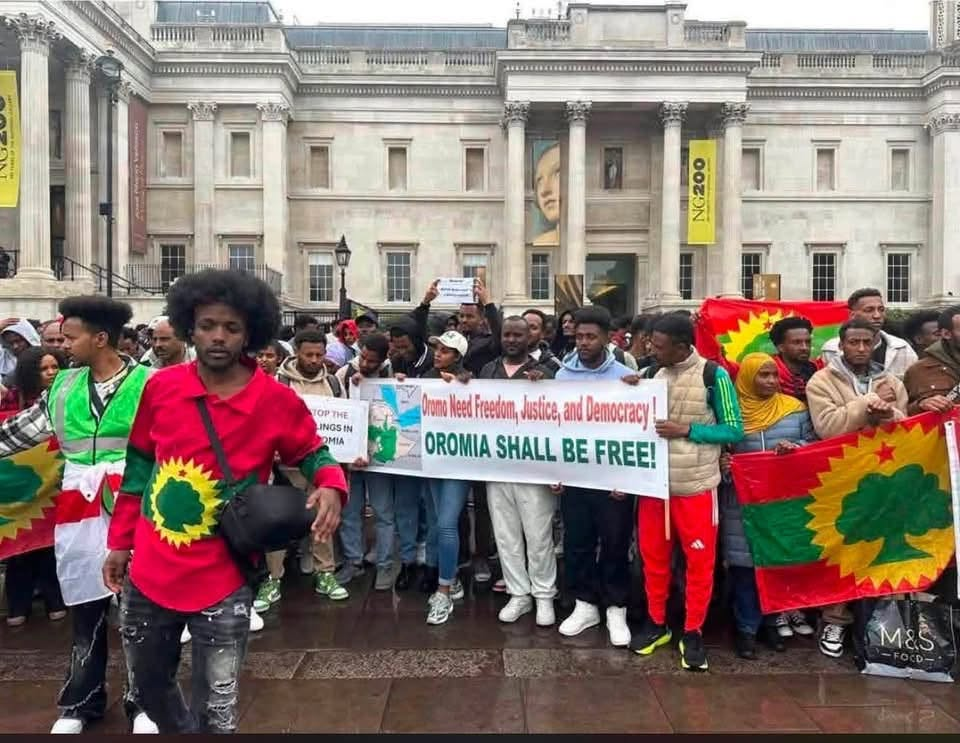
(ONA, LONDON, 27 August 2026) – The drizzle over London could not dampen the fire in their hearts. On a grey but determined morning, the streets of the British capital bore witness to a powerful display of diaspora solidarity as the Oromo community in the United Kingdom took to the streets in a mass protest, raising their voices against what they termed “systematic killings and the erosion of fundamental rights” unfolding in their homeland.
Under the banner of peace but fueled by anguish, hundreds—if not thousands—of Oromo men, women, and children converged in central London today, 27 August 2026, to issue an unmistakable demand: “Stop killing Oromos on their own land and in their own homes.”
The protest, which saw participants draped in the traditional Oromo colours of red, green and red, was not merely a rally. It was a cry of the displaced, a roar of the silenced, and a plea from those who have watched helplessly from afar as their kin face what they describe as “genocide and looting” in regions including the embattled Wallaggaa zone and beyond.
—
The Gathering: A Sea of Resistance
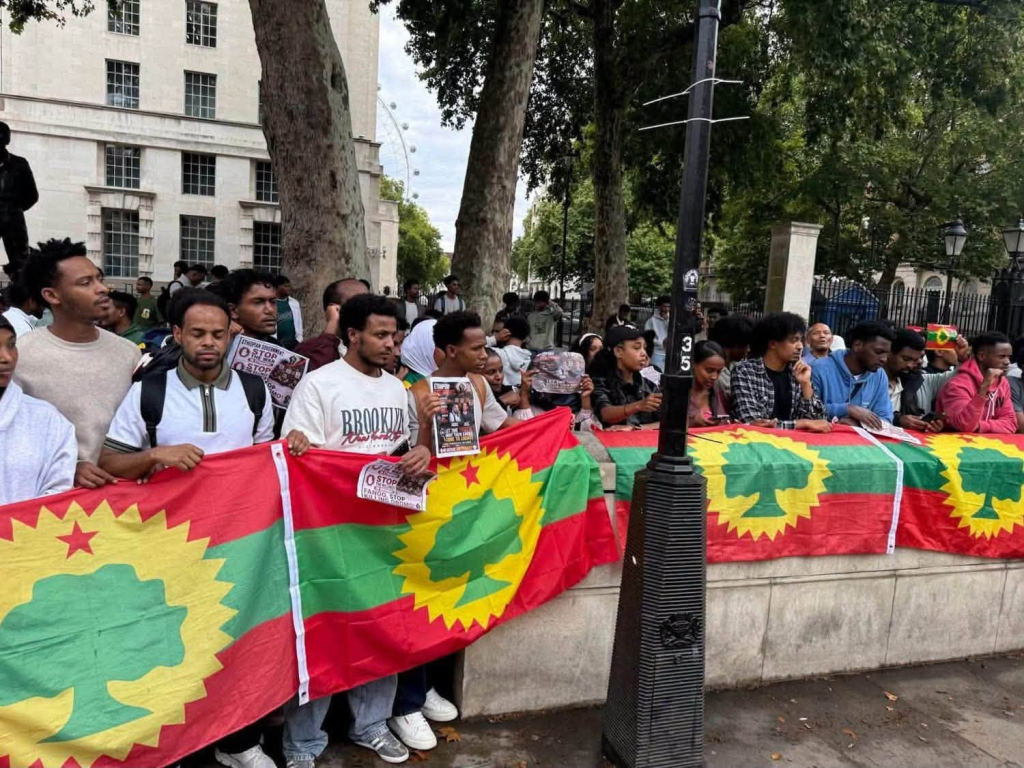
By midday, the area around the Houses of Parliament and Whitehall was transformed into a vibrant yet somber sea of flags and placards. Protesters held signs that read:
· “Stop the War in Wallaggaa!”
· “Our Land, Our Lives – Not for Sale!”
· “The Government Must Protect, Not Persecute!”
Chants of “Oromia! Oromia!” echoed off government buildings, interspersed with the rhythmic clapping and traditional ululations that have long been the hallmark of Oromo cultural resilience. But beneath the cultural pride lay a deep, gnawing grief.
“We are here because we have no choice,” said one participant, a community member who has lived in Birmingham for over two decades. “We have sent letters, we have made phone calls, we have appealed to the Ethiopian government through official channels. They have ignored us. Today, we are making the world listen.”
—
The Core Demands: Justice and Accountability
The protesters were unequivocal in their message. The rally was not a political campaign for secession or regime change, but a humanitarian outcry grounded in three core demands:
1. An Immediate End to Hostilities: The community called for an urgent ceasefire in Wallaggaa and other conflict zones across Oromia, where civilians—particularly women, children, and the elderly—have borne the brunt of inter-communal violence and state-backed military operations.
2. Government Accountability: Demonstrators accused the federal government of “playing both sides”—a reference to perceived double-dealing that allows armed groups to operate with impunity while civilians suffer. “You cannot be the arbiter and the arsonist,” one placard read.
3. Protection of Civilians: The Oromo diaspora demanded that the Ethiopian government uphold its primary duty: the protection of all citizens, regardless of ethnicity or political affiliation. They also called on the international community—specifically the UN Human Rights Council—to intervene with independent investigators and tangible sanctions.
—
The Wallaggaa Crisis: A Humanitarian Catastrophe
Central to the protest was the ongoing crisis in Wallaggaa, a region that has become a flashpoint for violence in recent months. Eyewitness accounts shared by diaspora members describe villages burned to the ground, families displaced without shelter, and extrajudicial killings that have left entire communities traumatised.
The protesters specifically condemned what they called “sarbamiinsa mirgaa”—the systematic violation of rights—alleging that Oromo civilians are being targeted not for their crimes, but for their identity.
—
Diaspora as a Political Force
The UK Oromo community has long been recognised for its organisational capacity and civic engagement. From lobbying Members of Parliament to hosting peace conferences, they have consistently punched above their weight in advocating for their people.
But today’s demonstration was different in its scale and urgency. Social media platforms were flooded with live updates, with the hashtags #Oromia, #Wallaggaa, #UNHumanRightsCouncil, and #UNHumanRights trending across multiple time zones.
One widely shared post from the ground captured the spirit of the day:
“
 UK Oromos are always ahead of the game when it comes to peaceful diaspora protests! Well done!”
Indeed, the protest was entirely peaceful—a testament to the community’s commitment to civil disobedience and moral persuasion, even as they spoke of the violence afflicting their homeland.
—
The Broader Context: A Region in Turmoil
The Oromo protests in London do not exist in a vacuum. They come at a time when the Horn of Africa is grappling with complex security challenges, from ethnic conflicts to climate-induced displacement. The Oromo, as the largest ethnic group in Ethiopia, have historically been at the centre of the country’s political struggles, often facing marginalisation despite their demographic weight.
The protesters argued that the international community, particularly the UN Human Rights Council, has been too slow to act. “We have seen reports. We have seen the joint investigations. But where are the consequences?” asked another participant, a student who joined the protest. “The government must feel the weight of international law. Words are cheap; action is expensive, but it is necessary.”
—
A Message to the Government and the World
The community demanded and called for:
· An independent, UN-supervised inquiry into human rights violations in Oromia.
· Unrestricted humanitarian access to affected regions.
· A clear timeline for the withdrawal of non-regular armed forces from civilian areas.
“We are not enemies of the state. We are citizens who love our country, but we cannot love a country that does not love us back,” one of the elders declared, his voice breaking.
—
Looking Ahead: Vigilance and Hope
As the protesters dispersed, the mood was one of grim resolve. Many pledged to continue their advocacy—through legal channels, media campaigns, and diplomatic pressure—until justice is served.
For now, the streets of London have fallen silent. But the echoes of the chants remain, a reminder that the Oromo diaspora refuses to be a passive spectator to the suffering of its people.
The question that lingers—over the Thames and across the Atlantic, from Wallaggaa to Whitehall—is simple yet profound:
How many more lives must be lost before the world acts?
Reporting from London, UK.
—
© ONA, 2026 – All Rights Reserved.

A New Chapter for Multicultural Victoria: Building Bridges, Counting Voices, and Taking Action
VMC Chairperson Louise Perry Reflects on a Weekend of Celebration and a Future of Collaboration
By Dhabessa Wakjira
The Premier’s Multicultural Gala Dinner, held over the weekend, was more than just a glittering event on the social calendar. It was a powerful affirmation of Victoria’s identity—a “Stories of Us” celebration that brought together over 1,200 guests from across the state to honour the unique journeys and contributions of its diverse communities.
Victorian Multicultural Commission (VMC) Chairperson Louise Perry, in a heartfelt message to the community, described the evening as a fitting tribute to the people, cultures, and experiences that together tell the story of multicultural Victoria. The event featured dynamic performances from across the globe, a bustling bazaar showcasing cultural traditions, and invaluable conversations between community leaders and government representatives.
A Future of Institutional Strength and Collaboration
Perry highlighted that the conversations from the Gala are particularly important as Victoria looks to the future of its multiculturalism. A landmark shift is currently progressing through Parliament: the Multicultural Victoria Amendment Bill 2026 .
Subject to its passage, this bill will establish Multicultural Victoria, a new government entity designed to reset how government listens to, collaborates with, and supports multicultural and multifaith communities. The new body will merge the policy, grants, and community engagement functions currently delivered by the VMC and the Department of Premier and Cabinet. This integration aims to ensure community voices have a stronger influence on government policy.
“The Victorian Multicultural Commission was established in 1983 to advise the government on issues affecting people from culturally and linguistically diverse backgrounds,” notes the importance of this legacy. The new entity, led by a Multicultural Coordinator General and supported by an advisory group, will build upon this history, using new powers to drive change and publish an annual State of Multicultural Victoria report to measure progress. While the Bill is subject to parliamentary debate, its passage would represent a significant step in strengthening the institutional architecture for cohesion.
Ensuring Our Communities Are Counted
Perry also stressed the importance of participation in the 2026 Census, encouraging anyone who has not yet completed it to do so . “Every response helps build a clearer picture of who we are and the communities that make up Australia,” she said.
The Census is a critical tool for representation and advocacy. It helps governments, service providers, and community organisations understand where multicultural communities are growing, allowing them to plan essential services like healthcare, education, and language support. As community leaders note, accurate data is essential for ensuring communities are visible in official statistics and can “demand their fair share”.
Funding Opportunities for Community Action
Looking ahead, Perry highlighted two current funding opportunities for community organisations to turn their visions into action:
- Local Anti-Racism Initiatives Grants Program: This program provides grants of up to $40,000 for community-led responses to racism. The applications are closing soon, at midday on 27 August 2026. This program is part of the Victorian Government’s anti-racism strategy, supporting activities that build community capacity, promote First Peoples’ history and culture, and improve reporting of racist incidents.
- Multicultural Festivals and Events Program: This program supports multicultural communities to celebrate and share their culture through festivals and events. With over $5 million available for 2026-27, including an extra $1 million for regional events, this program helps Victorians celebrate and preserve their cultures while building understanding and respect. The current round of applications closes on 31 August 2026.
A Message of Connection and Future Collaboration
In her closing remarks, Perry looked forward to continuing to meet many more community members, hearing their stories, and learning about the work happening across Victoria. Her message is clear: Victoria’s diversity is its strength, and the path forward lies in listening, counting, and acting together.
For more information on the Multicultural Victoria Amendment Bill, the 2026 Census, or the current grants programs, please visit the Victorian Government’s official websites.

The Unshakable Pillar: Why One Foundational Aspiration Will Outlast Every Attempt to Destroy It
By Dhabessa Wakjira
—
In the quiet corners of history, in the roar of revolutions, and in the whispered hopes of ordinary homes, one truth has endured: human beings are born with an innate longing for equality, freedom of thought, and dignity.
This is not a modern invention. It is not a Western import, nor an Eastern myth. It is the quiet fire that lit every abolition movement, every suffrage march, every student protest, and every parent’s prayer for a better future. And in our own community—ummata keenya—this aspiration has been planted like a deep-rooted tree.
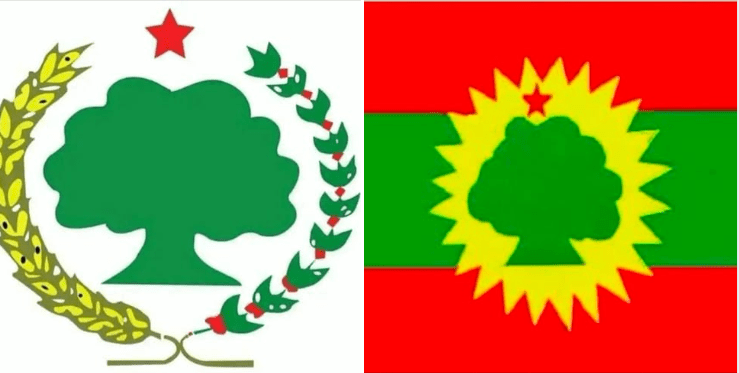
That tree is OLF—not as a slogan, but as a living, breathing promise: that no person is above another; that no mind should be chained; that every voice carries the weight of sacred worth.
—
The Aspiration That Refuses to Die
The original text reminds us: “ABOn waan bu’uraa tokko ummata keessa kaahee jira.”
There is, among the people, one foundational principle. It is not written in stone alone—it is written in conscience. It says:
· Equality is not a privilege; it is a birthright.
· Freedom of thought is not a concession; it is the soil where truth grows.
· Dignity is not a reward; it is the oxygen of human existence.
This aspiration, the text insists, cannot be stopped or erased in any form. Not by armies. Not by laws. Not by propaganda. Not by time.
Why? Because it is not borrowed from a constitution or a king. It is discovered—in the cry of a child, in the sweat of a labourer, in the silent grief of a mother, in the bold question of a teenager. It is experiential before it is philosophical.
—
The Many Faces of Opposition
History is littered with attempts to suffocate this aspiration.
· Tyrants have banned books.
· Dictators have jailed thinkers.
· Empires have rewritten histories.
· Corporations have commodified attention.
· Algorithms have tried to herd our thoughts into safe, sellable boxes.
Yet every time, the aspiration returns—not in the same shape, but in a stronger one.
Why? Because suppression is reactive; aspiration is generative.
· Suppression says: “You must not think this way.”
· Aspiration replies: “Then I will think deeper.”
· Suppression says: “You are unequal by nature.”
· Aspiration answers: “Then I will build communities that prove you wrong.”
This is why the text declares: “Kun dhugaa bara baraan dhaloota walqixxummaa fi bilisummaa barbaadan kamiyyuu keessa kan jiraatuu dha.”
It is the permanent inheritance of every generation that dares to seek equality and liberty. Not a relic of the past—but a living torch passed from hand to hand, across fire and flood.
—
What Does This Mean for Us Today?
In our own time—fractured by misinformation, polarized by identity, exhausted by performative justice—this foundational aspiration calls us back to simplicity and courage.
It asks us:
· Do we treat the stranger at our gate as our equal, or as a threat?
· Do we listen to an idea we hate with the same patience as one we love?
· Do we defend dignity for the powerless, even when it costs us comfort?
If the aspiration is truly unkillable, then our job is not to protect it—but to practice it. Because an aspiration that lives only in speeches is a ghost. An aspiration that lives in schoolrooms, marketplaces, courtrooms, and dinner tables—that is a revolution.
—
The Final Word: A Promise, Not a Puzzle
Some will try to redefine this aspiration. They will twist it into a weapon, a commodity, or a vague slogan. But the core remains indestructible:
Every person holds the right to be free, to think boldly, and to stand equal before their fellow human.
No empire, no algorithm, no crisis can undo that truth—because it is not built on fragile institutions. It is built on the fragile, fierce, unbreakable human heart.
And as long as one parent teaches a child to question, one writer speaks truth to power, one citizen refuses to kneel—that aspiration lives.
It has survived every storm before us.
It will survive every storm ahead.
Not because we are lucky.
But because we are human.
—
“ABOn waan bu’uraa tokko ummata keessa kaahee jira.”
May we never forget it. May we never betray it. May we live it—until it needs no defense.

The Ten Apostles of Waaqeffannaa: Guardians of Faith, Architects of Recognition
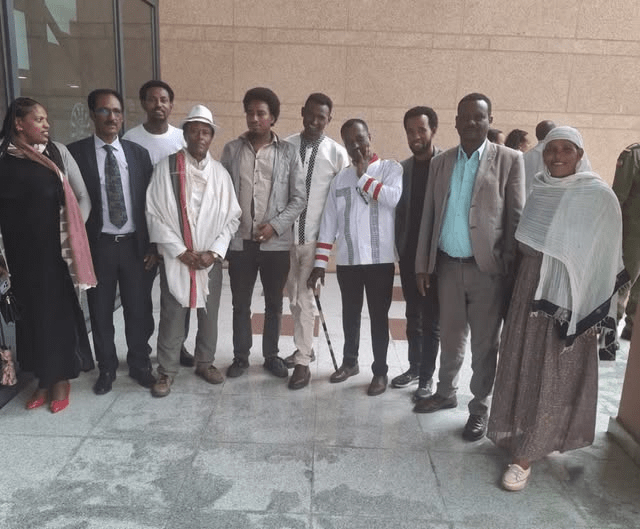
In the annals of cultural and religious history, certain moments stand as watersheds—turning points where the voices of the faithful rise above the din of indifference and claim their rightful place in the national consciousness. Such a moment unfolded between August 8, 2018, and August 16, 2018, when ten extraordinary individuals stepped into the arena of the national dialogue conference and forever altered the trajectory of Waaqeffannaa.
These were not merely delegates or observers. They were apostles—ten men and women who carried the hopes of a community on their shoulders and the weight of centuries-old tradition in their hearts. With unwavering resolve, they presented the core agenda items concerning Waaqeffannaa, articulating its principles, its spiritual significance, and its enduring relevance to the nation’s diverse tapestry. Their presentation was not a mere request; it was a testimony—a vivid recounting of a faith that has sustained generations and deserves recognition.
Their efforts bore fruit in ways that exceeded even the most optimistic expectations. The ten apostles successfully advocated for the Irreechaa festival—the sacred thanksgiving celebration of Waaqeffannaa—to be formally recognized as a national holiday. In a historic decision, their proposal was met with resounding approval from the 4,000 participants of the conference, marking a pivotal moment of inclusion and respect for indigenous spirituality.
But the journey was far from effortless. The proceedings were marked by rigorous debate, delicate negotiations, and moments of intense deliberation. Yet through it all, the apostles remained steadfast, refusing to yield to fatigue or frustration. Their commitment never wavered, even as the conference unfolded day after day, dialogue after dialogue. They understood that they were not merely negotiating for a date on the calendar; they were negotiating for identity, for dignity, and for the right of future generations to celebrate their heritage openly and proudly.
Today, their legacy is etched not only in the official records of the conference but in the hearts of every Waaqeffannaa believer. The recognition of Irreechaa as a national holiday is more than a symbolic victory—it is a bridge between the past and the present, a testament to what can be achieved when faith meets perseverance, and when a small group of committed individuals dares to speak truth to power.
As we reflect on their achievement, we are reminded that every great movement begins with a few voices willing to stand alone before they stand together. The ten apostles of Waaqeffannaa have shown us that courage, clarity, and conviction can move mountains—or, in this case, calendars.
So let us offer them our deepest gratitude and our most heartfelt blessings. May their footsteps inspire others to walk the path of advocacy. May their success embolden other communities to seek recognition. And may the Irreechaa festival, now enshrined in the national fabric, forever remind us of the power of unity, faith, and the unyielding human spirit.
—
To the ten apostles—we see you, we honor you, and we thank you.





 Advocacy for Oromia