A Roar Across the Thames: London Oromos Stage Historic Protest Against Atrocities and Rights Abuses
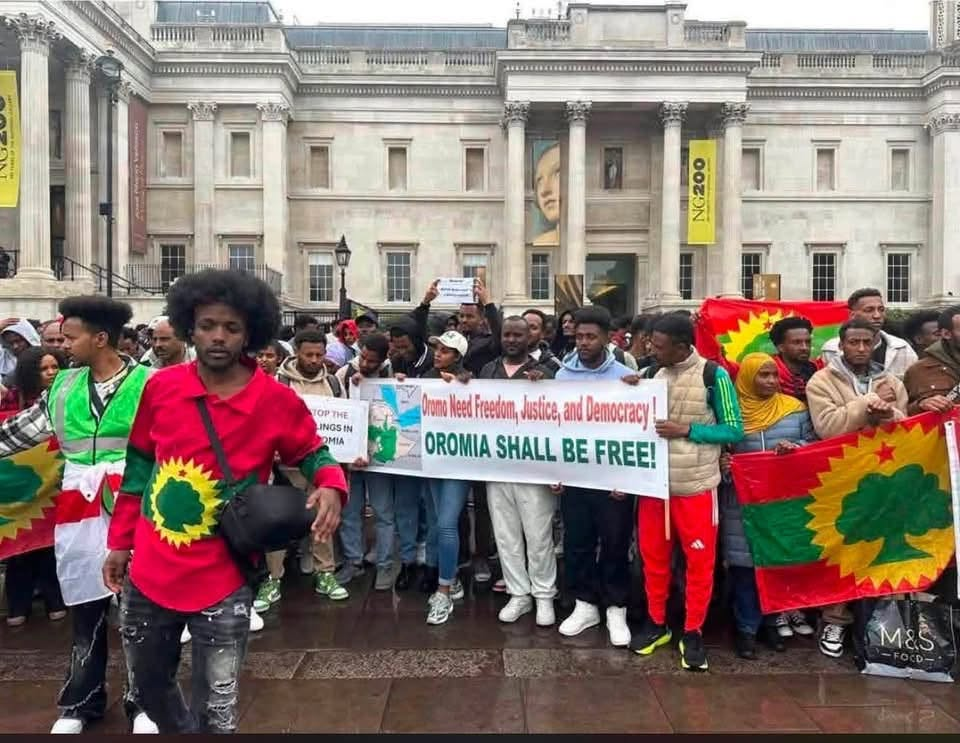
(ONA, LONDON, 27 August 2026) – The drizzle over London could not dampen the fire in their hearts. On a grey but determined morning, the streets of the British capital bore witness to a powerful display of diaspora solidarity as the Oromo community in the United Kingdom took to the streets in a mass protest, raising their voices against what they termed “systematic killings and the erosion of fundamental rights” unfolding in their homeland.
Under the banner of peace but fueled by anguish, hundreds—if not thousands—of Oromo men, women, and children converged in central London today, 27 August 2026, to issue an unmistakable demand: “Stop killing Oromos on their own land and in their own homes.”
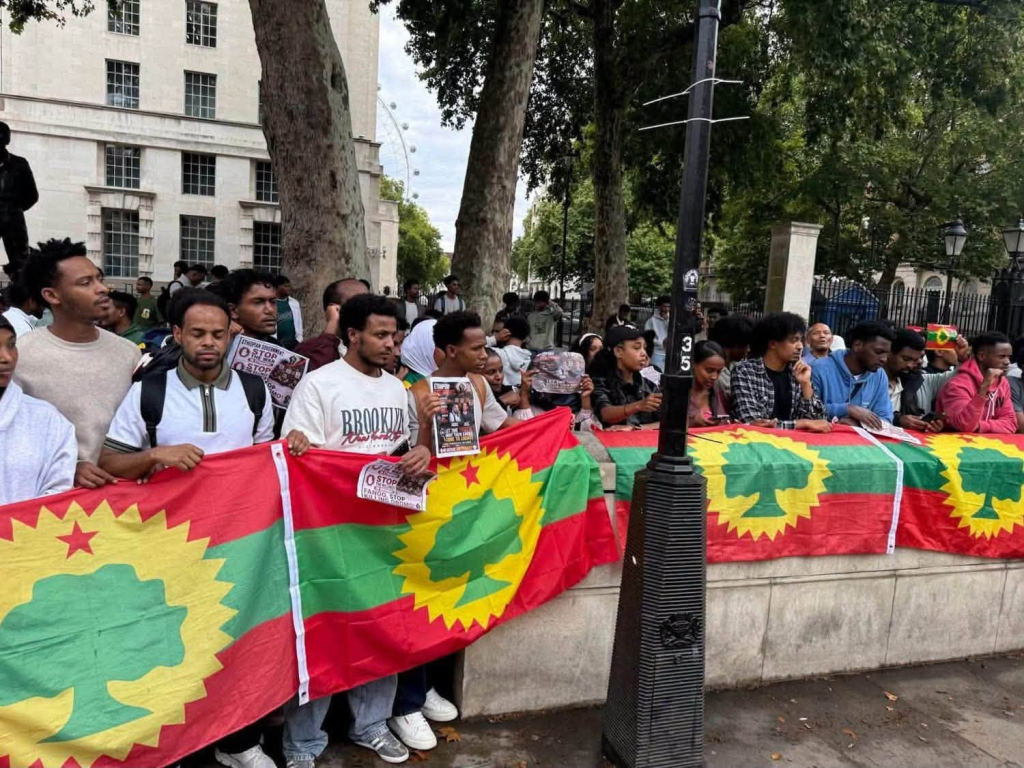
The protest, which saw participants draped in the traditional Oromo colours of red, green and red, was not merely a rally. It was a cry of the displaced, a roar of the silenced, and a plea from those who have watched helplessly from afar as their kin face what they describe as “genocide and looting” in regions including the embattled Wallaggaa zone and beyond.
—
The Gathering: A Sea of Resistance
By midday, the area around the Houses of Parliament and Whitehall was transformed into a vibrant yet somber sea of flags and placards. Protesters held signs that read:
· “Stop the War in Wallaggaa!”
· “Our Land, Our Lives – Not for Sale!”
· “The Government Must Protect, Not Persecute!”
Chants of “Oromia! Oromia!” echoed off government buildings, interspersed with the rhythmic clapping and traditional ululations that have long been the hallmark of Oromo cultural resilience. But beneath the cultural pride lay a deep, gnawing grief.
“We are here because we have no choice,” said one participant, a community member who has lived in Birmingham for over two decades. “We have sent letters, we have made phone calls, we have appealed to the Ethiopian government through official channels. They have ignored us. Today, we are making the world listen.”
—
The Core Demands: Justice and Accountability
The protesters were unequivocal in their message. The rally was not a political campaign for secession or regime change, but a humanitarian outcry grounded in three core demands:
1. An Immediate End to Hostilities: The community called for an urgent ceasefire in Wallaggaa and other conflict zones across Oromia, where civilians—particularly women, children, and the elderly—have borne the brunt of inter-communal violence and state-backed military operations.
2. Government Accountability: Demonstrators accused the federal government of “playing both sides”—a reference to perceived double-dealing that allows armed groups to operate with impunity while civilians suffer. “You cannot be the arbiter and the arsonist,” one placard read.
3. Protection of Civilians: The Oromo diaspora demanded that the Ethiopian government uphold its primary duty: the protection of all citizens, regardless of ethnicity or political affiliation. They also called on the international community—specifically the UN Human Rights Council—to intervene with independent investigators and tangible sanctions.
—
The Wallaggaa Crisis: A Humanitarian Catastrophe
Central to the protest was the ongoing crisis in Wallaggaa, a region that has become a flashpoint for violence in recent months. Eyewitness accounts shared by diaspora members describe villages burned to the ground, families displaced without shelter, and extrajudicial killings that have left entire communities traumatised.
The protesters specifically condemned what they called “sarbamiinsa mirgaa”—the systematic violation of rights—alleging that Oromo civilians are being targeted not for their crimes, but for their identity.
—
Diaspora as a Political Force
The UK Oromo community has long been recognised for its organisational capacity and civic engagement. From lobbying Members of Parliament to hosting peace conferences, they have consistently punched above their weight in advocating for their people.
But today’s demonstration was different in its scale and urgency. Social media platforms were flooded with live updates, with the hashtags #Oromia, #Wallaggaa, #UNHumanRightsCouncil, and #UNHumanRights trending across multiple time zones.
One widely shared post from the ground captured the spirit of the day:
“
 UK Oromos are always ahead of the game when it comes to peaceful diaspora protests! Well done!”
Indeed, the protest was entirely peaceful—a testament to the community’s commitment to civil disobedience and moral persuasion, even as they spoke of the violence afflicting their homeland.
—
The Broader Context: A Region in Turmoil
The Oromo protests in London do not exist in a vacuum. They come at a time when the Horn of Africa is grappling with complex security challenges, from ethnic conflicts to climate-induced displacement. The Oromo, as the largest ethnic group in Ethiopia, have historically been at the centre of the country’s political struggles, often facing marginalisation despite their demographic weight.
The protesters argued that the international community, particularly the UN Human Rights Council, has been too slow to act. “We have seen reports. We have seen the joint investigations. But where are the consequences?” asked another participant, a student who joined the protest. “The government must feel the weight of international law. Words are cheap; action is expensive, but it is necessary.”
—
A Message to the Government and the World
The community demanded and called for:
· An independent, UN-supervised inquiry into human rights violations in Oromia.
· Unrestricted humanitarian access to affected regions.
· A clear timeline for the withdrawal of non-regular armed forces from civilian areas.
“We are not enemies of the state. We are citizens who love our country, but we cannot love a country that does not love us back,” one of the elders declared, his voice breaking.
—
Looking Ahead: Vigilance and Hope
As the protesters dispersed, the mood was one of grim resolve. Many pledged to continue their advocacy—through legal channels, media campaigns, and diplomatic pressure—until justice is served.
For now, the streets of London have fallen silent. But the echoes of the chants remain, a reminder that the Oromo diaspora refuses to be a passive spectator to the suffering of its people.
The question that lingers—over the Thames and across the Atlantic, from Wallaggaa to Whitehall—is simple yet profound:
How many more lives must be lost before the world acts?
Reporting from London, UK.
—
© ONA, 2026 – All Rights Reserved.

Posted on August 29, 2026, in Aadaa, Afaan, Events, Face of Injustice, Finfinne, freedom, Grief Support, health, Information, Kindness, Language, Media, News, Oromia, Oromo truth telling, Press Release, Promotion. Bookmark the permalink. Leave a comment.






Leave a comment
Comments 0