Category Archives: Oromo truth telling

The Unshakable Pillar: Why One Foundational Aspiration Will Outlast Every Attempt to Destroy It
By Dhabessa Wakjira
—
In the quiet corners of history, in the roar of revolutions, and in the whispered hopes of ordinary homes, one truth has endured: human beings are born with an innate longing for equality, freedom of thought, and dignity.
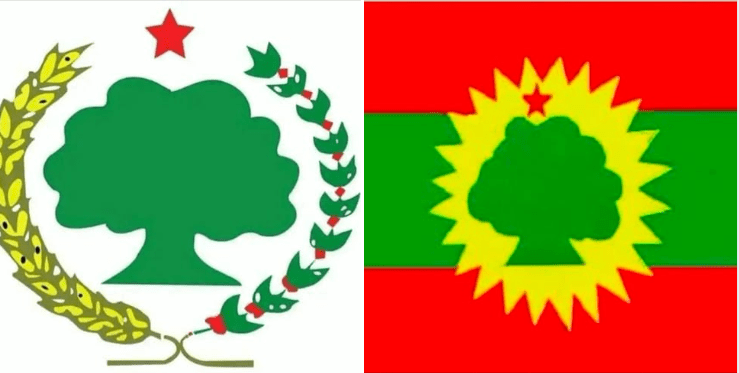
This is not a modern invention. It is not a Western import, nor an Eastern myth. It is the quiet fire that lit every abolition movement, every suffrage march, every student protest, and every parent’s prayer for a better future. And in our own community—ummata keenya—this aspiration has been planted like a deep-rooted tree.
That tree is OLF—not as a slogan, but as a living, breathing promise: that no person is above another; that no mind should be chained; that every voice carries the weight of sacred worth.
—
The Aspiration That Refuses to Die
The original text reminds us: “ABOn waan bu’uraa tokko ummata keessa kaahee jira.”
There is, among the people, one foundational principle. It is not written in stone alone—it is written in conscience. It says:
· Equality is not a privilege; it is a birthright.
· Freedom of thought is not a concession; it is the soil where truth grows.
· Dignity is not a reward; it is the oxygen of human existence.
This aspiration, the text insists, cannot be stopped or erased in any form. Not by armies. Not by laws. Not by propaganda. Not by time.
Why? Because it is not borrowed from a constitution or a king. It is discovered—in the cry of a child, in the sweat of a labourer, in the silent grief of a mother, in the bold question of a teenager. It is experiential before it is philosophical.
—
The Many Faces of Opposition
History is littered with attempts to suffocate this aspiration.
· Tyrants have banned books.
· Dictators have jailed thinkers.
· Empires have rewritten histories.
· Corporations have commodified attention.
· Algorithms have tried to herd our thoughts into safe, sellable boxes.
Yet every time, the aspiration returns—not in the same shape, but in a stronger one.
Why? Because suppression is reactive; aspiration is generative.
· Suppression says: “You must not think this way.”
· Aspiration replies: “Then I will think deeper.”
· Suppression says: “You are unequal by nature.”
· Aspiration answers: “Then I will build communities that prove you wrong.”
This is why the text declares: “Kun dhugaa bara baraan dhaloota walqixxummaa fi bilisummaa barbaadan kamiyyuu keessa kan jiraatuu dha.”
It is the permanent inheritance of every generation that dares to seek equality and liberty. Not a relic of the past—but a living torch passed from hand to hand, across fire and flood.
—
What Does This Mean for Us Today?
In our own time—fractured by misinformation, polarized by identity, exhausted by performative justice—this foundational aspiration calls us back to simplicity and courage.
It asks us:
· Do we treat the stranger at our gate as our equal, or as a threat?
· Do we listen to an idea we hate with the same patience as one we love?
· Do we defend dignity for the powerless, even when it costs us comfort?
If the aspiration is truly unkillable, then our job is not to protect it—but to practice it. Because an aspiration that lives only in speeches is a ghost. An aspiration that lives in schoolrooms, marketplaces, courtrooms, and dinner tables—that is a revolution.
—
The Final Word: A Promise, Not a Puzzle
Some will try to redefine this aspiration. They will twist it into a weapon, a commodity, or a vague slogan. But the core remains indestructible:
Every person holds the right to be free, to think boldly, and to stand equal before their fellow human.
No empire, no algorithm, no crisis can undo that truth—because it is not built on fragile institutions. It is built on the fragile, fierce, unbreakable human heart.
And as long as one parent teaches a child to question, one writer speaks truth to power, one citizen refuses to kneel—that aspiration lives.
It has survived every storm before us.
It will survive every storm ahead.
Not because we are lucky.
But because we are human.
—
“ABOn waan bu’uraa tokko ummata keessa kaahee jira.”
May we never forget it. May we never betray it. May we live it—until it needs no defense.

The Ten Apostles of Waaqeffannaa: Guardians of Faith, Architects of Recognition
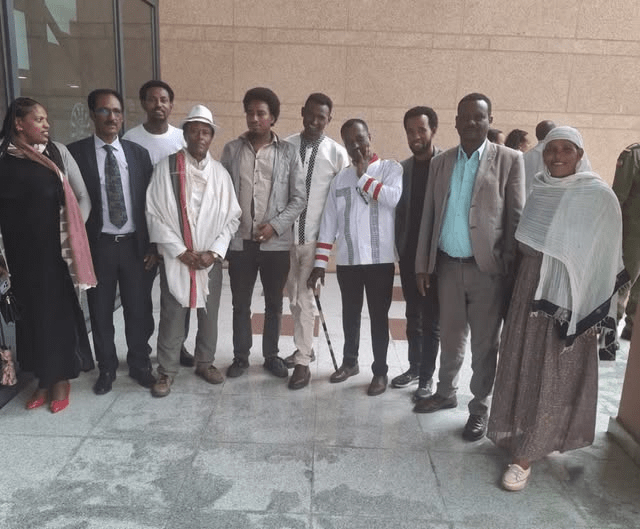
In the annals of cultural and religious history, certain moments stand as watersheds—turning points where the voices of the faithful rise above the din of indifference and claim their rightful place in the national consciousness. Such a moment unfolded between August 8, 2018, and August 16, 2018, when ten extraordinary individuals stepped into the arena of the national dialogue conference and forever altered the trajectory of Waaqeffannaa.
These were not merely delegates or observers. They were apostles—ten men and women who carried the hopes of a community on their shoulders and the weight of centuries-old tradition in their hearts. With unwavering resolve, they presented the core agenda items concerning Waaqeffannaa, articulating its principles, its spiritual significance, and its enduring relevance to the nation’s diverse tapestry. Their presentation was not a mere request; it was a testimony—a vivid recounting of a faith that has sustained generations and deserves recognition.
Their efforts bore fruit in ways that exceeded even the most optimistic expectations. The ten apostles successfully advocated for the Irreechaa festival—the sacred thanksgiving celebration of Waaqeffannaa—to be formally recognized as a national holiday. In a historic decision, their proposal was met with resounding approval from the 4,000 participants of the conference, marking a pivotal moment of inclusion and respect for indigenous spirituality.
But the journey was far from effortless. The proceedings were marked by rigorous debate, delicate negotiations, and moments of intense deliberation. Yet through it all, the apostles remained steadfast, refusing to yield to fatigue or frustration. Their commitment never wavered, even as the conference unfolded day after day, dialogue after dialogue. They understood that they were not merely negotiating for a date on the calendar; they were negotiating for identity, for dignity, and for the right of future generations to celebrate their heritage openly and proudly.
Today, their legacy is etched not only in the official records of the conference but in the hearts of every Waaqeffannaa believer. The recognition of Irreechaa as a national holiday is more than a symbolic victory—it is a bridge between the past and the present, a testament to what can be achieved when faith meets perseverance, and when a small group of committed individuals dares to speak truth to power.
As we reflect on their achievement, we are reminded that every great movement begins with a few voices willing to stand alone before they stand together. The ten apostles of Waaqeffannaa have shown us that courage, clarity, and conviction can move mountains—or, in this case, calendars.
So let us offer them our deepest gratitude and our most heartfelt blessings. May their footsteps inspire others to walk the path of advocacy. May their success embolden other communities to seek recognition. And may the Irreechaa festival, now enshrined in the national fabric, forever remind us of the power of unity, faith, and the unyielding human spirit.
—
To the ten apostles—we see you, we honor you, and we thank you.

Honouring Our Roots: AOCV Launches Elders Voice Program at Flemington Hub
By Dhabessa Wakjira
—
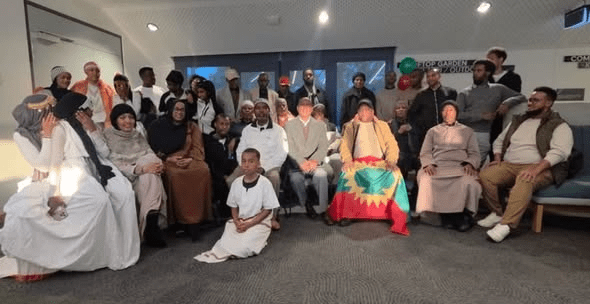
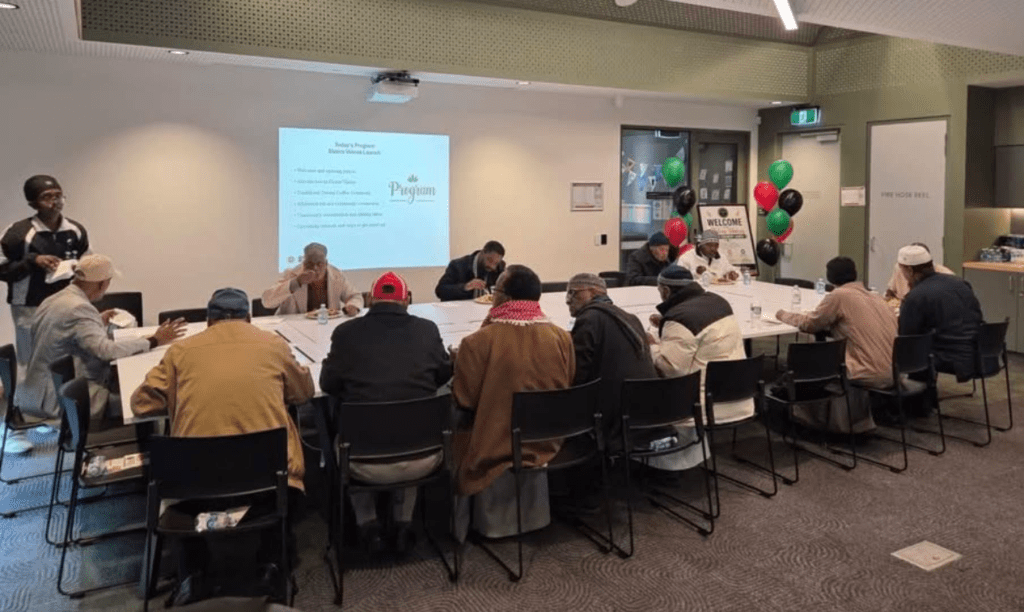
On Sunday, 16th August 2026, the air at Flemington Hub was thick with anticipation, respect, and the warm hum of community. It was a day of celebration, reflection, and a profound commitment to the future—a day when the Australian Oromo Community Victoria (AOCV) officially launched its much-anticipated Elders Voice Program (Sagantaa Sagalee Maanguddootaa) .
The event marked more than just a ceremonial opening; it was a declaration that the voices of our elders matter. That their stories are not merely echoes of the past but living threads that weave the fabric of our identity. As the program unfolds, it promises to become a cornerstone of cultural preservation, intergenerational connection, and community healing.
—
A Program Rooted in Reverence
The Elders Voice Program will be delivered on the first week of every month, offering a regular, dedicated space for elders to share their wisdom, experiences, and cultural knowledge with younger generations. It is a structured yet heartfelt initiative designed to ensure that the rich tapestry of Oromo heritage—its history, traditions, language, and values—is not only remembered but actively lived and passed on.
“Maanguddoonni keenya kuusaa seenaa, aadaa fi duudhaa keenyaati,” the AOCV team reminded attendees during the launch. “Isaan seenaa, barnoota, muuxannoo fi yaadannoo dhaloota walitti hidhu baatanii jiru.”
Translation: “Our elders are the keepers of our history, culture and traditions—carrying stories, lessons and memories that connect us to where we come from and remind us of who we are.”
These words resonated deeply with the crowd, a mix of young and old, Oromo-born and Australian-raised, all united by a shared desire to honour the past while building a resilient future.
—
Why This Program Matters Now
In an age of rapid globalisation and digital distraction, the risk of cultural erosion is real. For diaspora communities, the challenge is even greater. Languages fade, customs evolve, and the intimate oral traditions that once bound generations together can easily slip through the cracks of busy modern lives.
The Elders Voice Program stands as a deliberate counterforce to this trend. By creating a regular forum where elders are not just listened to but celebrated, AOCV is ensuring that:
· History is preserved: Oral histories, migration stories, and ancestral knowledge are documented and shared.
· Wisdom is transferred: Life lessons, problem-solving approaches, and traditional skills are passed to younger hands.
· Identity is strengthened: Young people gain a clearer sense of who they are and where they come from, building pride and resilience.
· Community is unified: Intergenerational dialogue fosters mutual understanding, respect, and deeper social bonds.
—
A Launch to Remember
The Flemington Hub was alive with energy on launch day. Elders were seated in places of honour, their faces beaming with pride and emotion. Young community members performed traditional songs and poetry, weaving the old with the new. There were moments of laughter, tears, and powerful silence—the kind that speaks louder than words.
One elder, reflecting on the initiative, shared: “Yeroo dheeraaf sagaleen keenya hin dhageeffamne ture. Amma garuu, ijoolleen keenya dhaga’uu barbaada. Kun ijoollee keenyaaf, nuufis, eebba guddaadha.”
“For too long, our voices were not heard. But now, our children want to listen. This is a blessing for them and for us.”
The launch concluded with a community feast and the formal announcement of the program’s monthly schedule, with the first official session set to take place in the first week of September 2026.
—
Looking Ahead
The Elders Voice Program is more than a series of meetings—it is a movement. It is a promise that the stories of those who came before us will not be forgotten. It is an invitation for every community member, young and old, to participate in the sacred act of remembering and retelling.
As AOCV continues to build bridges between the Oromo diaspora and broader Australian society, initiatives like this remind us all of a universal truth: every culture is carried forward by its elders, and every community is enriched when it pauses to listen to them.
“Sagalee maanguddootaa keenyaa haa dhageenyu, seenaa isaanii haa galmeessinu, ogummaa isaanii dhalootaaf haa dabarsinu.”
“Let us hear the voices of our elders, document their stories, and pass on their wisdom to the generations to come.”
—
Get Involved
The Elders Voice Program invites all community members to attend, contribute, and learn. For more information on upcoming sessions, volunteer opportunities, or to share an elder’s story, contact AOCV at [insert contact details] .
Together, we honour the past. Together, we build the future.
—
#EldersVoice#AOCV#OromoCommunity#CulturalPreservation#FlemingtonHub#GenerationsUnited

Garanfasaa: Welcoming the Season of Light Through Oromo Tradition
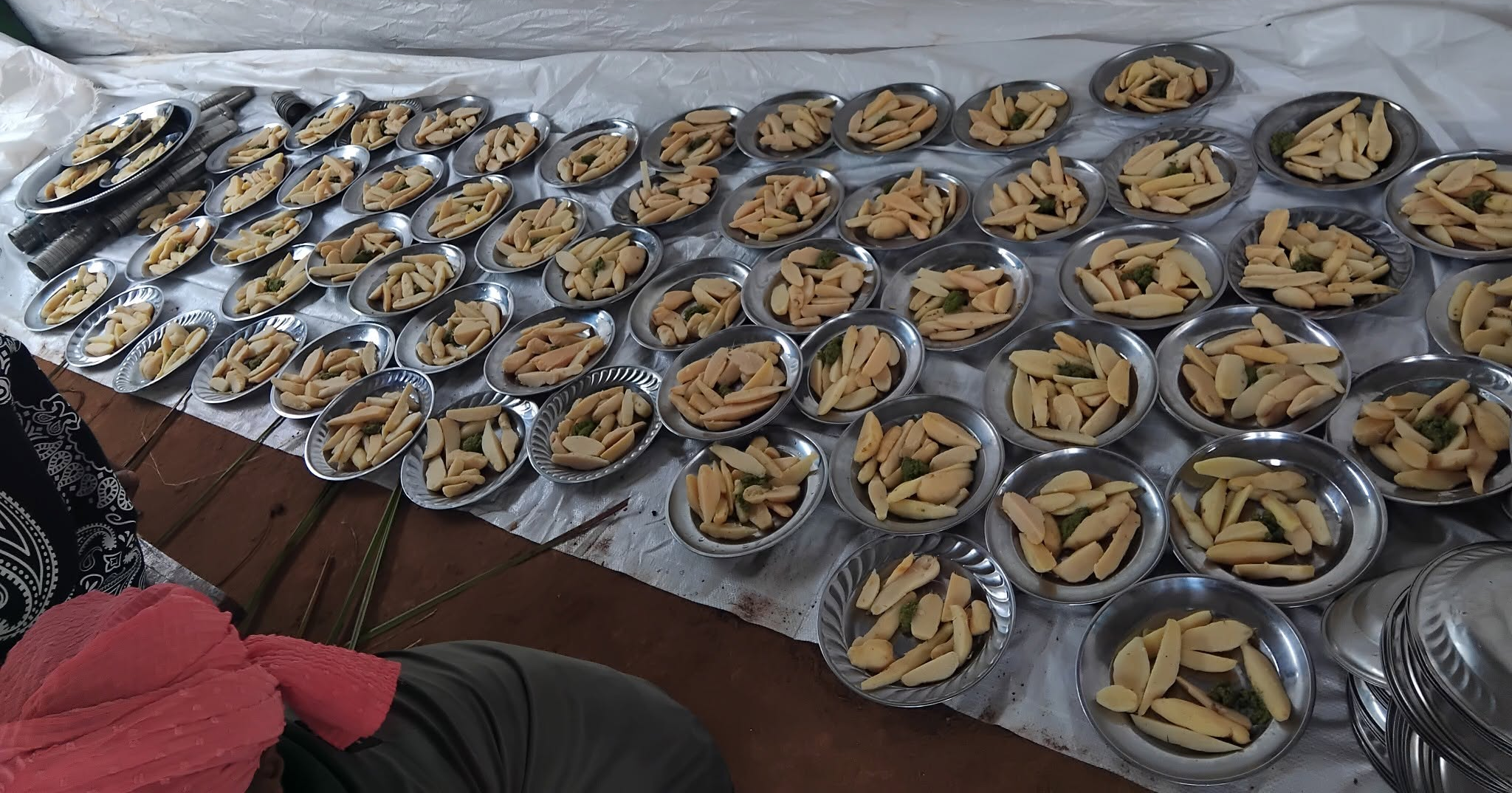
A Celebration of Love, Unity, and the Transition to Spring
By Daandii Ragabaa
Across the Oromo landscape, as the dark winter season gives way to the bright promise of spring, a sacred celebration unfolds. Garanfasaa—known in central Oromia as Ibsaa Birraa—is a vibrant festival marking the arrival of the season of light, love, and renewal.
This ancient tradition, celebrated in the western regions of Oromia, is a profound expression of Oromo identity, community, and cultural continuity. It is a time when families, lovers, and communities come together to honour the transition from winter to spring, and to reaffirm the bonds that hold society together.
The Meaning of Garanfasa
Garanfasaa, also known as Ibsaa Birraa, is a festival of love and renewal. It marks the transition from the rainy season to the bright, hopeful days of spring—a time when the earth awakens, the flowers bloom, and life is renewed.
The festival is celebrated in the month of Hagayya (July-August), when the community gathers to welcome the season of light. The celebration is characterised by traditional songs, dances, and the exchange of gifts between lovers and family members.
The name “Ibsaa Birraa” reflects the festival’s essence: Ibsaa means “light,” and Birraa means “spring.” Together, they capture the spirit of the celebration—the illumination that follows the darkness of winter, the hope that follows hardship, the renewal that follows loss.
A Celebration of Love and Community
One of the most distinctive features of Garanfasaa is its emphasis on love and courtship. The festival is a time when young men and women express their affection for one another through the exchange of gifts. Traditionally, lovers give each other tokens of their love—beautifully crafted items that symbolise their commitment and devotion.
As the custom holds, the exchange of gifts is not merely a gesture of affection but a declaration of intent. Those who fail to give gifts may be seen as lacking in respect or affection, and tensions can arise between couples. The festival thus serves as a social mechanism for maintaining harmony in relationships and reinforcing the values of love and mutual respect.
The scholar John Samuel, writing on Oromo spirituality and history, described Ibsaa Birraa as a “great festival of the blacks,” noting its deep cultural and spiritual significance. The festival, he observed, has been eroded over time, but its essence remains a powerful expression of Oromo identity.
The Rituals of Garanfasaa
The Garanfasa celebration is marked by a series of traditional rituals that have been passed down through generations:
Gathering of the Three Clans
In the western Oromo region, the festival is celebrated by the Three Clans of Sibuu. Families gather at designated sites, dressed in their finest traditional attire, to participate in the festivities.
Traditional Songs and Dances
The air is filled with the sounds of traditional songs, known as sirba, and the rhythmic beat of drums. Young men and women perform dances that have been passed down through generations, expressing joy and gratitude for the arrival of spring.
Exchange of Gifts
The exchange of gifts is a central feature of the celebration. Lovers present each other with tokens of their affection, reinforcing the bonds of love and commitment. Families also exchange gifts, strengthening the ties of kinship and community.
Blessings from Elders
Elders lead the prayers and offer blessings for the coming season. They share the wisdom of the ancestors, reminding the younger generation of their responsibilities to their community and their culture.
The Significance of Garanfasa in Oromo Culture
Garanfasaa is more than a festival—it is a reaffirmation of Oromo identity and cultural continuity. In a world of rapid change, traditions like Garanfasaa serve as anchors of identity, connecting the present generation to their ancestors and ensuring that the values of the past endure.
The festival also reinforces the bonds of community. By coming together to celebrate, families and neighbours strengthen the social fabric that sustains them. The festival is a reminder that the Oromo people are not merely individuals but members of a larger community, bound by shared history, culture, and values.
A Call to Preserve and Celebrate
Like many Oromo traditions, Garanfasaa has faced challenges. Under successive oppressive regimes, the celebration was suppressed and driven underground. Its revival in recent years is a testament to the resilience of the Oromo people and their determination to preserve their heritage.
As the community gathers to celebrate Garanfasaa, they are also declaring that their traditions endure—that the light of their culture will never be extinguished.
This feature article is dedicated to the custodians of Oromo tradition who keep the spirit of Garanfasaa alive for future generations.

THE RESILIENT SPIRIT: OROMIA’S STRUGGLE FOR SURVIVAL AND RENEWAL

A feature on the challenges facing Oromo language, culture, and identity—and the unyielding determination to preserve them for generations to come
—
The Whispers of a Dying Language
In the bustling markets of Finfinne, amidst the vibrant chaos of merchants and shoppers, a troubling silence grows. The melodic tones of Afaan Oromo—once the heartbeat of millions—are increasingly drowned out by foreign tongues. Elders shake their heads as they witness their grandchildren struggle to form sentences in their mother tongue, preferring instead the languages of power and commerce.
“This is not just about words,” says Dr. Lemma Gutema, a linguist at Jimma University. “When a language dies, a worldview dies with it. The Oromo people are losing not just vocabulary, but the very framework through which we understand our relationship with the land, our history, and each other.”
The erosion of Oromo culture is not a natural evolution—it is a systematic dismantling that has accelerated over decades. As one elder in the countryside put it: “The language that was once spoken freely in every home, every market, every ceremony, is now fighting for breath. Our children are taught to be ashamed of who they are.”
—
Cultural Bleeding: The Erosion of Identity
Walk through any Oromo village today and you will see the signs of cultural fracture. The gadaa system—once the cornerstone of Oromo democracy and governance—is dismissed by many as primitive, its intricate wisdom forgotten. Traditional ceremonies are simplified, commercialized, or abandoned entirely.
“The aadaa of our people is not being preserved as it should be,” laments Haji Birmah, a cultural elder from Borana. “Our rituals, our songs, our ways of greeting, our respect for elders—these are not just customs. They are the threads that weave our community together. When these threads break, the fabric of our society unravels.”
Young Oromos find themselves caught between two worlds. Many seek to reconnect with their heritage, but find the path blocked by generations of suppression and the relentless pull of globalized culture. The result is a generation suffering from what psychologists call “cultural bereavement”—the grief of losing one’s cultural identity.
—
The Weight of Economic Injustice
Behind the cultural crisis lies a deeper wound: the systematic impoverishment of the Oromo people. Poverty is not merely an economic condition in Oromia—it is a manifestation of structural injustice that has left entire communities marginalized.
“We are rich in resources but poor in access,” explains financial analyst Tsehay Mulugeta. “Oromia holds the majority of Ethiopia’s agricultural land, water resources, and mineral wealth. Yet our people remain among the poorest and least developed in the nation. This is not an accident of geography—it is a product of policy.”
Farmers who have worked the land for generations find themselves unable to benefit from its bounty. Young people with dreams and ambition lack the educational and economic opportunities available to others. The cycle of poverty is not just about money—it erodes dignity, hope, and the very possibility of a better future.
“The poverty is humiliating,” says a young woman from Arsi, who asked to remain anonymous. “We see others prosper while we struggle. Our children go hungry. Our parents cannot afford healthcare. How can we preserve our culture when we are fighting for survival?”
—
Betrayed by the State
Perhaps most painful for the Oromo people is their relationship with the institutions meant to serve them. Citizenship services—the basic promise of protection and provision—have consistently failed to reach Oromo communities.
“Citizenship means nothing if the state does not recognize your dignity,” says legal scholar Professor Almaz Gonfa. “When you cannot access justice, when your rights are not protected, when your voice is not heard—you are not a citizen. You are a subject, at best, or an obstacle to be removed.”
The story of Oromo marginalization is written in the experiences of ordinary people: the family denied land rights, the businessman unable to secure permits, the student rejected from university despite qualifications, the community without basic infrastructure while neighboring regions prosper.
“Naatoon namummaa badaa jira”—human dignity is suffering. This simple phrase spoken by Oromo mothers captures the essence of the crisis. When a people’s humanity is not recognized, when their basic needs are not met, when their existence is rendered invisible—dignity itself becomes a casualty.
—
The Lament of the Land
The Oromo relationship with their land is sacred. Oromiyaa is not just geography—it is identity, heritage, and the living memory of ancestors. But this connection is being severed.
Naannoon Oromiyaa—the Oromo region—is described by elders as gammojjummaan dhaalaa, a heritage that is crying out for proper care. Environmental degradation, encroachment on traditional lands, and the disruption of traditional land management systems have left the land scarred and the people disconnected.
“In our gadaa system, we understood that we are temporary stewards of the land,” explains a traditional leader from Guji. “We passed it down to our children as we received it from our fathers. But now the land is being taken, degraded, and exploited. How can we preserve our culture when the very ground beneath our feet is disappearing?”
—
A Generation’s Sacred Duty
Despite the weight of these challenges, a powerful movement is stirring among Oromo youth. Across universities, community centers, and social media platforms, young Oromos are reconnecting with their heritage—not as a sentimental exercise, but as an urgent mission.
“This is about survival,” says Bontu Dibaba, a 24-year-old activist from Adama. “We are the generation standing between extinction and renewal. Our parents endured the worst of the suppression. We have the knowledge, the tools, and the freedom to fight back. If we don’t act now, what will be left for our children?”
The mission is clear and urgent: to protect the Oromo language from extinction, to preserve Oromo culture in all its richness, to ensure Oromo children can grow up with dignity and opportunity, and to create a future where being Oromo is not a burden but a source of strength and pride.
“Dhaloonni keenya jajjaboon otuu jiranii”—as long as our descendants remain strong—the elders remind us. This is not a passive hope but an active commitment. The strength of future generations depends on the choices made today.
—
Gaammee: The Call to Action
At the heart of this movement is a powerful concept: Gaammee. It represents the collective commitment of the Oromo people to stand together in defense of their identity and future.
“Nuti otuu jirruu Oromoo fi Oromiyaan rakkoof hin saaxilaman,” the people of Gaammee declare. “As long as we are alive, Oromo and Oromia will not be subjected to problems.”
This is not empty rhetoric. It is a pledge backed by action—cultural festivals being revitalized, language classes being organized in diaspora communities, economic cooperatives being formed to build self-sufficiency, advocacy campaigns raising awareness about rights and injustice.
The Gaammee movement represents something profound: a refusal to accept the narrative of decline, a determination to write a different story. It is the voice of a people saying, “We are here. We have always been here. And we will remain here.”
—
Looking Toward Tomorrow
The challenges facing Oromo language, culture, and people are immense. But so is the resilience of a people who have survived centuries of change, challenge, and oppression.
What happens in the coming years will determine not just the fate of one ethnic group, but the kind of society Ethiopia will become. Will it be a nation that embraces its diversity, that protects the rights and dignity of all its peoples? Or will it continue down a path of exclusion and denial?
For the Oromo people, the answer is already clear. Through language preservation, cultural revival, economic empowerment, and collective action, they are building the future they deserve. A future where Afaan Oromo is not just spoken but celebrated. Where aadaa is not just remembered but practiced. Where Oromo children can grow up with pride, opportunity, and hope.
“Dhaloota keenya eeggachaa jira,” they say—we are protecting our generation. It is a promise passed from elders to youth, from parents to children. It is the thread that connects past, present, and future.
The road ahead is long. The obstacles are real. But the spirit of the Oromo people—that indomitable fire that has burned through centuries of challenge—is undimmed. Like the ancestors who survived and thrived before them, this generation is determined not just to survive, but to flourish.
In the words of an old Oromo proverb: “The river that forgets its source will dry up.” The Oromo people are remembering their source. They are returning to the well of their identity. And they are drawing from it the strength to build tomorrow.
—
The struggle of the Oromo people is a struggle for justice, dignity, and identity. It is a struggle that deserves recognition and understanding—not just from Ethiopians, but from the global community. Because when one people’s culture, language, and dignity are threatened, it diminishes us all.
The question is not whether the Oromo people will survive—they have survived centuries of challenge and will continue to do so. The question is what kind of world we will create: one where diversity is celebrated and all peoples can thrive, or one where difference is suppressed and culture is erased.
For the Oromo people, the answer is clear. Gaammee—they stand together, committed to a future where Oromo culture flourishes, the language lives, and the land is protected. For themselves, and for generations yet unborn.

The Price of Silence: A Reflection on Inaction and the Tragedy of Our People

We Knew This Was Coming — Yet We Chose to Stay Silent
By Koste Abdiisaa
If we had shown even 1% of the outrage we have expressed over the past two days three, four, or five years ago—when Fano killed hundreds of innocent Oromos in Kiramu, Hagamsa, Amuru, Alibo, Jardega-Jartee, and elsewhere—perhaps these killings would not have happened.
We knew this was coming. The signs were everywhere. The warnings were clear. Yet we chose to remain silent. We chose to look away. We chose to believe that the storm would pass us by.
But storms do not pass by those who refuse to prepare. They break over them.
The Warning Signs We Ignored
For years, the enemies of the Oromo people have been methodically preparing for this moment. While we argued among ourselves, they were opening training camps in our backyard. While we engaged in name-calling and petty divisions, they were building security structures and training hundreds of people to carry out their plans.
We saw it happening. We heard the reports. We knew that innocent farmers—our farmers—were being killed in Kiramu, Hagamsa, Amuru, Alibo, Jardega-Jartee, and countless other places. And what did we do?
We expressed outrage on social media. We posted our anger, shared our grief, and then went back to business as usual.
Our collective inaction allowed this to continue. Our silence gave them permission to proceed. Our failure to act was an invitation for more violence.
The Consequences of Inaction
This is not about hindsight. This is about foresight—and our failure to use it. We cannot pretend that these killings were unexpected. We knew what was coming. We had every warning. But we failed to act.
And now, the consequences are here.
The killing of our innocent farmers is not just a tragedy—it is a judgment on our collective failure to protect our own. It is the result of years of political naivety, misplaced priorities, and a refusal to confront the reality of the threat we faced.
We were good at crying after the fact. We were good at expressing outrage on social media after tragedies happened. But we were very poor at recognizing threats early on, listening to those who recognized them, and preparing ourselves to face them.
The Deeper Outrage
Like many of you, I am outraged by the killing of our innocent farmers. But I am even more outraged by our inaction—our lack of political awareness, our failure to recognize and respond to such cruelty for so long.
What is even more troubling is that some of our so-called political entities—those who claim to speak for us—continue to seek alignment with those responsible. They act as if there is still some humanity left in them to appeal to. They still hope for dialogue with those who have shown, time and again, that they have no interest in peace, only in domination.
This is not leadership. This is delusion.
And we, as a people, have allowed it. We have allowed ourselves to be led by those who refuse to see the enemy for what they are. We have allowed ourselves to be distracted by petty divisions while our people are being slaughtered.
The Beginning, Not the End
Let us not pretend that this is the end. This is the beginning. The attacks will continue. The killings will escalate. And if we do not act now—with unity, determination, and clarity—the tragedies we see today will seem small compared to what is coming.
I fear that we may still fail to act in a timely manner. I fear that we will continue to cry and express outrage for a week, and then return to normal life. I fear that we will continue to do what we seem to be good at: mourning after the fact, but never preparing for what lies ahead.
A Call to Look Within
If this senseless killing of our people does not make us angry enough to question our collective inaction, then perhaps we need to look within ourselves and ask: What kind of society have we become?
Have we become a people who only react after the damage is done? Have we become a people who prioritize social media outrage over real action? Have we become a people who are more concerned with who is right than with what is right?
We must ask ourselves these questions. And we must answer them honestly.
The Path Forward
We cannot change the past. The blood that has been spilled cannot be unspilled. But we can change the future. We can act now—today—to ensure that these tragedies do not continue.
This requires several things:
- Unity: We must put aside our petty divisions and unite as a people. Our enemies are united; we must be even more united.
- Awareness: We must wake up to the reality of the threat we face. We must recognize the signs and act before it is too late.
- Action: We must support those who are willing to sacrifice and risk their lives to defend our people. We must build the structures and institutions necessary to protect ourselves.
- Accountability: We must hold our political entities accountable. We must demand that they prioritize the defense of our people over their own political ambitions.
- Resilience: We must be prepared for the long fight ahead. This is not a battle that will be won in a day. It requires patience, courage, and an unwavering commitment to our people.
Conclusion: Enough Is Enough
The killing of our innocent farmers is a crime against humanity. But our collective inaction is a crime against ourselves.
We cannot afford to continue down this path. We cannot afford to remain silent while our people are being slaughtered. We cannot afford to wait until the next tragedy to express our outrage.
Enough is enough.
Let us honor the memory of those who have been killed by resolving to act—not just with words, but with deeds. Let us build a future where our people are safe, our land is protected, and our dignity is restored.
Injifannoon Ummata Oromoo!
Nagaan haa jabaatu!
This reflection is dedicated to the innocent Oromo farmers who have lost their lives, and to all those who are determined to build a future of peace, justice, and security for our people.

The Spark That Lit a Fire: The Macha-Tulama Association and the Birth of Modern Oromo Consciousness

By Our Senior Correspondent
—
In the early 1960s, Ethiopia was a nation of silence. Political parties were banned. Open dissent was crushed. The empire of Haile Selassie I, with its ancient Amharic-speaking elite, governed through a system of centralized control that left little room for the voices of its largest ethnic group—the Oromo.
Yet, in the cramped offices of Addis Ababa, three small self-help groups began to meet. The Jibat and Macha, the Metta Robii, and the Tulama Shawa associations had been formed to provide modest social relief to Oromo communities. But in 1963, these three organizations merged into something far more significant. They became the Macha-Tulama Self-Help Association—Waldaa Wal-gargaarsa Maccaa fi Tuulamaa—and in doing so, they ignited a fire that would reshape Oromo history forever.
A Name That United a People
The association took its name from two of the major Borana Oromo clans: Machaa and Tulema. But its vision was far broader than any single clan. It was designed to embrace all Oromos, irrespective of religion or region, and even welcomed non-Oromo nationalities who accepted its objectives. Its founders were a remarkable group: Hail Mariam Gamada, a lawyer; Alemu Qixxeesa, a retired colonel; Mamo Mezemer; and others who had been educated in the imperial system but had “subsequently rediscovered their culture”.
The most prominent leader was Tadesse Birru, a former general in the Ethiopian police force and territorial army. A Shewa Oromo who had been fully integrated into Amhara culture, his Oromo origins were not apparent to many until he began to champion the cause of his people. His conversion was a powerful symbol: a man who had risen to the highest ranks of the imperial establishment, turning his back on privilege to fight for his own people.
Two Levels of Purpose
The association operated on two distinct levels. The first was practical and visible: it built schools, health clinics, roads, and water supplies across Oromia. It constructed churches and mosques for believers who had none. It provided financial and legal assistance for the disabled and unemployed.
But the second objective was political—and far more dangerous. In an era when political parties were forbidden, the Macha-Tulama Association became a vehicle for Oromo nationalism. It was the first movement to articulate Oromo grievances in a public, organized manner. It championed “the social, educational, cultural and political rights of the Oromo people”. It politicized the masses and, through its dynamic Youth Wing, produced revolutionary literature that circulated underground. Its very existence marked “the public rise of Oromo nationalism”.
The Threat to Empire
The association’s rapid growth was breathtaking. At its height, it claimed as many as 200,000 members. It expanded “very rapidly all over Oromiyaa as a Pan-Oromo movement”. It was most successful in the south, particularly in Arsi, where Oromos had been relegated to the status of tenants on their own land after being conquered by Menelik’s forces.
For the imperial government, this was an existential threat. The Ethiopian state accused the association of committing “acts of terror” in an effort to suppress the developing Oromo National Movement. The repression was swift and brutal.
The Crackdown
In 1966, the Macha-Tulama Association was banned. Its leaders were arrested, imprisoned, and some were executed. Tadesse Birru, Mamo Mezemir, Alemu Kitessa, and others were imprisoned and killed for their humanitarian and political activities. The association was banned during the imperial regime, again under the Derg, and once more in 2011 under the EPRDF regime. It was accused of “threatening Ethiopia’s unity—an unfounded claim,” according to its current president.
Yet the organization refused to die. It survived underground, and its members continued to organize. The suppression of the Macha-Tulama Association became “an immediate reason for the birth of” a more militant organization. In 1974, the Oromo Liberation Front (OLF) was formed, largely from the underground cells of the Macha-Tulama Association.
A Legacy That Endures
Today, the Macha-Tulama Association—now officially known as the Mecha and Tulema Self-Help Association—continues its work. It regained its legal status in 2019. It celebrated its 60th anniversary in 2024, a testament to its resilience.
Its current president, Diribi Damuse, has outlined the association’s ongoing humanitarian efforts: supporting internally displaced people from Western Oromia, assisting those affected by drought in Borena and Guji, and providing aid to university students and Abba Gada leaders. The association, he emphasized, “has united members from diverse backgrounds, including military, students, intellectuals, and grassroots, including non-Oromo members from Wolayita, Sidama, and other ethnic groups”.
The Unfinished Struggle
The Macha-Tulama Association’s place in Oromo history is secure. It was the first organized, mass-based expression of Oromo identity in the modern era. It bridged the gap between the rural peasantry and the urban intelligentsia. It laid the groundwork for every Oromo political movement that followed.
But its story is also a warning. The association was banned not because it committed violence, but because it united a people. Its leaders were killed not for crimes, but for the crime of demanding dignity. The imperial state, and every regime that followed, understood that a united Oromo people was a threat to centralized power.
As the association continues its work—building schools, feeding the hungry, preserving culture—it carries with it the memory of those who gave their lives. Mamo Mezemir, Tadesse Birru, Alemu Kitessa, and so many others are not just names in a history book. They are the foundation upon which modern Oromo consciousness was built.
The Macha-Tulama Association was the spark. The fire it lit continues to burn.
—
Sources: UNHCR Refugee Review Tribunal; Canada Immigration and Refugee Board; Addis Standard; Wikipedia; AfricaBib; Taylor & Francis; Advocacy for Oromia.

The Hour of Need: Forging a Resilient Future for Oromia and Its People

By Maatii Sabaa
The air in Oromia is heavy with a sense of urgency. Across the region and its surrounding areas, a silent tremor of concern is reverberating through the hearts of its people. We are witnessing a pivotal moment in our history, a time fraught with challenges that test the very fabric of our society. The question is no longer if we will act, but when—and how boldly.
As we look at the current state of affairs, it is impossible to ignore the profound anxieties that grip our communities. The safety net that once held our families together is fraying under the weight of economic strain, environmental upheaval, and political instability. We are, to put it plainly, standing on the precipice of a great ordeal. The need for a unified, robust, and relentless response—a determined stand against the tide of adversity—has never been more critical.
This is not merely a time for sorrow; it is a time for strategy. The path forward is not found in despair, but in the deliberate construction of a new paradigm. We must build a fortress of resilience, brick by brick, institution by institution. It is through the creation of resilient systems—in agriculture, education, and governance—that we can effectively combat the crises that threaten to overwhelm us. We need a “fala/ gaachanaa” (shield) that is not just reactive but proactive, designed to protect the most vulnerable and secure the borders of our collective future.
Yet, the ultimate shield for Oromia is not made of steel or stone; it is made of the mind and spirit of its youth. The young men and women of this generation are the architects of tomorrow. To leave them untrained, unmotivated, or disconnected is to invite disaster. Our imperative is clear: we must educate, energize, and organize the Oromo youth.
This is more than a call to action; it is a call to transformation. We must transform our schools into crucibles of critical thinking, our communities into hubs of entrepreneurial energy, and our political spaces into arenas of constructive dialogue. By doing so, we ensure that our youth do not become victims of circumstance, but rather, become the standard-bearers of a proud heritage. They must become the vanguard that carries the torch of Oromia forward, ready to stand as “gaachana” (champions) for their land and their people.
It is a saddening truth that the heritage of the Oromo people—a legacy of resilience, democracy, and cultural richness—is at risk of being eroded. We are custodians of a “Dhaloota qaroo” (a heritage of value), a distinct identity that has survived for millennia. To protect this inheritance is to diversify it; to bring in new voices, new ideas, and new energy. We must ensure that the narrative of our people is written not by our oppressors, but by our own hands, in our own words.
The time for deliberation is over. The foundations of a new era must be laid today. It is not enough to hope for a brighter tomorrow; we must labor for it. Starting today, we must commit to the arduous but noble task of rebuilding. Starting today, we must bridge the divides that separate us. Starting today, we must empower the next generation to take the helm.
The challenges are great, but the spirit of Oromia is greater. Let us meet this moment with the courage it demands. The hour of need is upon us, but it is also an hour of opportunity. Let us rise, unite, and forge a destiny worthy of the sacrifices of our ancestors and the dreams of our children.
The time to start is now.

For the Cause of Finfinne: Entering Finfinne Itself Is Better Than Entering the Forest
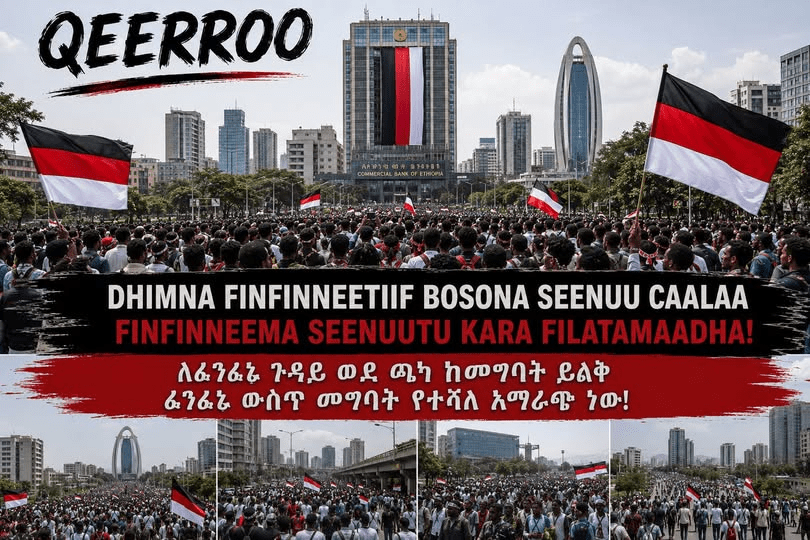
A Reflection on Strategy, Presence, and the Path Forward for Oromo Liberation
By Dhabessa Wakjira
In the long and arduous struggle for Oromo liberation, the question of strategy has always been central. For decades, the Oromo people have employed various methods of resistance—armed struggle in the forests, political advocacy in the diaspora, and mass protests in the streets. Each has its place and its purpose. But there is a principle that deserves careful consideration:
“Dhimma Finfinneetiif bosona seenuu caalaa Finfinneedhuma seenuutu karaa filatamaadha.”
“For the cause of Finfinne, entering Finfinne itself is better than entering the forest.”
This is not a dismissal of armed struggle or the sacrifices made by those who have fought in the forests. It is a strategic reflection on the nature of the struggle for Finfinne and the most effective means of achieving justice for the Oromo people’s ancestral capital.
The Significance of Finfinne
Finfinne—the city known internationally as Addis Ababa—is not just any city. It is the historical and spiritual heart of the Oromo people. It is the place where the Oromo people lived for generations before the expansion of the Ethiopian Empire. It is the site of their cultural heritage, the cradle of their language, and the symbol of their historical presence in the region.
For the Oromo people, Finfinne is not a bargaining chip. It is not a political football to be kicked around by competing interests. It is their ancestral homeland, and their connection to it is inseparable from their identity.
The struggle for Finfinne is therefore not just a political struggle—it is a struggle for the very soul of the Oromo nation. It is a struggle for recognition, for justice, and for the restoration of a people’s connection to their land.
The Forest and the City: Two Strategies
Historically, the Oromo liberation movement has employed two primary strategies: armed struggle in the forests and political organizing in the cities. Both have their strengths and limitations.
The Forest Strategy
Armed struggle has been a vital part of the Oromo resistance. The Oromo Liberation Army (WBO) has fought bravely against successive Ethiopian regimes, and their sacrifices have inspired generations. The forest has been a sanctuary for those who could not operate openly, a place where resistance could be sustained even in the darkest times.
However, the forest strategy has limitations. It is physically demanding, resource-intensive, and often results in heavy casualties. It can also be geographically remote from the centers of political power, limiting its direct impact on urban populations and decision-makers.
The City Strategy
The city strategy—entering Finfinne itself—offers a different approach. It recognizes that the struggle for Finfinne cannot be won solely in the forests. It must be waged in the city itself, among its residents, in its institutions, and in its political life.
Entering Finfinne means:
- Building a presence in the city’s political and civic institutions
- Organizing communities within the city
- Advocating for Oromo rights in the urban space
- Challenging the narrative that denies Oromo history
- Demanding recognition of Finfinne’s Oromo heritage
- Participating in governance to shape the city’s future
This strategy recognizes that Finfinne is not just a piece of land to be claimed from the outside—it is a living city with millions of residents, a complex political landscape, and a role as Ethiopia’s capital. Engaging with the city directly is essential for achieving justice.
Why Entering Finfinne Matters
1. Presence Is Power
In politics, presence is power. If the Oromo people are absent from Finfinne’s political and civic life, their voice will not be heard. Entering Finfinne means being present where decisions are made, where policies are shaped, and where the future of the city is determined.
2. The City Is the Symbol
Finfinne is not just a city—it is a symbol. It is the symbol of Oromo dispossession and the symbol of Oromo resistance. To enter Finfinne is to reclaim that symbol. It is to assert that the Oromo people have a rightful place in their ancestral capital.
3. The City Is the Center of Power
Finfinne is the seat of the Ethiopian government, the African Union, and numerous diplomatic missions. It is the center of political and economic power in Ethiopia. To influence the future of Finfinne, the Oromo people must be present at the center of that power.
4. The City Is a Space for Organizing
Finfinne is home to millions of people, including a significant Oromo population. It is a space for organizing, for building alliances, and for creating a movement that can effect change from within. By entering Finfinne, the Oromo people can build a movement that is rooted in the city itself.
5. The City Is the Future
The future of Finfinne will be shaped by those who are present in the city. If the Oromo people are absent, others will shape that future. Entering Finfinne ensures that the Oromo people have a say in what that future looks like.
The Path Forward
The principle that “entering Finfinne is better than entering the forest” is not a rejection of armed struggle. It is a call to recognize that the struggle for Finfinne must be waged on multiple fronts. It must include:
- Political organizing in the city
- Advocacy for Oromo rights in national and international forums
- Legal action to challenge unjust policies
- Cultural preservation to maintain Oromo heritage in the city
- Economic empowerment to build Oromo prosperity
- Public awareness to educate residents about Finfinne’s history
- Participation in governance to shape the city’s future
This multi-front approach recognizes that the struggle for Finfinne is not just about the past—it is about the present and the future. It is about ensuring that the Oromo people have a rightful place in their ancestral capital and that the city reflects the diversity and history of the Oromo nation.
A Call to Action
The time has come for the Oromo people to enter Finfinne—not as visitors, but as participants. Not as outsiders, but as rightful inhabitants. Not as supplicants, but as citizens with equal rights.
Entering Finfinne means:
- Registering to vote in the city’s elections
- Participating in civic organizations that shape the city’s life
- Advocating for Oromo rights in the city’s institutions
- Building businesses that create jobs and prosperity
- Educating residents about Finfinne’s Oromo history
- Demanding recognition of Oromo heritage in the city’s public spaces
This is not an easy path. It requires patience, persistence, and courage. But it is a path that offers a real chance for lasting change.
Conclusion: A New Chapter in the Struggle
The Oromo people have fought for Finfinne for generations. They have sacrificed their lives, their freedom, and their dreams. They have entered the forests, faced the guns, and endured the prisons. But the struggle is not over.
“Dhimma Finfinneetiif bosona seenuu caalaa Finfinneedhuma seenuutu karaa filatamaadha.”
“For the cause of Finfinne, entering Finfinne itself is better than entering the forest.”
This is a call to a new chapter in the struggle—a chapter of presence, participation, and engagement. A chapter where the Oromo people enter the city they love and claim their rightful place in it.
Let us enter Finfinne. Let us build a future where the Oromo people are recognized, respected, and empowered in their ancestral capital. Let us create a city that reflects the beauty, diversity, and resilience of the Oromo nation.
Finfinne is Oromo.
Entering Finfinne is the path forward.
The struggle continues.
Injifannoon Ummata Oromoo!
Finfinne haa jabaattu!
Finfinnee haa seennu!
This feature article is dedicated to all those who have fought for Finfinne and to those who will continue the struggle in the city itself—the heart of the Oromo nation.

Revitalizing Oromo History: Recognizing Errors and Gaps in Oromo Historiography-Part Three
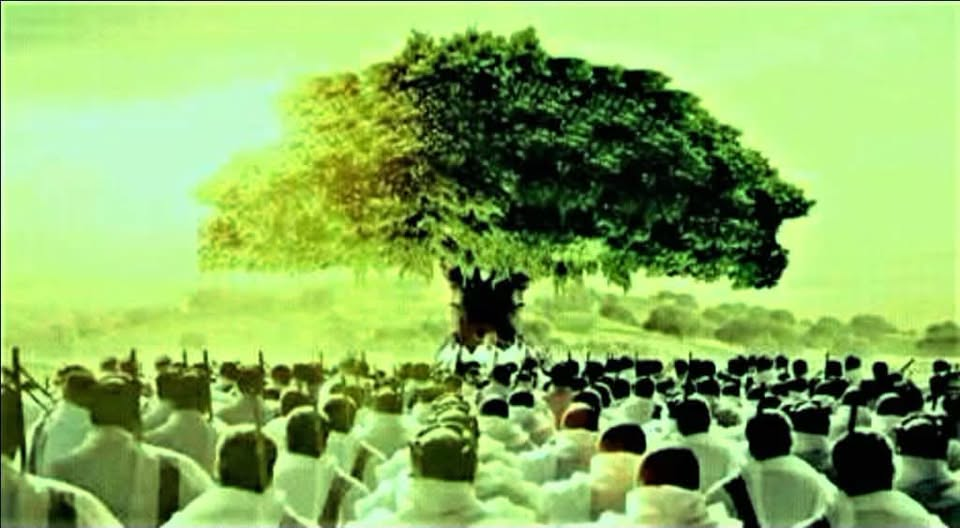
A Critical Examination of the Challenges Facing Oromo Historical Studies
By Hailu Gonfa
This article is not intended as a concluding statement, but rather as a starting point for further research and discussion. It is my hope that historians, scholars, and all those interested in Oromo history will engage with these reflections, deepen the analysis, and contribute to the vital work of revitalizing Oromo historiography.
3.1. Revitalizing History Is Not Simply About Uncovering the Hidden
When we speak of revitalizing Oromo history, the first thought that often comes to mind is uncovering what has been hidden, forgotten, or misrepresented. This is necessary and important. But the work of revitalization must also be viewed from another perspective. It requires us to honestly examine the errors, gaps, contradictions, and failures within our own historical record.
A people who selectively remember only what glorifies them, while hiding what does not flatter them, have not truly revitalized their history. A people who examine their history in its entirety—drawing strength from its achievements and learning from its mistakes—are the ones who move forward with wisdom. Revitalization is not an exercise in self-praise; it is an exercise in self-knowledge. And self-knowledge requires knowing not only what elevates us, but also what diminishes us.
3.2. Oromo History Must Not Be Written Only by Outsiders
One of the major gaps in Oromo historiography is that for a long time, much of the research and writing about Oromo history has come from external perspectives. This is not to say that outsiders should not study Oromo history—on the contrary, external scholarship has made significant contributions. However, when a people’s history is interpreted primarily by outsiders, that people risks learning about themselves only through the eyes of others.
It is therefore essential to strengthen and support Oromo historians, scholars, writers, linguists, cultural experts, Gadaa researchers, and political and legal scholars. Oromo people must research, write, and engage in scholarly debate about their own history. This is not a rejection of others—it is the assertion of one’s own voice in matters that concern one’s own identity.
3.3. The Gap in Documentation
If a people wishes to pass their history on to future generations, they must document it. The Oromo people possess a rich oral tradition—history, proverbs, poetry, songs, stories of heroes, place names, customs, and social memory are all preserved in the oral tradition. However, oral transmission is vulnerable to change, loss, and distortion over time.
The great task awaiting the current generation is the transition from oral tradition to written and digital documentation. This includes written texts, audio recordings, video documentation, photographs, maps, digital archives, and books. What we document today will be the foundation upon which future generations will build their understanding of who they are.
3.4. Blending Personal Memory and Historical Evidence
One challenge in historical research is the mixing of personal memory with evidence-based history. A person may remember what they heard, saw, or were told by their elders. But to verify that such memory constitutes accurate history, it must be cross-referenced with other sources.
Revitalized Oromo history must move from “This is what I heard” to “What is the evidence?” Evidence may include government archives, ancient manuscripts, books, university research, oral testimonies, place names, archaeological findings, documentaries, personal recollections, and both internal and external sources. All must be examined together.
3.5. History as More Than Heroism
In Oromo historiography, there is sometimes an excessive focus on heroes and heroism. Heroes are important. A people must know and honour their heroes. But to build a people’s history solely around heroes is to impoverish it. A people’s history includes farmers, mothers, youth, teachers, professionals, traders, elders, artists, scholars, health workers, soldiers, and all the diverse builders of society.
A revitalized Oromo history must be a history of the people, not merely a history of heroes. Heroism belongs to a few; history must embrace the many.
3.6. Avoiding the Narrowing of Oromo History to the Struggle for Liberation
Another gap that sometimes appears in Oromo historiography is the tendency to define Oromo history primarily, or even exclusively, through the lens of political and armed struggle. The struggle is an important part of Oromo history, but it is only one part.
The Oromo people possess a rich Gadaa system, a deep philosophy, social institutions, culture and ethics, language, agricultural expertise, economic practices, conflict resolution mechanisms, environmental knowledge, and a vibrant literary and oral tradition. A revitalized Oromo history must ask not only “Who did the Oromo fight?” but also “How did the Oromo live? How did they govern themselves? How did they resolve conflicts? What did they create?”
3.7. The Danger of “We Are Always Right, They Are Always Wrong”
One of the great pitfalls in national historiography is the tendency to view oneself as always right and others as always wrong. This approach prevents genuine learning from history. The Oromo people have had relationships with many communities—relationships of cooperation, conflict, exchange, intermarriage, political alliance, and cultural borrowing.
To reduce all of this to a simple binary of “good versus evil” is to distort history and impoverish our understanding. A revitalized history must ask “What happened? Why did it happen? Who did what? What was the outcome?” This is the transition from myth-making to historical inquiry.
3.8. The Gap of Historical Context
Every historical event must be examined within its own time and place. It is a mistake to judge the past by the standards of the present. What a people thought, did, and believed a hundred years ago may have been shaped by conditions very different from our own. A proper understanding of Oromo history requires examining events within their own political, economic, social, environmental, and relational contexts.
3.9. Internal Diversity Within Oromo History
The Oromo people are spread across a vast territory with diverse regions, clans, dialects, cultures, and experiences. Sometimes, the history of one group is presented as the history of all Oromo, or the history of one group is separated from others. A revitalized historiography must avoid both errors: it must not minimize the history of any region, and it must not deny the diversity that exists. The correct path is to acknowledge our diversity while building a shared history.
3.10. Distinguishing Between Struggle and Its Mistakes
A struggle may have a just cause, but that does not mean every action taken in its name is just. This is an important and mature insight. In revitalizing Oromo history, we must distinguish between the goal, the method, and the outcome. The goal may be just, but the method chosen to achieve it may be flawed. This requires us to ask: What succeeded? What failed? What can we learn? What must we not repeat?
This is not about condemning individuals or groups—it is about learning from the past so that future generations do not repeat the same mistakes.
3.11. The Gap of Women in Oromo History
When writing Oromo history, it is easy to focus on those who held political or military power. But Oromo women have played a vital role in social, economic, cultural, family, educational, and peacebuilding life. A revitalized history must ask: “Where are the Oromo women in our history?” It must document the stories of mothers, farmers, teachers, professionals, artists, scholars, leaders, and community participants. Without women, the history of the Oromo people is incomplete.
3.12. Youth’s Role in History-Making
History often focuses on the elders and heroes of the past. But the younger generation also plays a role in history. Oromo youth must not only learn history—they must also research, write, and document it. Using digital technology, they can create digital archives, podcasts, documentaries, short videos, historical maps, e-books, websites, and research papers. Oromo history must move from the library and the academy into the digital age.
3.13. The Gap of Language and Translation
It is essential to write and document Oromo history in Afaan Oromoo, because the language carries the culture, thought, ethics, and worldview of the people. But it is also important to translate Oromo history into Amharic, English, other Ethiopian languages, and international languages. This ensures that Oromo history is not only for Oromo people, but is accessible to neighbours, scholars, and the wider world.
3.14. Separating History from Contemporary Politics
Historical research is sometimes influenced by the politics of the present. People may interpret the past in ways that serve their current political interests. This can distort historical scholarship. Oromo historiography must strive to be free from political manipulation and based on rigorous social science research. History should not be written simply to praise or attack a particular individual, group, or government. It should be written to provide truth, evidence, and lessons for future generations.
3.15. Learning from Errors Is Not Weakness
When a people openly acknowledges its historical errors, that is not a sign of weakness. On the contrary, it is a sign of maturity. A people who learn from their mistakes are less likely to repeat them. Hiding our failures does not strengthen us—understanding them does. Let us honour our heroes, but also learn from their errors. This is the foundation of mature historiography.
3.16. New Principles for Revitalizing Oromo History
If we are to revitalize Oromo history, we must agree on several guiding principles:
- Evidence-Based: What we say must be supported by evidence, or we must seek it.
- Balanced: We must not mix good and bad indiscriminately, but examine both.
- Self-Critical: We must not fear criticizing ourselves.
- Comparative: We must examine multiple sources and compare them.
- Respectful of Diversity: We must include the histories of diverse regions, clans, genders, and generations.
- Independent of Political Agendas: History should not serve the political interests of a single moment.
- Generational: We must not only research history but pass it on in an understandable way.
- Forward-Looking: We must learn from the past and use it to build the future.
Conclusion: Revitalization as Self-Knowledge
Revitalizing Oromo history is not simply about uncovering what has been hidden. It is about looking at everything—what brings us pride and what brings us shame, what strengthens us and what weakens us, what succeeded and what failed. A people who only praise their history do not know themselves. A people who only condemn their history lose confidence in themselves. But a people who know their history honestly, draw strength from what is good, learn from what is wrong, and build for the future—that is a mature people.
A revitalized Oromo history must move from self-praise to self-knowledge, from self-knowledge to self-criticism, from self-criticism to learning, from learning to renewal, and from renewal to building the future.
By openly examining the errors and gaps in Oromo history, we do not diminish the Oromo people. We do not flee from historical truth. Because a people who know their history honestly are the only ones who can guide their history toward a path of growth and modernity.
In the next section—Part Four: “Oromo History in the Construction of Ethiopia” —we will explore what role the Oromo played in Ethiopian history, what they contributed, what they lacked, and what they must build.
Injifannoon Ummata Oromoo!
Seenaan Oromoo haa haaromfu!
Dogoggora keenya irraa haa barannu!
This feature article is based on the reflections of Hailu Gonfa and is dedicated to all those committed to the honest, rigorous, and balanced revitalization of Oromo history.





 Advocacy for Oromia