Category Archives: Press Release

A Scholar Immortal: Prof. Asmerom Legesse’s Legacy Lives in the Hearts of a Nation
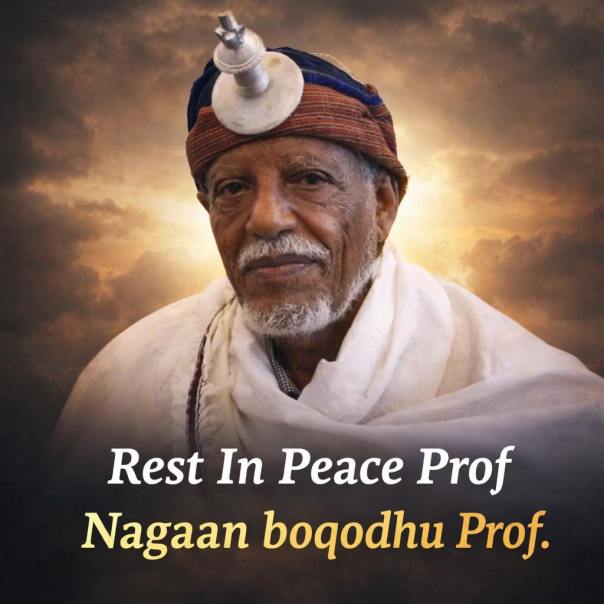
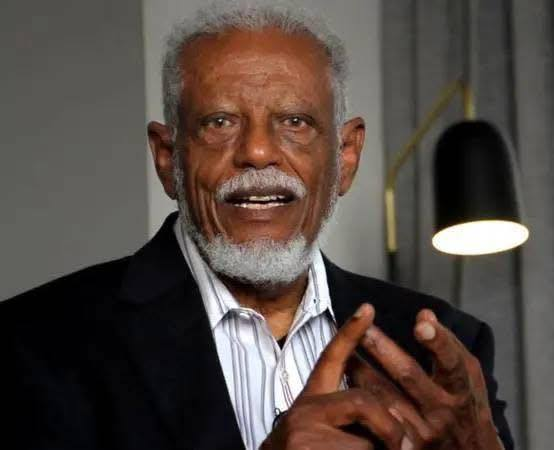
5 February 2026 – Across the globe, from the halls of academia to the living rooms of the diaspora, the Oromo community is united in a chorus of grief and profound gratitude. The passing of Professor Asmerom Legesse at the age of 94 is not merely the loss of a preeminent scholar; it is, as countless tributes attest, the departure of a cherished friend, a fearless intellectual warrior, and an adopted son whose life’s work became the definitive voice for Oromo history and democratic heritage.
The outpouring of personal reflections paints a vivid portrait of a man whose impact was both global and deeply intimate. Olaansaa Waaqumaa recalls a brief conversation seven years ago, where the professor’s conviction was unwavering. “Yes! It is absolutely possible,” he declared when asked if the Gadaa system could serve as a modern administrative framework. “The scholars and new generation must take this mantle, think critically about it, and bridge it with modern governance,” he advised, passing the torch to future generations.
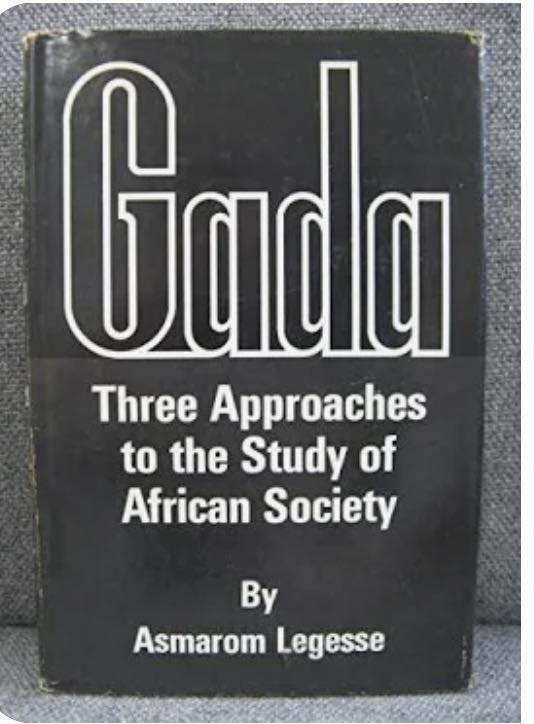
This personal mentorship extended through his work. Scholar Luba Cheru notes how Professor Legesse’s 1973 seminal text, Gada: Three Approaches to the Study of African Society, became an indispensable guide for her own decade-long research on the Irreecha festival. She reflects, “I never met him in person, but his work filled my mind.”
Ituu T. Soorii frames his legacy as an act of courageous resistance against historical erasure. “When the Ethiopian empire tried to erase Oromo existence, Professor Asmarom rose with courage to proclaim the undeniable truth,” they write, adding a poignant vision: “One day, in a free Oromiyaa, his statues will rise—not out of charity, but out of eternal gratitude.” Similarly, Habtamu Tesfaye Gemechu had earlier praised him as the scholar who shattered the conspiracy to obscure Oromo history, “revealing the naked truth of the Oromo to the world.”
Echoing this sentiment, Dejene Bikila calls him a “monumental figure” who served as a “bridge connecting the ancient wisdom of the Oromo people to the modern world.” This notion of the professor as a bridge is powerfully affirmed by Yadesa Bojia, who poses a defining question: “Did you ever meet an anthropologist… whose integrity was so deeply shaped by the culture and heritage he studied that the people he wrote about came to see him as one of their own? That is the story of Professor Asmerom Legesse.”
Formal institutions have also affirmed his unparalleled role. The Oromo Studies Association (OSA), which hosted him as a keynote speaker, stated his work “fundamentally reshaped the global understanding of African democracy.” Advocacy for Oromia and The Oromia Culture and Tourism Bureau hailed him as a “steadfast guardian” of Oromo culture, whose research was vital for UNESCO’s 2016 inscription of the Gadaa system as Intangible Cultural Heritage.
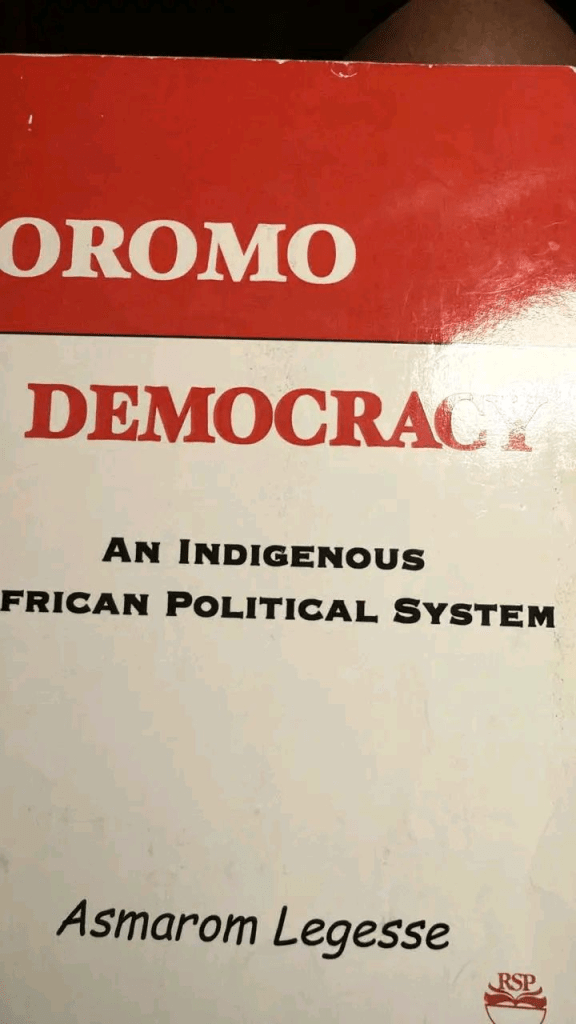
Binimos Shemalis reiterates that his “groundbreaking and foundational work… moved [Oromo studies] beyond colonial-era misrepresentations.” Scholar Tokuma Chala Sarbesa details how his book Oromo Democracy: An Indigenous African Political System proved the Gadaa system was a sophisticated framework of law, power, and public participation, providing a “strong foundation for the Oromo people’s struggle for identity, freedom, and democracy.”
The most recent and significant political tribute came from Shimelis Abdisa, President of the Oromia Regional State, who stated, “The loss of a scholar like Prof. Asmarom Legesse is a great damage to our people. His voice has been a lasting institution among our people.” He affirmed that the professor’s seminal work proved democratic governance originated within the Oromo people long before it was sought from elsewhere.
Amidst the grief, voices like Leencoo Miidhaqsaa Badhaadhaa offer a philosophical perspective, noting the professor lived a full 94 years and achieved greatness in life. “He died a good death,” they write, suggesting the community should honor him not just with sorrow, but by learning from and adopting his teachings.
As Seenaa G-D Jimjimo eloquently summarizes, “His scholarship leaves behind not just a legacy for one community, but a gift to humanity.” While the physical presence of this “real giant,” as Anwar Kelil calls him, is gone, the consensus is clear: the intellectual and moral bridge he built is unshakable. His legacy, as Barii Milkeessaa simply states, ensures that while “the world has lost a great scholar… the Oromo people have lost a great sibling.”

Oromo Liberation Front Honors Professor Asmerom Legesse’s Contributions
Oromo Liberation Front Mourns the Passing of Intellectual Pillar, Professor Asmerom Legesse
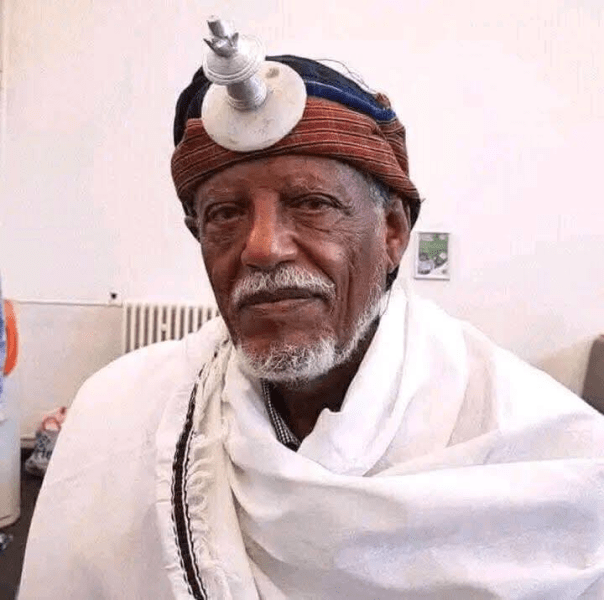
Finfinnee, March 4, 2026 – The Oromo Liberation Front (OLF) has issued a formal statement of profound grief, marking the passing of Professor Asmerom Legesse, whom it hailed as a “great historian” and an “intellectual pillar of the Oromo struggle.” In a detailed tribute released today, the OLF emphasized that the death of the 95-year-old scholar, a global authority on the Oromo Gadaa system, represents not just an academic loss but the departure of a “true sibling” to the Oromo people.
Born in Asmara, Eritrea, in 1931, Professor Legesse was celebrated by the OLF for a lifetime of work that went far beyond scholarship. The statement described his research as an “act of cultural reclamation” that systematically documented and presented the Gadaa system to the world, revealing it as a sophisticated African democratic tradition. His work, the OLF noted, provided irrefutable proof that principles such as “equality, rotational leadership, checks and balances, and the supremacy of law” were not foreign imports but deeply embedded practices of the Oromo people.
The OLF’s tribute positioned Professor Legesse’s academic contributions within the broader context of Oromo political identity and resistance. It credited him with restoring dignity to a history that had been “marginalized and distorted” and for providing the intellectual foundation that allowed the Gadaa system to gain global recognition, including its inscription by UNESCO as an Intangible Cultural Heritage of Humanity.
The statement poignantly noted that the scholar, while Eritrean by birth, became “Oromo by choice,” a sentiment that reflected his deep solidarity and lifelong engagement with the Oromo community. His extensive fieldwork, particularly with the Borana Oromo, was highlighted as a bridge that connected ancestral wisdom to contemporary understanding.
“While his voice is now silent, his work and his history will live on for generations,” the OLF statement read, affirming that Professor Legesse’s legacy is an “indelible part of Oromo history” that will continue to guide future generations toward truth and knowledge.
The OLF extended its deepest condolences to his family, relatives, friends, and the entire Oromo nation. It called upon the global Oromo diaspora and communities everywhere to participate, as circumstances allow, in memorial ceremonies honoring the scholar, stating that such acts of remembrance are a fitting way to “demonstrate gratitude for the great service this scholar rendered to our people’s struggle.”
The funeral service for Professor Asmerom Legesse is scheduled for February 7, 2026.
About the Oromo Liberation Front (OLF):
The Oromo Liberation Front is a political organization founded in 1973, advocating for the right to self-determination of the Oromo people. It has been a central institution in the modern Oromo national movement, seeking to address historical and political grievances through the establishment of an independent or autonomously democratic Oromia.

Advocacy for Oromia Mourns Professor Asmerom Legesse’s Passing

FOR IMMEDIATE RELEASE
Global Oromo Advocacy Group Mourns Scholar Who Championed Indigenous African Democracy
(Melbourne, Australia) – February 5, 2026 – The global advocacy network, Advocacy for Oromia, has announced the passing of Professor Asmerom Legesse, a towering intellectual figure whose work fundamentally reshaped global understanding of the Oromo people and their democratic heritage. Professor Legesse, hailed as a “steadfast guardian” of Oromo culture, died at the age of 89.
In a statement released from its Melbourne headquarters, the organization paid tribute to the scholar’s more than four decades of work dedicated to the Gadaa system, describing it as the “sophisticated democratic and socio-political foundation of Oromo society.” The statement emphasized that Professor Legesse was far more than an academic; he was a “preeminent global ambassador” for an indigenous African system of governance, justice, and social order.
His seminal text, Oromo Democracy: An Indigenous African Political System, was highlighted as a cornerstone of his legacy. Advocacy for Oromia stated that his scholarship performed a “vital act of cultural reclamation and global education,” which restored dignity to a marginalized history and presented the world with a self-originating model of democracy that predated Western constructs.
The condolence message also revealed a poignant historical connection. During a recent visit to Asmara, Eritrea—Professor Legesse’s birthplace—a delegation learned that his family home stood adjacent to the church where Abbaa Gammachis and Aster Ganno, 19th-century icons of faith and linguistic preservation, translated the Bible into the Oromo language. The group framed this “physical proximity” as a powerful metaphor, linking the spiritual resilience of those earlier figures with Professor Legesse’s intellectual fortitude in defending Oromo identity.
Born in Asmara in 1937, Professor Legesse’s academic journey took him from political science at the University of Wisconsin to a doctorate in anthropology from Harvard University, where he later taught. Advocacy for Oromia noted that his rigorous research provided the foundational academic framework for understanding indigenous African political philosophy.
The organization extended its heartfelt condolences to his family, academic colleagues, and the Oromo people worldwide. While mourning the loss, the statement concluded with a commitment to celebrate his “immortal legacy,” asserting that his work will continue to “illuminate the path toward understanding, justice, and self-determination.”
About Advocacy for Oromia:
Advocacy for Oromia is a global network dedicated to promoting awareness, justice, and the rights of the Oromo people. It focuses on upholding principles of democracy, human rights, and cultural preservation central to Oromo identity.

Oromia Culture Bureau Honors Professor Legesse’s Impact
FOR IMMEDIATE RELEASE
Oromia Culture and Tourism Bureau Mourns the Passing of Professor Asmerom Legesse, Pillar of Gadaa Scholarship
(Oromia, Ethiopia) – The Oromia Culture and Tourism Bureau has announced its profound sorrow at the passing of Professor Asmerom Legesse, revered globally as a preeminent scholar, cultural custodian, and an unwavering servant of the Gadaa system.
In an official condolence message, the Bureau described Professor Legesse as an irreplaceable figure who dedicated his life to the preservation, interpretation, and transmission of the Gadaa system. He was hailed for playing an “indispensable role in safeguarding the philosophical foundations and moral values that define Oromo identity and humanity at large.”
Professor Legesse’s work transcended academic study. The Bureau emphasized that his scholarship acted as a vital bridge, “linking ancestral wisdom with contemporary knowledge,” and ensuring the Gadaa system remains a guiding framework for social harmony, equity, and collective responsibility in the modern world.
Beyond his scholarly contributions, Professor Legesse was recognized as a moral compass for his community. The Bureau’s statement noted that he “embodied the principles of truth, justice, service, and integrity,” tirelessly working to nurture unity, dialogue, and cultural continuity. His legacy, they affirmed, has left an “enduring imprint on cultural institutions, academic circles, and community life, both within Oromiyaa and beyond.”
The Oromia Culture and Tourism Bureau extended its deepest condolences to Professor Legesse’s family, relatives, colleagues, students, and the entire Oromo community mourning this immense loss. The statement concluded with a message of resilience, asserting that while his physical presence is gone, “his wisdom, teachings, and exemplary life will continue to live on, inspiring generations to uphold the values of Gada and to serve society with dedication and humility.”
About the Oromia Culture and Tourism Bureau:
The Oromia Culture and Tourism Bureau is the regional government body responsible for the preservation, promotion, and development of Oromia’s rich cultural heritage and tourism potential. It works to safeguard intangible cultural systems like Gadaa, which is recognized as a UNESCO Intangible Cultural Heritage of Humanity.
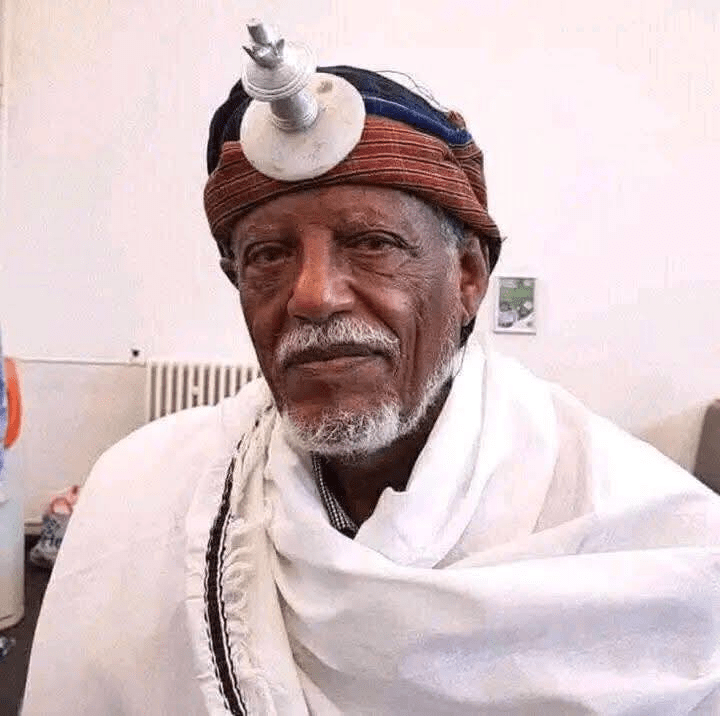
A Guardian of Heritage: Advocacy for Oromia Mourns the Passing of Professor Asmerom Legesse (1931-2026)

FOR IMMEDIATE RELEASE
A Guardian of Heritage: Advocacy for Oromia Mourns the Passing of Professor Asmerom Legesse (1937-2026)
(Melbourne, Victoria) – February 4, 2026 – Advocacy for Oromia, with profound respect and deep sorrow, announces the passing of the world-renowned scholar, Professor Asmerom Legesse. We extend our most heartfelt condolences to his family, his colleagues in academia, and to the entire Oromo people, for whom his work held monumental significance.
Professor Legesse was not simply an academic; he was a steadfast guardian and a preeminent global ambassador for the ancient Gadaa system, the sophisticated democratic and socio-political foundation of Oromo society. For more than forty years, he dedicated his intellect and passion to meticulously studying, documenting, and advocating for this profound indigenous system of governance, justice, and balanced social order.
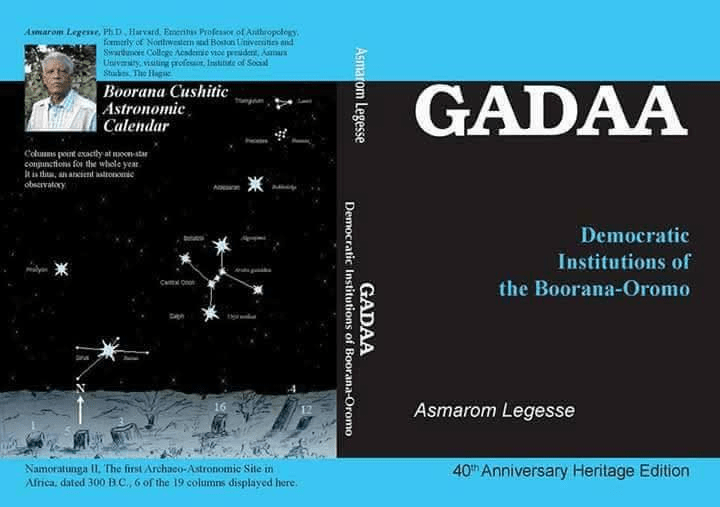
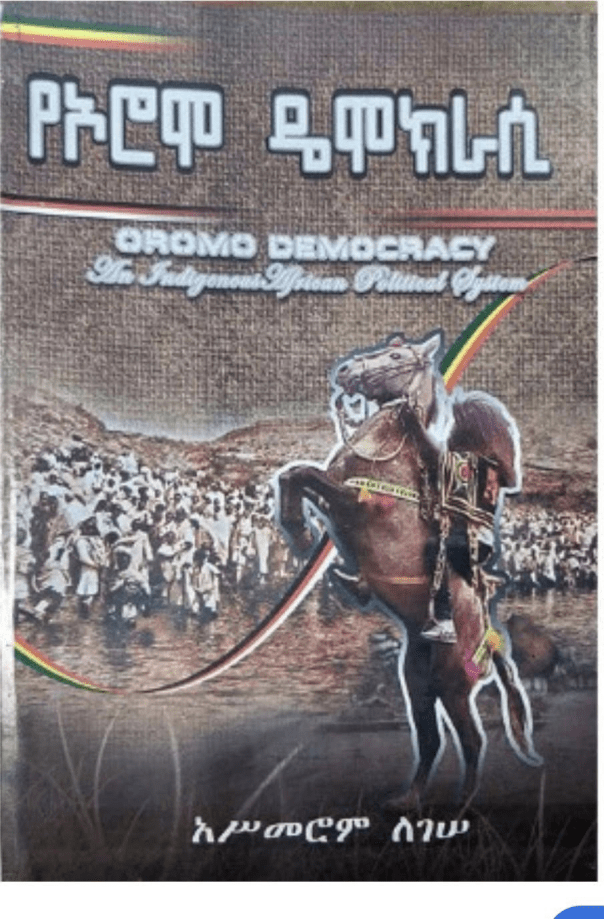
His seminal work, including the definitive text Oromo Democracy: An Indigenous African Political System, transcended mere historical analysis. Professor Legesse’s scholarship performed a vital act of cultural reclamation and global education. It restored dignity to a marginalized history, affirmed the cultural identity of millions, and presented to the international community a powerful, self-originating model of African democracy that predated and paralleled Western constructs.
Born in Asmara in 1931, Professor Legesse’s intellectual journey—from political science at the University of Wisconsin to a doctorate in anthropology from Harvard University, where he later taught—was always directed by a profound sense of purpose. His research provided the rigorous, academic foundation for understanding indigenous African political philosophy.
His passing is felt as a deeply personal loss within our community, reminding us of the interconnected threads of Oromo history and resilience. On a recent visit to Asmara, a delegation from Advocacy for Oromia visited a site of immense historical importance: the church where Abbaa Gammachis and Aster Ganno, giants of faith and resistance, resided while translating the Bible into Afaan Oromo. It was there we learned that the family home of Professor Asmerom Legesse stood adjacent.
This physical proximity stands as a powerful metaphor. It connects the spiritual and linguistic preservation embodied by Abbaa Gammachis with the intellectual and political excavation led by Professor Legesse. They were neighbors not only in geography but in sacred purpose: both dedicated their lives to protecting, promoting, and elucidating the core pillars of Oromo identity against historical forces of erasure.
Professor Legesse’s lifetime of contributions has endowed current and future generations with the intellectual tools to claim their rightful place in global narratives of democracy and governance. For this invaluable and enduring gift, we offer our eternal gratitude.
While we mourn the silence of a towering intellect, we choose to celebrate the immortal legacy he leaves behind—a legacy of knowledge, pride, and empowerment that will continue to guide and inspire.
May his soul rest in eternal peace. May his groundbreaking work continue to illuminate the path toward understanding, justice, and self-determination.
Rest in Power, Professor Asmerom Legesse.
About Advocacy for Oromia:
Advocacy for Oromia is a global network dedicated to promoting awareness, justice, and the rights of the Oromo people. We work to uphold the principles of democracy, human rights, and cultural preservation central to Oromo identity and heritage.
Media Contact:
Advocacy for Oromia
https://advocacy4oromia.org/

Oromia Peace Institute: Bridging Dialogue and Community Action
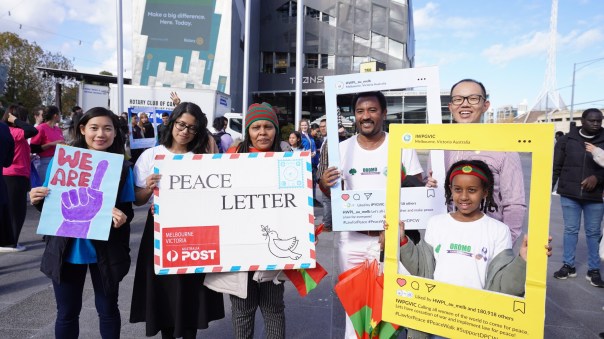
An Oromia Peace Institute is necessary to provide a permanent, professional, Oromo‑centered hub for conflict analysis, dialogue, and peace education that can guide political and community actors out of the current cycles of violence. It would connect Gadaa/Waaqeffannaa-based peace values, community experience, and modern peace-research methods into one institution that serves all of Oromia and contributes to Ethiopia-wide settlement efforts.
Current gaps in Oromia
Studies on Oromia’s security show there is no clear, comprehensive regional peacebuilding framework, and indigenous Oromo mechanisms like Gadaa, Abba Gadaa, and Siinqee are not systematically used in present peace processes. Existing initiatives are often short-term projects run by NGOs or ad‑hoc committees, so lessons are lost, coordination is weak, and there is no single reference body for evidence-based advice on the Oromia conflict.
What such an institute would do
An Oromia Peace Institute could systematically collect data on conflicts across zones and woredas, produce regular trend analyses, and advise government, parties, elders, and civic groups using rigorous and locally grounded research. It could design and support community-led dialogue processes that elevate elders, women, and youth, similar to participatory action research and dialogue models already piloted in Oromia by partner organisations.
Linking tradition and modern peacebuilding
Research highlights the relevance of Gadaa peace principles and Oromo customary institutions for conflict transformation, but these are not yet meaningfully integrated into formal policy and security structures. A dedicated institute could document Gadaa and Siinqee peace norms, train mediators and local officials in their use, and translate them into practical tools for modern governance and inter-ethnic conflict management.
Supporting political dialogue and long-term settlement
Recent calls for inclusive dialogue on Oromia’s crisis by Oromo political forces underline the need for neutral, credible technical support: mapping stakeholders, designing dialogue processes, and monitoring agreements. An Oromia Peace Institute can play this technical and moral support role, helping transform elite bargains into people-driven processes that include displaced communities, victims, women, and youth, and feeding Oromia’s experience into any broader Ethiopian peace architecture.
Position Statement of the Oromo Liberation Front (OLF)
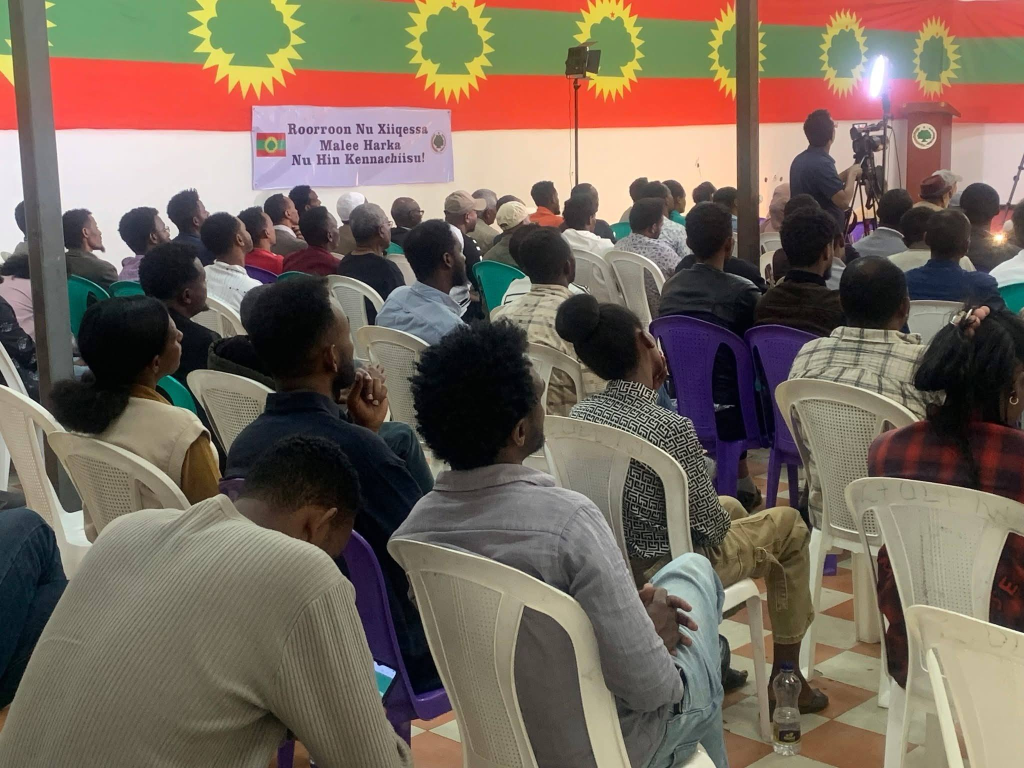
We, the members of the Oromo Liberation Front (OLF), convened in a two-day meeting on October 25 and November 1, 2025, at our headquarters in Gullalle.
Our deliberations have produced this five-point position statement concerning the past, present, and future of our party, the critical situation in Ethiopia, and ongoing developments in the African region and the world at large.
1) The Imperative for Peace and Justice
The pursuit of peace for the Oromo people is paramount. We unequivocally condemn the crimes against humanity perpetrated against the Oromo in recent years. We hold the government responsible for a systematic campaign of torture, employing tactics such as extrajudicial killings, forced displacement—notably through the Somali Special Forces in the East—and persecution under various pretexts across the nation.
The Oromo people possess an inalienable right to human rights and self-determination, equal to all peoples of the world. We therefore demand the establishment of an independent international body to investigate the wave of killings committed against the Oromo people over the past seven years, which continues unabated, including the assassination of our comrade, Jaal Battee Urgeessaa.
2) The Inviolability of Oromia’s Borders
The land of Oromia is the ancestral homeland of the Oromo people, whose presence spans centuries. All violations of Oromia’s established borders must cease immediately. The territorial integrity of Oromia is non-negotiable and must be respected unconditionally.
3) The Demand for Political Freedom
The current regime has deliberately closed the political arena and obstructed the lawful activities of the Oromo Liberation Front. This repression has perpetuated the subjugation of our people and illegally prevented our party from engaging with its constituents.
We demand the immediate and unconditional reopening of all OLF offices nationwide. Our party must be guaranteed the freedom to operate, to communicate its political program openly, and to dialogue directly with the people. OLF leadership must be free to travel, to conduct public forums, and to educate without hindrance. We further call for an end to the arbitrary arrests of our members and supporters, and for the immediate restoration of fundamental freedoms for media and civil society organizations.
4) The Sacred Unity of the Oromo People
We condemn in the strongest terms any and all attempts to fragment the Oromo people for transient political advantage. The unity of the Oromo is sacrosanct, forged by the ultimate sacrifice of our Shinigga heroes. It is a legacy built with their blood and bones, and it will not be weakened, bargained away, or destroyed.
5) A Renewed Vow and Final Resolution
In conclusion, and to fully achieve the aims and objectives of our struggle, we solemnly renew our vows to the Oromo cause. We reaffirm our acceptance of the duty before us and declare this position statement to be our final and resolute decision.
Victory to the Masses!
Members of the Oromo Liberation Front (OLF)
November 1, 2025
Finfinnee
Statement on the Escalating Atrocities in Oromia
The Oromo Liberation Front (OLF) issues this statement to strongly condemn the ongoing mass killing, imprisonment, torture, and systematic displacement of the Oromo people by Ethiopian government forces and allied militias, including the Amhara “Fano” group.
We are more alarmed than ever by the horrific war crimes being perpetrated. For the past seven years, democracy has been extinguished in Oromia, and the fundamental right to life has been obliterated. Our people are subjected to a campaign of terror, marked by land theft, explosions of violence, and the brutal suppression of any opposition. The existence and resilience of the Oromo Liberation Army is a direct consequence of this relentless persecution.
Recent Atrocities in Arsi Zone
Based on confirmed reports from October 28, 2025, in the Southeast Oromia Zone of Arsi, the government army (RIB) has committed numerous atrocities against civilians:
· In Jawi Kebele, Ona Shirka, 14 innocent people were executed without cause.
· On the border of the Wabe River, two young schoolchildren, who were not of an age to be involved in the conflict, were killed by government soldiers and their bodies thrown into the river.
· In Gobessa town, three youths were killed and their bodies dumped.
· In Honqolo Wabe, Baqaqsa Kebele, five individuals were executed by government soldiers and discarded in a field.
· In Arfatu Kebele, two children who were building a statue for their father’s grave were abducted. They were later found killed and thrown into a water store near Tulu Biyo.
Across the entirety of South Eastern Oromia, the systematic imprisonment, beating, robbery, and burning of villages and homes are the deliberate work of the government army. These reports illuminate a pattern of state-sanctioned violence that we are duty-bound to expose.
Political Persecution and Arbitrary Detention
Alongside these killings, our members and supporters are being arbitrarily imprisoned for their political beliefs. Among the many suffering in detention are:
· Jal Abbu Obse, who has been suffering in Ona Dugda prison for over a year without adequate healthcare.
· Comrade Abdulsalam Ona Sude, jailed for nine months alongside his wife and daughter.
· Comrade Taha Mamad Ona Robe, who is currently imprisoned in Ona Robe.
A Pattern of War Crimes
The actions of the government and affiliated militias over the past seven years constitute severe war crimes. These include burning homes, desecrating corpses by carrying them on donkeys, hanging bodies from trees, prohibiting burials, feeding the dead to hyenas, and looting and driving away the cattle of our people. These are the documented tactics of the “Bilthigina” and “Fano” forces.
Government Incitement and Intent
The Ethiopian Prime Minister, Dr. Abiy Ahmed, stated in Parliament on October 28, 2025, that “The war held in Tigray is not greater than the one held in Wollega,” while dismissing the conflict in Tigray as “baseless and useless.” This rhetoric is a stark admission that the government has consciously pursued a war of even greater intensity in Oromia. It confirms that the federal government’s true war is not in Tigray, but against the Oromo people. We believe this public declaration confirms the brutal campaign they have long waged in the shadows.
Our Position and Call to Action
The Prosperity Party (PP) government continues to kill civilians with impunity. The OLF reiterates that a nation cannot be led by violence and madness, nor by slandering its own people. A system that sustains itself by such means is illegal and must be held accountable.
The war the government is facing is a war against the broad Oromo populace. The Prime Minister’s own words prove that the conflict in Wollega—the heart of Oromia—is their primary focus.
Therefore, we call upon:
1. Our Oromo People: We urge all Oromos, especially our diaspora communities in neighboring countries and abroad, to become the voice for those being slaughtered day and night. We call on you to stand in unwavering solidarity with our people.
2. The International Community: We appeal to all believers in human rights, the United Nations, the African Union, international human rights organizations, and the global community to condemn the war crimes being committed against the Oromo people. We demand you exert necessary pressure on the Ethiopian government to:
· Immediately cease all attacks on civilians.
· Release all political prisoners held without charge.
· Allow unfettered humanitarian aid to reach affected populations.
May God have mercy on the souls of our people who were so brutally killed, and may He grant patience and strength to their families and all Oromo people.
A Victory for the People!
Oromo Liberation Front (OLF)
Finfinne | October 30, 2025

Oromo Diaspora in the UK Protests Against Human Rights Abuses in Oromia
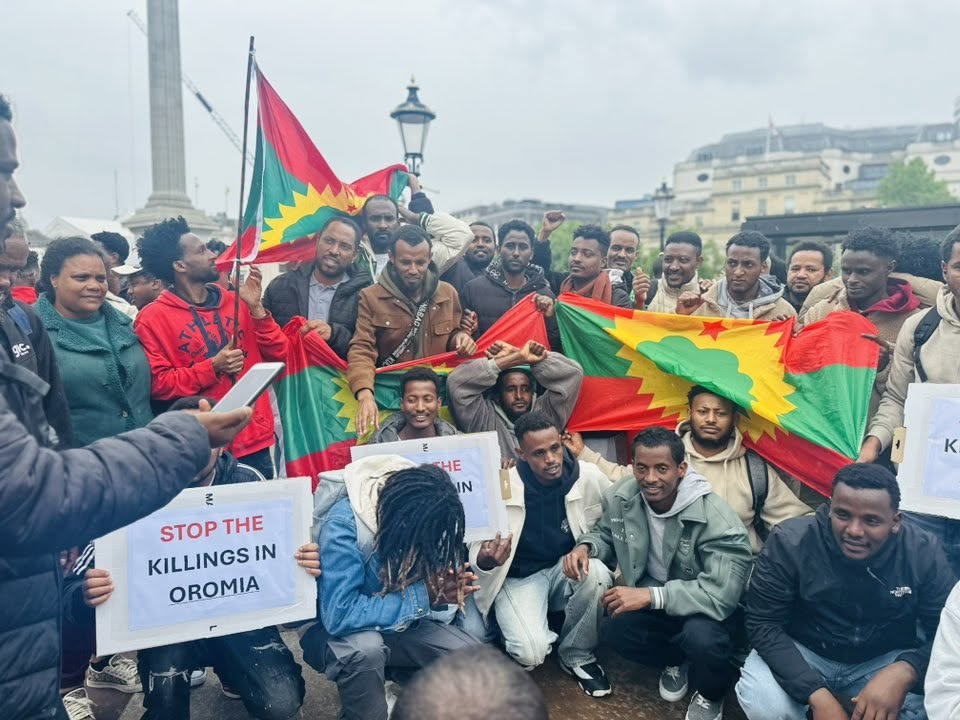
Thousands gather in London to denounce the Prosperity Party government’s actions and demand international intervention
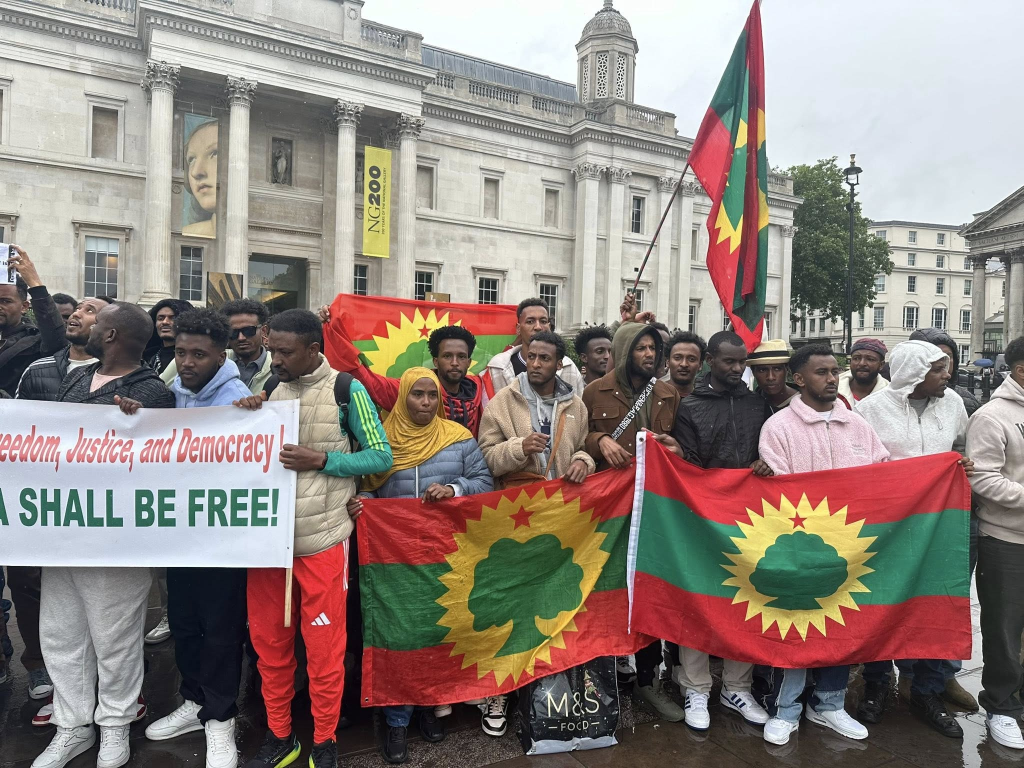
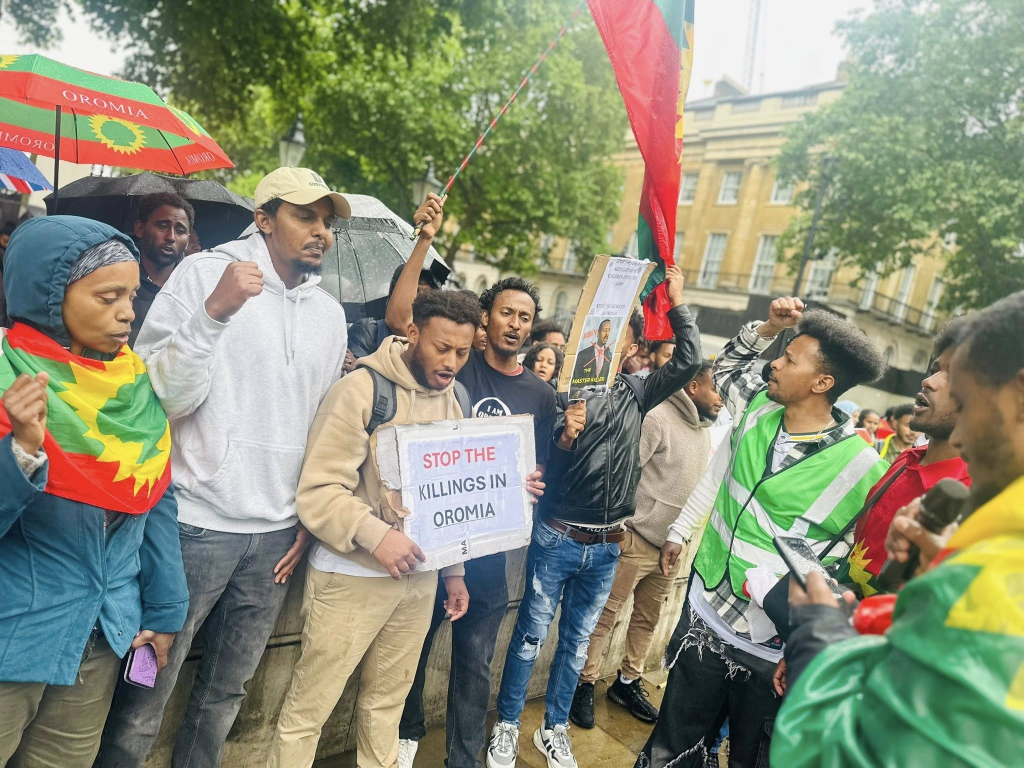
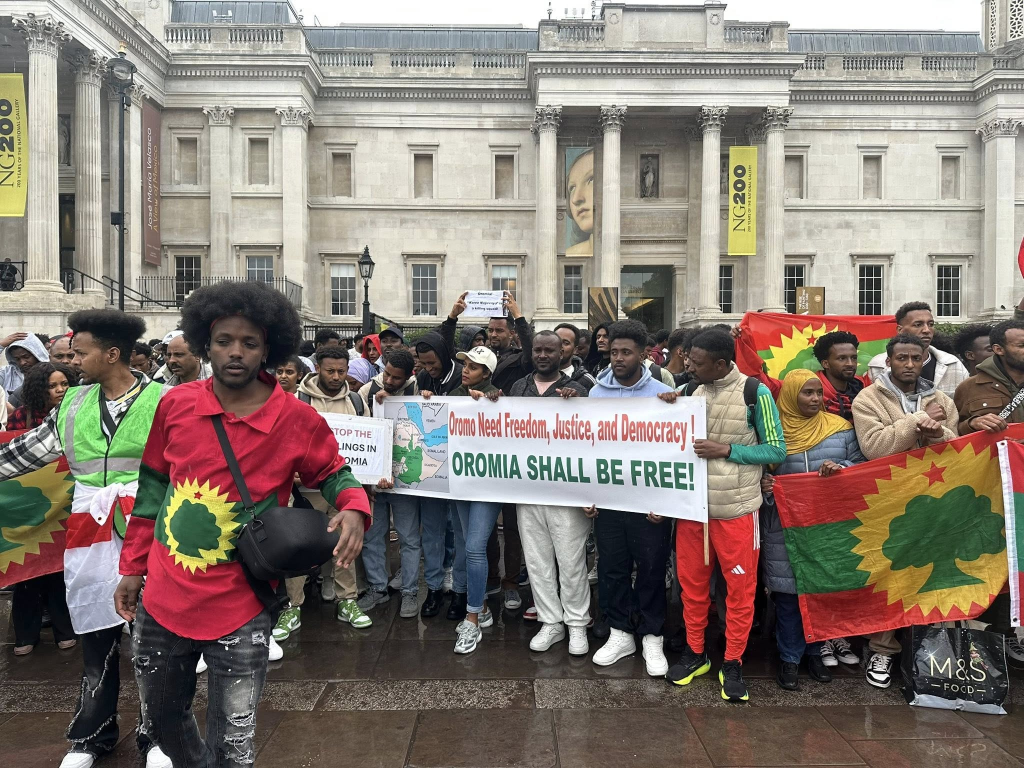
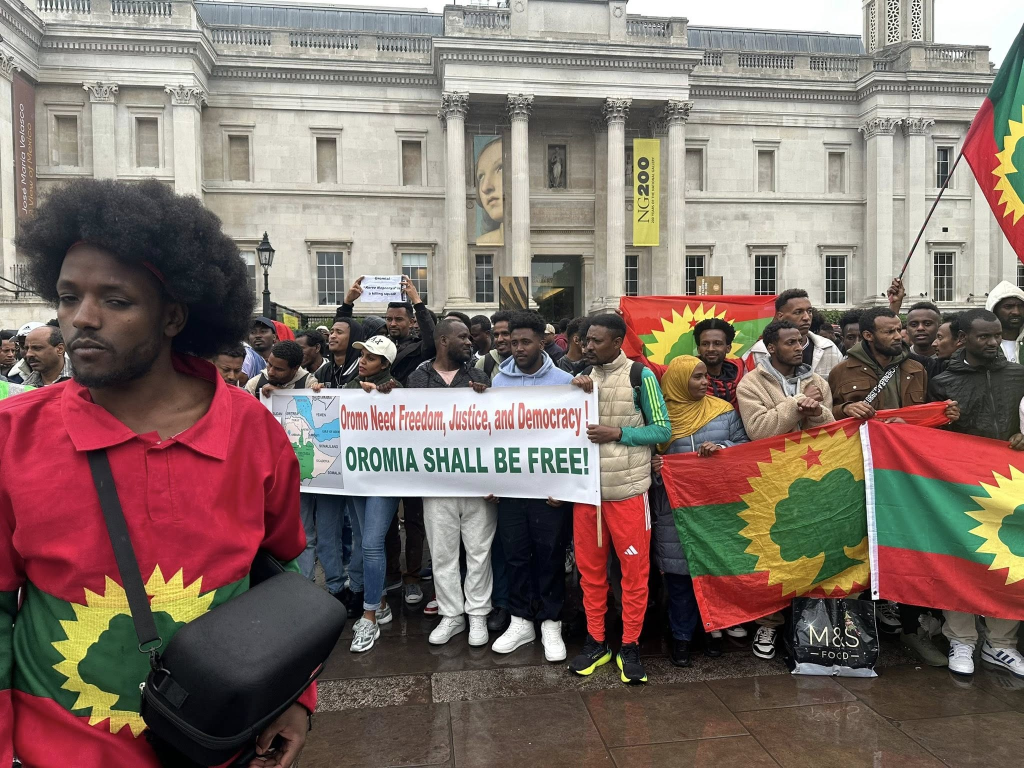
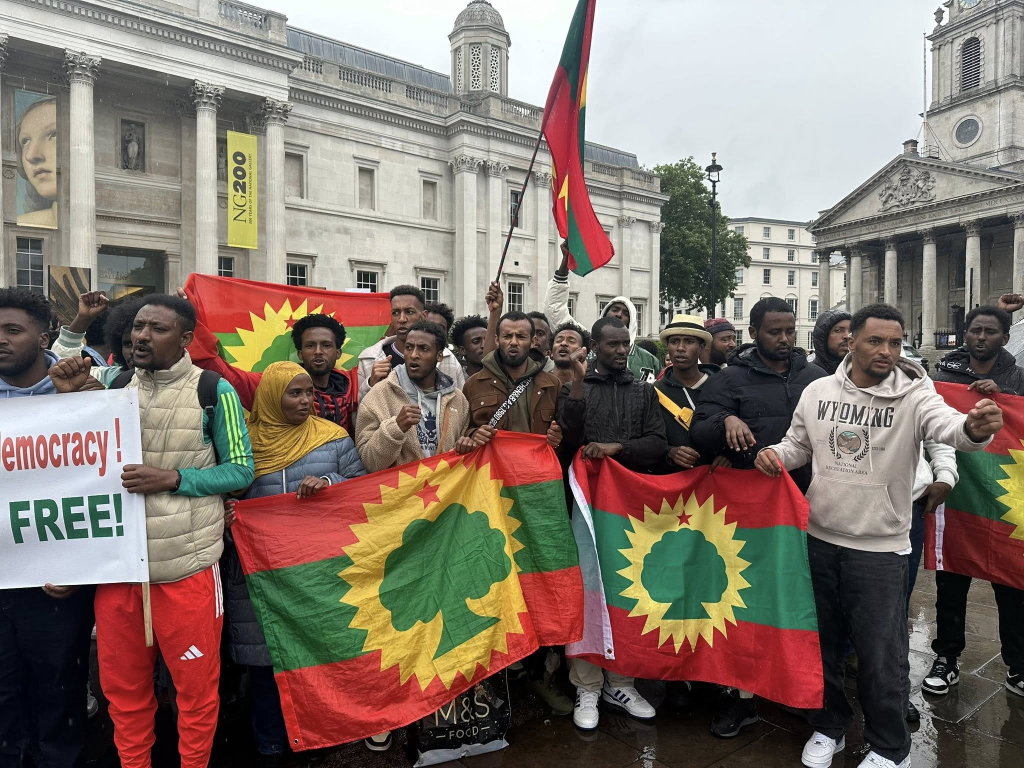
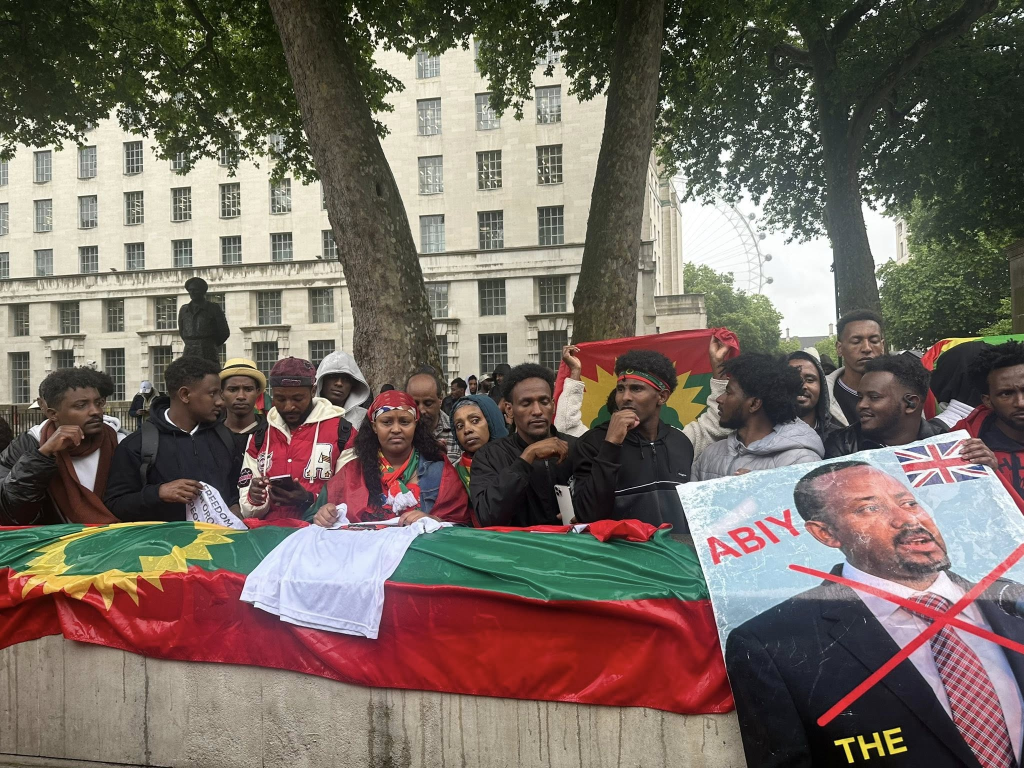
LONDON, UNITED KINGDOM — The Oromo diaspora community in the United Kingdom took to the streets of London on May 27, 2025, in a powerful demonstration against what they described as escalating human rights violations and systematic oppression in Oromia under the Prosperity Party government led by Prime Minister Abiy Ahmed .
Organizers described the protest as an urgent response to conditions in Oromia that have reached a critical threshold, drawing participants from across the UK. The rally demanded immediate international action to halt the violence and protect Oromo civilians.
A Crisis at the Breaking Point
Protest leaders emphasized that human rights abuses in Oromia and across Ethiopia have surpassed acceptable boundaries. They warned that the situation has become so alarming that it can no longer be ignored or dismissed.
The Oromo people, who constitute approximately 35 percent of Ethiopia’s population, have long voiced grievances over political marginalization, economic exploitation, and cultural suppression. The recent escalation of military operations in Oromia has deepened these concerns, with protesters pointing to a deliberate campaign of displacement and violence.
Echoes of the Derg Era
Demonstrators drew stark parallels between the current Prosperity Party government and the Derg regime of Mengistu Hailemariam (1974-1991). They accused the current administration of employing similar tactics: forcibly conscripting youth into the military, deploying them to war zones, and using them as cannon fodder in conflicts across the country .
The comparison resonated deeply with participants, many of whom have personal or family memories of the Derg’s brutal crackdown on Oromo communities. The Red Terror period, which saw systematic killings and disappearances of political opponents, remains seared into the collective memory of the Oromo people.
The Human Toll
Demonstrators painted a stark picture of life under the current government: the Oromo people have no peace and live each day like leaves falling to the ground. The constant state of insecurity has made movement between places “almost impossible” .
Reports from human rights organizations have documented extrajudicial killings, torture, abductions, and rape committed by both government forces and the Oromo Liberation Army (OLA). A joint investigation by Reuters uncovered the operations of a clandestine Security Committee in Oromia that has allegedly ordered extra-judicial killings and illegal detentions .
The impact on civilians has been devastating: over 3.2 million children are reportedly out of school due to the fighting, and aid groups have struggled to distribute supplies, contributing to high malnutrition rates.
A Call to Action
The protesters presented a series of demands to both the Ethiopian government and the international community :
- An immediate halt to what they described as genocide and military operations across Ethiopia
- The cessation of forced conscription of children into the military
- The withdrawal of all forces from Oromia
- An end to the unlawful seizure of Oromo land and property
- The unconditional release of all political prisoners
- Justice for murdered artists and activists, including Haacaaluu Hundeessaa and Battee Urgeessaa
The demonstrators specifically called on the UK government and international financial institutions to suspend all financial and diplomatic support to the Ethiopian government. A formal petition detailing these grievances was submitted to the UK Foreign Office.
The Role of the International Community
Protest leaders emphasized that international actors have a moral and legal obligation to intervene. The Ethiopian government, they argued, has repeatedly failed to protect its citizens and has weaponized state institutions against the Oromo people .
The call for the UK government to exert “necessary pressure” on the Prosperity Party reflects growing frustration among the Oromo diaspora with the international community’s perceived inaction. Despite widespread documentation of human rights abuses, Ethiopia has continued to receive diplomatic and financial support from Western nations.
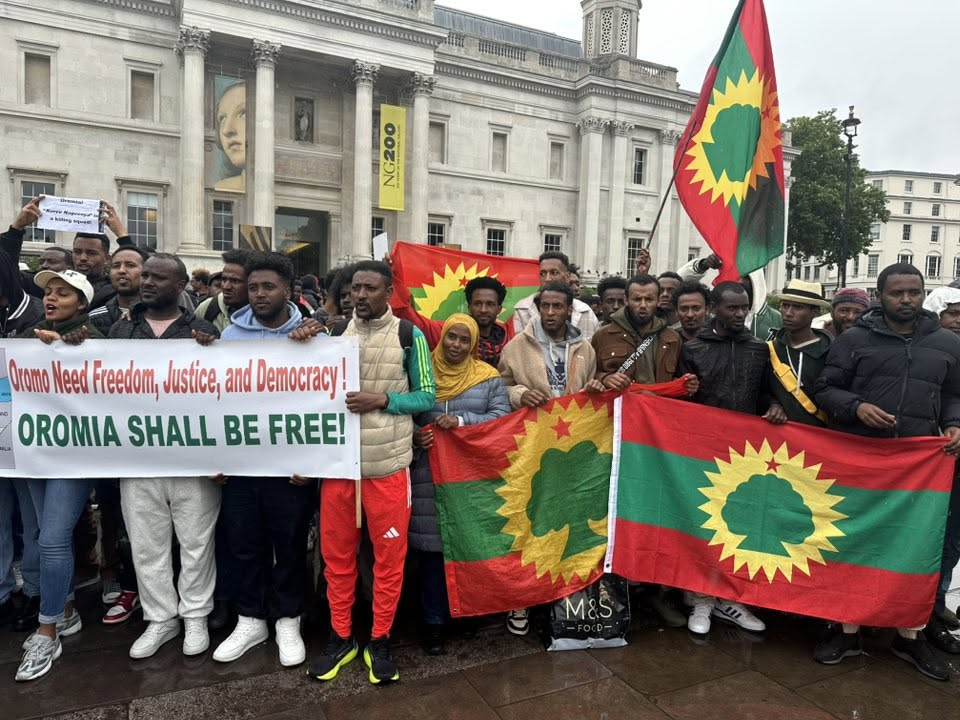
The London protest on May 27, 2025, was part of an ongoing global campaign by the Oromo diaspora to bring attention to systematic human rights abuses in their homeland . The demonstrators’ demands reflect a deep sense of urgency: they have called for an end to the killings, the withdrawal of forces, and international intervention .
The Oromo people continue to live without peace, and the situation in Oromia remains deeply insecure. The international community faces a critical test: whether it will respond with concrete action or allow another chapter of suffering to unfold largely unseen.

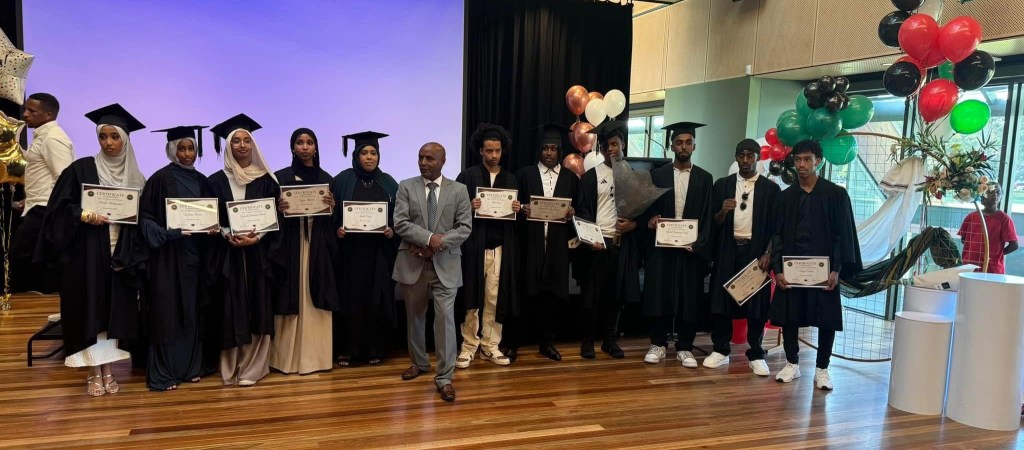
Oromo Graduation Day: Celebrating Academic Success in Australia
By Daandii Ragabaa
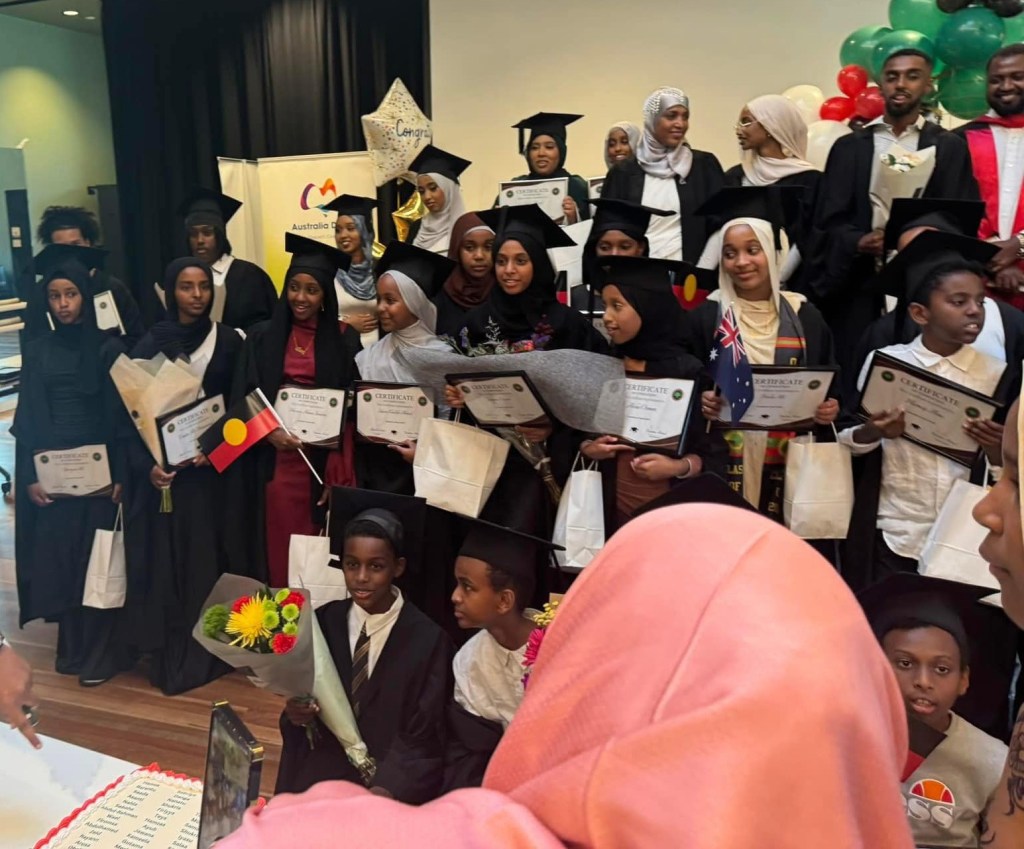
The Oromo Graduation Day is a significant event for the Oromo community in Australia, particularly for Oromo students. It serves as a platform to celebrate academic achievements, foster unity, and inspire the younger generation. Here are some ways it motivates and brings Oromo students together:
1. Celebration of Achievements: The event recognizes and honors the hard work and success of Oromo students, providing them with a sense of pride and accomplishment. This recognition can be a powerful motivator for both the graduates and their peers.
2. Community Support: It strengthens the sense of community among Oromo students, offering them a network of support. This camaraderie can be crucial for students who may feel isolated or face challenges in their academic journey.
3. Cultural Connection: The event often includes cultural elements, such as traditional music, dance, and food, which help students stay connected to their heritage. This cultural affirmation can boost their confidence and sense of identity.
4. Role Models: Graduates serve as role models for younger students, showing them that academic success is attainable. Hearing the stories and experiences of those who have succeeded can inspire others to pursue their educational goals.
5. Networking Opportunities: The event provides a platform for students to network with each other, as well as with professionals and community leaders. These connections can be valuable for future academic and career opportunities.
6. Encouragement and Motivation: Speeches and presentations during the event often focus on the importance of education, perseverance, and community involvement. These messages can motivate students to stay focused on their studies and strive for excellence.
7. Unity and Solidarity: By bringing together Oromo students from different universities and regions, the event fosters a sense of unity and solidarity. This collective spirit can be empowering and reassuring, especially in a foreign country.
Overall, the Oromo Graduation Day plays a crucial role in motivating Oromo students, celebrating their achievements, and strengthening their bonds as a community in Australia.